
Incoterms for Diamond Export: FOB vs CIF Explained for International Buyers
 by lepdogroup@gmail.com
0 comments
by lepdogroup@gmail.com
0 comments
FOB vs CIF diamond export refers to two Incoterms that decide who pays for shipping, insurance, and risk once diamonds leave the seller’s country. FOB shifts cost and risk to the buyer at the port of origin, while CIF has the seller cover freight and insurance to the destination port. Buyers exploring certified stock at Lepdo Diamonds should confirm which term applies before signing any purchase order.
A New York importer once told me about a parcel of loose diamonds that vanished somewhere between Mumbai and JFK. Nobody had figured out, in writing, who actually owned the risk once that box left the factory. The insurance fight dragged on for months, and it all came down to one clause nobody read closely enough. That story is the reason fob vs cif diamond export terms deserve more attention than they usually get.
If you’re buying diamonds from India, Belgium, or Israel, this one decision shapes who pays for shipping, who eats the loss if something breaks or goes missing, and who scrambles when customs holds a shipment for an extra week. A great deal on carat weight and clarity grade means very little if the shipping contract behind it is vague.
So here’s what this article actually covers: what FOB and CIF mean in plain terms, when each one makes sense, and what US-based manufacturers, wholesalers, and retail buyers should be asking before they sign anything. We’ll touch on GIA standards and 4Cs terminology too, since certification questions tend to surface the moment a shipment crosses a border.
Pay attention to the next few sections. The wording on your purchase order is doing more work than most people realize.
What FOB and CIF Mean in Diamond Export
Incoterms come from the International Chamber of Commerce. They’re a shared vocabulary for international trade, used for everything from machine parts to textiles, and diamonds are no exception.
FOB, or Free on Board, means the seller’s job ends the moment the goods are loaded onto the ship or plane at the port of origin. After that, it’s the buyer’s problem. CIF, Cost, Insurance, and Freight, means the seller pays for shipping and basic insurance all the way to the destination port. That sounds like more protection for the buyer, and in some ways it is, but the risk transfer point is earlier than most people assume. That detail alone causes a surprising number of disputes.
Quick Info Box
Definition: FOB and CIF are Incoterms that define who pays and who bears risk during diamond shipping.
Key Types or Varieties: FOB, CIF, CFR, EXW, DAP, DDP, FCA, CPT
Best For: B2B buyers, wholesalers, importers negotiating international Diamond Export contracts
Key Difference or Advantage: FOB gives buyers more shipping control, CIF gives sellers more logistics responsibility
Most Popular Incoterms Used in Diamond Trade, And Who They Are For
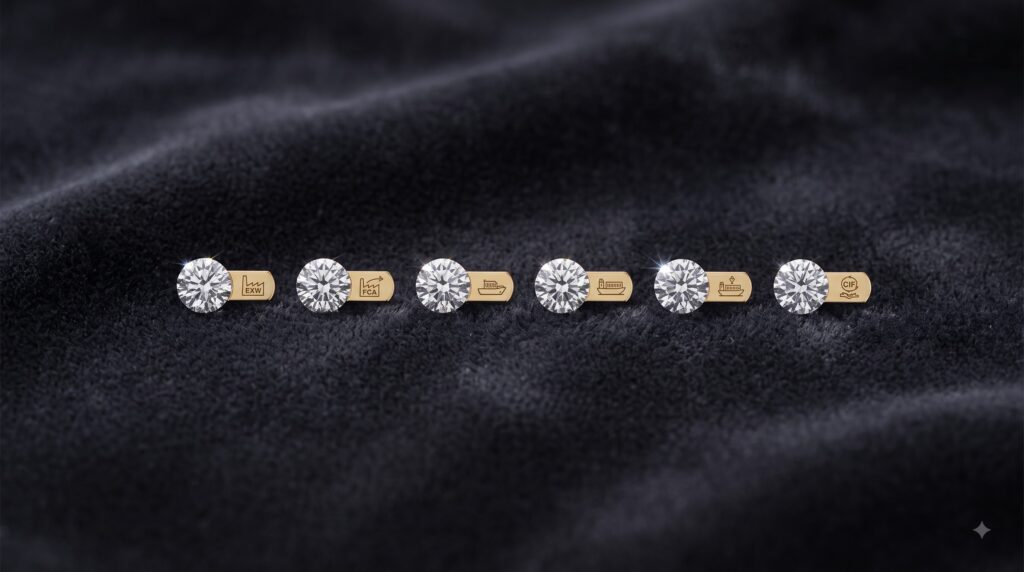
Most exporters don’t stick to one term across every client. A first-time buyer and a decade-long wholesale partner will almost never get the same shipping arrangement, and that’s by design.
FOB (Free on Board)
FOB shows up more than any other term in diamond contracts. The seller clears the export paperwork and loads the goods, then the buyer handles freight and insurance from there. It works well for importers who already have a freight forwarder they trust. Most long-running relationships in international diamond trade Incoterms eventually settle into FOB once both sides know each other.
CIF (Cost, Insurance, and Freight)
Under CIF, the seller books the freight and covers minimum insurance to the named port. Simpler for buyers who don’t want to juggle three or four vendors just to get a parcel of loose stones across an ocean. Smaller retailers lean toward this one a lot, especially the first time they import.
EXW (Ex Works)
EXW puts almost everything on the buyer, right down to picking the goods up from the seller’s own facility. Bigger manufacturers with their own trucking and freight contracts like this because it strips out any markup the seller might tack on for arranging transport.
Then there are the Incoterms that receive less attention but still play an important role in international diamond trade. While most buyers compare fob vs cif diamond export options first, understanding these alternatives can help businesses choose shipping terms that better match their logistics strategy and risk tolerance.
CFR (Cost and Freight) is essentially CIF without the insurance, making it a practical choice for buyers who already have their own cargo insurance in place. DAP (Delivered at Place) places almost all transportation responsibility on the seller until the goods reach the buyer’s specified destination, which many retail brands prefer because it creates a more predictable delivery experience. DDP (Delivered Duty Paid) goes a step further by requiring the seller to cover import duties and taxes as well, making it a popular option for first-time importers who want to avoid unexpected charges.
FCA (Free Carrier) is particularly well suited to air freight shipments, which are common for small, high-value parcels of fancy shape diamonds moving between major trading hubs. CPT (Carriage Paid To) is similar to CFR in that the seller pays for transportation to the agreed destination, but unlike CIF, there is no obligation for the seller to provide cargo insurance. Knowing how these terms compare alongside fob vs cif diamond export arrangements allows buyers and suppliers to select the Incoterm that best fits their operational needs, shipment value, and preferred level of logistics control.
Honestly, the right term has less to do with the diamond itself and more to do with how much logistics muscle the buyer already has.
FOB vs CIF Diamond Export, The Real Difference
| Factor | FOB | CIF |
|---|---|---|
| Who pays freight | Buyer | Seller |
| Who pays insurance | Buyer | Seller (minimum coverage) |
| Risk transfer point | At port of loading | At port of loading (despite seller paying freight) |
| Buyer’s control over carrier | High | Low |
| Best suited for | Experienced importers with freight contacts | Newer buyers wanting bundled pricing |
Here’s the part that trips people up: even under CIF, risk shifts to the buyer once the goods are loaded, not once they arrive. This is one of the biggest misconceptions when comparing fob vs cif diamond export terms. The seller is paying for freight and basic coverage as a service, not signing up to be liable for the whole trip. A lot of buyers assume CIF means “the seller’s responsible until it lands on my desk.” That assumption alone causes more insurance headaches in diamond export shipping terms than anything else I’ve seen.
To be fair, CIF still saves a buyer real time. Not having to chase down a freight forwarder or negotiate cargo insurance on your own is worth something. But you give up visibility into how the shipment is actually handled along the way. Is that trade worth it? For someone shipping their first international parcel, usually yes. Understanding this balance is essential when deciding between fob vs cif diamond export arrangements, especially for buyers importing high-value diamond shipments.
How to Choose the Right Incoterm for Your Business
- Match it to how much logistics experience you actually have. Got a freight forwarder you trust? FOB probably saves you money. New to this? CIF’s bundled pricing keeps early mistakes cheap.
- Look at your warehouse and customs setup. A retailer with an in-house customs broker handles FOB fine. One without that support usually shouldn’t try.
- Think about order size. Small, high-value parcels of fancy shape diamonds often move better through FCA or air freight than a full sea freight container.
- Actually compare the numbers. CIF quotes can look pricier on paper but sometimes beat what you’d pay negotiating freight and insurance separately under FOB. Ask for an itemized breakdown before assuming either way.
- Match the term to why you’re shipping in the first place. One engagement ring stone has a totally different risk profile than a recurring monthly wholesale order for a retail chain.
- Factor in whether you’re buying lab-grown diamonds. If you’re importing IGI or GIA certified lab-grown diamonds, don’t assume the same Incoterm clarity automatically covers certification questions too. Shipping terms and certification are handled separately in most contracts, and treating them as one thing is a common, avoidable mistake.
Before you finalize your choice, ask your supplier point blank which party holds insurance liability at each leg of the trip. Get the answer in writing on the purchase order. A verbal promise means nothing when a claim actually needs filing.
What B2B Buyers and Diamond Manufacturers Should Know

Bulk buyers deal with a different set of headaches than someone importing a single stone. Freight consolidation, consistent cut grading across a whole parcel, certification standards, and insurance requirements all interact with the agreed shipping terms. When comparing fob vs cif diamond export arrangements, these factors can significantly affect costs, risk allocation, and supply chain efficiency, yet they rarely appear clearly in a basic price quote.
Most B2B contracts in international diamond trade Incoterms default to FOB, mainly because established importers already run tightly managed freight lanes and prefer to control their own insurance and logistics costs. Newer business relationships often begin with CIF instead, giving buyers a simpler shipping process until both parties build enough trust to transition to FOB. Understanding fob vs cif diamond export practices helps businesses choose the arrangement that best matches their logistics experience and purchasing volume.
Manufacturers like Lepdo Diamonds, working out of Surat’s diamond manufacturing base, typically supply retailers and traders across the USA, UK, and UAE using clearly defined shipping terms alongside IGI and GIA certification for every parcel. This level of transparency becomes even more valuable when evaluating fob vs cif diamond export options, as even a small misunderstanding over freight responsibilities can affect dozens of diamonds in a single shipment rather than just one stone.
In my experience negotiating export contracts, the mistake I see most often from bulk buyers is assuming Rapaport-based pricing already bakes in freight costs. It almost never does. That gap needs sorting out before the invoice stage, not after the container lands on your dock. If you’re sourcing unique cut diamonds in volume, confirm freight terms line by line rather than assuming a default applies across every fancy cut diamond manufacturer relationship you have.
Diamond Export and Import Trends in the USA (2026 to 2027)
American buyers are pushing harder for itemized shipping quotes instead of bundled numbers. Retailers want freight, insurance, and duty broken out separately, and a chunk of that comes from growing interest in traceable, certified sourcing across Diamond Trading Centers around the world.
Interest in lab-grown diamonds has also pulled more first-time importers into direct manufacturer relationships instead of relying on multiple layers of middlemen, which naturally puts greater focus on fob vs cif diamond export terms than ever before. As more businesses source directly from manufacturers, understanding who is responsible for freight, insurance, customs, and risk at each stage of the shipment has become an essential part of successful international diamond trade.
A recent industry pricing report noted that lab-grown diamond wholesale prices continued to decline through 2025, encouraging a wave of new US buyers to import directly from manufacturers rather than distributors. Many of these first-time importers found themselves negotiating fob vs cif diamond export terms for the first time, making it increasingly important to understand how each Incoterm affects shipping costs, insurance responsibilities, and overall supply chain risk before placing an international order.
Smaller independent jewelers are asking for DDP more often specifically to dodge surprise customs bills, even knowing it costs a bit more upfront. Predictability over pure savings, that’s the pattern showing up in how American buyers approach Diamond Jewelry Trends conversations lately. Fancy cut diamond jewellery especially is seeing more direct-to-retailer shipping, cutting out distribution layers that used to blur who was responsible for what.
That shift has changed the questions retailers bring to their manufacturing partners too. Instead of just asking for a total landed cost, more buyers now ask their Diamond Jewelry Manufacturers Surat contacts to break out each shipping line item so budgets can be planned across a full season rather than guessed at order by order.
How to Evaluate Risk in FOB vs CIF Diamond Shipments
When I assess a new shipping contract, the first thing I check is whether the insurance figure actually matches the declared value of the parcel, not some rounded, generic minimum. This is especially important when comparing fob vs cif diamond export terms, because responsibility for arranging insurance differs, but inadequate coverage can affect the buyer either way. Undervalued insurance is one of the most overlooked risks in diamond export, and it rarely gets noticed until something has already gone wrong.
Quality checks on arrival matter just as much as the shipping terms themselves. Whether you’re importing under FOB or CIF, confirm that brilliance, fire, and scintillation match the paperwork. Check pavilion depth, table percentage, and length-to-width ratio against the certified diamonds report too. A stone that looks even slightly different from its certificate under a loupe is worth pausing on before final payment clears. Understanding fob vs cif diamond export responsibilities helps ensure that inspection and claim procedures are handled by the correct party if an issue is discovered.
- Cross-check the insured value against the actual invoice value, not an estimate someone rounded up.
- Confirm whose name is actually listed on the marine insurance certificate.
- Verify GIA or IGI certification numbers against the physical stones once they arrive.
- Ask for photos or video of the parcel before it gets sealed for shipment.
- Insist on a named customs broker at both ends, especially under CIF terms.
Most quality disputes I’ve seen come down to a communication gap rather than an actual grading mistake. Whether you’re dealing with fob vs cif diamond export arrangements, closing that gap before the shipment even leaves the port saves both buyers and sellers significant time, cost, and frustration later.
Conclusion
Picking between fob vs cif diamond export terms really comes down to three things: how much control you want over freight, how much logistics experience your team already has, and how much risk you’re willing to hold before the shipment even leaves port. Neither option is universally better. Experienced importers with established freight partners often gain greater flexibility and cost control under FOB, while newer buyers frequently find CIF’s bundled shipping and insurance services worth the additional expense until they’ve developed their own logistics network. Understanding fob vs cif diamond export responsibilities before signing a contract helps prevent costly misunderstandings later.
Most buyers only take Incoterms seriously after something has already gone wrong. There’s no reason to wait for that lesson. A straightforward conversation with your supplier about who assumes risk, arranges insurance, and manages freight at every stage of the shipment can save weeks of delays and disputes later. Whether you choose fob vs cif diamond export, having every responsibility clearly documented before the parcel leaves port is one of the simplest ways to protect both the buyer and the seller.
Retailers sourcing certified lab-grown diamonds can explore Lepdo Diamonds current stock and ask directly which Incoterms apply to their region, and how those terms line up with GIA and IGI paperwork on each parcel. Whether you’re importing a single engagement ring stone or running monthly bulk orders for a retail chain, the same rule applies: know exactly where the seller’s responsibility ends and yours begins, and put it in writing before anything ships.
Get the shipping terms right and the rest of your import process gets a lot easier to manage. Lepdo Diamonds remains a solid place to start that conversation, and a good starting point for any buyer who wants clarity before commitment rather than after.
Frequently Asked Questions About FOB vs CIF Diamond Export
1. What is FOB vs CIF diamond export?
FOB vs CIF diamond export refers to two Incoterms deciding who pays freight and insurance during shipping. FOB shifts these costs to the buyer after loading, while CIF has the seller cover them to the destination port, though risk still transfers earlier than delivery.
2. Is FOB cheaper than CIF for diamond shipments?
FOB is often cheaper for experienced buyers who already have freight contacts, since they can negotiate rates directly instead of paying a bundled seller markup. CIF can work out cheaper for smaller, occasional buyers without existing freight relationships.
3. Which Incoterm looks most cost-effective for small importers?
CIF usually looks most cost-effective for small or first-time importers because it bundles freight, insurance, and paperwork into a single predictable quote, cutting down the chance of unexpected charges showing up later.
4. Does FOB or CIF affect GIA certification handling?
Neither term affects certification itself. GIA or IGI paperwork travels with the physical stone no matter which shipping term applies, though it’s still worth confirming certificate numbers match on arrival under either arrangement.
5. What is the biggest quality risk with FOB vs CIF diamond export?
The biggest risk is assuming insurance coverage is broader than it really is. Plenty of CIF contracts include only a bare minimum, which leaves buyers underprotected if a shipment gets lost, delayed, or damaged along the way.
6. Are lab-grown diamonds shipped under the same Incoterms as natural stones?
Yes, lab-grown diamonds follow the exact same Incoterm structure as natural stones. Shipping terms are tied to the trade agreement, not the stone’s origin, though buyers should still confirm IGI or GIA certification travels correctly with lab-grown parcels.
7. Which Incoterm is best for a first engagement ring diamond import?
CIF or DDP usually work best for a single engagement ring stone, since both reduce a buyer’s exposure to unfamiliar customs steps and insurance paperwork on a one-time, high-value purchase.
8. How do I choose a reliable diamond export supplier or manufacturer?
Look for suppliers who put Incoterm agreements in writing and treat GIA or IGI certification as standard, not an upsell. Reliable manufacturers explain shipping responsibility upfront instead of leaving buyers to decode vague contract language after the deal’s already signed.