
Introduction: The Glittering Promise That Can Cost You Thousands
You found the perfect diamond online. The listing says it’s EGL certified, the price looks incredible, thousands less than comparable stones, and the photos are stunning. Your heart races. You click “Add to Cart.”
But before you enter your credit card number, there’s something the listing probably won’t tell you: that EGL certified diamond graded as a G/VS1 might realistically be an I/VS2, or even lower, if evaluated by the industry’s most trusted lab. That price gap? It exists for a reason.
Buying EGL certified diamonds online isn’t inherently dangerous, but it requires a level of knowledge that most consumers, and even some retailers, simply don’t have. Whether you’re an end consumer shopping for an engagement ring, a jeweler sourcing inventory, or a wholesaler evaluating loose stones, understanding exactly what EGL certification means (and doesn’t mean) is the difference between a great deal and an expensive regret.
In short:
- EGL certified diamonds are real, natural diamonds, but the grading standards differ significantly from GIA.
- Buying EGL diamonds online carries unique risks that can be managed with the right knowledge.
- Knowing what to look for protects both your wallet and your trust in the seller.
What Is an EGL Certified Diamond?
EGL certified diamonds are natural diamonds that have been graded and issued a certificate by the European Gemological Laboratory (EGL), an independent gemological organization with branches in multiple countries including the USA, Israel, South Africa, and Europe. The certificate documents a diamond’s 4Cs, Cut, Color, Clarity, and Carat weight, along with additional characteristics such as fluorescence and polish.
Unlike GIA (Gemological Institute of America), EGL is not a single unified lab. Different EGL branches operate independently and apply their own grading standards, which leads to significant inconsistency across certificates.
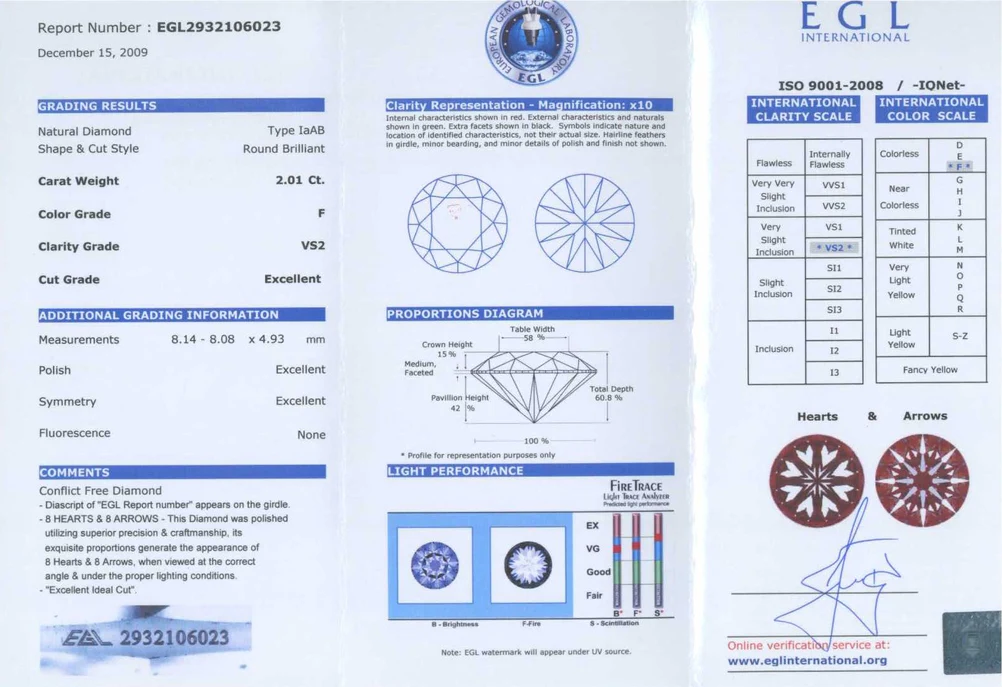
Understanding EGL: The Lab Behind the Certificate
A Brief History of EGL
EGL was founded in 1974 in Antwerp, Belgium, and expanded globally through independently operated franchise-style branches. EGL USA, EGL International (Israel), and EGL Europe are among the most commonly referenced branches, but they are not the same entity, and they do not share uniform grading protocols.
This distinction is critically important for buyers. An EGL USA certificate and an EGL Israel certificate may grade the same diamond differently, sometimes by several grades.
Why EGL Certificates Are Still Widely Used
Despite the grading inconsistencies, EGL certificates remain popular in the diamond trade for a specific reason: price positioning. Sellers can list a diamond at a color or clarity grade that appears higher than what GIA would assign, allowing the stone to be priced at a discount relative to “equivalent” GIA-graded diamonds.
For manufacturers, wholesalers, and certain retailers, this creates a viable market for diamonds that are legitimately beautiful but may not meet the strict standards of GIA grading. For consumers, it requires careful navigation.
In short:
- EGL is a legitimate but non-unified lab with branches that grade independently.
- EGL certificates are real documents, but grading standards are less stringent than GIA.
- The price advantage of EGL diamonds is real, but it comes with a knowledge requirement.
What Is the Difference Between GIA and EGL Certified Diamonds?
This is one of the most searched questions in the diamond industry, and for good reason. Understanding the difference between GIA and EGL certified diamonds is essential before any purchase.
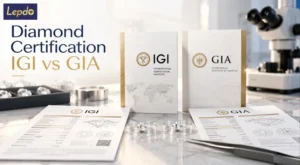
GIA vs EGL: Grading Standards
The GIA (Gemological Institute of America) is widely regarded as the gold standard of diamond grading. Founded in 1931, GIA developed the 4Cs grading system that the entire industry now uses. GIA is a nonprofit, meaning it has no financial incentive to inflate grades.
EGL, on the other hand, is a for-profit enterprise. Multiple studies and industry analyses have documented that EGL certificates, particularly from international branches, tend to grade diamonds 1 to 3 color grades more leniently, and 1 to 2 clarity grades more leniently, than GIA. On a larger stone, this can translate to a price difference of 20% to 40%.
What This Means in Practice
Suppose you’re comparing two round brilliant diamonds:
- Diamond A: GIA certified, G color, VS1 clarity, 1.00 carat
- Diamond B: EGL certified, G color, VS1 clarity, 1.00 carat
Diamond B may look similar on paper, but when evaluated by an independent GIA appraiser, it could come back as I color, VS2 clarity. The “discount” on Diamond B suddenly makes a lot more sense.
This is not fraud in a legal sense. EGL grading is not illegal. But consumers who don’t understand the grading gap can overpay for a diamond that doesn’t match the quality they expected.
The Key Differences at a Glance
- GIA uses blind, multi-grader consensus; EGL grading may vary by individual grader.
- GIA reports are universally accepted by major retailers, estate buyers, and insurance appraisers.
- EGL reports may not be accepted for resale or insurance at face value.
- EGL grades often skew more favorable; GIA grades are considered more conservative and accurate.
| Factor | GIA Certified | EGL Certified |
|---|---|---|
| Industry Trust | Gold Standard | Moderate / Variable |
| Grading Consistency | Highly consistent across labs | Varies by EGL branch (USA, Israel, Europe) |
| Color Grade Accuracy | Stringent; widely accepted | Often 1–3 grades more lenient |
| Clarity Grade Accuracy | Stringent; widely accepted | Can be 1–2 grades more lenient |
| Price Premium | Higher resale value | Lower upfront price |
| Resale Value | Strong; universally accepted | Weaker; questioned by many dealers |
| Best For | Investment, high-value purchases | Budget-conscious buyers; understand the risk |
| Accepted by Major Retailers | Yes — universally | Rarely accepted |
| Online Buying Safety | Lower risk; grade is reliable | Higher risk; verify independently |
How to Evaluate EGL Certified Diamonds Before Buying
Step 1: Identify Which EGL Branch Issued the Certificate
Not all EGL branches are created equal. EGL USA is generally considered more reliable than EGL International or EGL Europe. Always check the certificate header carefully, the issuing branch matters enormously.
Step 2: Apply a “Grading Discount” When Comparing
If you’re comparing an EGL diamond to a GIA diamond, apply a realistic grading adjustment:
- Subtract 1–2 color grades from EGL color rating.
- Subtract 1 clarity grade from EGL clarity rating.
- Then compare the adjusted stone to the GIA equivalent at the same price.
If the EGL diamond, after adjustment, still offers better value, it may be a legitimate deal.
Step 3: Request an Independent Appraisal
Before completing any high-value EGL diamond purchase online, request or arrange an independent appraisal from a GIA-certified gemologist. Many reputable online sellers will accommodate this request, and some offer returns within a window that allows time for appraisal.
Step 4: Examine the Actual Diamond, Not Just the Certificate
A certificate is a document, not a guarantee of beauty. For fancy shape diamonds and unique cut diamonds, the visual appearance matters enormously. Factors like light performance, symmetry, and brilliance aren’t fully captured in any certificate.
Browse high-quality diamond options with transparent imaging at Lepdo Diamonds’ fancy shape diamonds collection, where stone-specific detail goes beyond the grade on paper.
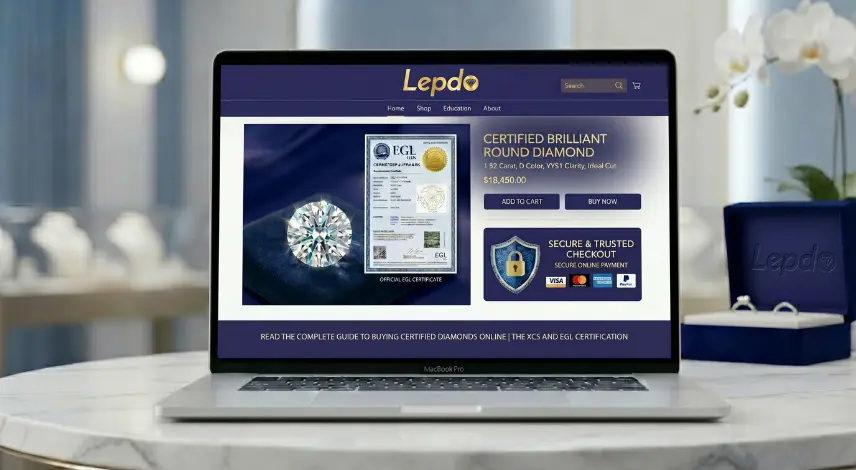
Step 5: Verify the Certificate Number Online
EGL certificates can be verified through EGL’s online database. Always cross-reference the certificate number shown in the listing with the official database. Discrepancies in grade, measurements, or carat weight are red flags.
In short:
- Identify the EGL branch, apply a realistic grade adjustment, and verify the certificate number.
- Always request an independent appraisal before finalizing a high-value EGL diamond purchase.
- Visual beauty matters, don’t rely on the certificate alone for fancy shapes and unique cuts.
EGL Certified Diamonds for Sale: Where to Buy Safely Online
Reputable Online Diamond Marketplaces
The USA market has several established platforms where EGL certified loose diamonds are listed. When shopping on these platforms:
- Look for sellers with verified reviews and a track record of accurate representation.
- Prioritize listings that include high-resolution images, 360-degree video, and detailed proportions.
- Choose sellers who clearly state the EGL branch on all certificate documentation.
- Look for return policies of at least 30 days.
B2B Buyers: Sourcing EGL Loose Diamonds as a Wholesaler or Retailer
For jewelry brands, wholesalers, and retailers sourcing EGL certified loose diamonds in volume:
- Build direct relationships with diamond manufacturers who can provide stone-specific documentation.
- Request GIA comparison appraisals on sample lots before committing to large orders.
- Ensure your pricing to end consumers reflects the grade gap honestly, selling EGL stones as equivalent to GIA stones creates liability and erodes brand trust.
- Consider offering both GIA and EGL options with transparent consumer education on the difference.
If you’re sourcing beyond traditional cuts, explore unique cut diamonds, a growing category among buyers who prioritize character and personality over strict grading metrics, where EGL stones can offer genuine value.
B2C Buyers: Protecting Yourself as an End Consumer
For individual buyers purchasing an engagement ring, anniversary gift, or investment stone:
- Never purchase an EGL diamond online without understanding the grading gap.
- Ask the seller directly: “What would this diamond grade at GIA?” Reputable sellers will answer honestly.
- Prioritize diamonds with strong light performance, even an I-color diamond can be beautiful if cut to maximize brilliance.
- For stones above 1 carat, the grading risk increases. Consider GIA certification for higher-carat purchases.
- For stones under 0.75 carat, EGL diamonds can offer genuine value when purchased with full knowledge.
EGL Certified Loose Diamonds: The Categories That Make Sense
Not every diamond purchase is an investment decision. In the following scenarios, EGL certified loose diamonds can offer real value to both B2B and B2C buyers:
Melee and Small Accent Stones
For melee diamonds (under 0.18 carat) used in pavé settings, halos, or channel bands, EGL or even non-certified stones are standard industry practice. At this size, certification costs would exceed practical value.
Fashion and Trend-Driven Jewelry
For fashion jewelry with a shorter lifecycle, pieces intended for seasonal collections rather than heirloom significance, EGL diamonds provide an affordable, legitimate option. Jewelry brands and retailers operating in the accessible luxury segment frequently source EGL stones for this category.
Budget Engagement Rings with Transparent Communication
A buyer on a strict budget who understands the grading difference, has seen the actual stone in high resolution or in person, and has received an honest adjusted-grade disclosure from the seller, this buyer can make a sound, informed decision with an EGL certified diamond.
Fancy Shape Diamonds
Fancy shapes, including oval, pear, cushion, marquise, and emerald cuts, are evaluated substantially on visual characteristics that certificates don’t fully capture. A well-cut EGL oval diamond with excellent light performance can offer tremendous value. The eye-clean appearance and brilliance of the actual stone matters more than the grade on paper.
In short:
- EGL diamonds make practical sense for melee, fashion jewelry, budget-conscious purchases, and fancy shapes.
- In each case, transparency and informed decision-making are non-negotiable.
- The certificate is a starting point, not the final word on quality or value.
Pricing Guide: What Do EGL Certified Diamonds Actually Cost?
The EGL Price Discount: How It Works
EGL certified diamonds typically trade at a 10% to 30% discount relative to GIA-certified diamonds of the same stated grade, depending on:
- Stone size: Larger stones carry a steeper discount because the grading risk is higher.
- EGL branch: EGL USA-graded stones trade closer to GIA prices than EGL International stones.
- Shape: Round brilliants are scrutinized more heavily; fancy shapes have more flexibility.
- Actual quality: A beautifully cut, eye-clean EGL stone may command a smaller discount than a poorly cut stone of the same grade.
Sample Price Ranges (USA Market, 2024 – 2025 Estimates)
| Stone | GIA Price (approx.) | EGL Price (approx.) | Discount |
|---|---|---|---|
| 1.00ct Round, G/VS1 | $6,000–$7,500 | $3,800–$5,200 | 20–35% |
| 1.50ct Round, F/VS2 | $10,000–$13,000 | $6,500–$9,000 | 25–35% |
| 2.00ct Oval, H/SI1 | $14,000–$18,000 | $9,000–$12,500 | 25–40% |
| 0.50ct Fancy Shape | $1,200–$2,000 | $800–$1,500 | 15–25% |
Note: Prices vary based on seller, market conditions, and specific stone characteristics.
Why Choosing the Right Supplier Matters
Whether you’re a manufacturer, retailer, wholesaler, or end consumer, the quality of your diamond supplier determines everything, not just the stone you receive, but the trust you build with your customers and the value you protect in your portfolio.
Quality Consistency
A reliable supplier provides consistent, accurate representation of every diamond, EGL certified or otherwise. They disclose the issuing EGL branch, provide real imaging, and stand behind the stones they sell.
Pricing Advantage
Buying directly from manufacturers or established wholesalers eliminates middleman markups. For B2B buyers, this means better margins. For consumers, it means more diamond for your budget.
Customization
The right supplier can accommodate specific requirements, shapes, sizes, carat ranges, grade parameters, and certificate preferences. Whether you need GIA for a bridal collection or EGL for a fashion line, a supplier with deep inventory gives you options.
Trust and Transparency
In a category where certification inconsistency is a known issue, the supplier’s reputation is your most important protection. Look for suppliers who proactively explain EGL grading differences, welcome independent appraisals, and offer clear return policies. These are the signs of a business that prioritizes long-term relationships over short-term sales.
Conclusion: Informed Buying Is Smart Buying
EGL certified diamonds occupy a real, legitimate, and sizable place in the global diamond market. They are not a scam, but they are a category that rewards knowledge and punishes ignorance.
For end consumers, the key is simple: understand the grading gap, evaluate the actual stone, and buy from sellers who communicate transparently. For B2B buyers, manufacturers, retailers, and wholesalers, EGL diamonds represent a pricing opportunity when sourced and sold with integrity.
The difference between a bad EGL diamond experience and a great one almost always comes down to the supplier. A manufacturer who understands both the product and the customer’s needs will always deliver better outcomes than a listing optimized only to look good on paper.
As fancy shape diamonds and unique cut diamonds grow in popularity, categories where visual performance often matters more than strict grading, EGL certified stones will continue to hold relevance for buyers who know how to evaluate them.
If you are looking for high-quality EGL certified diamonds, GIA certified alternatives, or expert guidance on sourcing the right stones for your needs, contact Lepdo Diamonds for consultation or pricing. Our team works with manufacturers, retailers, wholesalers, and individual buyers across the USA to deliver transparent, quality-first diamond sourcing.
FAQ: EGL Certified Diamonds
1. What is an EGL certified diamond?
An EGL certified diamond is a natural diamond that has been graded by the European Gemological Laboratory and issued a certificate documenting its 4Cs. The lab operates through multiple independent branches, and grading standards vary significantly between them.
2. Are EGL certified diamonds real diamonds?
Yes, EGL certified diamonds are real, natural diamonds. EGL certification does not relate to the authenticity of the stone, it relates only to the grading assessment, which may differ from GIA standards.
3. What is the difference between GIA and EGL certified diamonds?
GIA is the industry’s most trusted, non-profit grading lab with strict, consistent standards. EGL is a for-profit lab network with variable standards across branches. EGL grades are often 1–3 color grades and 1–2 clarity grades more lenient than GIA, resulting in lower pricing but also lower grading reliability.
4. Is it safe to buy EGL certified diamonds online?
It can be safe if you apply the right precautions: verify the issuing EGL branch, apply a grade adjustment when comparing prices, request high-resolution imaging, arrange an independent appraisal for high-value purchases, and buy from reputable sellers with transparent return policies.
5. Why are EGL certified diamonds cheaper than GIA diamonds?
The price difference reflects the grading gap. Because EGL grades are often more lenient than GIA, the stated grade on an EGL certificate may not reflect GIA-equivalent quality. The market discounts EGL stones accordingly.
6. Are EGL certified diamonds a good investment?
Generally, GIA certified diamonds hold better resale value because they are universally accepted by estate buyers, appraisers, and major retailers. EGL diamonds can offer good value for personal purchases or fashion jewelry, but they carry more resale risk, especially for high-carat stones.
7. Can I get an EGL diamond re-certified by GIA?
Yes. Any natural diamond can be submitted to GIA for grading regardless of prior certifications. Many buyers do exactly this after purchasing an EGL stone, to establish its GIA-equivalent grade for insurance or resale purposes.
8. Which EGL branch is the most reliable?
EGL USA is generally regarded as the most consistent and reliable EGL branch within the industry. EGL International (Israel) grades are often considered the most lenient. Always confirm which branch issued the certificate before evaluating a stone.