Why Smart Retailers Are Avoiding the Lab Diamond Price War in 2026
 by lepdogroup@gmail.com
1 comment
by lepdogroup@gmail.com
1 comment
A lab grown diamond price war happens when retailers compete mainly on discounts instead of quality or service, eroding margins industry-wide. Smart sellers avoid this trap because deep discounting damages long-term value perception. Lepdo Diamonds supplies IGI and GIA certified stones that support a premium pricing strategy instead of a race to the bottom.
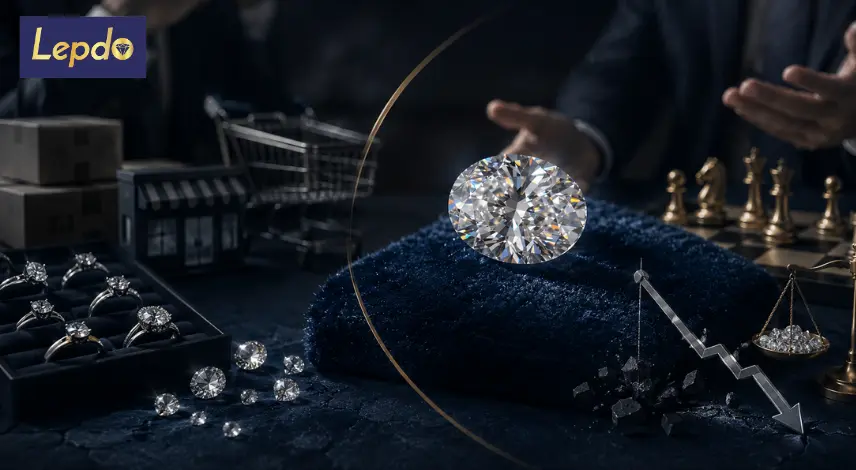
That drop is the visible edge of the lab grown diamond price war, and it is exactly what smart sellers are stepping away from in 2026. The lab grown diamond price war is no longer just about cheaper inventory. It is about whether a retailer can protect profit margins while competitors continue racing toward the lowest possible price. Here is what separates a retailer who survives this shift from one who gets caught in it: a clear lab diamond premium pricing strategy built around certification, service, and design rather than the lowest number on a price tag.
This article breaks down why chasing rock-bottom prices during the lab grown diamond price war is a losing game, and what a smarter approach looks like for both B2B buyers and everyday engagement ring shoppers. You will see how GIA and IGI certification standards, the 4Cs, and honest value perception protect margins even as raw material costs keep falling. Retailers who understand the lab grown diamond price war now will be well ahead of competitors still stuck discounting in 2027.
Most buyers assume the cheapest listing wins every time, but that is rarely how repeat business actually works in fine jewelry. A shopper who feels confident about a diamond’s grading, certification, and provenance tends to return, refer friends, and trust a store’s next recommendation. A shopper who was simply won on price tends to leave the moment a lower number appears somewhere else. That is why the retailers succeeding during the lab grown diamond price war are investing in trust, education, customization, and long-term customer relationships instead of relying on endless discounting.
What Is the Lab Grown Diamond Price War?
The lab grown diamond price war describes a market condition where retailers and wholesalers keep undercutting each other’s prices until profit margins nearly disappear. It started as production capacity from CVD and HPHT growers expanded faster than consumer demand, pushing wholesale costs down and tempting sellers to compete on price alone instead of value. Most buyers assume lower prices always mean a better deal, but that assumption is exactly what this pricing war exploits. It also shapes consumer expectations around Lab Diamond Resale Value, since aggressive discounting can influence how buyers perceive long-term value and market stability.
The pattern tends to snowball. One retailer drops prices to move inventory, competitors match it within days, and soon an entire regional market is selling near cost just to stay visible in search results and marketplace listings. Manufacturers feel the pressure too, since retail partners start demanding lower wholesale rates to protect their own thinning margins.
Over time, constant discounting can weaken pricing power and affect customer confidence in Lab Diamond Resale Value, making it even more important for retailers to focus on quality, certification, branding, and service rather than competing only on price. Understanding this cycle is the first step toward building a lab diamond pricing strategy retailers can actually sustain past a single selling season.
Quick Info Box
- Definition: A pricing environment where retailers repeatedly undercut each other on lab grown diamonds until margins nearly vanish
- Key Types or Varieties: Deep discounting, flash sales, loss-leader pricing, blind price matching
- Best For: Retailers who want to understand the risk before it hits their bottom line
- Key Difference or Advantage: A premium pricing strategy protects long-term profit instead of chasing short-term volume
Retailers researching current numbers can check the Lab Diamond Price glossary entry for a clearer read on how wholesale figures actually move.
Different Pricing Strategies Retailers Are Choosing in 2026
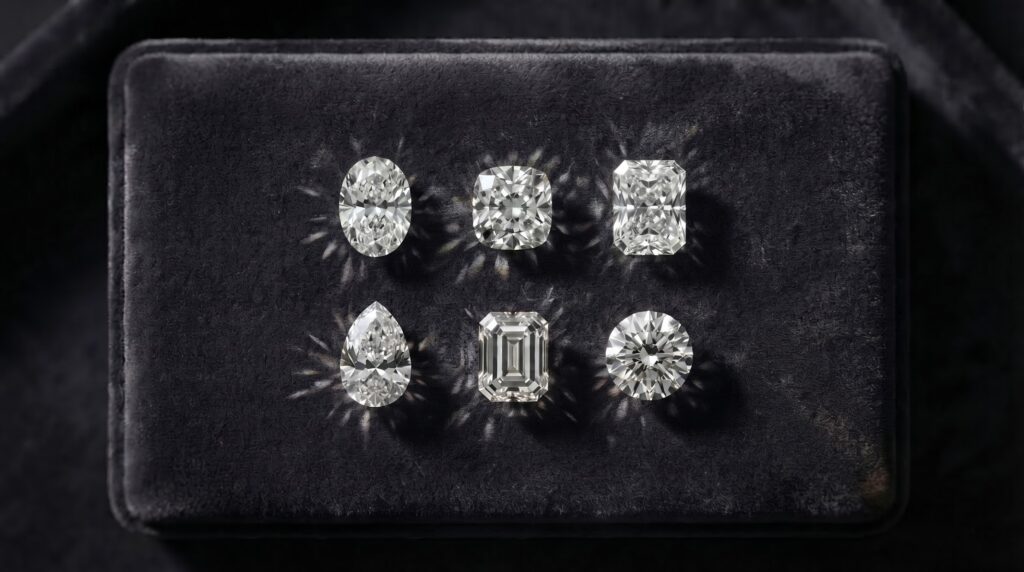
Not every retailer is reacting to falling costs the same way. Here is what the market actually looks like right now, broken into the strategies stores are using and who each one tends to suit.
The Deep Discount Race
This is the classic lab grown diamond price war move: slashing margins to match or beat every competitor’s listed price. It works short-term for clearance inventory but rarely builds a sustainable business, and it trains customers to wait for the next markdown instead of buying now.
Premium Positioning
Retailers using this model lean into IGI and GIA certification, transparent grading reports, and personalized service instead of competing on price. It suits stores targeting engagement ring buyers who care about resale confidence and long-term value, not just the sticker number.
Certification-Tier Pricing
Here, pricing scales with clarity grade, color, and cut quality rather than a flat discount across the board. This rewards buyers who want top brilliance and fire without punishing the retailer’s margin on entry-level stones. It is also one of the clearest ways retailers can avoid getting pulled into the lab grown diamond price war, because the focus stays on measurable quality differences instead of competing only on the lowest price.
Beyond these three, several other approaches are common. Loss-leader marketing uses one heavily discounted shape to pull in foot traffic, then relies on upsells to recover margin. Blind price matching simply mirrors whatever a competitor lists, which is reactive rather than strategic, and it leaves no room for a retailer to control their own positioning during the lab grown diamond price war.
Value-added bundling wraps in appraisal services, warranty coverage, or custom settings so the price feels justified beyond the stone itself, which is often a more sustainable answer to how to price lab grown diamonds retail than a straight discount ever could be. Retailers that rely on bundling and differentiated service are generally better positioned to survive the lab grown diamond price war than those competing on price alone.
Story-driven pricing leans on sourcing transparency and design narrative, something a Diamond Retailer can use to differentiate inventory that otherwise looks identical to a shopper comparing tabs online. Trade-loyalty pricing rewards repeat B2B accounts with tiered rates instead of public discounts, which keeps retail pricing intact while still rewarding volume buyers of lab grown diamonds.
Most buyers do not actually compare every store in a market before deciding where to purchase. They compare the two or three sellers who earned enough trust to make the shortlist, which means a strategy built on visible credibility often outperforms one built purely on being the cheapest option in a search result.
Lab Grown Diamond Price War vs Premium Positioning: The Real Difference
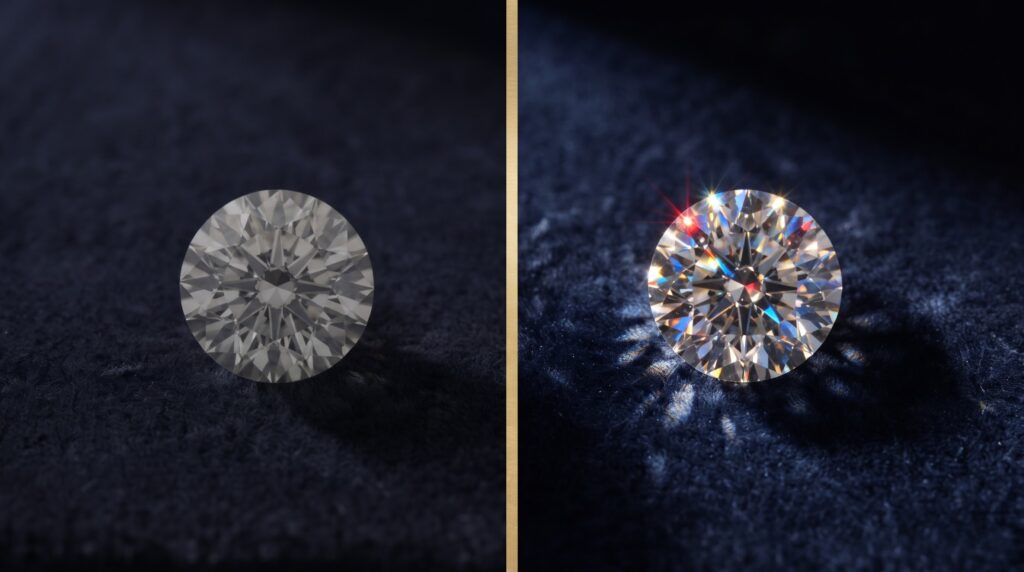
| Factor | Price War Approach | Premium Positioning |
|---|---|---|
| Margin Stability | Thin and unpredictable | Consistent and protected |
| Customer Trust | Built on discounts, easily lost | Built on certification and service |
| Repeat Business | Low, customers chase the next sale | Higher, driven by loyalty |
| Brand Perception | Commodity seller | Trusted expert source |
| Long-Term Resale Confidence | Weak, tied to falling prices | Stronger, tied to grading and quality |
The truth is, a store can win a single sale by discounting and still lose the customer relationship. Lab diamond value perception 2026 depends less on the lowest price and more on whether a buyer trusts the grading, the seller, and the story behind the stone. Retailers who avoid discounting lab grown diamonds as their main lever tend to keep healthier margins even as lab grown diamond price benchmarks continue shifting industry-wide.
Is a slightly higher price tag really a hard sell when the buyer walks away with a graded, certified stone and a seller who stands behind it? For most engagement ring shoppers, the answer is no, especially once they understand what the lab grown diamond price war actually costs them in service and support down the line.
How to Choose the Right Lab Diamond Pricing Strategy for Your Store
Picking a pricing model is not a one-size-fits-all decision. Consider these six factors before you set your next price list.
- Brand identity first. A store known for craftsmanship should not compete on the same terms as a clearance outlet. Your pricing needs to match how customers already perceive you.
- Store format compatibility. An online-only retailer has different overhead than a boutique showroom, which changes how much margin flexibility actually exists.
- Customer base fit. Bridal buyers respond differently to pricing signals than fashion jewelry shoppers or investment-minded collectors.
- Margin advantage over discounting. Compare your realistic profit on a premium sale against the volume you would need at discount pricing to earn the same revenue.
- Occasion targeting. Engagement rings, everyday fashion pieces, and commercial bulk orders each carry different pricing expectations from the buyer.
- Lab-grown positioning versus natural stones. Knowing how to price lab grown diamonds retail means understanding that shoppers already expect a gap versus natural, so your margin should come from service and certification, not from racing competitors to the bottom. Retailers sourcing lab grown certified inventory have more room to justify a premium because the paperwork backs up the claim.
Before you finalize your choice, ask whether the strategy still works if your biggest competitor cuts prices again next month. If the answer is no, it is not really a strategy, it is just a reaction waiting to happen.
You will want to pay attention to how each of these six factors interacts with the others, since a pricing model that fits your brand but ignores your customer base rarely holds up once the lab grown diamond price war intensifies further this year.
What B2B Buyers and Diamond Manufacturers Should Know
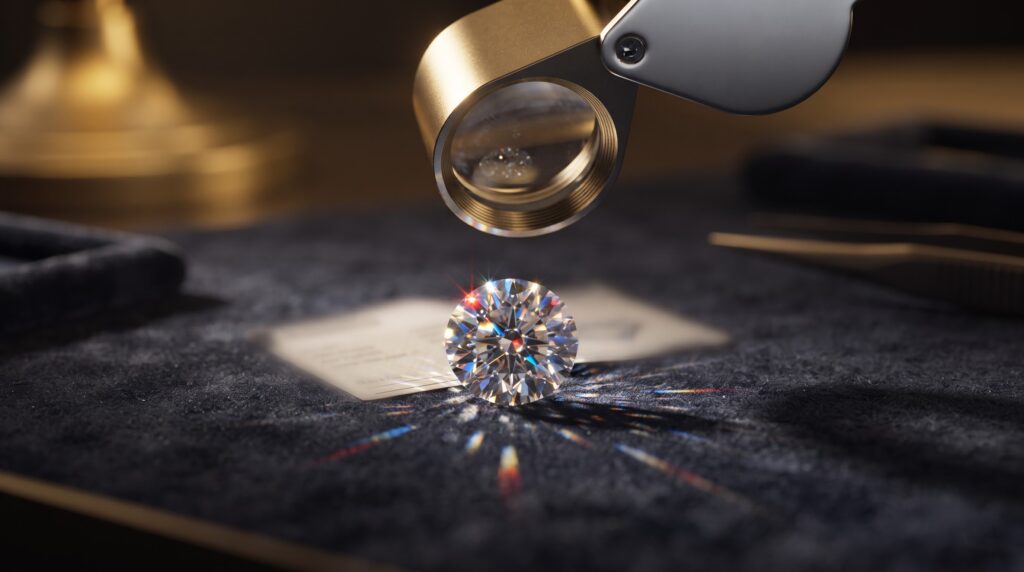
Wholesalers and manufacturers feel the lab grown diamond price war differently than retail storefronts do. Bulk sourcing decisions hinge on cut grading consistency across parcels, since a single inconsistent batch can undercut an entire pricing strategy downstream. IGI and GIA certification standards for lab grown stones are not identical in every lab report format, so buyers need to confirm which grading language their retail partners expect before committing to a purchase order.
Rapaport pricing factors still influence wholesale lab grown numbers indirectly, even though lab-grown pricing has largely decoupled from natural diamond benchmarks. In my experience, manufacturers who publish transparent, tiered pricing based on the 4Cs build far more trust with retail partners than those who negotiate every deal from scratch. Manufacturers like Lepdo Diamond, based in Surat’s diamond manufacturing hub, typically grade CVD and HPHT stones with consistent standards precisely because retail partners need that reliability to hold their own pricing firm.
That said, a reliable lab grown diamond manufacturer relationship matters more than chasing the cheapest quoted rate. Reputable suppliers issue lab diamond certification as standard practice rather than an upsell, which gives retailers the paperwork needed to justify premium pricing to their own customers.
Cut grading consistency deserves special attention here. A parcel with mixed cut quality forces a retailer into an awkward position, discounting the whole batch to move the weaker stones or spending extra time re-sorting inventory by hand. Wholesalers who ask manufacturers for documented cut grade distribution before purchasing tend to avoid this problem entirely, and it keeps their own retail pricing strategy predictable instead of reactive.
Lab Diamond Jewelry Trends in the USA (2026-2027)
Fancy shape lab grown diamond jewelry is gaining ground fast, with oval, cushion, and elongated radiant cuts pulling attention away from the traditional round brilliant in bridal collections. Quiet luxury design language, thinner bands, hidden halos, and understated pavé continue shaping how retailers merchandise engagement rings this year. For many retailers, these design-led categories have become an effective way to differentiate themselves and avoid competing directly in the lab grown diamond price war, where identical round stones are often compared purely on price.
Cultural and celebrity influence keeps pushing colored gemstone accents and mixed-shape tennis bracelets into mainstream demand, without any single trend dominating the way round solitaires once did. Industry tracking shows lab grown diamonds now account for a significant majority of engagement ring center stone sales in the US bridal market, a shift that would have seemed unlikely just five years ago. As the lab grown diamond price war continues to pressure commodity-style inventory, retailers that focus on distinctive designs, custom settings, and branded collections are generally in a stronger position to protect margins and maintain long-term customer value.
Most buyers browsing in this environment expect transparency about sourcing and grading before they ever ask about price. Retailers who lean into that expectation, rather than fighting it with discounts, tend to convert better. Growth data and sourcing context are available through the Lab Diamond Market Growth glossary page for retailers building a longer-term merchandising plan.
Social media has also changed how customers evaluate a diamond before ever visiting a store. Close-up video content showing light return and facet patterns now shapes buyer expectations before price ever enters the conversation, which favors retailers who invest in quality photography and honest grading disclosure over those relying on a discount banner alone.
How to Evaluate Value Behind Lab Diamond Pricing
When I assess a lab grown diamond’s price tag, the first thing I check is whether the cut quality actually earns the number on the ticket. A diamond can carry the right carat weight and clarity grade on paper and still underperform badly if the proportions are off.
- Check the pavilion depth and table percentage against ideal cut ranges before trusting the grading report alone.
- Look for even light return across the stone rather than a bright center with dark, dead edges.
- Compare brilliance, fire, and scintillation under different lighting, not just a single jeweler’s spotlight.
- Confirm the clarity grade matches what is visible under 10x magnification, since inclusions sometimes read differently than the report suggests.
- Ask whether the lab diamond quality claims are backed by a recognized lab, not a house grading system with no external accountability.
To be fair, plenty of lower-priced lab grown diamonds are genuinely well cut and fairly graded. Think of it this way: price alone tells you almost nothing about whether a stone deserves its position on the shelf. Diamond grading from an accredited lab, not the discount percentage, should drive the final buying decision.
The length-to-width ratio matters too, particularly for fancy shapes like oval and elongated cushion cuts, since an unbalanced ratio can create a visible bowtie effect that dulls light return through the center of the stone. A well-proportioned gemstone with excellent polish will consistently outsell a larger, cheaper stone with weaker facets, because engagement ring buyers ultimately shop with their eyes before they shop with a calculator.
Conclusion
The lab grown diamond price war rewards short-term volume and punishes long-term trust, and that trade-off is exactly why smart retailers are stepping back from it in 2026. A stronger approach leans on certified grading, honest value perception, and a pricing structure that can survive the next round of competitor discounts without collapsing. Retailers who build their business on quality signals rather than markdowns tend to keep customers coming back, which matters more than winning any single price comparison.
That said, none of this means ignoring the market. It means pricing with intention instead of reacting to every competitor’s next move. Buyers evaluating suppliers for pricing stability often start by requesting a sample parcel, something Lepdo Diamonds offers to verified B2B accounts, and retailers weighing resale confidence for their bridal customers can review the Lab Diamond Resale Value glossary page before finalizing next season’s pricing strategy.
The lab grown diamond price war will keep tempting sellers with quick wins. The retailers still standing in 2027 will be the ones who chose value over volume.
Frequently Asked Questions About the Lab Grown Diamond Price War
1. What is a lab grown diamond price war?
A lab grown diamond price war is a market condition where retailers and wholesalers repeatedly undercut each other’s prices on lab grown diamonds, often faster than actual production costs fall. It erodes profit margins across the industry and trains shoppers to expect constant discounts rather than fair, quality-based pricing.
2. Is avoiding the lab grown diamond price war more profitable than discounting?
Yes, in most cases. Retailers who avoid discounting lab grown diamonds as their primary strategy tend to protect margins and build repeat customers through certification and service. Deep discounting wins isolated sales but rarely builds the loyalty needed for sustainable long-term revenue.
3. Which pricing strategy makes a retailer’s inventory look most impressive?
Certification-tier pricing paired with transparent grading reports tends to make inventory look most credible and impressive to shoppers. Buyers respond to visible proof of quality, GIA or IGI reports, cut grade details, and clear sourcing, far more than they respond to a discount badge tied to the lab grown diamond price war.
4. Does GIA cut grade affect lab diamond pricing strategy?
Yes, cut grade is one of the strongest pricing levers available. A GIA or IGI excellent cut grade justifies premium pricing because it directly affects brilliance, fire, and scintillation, giving retailers a legitimate reason to price above competitors relying purely on discounts.
5. What is the biggest risk of joining a lab grown diamond price war?
The biggest risk of the lab grown diamond price war is training your customer base to associate your store with discounts instead of trust or expertise. Once shoppers expect markdowns, raising prices later becomes difficult, and margins stay compressed long after competitors have moved on to other tactics.
6. Are lab grown diamonds priced fairly compared to natural diamonds?
Lab grown diamonds are generally priced well below comparable natural stones because production costs and supply chains differ significantly. That gap reflects manufacturing economics rather than a difference in optical quality, since a well-cut lab grown diamond performs identically to a natural one of the same grade.
7. Which pricing model is best for engagement ring retailers?
Premium positioning built around certification, cut quality, and personalized service tends to perform best for engagement ring retailers. Bridal buyers are emotionally invested in the purchase and respond more to trust signals and long-term value than to aggressive discounting.
8. How do I choose a reliable lab grown diamond manufacturer or supplier?
Look for a manufacturer offering consistent IGI and GIA certification, transparent tiered pricing based on the 4Cs, and a verifiable sourcing history. Ask for sample parcels before committing to bulk orders, and confirm their grading language matches what your retail customers expect to see.