• Diamonds

    Fancy Shape Diamonds

    SHOP NOW

    Fancy Color Diamonds

    SHOP NOW

    Loose Diamonds

    SHOP NOW

    Certified Diamonds

    SHOP NOW

    Unique Cut Diamonds

    SHOP NOW
  • About
    • About us
    • Why Us
    • Our Customers
    • Workshop
    • Our Alliances
  • Support
    • FAQs
    • Size Chart
    • Our Policies
    • KYC Form
  • Resources
    • Blog
    • CSR Work
    • Glossary
  • Contact Us

Search

  • All categories

Search

  • All categories
Lepdo Logo
  • Home
  • Diamonds
    • Fancy Shape
    • Fancy Color
    • Loose Diamonds
    • Certified Diamonds
  • About Us
    • About us
    • Why Us
    • Our Customers
    • Workshop
    • Our Alliances
  • Support
    • Contact Us
    • FAQs
    • Size Chart
    • Our Policies
    • KYC Form
  • Resources
    • Blog
    • CSR Work
    • Glossary

Home / News / Tiffany Setting Guide: What Jewelry Retailers Need to Know About This Iconic Ring Style

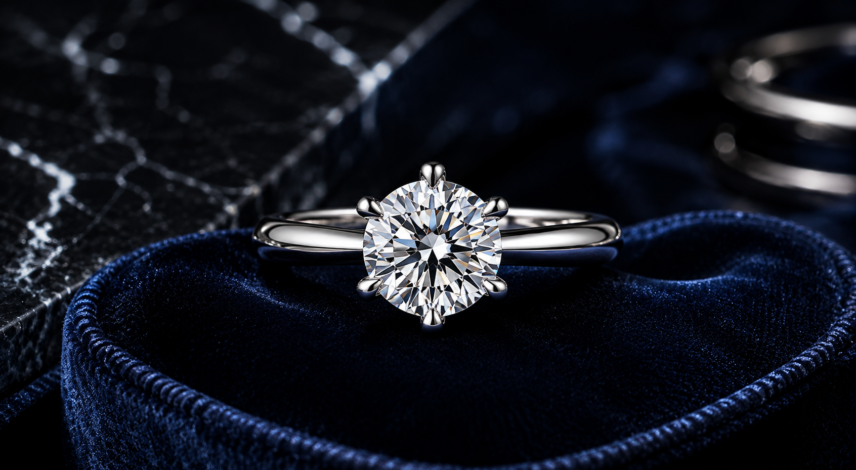
Tiffany Setting Guide featuring a six-prong solitaire diamond ring on deep navy velvet.
News August 26, 2026

Tiffany Setting Guide: What Jewelry Retailers Need to Know About This Iconic Ring Style

by lepdogroup@gmail.com 0 comments

Tiffany Setting Guide: The Retailer’s Blueprint for Solitaire Sourcing, Cut Precision, and Bench Quality that lifts a diamond above the band to maximize light entry and brilliance. Retailers stock it because it sells across generations and price points. Lepdo Diamonds supplies certified loose diamonds cut to perform in this classic, high-demand mounting.

A single ring style, introduced in 1886, still accounts for a meaningful share of solitaire engagement ring sales across American jewelry counters today. That style is the tiffany setting, and most retailers underestimate how much sourcing knowledge sits behind its simple look.

This tiffany setting guide for jewelry retailers breaks down what actually matters when you buy, stock, or sell this design, from prong geometry to GIA cut grading to the diamonds that perform best under six-prong tension.

You will walk away knowing how to evaluate a tiffany setting ring, Diamond Ring and Diamond Setting how to compare it against a standard prong setting, and what questions to ask any diamond wholesaler before placing a bulk order. Whether you manage a manufacturing floor or run a retail counter, carat weight decisions and prong quality will directly affect your sell-through rate.

What the Tiffany Setting Is

The tiffany setting is a solitaire mounting built around six thin, tapered prongs that hold a diamond high above the band. Charles Lewis Tiffany designed it to expose more of the stone to light than bezel or flush styles allowed at the time, and the format has barely changed since.

Quick Info Box

  • Definition: A six-prong solitaire mounting that elevates a single diamond above the shank for maximum light exposure.
  • Key Types or Varieties: Classic six-prong, four-prong variant, cathedral tiffany, knife-edge band tiffany, trellis tiffany.
  • Best For: Round brilliants, engagement ring buyers, retailers wanting a low-return, high-turnover SKU.
  • Key Difference or Advantage: Prong height and count maximize brilliance while keeping the setting mechanism minimal and repairable.

Most retailers stock some version of the Tiffany Setting because it photographs well, resizes easily, and rarely goes out of style with mainstream bridal buyers.

Most Popular Types or Variations And Who They Are For
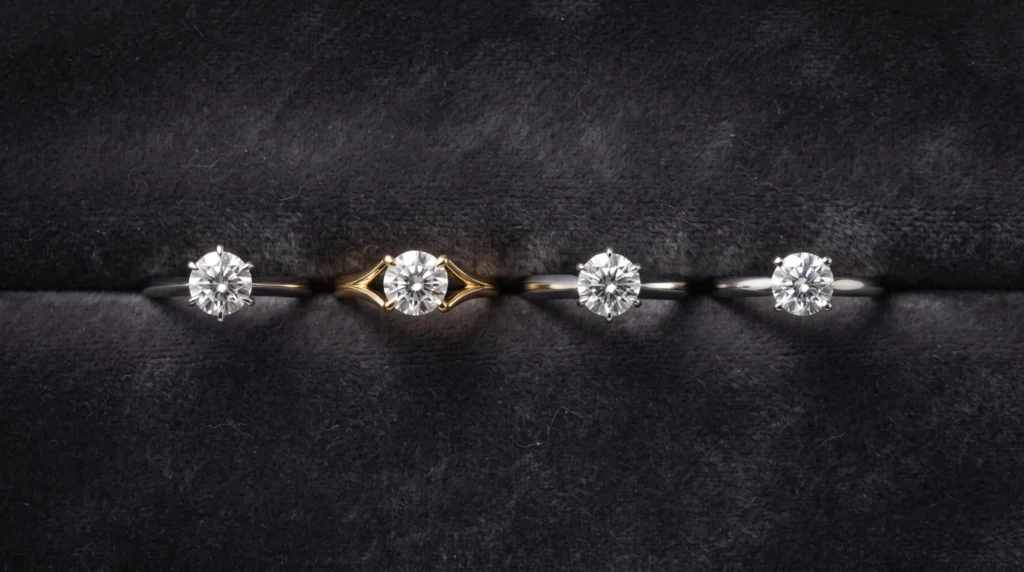
Most Popular Types or Variations  And Who They Are For

Not every tiffany setting is built the same, and the variations matter more to a buyer than most sales staff realize.

Classic Six-Prong Tiffany

This is the original silhouette, with six evenly spaced prongs holding the stone roughly two to three millimeters above the band. It suits buyers who want maximum brilliance and don’t mind slightly higher snag risk during daily wear.

Four-Prong Tiffany Variant

A lighter build with four prongs instead of six, showing more of the diamond’s girdle. It appeals to buyers with smaller hands or those who prefer a more delicate profile, though it offers less security for larger stones.

Cathedral Tiffany

Here the shank arches upward to meet the setting head, adding structural support and a more dramatic side profile. This style works well for taller center stones and customers who want extra presence without changing the prong count.

Beyond these three, retailers should also know knife-edge band tiffany (thin, faceted shank for a modern look), trellis tiffany (crisscrossing prongs for added sparkle), double-prong tiffany (extra security for larger carat weights), solitaire pavé-tiffany hybrid (small pavé diamonds along the shank), and wide-band tiffany (built for men’s and unisex bridal lines). Each variant serves a different buyer profile, from minimalist shoppers to those wanting more visual weight for the same Diamond Engagement Ring budget.

Tiffany Setting vs Prong Setting : The Real Difference
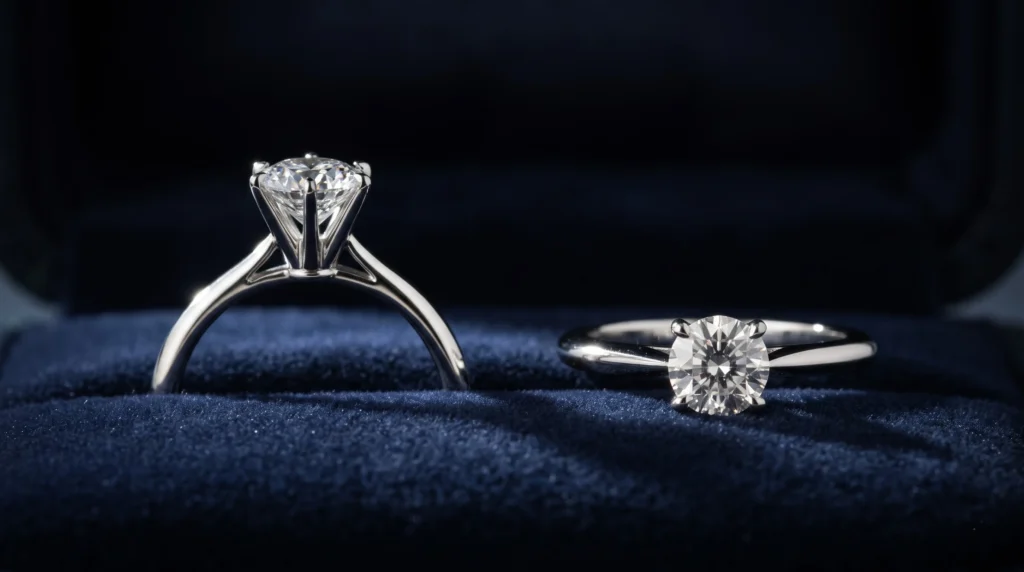
Tiffany Setting vs Prong Setting

A tiffany setting is technically a type of prong setting, but the two terms get used loosely enough in retail that a comparison helps.

FactorTiffany SettingStandard Prong Setting
Prong CountFixed at six (traditionally)Ranges from three to six
Height Above BandHigh, 2 to 3mm typicalVariable, often lower
Light PerformanceMaximized, minimal metal coverageGood, but depends on head design
SecurityStrong at six prongs, weaker at fourDepends heavily on prong count
Best Diamond ShapesRound, princess, cushionNearly all shapes

The core difference comes down to standardization. A Prong Setting is a broad category that includes basket settings, cathedral prongs, and shared-prong designs, while the tiffany setting refers specifically to the elevated six-prong solitaire format Tiffany & Co. trademarked in the American market. Retailers selling under generic “prong setting” listings often lose SEO traffic and in-store search relevance because shoppers now search by the more specific term.

How to Choose the Right Tiffany Setting for Your Style

Selecting the right tiffany setting configuration depends on more than personal taste. Here is what actually drives the decision for most buyers and retail buyers alike.

  1. Personal style or physical fit. Six-prong classic styles suit buyers who want a traditional look, while four-prong or knife-edge versions suit those wanting something lighter and more contemporary.
  2. Body or space compatibility. Active hands and manual work environments call for lower-profile prongs, while low-impact lifestyles can support the higher classic elevation.
  3. Setting or use-case compatibility. Round and princess cuts sit most securely in a six-prong head, while elongated shapes like oval or marquise may need a modified prong arrangement to avoid chipping at the tips.
  4. Budget advantage vs alternatives. A tiffany setting typically uses less metal than a halo or pavé mounting, which can lower total ring cost without sacrificing perceived size.
  5. Occasion. Engagement purchases dominate tiffany setting demand, though fashion rings and anniversary upgrades are a growing secondary category worth stocking separately.
  6. Lab-grown vs natural option. Retailers increasingly pair the tiffany setting with lab-grown diamonds because the elevated prongs showcase brilliance regardless of origin, and margin structures on lab-grown stones tend to be more favorable for volume sellers.

Before you finalize your choice, think about how the ring will actually be worn day to day, not just how it looks under showroom lighting.

What B2B Buyers and Diamond Manufacturers Should Know
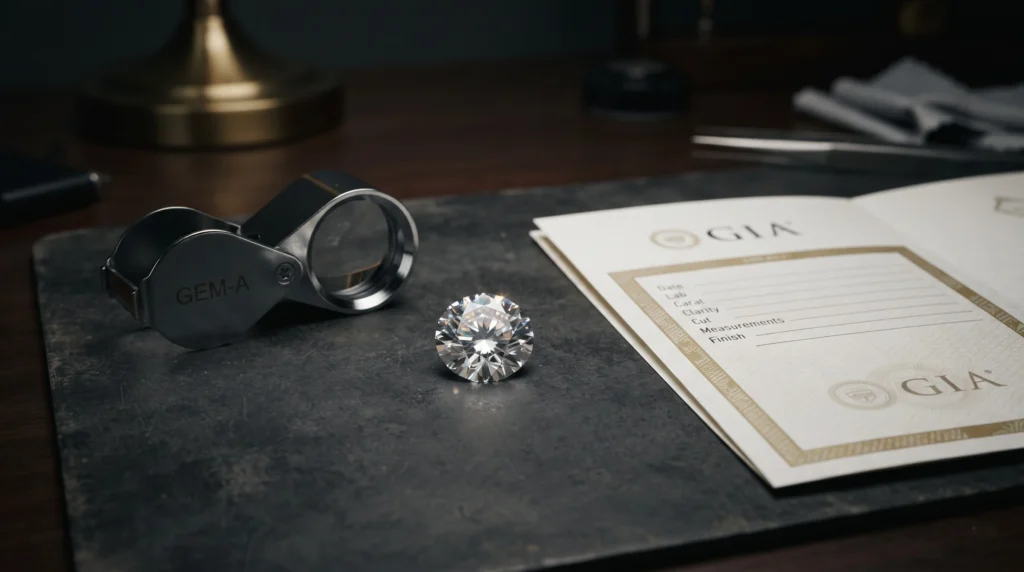
Certified round diamond with GIA report and loupe for Tiffany Setting Guide.

Sourcing for tiffany setting wholesale rings requires more discipline than sourcing for halo or bezel styles, mainly because prong geometry has to match diamond proportions almost exactly.

Bulk buyers should request consistent cut grading across a parcel, not just consistent carat weight. A batch of rounds graded “Excellent” by GIA but with varying pavilion depth will sit unevenly in a six prong tiffany setting head, creating visible gaps that hurt perceived quality on the sales floor. IGI and GIA certification standards differ slightly in cut grading language, so retailers working across both should standardize internally on one grading language for customer-facing materials.

Rapaport pricing for round brilliants used in tiffany-style mountings tends to track closely with standard market movement, since round remains the most liquid shape category. Manufacturers like Diamond Manufacturing operations based in Surat’s diamond hub typically grade stones for prong compatibility before shipment, checking girdle thickness against prong tip width so retailers aren’t left reworking mountings after delivery.

In my experience sourcing for six-prong builds, the single most overlooked spec is girdle thickness consistency. A stone with a thin girdle can chip under prong pressure during resizing, which becomes a warranty headache nobody wants.

Tiffany Setting Jewelry Trends in the USA (2026-2027)

Bridal jewelry trend reports for the coming seasons point to a continued lean toward minimalist solitaire styles, with the tiffany setting holding steady as a top three requested style at independent jewelers nationwide.

Cultural interest in “heritage” jewelry design, driven partly by high-profile engagement announcements and vintage-inspired red carpet moments, has pushed more shoppers toward classic six-prong silhouettes rather than heavily embellished halo rings. Retailers report that customers now ask for the tiffany setting by name more often than they did five years ago, a shift that industry trend coverage attributes to increased jewelry literacy among younger buyers researching styles online before visiting a store.

Wider band variations and cathedral tiffany builds are gaining ground alongside the classic profile, giving retailers a chance to upsell within a familiar silhouette. Demand for fancy cut diamond jewellery paired with tiffany-style heads is also climbing, particularly in cushion and oval shapes, as buyers look for something recognizable but not identical to what their friends are wearing.

How to Evaluate Quality in Tiffany Setting Diamonds

When I assess a tiffany setting ring, the first thing I check is prong alignment against the girdle, not the diamond alone.

Brilliance and fire depend heavily on how much light escapes through the pavilion versus how much reflects back through the table, and a poorly matched prong height can shadow the crown facets enough to dull scintillation even on a well-cut stone. Depth percentage and table percentage both need to fall within GIA’s “Excellent” or “Very Good” range for round brilliants intended for this setting style, since anything outside that range shows visibly in a high-elevation mount.

Here are five checks I run on every tiffany setting stone before approving it for mounting:

  1. Confirm depth percentage sits between 59 and 62.5 percent for round brilliants.
  2. Check table percentage falls within 54 to 58 percent for balanced light return.
  3. Inspect for bowtie effect on fancy shapes like oval or marquise before they go into elongated prong heads.
  4. Verify clarity grade under 10x loupe near the prong contact points specifically.
  5. Cross-reference the certificate, ideally from GIA or IGI, against the physical stone’s measurements.

Retailers sourcing Tiffany Setting for tiffany-style mountings should never accept a parcel without individual certification, since even a fraction of a millimeter in girdle variance changes how the stone sits in a six-prong head.

Beyond the initial proportions, examine the girdle thickness to ensure it stays between thin and slightly thick so the stone seats evenly without cracking under setting pressure. Check that the culet has adequate clearance above the mounting bridge to prevent metal contact damage, and verify crown angles between 34 and 35 degrees to prevent the prongs from casting dark shadows across the crown. Finally, confirm high polish and symmetry grades so the diamond sits level in the head, and check fluorescence to ensure the stone remains crisp and bright in natural daylight.

Inspect the pavillion angle closely between 40.6 and 40.8 degrees to stop light from leaking out the bottom of the elevated head. Make sure each prong tip is shaped with rounded or claw finishes that grip the girdle securely without hiding too much of the top facets. Check that the overall ring shank width balances the stone size so the head does not spin on the finger, and ensure the prong metal matches the diamond color grade to avoid reflecting unwanted yellow or warm tones into a near-colorless center gem.

Conclusion

The tiffany setting has stayed relevant for over a century because it solves a simple problem well: showing off a diamond with minimal interference. Retailers who understand prong geometry, matching cut grades to setting height, and the practical differences between a tiffany setting and a general prong setting tend to see fewer returns and stronger repeat business. That said, round diamonds still dominate this category, so shape-specific sourcing knowledge matters more than most buyers assume going into a purchase.

For wholesale inquiries on tiffany-style sourcing, Lepdo Diamonds offers direct manufacturer pricing from Surat, backed by IGI and GIA certified lab-grown stock across the DEFG color range. Retailers can explore our Diamond Ring and Diamond Setting resources to see how prong compatibility and cut consistency come together before a stone ever reaches a display case.

A well-built tiffany setting sells itself once the diamond inside it is graded, cut, and sourced correctly. Following a complete Tiffany Setting Guide helps retailers master this balance, ensuring that every stone chosen for a classic solitaire delivers optimal fire and brilliance.

The enduring appeal of the six-prong solitaire lies in its balance of structural engineering and optical performance. As highlighted in any comprehensive Tiffany Setting Guide, mastering the mechanics of prong placement, girdle clearance, and head calibration ensures that every mounted stone achieves maximum light return while maintaining long-term durability on the client’s hand.

By prioritizing precision calibration, certified lab-grown inventory, and rigorous bench standards, retailers can confidently deliver heirloom-quality solitaire jewelry that withstands daily wear and builds lasting customer loyalty across generations. A practical Tiffany Setting Guide emphasizes that bench efficiency is just as critical as floor salesmanship. Ensuring that your workshop pairs calibrated prong angles with stones featuring uniform girdle thicknesses prevents metal fatigue, reduces seat-cutting labor, and eliminates the risk of stone slippage during routine sizing.

Furthermore, today’s bridal shoppers demand complete transparency regarding stone provenance, grading authenticity, and metal integrity. Using a professional Tiffany Setting Guide to train your sales team on how elevation affects light reflection—alongside providing clear aftercare and prong-maintenance schedules—transforms a simple ring purchase into a trusted, long-term relationship that drives repeat fine jewelry and anniversary sales.

Frequently Asked Questions About Tiffany Setting

1. What is a Tiffany Setting Guide?

A Tiffany Setting Guide explains the design mechanics of the iconic six-prong solitaire ring mounting that lifts a diamond above the band to maximize light return. Exploring a Tiffany Setting Guide reveals how this classic mounting style balances optical brilliance, security, and timeless solitaire appeal for modern engagement rings.

2. Does a Tiffany Setting Guide show it is cheaper than a standard prong setting?

Following a Tiffany Setting Guide shows that pricing depends primarily on metal type, band width, and prong count rather than the mounting style alone. A standard Tiffany Setting Guide indicates that simple solitaire mountings generally offer similar labor and precious metal costs compared to traditional four-prong designs.

3. Which style in a Tiffany Setting Guide looks biggest or most impressive?

According to a Tiffany Setting Guide, the classic six-prong design paired with a slim knife-edge band creates the largest visual presence by directing full focus to the center stone. A detailed Tiffany Setting Guide notes that while cathedral variations add architectural height, minimalist prongs best enhance the diamond’s perceived surface size.

4. Does a Tiffany Setting Guide explain GIA cut grades for settings?

A reliable Tiffany Setting Guide clarifies that gemological laboratories like the GIA grade the loose diamond itself, not the mounting. Using a Tiffany Setting Guide helps buyers understand that proportions, symmetry, and light return are intrinsic to the stone rather than the six-prong head holding it.

5. What is the primary risk highlighted in a Tiffany Setting Guide?

The primary maintenance risk outlined in a Tiffany Setting Guide is prong wear and snagging over time due to the elevated profile of the diamond. Any comprehensive Tiffany Setting Guide recommends professional prong inspections every 12 to 18 months to ensure the gemstone remains secure during daily wear.

6. Does a Tiffany Setting Guide recommend lab-grown diamonds?

Yes, an updated Tiffany Setting Guide confirms that lab-grown diamonds deliver the exact same optical brilliance, fire, and durability in a six-prong head as mined stones. Reviewing a Tiffany Setting Guide shows that certified lab diamonds in high color and clarity grades perform seamlessly in classic solitaire mountings.

7. Which variation in a Tiffany Setting Guide is best for an engagement ring?

The traditional six-prong mounting featured in every classic Tiffany Setting Guide remains the premier choice for bridal jewelry due to its timeless design and secure hold. A modern Tiffany Setting Guide also suggests knife-edge or low-profile basket variants for shoppers wanting a subtle contemporary touch.

8. How do I use a Tiffany Setting Guide to find a reliable supplier?

A professional Tiffany Setting Guide advises sourcing from manufacturers that provide certified GIA or IGI diamonds, precise prong calibration, and transparent wholesale pricing. Following a B2B Tiffany Setting Guide ensures that jewelers partner with reputable suppliers to guarantee proper stone fit and high-grade bench craftsmanship.

For in-depth market reports, trade sourcing guides, interactive Q&As, and expert gemological perspectives, explore the official Lepdo Group Medium platform and join the discussion on Lepdo Diamonds on Quora.

Share Tweet Pin it Linkedin
previous post
Diamonds vs Emeralds: Profit and Demand Comparison for Jewelry Retailers
next post
Diamond Crystal Physics, Spectroscopy & Material Science.

Related Post

Diamond isotopes scientific analysis of a polished diamond
News
Diamond Isotopes: How Science Reveals the Hidden Identity of Diamonds.
Diamond anisotropy analysis showing crystal structure and optical behavior in a polished diamond
News
Diamond Anisotropy: How Crystal Direction Affects Diamond Performance
Diamond birefringence testing with a loose round diamond, gemological tools, and an optical grading diagram.
News
Diamond Birefringence: How Double Refraction Affects Diamond Quality
Laboratory testing demonstrating CVD Diamond Spectroscopy & Crystal Physics on a faceted stone.
News
Diamond Crystal Physics, Spectroscopy & Material Science.
Tiffany Setting Guide featuring a six-prong solitaire diamond ring on deep navy velvet.
News
Tiffany Setting Guide: What Jewelry Retailers Need to Know About This Iconic Ring Style
diamonds vs emeralds retailers comparison guide
News
Diamonds vs Emeralds: Profit and Demand Comparison for Jewelry Retailers
Pearls vs Diamonds
News
Pearls vs Diamonds: Which Gemstone is Better for Jewelry Retailers?
Diamond Milky Effect: How to Identify and Avoid Milky Diamonds When Buying Wholesale
News
Diamond Milky Effect: How to Identify and Avoid Milky Diamonds When Buying Wholesale
VS2 Diamond: Is It the Best Value Clarity Grade for Jewelry Retailers?
News
VS2 Diamond: Is It the Best Value Clarity Grade for Jewelry Retailers?
VVS1 vs VVS2 vs VS1 vs VS2 Diamond Clarity: Full Retailer and Buyer Guide
News
VVS1 vs VVS2 vs VS1 vs VS2 Diamond Clarity: Full Retailer and Buyer Guide
SGL Diamond Certificate: Complete B2B Buyer Guide
News
SGL Diamond Certificate: Complete B2B Buyer Guide
Do Diamonds Conduct Electricity? The Science Every Buyer Should Know
News
Do Diamonds Conduct Electricity? The Science Every Buyer Should Know
What Is a Diamond Pendant? Complete Guide for Jewelry Retailers
News
What Is a Diamond Pendant? Complete Guide for Jewelry Retailers
AI in Diamond Production and Grading: What's Changing in 2026
News
AI in Diamond Production and Grading: What’s Changing in 2026
lab grown diamond certification importance
News
Lab Grown Diamond Certification: Why It’s Becoming Non-Negotiable for Buyers in 2026
Why Smart Retailers Are Avoiding the Lab Diamond Price War in 2026
News
Why Smart Retailers Are Avoiding the Lab Diamond Price War in 2026
Micro-Pavé Lab Diamond Jewelry: 2026's Fastest-Growing Wholesale Category
News
Micro-Pavé Lab Diamond Jewelry: 2026’s Fastest-Growing Wholesale Category
Mixed diamond shape tennis bracelet with alternating round and pear cut diamonds
News
Mixed Diamond Shapes: The Tennis Bracelet and Necklace Trend Retailers Should Stock
2 carat lab grown diamond ring trend
News
Bigger, Bolder, Better Value : Why More Couples Are Choosing 2-3 Carat Lab Grown Centre Stones in 2026
Why Lab Grown Diamonds Are Now the Default Choice for US Engagement Rings
News
Why Lab Grown Diamonds Are Now the Default Choice for US Engagement Rings
Lab Grown Diamond Carbon Footprint vs Mined Diamonds: The Real Environmental Comparison
News
Lab Grown Diamond Carbon Footprint vs Mined Diamonds: The Real Environmental Comparison
How to Test If a Diamond is Lab Grown
News
How to Test If a Diamond is Lab Grown: A Complete Diamond Tester Guide
Are Lab Grown Diamonds Conflict-Free
News
Are Lab Grown Diamonds Conflict-Free? The Kimberley Process Explained
Halo Setting Diamond Rings: A Wholesale Buying Guide for Retailers
News
Halo Setting Diamond Rings: A Wholesale Buying Guide for Retailers
Prong vs Bezel vs Pave Setting: A Buying Guide for Jewelry Retailers
News
Prong vs Bezel vs Pave Setting: A Buying Guide for Jewelry Retailers
Private Label Lab Grown Diamond Jewelry Manufacturing Guide for Retailers and Brands
News
Private Label Lab Grown Diamond Jewelry Manufacturing Guide for Retailers and Brands
IIJS Mumbai Jewellery Show Guide for International Buyers: What to Expect and How to Prepare
News
IIJS Mumbai Jewellery Show Guide for International Buyers: What to Expect and How to Prepare
MOQ in Diamond Wholesale: How Much Should You Order as a B2B Buyer
News
MOQ in Diamond Wholesale: How Much Should You Order as a B2B Buyer
Incoterms for Diamond Export: FOB vs CIF Explained for International Buyers
News
Incoterms for Diamond Export: FOB vs CIF Explained for International Buyers
Diamond Carat to MM Size Chart: Convert Carat Weight to Millimeter Diameter
News
Diamond Carat to MM Size Chart: Convert Carat Weight to Millimeter Diameter
Diamond Brilliance, Fire and Scintillation Explained: What Makes a Diamond Sparkle
News
Diamond Brilliance, Fire and Scintillation Explained: What Makes a Diamond Sparkle
Diamond Cut Grade Guide: Excellent vs Very Good vs Good Explained for Buyers
News
Diamond Cut Grade Guide: Excellent vs Very Good vs Good Explained for Buyers
Australia Lab Grown Diamond Wholesale Guide: Sourcing from India for Retailers
News
Australia Lab Grown Diamond Wholesale Guide: Sourcing from India for Retailers
Turkey's Diamond Jewelry Market: A Sourcing Guide for International Buyers
News
Turkey’s Diamond Jewelry Market: A Sourcing Guide for International Buyers
Italy's Jewelry Market: A Sourcing Guide for Lab Grown Diamonds from India
News
Italy’s Jewelry Market: A Sourcing Guide for Lab Grown Diamonds from India
How Canadian Jewelers Can Source Lab Grown Diamonds from India: Complete Guide
News
How Canadian Jewelers Can Source Lab Grown Diamonds from India: Complete Guide
UK Diamond Import Guide for Jewelry Retailers: Sourcing Lab Grown Diamonds from India
News
UK Diamond Import Guide for Retailers: Sourcing Lab Grown Diamonds from India
Lab Grown Diamond Suppliers for Israel's Jewelry Trade: A Sourcing Guide for B2B Buyers
News
Lab Grown Diamond Suppliers for Israel’s Jewelry Trade: A Sourcing Guide for B2B Buyers
How to Import Diamonds from India to the USA: A Step-by-Step Guide for B2B Buyers
News
How to Import Diamonds from India to the USA: A Step-by-Step Guide for B2B Buyers
Diamond Import Duties in the USA for Lab Grown Diamonds: What B2B Buyers Need to Know
News
Diamond Import Duties in the USA for Lab Grown Diamonds : What B2B Buyers Need to Know
Lab Grown Diamond vs Natural Diamond Wholesale : A Cost and Margin Comparison for Retailers
News
Lab Grown Diamond vs Natural Diamond Wholesale : A Cost and Margin Comparison for Retailers
Are Lab Grown Diamonds Worth Buying Wholesale? A Profitability Analysis for Retailers
News
Are Lab Grown Diamonds Worth Buying Wholesale? A Profitability Analysis for Retailers
How Are Lab Grown Diamonds Made? The Complete Science Behind CVD and HPHT Diamonds
News
How Are Lab Grown Diamonds Made? The Complete Science Behind CVD and HPHT Diamonds
Lab Grown Diamond Quality Grades for B2B Buyers: A Practical Grading Guide for Retailers
News
Lab Grown Diamond Quality Grades for B2B Buyers: A Practical Grading Guide for Retailers
HPHT Diamond Process Guide: How High Pressure High Temperature Diamonds Are Made
News
HPHT Diamond Process Guide: How High Pressure High Temperature Diamonds Are Made
CVD Diamond Manufacturing Process Explained: How Chemical Vapor Deposition Creates Diamonds
News
CVD Diamond Manufacturing Process Explained: How Chemical Vapor Deposition Creates Diamonds
Lab Grown Diamond Wholesale Market in the USA: Trends, Demand and Sourcing Insights for 2026
News
Lab Grown Diamond Wholesale Market in the USA: Trends, Demand and Sourcing Insights for 2026
How to Buy Diamonds in Bulk: A Step-by-Step Guide for Wholesale Buyers
News
How to Buy Diamonds in Bulk: A Step-by-Step Guide for Wholesale Buyers
US-India Diamond Tariff Deal 2026: What It Means for Lab Grown Diamond Buyers
News
US-India Diamond Tariff Deal 2026: What It Means for Lab Grown Diamond Buyers
Diamond Parcel Buying Guide: How to Evaluate and Purchase Diamond Parcels Wholesale
News
Diamond Parcel Buying Guide: How to Evaluate and Purchase Diamond Parcels Wholesale
How to Source Diamonds from India: A Complete B2B Guide for International Buyers
News
How to Source Diamonds from India: A Complete B2B Guide for International Buyers
How to Start a Diamond Import Business in the USA: Complete Step-by-Step Guide
News
How to Start a Diamond Import Business in the USA: Complete Step-by-Step Guide
How to Choose the Right Lab Grown Diamond Supplier: 10 Things Jewelry Retailers Must Check
News
How to Choose the Right Lab Grown Diamond Supplier: 10 Things Jewelry Retailers Must Check
Lab Grown Diamond Wholesale Price Guide 2026: How Much Do Lab Diamonds Cost at B2B Level?
News
Lab Grown Diamond Wholesale Price Guide 2026: How Much Do Lab Diamonds Cost at B2B Level?
How to Import Lab Grown Diamonds from India: Step-by-Step Guide for USA, UK and UAE Buyers
News
How to Import Lab Grown Diamonds from India: Step-by-Step Guide for USA, UK and UAE Buyers
Lab Grown Diamond Resale Value: What Retailers and Investors Need to Know in 2026
News
Lab Grown Diamond Resale Value: What Retailers and Investors Need to Know in 2026
Lab Grown Diamonds Last Forever
News
Do Lab Grown Diamonds Last Forever? Are They Real Diamonds? Complete Guide
VVS1 vs VVS2 vs VS1 vs VS2 Diamond Clarity
News
VVS1 vs VVS2 vs VS1 vs VS2 Diamond Clarity: Complete Guide for Buyers and Retailers
HRD Diamond Certificate
News
HRD Diamond Certificate: What is HRD Antwerp Certification and How Does It Compare to IGI and GIA?
Is SGL Certification Reliable for Lab Grown Diamonds
News
SGL Certificate Explained: Is SGL Certification Reliable for Lab Grown Diamonds?
Which Diamond Certification Should You Trust
News
IGI vs GIA vs SGL Certificate: Which Diamond Certification Should You Trust?
Melee Diamonds Wholesale from India: How to Source Small Diamonds for Jewelry Manufacturing
News
Melee Diamonds Wholesale from India: How to Source Small Diamonds for Jewelry Manufacturing
The Future of Diamond Industry in India: Trends, Growth and Opportunities in 2026 and Beyond
News
The Future of Diamond Industry in India: Trends, Growth and Opportunities in 2026 and Beyond
Round Diamonds Are India's Top Export
News
Round Brilliant Diamond Suppliers in India: Why Round Diamonds Are India’s Top Export
Lab Grown Diamond Price in India 2026
News
Lab Grown Diamond Price in India 2026: How Much Do Lab Diamonds Cost Compared to Natural?
Buy Diamonds Online in India: Tips for Getting the Best Quality at the Right Price
News
How to Buy Diamonds Online in India: Tips for Getting the Best Quality at the Right Price
Surat Diamond Bourse: Why It's the World's Largest Diamond Trading Hub
News
Surat Diamond Bourse: Why It’s the World’s Largest Diamond Trading Hub
Diamond Jewelry Manufacturers in Surat: From Raw Diamonds to Finished Jewelry
News
Diamond Jewelry Manufacturers in Surat: From Raw Diamonds to Finished Jewelry
Fancy Color Lab Grown Diamonds in India: Yellow, Pink, Blue and More at Wholesale Prices
News
Fancy Color Lab Grown Diamonds in India: Yellow, Pink, Blue and More at Wholesale Prices
Diamond Wholesalers in Gujarat: Finding the Best Diamond Deals in India's Diamond Hub
News
Diamond Wholesalers in Gujarat: Finding the Best Diamond Deals in India’s Diamond Hub
Fancy Cut Diamonds from India: A Complete Guide to Shapes, Prices and Where to Buy
News
Fancy Cut Diamonds from India: A Complete Guide to Shapes, Prices and Where to Buy
Genuine Natural Diamonds at the Best Price
News
Natural Diamond Suppliers in India: How to Source Genuine Natural Diamonds at the Best Price
GIA Certified Diamonds from Surat
News
GIA Certified Diamonds from Surat: Understanding GIA Grading and Why It Matters
IGI Certified Lab Grown Diamonds in India
News
IGI Certified Lab Grown Diamonds in India: Why Certification Matters When Buying Lab Diamonds
Diamond Exporters Surat India
News
Diamond Exporters in Surat, India: How Surat Supplies Diamonds to the World
Loose Diamonds Wholesale from Surat
News
Buy Loose Diamonds Wholesale from Surat: Your Ultimate Sourcing Guide
HPHT Diamond Manufacturers in India
News
HPHT Diamond Manufacturers in India: Everything You Need to Know About High Pressure Lab Diamonds
CVD Diamond Manufacturers India
News
CVD Diamond Manufacturers in India: How Chemical Vapor Deposition is Changing the Diamond Industry
Lab Grown Diamond Manufacturers in Surat: Leading the Global CVD & HPHT Revolution
News
Lab Grown Diamond Manufacturers in Surat: Leading the Global CVD & HPHT Revolution
Trusted Diamond Supplier India
News
How to Find a Trusted Diamond Supplier in India: Complete Buyer’s Guide
Top Diamond Manufacturers in Surat
News
Top Diamond Manufacturers in Surat: Why Surat is the Diamond Capital of the World
sourcing loose diamonds wholesale from Surat India
News
How to Source Loose Diamonds Wholesale from Surat India: Complete Guide for Jewelry Businesses
The 5Cs of Diamonds Explained
News
The 5Cs of Diamonds Explained: Cut, Color, Clarity, Carat, and Certification
The-4Cs-Of-Diamonds-Explained-Brijes-Pansuriya
News
The 4Cs of Diamonds Explained: Cut, Color, Clarity & Carat – Ultimate Guide by Brijes Pansuriya
Unique Diamond Cuts That Are Trending in 2026: Kite, Hexagon, Shield, Rose & More
News
Unique Diamond Cuts That Are Trending in 2026: Kite, Hexagon, Shield, Rose & More
trusted diamond supplier India Lepdo
News
Why Indian Jewelers & Global Buyers Trust Lepdo Diamonds: GIA, IGI, SDB & Our Story
Diamond Manufacturers in Surat: Complete Guide to India's Diamond Industry (2026)
News
Diamond Manufacturers in Surat: Complete Guide to India’s Diamond Industry (2026)
Moissanite-Vs-Diamond-What-Every-Jeweler-Needs-To-Know
News
Moissanite vs Diamond: What Every Jeweler Needs to Know Before Stocking in 2026
Natural-Diamonds-vs-Lab-Grown-B2B-Buyers-Guide.
News
Natural Diamonds vs Lab Grown: Complete B2B Buyer’s Guide for Jewelers & Retailers
Fancy-Color-Diamonds-Yellow-Pink-Blue-Green
News
Fancy Color Diamonds: Yellow, Pink, Blue & Green – Rarity, Grading & Investment Value
Diamond Buying Guide | Lepdo Diamonds - Types, Quality, Clarity & Price
News
Diamond Buying Guide | Lepdo Diamonds – Types, Quality, Clarity & Price
GIA Certified Diamonds: Why Certification Matters and Where to Buy in India
News
GIA Certified Diamonds: Why Certification Matters and Where to Buy in India
Lab Grown Diamond Price India in 2026: How Much Should You Actually Pay?
News
Lab Grown Diamonds Price Guide 2026: How Much Should You Actually Pay?
Custom Jewelry Ideas Using Lab Grown Diamonds Certified
News
Custom Jewelry Ideas Using Lab Grown Diamonds Certified
How to Buy EGL Certified Diamonds Safely Online
News
How to Buy EGL Certified Diamonds Safely Online
Diamond Certification: The Complete Guide for Buyers, Retailers & Wholesalers (2026 - 27)
News
Diamond Certification: The Complete Guide for Buyers, Retailers & Wholesalers (2026 – 27)
How to Buy Certified Loose Diamonds Online Safely
News
How to Buy Certified Loose Diamonds Online Safely
How Fancy Color Diamonds Get Their Stunning Natural Hues
News
How Fancy Color Diamonds Get Their Stunning Natural Hues
How Diamond Fancy Shapes Enhance the Brilliance of Lab Grown Diamonds (1)
News
How Diamond Fancy Shapes Enhance the Brilliance of Lab-Grown Diamonds
How to Choose the Perfect Fancy Shape Diamonds for Your Style
News
How to Choose the Perfect Fancy Shape Diamonds for Your Style

Leave A Comment Cancel

Your email address will not be published. Required fields are marked *

FILTERS Close
Search
Categories
  • News
  • Tips
Latest Posts
Diamond isotopes scientific analysis of a polished diamond

Diamond Isotopes: How Science Reveals the Hidden Identity of Diamonds.

September 10, 2026
Diamond anisotropy analysis showing crystal structure and optical behavior in a polished diamond

Diamond Anisotropy: How Crystal Direction Affects Diamond Performance

September 9, 2026
Diamond birefringence testing with a loose round diamond, gemological tools, and an optical grading diagram.

Diamond Birefringence: How Double Refraction Affects Diamond Quality

September 8, 2026
Archives
  • September 2026
  • August 2026
  • July 2026
  • June 2026
  • May 2026
  • April 2026
  • March 2026
  • February 2026
  • January 2026
  • December 2025

Sign up for our newsletter

By signing up you agree with our Terms & Conditions and Privacy Policy. To opt out, click Unsubscribe in our emails.

Lepdo Diamonds & Jewelry logo with gold gradient lettering and a diamond icon.

Lepdo Diamonds: Leap Into Luxury

COMPANY
  • About Us
  • Why Us
  • Our Customers
  • Our Alliances
  • CSR Work
  • Blog
SUPPORT
  • Contact Us
  • FAQ
  • Policies
  • Size Chart
  • Workshop
  • Connect
DIAMONDS
  • All Diamonds
  • Lab-Grown Diamonds
  • Fancy Shape
  • Fancy Color
  • Loose Diamonds
  • Certified Diamonds

GET IN TOUCH

Facebook Linkedin Instagram Quora Medium-m Youtube Pinterest
  • Call us at: +91 9173776393
  • Email us at: info@lepdo.com
  • No product
Head Office

Office No. B - 901,902, Pragati it park, opp. AR mall, Mota Varachha, Surat, Gujarat 394101

Market Office

202/Devniranjan Building, LB Chowk, Mahidharpura, Surat, Gujarat, India, 395003

Copyright © 2026 – 2027 Lepdo Diamonds. All Rights Reserved

Login

Register

Continue with Google Continue with Facebook
or

Lost your password?