GIA Certified Diamonds: Why Certification Matters and Where to Buy in India
 by Lepdo Diamonds
4 comments
by Lepdo Diamonds
4 comments
GIA certified diamonds India refers to polished diamonds manufactured in India and graded by the Gemological Institute of America, the world’s most trusted diamond certification body. For buyers in the USA, certification from GIA ensures unbiased grading of cut, color, clarity, and carat weight before purchase. Lepdo Diamonds, based in Surat, supplies GIA and IGI certified loose diamonds directly to retailers, wholesalers, and manufacturers worldwide.
A staggering 80% of the world’s polished diamonds pass through India before reaching any jewelry store shelf. Yet a large share of American buyers still walk into a purchase with no idea whether the stone they are buying has been independently graded, who graded it, or what that grading actually guarantees. That knowledge gap costs buyers real money.
The demand for GIA certified diamonds India suppliers produce has grown sharply over the past five years, driven by USA-based retailers, wholesalers, and even individual consumers who want documented proof of quality before committing to a purchase. And that demand is not misplaced. Certification is not a formality. It is the difference between buying a stone based on trust and buying one based on verified fact.
This guide covers everything you need to know: what certification actually means, which labs matter, how GIA certified diamonds compares to IGI and HRD, what B2B buyers need to understand about sourcing certified loose diamonds from India, and how to evaluate quality beyond the paper. By the end, you will have a clear, practical framework, whether you are a jewelry retailer in New York, a manufacturer in Los Angeles, or a consumer shopping for an engagement ring.
What Diamond Certification Actually Is
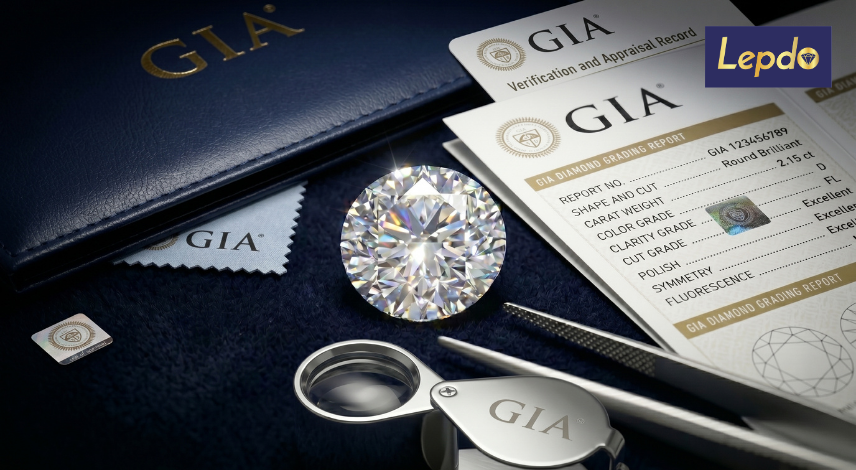
Diamond certification, also called a diamond grading report, is an independent assessment of a stone’s quality characteristics conducted by a neutral gemological laboratory. The report does not set a price. It documents the facts: the 4Cs of cut, color, clarity, and carat weight, along with additional details like fluorescence, polish, symmetry, and often a plotted clarity map.
Quick Info Box:
- Definition: An independent grading report issued by a gemological lab confirming a diamond’s quality characteristics
- Key Types: GIA, IGI, HRD, AGS, EGL reports
- Best For: Retail buyers, B2B wholesalers, investment diamond purchasers, engagement ring shoppers
- Key Advantage: Removes subjectivity and seller bias from the quality evaluation process
Understanding Diamond Certification is the starting point for any serious diamond purchase. A stone without a report from a credible lab requires the buyer to take the seller’s word on quality, which is not a position any informed buyer should accept.
The report itself travels with the diamond and allows any buyer, anywhere in the world, to verify independently what they are purchasing. That portability and neutrality is exactly why certified stones trade at a premium over uncertified ones.
The Most Important Certification Types and Who They Are For
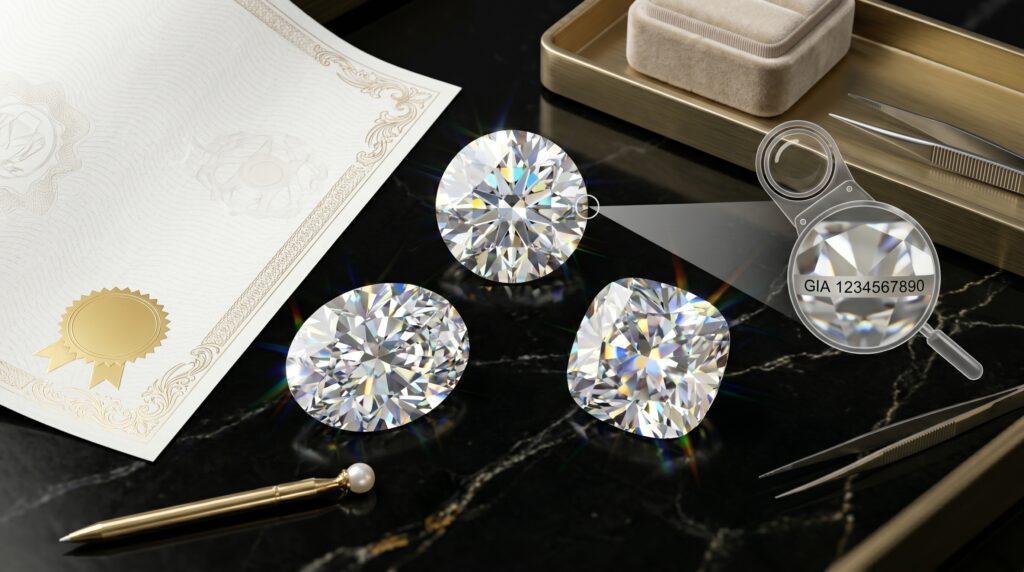
Not all certification labs are equal. Knowing the difference between them shapes your sourcing strategy, your pricing conversations, and the confidence your end customer walks away with.
GIA: The Global Standard
The Gemological Institute of America is the most recognized and trusted name in diamond grading worldwide. When a USA retail customer hears “GIA certified diamonds,” they generally feel reassured without needing further explanation. GIA grading is known for being consistent, conservative, and rigorous. For natural diamonds, especially those intended for engagement rings or high-value retail, GIA reports carry the strongest market credibility. GIA Certified Diamonds are the benchmark against which other certification labs are often measured in the American market.
IGI: The Trade Favorite, Especially for Lab-Grown
The International Gemological Institute has become the leading certification body for lab-grown diamonds globally, and it is extremely well-established in the Indian diamond trade. Many Surat-based manufacturers use IGI as their default lab for both natural and lab-grown stones. IGI certified loose diamonds wholesale represent a significant portion of what flows from India to the USA. The grading standards are strong, and IGI reports are widely accepted by major USA retailers. IGI Certified Diamonds have gained particular traction in the direct-to-consumer lab-grown segment, where price sensitivity is higher and IGI is seen as fully credible.
HRD: The European Benchmark
HRD Antwerp is Belgium’s primary diamond grading institute and is well-regarded in European markets. HRD certified diamonds from Surat appear regularly in trade channels, particularly for buyers with European distribution networks. In the USA, HRD is respected within the trade but carries less consumer name recognition than GIA certified diamonds.
AGS (American Gem Society)
AGS is a USA-based lab known for its proprietary cut grading system and its strong focus on light performance. Less common in the Indian supply chain but valued by American jewelers who emphasize optical performance.
EGL (European Gemological Laboratory)
EGL reports are generally not recommended for serious B2B transactions. The lab has faced significant criticism for grade inflation over the years. Most experienced USA buyers discount EGL-graded stones heavily, and many retailers will not accept them.
Other Regional Labs
Various smaller Indian labs issue grading reports that circulate domestically. These are fine for lower-value goods but should not be positioned as equivalent to GIA or IGI when selling into the US market.
Lab-Grown Diamonds
For lab-grown diamonds, both GIA and IGI have developed dedicated grading reports. IGI currently dominates this segment in terms of volume, while GIA lab-grown reports are gaining traction with premium retailers.
GIA vs IGI: The Real Difference
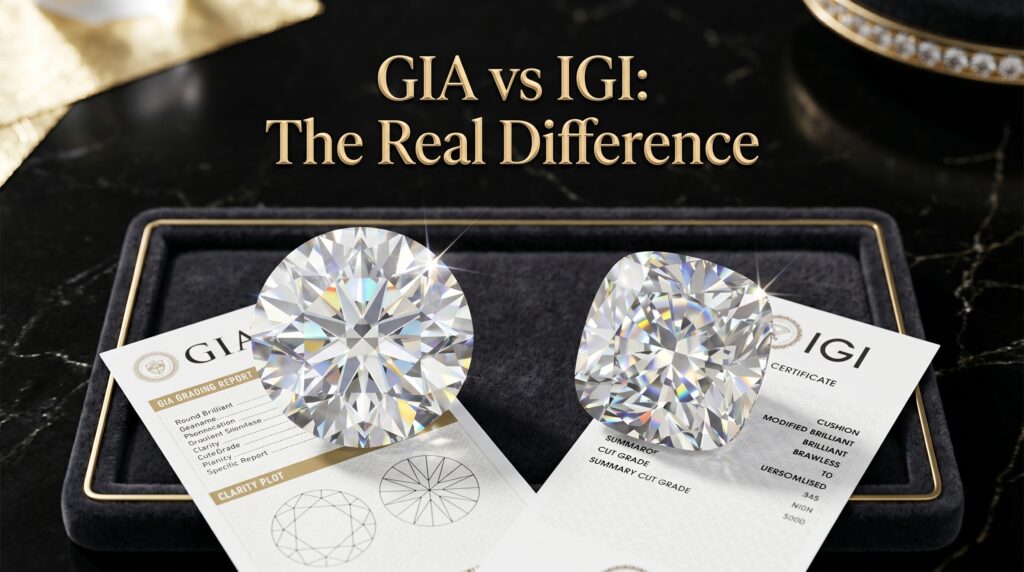
This is the question that comes up constantly in B2B conversations. Here is a clean comparison across the five factors that matter most to buyers.
| Factor | GIA | IGI |
|---|---|---|
| Consumer Name Recognition (USA) | Very High | Moderate to High |
| Natural Diamond Grading Strictness | Very strict, conservative | Slightly more lenient on color/clarity |
| Lab-Grown Diamond Coverage | Yes, growing | Yes, market leader |
| Turnaround Time | Longer | Faster |
| Cost of Certification | Higher | Lower |
The table tells part of the story. Here is the part it does not: in practice, a GIA G/VS2 and an IGI G/VS2 on the same physical stone will not always represent identical quality. GIA grading tends to be more conservative, meaning an IGI stone graded at G color might be graded H or even I by GIA certified diamonds. This is not a knock on IGI. It is simply the reality that lab standards differ slightly, and the market prices this in.
Most buyers sourcing certified diamond supplier India operations have found that for retail-facing natural diamonds, GIA delivers a pricing premium that the end customer is willing to pay. For lab-grown stones or B2B bulk orders where margin is the priority, IGI certified loose diamonds wholesale offer an efficient and credible path. That said, always request the actual grading report and verify the report number independently before finalizing any purchase.
How to Choose the Right Certified Diamond for Your Needs
Choosing certification is only part of the decision. The right stone still requires matching the diamond’s characteristics to the buyer’s actual use case. Here are six factors every buyer should work through.
- End use and customer expectations. A retail consumer shopping for an engagement ring in a USA jewelry store will respond differently to a GIA certified diamonds report than a B2B buyer placing a bulk order for fashion jewelry. Know who the stone is ultimately for before deciding which certification lab serves that buyer’s expectations.
- Shape and size compatibility. Larger stones above one carat warrant GIA certification for resale value and consumer confidence. Smaller melee or commercial goods are typically sold uncertified or with IGI batch reports, where per-stone certification cost becomes prohibitive.
- Setting and design requirements. A halo or solitaire engagement ring showcasing a center stone benefits enormously from a full GIA report. Accent stones and pavé goods rarely require individual certification.
- Budget positioning. GIA certification adds real cost to a stone’s price point, both through lab fees and through the premium the market assigns. If a buyer is working within a tight retail price ceiling, IGI certified loose diamonds wholesale may allow a higher-quality stone at the same price.
- Occasion and emotional weight. Diamonds purchased for engagements, anniversaries, or investment purposes benefit most from GIA or IGI reports. The certificate becomes part of the emotional purchase story, reinforcing value and trust.
- Lab-grown versus natural stones. The lab-grown category is where IGI certification has become the trade standard. For buyers sourcing lab-grown diamonds from Surat manufacturers, IGI grading is typically expected, accepted, and competitively priced. If your customer base is sustainability-focused or budget-conscious, lab-grown with a solid IGI report is an excellent path.
Before you finalize your choice of certification lab or supplier, request sample reports and verify a few report numbers through the lab’s own online verification tool. Any credible supplier will welcome that due diligence.
What B2B Buyers and Diamond Manufacturers Should Know
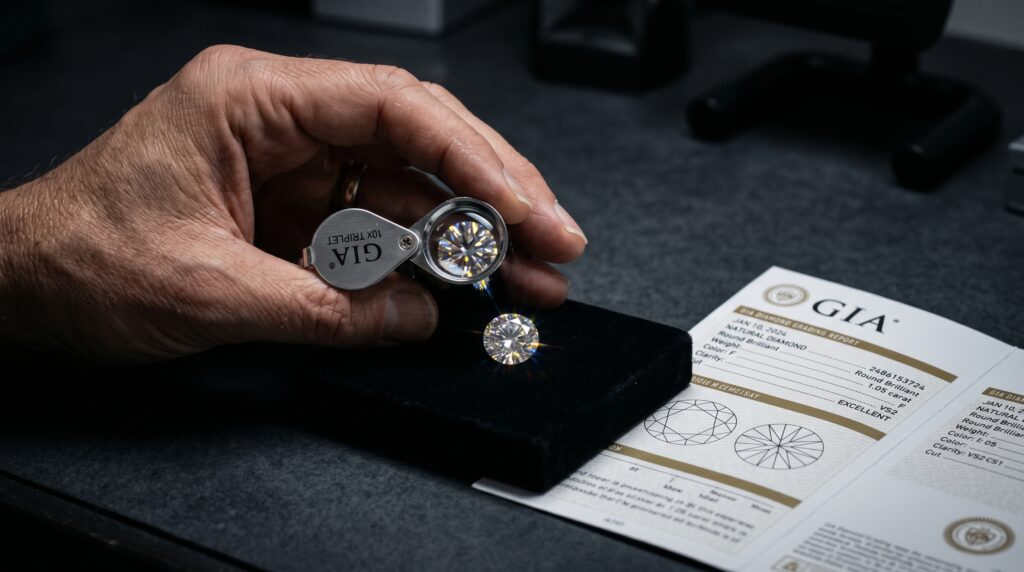
The conversation looks different when you are buying in volume. A retail jeweler ordering a single stone has different priorities than a manufacturer placing a multi-parcel order for seasonal inventory. Here is what matters most at the B2B level.
First, consistency of cut quality across a parcel is far harder to guarantee than a single stone. When sourcing loose certified diamonds B2B at scale, always request that parcels be sorted by a shared cut quality range, not just color and clarity. A parcel where table percentage and depth percentage vary wildly will produce inconsistent finished jewelry.
Second, Rapaport pricing is the baseline most Indian suppliers use for natural certified diamonds. Knowing the current Rap sheet for the size, color, and clarity range you are buying helps you negotiate from a position of knowledge rather than guessing at market value.
Third, GIA and IGI both publish grading standards for fancy shapes, but neither issues an official cut grade for anything other than a round brilliant. For fancy shape diamonds sourced from a certified diamond wholesaler Surat, buyers must evaluate light performance and proportions directly, since the report will not carry a cut grade.
Here is an industry-level insight I share with every manufacturer I work with: the difference between a well-cut fancy shape and a poorly cut one at the same GIA color and clarity grade can be 15 to 20% in actual market value. The certificate does not capture that. Your own eyes, or a trusted optical performance tool, have to.
For understanding how Diamond Certification Numbers work and how to verify them directly with the issuing lab, every B2B buyer should build this verification step into their procurement process. It takes minutes and removes any ambiguity.
Certified Diamond Trends in the USA, 2025 to 2026
The USA certified diamond market is shifting in ways that matter for anyone sourcing from India. Lab-grown diamonds with IGI certification have moved from a niche category to a mainstream retail offering. Major chain retailers that resisted lab-grown inventory two years ago are now actively buying it, and IGI-graded stones from Surat manufacturers are filling those orders.
At the same time, demand for GIA certified diamonds natural fancy shapes, particularly ovals, cushions, and elongated radiant cuts, has stayed strong in the premium segment. Consumers influenced by bridal content, fashion media, and luxury brand aesthetics are seeking stones that look distinctive, not just traditional. The standard round brilliant still holds the largest market share, but the fancy shape segment has grown consistently.
To be fair, round diamonds still dominate engagement ring sales in the USA, accounting for roughly 40 to 50% of the market by most trade estimates. But the growth is happening in fancy shapes, and certified diamond supplier India operations have responded by investing in better cut execution for these shapes, particularly for stones destined for GIA or IGI submission.
Setting styles have also shifted. Bezel and east-west settings for elongated shapes, mixed metal designs, and hidden halo constructions are all trending in certified diamond jewelry for the USA retail market. These settings require precise stone proportions, which makes certification and documented specifications even more valuable for manufacturers and retailers alike.
How to Evaluate Quality in a Certified Diamond
When I assess a GIA or IGI certified diamond, the first thing I check is not the grade on the report. It is the stone itself under diffused lighting. The certificate tells you what category the stone belongs to. It does not tell you where it sits within that category, and within a single grade range, quality variation is very real.
Here are five expert evaluation steps every serious buyer should use:
- Check the table percentage and depth percentage. For round brilliants, a table of 54 to 57% and a depth of 61 to 62.5% typically indicates strong light return. Fancy shapes require shape-specific benchmarks, and you should know the ideal ranges for each shape before evaluating.
- Look for the bowtie effect in ovals, marquises, and pear shapes. A dark bowtie across the center of the stone signals poor light performance regardless of the clarity grade. A mild bowtie is acceptable. A severe one is a dealbreaker for quality retail.
- Evaluate brilliance and fire in real light. Brilliance is the white light reflected back to the eye. Fire is the dispersion of colored light through the facets. A stone that shows both in motion is performing well optically. A flat or glassy-looking stone is not.
- Cross-check the fluorescence notation. Strong blue fluorescence can make a lower color grade appear whiter in daylight, which some buyers love. It can also produce a milky or oily appearance in some stones. Always view a fluorescent stone under both UV and standard lighting before deciding.
- Verify the report number. Every GIA or IGI report has a unique number etched microscopically on the diamond’s girdle. For any stone you are buying, cross-reference this number through the issuing lab’s online database. Understanding Diamond Certification Labs and which ones offer reliable public verification tools will help you build this step into your buying process.
Scintillation, the flashing pattern of light and dark as the stone moves, is the final signal. A well-cut diamond creates a dynamic, even pattern. A poorly cut stone creates dead zones. No certificate captures this. Only the stone itself reveals it.
Conclusion
Three things stand above everything else in this conversation. Certification from a credible lab is not optional for any serious diamond purchase, whether you are a USA retailer stocking engagement ring inventory or a consumer buying a single stone for someone you love. GIA certified diamonds India manufacturers produce carry the strongest market credibility in the American trade, and understanding how GIA compares to IGI, HRD, and other labs helps buyers make smarter sourcing decisions at every price point.
The second point is that the certificate is a starting point, not the finish line. A strong grading report documents characteristics. It does not guarantee a beautiful stone. Cut execution, light performance, and visual appeal require direct evaluation alongside any paperwork. Buyers who combine certified documentation with rigorous physical or video-based evaluation protect themselves against the most common sourcing mistakes.
The third is that sourcing GIA certified diamonds directly from Surat-based suppliers removes layers of cost without removing quality. The savings are real, the certification standards are identical worldwide, and the supply is deep.
Lepdo Diamonds works directly with manufacturers and buyers across the USA, offering GIA and IGI certified loose diamonds with full transparency on report numbers, pricing, and stone videos. If you are ready to buy GIA certified diamonds India’s cutting centers produce at their best, explore Lepdo Diamonds as your starting point. In a market where trust is everything, working with a verified, certified source is not just smart. It is the only way to buy.
Frequently Asked Questions About GIA Certified Diamonds from India
1. What are GIA certified diamonds from India?
GIA certified diamonds from India are polished diamonds cut and finished by Indian manufacturers, then graded by the Gemological Institute of America. The GIA report documents the stone’s cut, color, clarity, and carat weight to internationally accepted standards, giving buyers worldwide a reliable, unbiased quality reference before purchasing any loose or mounted diamond.
2. Are GIA certified diamonds cheaper when sourced from India?
Yes, generally. India, particularly Surat, is the world’s largest diamond cutting and polishing hub, which means lower manufacturing overhead. Sourcing GIA certified loose diamonds directly from an Indian wholesaler or manufacturer often gives B2B buyers a meaningful price advantage compared to purchasing through Western intermediaries, without sacrificing grading quality or stone integrity.
3. Which certification looks most impressive to end consumers, GIA or IGI?
GIA carries stronger brand recognition with retail consumers in the USA. Most buyers have heard of GIA, and a GIA report conveys immediate confidence. IGI is widely respected in the trade and increasingly trusted for lab-grown diamonds, but for natural diamond retail sales in the American market, GIA certification still carries the greatest name-value weight.
4. Does GIA provide a cut grade for all diamond shapes?
No. GIA issues an official cut grade only for standard round brilliant diamonds. For fancy shapes, including oval, cushion, pear, princess, and emerald cuts, the GIA report does not include a cut grade. Buyers evaluating fancy shapes must rely on table percentage, depth percentage, length-to-width ratio, and visual light performance to assess cut quality accurately.
5. What is the biggest quality risk when buying certified diamonds from India?
The biggest risk is a gap between the certificate grade and the stone’s actual visual performance. A stone can carry a strong clarity grade but still show poor light return, a pronounced bowtie effect, or uneven facets due to cut execution. Always request actual images, videos, or physical inspection alongside the certificate, especially when sourcing loose certified diamonds wholesale from any supplier.
6. Are lab-grown GIA certified diamonds from India as good as natural?
Chemically and optically, yes. GIA also grades lab-grown diamonds and issues dedicated laboratory-grown diamond reports with the same 4Cs standards. Lab-grown diamonds from Indian manufacturers, many based in Surat, offer significant cost savings. For buyers prioritizing budget or sustainability, a GIA or IGI graded lab-grown diamond from a certified Indian supplier is a strong, traceable choice.
7. Which certified diamond is best for an engagement ring sourced from India?
For engagement rings, GIA certified round brilliant or oval cut diamonds in the G-H color range and VS2-SI1 clarity offer the best value without visible quality compromise. Sourcing directly from a certified diamond supplier in India gives access to well-graded stones at competitive prices, especially for buyers seeking eye-clean results within a defined budget.
8. How do I choose a reliable GIA certified diamond manufacturer or supplier in India?
Look for suppliers who are members of recognized trade bodies, who provide verifiable GIA or IGI report numbers, and who offer transparent pricing relative to Rapaport list prices. Ask for stone videos and certificates before committing to any purchase. A trustworthy certified diamond wholesaler in Surat will readily supply full documentation and welcome due diligence from serious buyers.