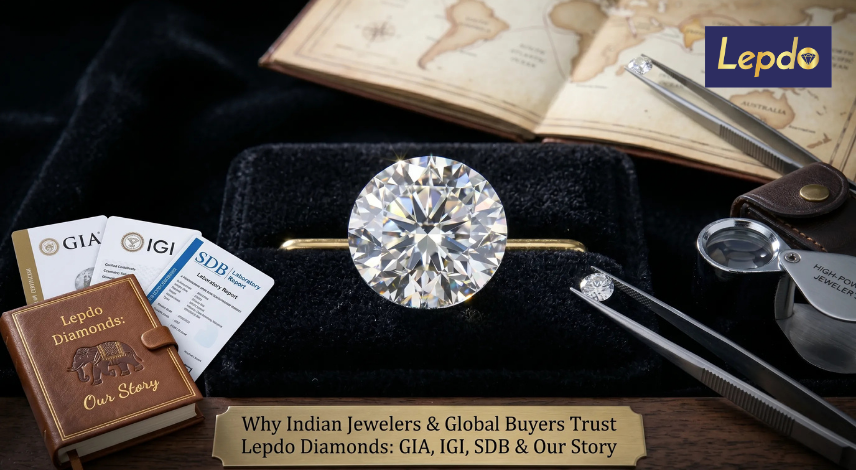
Why Indian Jewelers & Global Buyers Trust Lepdo Diamonds: GIA, IGI, SDB & Our Story
 by lepdogroup@gmail.com
1 comment
by lepdogroup@gmail.com
1 comment
Trusted diamond supplier India Lepdo refers to Lepdo Diamonds, a GIA- and IGI-certified diamond export company based in Surat, India, serving global B2B buyers and retail consumers. For jewelry businesses and individual buyers in the USA, choosing a certified Indian supplier means better pricing, documented quality, and traceable sourcing. Lepdo Diamonds combines SDB membership, GJEPC certification, and direct founder access to make every purchase decision easier and more confident.
Less than 3% of the world’s rough diamonds ever reach a consumer without passing through Surat, India. That single fact tells you something important about where real diamond expertise lives. Yet most American buyers, whether they are running a jewelry brand or shopping for an engagement ring, have never had a direct conversation with a Surat-based supplier. That changes when you discover trusted diamond supplier India Lepdo, a name that has earned genuine credibility in one of the world’s most competitive trades.
Here is what this post covers: who Lepdo Diamonds is, why B2B buyers from the USA keep coming back, what certifications actually mean in practice, and how the company’s story connects to the quality you receive. You will also get a gemologist’s honest perspective on what separates a reliable diamond export company from a good-looking website.
Whether you are a wholesaler, a jewelry brand owner, or a retail consumer ready to invest in a certified diamond, the details below matter.
What Lepdo Diamonds Is: The Company, the Credentials, and the Commitment
Lepdo Diamonds is a Surat-based diamond export company founded by Brijes Pansuriya, supplying both natural and lab-grown certified diamonds to buyers in the USA, Europe, and across Asia. The company operates as part of the larger Lepdo Group Of Company, which includes Lepdo Jewelry for finished fine jewelry.
Quick Info Box:
- Definition: A GIA and IGI certified diamond supplier and exporter based in Surat, India, serving global wholesale and retail clients
- Key Types / Varieties: Round brilliant, fancy shape (oval, cushion, radiant, pear, marquise), natural diamonds, lab-grown diamonds
- Best For: USA-based wholesalers, jewelry manufacturers, engagement ring buyers, and investment-grade diamond sourcing
- Key Difference: Direct manufacturer access combined with SDB membership and GJEPC certification, removing unnecessary layers between the polishing floor and the buyer
Diamond export from India accounts for over 75% of the world’s polished diamond supply by volume. Working with a supplier at the source is not just a cost advantage. It is a quality control advantage. You know exactly where the stone was cut, who graded it, and which certification accompanies it.
To understand the full scope of what Lepdo offers, the Why Lepdo page walks through their sourcing philosophy, quality standards, and buyer support model in detail.
Most Popular Diamond Types Lepdo Offers, and Who Each One Is For
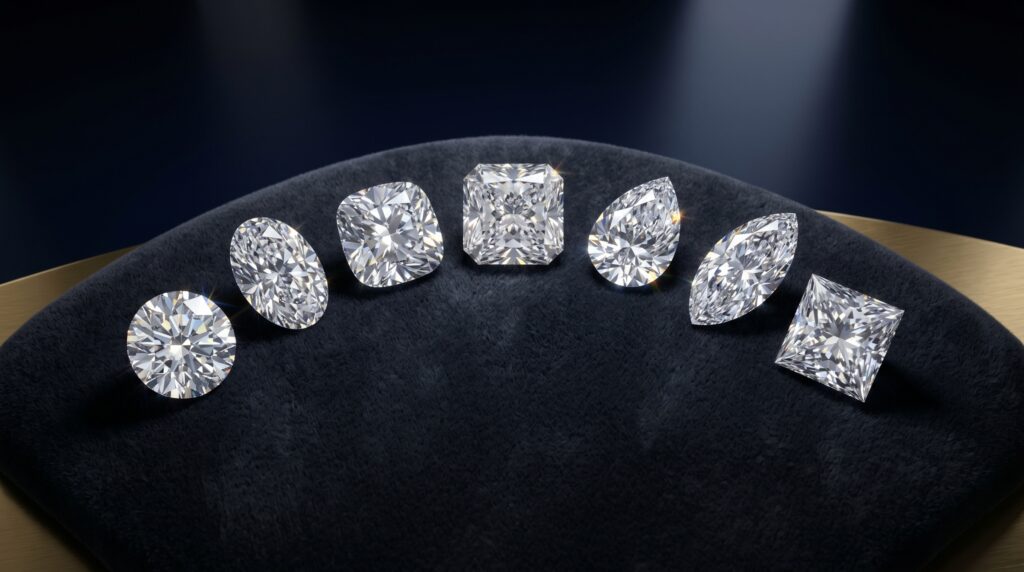
The diamond industry in Surat is not uniform. Different factories specialize in different shapes, and the cut quality gap between them can be significant. Lepdo Diamonds has built its reputation across several diamond categories that are consistently in demand in the US market.
Round Brilliant Diamonds
Round brilliant diamonds are the benchmark. Every other shape is compared to them. They carry the only official GIA cut grade, which ranges from Excellent to Poor. Lepdo’s round brilliant inventory focuses on the Excellent to Very Good cut range, making them appropriate for premium engagement ring retailers and designers who cannot afford a poorly performing stone in their showcase.
To be fair, round diamonds still dominate engagement ring sales in the USA, accounting for roughly 40% of all bridal purchases. That makes them a core SKU for any US wholesaler.
Oval Cut Diamonds
Oval cuts have been the fastest-growing fancy shape in the US market for several years running. They appear larger face-up than rounds of identical carat weight, and their elongated silhouette flatters nearly every hand shape. Lepdo specializes in ovals with length-to-width ratios between 1.35 and 1.50, the sweet spot preferred by American jewelry brands and their retail customers.
Cushion Cut Diamonds
Cushion cuts combine vintage warmth with modern brilliance. They are a natural fit for halo settings and three-stone designs, both of which have maintained strong demand in the US bridal category. Lepdo offers cushion cuts in both standard and modified brilliant faceting patterns, allowing buyers to choose the right light performance profile for their customer base.
Radiant Cut Diamonds
Radiants offer the rectangular outline of an emerald cut with the sparkle pattern of a round brilliant. They are popular with buyers who want a bold, angular shape without the windowing and extinction risks of step cuts. Strong sellers in the 1.50 to 3.00 carat range for US retailers.
Pear Shape Diamonds
Pear shapes work beautifully as pendants and as east-west ring settings, both of which have been trending. Lepdo’s pear shapes are cut with attention to shoulder symmetry and bow-tie management, two details that make a real difference in finished jewelry.
Marquise Cut Diamonds
A more specialized shape, but one with a loyal following. Marquise diamonds maximize apparent size per carat more than almost any other shape. They require careful attention to the bow-tie effect and length-to-width ratio. Lepdo’s marquise inventory is graded for these specific visual characteristics before shipping.
Princess Cut Diamonds
Still a consistent seller in the US commercial market, especially at price points under 1.50 carats. Lepdo’s princess cuts are particularly popular with jewelry brands producing channel-set eternity bands and matching bridal sets.
Lab-Grown Fancy Shapes
Lepdo has built a strong inventory of lab–grown diamonds in all the shapes above. IGI certification for lab-grown stones gives US buyers the same grading confidence they expect for natural diamonds, at price points that open up new market segments.
Lepdo Diamonds vs. Generic Diamond Suppliers: The Real Difference
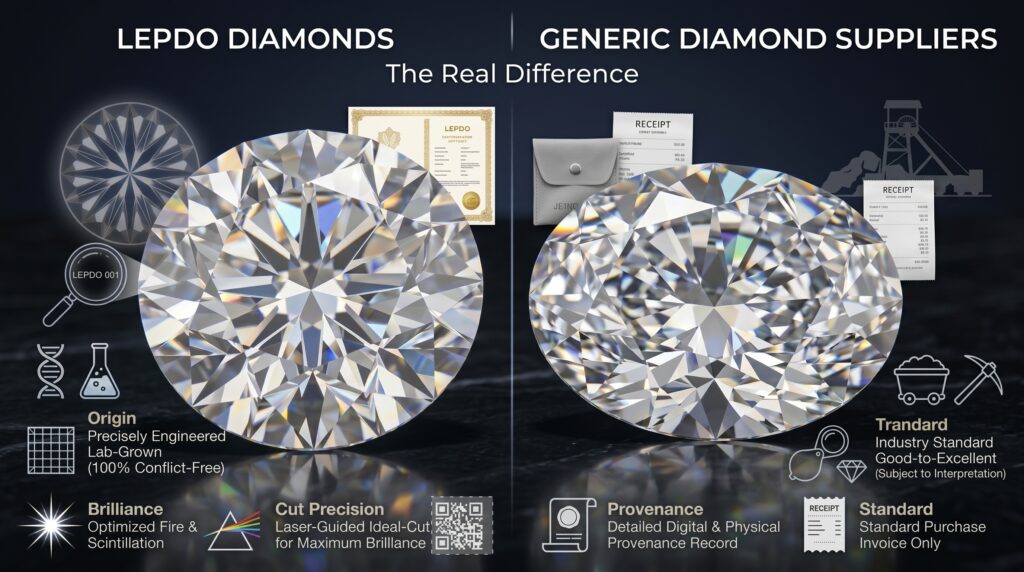
Many diamond suppliers in Surat will fill an order. Fewer will fill it consistently, with full certification, accurate grading, and support after the shipment arrives. That gap is where Lepdo’s positioning becomes clear.
| Factor | Lepdo Diamonds | Generic Supplier |
|---|---|---|
| Certification Standard | GIA and IGI certified on all stones | Varies; often uncertified or in-house graded |
| Industry Membership | SDB member, GJEPC certified | Often unverified or membership unclear |
| Cut Consistency | Graded to specification per shape | Cut quality varies batch to batch |
| Communication & Support | Direct access to founder Brijes Pansuriya | Typically handled by sales agents with limited authority |
| Buyer Verification | References and testimonials available | Limited accountability or buyer history |
Most buyers who have worked with generic suppliers understand the frustration. A stone arrives, the color grade is off by a full grade, the cut looks nothing like the certificate described, and the only response from the supplier is to “adjust on the next order.” That pattern costs jewelers money, reputation, and customer trust.
Here is what actually matters in a supplier relationship: consistency over time. A single shipment of perfect stones means little if the next five are unreliable. Lepdo Diamonds has built its repeat buyer base specifically because the grading standards are applied the same way on every shipment, whether the order is 10 stones or 500.
The Lepdo Diamonds review record from US-based buyers consistently references two things: accurate certification and responsive communication from the team.
How to Choose the Right Diamond Type and Supplier for Your Needs
Choosing between diamond types, and choosing the right supplier, involves more than comparing prices. Here are six factors that should guide the decision:
- Personal style or setting preference. Round brilliants suit classic solitaire and pavé settings. Ovals and pears work beautifully in east-west orientations and delicate prong settings trending in the USA right now. Think about the end-use context before selecting a shape.
- Physical fit and proportion. Elongated shapes like oval and marquise make fingers appear longer and are consistently requested by buyers whose customers prefer a slender, sophisticated look. The length-to-width ratio is not just an aesthetic preference; it affects how the stone fits the setting hardware.
- Setting compatibility. Cushion cuts and radiants are natural fits for halo settings. Round brilliants work in virtually every setting style. Step cuts like emerald require a buyer comfortable with a clarity-forward stone. Match the shape to the setting category your customers actually buy.
- Budget relative to perceived size. Fancy shapes generally cost 20 to 40% less per carat than round brilliants of equivalent quality. For buyers managing tight retail price points, oval or cushion cuts from a direct supplier like Lepdo Diamonds deliver meaningful margin advantages.
- Occasion and use case. Engagement rings demand the highest cut quality and certification standards. Fashion jewelry allows more flexibility. Investment-grade purchases require GIA certification specifically, as GIA remains the most universally recognized standard in diamond resale markets.
- Lab-grown vs. natural diamonds. Lab-grown diamonds offer identical physical and optical properties to natural diamonds at a fraction of the cost. For buyers entering the lab-grown segment or expanding their range, Lepdo’s IGI-certified lab-grown inventory covers all major shapes with consistent quality.
Before you finalize your choice, ask your supplier directly: can you provide a GIA or IGI report for every stone in this order, and what is your return policy if grading does not match the certificate? The answer tells you everything you need to know about whether you are dealing with a professional operation.
What B2B Buyers and Diamond Manufacturers Should Know
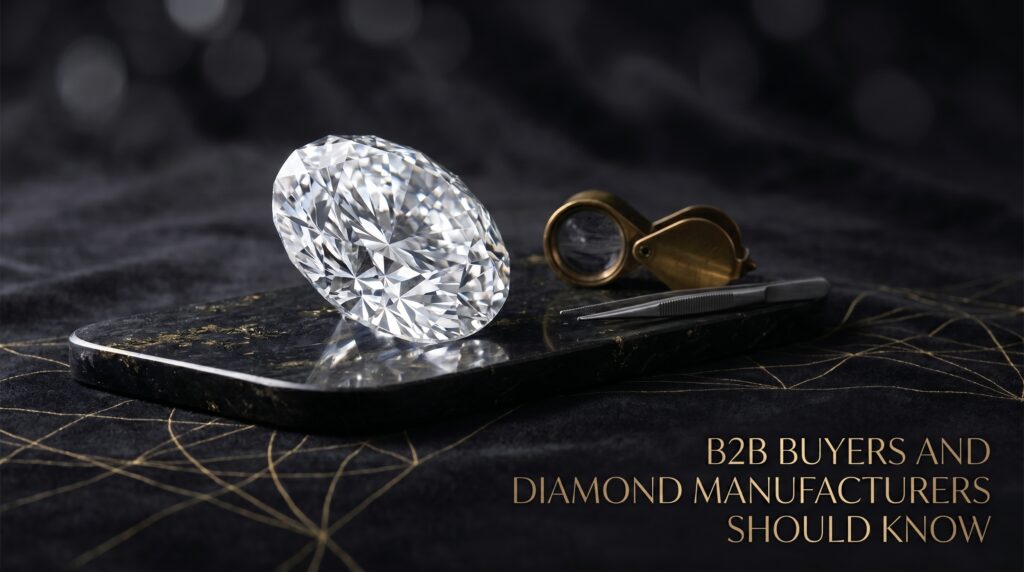
If you are a wholesale buyer, a jewelry manufacturer, or a retailer building a certified inventory, the sourcing decision carries more weight than it does for a single retail purchase. Here is what Surat’s diamond export ecosystem looks like from the inside.
Surat accounts for the majority of the world’s cut and polished diamond production. The city has thousands of cutting factories, but the range in quality is enormous. At the lower end, stones are cut for maximum weight retention from the rough, not for optical performance. At the professional level, cutters follow GIA and IGI specifications precisely, targeting table percentages, depth percentages, and pavilion angles that produce the brilliance, fire, and scintillation buyers expect.
Lepdo Diamonds operates at the professional end. Their stock is graded against GIA and IGI standards, and diamond certification accompanies every stone. For Rapaport pricing purposes, this matters: a certified stone with an accurate grade trades at a predictable Rapaport discount, while an uncertified or loosely graded stone introduces pricing uncertainty that hurts you at resale.
The SDB (Surat Diamond Bourse) membership is worth calling out specifically. SDB members operate under a recognized regulatory framework with accountability standards that protect international buyers. GJEPC (Gem and Jewellery Export Promotion Council) certification adds another verified layer of credibility for diamond export compliance.
In my experience reviewing sourcing operations, the single most reliable indicator of a trustworthy B2B supplier is their willingness to share references from existing buyers in your market. Lepdo invites this kind of scrutiny. Their Our Alliances page lists the industry memberships and affiliations that back up their credentials.
My insider tip: when evaluating a new India-based supplier, request a mixed parcel of 20 to 30 stones and have them independently graded by a local GIA lab before committing to volume. A confident supplier will agree without hesitation.
Diamond Jewelry Trends in the USA: 2026 to 2027
The US diamond jewelry market has shifted in ways that reward suppliers who can deliver variety quickly. According to industry tracking data, fancy shape diamond sales have grown by nearly 30% over the past three years in the bridal category alone, driven by social media influence and a younger buyer demographic that actively resists the purely traditional round solitaire.
Elongated shapes are leading this wave. Oval diamonds set in thin yellow gold bands have become one of the most photographed ring styles on social platforms, and that visibility translates directly into retail demand. East-west pear settings and asymmetric toi-et-moi rings featuring two contrasting shapes have also been strong sellers at mid-to-upper price points.
On the fine jewelry side, tennis bracelets set with fancy shape diamonds and mixed-metal designs incorporating both white and yellow gold have seen renewed commercial interest. Lab-grown diamond jewelry is expanding beyond bridal into everyday luxury, with American consumers increasingly comfortable purchasing IGI-certified lab-grown pieces for fashion purposes.
For diamond export company Surat operations like Lepdo, this trend environment requires a responsive inventory and the ability to fulfill specific shape and size combinations quickly. That responsiveness is part of what has built Lepdo’s reputation among US-based jewelry brands who need fast turnaround without sacrificing certification standards.
How to Evaluate Quality in a Diamond Supplier’s Inventory
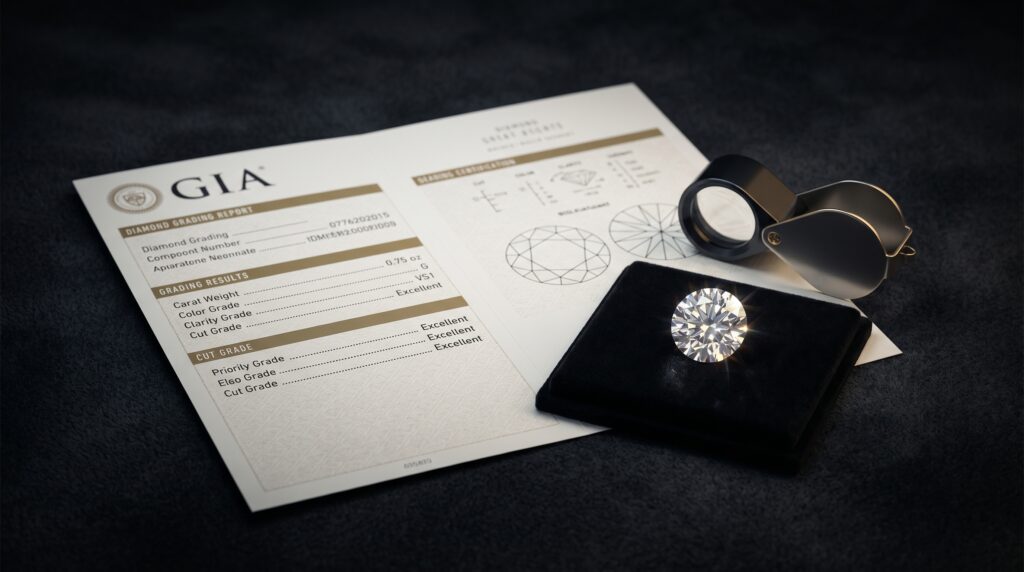
When I assess a parcel of diamonds from a new supplier, the first thing I check is not price. It is the relationship between the stated grade on the certificate and what I actually see under magnification.
Here is what consistent quality evaluation looks like in practice:
- Verify the GIA or IGI report number independently. Every certificate has a report number traceable through the issuing lab’s online database. If a supplier cannot provide verifiable report numbers, the stones are not certified regardless of what the paperwork says.
- Check table percentage and depth percentage. For round brilliants, a table between 54 and 57% and a total depth between 60 and 62.5% produces optimal light return. For fancy shapes, proportions vary, but pavilion angle and culet condition are always worth reviewing.
- Look for brilliance and scintillation under both direct and diffuse light. A well-cut stone should show strong, even brilliance under a single light source and dynamic scintillation with movement. Dead zones or milky areas indicate cut or clarity issues not always captured in a grade.
- Assess color in a controlled environment. Color grading requires a neutral white light source and comparison master stones. What looks like an H color under warm showroom lighting can be a J in grading conditions. You will want to pay attention to this especially with fancy shapes, which can concentrate body color at the tips and edges.
- Ask about the batch’s provenance and cutting facility. Legitimate suppliers like Lepdo Diamonds can tell you where a parcel was cut and which grading lab processed it. That traceability is a quality signal in itself.
Diamond certification from GIA or IGI does not eliminate the need for expert review, but it gives you a documented baseline that protects both buyer and seller in any commercial transaction.
Why Trust Is the Most Valuable Thing a Diamond Supplier Can Offer
The diamond industry has no shortage of suppliers. What it has a shortage of is suppliers you can count on to deliver the same quality on the hundredth order that they delivered on the first. That consistency is the real product, and it is what has made Lepdo Diamonds a preferred source for US-based buyers ranging from independent jewelers to established wholesale operations.
Three things stand out from everything covered above. First, certification matters more than price. A cheaper stone with an unreliable grade will cost you more in returns, reputation damage, and lost customers than the savings are worth. Second, industry credentials like SDB membership and GJEPC certification are not decorative. They signal a supplier operating within a framework of accountability. Third, access to the decision-maker matters in this business. Diamond quality questions are technical and time-sensitive, and being able to speak directly with the founder makes a difference that no sales team layer can replicate.
The truth is, sourcing from a trusted diamond supplier India Lepdo represents is a genuine competitive advantage for US buyers willing to build a direct relationship with the source.
Ready to see what that relationship looks like in practice? Explore Lepdo Diamonds or request a direct consultation to discuss your sourcing needs. When your customers ask how you source with such confidence, the answer starts with knowing exactly who cut the stone and who stands behind it.
Frequently Asked Questions About Trusted Diamond Supplier India Lepdo
1. What is trusted diamond supplier India Lepdo?
Lepdo Diamonds is a Surat-based diamond export company recognized as a trusted diamond supplier in India and globally. The company supplies GIA- and IGI-certified natural and lab-grown diamonds to wholesalers, jewelry brands, and retailers worldwide, backed by SDB membership and GJEPC certification.
2. Is buying diamonds from an Indian supplier cheaper than sourcing locally in the USA?
Yes, sourcing directly from a certified Indian diamond supplier like Lepdo Diamonds typically offers significant cost advantages. Surat processes roughly 90% of the world’s polished diamonds, and direct sourcing cuts out multiple middlemen. Buyers often save 20 to 40% compared to purchasing from US-based intermediaries, without compromising on GIA or IGI certification quality.
3. Which diamond types does Lepdo Diamonds offer that look most impressive?
Lepdo Diamonds is particularly well known for fancy shape diamonds, including elongated ovals, cushions, and radiant cuts that appear larger face-up than round brilliants of the same carat weight. These shapes are consistently popular with USA engagement ring buyers who want maximum visual impact at a competitive price point.
4. Does Lepdo Diamonds supply GIA-certified diamonds?
Yes. Lepdo Diamonds supplies diamonds certified by both GIA and IGI. GIA remains the globally accepted gold standard for diamond grading. Lepdo works with both certification bodies to meet the specific requirements of US-based manufacturers, wholesalers, and retail clients.
5. What is the biggest quality risk when sourcing diamonds from India?
The biggest risk is inconsistent cut quality from suppliers who lack third-party certification standards. Without GIA or IGI grading, buyers have no reliable measure of light performance or accurate color and clarity grades. Lepdo Diamonds addresses this directly by supplying only certified stones with full grading documentation, eliminating guesswork from the sourcing process.
6. Are lab-grown diamonds from Lepdo Diamonds as good as natural diamonds?
Lab-grown diamonds from Lepdo Diamonds are physically and chemically identical to natural diamonds. They carry the same GIA or IGI grading standards and offer identical brilliance, fire, and scintillation. The key difference is price and long-term resale value. Lab-grown options from Lepdo are ideal for buyers prioritizing size and visual impact within a defined budget.
7. Which diamond type from Lepdo is best for an engagement ring?
This depends on the buyer’s style. Round brilliant diamonds remain the most popular choice for engagement rings due to their unmatched fire and GIA cut grading. That said, Lepdo’s oval, cushion, and elongated radiant cuts are increasingly popular in the USA market for their distinctive look and better value per carat compared to round diamonds.
8. How do I choose a reliable trusted diamond supplier in India like Lepdo?
Look for three things: certified credentials (GIA, IGI), recognized industry memberships (SDB, GJEPC), and transparent communication about sourcing and grading. Lepdo Diamonds checks all three. They also offer direct consultation with founder Brijes Pansuriya, which gives buyers a level of personal accountability rarely found in large-scale diamond export operations.