
HRD Diamond Certificate: What is HRD Antwerp Certification and How Does It Compare to IGI and GIA?
 by lepdogroup@gmail.com
0 comments
by lepdogroup@gmail.com
0 comments
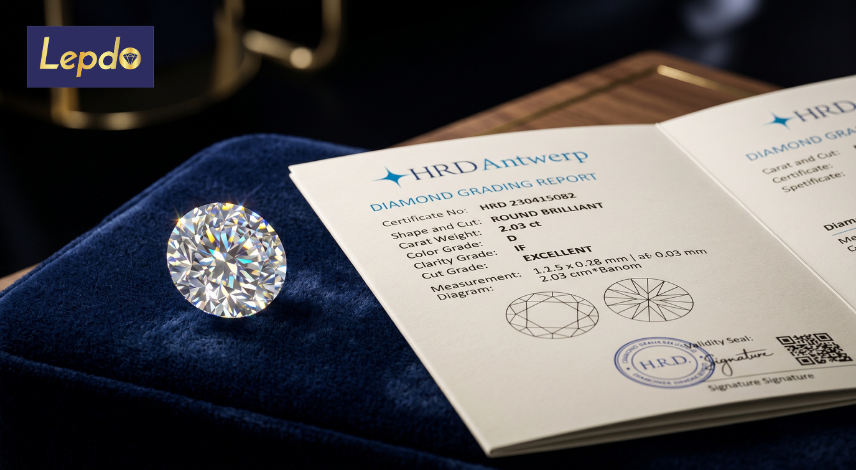
An HRD diamond certificate is an official grading report issued by HRD Antwerp, one of Europe’s oldest and most respected diamond laboratories. For buyers, it provides a standardized evaluation of a diamond’s cut, color, clarity, and carat weight. If you are sourcing certified diamonds in the USA or globally, Lepdo Diamonds offers guidance on all major certification standards including HRD, IGI, and GIA.
A diamond buyer once walked into a meeting with a stone that carried an HRD certificate, and the American wholesaler on the other side of the table had never heard of it. That moment plays out more often than people in the trade like to admit. The HRD diamond certificate has been around since 1976, yet it remains one of the most misunderstood credentials in the USA diamond market.
HRD Antwerp is a legitimate, well-established grading laboratory headquartered in the heart of the world’s diamond capital. Understanding what the HRD certification covers, where it stands relative to GIA and IGI, and when it makes sense for buyers and manufacturers is the kind of working knowledge that can protect a purchase, sharpen a negotiation, and prevent a costly mistake.
This post breaks down exactly what HRD-certified diamonds are, how the grading compares, and what both retail buyers and B2B professionals need to know before making a decision.
What Is an HRD Diamond Certificate?
HRD Antwerp, which stands for Hoge Raad voor Diamant (the Diamond High Council), is a Belgian diamond grading institute founded in 1976. It operates out of Antwerp, Belgium, the city that processes an estimated 80 percent of the world’s rough diamonds annually. The HRD diamond certificate is an independent grading report that evaluates a polished diamond based on the 4Cs: carat weight, color, clarity grade, and cut quality.
Quick Info Box:
- Definition: An HRD diamond certificate is a grading report from HRD Antwerp that documents a diamond’s 4Cs along with additional optical and physical characteristics.
- Key Types: Brilliant Certificate, Fancy Shape Certificate, Solitaire Certificate, Lab-Grown Diamond Report
- Best For: European-origin stones, international B2B transactions, buyers seeking recognized grading outside the GIA/IGI ecosystem
- Key Advantage: Strict European grading standards with deep roots in the Antwerp diamond trade
For a broader overview of how grading documents work across labs, the Diamond Certification guide at Lepdo Diamonds covers the full picture.
HRD Certificate Types and Who They Are For
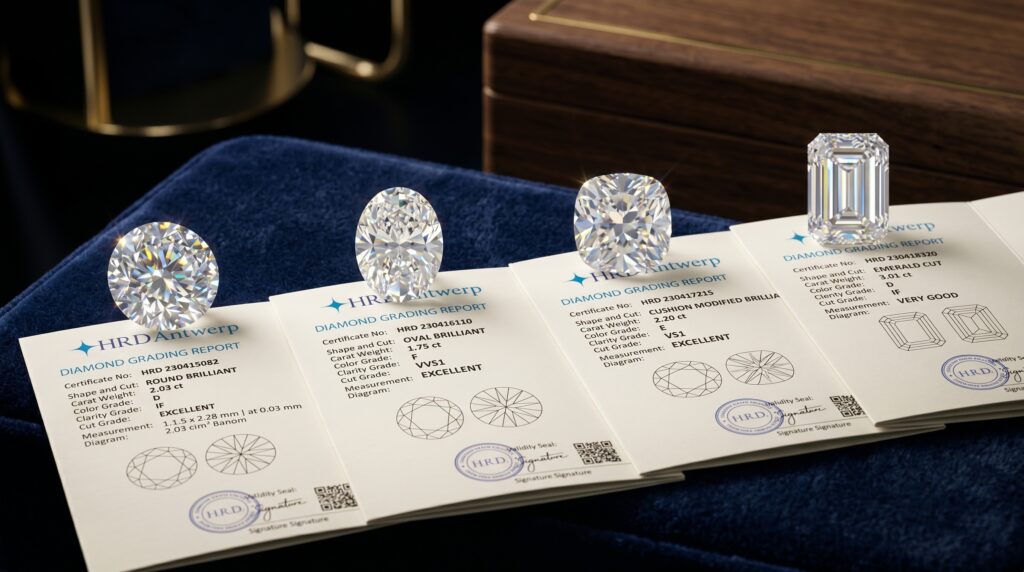
HRD Antwerp issues several distinct certificate formats, each designed for a different type of stone or commercial need. Knowing which one applies to your purchase is the first step to reading the report accurately.
HRD Brilliant Certificate
This is the most widely issued HRD report and covers round brilliant diamonds. It includes a full 4Cs analysis along with fluorescence intensity, proportions diagram, and a laser inscription number if applicable. Retail jewelers stocking classic solitaire engagement rings will encounter this format most often. The grading criteria for cut quality are rigorous, and the report includes a detailed facet proportion chart that experienced buyers use to cross-check light performance before purchasing.
HRD Fancy Shape Certificate
This report covers non-round diamonds: ovals, cushions, pears, emerald cuts, princess cuts, and other fancy shapes. The HRD grading system does not assign a cut grade to fancy shapes in the same way GIA does for rounds, which is a key distinction buyers should understand before comparing reports. HRD certification for fancy shapes focuses on symmetry, polish, and proportions rather than an overall cut grade score.
HRD Solitaire Certificate
Designed specifically for diamonds mounted in a setting, this report is issued without removing the stone. It is commonly used for estate jewelry, pre-set pieces from manufacturers, and situations where disassembly would be impractical. The grading is necessarily less precise than loose stone reports, and buyers should weigh that limitation accordingly.
HRD Lab-Grown Diamond Report
HRD Antwerp has issued grading reports for lab-grown diamonds since 2012, making it one of the earlier major labs to recognize this category. The report format mirrors the natural diamond certificate but is clearly marked as lab-grown. This is increasingly relevant for USA retailers who are stocking both natural and lab-grown options side by side.
HRD Colored Diamond Report
For fancy color diamonds, HRD issues a dedicated report that describes hue, tone, and saturation using internationally accepted color terminology. This certificate is used by collectors and investment buyers who need a credible third-party color assessment.
HRD Electronic Reports
HRD offers digital versions of all its reports through an online verification portal. The HRD certificate check can be completed at the lab’s official website using the unique report number printed on the physical document. This is a standard step for any professional buyer before finalizing a purchase.
HRD vs IGI vs GIA: The Real Difference
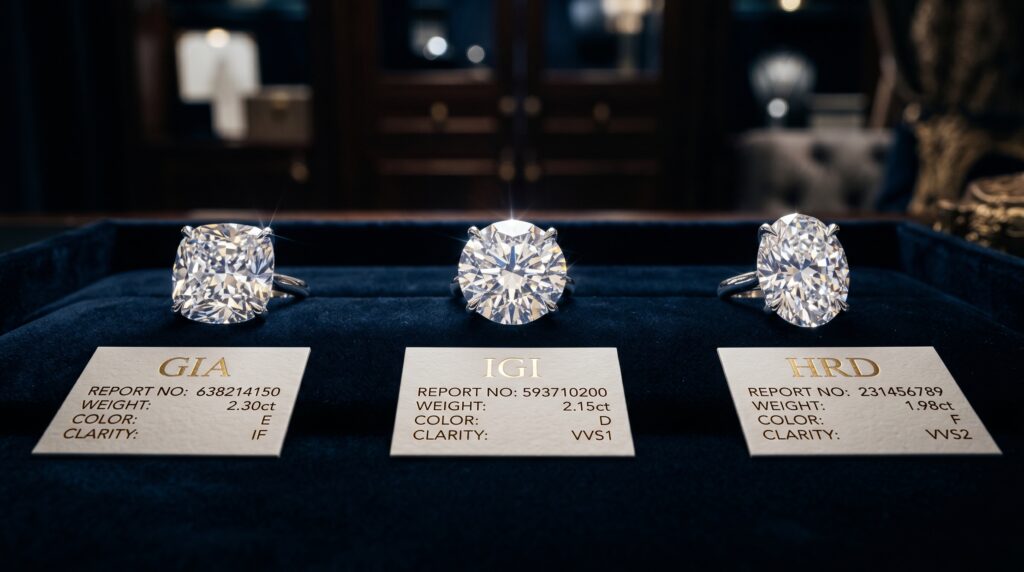
This is the question most American buyers ask first, and it deserves a direct answer.
| Factor | HRD Antwerp | IGI | GIA |
|---|---|---|---|
| Founded | 1976 | 1975 | 1931 |
| Primary Market | Europe / International | Global, strong in lab-grown | USA, global benchmark |
| Cut Grade for Rounds | Yes | Yes | Yes |
| Cut Grade for Fancy Shapes | No overall grade | No overall grade | No overall grade |
| Lab-Grown Reports | Yes (since 2012) | Yes (extensive) | Yes |
| USA Market Recognition | Moderate | High (especially lab-grown) | Very High |
Here is what most buyers miss when they see this comparison: GIA is widely regarded as the strictest grading laboratory for natural diamonds in the USA market, which means a GIA VS1 stone and an HRD VS1 stone may not represent the same quality when placed side by side. Industry professionals often describe HRD’s grading as slightly more generous than GIA on color and clarity, though less liberal than some IGI reports on natural stones. That said, for European-origin stones and international B2B transactions, the HRD diamond grading report is a credible and respected document that carries real weight in the trade.
IGI has positioned itself as the dominant certification body for lab-grown diamonds globally. HRD is a legitimate alternative for both natural and lab-grown stones, but USA buyers will find GIA and IGI reports significantly easier to value using standard Rapaport price lists.
To verify any certificate before a transaction, you can use the Diamond Certification Check tool, which walks through how to confirm report authenticity across multiple labs.
How to Choose the Right Certification for Your Diamond
Choosing a diamond certification is not just about which lab has the most prestigious name. Here are six factors that should drive the decision:
- Intended market and resale destination. If the diamond is being purchased for the USA retail market, GIA-certified stones carry the highest resale liquidity. HRD certification is better recognized in European markets, which matters if you intend to eventually sell or trade internationally.
- Stone shape and size. For round brilliants above 1 carat, GIA is the benchmark. For fancy shapes where no lab assigns an overall cut grade, the grading lab matters less on that specific criterion, and HRD certification becomes more comparable to the alternatives.
- Natural vs lab-grown. If you are purchasing a lab-grown diamond, IGI is currently the most widely recognized lab in that category in the USA. HRD lab-grown reports are credible but less commonly requested by American consumers. Understanding how Diamond Grading Report standards differ between natural and lab-grown stones helps set realistic expectations.
- Budget and certificate cost. HRD certification costs can be lower than GIA for certain stone categories, which sometimes makes HRD-certified stones slightly more accessible at the wholesale level. That price advantage only holds value if your buyer accepts the certification.
- Investment vs personal wear. For investment-grade diamonds, GIA certification is non-negotiable among serious collectors and investors. For personal jewelry purchases where the buyer is not primarily thinking about resale, an HRD-certified diamond of verified quality is a legitimate option.
- Lab-grown buyers specifically. The lab-grown diamond segment continues to expand rapidly in the USA, and Certified Diamonds from established labs like IGI, GIA, or HRD all offer traceable grading documentation. The key is confirming that the specific retailer and secondary market you plan to engage with recognize the lab you choose.
Before you finalize your choice, always request the actual certificate number and verify it directly through the issuing lab’s official online portal. A certificate that cannot be verified digitally should raise immediate questions.
What B2B Buyers and Diamond Manufacturers Should Know
For wholesalers, retailers, and manufacturers sourcing diamonds at volume, certification strategy is a commercial decision, not just a quality one.
HRD-certified diamonds appear regularly in the Antwerp and Mumbai wholesale markets. European suppliers often ship stones with HRD reports because the lab is local, fast, and cost-effective for their operations. American B2B buyers who are comfortable grading stones independently can sometimes find competitive pricing on HRD-certified parcels relative to equivalent GIA-certified inventory.
That said, here is the practical reality: Rapaport price lists are calibrated primarily around GIA grading standards for natural diamonds. When you receive an HRD certificate and try to price the stone using Rapaport, you need to account for potential grading differences, particularly on color and clarity. Experienced buyers typically budget for a half-grade to full-grade adjustment on color when crossing from HRD to GIA standards, though this is not universal and varies stone by stone.
IGI has largely taken over certification of lab-grown goods in the USA wholesale channel. HRD is making inroads in that category as well, but IGI’s network depth and faster turnaround times in American markets give it a structural advantage for high-volume lab-grown sourcing right now.
In my experience, the smartest approach for a USA-based manufacturer or retailer is to independently assess any HRD-certified stone against GIA grading equivalents before finalizing pricing. Never apply Rapaport values to an HRD report without doing that adjustment analysis first.
To explore how HRD Certification fits within the broader landscape of grading standards, Lepdo Diamonds provides detailed breakdowns of each major lab’s methodology and commercial standing.
HRD Certified Diamond Jewelry Trends in the USA (2026 to 2027)
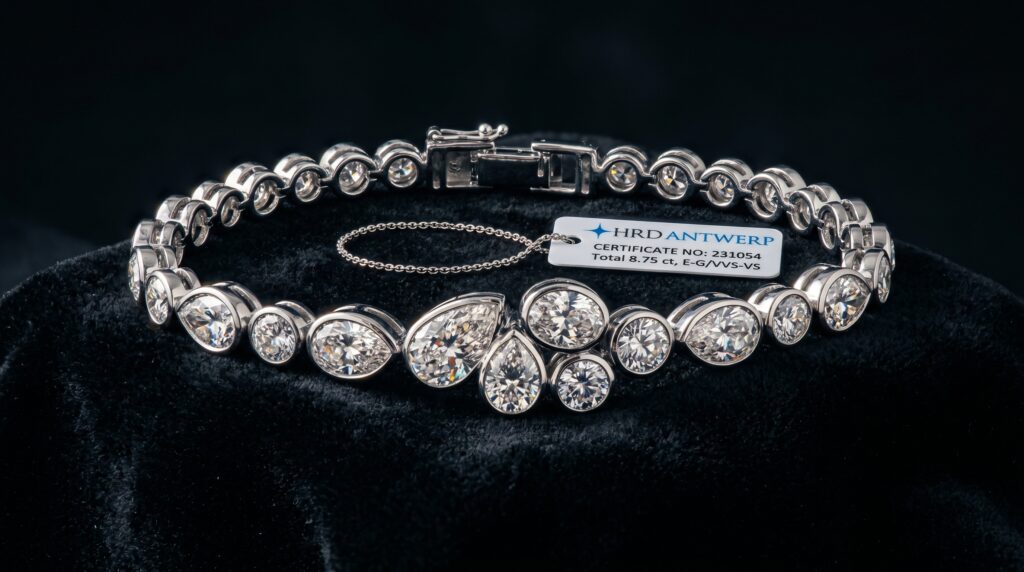
The USA fine jewelry market is going through a visible shift. Natural diamond demand has stabilized following a correction period, while lab-grown diamond jewelry continues to take meaningful market share in the engagement ring and fashion jewelry categories. HRD’s expansion of its lab-grown certification services is well-timed relative to this trend.
According to industry tracking data, fancy shape diamonds now account for over 40 percent of engagement ring center stone purchases in the USA, with oval, cushion, and elongated shapes leading consumer preferences. HRD-certified fancy shape stones from Antwerp-based suppliers are entering American retail channels more frequently as buyers diversify beyond the traditional GIA-only sourcing model.
The broader cultural shift toward transparency and ethical sourcing is also creating demand for third-party grading documentation that goes beyond brand marketing. HRD Antwerp’s reputation for independence from major diamond mining interests is a point that resonates with a growing segment of educated American consumers. HRD certified diamonds, presented with full documentation and honest grading context, fit naturally into the positioning of premium independent jewelers who want to differentiate from mass-market chains.
How to Evaluate Quality in an HRD-Certified Diamond
When I assess an HRD-certified diamond, the first thing I check is not the grade on the certificate. It is the actual proportions listed in the report and whether they align with what I can observe under magnification.
Here are four expert evaluation steps every buyer should follow with an HRD diamond grading report in hand:
- Check table percentage and depth percentage. For a round brilliant, an ideal table percentage falls between 54 and 57 percent, and depth percentage should be in the 61 to 62.5 percent range. Stones outside these ranges may sacrifice brilliance or fire regardless of the stated cut or polish grade.
- Evaluate the clarity plot carefully. HRD clarity plots are detailed, but the location and nature of inclusions matter more than the grade alone. A VS2 with a large feather near the girdle behaves differently than a VS2 with pinpoint inclusions spread across the table.
- Assess color under standard lighting. HRD color grading uses the same D-to-Z scale as GIA, but calibration can differ. Compare the stone to a GIA-graded master comparison stone when possible, especially for H color and below where color is visible to the naked eye.
- Verify fluorescence impact. HRD reports list fluorescence intensity. Strong blue fluorescence in higher color grades (D to F) can actually improve the appearance of the stone in daylight conditions, but it can also create a milky or hazy look in certain lighting environments. Check the stone under multiple light sources.
- Confirm the certificate against the HRD online portal. Every legitimate HRD report has a traceable number. Cross-checking the certificate details through the official Diamond Certification Check process takes less than two minutes and eliminates any doubt about document authenticity.
Conclusion
Three things stand out after a thorough look at HRD diamond certification. First, the HRD Antwerp laboratory is a legitimate and respected grading institution with nearly five decades of history in the world’s most important diamond market. Second, for USA buyers, understanding the grading calibration differences between HRD, GIA, and IGI is not optional knowledge. It is the difference between making a well-informed purchase and overpaying on a certificate mismatch. Third, the right certification is not always the most famous one. It is the one that matches your market, your buyer, and your ability to independently verify what the report says.
Whether you are a retail consumer shopping for an engagement ring, a jewelry retailer sourcing inventory, or a manufacturer evaluating parcels from Antwerp suppliers, working with a knowledgeable partner changes the outcome. At Lepdo Diamonds, the team works across all major certification standards including HRD Antwerp, IGI, and GIA, helping buyers find the right HRD diamond certificate or alternative grading document for every use case.
The best diamond is not always the one with the most famous certificate. It is the one that delivers proven quality, verified documentation, and value you can stand behind with confidence.
Frequently Asked Questions About HRD Diamond Certificates
1. What is an HRD diamond certificate?
An HRD diamond certificate is a grading report issued by HRD Antwerp, a Belgian diamond laboratory founded in 1976. The report evaluates a polished diamond’s carat weight, color, clarity, and cut based on international standards. It also includes proportions data, fluorescence grade, and a unique report number that can be verified online through HRD’s official database.
2. Is an HRD diamond certificate cheaper than GIA or IGI?
HRD-certified diamonds are sometimes priced slightly lower than equivalent GIA-certified stones in the USA market because American buyers place a premium on GIA. The certification cost itself varies by stone size, but HRD fees can be more competitive for smaller stones. That price difference only benefits buyers if they can independently verify that the quality matches the grade on the HRD report.
3. Which HRD-certified diamond shape looks the most impressive?
Oval and cushion cut diamonds consistently create the largest visual footprint per carat weight among fancy shapes graded by HRD. An oval cut can appear 10 to 15 percent larger than a round brilliant of the same carat weight when cut with ideal length-to-width ratios. Among rounds, a well-cut HRD brilliant certificate stone with ideal proportions delivers the strongest light performance.
4. Does an HRD diamond certificate include a GIA cut grade?
No. HRD Antwerp issues its own cut quality assessment, which is independent of GIA’s grading scale. For round brilliants, HRD assigns a cut grade using its own criteria. GIA’s Excellent cut grade and HRD’s Excellent designation are comparable in intent, but they are not officially equivalent. American buyers comparing stones across labs should verify proportions data rather than relying on grade labels alone.
5. What is the biggest quality risk with an HRD-certified diamond?
The primary risk for USA buyers is grading calibration differences. HRD’s color and clarity assessments may read one half-grade to one full grade more generously than GIA on the same stone. Buyers who price an HRD-certified stone using GIA-calibrated Rapaport values without adjusting for this difference can overpay significantly. Always have a knowledgeable gemologist or trusted trade professional review an HRD stone before purchasing at full Rapaport-equivalent pricing.
6. Are lab-grown HRD-certified diamonds as good as natural?
Lab-grown diamonds with HRD certification are chemically and optically identical to natural diamonds. HRD has issued lab-grown grading reports since 2012, and the certification covers the same 4Cs criteria. The difference is not quality but origin, market perception, and long-term value trajectory. Lab-grown diamonds with HRD or IGI certification are widely accepted in the USA retail market and offer significant cost advantages over natural stones of equal graded quality.
7. Which HRD certificate type is best for an engagement ring?
The HRD Brilliant Certificate is the most appropriate for a round diamond engagement ring because it includes the most complete proportions analysis and cut assessment available from the lab. For fancy shape engagement rings, the HRD Fancy Shape Certificate provides symmetry, polish, and proportion data. Either way, confirm that the stone’s light performance meets your standards in person, not solely based on the grading report.
8. How do I choose a reliable HRD-certified diamond manufacturer or supplier?
Look for suppliers who provide original HRD certificates with traceable report numbers, offer independent diamond grading verification before purchase, and have a track record of consistent quality across multiple transactions. Ask for the ability to verify the certificate through HRD’s official online portal before payment. Suppliers affiliated with recognized trade organizations and those who work transparently with multiple labs, not just the most lenient one, are the most trustworthy partners.