
Bigger, Bolder, Better Value : Why More Couples Are Choosing 2-3 Carat Lab Grown Centre Stones in 2026
 by lepdogroup@gmail.com
0 comments
by lepdogroup@gmail.com
0 comments
A 2 carat lab grown diamond ring trend describes the growing shift toward larger, high clarity lab grown center stones as couples prioritize size and brilliance over budget limits. This matters because buyers now get more carat weight for the same spend as natural diamonds. Lepdo Diamonds supplies IGI and GIA certified stones for this exact demand.
Last spring, a jewelry retailer in Dallas mentioned something that caught our attention. Nearly half of her engagement ring customers were now asking to start their search at 2 carats or larger, a number that would have sounded unrealistic five years ago.
That shift has a name in the trade: the 2 carat lab grown diamond ring trend. The 2 carat lab grown diamond ring trend is not a passing fad. It reflects a real change in what couples believe they can afford, and what they believe they deserve.
Here is what you will take away from this piece: why bigger lab grown center stones went from a rare request to a standard order, how retailers are stocking for this shift, and what a 3 carat lab diamond engagement ring actually costs compared to its natural counterpart. Carat weight, once the biggest budget constraint in engagement ring shopping, has become one of the easiest variables to solve as lab-grown production scales across cutting hubs worldwide.
We will also look at the 4Cs, GIA and IGI grading standards, and what both consumers and B2B buyers should know before committing to a larger stone. Whether you are shopping for an engagement ring or sourcing inventory as a jeweler, understanding the 2 carat lab grown diamond ring trend can help explain why larger lab-grown diamonds are becoming the new benchmark in modern bridal jewelry.
What Is the 2 Carat Lab Grown Diamond Ring Trend?
The 2 carat lab grown diamond ring trend refers to the sharp rise in couples selecting lab grown diamonds of 2 carats or more as their engagement ring center stone, a size that was once reserved for buyers with much larger budgets. Improved growth technology has narrowed the price gap between small and large stones, so size no longer forces the same trade-offs it used to.
Quick Info Box
- Definition: A market shift toward 2 to 3 carat Lab Grown Diamonds as the new standard center stone size for engagement rings.
- Key Types or Varieties: Round, oval, cushion, radiant, emerald, pear, princess, elongated cushion.
- Best For: Couples wanting visual size and presence, retailers stocking statement pieces, budget-conscious buyers upgrading carat weight.
- Key Difference or Advantage: Same visible size and fire as a comparable natural diamond, at a fraction of the historical cost.
This is not just a consumer story. Retailers and wholesalers are adjusting inventory to match this exact demand curve, and manufacturers are cutting more rough specifically to serve the 2 to 3 carat range.
Most Popular Shapes and Styles for Larger Lab Grown Diamonds
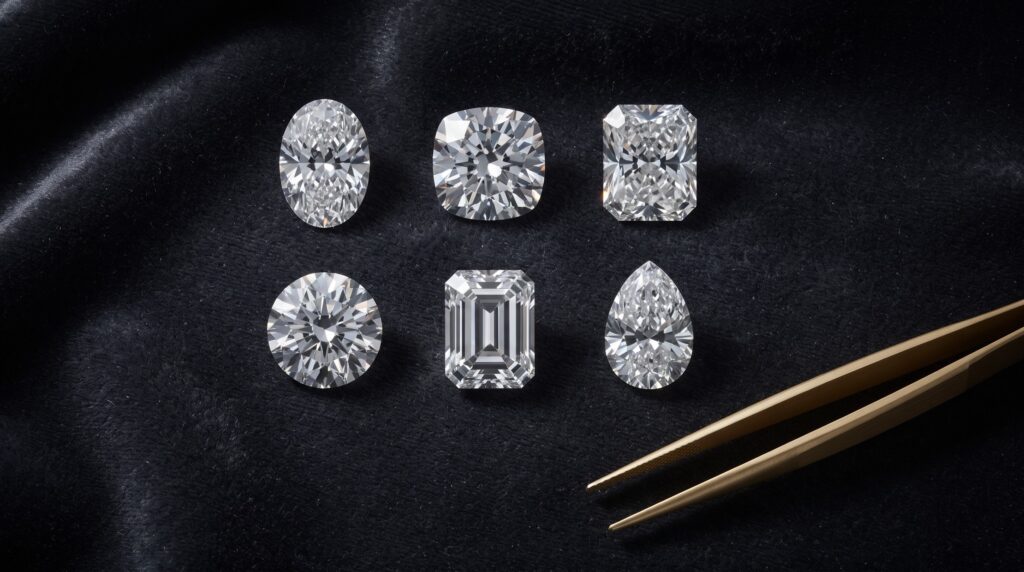
Not every stone shape wears size the same way. Some shapes stretch the face of the stone for a bigger look at the same weight, while others concentrate mass toward the center. Choosing the right stone shape matters more at 2 to 3 carats than it does at smaller weights, since the visual difference between shapes becomes far more noticeable.
Oval Cut
The oval consistently ranks as the top choice for buyers chasing the 2 carat lab grown diamond ring trend. Its elongated shape creates a larger face-up appearance than a round diamond of equal weight, and it flatters most finger lengths. For many couples, an oval center stone is the shape most closely associated with the 2 carat lab grown diamond ring trend because it delivers maximum visual impact.
Elongated Cushion
This shape blends softened corners with a stretched silhouette, giving it a vintage-modern look that photographs beautifully. It is popular among buyers who want size without sharp, geometric lines, making it one of the fastest-growing choices within the 2 carat lab grown diamond ring trend.
Radiant Cut
Radiant cuts hide small inclusions well and offer strong brilliance at larger carat weights, making them a practical pick for buyers prioritizing sparkle over strict color grading. As the 2 carat lab grown diamond ring trend continues to grow, radiant-cut diamonds remain a favorite for shoppers who want exceptional brilliance in a larger lab-grown center stone.
Beyond these three, round brilliants still hold steady demand thanks to unmatched light performance. Emerald cuts appeal to buyers who prefer clarity and clean lines over maximum sparkle. Pear shapes suit those wanting a distinctive silhouette, while princess and Asscher cuts serve buyers looking for structured, architectural settings. For couples exploring color, Lab Grown Fancy Color Diamonds in yellow and pink hues are increasingly requested as statement alternatives to traditional white stones.
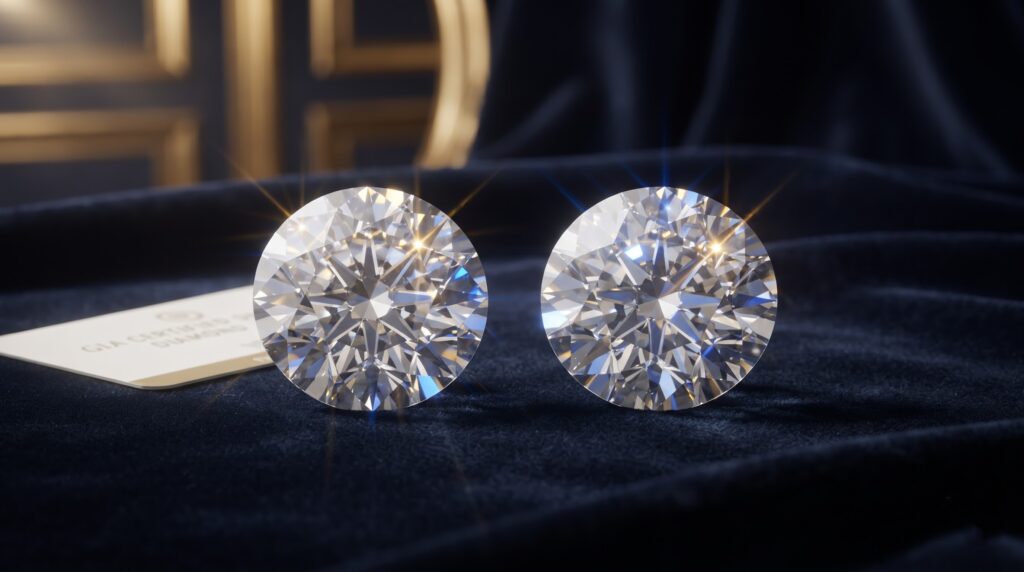
2 Carat Lab Grown Diamond Ring Trend vs Natural Diamond Buying : The Real Difference
| Factor | 2-3 Carat Lab Grown Diamond | Natural Diamond (Same Size) |
|---|---|---|
| Price per carat | 60-80% lower on average | Full market rate |
| Size for budget | 2-3 carats achievable at mid-range budgets | Often requires stepping down in carat |
| Certification | GIA or IGI graded, clearly labeled | GIA or GIA graded, clearly labeled |
| Resale perception | Growing acceptance, still evolving | Established secondary market |
| Environmental footprint | Lower reported mining impact | Requires extraction and land disturbance |
To be fair, round natural diamonds still dominate a large share of total engagement ring sales, and some buyers remain committed to natural stones for tradition or resale reasons. That said, the price gap has grown wide enough that many couples now choose a larger lab grown center stone specifically because it lets them buy the size they actually wanted, rather than settling for the size their budget allowed. This purchasing behavior has become a major force behind the 2 carat lab grown diamond ring trend, and it also explains the rapid rise in large lab grown diamond rings 2026 demand. For many shoppers comparing options, the question is no longer whether they can afford a larger diamond, but which shape and quality combination represents the Best Diamond for Engagement Ring for their budget and lifestyle. As more couples prioritize visual impact and value over traditional size limitations, the 2 carat lab grown diamond ring trend is unlikely to reverse anytime soon.
How to Choose the Right 2-3 Carat Lab Grown Diamond for Your Style
Choosing a larger center stone involves more than picking a carat number. Consider these six factors before you commit.
- Personal style – Vintage lovers often gravitate toward cushion or emerald cuts, while modern minimalists tend to prefer round or oval shapes.
- Hand and finger proportions – Elongated shapes like oval and radiant tend to suit shorter fingers better, since they create a lengthening effect.
- Setting compatibility – A larger stone needs a secure setting; hidden halos and cathedral settings both work well for a Diamond Engagement Ring built around a 2 to 3 carat center.
- Budget advantage – Lab grown options routinely free up 40 to 60 percent of budget compared to natural stones of equal size, which many couples redirect toward better cut quality.
- Occasion fit – A 2 carat stone reads as a strong engagement statement, while 3 carats leans into investment-level presence for buyers who want a lasting centerpiece.
- Lab-grown vs natural decision – Most buyers weighing this choice today start by comparing Lab Diamond Quality against natural stone pricing, and increasingly land on lab grown for the size-to-cost ratio it delivers.
Before you finalize your choice, try the stone on your hand under different lighting. A diamond that looks stunning under a jeweler’s spotlight can read differently in daylight, and you will want to pay attention to how it catches light in both settings.
What B2B Buyers and Diamond Manufacturers Should Know
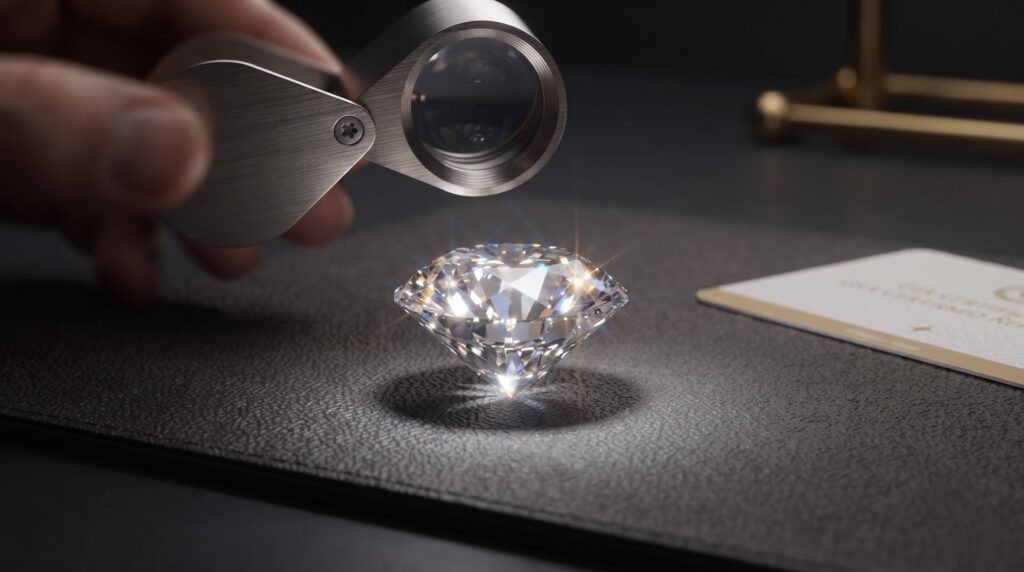
Retailers and wholesalers riding the 2 carat lab grown diamond ring trend need to think beyond single-stone sourcing. Bulk buyers should request matched parcels graded to consistent cut standards, since inconsistent proportions across a batch create returns and customer complaints down the line.
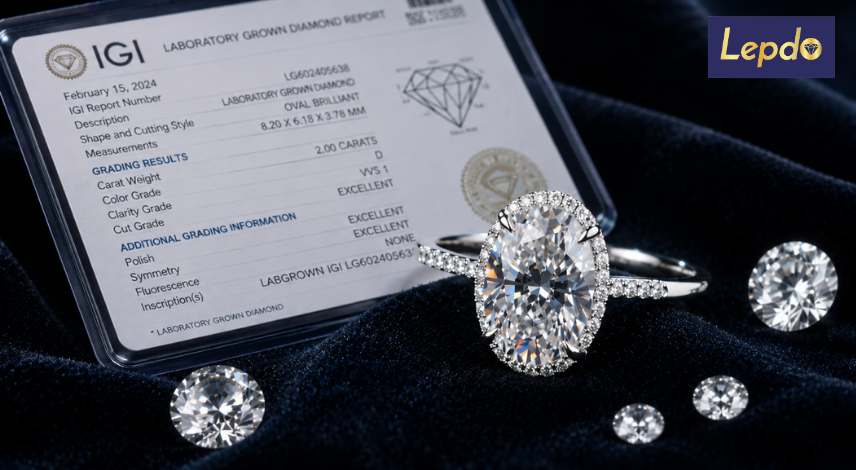
IGI and GIA certification standards apply to lab grown stones the same way they apply to natural ones, covering cut, color, clarity, and carat weight. A Lab Diamond Certification should always accompany stones above 1 carat, and buyers sourcing 2 to 3 carat inventory should insist on it without exception. Rapaport pricing benchmarks, while built around natural diamonds, still influence how lab grown pricing is perceived relative to market expectations, so understanding that reference point helps when setting retail margins.
In my experience working with wholesale accounts, the manufacturers who win repeat business are the ones who can guarantee consistent cut grading across large orders, not just competitive pricing on a single stone. Manufacturers like Lepdo Diamonds, based in Surat’s diamond manufacturing hub, typically grade CVD and HPHT stones against strict internal cut benchmarks before certification, which matters more at larger carat weights where even small proportion errors become visible to the naked eye.
Large Lab Grown Diamond Ring Trends in the USA (2026-2027)
Oversized lab grown diamond rings are showing up more frequently in bridal editorial content and social media engagement announcements, a shift that mirrors broader cultural comfort with lab grown stones as a legitimate, permanent choice rather than a budget compromise. This visibility has become one of the strongest signals behind the 2 carat lab grown diamond ring trend, which continues to influence what couples consider a standard engagement ring size. Industry trade reporting has repeatedly noted lab grown diamonds capturing a growing share of total US engagement ring sales over the past several years, a trend directly tied to the 2 carat lab grown diamond ring trend and the bigger lab diamond trend 2026 buyers are chasing.
Hidden halo settings, low-profile east-west mountings, and toi et moi styles featuring a larger lab grown center stone are gaining ground among younger buyers. These designs are increasingly associated with the 2 carat lab grown diamond ring trend because they maximize visual size while maintaining a contemporary, wearable look. Cultural visibility around celebrity engagements, without naming specific individuals, continues to influence what shapes and settings trend season to season.
Retailers report that customers increasingly walk in already knowing they want a 2 carat lab grown diamond ring trend piece rather than being introduced to the idea in-store, which changes how showrooms need to merchandise their cases and plan inventory for larger lab-grown center stones.
How to Evaluate Quality in 2-3 Carat Lab Grown Diamonds
When I assess a 2 carat lab grown diamond, the first thing I check is light performance, not size. Brilliance, fire, and scintillation matter more at larger carat weights because flaws in cut proportion become far easier to spot with the naked eye.
- Check pavilion depth – A pavilion cut too deep or too shallow leaks light and dulls brilliance, regardless of carat weight.
- Review table percentage – A table between 54 and 62 percent generally balances brightness and fire well for most shapes.
- Look for a bowtie effect – Elongated shapes like oval and cushion can show a dark bowtie shadow across the center; minimal bowtie indicates better cutting.
- Confirm clarity grade under magnification – At 2 to 3 carats, inclusions invisible in smaller stones can become visible, so reviewing Lab Diamond Clarity Grades carefully matters.
- Ask about fluorescence – Strong fluorescence can affect how a stone appears in daylight, so understanding Lab Diamond Fluorescence before purchase avoids surprises.
A certified diamond report should back up every claim a seller makes about cut, color, and clarity. Never take verbal assurances as a substitute for paperwork, especially at this price point.
Conclusion
The 2 carat lab grown diamond ring trend did not happen by accident. It grew out of real gains in production technology, more transparent certification standards, and a generation of buyers who simply expect more transparency and value from a major purchase. Bigger stones no longer mean bigger compromises on quality, and that combination of size, brilliance, and price is exactly why couples are moving toward 2 and 3 carat center stones in growing numbers.
For retailers, this shift means stocking smarter, verifying certification on every stone, and understanding cut quality well enough to guide customers confidently. For consumers, it means asking better questions before choosing a shape, a setting, and a supplier. Buyers evaluating suppliers for larger lab grown stones often start by requesting a sample parcel, something Lepdo Diamond offers to verified B2B accounts sourcing certified inventory.
Whichever path you take, understanding what makes the Best Diamond for Engagement Ring choices work, size, cut, and certification together, will always matter more than carat weight alone. Bigger can be better, but only when it is backed by real quality behind the sparkle.
Frequently Asked Questions About the 2 Carat Lab Grown Diamond Ring Trend
1. What is the 2 carat lab grown diamond ring trend?
It is the growing consumer shift toward choosing 2 carat or larger lab grown diamonds as engagement ring center stones. Lower per-carat pricing compared to natural diamonds has made larger sizes accessible to a much wider range of buyers, changing what a typical first-choice carat weight looks like in 2026.
2. Is a 2 carat lab grown diamond cheaper than a natural diamond?
Yes, a 2 carat lab grown diamond typically costs 60 to 80 percent less than a natural diamond of the same size and quality grade. This price gap is the primary driver behind the trend, since it lets buyers reach larger carat weights without expanding their total budget.
3. Which shape looks biggest for a 2 carat lab grown diamond?
Oval and elongated cushion shapes generally appear largest at 2 carats because their stretched outlines increase face-up surface area compared to round or princess cuts. Radiant cuts also read larger due to their rectangular profile and brilliant faceting pattern.
4. Does a 2 carat lab grown diamond have a GIA cut grade?
Yes, GIA grades lab grown diamonds using the same cut, color, clarity, and carat criteria applied to natural stones. IGI also certifies lab grown diamonds at high volume, and both reports should be checked before purchasing any 2 to 3 carat stone.
5. What is the biggest quality risk with a 2 carat lab grown diamond ring?
The biggest risk is poor cut proportions that reduce brilliance despite a large carat weight. A poorly cut stone can look glassy or lifeless even at 2 carats, which is why verified certification and in-person evaluation matter more than size alone.
6. Are lab-grown 2 carat diamonds as good as natural diamonds?
Chemically and optically, lab grown and natural diamonds are identical, since both are crystallized carbon with the same hardness and brilliance potential. The truth is that grading standards, not origin, determine quality, so a well-cut lab grown stone performs exactly like a well-cut natural one.
7. Which shape is best for a 2-3 carat engagement ring?
Oval, cushion, and radiant cuts are generally considered the strongest choices for 2 to 3 carat rings because they maximize visual size while hiding minor inclusions well. The right choice ultimately depends on hand shape, personal style, and setting preference.
8. How do I choose a reliable 2-3 carat lab grown diamond manufacturer or supplier?
Look for suppliers offering IGI or GIA certification, transparent cut grading, and consistent sourcing practices across bulk orders. Established manufacturers with direct-from-source supply chains, rather than resellers, typically offer better consistency and pricing for retailers buying at volume.