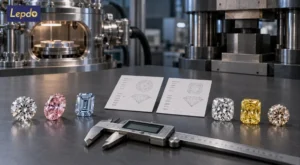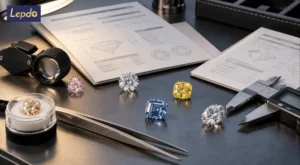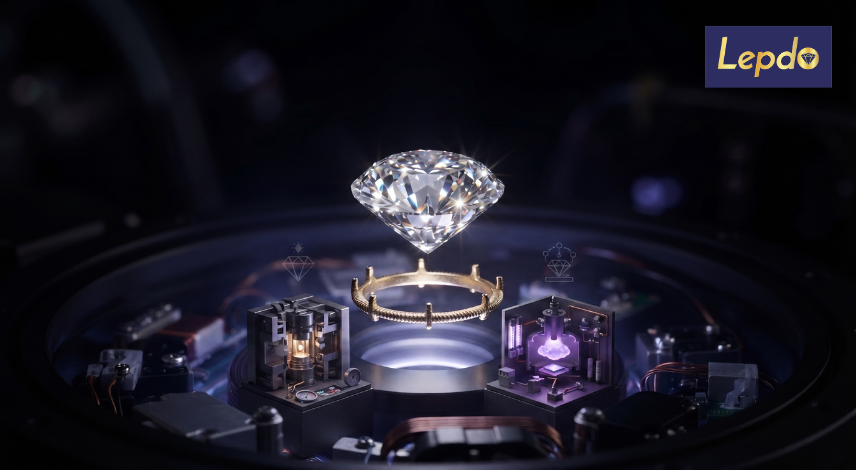
How Are Lab Grown Diamonds Made? The Complete Science Behind CVD and HPHT Diamonds
 by lepdogroup@gmail.com
1 comment
by lepdogroup@gmail.com
1 comment
Lab grown diamonds are created in controlled laboratory chambers using either CVD (Chemical Vapor Deposition) or HPHT (High Pressure High Temperature) technology, which replicate the natural diamond growing process in weeks instead of billions of years. Buyers get identical carbon structure at a lower cost. Lepdo Diamonds supplies IGI and GIA certified stones grown through both methods.
A jeweler in Dallas told me something last year that stuck with me. He said more than half his engagement ring customers now ask about lab grown before he even brings up the topic. That is not a fluke. Multiple US retail jewelry trackers reported lab grown diamonds crossing the 50% mark of engagement ring center stones sold in 2024, and that share has only grown since.
So how are lab grown diamonds made, and why do so many buyers trust one enough to put it on a ring finger? The short version involves plasma chambers, industrial presses, and a surprising amount of patience. The longer version touches on GIA grading, carat weight, and two very different manufacturing paths that somehow land on the exact same result.
This piece walks through the real science behind lab grown diamond production, how CVD and HPHT diamonds actually form, and what both retail shoppers and B2B manufacturers should check before sourcing one. You will want to pay attention to the differences between the two methods, because they shape price, color, and even how a stone reads under jeweler’s light.
What Is a Lab Grown Diamond?
A lab grown diamond is a real diamond. Chemically and optically, it matches a mined stone atom for atom. The difference sits entirely in how it formed, not what it is made of.
It carries the same carbon crystal lattice, the same hardness on the Mohs scale, and the same fire and brilliance you would expect from a diamond pulled out of the earth. The only real distinction is where it grew and how long that process took.
Quick Info Box
Definition: A diamond grown in a lab through CVD or HPHT technology that replicates natural diamond formation.
Key Types or Varieties: CVD diamonds, HPHT diamonds, HPHT-treated CVD diamonds, Type IIa, Type IIb (blue), fancy color lab diamonds.
Best For: Engagement rings, fine jewelry, investment-conscious buyers, and wholesale jewelry programs.
Key Difference or Advantage: Same 4Cs quality as natural diamonds, grown in weeks, priced significantly lower per carat.
This entire category sits inside the broader world of modern Diamond Manufacturing, which today blends traditional cutting houses with diamond growing facilities working side by side, sometimes under the same roof.
The Two Main Growing Methods: CVD and HPHT Explained
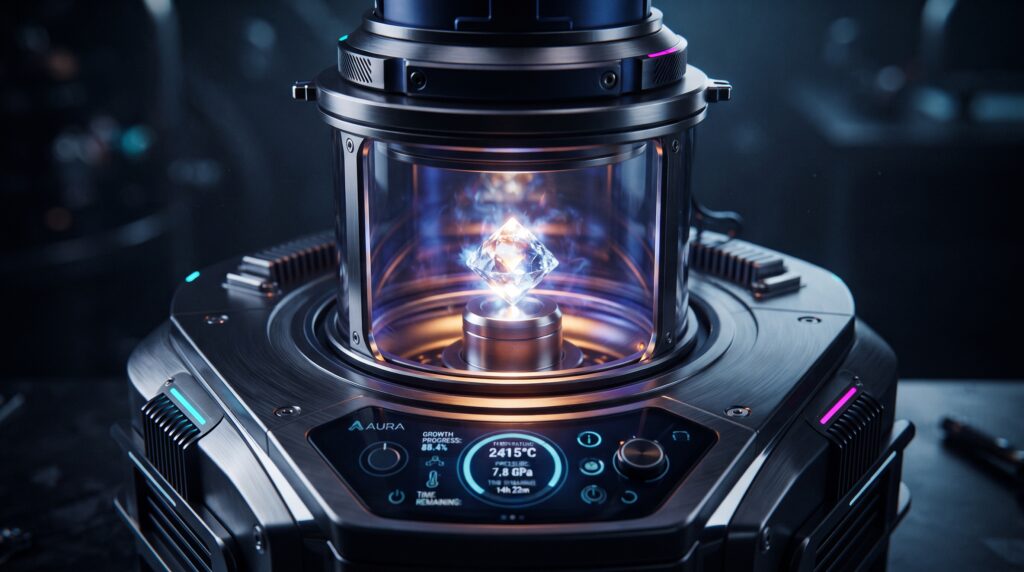
Most people asking how lab grown diamonds are created assume there is one process. There are actually two, and they behave differently enough that experienced buyers learn to ask which one produced their particular stone.
CVD Diamonds: Grown Layer by Layer
CVD stands for Chemical Vapor Deposition. A thin diamond seed plate sits inside a sealed reactor filled with carbon-rich gas, usually a mix of methane and hydrogen. Microwave energy ionizes that gas into plasma, and carbon atoms begin drifting down onto the seed, stacking one atomic layer on top of the next.
Here is what surprises most first-time buyers: the lab grown diamond making process at this stage often takes four to six weeks per rough stone, sometimes longer for larger carat weight targets. CVD Diamonds frequently start out as Type IIa material, meaning very low nitrogen content, which tends to produce excellent natural color straight out of the chamber, no treatment required.
HPHT Diamonds: Recreating the Earth’s Pressure Cooker
HPHT stands for High Pressure High Temperature. This method mimics the exact conditions found nearly 100 miles beneath the earth’s surface, applying pressure close to 1.5 million pounds per square inch alongside heat above 2,700 degrees Fahrenheit.
A carbon source and a small diamond seed sit inside a massive hydraulic press, and growth happens through a molten metal solvent that carries carbon atoms to the seed. HPHT Diamonds were actually the very first lab grown diamonds ever produced at commercial scale, dating back to the 1950s, decades before CVD technology matured enough to compete.
Fancy Color Lab Diamonds
Both methods can produce color. Boron introduced during HPHT growth creates blue diamonds. Nitrogen vacancy manipulation during CVD growth, sometimes paired with post-growth treatment, can produce yellow, pink, or even red tones. These fancy color lab diamonds have quietly become a real category of their own rather than a novelty.
Beyond these three main paths, the category also includes HPHT-treated CVD stones, where a CVD diamond gets processed a second time under HPHT conditions purely to improve color. There are melee-size lab diamonds built for pave settings, large format lab diamonds above 3 carats gaining popularity for statement pieces, and Type IIb blue lab diamonds that collectors chase for their rarity even in lab grown form.
Lab Grown Diamonds vs Natural Diamonds: The Real Difference
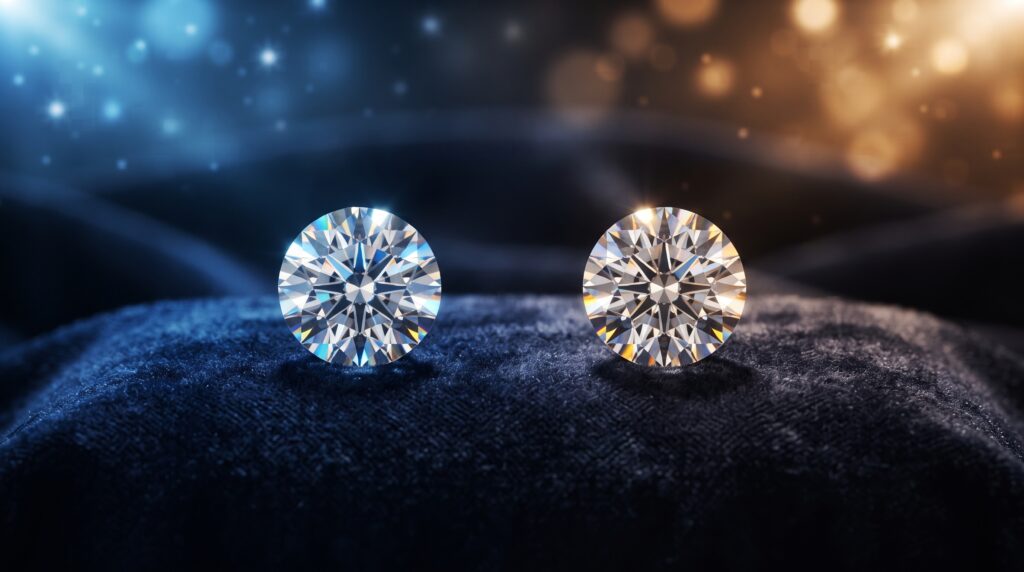
| Factor | Lab Grown Diamond | Natural Diamond |
|---|---|---|
| Formation Time | Weeks to a few months | Billions of years underground |
| Price per Carat | Typically 60-85% lower | Market rate, tied to Rapaport pricing |
| Chemical Structure | Identical carbon crystal | Identical carbon crystal |
| Certification | IGI, GIA (with lab-grown notation) | GIA, AGS |
| Resale Value Perception | Still developing, lower recovery | Historically more established |
The truth is that a trained gemologist cannot tell a lab grown diamond apart from a natural one by eye, or even under a standard loupe. Specialized detection equipment is required, and most jewelry stores do not own it. What differs here is scarcity, not beauty.
To be fair, natural diamonds still dominate the very high end of the resale and investment market, mostly because of decades of established trading history that lab grown stones simply have not built yet. That gap is closing, but it has not closed completely.
How to Choose the Right Lab Grown Diamond for Your Style
- Match the shape to your hand or design vision. Elongated cuts like ovals and emeralds tend to flatter longer fingers, while round and cushion shapes work well on almost any hand.
- Consider how the stone holds up in daily wear. A round brilliant or cushion cut hides small inclusions better than a step cut does, which matters if you tend to catch your ring on things.
- Think about setting compatibility. Prong settings let light in and show off brilliance, while bezel settings protect fancy shapes prone to chipping at the corners, like emerald and marquise cuts.
- Weigh the budget advantage. Most buyers do not realize how much room this opens up. Choosing lab grown over natural at the same carat weight and clarity grade can free up 50% or more of your budget for a better setting or a larger center stone.
- Match the stone to the occasion. Engagement rings usually call for GIA or IGI certified DEFG color with VVS-VS clarity, while fashion jewelry can comfortably use lower color and clarity grades without anyone noticing the difference.
- Decide between CVD and HPHT based on your priorities. CVD often delivers cleaner Type IIa color at a slightly lower cost, while HPHT can produce exceptional whiteness and sometimes gets used to enhance CVD stones after their initial growth cycle. Buyers comparing sourcing options often start by reviewing established CVD Diamond Manufacturers to get a feel for pricing tiers before narrowing things down.
Before you finalize your choice, ask your jeweler for the full grading report and confirm whether the stone is CVD or HPHT grown. This detail can affect long-term color stability in certain fancy color stones, and it is worth asking about even if the salesperson does not bring it up first.
What B2B Buyers and Diamond Manufacturers Should Know
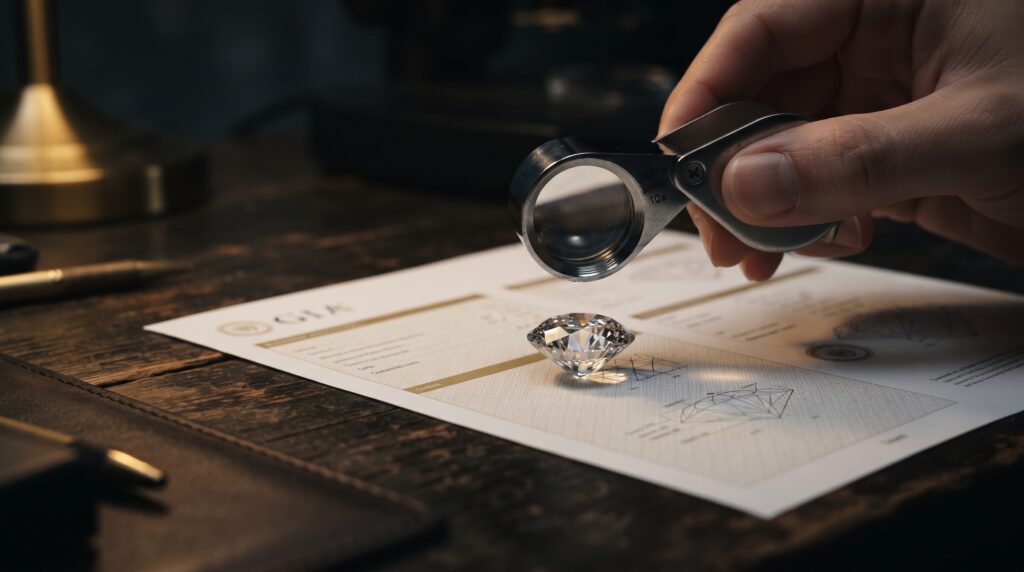
Wholesale buying for lab grown diamonds runs on different logistics than natural stone sourcing. Bulk parcels typically get sold by carat weight bracket, color range, and clarity tier, with pricing loosely benchmarked against Rapaport lists even though lab grown stones trade at a steep discount to those published figures.
Cut grading consistency matters enormously once you are buying at scale. A parcel with mixed proportions, inconsistent table percentage, or uneven pavilion depth will frustrate retail partners who expect uniform light return across an entire display case. Manufacturers active in Lab Grown Diamond Manufacturers Surat networks, where the bulk of global CVD and HPHT production actually happens, generally run internal quality checks long before a parcel ever reaches IGI or GIA for formal certification.
In my experience working alongside wholesale buyers, the retailers who do best are the ones who request certificate samples from an entire parcel, not just the top stone in the box. A single fancy cut diamond manufacturer can produce dramatically different consistency from one batch to the next, so ongoing quality audits genuinely protect your margin over time.
Buyers should also compare HPHT Diamond Manufacturers directly against CVD suppliers whenever color-treated stock is involved, since post-growth treatment disclosure is a certification requirement, not an optional courtesy. Understanding these mechanics is part of operating inside the modern Diamond Industry, where lab grown supply chains now run parallel to traditional mined pipelines rather than competing against them for the same buyers.
Lab Grown Diamond Jewelry Trends in the USA (2026-2027)
Fine jewelry buyers are moving past simple solitaires. Bezel settings, hidden halos, and toi-et-moi styles are showing up more often in bridal collections, frequently built around lab grown center stones because the price point allows for larger carat weight without stretching the budget past comfort.
Fancy cut diamond jewellery, especially elongated cushions and radiants, keeps gaining ground against the traditional round brilliant. That said, round still holds the largest single share of engagement ring sales overall, so this is a shift in preference rather than a full replacement.
Cultural visibility around lab grown engagement rings has pushed mainstream comfort with the category higher than most retailers predicted even five years ago. Industry data from major US bridal retailers now shows lab grown share of engagement center stones holding above 50% across several regions, a figure that would have seemed aggressive back in 2022.
Colored lab diamonds, particularly soft yellow and pink tones, are also showing up more in statement rings and stacking bands. Retailers report strong interest from younger buyers who treat color as a personalization choice rather than a compromise on quality.
How to Evaluate Quality in Lab Grown Diamonds
When I assess a lab grown diamond, the first thing I check is light performance, not the paper grades sitting in front of me. Brilliance, fire, and scintillation tell you more about real-world sparkle than a certificate number ever will.
- Check the pavilion angle and table percentage together, since a shallow pavilion paired with an oversized table often leaks light straight out the bottom of the stone.
- Look for a bowtie effect in elongated shapes like ovals and pears, which shows up as a dark shadow running across the center.
- Confirm the length-to-width ratio matches the intended shape category, since a cushion cut that reads square rather than rectangular changes the entire look of the ring.
- Review the depth percentage against GIA excellent-cut ranges for that specific shape rather than assuming one number fits every cut.
- Ask whether color grading reflects natural CVD or HPHT growth, or post-growth treatment, since honest disclosure affects both long-term value and overall diamond certification integrity.
Most buyers focus almost entirely on carat weight and color letter. That is a mistake, and an understandable one. Cut quality drives how a diamond actually looks on the hand far more than an extra tenth of a carat ever will, and this is where I see the most disappointment when buyers skip the step of asking for a full report before mentioning certified diamonds at all.
Conclusion
Understanding how lab grown diamonds are made comes down to two proven paths, CVD and HPHT, both producing genuine diamond material through very different physical processes. Retail buyers gain access to larger, better-graded stones at a fraction of natural diamond pricing, while wholesale buyers need to prioritize cut consistency and certified sourcing over price alone. Quality still lives in the cut, not just the certificate sitting in the box.
Whichever method produced your stone, the fundamentals of good buying do not change. Ask questions, check the report, and let the light performance make the final case.
Retailers sourcing certified lab-grown diamonds can explore Lepdo Diamonds current stock across DEFG color and VVS-VS clarity ranges, grown through both CVD and HPHT methods and backed by IGI and GIA paperwork.
A diamond grown in a matter of weeks still has to earn its sparkle the same way one formed over billions of years does, through the cut. That is the one thing science has never managed to shortcut.
Frequently Asked Questions About How Lab Grown Diamonds Are Made
1. What is how are lab grown diamonds made?
Lab grown diamonds are made using CVD or HPHT technology inside controlled laboratory chambers that replicate the pressure, heat, or gas conditions needed to form diamond crystal structure. A tiny diamond seed grows into a full rough stone over several weeks, then gets cut and polished just like any natural diamond.
2. Is a lab grown diamond cheaper than a natural diamond?
Yes, lab grown diamonds typically cost 60 to 85 percent less than natural diamonds of the same carat weight, color, and clarity grade. This gap exists because lab production removes mining costs and scarcity pricing, not because the stone is lower quality.
3. Which lab grown diamond method looks the most impressive?
CVD diamonds often produce cleaner Type IIa color with fewer inclusions straight from growth, while HPHT diamonds can achieve exceptional whiteness through post-treatment. Neither method is universally more impressive, since final appearance depends far more on cut quality than on which growing process was used.
4. Does a lab grown diamond have a GIA cut grade?
Yes, GIA issues full cut grades for lab grown diamonds using the same Excellent to Poor scale it applies to natural stones. IGI also certifies lab grown diamonds and currently handles a larger share of global lab grown certification volume overall.
5. What is the biggest quality risk with lab grown diamonds?
Inconsistent parcel quality from unverified suppliers is the biggest risk, particularly uneven cut proportions across a bulk order. Always request individual grading reports rather than trusting a single sample stone pulled from a larger parcel.
6. Are lab-grown diamonds as good as natural diamonds?
Lab grown diamonds share identical chemical composition, hardness, brilliance, and fire with natural diamonds, verified independently by GIA and IGI grading. The main difference is origin and current resale market perception, not physical or optical quality.
7. Which lab grown diamond type is best for an engagement ring?
Round brilliant and oval CVD diamonds in DEFG color with VVS-VS clarity remain the most popular engagement ring choices among US buyers. They balance durability, everyday brilliance, and broad setting compatibility better than most fancy shapes.
8. How do I choose a reliable lab grown diamond manufacturer or supplier?
Look for suppliers offering IGI or GIA certification as standard practice, transparent sourcing information, and sample parcels before any bulk commitment. Established manufacturers with direct Surat production ties typically offer more consistent cut grading across large orders.