VS2 Diamond: Is It the Best Value Clarity Grade for Jewelry Retailers?
 by lepdogroup@gmail.com
0 comments
by lepdogroup@gmail.com
0 comments
A VS2 diamond has inclusions that are very slightly visible only under 10x magnification, invisible to the naked eye in most cases. This makes VS2 diamond best value clarity for retailers who want brilliant, eye-clean stones without paying premium VVS pricing. Lepdo Diamonds offers certified VS2 options across popular fancy shapes.
A GIA report crosses a wholesaler’s desk showing a 1.5 carat round brilliant, VS2 clarity, and the buyer hesitates. Should the order go to VVS2 for peace of mind, or does VS2 already deliver everything the customer will ever notice? This exact question plays out thousands of times a week across US jewelry counters, and it is costing retailers margin they do not need to give up.
The vs2 diamond best value clarity retailers debate is not new, but it has gotten louder as lab-grown supply has widened price gaps between grades. Buyers want brilliance and confidence. Retailers want healthy margins without inventory that raises eyebrows under a jeweler’s loupe.
Here is what this guide will do: break down what VS2 clarity actually means, how it stacks up against SI1 and VVS2, what B2B buyers should watch for when sourcing at scale, and how to evaluate quality using the same GIA and 4Cs standards professional gemologists rely on every day. By the end, you will know exactly where VS2 fits in your case and your inventory plan.
What VS2 Diamond Clarity Actually Means
VS2 stands for “Very Slightly Included, second level.” It sits just below VS1 and above SI1 on the GIA clarity scale, and it means a diamond has minor inclusions that a trained grader can spot at 10x magnification, but that are typically invisible to the unaided eye.
For most shoppers, a well-cut VS2 Diamond looks exactly as clean as a VVS stone once it is mounted and worn. That is precisely why this grade dominates mid-to-upper market engagement ring sales.
Quick Info Box
- Definition: A diamond clarity grade with minor inclusions visible only under 10x magnification, generally eye-clean when set.
- Key Types or Varieties: VS2 round, VS2 oval, VS2 cushion, VS2 emerald, VS2 pear, VS2 radiant.
- Best For: Engagement rings, statement jewelry, retailers balancing quality with margin.
- Key Difference or Advantage: Near-VVS visual clarity at a meaningfully lower price point per carat.
Most Popular Types or Variations And Who They Are For
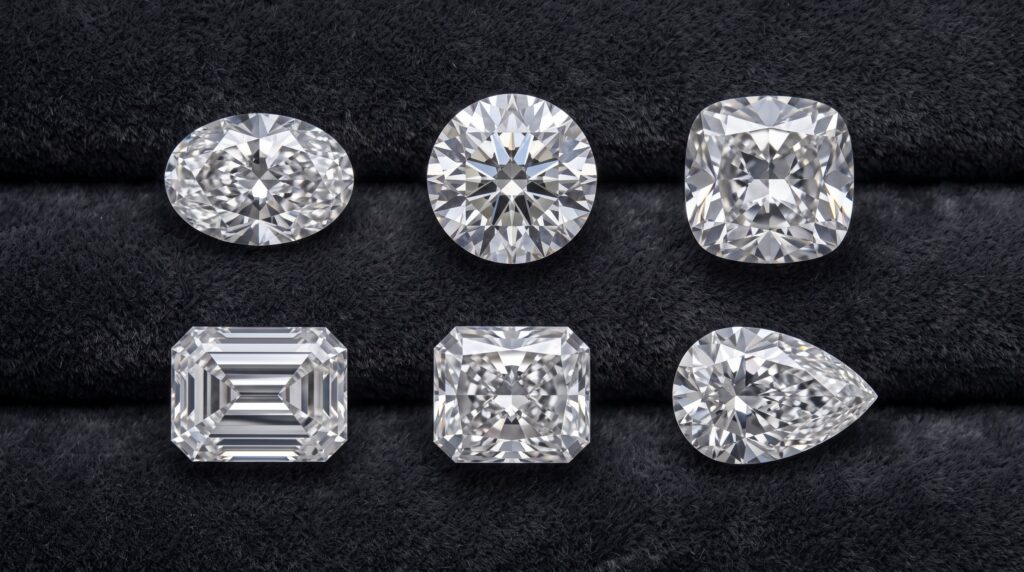
Not every VS2 diamond behaves the same way, and shape plays a bigger role than most buyers realize. Certain cuts hide inclusions naturally, while others expose them under bright light.
Round Brilliant VS2
The round brilliant’s 58 facets scatter light aggressively, which camouflages small inclusions extremely well. This is the safest VS2 pick for a retailer stocking engagement rings for first-time buyers who want zero visible flaws.
Oval and Pear VS2
Ovals and pears have larger open facets near the center, so inclusion placement matters more here. A gemologist should check the table and pavilion area specifically before approving stock for a bridal collection.
Emerald and Asscher VS2
Step-cut stones like emerald and Asscher shapes are the least forgiving. Their open facets act like windows, so VS2 clarity needs careful inspection before it goes on a retail floor. Many buyers upgrade to VS1 for step cuts specifically for this reason.
Cushion, Radiant, Princess, and Marquise VS2
These mixed and brilliant cuts sit comfortably in the middle. Cushion and radiant shapes mask inclusions almost as well as round brilliants, making them popular choices for fashion rings and pendants. Princess cuts hide color and minor inclusions in their corners, while marquise stones need a quick check near the points where inclusions can sometimes catch light.
Most buyers shopping VS2 in these fancy shapes are looking for a unique diamond shape with strong visual impact and a price that still leaves room for a nicer setting or a larger carat weight. This is where VS2 earns its reputation among value-conscious consumers and the retailers who serve them.
VS2 vs SI1 : The Real Difference
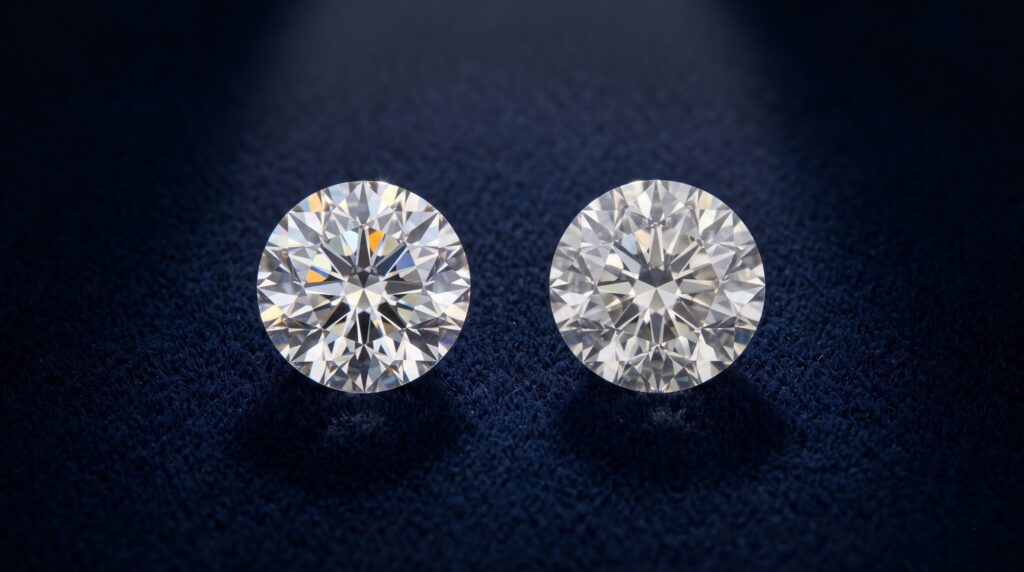
The comparison retailers get asked about most often is VS2 against SI1. Both can look eye-clean, but the risk profile differs sharply.
| Factor | VS2 Diamond | SI1 Diamond |
|---|---|---|
| Inclusion Visibility | Minor, generally invisible to naked eye | Can be visible in larger stones or step cuts |
| Price per Carat | Higher, but justified by consistency | Lower, but variable stone-to-stone |
| Best Shapes | Works well across all shapes | Safest in round, cushion, princess |
| Retailer Risk | Low return risk | Moderate, needs individual inspection |
| Resale/Perceived Value | Strong, buyer confidence higher | Good, but requires disclosure of inclusions |
The truth is that SI1 can absolutely compete with VS2 in round brilliants under 1 carat, where light performance masks nearly everything. Once you move into larger carat weights or open step cuts, that gap widens fast, and a SI1 Diamond needs individual stone review rather than blind trust in the grade alone. For retailers building repeat customer relationships, VS2 removes that guesswork.
How to Choose the Right VS2 Diamond for Your Style
Selecting a VS2 diamond is not just about the certificate number. Consider these six factors before committing to a purchase or a wholesale order.
- Personal style fit. Brilliant cuts flatter VS2 clarity best, while step cuts demand a closer look at inclusion location.
- Hand and finger proportion. Larger stones in open facets show more, so pair bigger VS2 carats with brilliant or mixed cuts rather than emerald shapes.
- Setting compatibility. Prong settings expose more of the stone than bezel settings, which can help hide minor inclusions near the girdle.
- Budget advantage. VS2 typically runs 15 to 25 percent below VVS2 pricing at comparable carat weight and color, according to industry Rapaport pricing benchmarks.
- Occasion. Engagement rings and heirloom pieces benefit from VS2’s balance of clarity and value, while fashion jewelry can often step down to SI1 without issue.
- Lab-grown vs natural. A vs2 lab grown diamond delivers identical optical and physical properties to a natural stone at a lower cost basis, which is reshaping how retailers stock bridal cases. Buyers exploring Lab Grown Diamonds at VS2 clarity are increasingly choosing larger carat weights for the same budget.
Before you finalize your choice, ask your supplier for the actual GIA or IGI report and view the plotting diagram, not just the grade on paper.
What B2B Buyers and Diamond Manufacturers Should Know
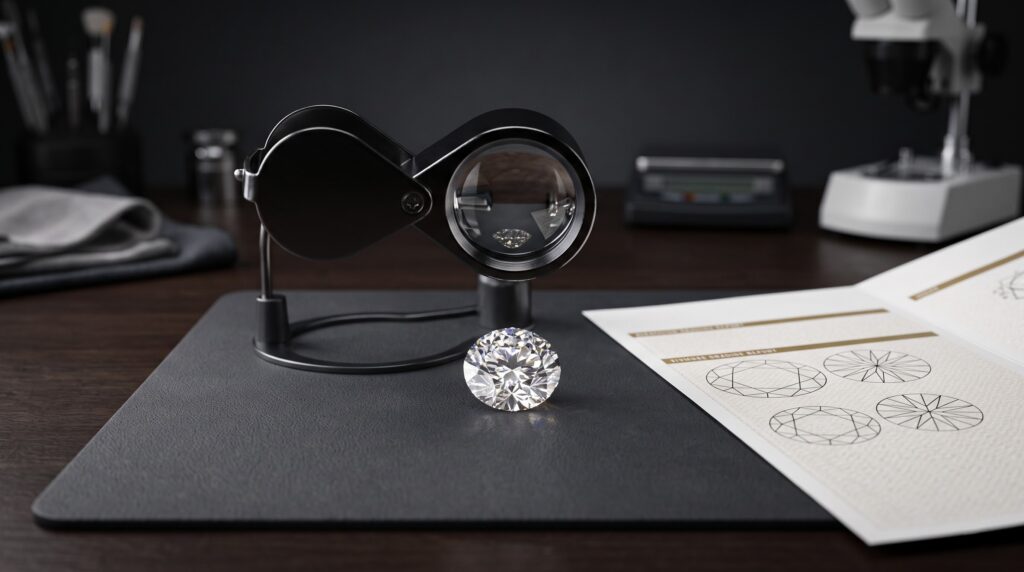
Wholesale VS2 sourcing requires more discipline than most new buyers expect. Consistency across a parcel matters as much as the grade printed on any single certificate.
Bulk purchasing means grading variance is real. Two VS2 stones from different labs can look noticeably different face-up, so a fancy cut diamond manufacturer with strong in-house quality control saves retailers from costly returns. Cut grading consistency, not just clarity, determines whether a parcel will actually sell.
Certification standards matter just as much. IGI and GIA use similar clarity scales, but grading tendencies differ slightly, particularly on lab-grown stock, and buyers should factor that into pricing negotiations. Reputable suppliers issue full Diamond Certification with every stone as standard practice, not an upsell. Manufacturers like Lepdo Diamonds, based in Surat’s diamond manufacturing hub, typically grade CVD and HPHT stones against both GIA and IGI standards before a parcel ever ships to a retail partner.
In my experience working parcel by parcel with cutters, the biggest hidden cost is not the clarity grade itself. It is inconsistent cut quality within a “VS2” batch that never gets caught until stones reach the sales floor.
VS2 Diamond Jewelry Trends in the USA (2026 to 2027)
Retro-inspired settings paired with clean, high-clarity center stones are dominating US bridal collections heading into 2026. Bezel and half-bezel settings are gaining ground because they showcase VS2 clarity while adding a modern, understated look.
Minimalist and stackable jewelry continues climbing, with consumers favoring smaller, cleaner stones over heavily embellished pieces. Buyers researching Diamond Minimal Jewelry styles are frequently landing on VS2 clarity as their default choice, since it supports a clean aesthetic without unnecessary premium cost. Cultural visibility around lab-grown engagement rings has also pushed VS2 lab-grown demand up significantly across major US metro markets, according to recent industry trade reporting.
Oval and cushion shapes remain the fastest-growing fancy shapes in bridal, with VS2 clarity appearing as the most requested grade among shoppers comparing options in the $3,000 to $8,000 range. That said, round diamonds still hold the largest overall share of engagement ring sales nationally.
How to Evaluate Quality in VS2 Diamonds
When I assess a VS2 stone, the first thing I check is not the clarity plot. It is the cut grade, because a poorly cut VS2 diamond will always underperform a well-cut SI1.
Light performance depends on proportions working together. Brilliance, fire, and scintillation all come from how light bounces off the pavilion and exits through the table, so table percentage and depth percentage both need to fall within GIA’s excellent or very good ranges. A shallow or overly deep cut kills light return regardless of clarity grade.
Here are five things I check on every VS2 stone:
- Confirm the GIA or IGI plotting diagram matches the physical stone’s inclusion map.
- Check pavilion depth and table percentage against ideal cut ranges for that shape.
- Look for a bowtie effect in oval, marquise, and pear shapes under natural light.
- Verify length-to-width ratio matches current buyer preference for that fancy shape.
- Inspect the girdle for inclusions that could weaken durability, not just visibility.
Always request full Diamond Certification before finalizing any purchase, wholesale or retail.
Conclusion
VS2 clarity earns its reputation honestly. It delivers eye-clean brilliance in nearly every popular shape, sits comfortably below VVS2 pricing, and gives retailers a grade they can sell with confidence rather than constant disclaimers. The real differentiator is not the grade printed on a certificate, it is cut quality, inclusion placement, and verified certification behind every stone.
Think of it this way: VS2 is not a compromise grade, it is a calculated one, chosen by buyers and retailers who understand exactly what they are paying for and why. Whether you are stocking bridal cases or building out a fancy shape collection, the vs2 diamond best value clarity retailers argument holds up under real market scrutiny, not just marketing copy.
Retailers sourcing certified lab-grown diamonds can explore Lepdo Diamond current VS2 stock across popular fancy shapes, backed by IGI and GIA documentation on every parcel. In a market full of vague promises, a well-documented VS2 stone still speaks for itself.
Frequently Asked Questions About VS2 Diamonds
1. What is a VS2 diamond?
A VS2 diamond has minor inclusions visible only under 10x magnification, ranking just below VS1 on the GIA clarity scale. Most VS2 stones appear completely clean to the naked eye once mounted, making this grade popular for engagement rings and fine jewelry where value and clarity both matter.
2. Is VS2 cheaper than SI1?
No, VS2 typically costs more than SI1 because it carries fewer and smaller inclusions. However, the price gap is often smaller than buyers expect, especially in round brilliants, where SI1 stones can look nearly identical to VS2 once set in a ring.
3. Which VS2 shape looks biggest or most impressive?
Oval, cushion, and radiant VS2 diamonds tend to look larger face-up than their carat weight suggests because of their elongated or expansive shape. Round brilliants maximize brilliance instead, so the “biggest look” choice depends on whether size or sparkle matters more to the buyer.
4. Does VS2 diamond clarity have a GIA cut grade?
Clarity and cut are graded separately on every GIA report. A VS2 diamond can carry any cut grade from Excellent to Poor, which is why buyers should always check both the clarity grade and the cut grade before purchasing, not just one number.
5. What is the biggest quality risk with VS2 diamonds?
The biggest risk is inclusion placement in step-cut shapes like emerald and Asscher, where open facets can expose minor flaws more clearly than in brilliant cuts. Always review the plotting diagram, not just the grade, before approving a VS2 stone for step-cut jewelry.
6. Are lab-grown VS2 diamonds as good as natural?
Yes, a vs2 lab grown diamond has identical chemical, optical, and physical properties to a natural VS2 stone. Both are graded using the same GIA and IGI clarity standards, so a lab-grown VS2 will show the same eye-clean appearance at a lower price point per carat.
7. Which VS2 shape is best for an engagement ring?
Round brilliant and cushion cut VS2 diamonds are generally the safest engagement ring choices because their facet patterns hide minor inclusions most effectively. Oval and pear shapes also perform well, provided the plotting diagram confirms clean placement near the center of the stone.
8. How do I choose a reliable VS2 diamond manufacturer or supplier?
Look for suppliers offering full GIA or IGI certification, consistent cut grading across parcels, and transparent sourcing practices rather than the lowest possible price. Requesting sample stones or a small trial parcel before a bulk order is standard practice among experienced B2B buyers.