MOQ in Diamond Wholesale: How Much Should You Order as a B2B Buyer
 by lepdogroup@gmail.com
0 comments
by lepdogroup@gmail.com
0 comments
MOQ in diamond wholesale is the minimum quantity, carat weight, or parcel size a supplier will sell per order. It matters because ordering below that threshold usually means higher per-carat pricing and weaker negotiating power. Lepdo Diamonds sets tiered MOQ options so smaller retailers can still access certified lab-grown stock without overcommitting.
A retailer I spoke with in Dallas nearly signed a contract for 500 carats of melee diamonds last year. Her store sells about 40 carats annually. She caught the math just before signing, but it was close.
That’s the trap hiding inside MOQ diamond wholesale purchasing, and it catches more buyers than people admit. Whether you’re running a small retail counter or managing procurement for a manufacturing operation, understanding MOQ diamond wholesale requirements isn’t a detail you can skim past. Get it wrong and you’re either sitting on dead inventory or paying retail-level prices because your order was too small to qualify for genuine wholesale pricing.
Most buyers assume MOQ diamond wholesale is one fixed number every supplier posts somewhere on a price sheet. It almost never works that way. Shape, carat size, clarity grade, certification, and whether the stone is natural or lab-grown through GIA or IGI all influence the minimum order quantity a supplier expects.
In reality, MOQ diamond wholesale policies vary from one manufacturer and wholesaler to another. Some suppliers offer flexible minimums for repeat customers, while others require larger commitments for rare diamond sizes or premium quality grades.
Here’s what this covers: how MOQ diamond wholesale requirements are actually determined, what makes them change, how to calculate the right order size for your business, and what separates buyers who consistently profit from wholesale diamond purchasing from those who end up with a vault full of slow-moving inventory.
What MOQ in Diamond Wholesale Actually Means
Minimum order quantity is simply the smallest amount a supplier agrees to sell in one transaction. Diamonds get measured this way in carats, in piece counts, or by parcel, and which one applies depends heavily on the shape you’re after.
Suppliers set these floors because sorting, grading, and certifying stones costs them nearly as much whether the order is tiny or massive. A small order eats up the same labor as a bigger one without generating enough margin to justify it.
Quick Info Box
- Definition: The smallest quantity, carat weight, or parcel size a diamond supplier will accept per order.
- Key Types or Varieties: Per-carat MOQ, per-piece MOQ, parcel-based MOQ, shape-specific MOQ.
- Best For: Manufacturers, jewelry brands, wholesalers, and retailers buying loose stones for resale or production.
- Key Difference or Advantage: Meeting or exceeding MOQ typically unlocks pricing well below one-off retail rates.
If bulk sourcing is new territory for you, it’s worth first understanding how Diamond Wholesale works differently from retail buying before locking in any order size.
Most Popular MOQ Structures, And Who They Are For
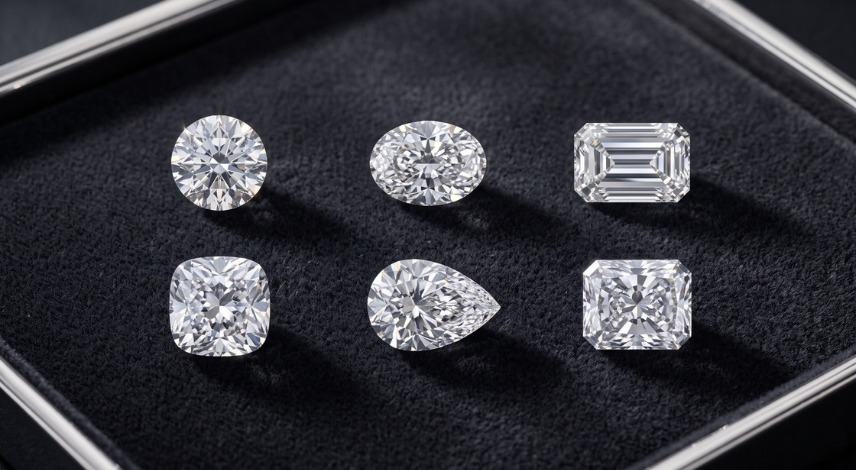
Suppliers don’t all structure this the same way, and knowing which model you’re dealing with changes how you negotiate.
Per-Carat MOQ
This is the structure you’ll hit most often with round and fancy shapes alike. A supplier might set a floor of 5 to 10 carats within a given size range. Manufacturers running steady production lines lean on this model because it matches how they need consistent melee or accent stones week to week.
Parcel-Based MOQ
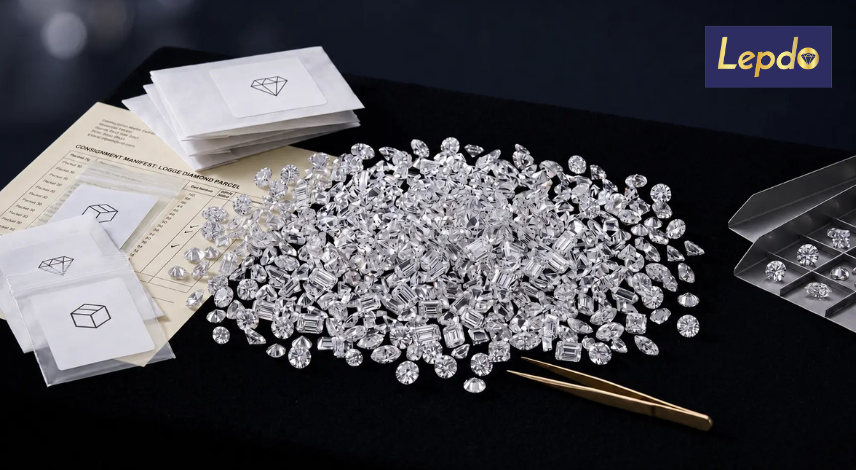
Here diamonds come pre-sorted into parcels grouped by size, color, and clarity rather than stone-by-stone selection. Retailers stocking commercial jewelry lines often go this route because it’s cheaper and faster than hand-picking. Checking typical diamond parcel sizes wholesale before you order can save you several rounds of back-and-forth with a supplier.
Shape-Specific MOQ
Fancy shapes like emerald, radiant, oval, and pear tend to carry higher MOQs than round brilliants simply because rough yield is lower and turnover is slower. It’s not unusual to see 15 carats minimum required on ovals while rounds only need 3.
Beyond those three, you’ll also run into certificate-tier MOQ, where GIA-certified natural stones require bigger minimums than IGI-certified lab-grown options. Melee suppliers sometimes price by gram weight instead of carat entirely. Bridal collection buyers occasionally face per-style MOQ, meaning a minimum number of ring mountings per design rather than loose stones. And some exporters bundle MOQ with a shipping value threshold, so your order needs to clear a certain dollar amount before free freight kicks in.
MOQ Diamond Wholesale vs Retail Purchase, The Real Difference
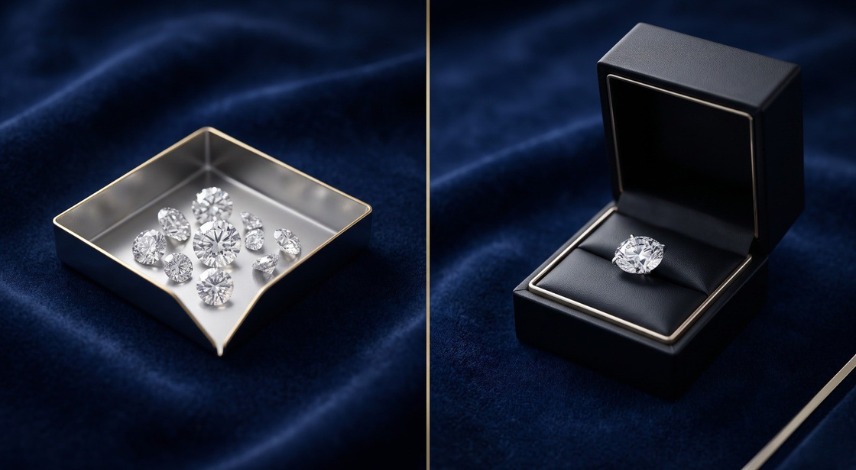
| Factor | Wholesale MOQ Purchase | Retail Purchase |
|---|---|---|
| Minimum quantity | 3 to 50+ carats depending on shape | Single stone |
| Price per carat | Lower, tiered by volume | Fixed, retail margin built in |
| Certification access | GIA/IGI bulk certified lots | Individually certified pieces |
| Negotiation room | Often flexible on price and terms | Little to none |
| Delivery timeline | May involve custom sorting time | Usually immediate or short lead |
Buyers who plan ahead get rewarded here. A retailer buying one stone at a time pays full margin every single time, no exceptions. Someone willing to commit to even a modest MOQ often saves 15 to 30 percent per carat, depending on shape and clarity tier. To be fair, single-stone retail purchases still make sense when a customer wants to see and approve one specific center stone before an engagement ring purchase, and no bulk discount is worth losing that sale.
How to Choose the Right MOQ for Your Business
Ordering the wrong quantity is one of the costliest mistakes a new B2B buyer makes early on. Run through these before committing to any number.
- Your actual sales velocity. Pull your last 12 months of sales, not your projections for next year. Order close to what you’ve historically moved.
- Storage and insurance capacity. A bigger MOQ commitment means more inventory sitting in a vault, and that raises your insurance premiums along with your security burden.
- Setting and production compatibility. If you’re mounting rings in-house, your MOQ needs to line up with your production schedule, not sit disconnected from it.
- Budget efficiency against the alternative. Weigh the per-carat savings at your target MOQ against the capital you’d otherwise tie up buying small, frequent orders instead.
- Purpose behind the order. Stocking for engagement season, building a fashion line, or buying for long-term resale each call for a different MOQ approach entirely.
- Lab-grown versus natural sourcing. A lab-grown diamond moq tends to run lower than natural diamond MOQ, since production is more predictable and supply doesn’t fluctuate the same way. Buyers exploring Lab Grown Diamonds often start with a smaller test order before scaling into a full parcel commitment.
Before you finalize your choice, pull your actual sell-through numbers and hold them up honestly against whatever MOQ tier a supplier is offering.
What B2B Buyers and Diamond Manufacturers Should Know
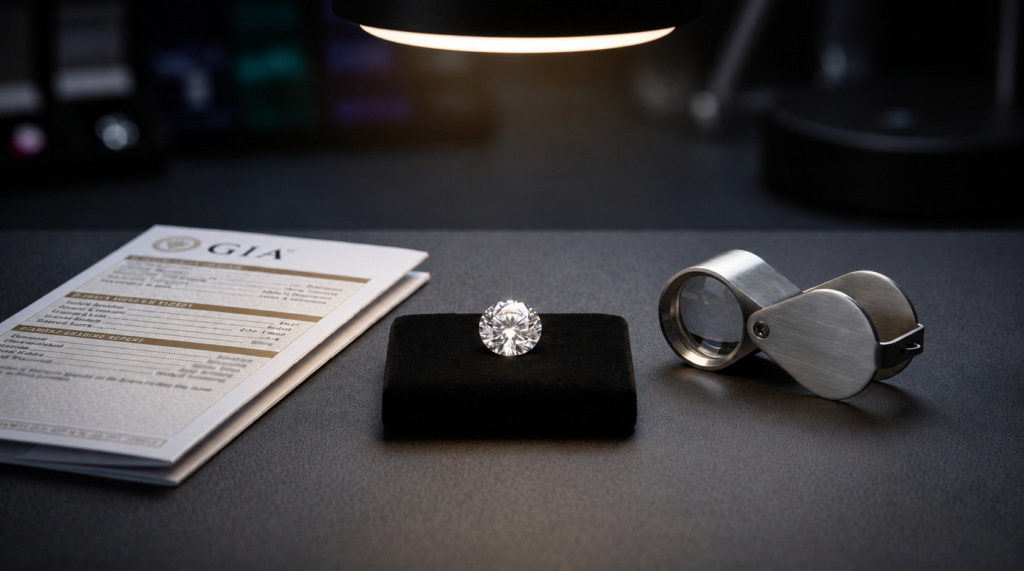
What B2B Buyers and Diamond Manufacturers Should Know
Bulk sourcing carries more weight than a lot of new buyers realize going in. A diamond bulk order minimum requirement isn’t just about hitting a quantity target. It’s tied directly to cut grading consistency, certification standards, and how Rapaport pricing benchmarks apply to your particular shape and size range.
Manufacturers like Lepdo Diamonds, working out of Surat’s diamond manufacturing hub, grade CVD and HPHT stones against consistent IGI and GIA standards across an entire batch, and that matters a great deal when you’re buying at MOQ level without inspecting every single stone yourself. You’ll want to pay attention to whether a supplier certifies each stone individually or only pulls a sample from the parcel, because that affects what you can claim later when reselling.
Rapaport pricing shifts based on shape popularity, which lab issued the certificate, and current market demand, so your MOQ negotiations should reference this quarter’s sheets, not last year’s. A fancy cut diamond manufacturer working at real scale usually offers more MOQ flexibility on trending shapes simply because they’re already cutting rough for that demand anyway.
It also helps to ask upfront how a supplier handles rejections or mismatched stones within a bulk shipment. Some manufacturers absorb a small percentage of grading discrepancies as standard policy, while others push that cost entirely onto the buyer, and that distinction alone can change your true landed cost per carat. A quick clause in your purchase agreement covering this can save a lot of friction down the line.
In my experience, the buyers who land the best terms are the ones who ask for a small sample parcel first, check the grading consistency themselves, and only then commit to full volume. Manufacturers respect that far more than a buyer trying to squeeze price down before ever seeing the goods. Anyone curious how sourcing plays out at scale should look at Loose Diamond Wholesale Surat for a realistic picture of standard practice.
MOQ and Diamond Sourcing Trends in the USA (2026 to 2027)
American retailers are moving toward smaller, more frequent MOQ diamond wholesale commitments rather than one large annual purchase. This shift reflects tighter inventory management across the fine jewellery industry after several economically challenging years. Instead of tying up capital in large inventories, many retailers now prefer flexible MOQ diamond wholesale orders that align with changing consumer demand.
Demand for fancy-cut diamond jewellery, especially oval, cushion, and radiant shapes, continues to rise among engagement ring shoppers. As a result, MOQ diamond wholesale requirements for these popular shapes have increased compared with three years ago. Interest in unique, non-round centre stones has also grown steadily, supported by celebrity engagement trends and social media influence, even without a single factor driving the market.
Lab-grown diamond adoption in the US bridal market has increased significantly since 2021, according to recent industry commentary, and this is reshaping MOQ diamond wholesale strategies for certified lab-grown melee and centre stones. Manufacturers are introducing more flexible order structures while maintaining efficient production volumes. Retailers sourcing certified lab-grown diamonds can explore Lepdo Diamonds’ inventory to see how modern MOQ diamond wholesale programmes are designed around today’s market demand. Hidden halo settings and East-West ring designs are also encouraging manufacturers to adjust minimum order quantities for fancy-shaped diamonds to meet evolving jewellery trends.
Coloured accent stones paired with white centre diamonds are gaining popularity as well, influencing how suppliers bundle MOQ diamond wholesale orders across mixed-shape parcels instead of single-shape lots. Retailers who once purchased diamonds by individual shape are increasingly requesting blended parcels containing two or three complementary cuts within one minimum order commitment. This flexible approach to MOQ diamond wholesale sourcing is expected to continue expanding through 2027 as jewellery buyers prioritise inventory efficiency, faster stock turnover, and broader product variety.
How to Evaluate Quality When Buying at MOQ Volume
When I assess a bulk parcel before signing off on an order, the first thing I check is cut consistency across the whole lot, not just the handful of showpiece stones presented up front. Buying at MOQ scale means you can’t inspect every single diamond the way you would with a one-off retail purchase.
A few things matter most here:
- Check pavilion depth and table percentage across a random sample pulled from the parcel, not only the best-looking stones sitting on top.
- Look for consistent brilliance and fire under standard lighting. Inconsistent light return across the lot usually signals mixed-quality cutting.
- Confirm clarity grade consistency, since parcels sometimes blend slightly different clarity tiers together to hit a target price.
- Watch for bowtie effect in oval, marquise, and pear shapes especially, since it dulls scintillation and drags down resale value.
- Verify certification by matching report numbers to the physical stones, rather than trusting a general lab claim from the seller.
Diamond certification remains your strongest protection at MOQ scale. A mismatched or incomplete certification set can wipe out whatever pricing advantage you gained from buying in bulk in the first place.
Conclusion
Getting MOQ right really comes down to three things: knowing your real sales velocity, understanding how shape and certification push minimum thresholds around, and never committing to volume without a verified sample in hand first. Buyers who skip these steps end up either overpaying for undersized orders or stuck with inventory that never sells through.
The diamond wholesale minimum order landscape keeps shifting as lab-grown adoption grows and fancy shapes gain ground with American bridal buyers. Staying current on MOQ structures protects your margins and your working capital far better than guessing off last year’s assumptions.
None of this needs to feel complicated once you’ve mapped it against your own numbers. A supplier who explains their MOQ logic clearly, instead of just quoting a figure, is usually the one worth building a long-term relationship with.
For wholesale inquiries on fancy shapes and SGL or IGI-certified stones, Lepdo Diamonds offers direct manufacturer pricing out of Surat, with MOQ tiers built to work for growing retailers and not just established chains. If you’re ready to compare shapes, certifications, and parcel options before placing an order, take a look at Loose Diamonds or review standards among Diamond Wholesalers Gujarat for a solid benchmark to start from.
Smart MOQ decisions made today become the inventory that actually sells tomorrow, and honestly, that’s the whole point of getting this right from the start. Buyers who treat MOQ as a strategy rather than a formality tend to be the ones still sourcing confidently five years from now.
Frequently Asked Questions About MOQ Diamond Wholesale
1.What is moq diamond wholesale?
MOQ diamond wholesale is the minimum carat weight, piece count, or parcel size a supplier requires before processing an order. It exists because sorting, grading, and certifying small quantities costs a supplier nearly the same as larger ones. MOQ shifts by shape, certification lab, and whether stones are natural or lab-grown.
2.Is moq diamond wholesale cheaper than retail purchase?
Yes, per-carat pricing at MOQ volume typically runs 15 to 30 percent below single-stone retail pricing. This happens because suppliers pass along savings from batch grading, certification, and lower per-transaction overhead. Actual savings vary by shape, clarity tier, and current Rapaport benchmarks.
3.Which diamond shape has the highest MOQ requirement?
Fancy shapes like emerald and Asscher usually carry higher MOQ requirements than round brilliants. Rough yield is lower for these shapes, which makes small production runs less economical for manufacturers. Round diamonds tend to have the lowest, most flexible MOQ tiers around.
4.Does moq diamond wholesale include a GIA cut grade requirement?
Not automatically. Cut grade requirements depend on the individual supplier’s own grading policy rather than the MOQ structure itself. Many reputable wholesalers do include cut grade documentation as standard practice for certified parcels, but always confirm this in writing beforehand.
5.What is the biggest quality risk with moq diamond wholesale?
The biggest risk is receiving a parcel with inconsistent cut quality or mismatched clarity grades buried inside the bulk lot. Suppliers sometimes blend slightly lower-grade stones into a parcel to hit a target price point. Requesting a sample parcel first cuts this risk down significantly.
6.Are lab-grown diamonds at MOQ volume as good as natural diamonds?
Yes. Certified lab-grown diamonds carry the identical 4Cs grading standards as natural stones under GIA and IGI. Optically and physically, they show the same brilliance, fire, and scintillation as natural diamonds of equal grade, with origin and typically lower price per carat as the main differences.
7.Which shape is best for engagement ring inventory at MOQ scale?
Oval and cushion shapes currently offer the strongest balance of demand and MOQ flexibility for engagement ring retailers. Both show solid 2026 to 2027 consumer demand while keeping moderate MOQ thresholds compared to rarer fancy shapes. Round brilliants remain the safest, most flexible option overall.
8.How do I choose a reliable moq diamond wholesale supplier?
Look for a supplier offering GIA or IGI certification as standard practice, transparent Rapaport-based pricing, and a willingness to send a sample parcel before you commit to full MOQ. Check their manufacturing base and sourcing network for consistency across repeat orders. A supplier unwilling to answer direct grading questions is usually a red flag worth taking seriously.