Pearls vs Diamonds: Which Gemstone is Better for Jewelry Retailers?
 by lepdogroup@gmail.com
0 comments
by lepdogroup@gmail.com
0 comments
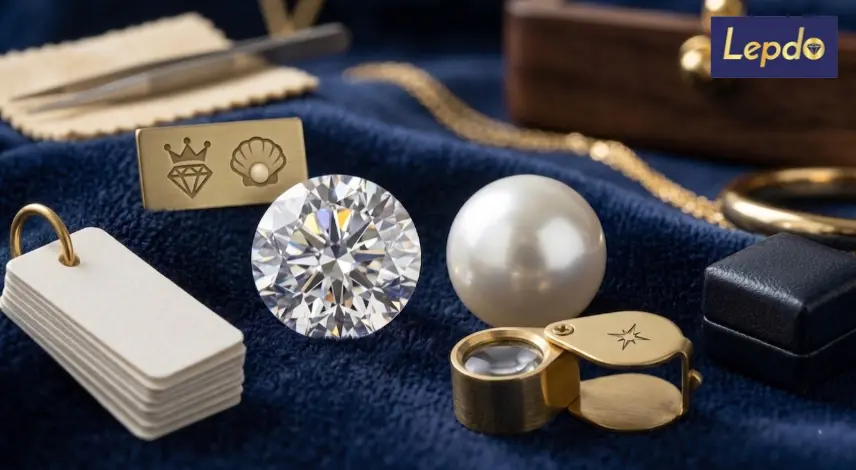
A pearls vs diamonds jewelry retailers guide compares margin potential, durability, and consumer demand between these two gemstones for stocking decisions. Diamonds generally offer stronger resale value, higher durability, and steadier engagement ring demand, while pearls suit fashion jewelry and lower price points. Lepdo Diamonds supplies certified stones for retailers weighing both categories.
A jewelry retailer deciding between pearls and diamonds is not really choosing between two gemstones. The bigger decision is about what kind of inventory the store wants to carry, how quickly that inventory is likely to move, and what customers are actually looking for.
A wholesale buyer in New Jersey once told me that she had purchased around $40,000 worth of freshwater pearl strands for the spring season. Six months later, she had sold less than half of them. Her diamond stud inventory, on the other hand, had turned over three times during roughly the same period.
That conversation stayed with me because it highlights something retailers sometimes overlook. Pearls and diamonds may both sit behind the same jewelry counter, but customers buy them for very different reasons.
Diamonds generally have an advantage when it comes to durability, consumer recognition, engagement jewelry, and higher-ticket purchases. Pearls, meanwhile, can be excellent for fashion jewelry, gifting, occasion wear, and customers looking for a more accessible luxury purchase.
For wholesale buyers, the distinction becomes even more important. Inventory turnover, margin protection, consistency, certification, purchasing power, and repeat orders all affect cash flow.
Diamonds are commonly evaluated using the familiar 4Cs of Diamonds—carat weight, color, clarity, and cut. Laboratory reports from organizations such as GIA and IGI give retailers a standardized way to communicate those characteristics. Pearls are judged differently, with factors such as luster, surface quality, shape, size, color, nacre quality, and matching playing a much larger role.
In this guide, we will compare pearls and diamonds from a retailer’s perspective, look at the most relevant varieties, examine 2026–2027 jewelry trends, and discuss how independent boutiques, bridal stores, and larger jewelry businesses can build a practical assortment.
The goal is not to declare one gemstone universally better than the other. It is to help retailers make stocking decisions based on demand, margins, turnover, durability, and customer value.
What Pearls vs Diamonds Actually Means for Retailers
The pearls vs diamonds question becomes much easier to answer when you start with customer intent.
A diamond purchase is often connected to a major life event: an engagement, wedding, anniversary, milestone, or significant personal purchase. Pearls tend to have a broader relationship with fashion, gifting, traditional occasions, and everyday elegance.
That difference affects everything from the sales conversation to how long a product may remain in inventory.
Quick Info Box
- Definition: Pearls are organic gems formed inside mollusks, while diamonds are crystallized carbon evaluated through characteristics including cut, color, clarity, and carat weight.
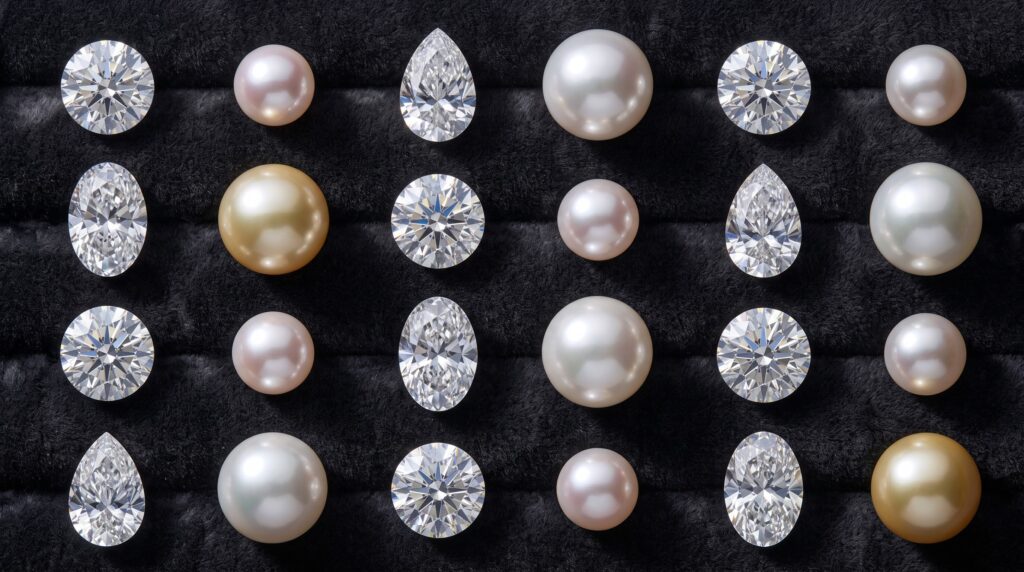
- Key Types or Varieties: Akoya, Tahitian, South Sea, and freshwater pearls; round, oval, cushion, emerald, and pear-shaped diamonds.
- Best For: Diamonds are particularly suited to engagement rings and high-value jewelry, while pearls work well for fashion jewelry, gifting, and lower price points.
- Key Difference or Advantage: Diamonds benefit from established certification systems, exceptional hardness, and stronger secondary-market recognition. Pearls offer accessibility, variety, and a wide range of fashion-driven styles.
For retailers who want to understand the underlying differences more technically, our Diamond vs Pearl resource provides a closer look at their composition, characteristics, and market positioning.
Most Popular Types or Variations — And Who They Are For
A pearl or diamond category can look attractive on paper and still perform poorly if it does not match the store’s customers.
That is why retailers should think about the buyer behind the product, rather than simply filling display cases with every available variety.
Akoya Pearls
Akoya pearls remain one of the most familiar pearl varieties in fine jewelry. Their classic appearance, strong luster, round to near-round shapes, and traditional white-to-cream colors make them easy for many customers to understand.
They are particularly relevant for anniversary gifts, Mother’s Day, graduations, birthdays, bridal jewelry, and other milestone purchases.
From a retailer’s perspective, Akoya pearls can work well as an anchor product because customers often recognize the style immediately. A store does not necessarily need to spend as much time explaining what makes an Akoya strand appealing compared with a more unusual pearl variety.
In a Pearls vs Diamonds assortment, however, Akoya pearls occupy a different emotional space. A customer may be purchasing them because they represent elegance, tradition, or a special occasion rather than because they see the purchase as a long-term store of value.
For that reason, retailers can benefit from offering Akoya pearls in several formats, including strands, earrings, pendants, and bracelets.
South Sea Pearls
South Sea pearls sit toward the luxury end of the pearl market. Their larger size, substantial nacre, distinctive luster, and naturally occurring white, silver, cream, and golden colors give them a presence that smaller pearls simply cannot replicate.
They are associated primarily with Australia, Indonesia, and the Philippines and are often used in statement necklaces, substantial earrings, and custom jewelry.
A South Sea pearl can produce an impressive average transaction value, but retailers should not expect the same turnover pattern as a standard pair of diamond studs.
The customer buying a premium South Sea piece may want to understand its size, origin, nacre, surface quality, shape, color, and luster before making a decision. That can lengthen the sales process, but it can also create an opportunity for luxury retailers to build a stronger relationship with the customer.
For stores serving affluent or luxury-oriented buyers, a carefully selected South Sea collection can therefore make sense even if the inventory moves more slowly.
Tahitian Pearls
Tahitian pearls are particularly interesting for retailers because they do not look like the traditional white pearl that many customers already know.
They are commonly associated with dark body colors, but their appearance can range from gray and charcoal to green, peacock, silver, aubergine, and other complex overtones.
This gives Tahitian pearls a strong appeal among customers who want something distinctive.
In a Pearls vs Diamonds comparison, they occupy a position somewhat similar to fancy-shape or fancy-color diamonds. The buyer is often looking for personality rather than simply choosing the most traditional option.
That makes Tahitian pearls useful for boutiques that want to differentiate their assortment. At the same time, demand can be more specialized, so retailers should generally be cautious about carrying excessive depth in every color and size.
Freshwater Pearls
Freshwater pearls are often the easiest way for retailers to introduce customers to pearl jewelry without requiring a large initial purchase.
They are available in a wide range of sizes, shapes, colors, and qualities, making them suitable for gifts, bridal jewelry, fashion collections, and everyday pieces.
Their relatively accessible pricing also allows retailers to create several price points without tying up the same amount of capital required for premium pearl varieties.
Baroque freshwater pearls are particularly useful for contemporary collections. Their irregular shapes can give jewelry a more relaxed, artistic, or handcrafted appearance.
The challenge is variety.
Because freshwater pearls are available in so many styles, it is easy for a retailer to buy too broadly. Instead of assuming every style will sell, stores should track which colors, shapes, sizes, and jewelry formats actually generate repeat sales.
Round Brilliant Diamonds
Round brilliant diamonds continue to be one of the most important categories for diamond jewelry retailers.
They work across engagement rings, wedding jewelry, pendants, earrings, and diamond studs. Their popularity is also supported by strong consumer familiarity.
From an inventory perspective, another advantage is the ability to create a pricing ladder. A retailer can offer different carat weights, colors, clarity grades, and cut qualities to reach customers at several price levels.
That flexibility is valuable.
A customer may come into the store with a specific budget rather than a fixed specification. Having multiple round diamond options makes it easier for the sales associate to adjust carat weight or clarity while keeping the customer within budget.
For wholesale buyers, consistency becomes particularly important. Retailers ordering multiple stones need confidence that repeat parcels will maintain the expected quality level.
Oval-Cut Diamonds
Oval diamonds have become an important alternative to the traditional round brilliant.
Their elongated outline gives them a softer appearance, while their face-up size can make them particularly attractive to shoppers who want a larger-looking stone without moving to a much higher carat weight.
Ovals are commonly used in engagement rings, halos, three-stone designs, and elongated solitaire settings.
However, retailers should not select ovals simply by looking at their laboratory grades.
Bow-tie effect, symmetry, length-to-width ratio, and overall light performance can make one oval look significantly better than another with similar carat weight and clarity.
For wholesale buyers, visual inspection is therefore particularly important when building an oval inventory.
Cushion-Cut Diamonds
Cushion diamonds combine rounded corners with a softer square or rectangular outline. They appeal to customers who like some vintage character but still want a modern diamond appearance.
They work especially well in halo engagement rings, three-stone designs, and vintage-inspired settings.
One thing retailers need to remember is that cushion diamonds are not visually identical simply because they share the same laboratory grade.
Different facet arrangements can create very different levels of brilliance and visual personality. Brilliant cushions and modified cushion styles can perform quite differently.
When purchasing cushion inventory, retailers should therefore consider faceting, proportions, transparency, and overall appearance, rather than relying exclusively on the certificate.
Pear-Shaped Diamonds
Pear-shaped diamonds are popular with customers who want something distinctive without moving too far away from a familiar diamond aesthetic.
The teardrop shape works particularly well in engagement rings, pendants, earrings, and anniversary jewelry, giving retailers several opportunities to sell the same shape across different categories.
Symmetry is especially important.
An uneven outline becomes obvious once the diamond is mounted, while the pointed end requires suitable protection through an appropriate setting.
For finished jewelry, retailers should therefore consider the stone and its setting together rather than treating them as completely separate purchasing decisions.
Emerald-Cut Diamonds
Emerald cuts appeal to a different type of customer.
Instead of the intense sparkle associated with brilliant cuts, their step-cut facets produce broader flashes of light and a clean, sophisticated appearance.
They are often chosen by shoppers who prefer understated luxury and modern minimalism.
Clarity deserves particular attention with emerald cuts because their open, transparent faceting can make inclusions easier to notice.
This is one situation where a laboratory clarity grade does not tell the whole story. Two diamonds with the same clarity grade may have noticeably different visual transparency.
Fancy Color Diamonds
Fancy color diamonds give retailers another way to differentiate a collection.
Depending on the stone and its origin or treatment, diamonds can appear in shades including yellow, pink, blue, green, and champagne.
They can attract collectors, fashion-conscious shoppers, luxury buyers, and customers looking for something highly personal.
Because the customer base is more specialized, most retailers are better served by building a curated collection rather than carrying large quantities of every possible color and size.
Disclosure and certification are especially important here. Customers should clearly understand whether the color is natural, treated, or associated with a laboratory-grown diamond.
How Retailers Should Build the Assortment
This is where the Pearls vs Diamonds discussion becomes practical.
Retailers should not expect every product category to turn at the same speed.
Round brilliant diamonds may justify deeper inventory because they can be used across several major jewelry categories. A South Sea pearl may deserve only a few carefully selected pieces because its selling cycle is different.
Freshwater pearls can bring customers into the store at lower price points, while fancy-color diamonds and unusual shapes can provide differentiation and higher-ticket opportunities.
A useful inventory review should look at:
- Sell-through rate
- Average selling price
- Gross margin
- Repeat demand
- Seasonal performance
- Customer profile
- Inventory age
- Reorder frequency
The objective is not to choose one side of Pearls vs Diamonds.
It is to understand which products deserve depth and which products should remain curated.
Pearls vs Diamonds — The Real Difference
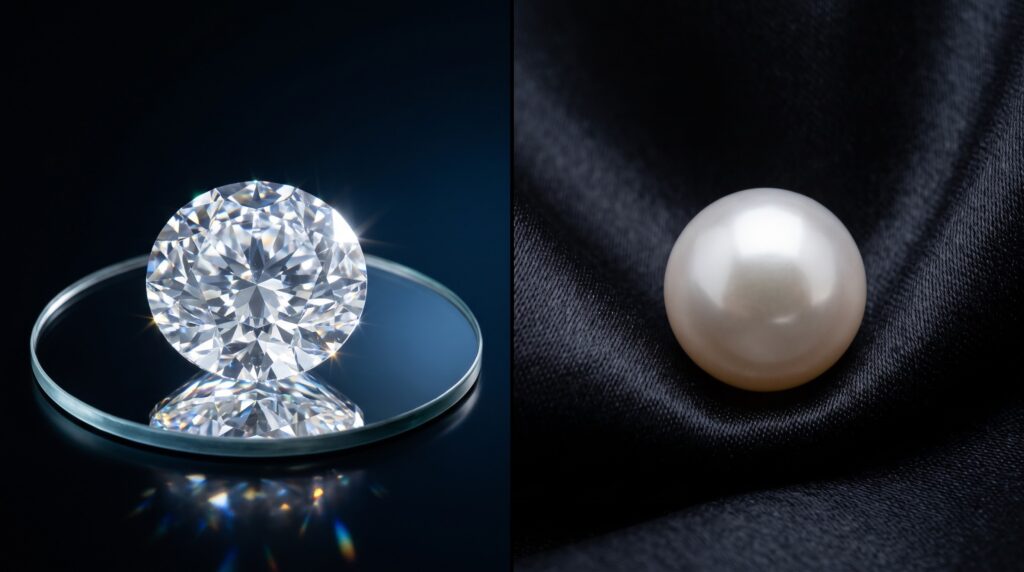
Retailers comparing diamond vs pearl jewelry profit potential need to look beyond the original wholesale cost.
The more useful question is what happens after the product reaches the display case.
| Factor | Pearls | Diamonds |
|---|---|---|
| Average Retail Margin | 40 to 60% | 50 to 100%+ |
| Durability (Mohs Scale) | 2.5 to 4.5 | 10 |
| Certification Standard | Limited (GIA pearl reports rare) | GIA, IGI widely available |
| Typical Buyer Motivation | Fashion, gifting | Engagement, investment |
| Resale/Trade-In Value | Low | Moderate to high |
Pearls can still perform extremely well, particularly around holidays, gifting seasons, weddings, and fashion-driven buying periods.
Their lower entry price can also bring customers into the store who may not be ready to purchase a diamond.
That creates an interesting opportunity. A customer who initially purchases a freshwater pearl necklace may later return for diamond earrings, an anniversary ring, or another fine jewelry purchase.
Diamonds, however, have a structural advantage when durability, long-term wear, certification, and secondary-market recognition become important.
Our pearls vs diamonds glossary resource provides a more technical comparison for buyers evaluating the differences before committing to wholesale inventory.
How to Choose the Right Mix for Your Style
There is no universal answer to the question, “Which is better, pearl or diamond?”
The right choice depends on the customers walking through your door.
Before placing a wholesale order, retailers should consider these six factors.
- Personal style or physical fit: Match inventory to your customer base. A resort-town boutique may naturally sell more pearls, while a bridal-focused store will usually need greater diamond depth.
- Body or space compatibility: Think about display space and security requirements. Diamonds require higher-security display arrangements, which can influence store layout and operating costs.
- Setting or use-case compatibility: Pearls work well in everyday and occasion jewelry, while diamonds can serve everything from everyday studs to engagement rings and formal jewelry.
- Budget advantage vs alternatives: Pearls generally require less upfront capital per piece, allowing retailers to create broader style variety without committing as much money to each individual item.
- Occasion: Engagement and anniversary customers tend to lean toward diamonds, while birthday, graduation, Mother’s Day, and other gifting occasions can create strong opportunities for pearls.
- Lab-grown vs natural option: Lab-grown diamonds have changed the conversation around size and budget. Retailers can offer larger carat weights at more accessible prices while still providing recognized certification. Retailers researching certification can also review our GIA Certified Diamonds resource.
Most customers today do not walk into a jewelry store with one fixed product in mind.
They often compare two, three, or even four options before deciding.
That is why your own sales data matters more than a generalized industry assumption. Look at the products that actually sold over the last 12 months, how long they remained in inventory, and which categories generated repeat purchases.es data rather than industry assumptions, because your actual customer base will tell you more than any national trend report.
What B2B Buyers and Diamond Manufacturers Should Know
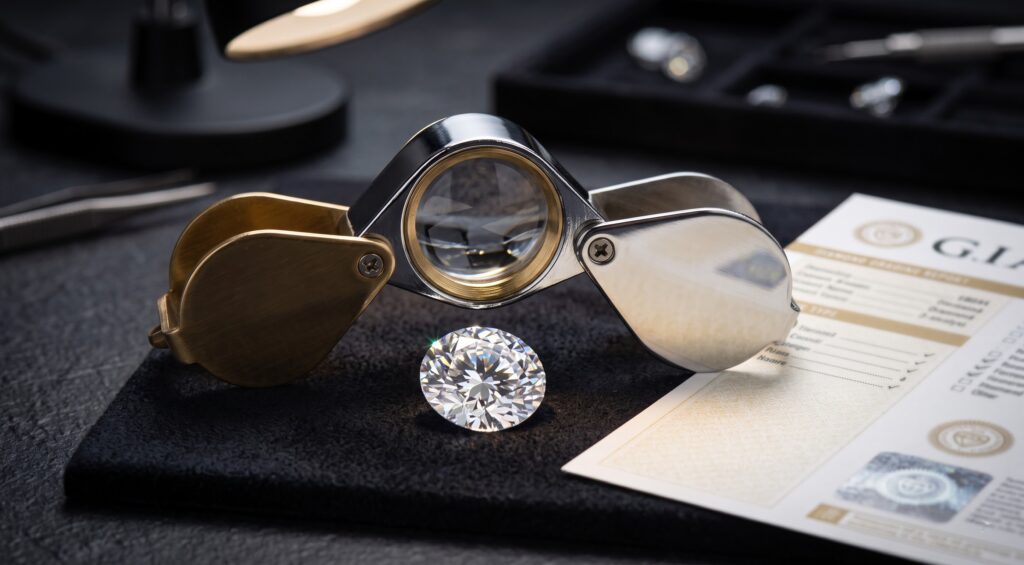
A retail customer may compare two individual diamonds. A wholesale buyer may be responsible for hundreds of stones that need to remain consistent across several collections or retail locations.
For diamonds, consistency within a parcel is particularly important.
Buyers should look at table percentage, depth, crown angle, pavilion angle, symmetry, polish, fluorescence, and overall light performance. Small differences can become noticeable when multiple stones are displayed together.
Certification also helps establish confidence.
GIA and IGI reports give retailers recognized documentation of important diamond characteristics. That makes it easier for the retail salesperson to explain the product and for the buyer to compare stones from different suppliers.
For a B2B business, certification is not simply paperwork. It can help with pricing, product comparison, customer communication, and repeat purchasing.
Manufacturing consistency matters just as much.
A retailer who orders a particular quality range today will want confidence that a future reorder will look and perform similarly.
This is one reason established manufacturing hubs such as Surat remain important to the global diamond supply chain.
Manufacturers such as Lepdo Diamonds, based in Surat, can support B2B buyers with certified lab-grown diamond inventory across standard and fancy shapes.
Rapaport pricing continues to influence natural diamond wholesale negotiations, although lab-grown diamonds have developed their own pricing dynamics and should be evaluated separately.
For wholesalers working with fancy shapes, consistency becomes even more important because proportions and visual appearance can vary significantly between stones.
Our Diamond Certification resource explains the documentation retailers should look for before committing to a diamond parcel.
In my experience working with B2B accounts, one purchasing habit consistently makes sense: ask for sample parcels before scaling an order.
The lowest price on a quotation does not necessarily produce the best result once quality variation, slow-moving inventory, customer returns, and inconsistent reorders are taken into account.
Diamond and Pearl Jewelry Trends in the USA (2026 to 2027)
Both categories are changing, but they are changing in different ways.
One interesting direction is the combination of pearls and diamonds in the same jewelry piece. Stackable pearl and diamond designs, for example, allow customers to combine a traditional pearl strand with diamond-accented clasps or complementary jewelry.
That gives retailers an opportunity to sell both categories rather than positioning them as competitors.
Fancy diamond shapes are also continuing to attract attention. Oval and elongated cushion designs can give bridal collections a different visual identity from the traditional round-diamond assortment.
Celebrity styling and social media continue to influence how consumers discover these shapes. Our Diamond Jewelry Trends coverage explores some of these developments in more detail.
Lab-grown diamonds are another important part of the 2026–2027 conversation, particularly for retailers trying to offer larger stones at accessible price points.
Pearls are changing too.
Younger customers are showing interest in baroque and irregular pearl shapes because they feel less formal and more individual than the traditional perfectly matched strand.
For retailers, that creates an interesting opportunity.
A modern baroque pearl collection alongside a selection of fancy-cut diamonds can serve both the fashion-conscious customer and the bridal shopper without forcing the store to choose one aesthetic.
How to Evaluate Quality in Pearls and Diamonds
When evaluating a diamond parcel, I always want to see how the stones perform visually rather than relying entirely on a laboratory report.
A report is important. It tells you what the stone has been graded as.
It does not replace looking at the stone itself.
Light performance, brilliance, fire, scintillation, transparency, and overall appearance all matter when the customer is standing at the counter.
Color can also behave differently depending on the setting. A G-color diamond may look different once placed in yellow gold compared with a white-metal setting.
Here are five practical checks retailers can use:
- Look at pavilion depth and table percentage together. Extreme proportions can affect light return.
- Examine clarity under 10x magnification. The certificate gives the grade, but the actual inclusion placement still matters.
- For pearls, assess luster and surface quality before focusing heavily on nacre thickness.
- Check the length-to-width ratio on fancy shapes. An unbalanced outline can change the entire appearance of the finished jewelry.
- Verify the diamond’s laser inscription against the accompanying paperwork where applicable, using your Diamond Certification procedures.
A certificate is valuable, but it is not a substitute for trained inspection.
That is especially true when buying in bulk.
Conclusion
The Pearls vs Diamonds decision becomes much clearer once retailers evaluate how the Pearls vs Diamonds dynamic functions in real-world merchandising rather than treating them as direct substitutes.
When analyzing Pearls vs Diamonds, diamonds generally make sense as the foundation of a bridal, anniversary, or higher-value fine jewelry assortment. In any Pearls vs Diamonds comparison, diamond hardness, established grading systems, consumer familiarity, and broad application across jewelry categories give them distinct inventory advantages.
In the Pearls vs Diamonds balance, pearls bring something entirely different to the counter.
Evaluating Pearls vs Diamonds reveals that pearls offer accessible price points, strong gifting potential, fashion flexibility, and a wide range of colors and shapes. In a Pearls vs Diamonds inventory strategy, freshwater pearls bring customers into the store at lower price points, while South Sea and Tahitian pearls add a luxury statement to a curated collection alongside diamonds.
The strongest retail approach to Pearls vs Diamonds is a strategic combination of both categories.
Managing the Pearls vs Diamonds mix allows diamonds to anchor the higher-ticket side of the business while pearls provide fashion, gifting, and entry-level opportunities. Instead of debating Pearls vs Diamonds to find a single winner, retailers should analyze Pearls vs Diamonds based on consumer demand, inventory turnover, and capital allocation.
For retailers sourcing certified lab-grown stones within the Pearls vs Diamonds landscape, Lepdo Diamonds offers B2B inventory across round brilliants and fancy shapes, with certification options including IGI and GIA.
You can explore the full range through Lepdo Diamonds and evaluate available options, including DEFG color ranges, when planning your next wholesale purchase and balancing your Pearls vs Diamonds inventory.
Get the balance right, and the Pearls vs Diamonds question becomes an asset where both categories work together to give your store a broader price range, versatile styling options, and higher customer retention.
Frequently Asked Questions About Pearls vs Diamonds Jewelry Retailers Guide
1. What is a pearls vs diamonds jewelry retailers guide?
A pearls vs diamonds jewelry retailers guide is a comparison framework that helps retailers decide how much inventory to allocate to pearls and diamonds based on factors such as margin, durability, certification, customer demand, and turnover. Understanding pearls vs diamonds allows store owners to plan case space, manage seasonal buying strategies, and balance their product mix effectively.
2. Is pearl jewelry cheaper than diamond jewelry in a pearls vs diamonds comparison?
In most cases, looking at pearls vs diamonds shows pearls generally have a lower entry price than diamonds, though the comparison depends on quality, size, origin, and setting design. A pearls vs diamonds analysis reveals an Akoya strand costs a fraction of a diamond tennis bracelet, while premium South Sea pearls can overlap with diamond price points.
3. Which looks biggest or most impressive in pearls vs diamonds?
Deciding which looks most impressive in pearls vs diamonds depends entirely on visual priorities. In the pearls vs diamonds debate, diamonds create impact through brilliance, fire, and scintillation, whereas pearls create impact through size and luster. When choosing between pearls vs diamonds for sparkle, diamonds lead, but pearls offer superior surface presence.
4. Does a diamond have a GIA cut grade while pearls do not in pearls vs diamonds?
Yes, evaluating pearls vs diamonds reveals GIA provides standardized cut grades for round diamonds, while pearls lack an equivalent universal cut system. In pearls vs diamonds grading, diamonds are assessed on 4Cs precision, whereas pearl evaluation focuses on organic factors like luster, surface quality, shape, size, color, and nacre thickness.
5. What is the biggest quality risk in pearls vs diamonds?
The main quality risk in pearls vs diamonds relates to durability differences between the two gems. Evaluating pearls vs diamonds shows pearls are softer and vulnerable to scratching, chemicals, and abrasion, while diamonds carry risks regarding inclusion visibility and grading consistency. Retailers managing pearls vs diamonds must verify sourcing and durability standards.
6. Are lab-grown diamonds as good as natural diamonds when evaluating pearls vs diamonds?
When analyzing pearls vs diamonds and gemstone origins, lab-grown diamonds share identical chemical, physical, and optical properties with natural diamonds. Incorporating lab diamonds into a pearls vs diamonds inventory strategy offers buyers larger sizes at accessible price points, verified by recognized grading reports from institutions like GIA or IGI.
7. Which is best for an engagement ring in pearls vs diamonds?
Diamonds remain the clear winner for engagement rings when comparing pearls vs diamonds. The pearls vs diamonds comparison demonstrates diamond hardness withstands daily wear, while pearls are too soft for everyday exposure. When customers choose between pearls vs diamonds for bridal jewelry, diamonds offer the required durability and traditional appeal.
8. How do I choose a reliable manufacturer for pearls vs diamonds?
Selecting a reliable supplier for pearls vs diamonds requires looking for consistency, transparent documentation, and verified quality standards. When sourcing pearls vs diamonds, request clear grading specifications, origin details, and sample parcels. Working with established manufacturers across pearls vs diamonds reduces supply chain risks and ensures predictable inventory quality across orders.
For in-depth market reports, trade sourcing guides, interactive Q&As, and expert gemological perspectives, explore the official Lepdo Group Medium platform and join the discussion on Lepdo Diamonds on Quora.