Why Lab Grown Diamonds Are Now the Default Choice for US Engagement Rings
 by lepdogroup@gmail.com
0 comments
by lepdogroup@gmail.com
0 comments
Lab grown diamond engagement ring statistics show lab grown center stones now account for the majority of US engagement rings, up sharply from under 10% five years ago. Buyers get larger, GIA or IGI certified diamonds at lower cost. Lepdo Diamonds supplies certified lab grown stones to retailers building on this shift.
A jeweler in Ohio told me something last month that stuck with me three years ago, he sold maybe one lab grown diamond engagement ring for every ten natural ones. Today, that ratio has flipped entirely. The latest lab grown diamond engagement ring statistics show that this shift is far from a passing trend; it reflects a genuine transformation in how American couples choose engagement rings.
As lab grown diamond market trends continue to accelerate, more buyers are prioritizing value, larger carat sizes, and certified quality over traditional assumptions about mined diamonds. The rapid rise in the percentage of engagement rings that are lab grown has become one of the clearest indicators of changing consumer behavior across the U.S. jewelry industry.
This piece breaks down the most important lab grown diamond engagement ring statistics for 2026, including current market share, average carat size, certification trends from GIA and IGI, and pricing data that explains why lab grown diamond engagement rings have become such a dominant category.
We’ll also compare lab grown vs natural diamond engagement ring trends, explore engagement ring market statistics, and explain what these numbers mean whether you’re planning a proposal this year, running a jewelry retail business, or sourcing inventory for the next selling season. Along the way, you’ll see the latest lab grown diamond pricing trends, certification insights, and practical takeaways that retailers, wholesalers, and manufacturers are using right now to make better buying decisions.
Round brilliant still gets plenty of attention. But the center of gravity in the US engagement ring market has moved, and the 4Cs conversation now happens almost as often around a lab grown stone as a mined one. Here is what the data actually says, and what it means for your next purchase or your next order.
What the Lab Grown Diamond Engagement Ring Shift Actually Means
Lab grown diamond engagement ring statistics describe the measurable share of US engagement rings sold with a laboratory grown center stone instead of a mined one, tracked through wedding industry surveys, retail sales data, and wholesale pricing reports. This is not a marketing claim, it is a documented consumer behavior trend spanning several years of independent research.
Quick Info Box
- Definition: The tracked percentage and dollar share of US engagement rings sold with lab grown center diamonds versus natural ones.
- Key Data Sources: The Knot’s Real Weddings Study, Rapaport pricing reports, GIA and IGI grading volume, retail point-of-sale data.
- Best For: Consumers comparing value, retailers planning inventory, manufacturers forecasting demand.
- Key Difference or Advantage: Lab grown diamonds now represent the majority of engagement ring purchases by volume, driven largely by carat size and certified quality at lower cost.
Multiple studies from 2025 and 2026 converge on a similar picture, even when the exact percentage of engagement rings lab grown varies slightly by methodology. Lab Grown Diamonds grown through CVD or HPHT methods are chemically, optically, and structurally identical to mined diamonds, which is precisely why buyers stopped treating them as a compromise.
Most Popular Lab Grown Diamond Styles Driving the 2026 Numbers
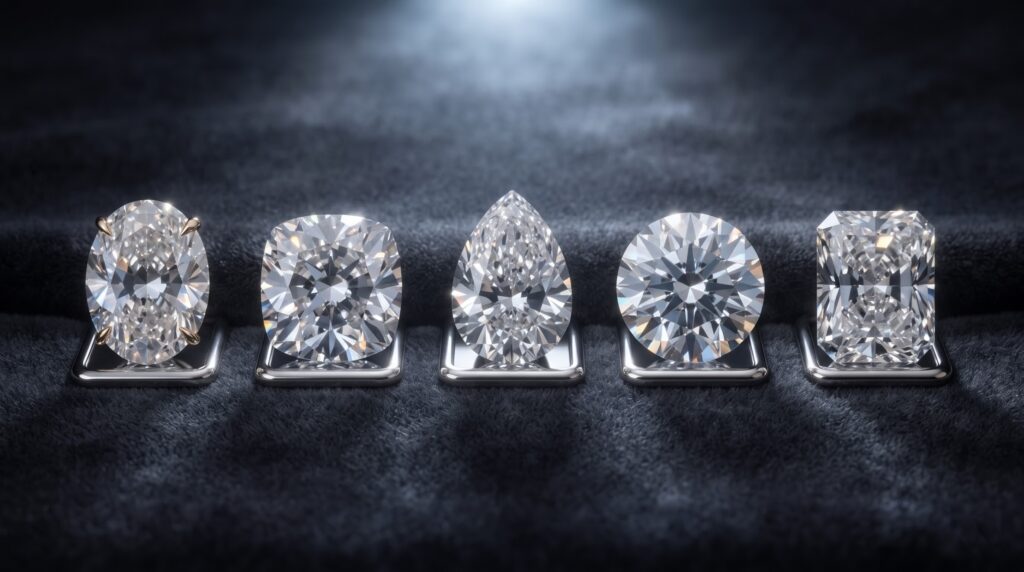
The lab grown diamond engagement ring statistics aren’t evenly distributed across every shape and setting. Certain combinations are pulling far more weight than others, and knowing which ones matters if you’re trying to understand where this US engagement ring trends 2026 story is actually heading.
Oval and Cushion Center Stones
Oval cuts have overtaken round brilliant in several 2026 retail datasets, largely because their elongated shape reads larger per carat. Cushion cuts remain close behind, favored for their softer light return and vintage appeal.
Larger Carat Weights at Lower Price Points
This is arguably the single biggest driver of the shift. Buyers who once budgeted for a 1-carat natural stone are now walking out with 2-carat or larger lab grown centers, because the price gap makes it possible without stretching the budget.
Toi et Moi and Two-Stone Settings
Twin-stone designs have grown sharply as couples move away from the traditional single-solitaire halo. This trend cuts across both lab grown and natural buyers, but lab grown pricing makes the two-stone look far more accessible.
Yellow Gold and Bezel Settings
Yellow gold has reclaimed dominant market share after two decades of platinum and white gold preference, often paired with hidden halos or low-profile bezels that protect larger center stones during daily wear. An Engagement Diamond set this way photographs differently than the maximalist halos of the past decade, and retailers are adjusting case displays accordingly.
Fancy shapes overall, ovals, cushions, pears, and radiants combined, now make up a meaningfully larger slice of lab grown sales than they do in the natural diamond category, where round brilliant still holds a firmer grip.
Lab Grown vs Natural Engagement Ring Market Share: The Real Difference
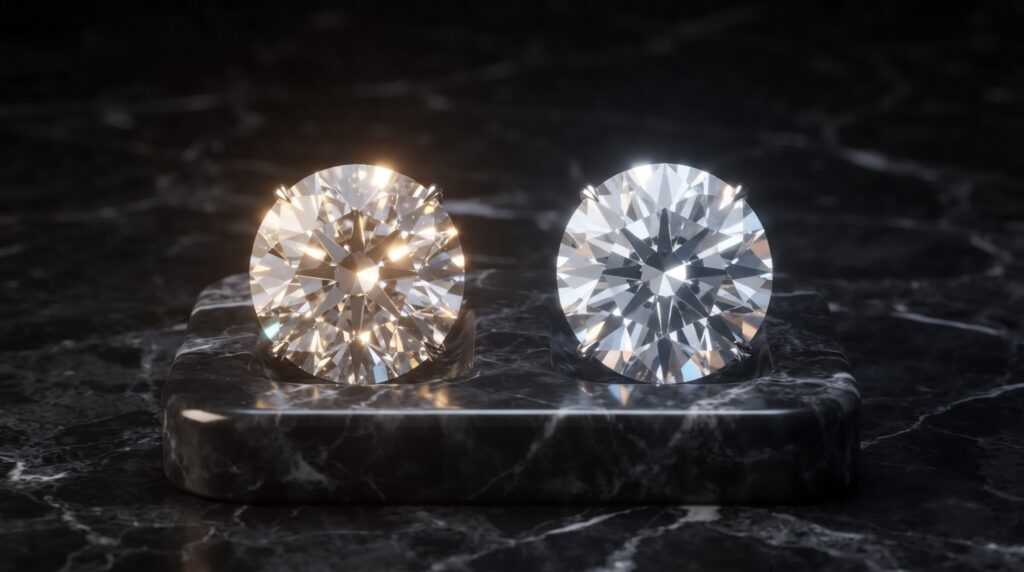
The lab grown vs natural engagement ring market share gap has widened every year since 2020, and the reasons go beyond price alone. To be fair, round diamonds and natural stones still dominate certain price tiers and regional markets, particularly among older buyers and heirloom-focused purchases.
| Factor | Lab Grown Diamonds | Natural Diamonds |
|---|---|---|
| Average engagement ring price (2025-2026) | Roughly $4,300-$4,900 | Roughly $7,000-$7,600 |
| Average center stone size | Approaching 2 carats and climbing | Around 1.6 carats |
| Certification standard | IGI and GIA graded | GIA graded, with other labs used |
| Price trend since 2020 | Wholesale prices down sharply | Relatively stable, gradual softening |
| Volume share of US engagement rings | Roughly half to majority, by most 2026 surveys | Remaining share, still significant by dollar value |
The clearest takeaway from this table is that lab grown diamonds win on volume while natural diamonds still hold a larger share of total dollars spent, since insured appraisal values run higher per natural stone. Buyers comparing Natural Diamonds against lab grown alternatives are increasingly choosing based on visible size and certified quality rather than rarity alone, which is a meaningful shift in consumer psychology.
How to Choose the Right Lab Grown Diamond for Your Engagement Ring
Understanding lab grown diamond engagement ring statistics is one thing. Applying them to your own purchase is another. Here’s how to think through it.
- Match the shape to hand and finger proportions : Elongated cuts like oval and pear tend to flatter shorter fingers, while cushion and princess suit rounder palm shapes.
- Check setting compatibility before falling for a shape : Pavé and hidden halo settings hide inclusions better than a plain solitaire prong, which matters more with certain clarity grades.
- Confirm the setting can handle the carat weight you’re choosing : Larger lab grown centers, now averaging close to 2 carats, need properly sized prongs and shank thickness.
- Compare your budget against the lab grown price advantage directly : Most buyers find they can move up a full shape category or half a carat for the same spend that natural stones would require.
- Match the stone to the occasion, not just the trend : Engagement rings warrant top clarity and cut grades, while fashion pieces can use slightly lower grades without visible compromise.
- Decide between lab grown and natural with certification, not assumption, as your guide : Lab Diamond Quality standards from IGI and GIA now cover lab grown stones with the same rigor applied to natural ones, so Lab Diamond Quality grading gives buyers a reliable way to compare across categories.
Before you finalize your choice, pull the actual grading report and read it line by line rather than trusting a display case description. The truth is that certification, not marketing language, is what protects your purchase.
What B2B Buyers and Diamond Manufacturers Should Know
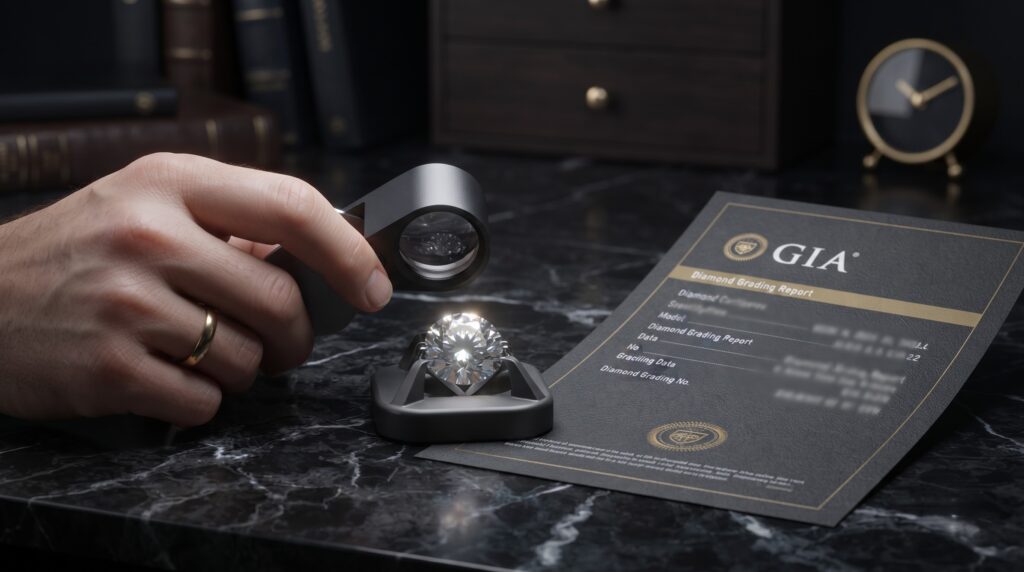
For retailers, wholesalers, and jewelry manufacturers, lab grown diamond engagement ring statistics are valuable for much more than understanding consumer demand , they are a practical indicator of how the diamond supply chain is evolving. The rapid expansion of CVD and HPHT production has transformed bulk sourcing, inventory planning, and pricing strategies across the industry. As production capacity has increased, buyers now have access to larger volumes of calibrated stones with improved consistency in cut, color, and clarity, which directly affects retail margins, order fulfillment speed, and long-term supplier relationships. Businesses that rely on outdated assumptions about natural diamond supply dynamics may overlook how quickly lab-grown inventory can now be replenished and standardized.
One of the most important insights hidden within current lab grown diamond engagement ring statistics is the shift toward certification-driven purchasing. IGI continues to dominate the lab-grown certification market by volume, while GIA has significantly expanded its grading services, making both certifications increasingly expected in B2B transactions. Retailers and wholesalers should ensure that suppliers can consistently provide certified inventory, detailed grading reports, and transparent production documentation.
Pricing has also evolved independently of natural diamonds, with Rapaport lab-grown categories following their own market trends for several years. Wholesalers who still benchmark lab-grown inventory against natural diamond pricing often miscalculate profitability and inventory turnover, especially in fast-moving engagement ring categories.
In my experience working with sourcing partners, the manufacturers that generate repeat B2B business are not necessarily those offering the lowest price per carat. they are the ones delivering predictable quality across every parcel. Consistent cut grading, matching color ranges, reliable calibration, and standardized polishing quality are far more valuable for retailers than mixed-quality lots that merely meet a target price point. Leading suppliers such as Diamond Jewelry Manufacturers In Surat operate in one of the world’s largest CVD and HPHT manufacturing hubs and often maintain strict in-house quality standards before stones are submitted for certification. Retail buyers should ask directly about parcel consistency, grading methodology, and production controls rather than relying solely on certificate labels.
Another trend reflected in lab grown diamond engagement ring statistics is that certified inventory has become a baseline expectation rather than a premium feature. Reputable manufacturers typically provide Lab Grown Diamond Certified stock as part of their standard sourcing process, giving retailers greater confidence in authenticity, grading accuracy, and customer transparency. Suppliers who hesitate to provide certification documentation, grading consistency records, or production traceability should be evaluated carefully, because these factors influence returns, customer trust, and long-term brand reputation. For B2B buyers, understanding lab grown diamond engagement ring statistics is ultimately about protecting margins, selecting reliable manufacturing partners, and building a supply chain that can scale with the growing global demand for lab-grown engagement rings.
Lab Grown Diamond Engagement Ring Trends in the USA (2026-2027)
US engagement ring trends 2026 point toward smaller, more personal statements rather than maximalist sizing for its own sake. Hidden halos, bezel settings, and unconventional metal choices like yellow and rose gold are replacing the large traditional halo styles that defined the previous decade.
Cultural shifts around ethical sourcing continue to influence younger buyers heavily, with a large majority of buyers under 35 citing sourcing transparency as a factor in their decision, according to recent industry trend research. That pressure has pushed more retailers toward suppliers who can document origin and certification clearly rather than relying on generic assurances.
Fancy shapes are gaining ground steadily against round brilliant for the first time in modern retail history, a genuinely notable milestone given how long round has held its position. Expect toi et moi settings, colored metal pairings, and slightly smaller average carat weights to define the next eighteen months, even as overall lab grown diamond engagement ring statistics keep trending upward.
How to Evaluate Quality in Lab Grown Diamond Engagement Rings
When I assess a lab grown diamond for an engagement ring, the first thing I check is light performance, not carat weight. Brilliance, fire, and scintillation depend heavily on cut proportions, and a poorly cut large stone will look duller than a smaller, well-proportioned one under normal lighting.
Pavilion angle and table percentage matter just as much on lab grown stones as they do on natural ones, since the physics of light return doesn’t change based on how the crystal formed. Color grading nuances also deserve attention, particularly in the D to G range where lab grown stones can sometimes show faint tint under certain lighting that a trained eye catches immediately.
- Request the full GIA or IGI certificate before viewing the stone, then verify the report number online.
- Check for a bowtie effect on elongated shapes like oval and pear under a loupe or in bright light.
- Compare length-to-width ratio against your preferred proportions, since ideal ratios vary by shape.
- Examine clarity grade under 10x magnification rather than relying on the certificate alone.
- Ask whether the Diamond Certification Complete Guide standards used match current IGI and GIA protocols, since grading criteria have been refined over time.
Certification remains the single most reliable safeguard against inflated quality claims, and any credible retailer or manufacturer will encourage you to verify it independently.
Conclusion
The numbers tell a consistent story across every major 2026 study lab grown diamond engagement ring statistics have moved from a niche footnote to the dominant narrative in American bridal jewelry. Buyers are choosing larger, certified stones at lower cost, retailers are restructuring inventory around fancy shapes and hidden settings, and manufacturers are standardizing grading to keep pace with demand that shows no sign of slowing.
None of this means natural diamonds have disappeared from the conversation, they still hold real value for heirloom purchases and specific price tiers. But the percentage of engagement rings lab grown continues climbing year over year, and the lab grown vs natural engagement ring market share gap looks unlikely to narrow anytime soon.
Retailers sourcing certified lab grown diamonds can explore Lepdo Diamond current stock directly. Whether you’re evaluating your first lab grown purchase or restructuring a wholesale program around these lab grown diamond engagement ring statistics, the data points in one clear direction, and it isn’t backward.
Frequently Asked Questions About Lab Grown Diamond Engagement Ring Statistics
1. What are lab grown diamond engagement ring statistics?
Lab grown diamond engagement ring statistics track the percentage of US engagement rings sold with laboratory grown center stones versus mined ones. Current 2026 research from wedding industry surveys shows lab grown diamonds now account for roughly half to a majority of all engagement ring purchases by volume, a dramatic increase from under 10% just five years earlier.
2. Is a lab grown diamond engagement ring cheaper than a natural one?
Yes, lab grown diamonds typically cost 60% to 90% less per carat than comparable natural diamonds. This price advantage lets buyers choose noticeably larger or higher-clarity center stones for the same budget, which is a major reason lab grown diamond engagement ring statistics have shifted so quickly since 2020.
3. Which lab grown diamond shape looks biggest for the price?
Elongated shapes like oval, pear, and marquise appear larger than their actual carat weight because their surface area spreads across more of the finger. Round brilliant and cushion cuts concentrate weight more toward the center, making them look proportionally smaller at the same carat size.
4. Does a lab grown diamond have a GIA cut grade?
Yes, GIA grades lab grown diamonds using the same cut, color, and clarity standards applied to natural diamonds. IGI also certifies lab grown stones extensively and remains the most commonly used lab for lab grown diamond grading in current US retail inventory.
5. What is the biggest quality risk with lab grown diamond engagement rings?
The biggest risk is buying an uncertified or vaguely certified stone from a supplier unwilling to provide a verifiable GIA or IGI report. Cut quality inconsistency across cheaper bulk parcels is the second most common issue, particularly with larger carat weights sold at aggressive discounts.
6. Are lab grown diamonds as good as natural diamonds?
Lab grown diamonds share identical chemical, physical, and optical properties with natural diamonds, since both are crystallized carbon. The only meaningful difference is origin, mined from the earth versus grown in a controlled lab environment, which has no bearing on hardness, brilliance, or durability.
7. Which lab grown diamond shape is best for an engagement ring?
Oval and cushion cuts currently lead US engagement ring sales for their balance of size, brilliance, and everyday wearability. The right choice ultimately depends on finger shape, setting style, and personal preference rather than a single universal answer.
8. How do I choose a reliable lab grown diamond manufacturer or supplier?
Look for suppliers who provide GIA or IGI certification as standard, maintain consistent cut grading across parcels, and can document sourcing clearly. Requesting a sample parcel before committing to bulk orders is standard practice among established wholesale buyers evaluating a new manufacturer relationship.