Diamond Manufacturers in Surat: Complete Guide to India’s Diamond Industry (2026)
 by lepdogroup@gmail.com
0 comments
by lepdogroup@gmail.com
0 comments
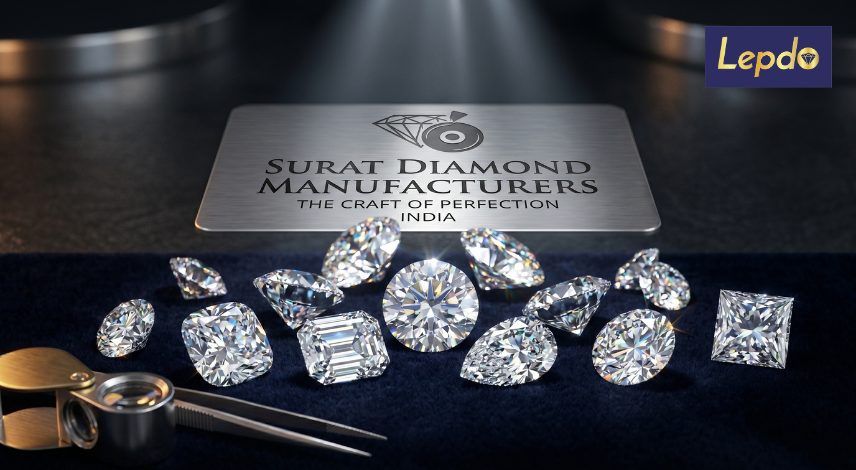
Diamond manufacturers in Surat, India, cut and polish over 90% of the world’s diamonds, making the city the undisputed global hub for both natural and lab-grown diamond production. Surat’s skilled workforce, world-class infrastructure, and GIA/IGI-certified output attract buyers worldwide. Lepdo Diamonds is a trusted Surat-based supplier offering certified, wholesale, and custom-cut diamonds to jewelry brands and retailers across the USA.
Here is a number that stops most buyers cold: over 90% of the world’s polished diamonds pass through Surat, India before they reach a jeweler’s showcase anywhere on Earth. Every round brilliant sitting in a New York engagement ring, every oval lab-grown center stone sold through a Los Angeles retailer, the overwhelming majority were cut and polished within a few square miles of this city in Gujarat.
Yet despite that extraordinary market dominance, many diamond wholesalers and jewelry brands in the United States still approach Surat with uncertainty. Who are the real manufacturers? How do you separate certified excellence from low-grade volume? And in a market now split between natural and lab-grown production, how do you source with confidence?
This guide answers every one of those questions. Whether you are a B2B buyer, a jewelry retailer, or a brand looking to build a private-label diamond program, understanding diamond manufacturers in Surat is not optional. It is the foundation of a smart sourcing strategy.
Why Surat Is Known as the Diamond Capital of the World
No other city on Earth has built what Surat has built around a single gemstone.
Quick Info Box
- Definition: Surat is a city in Gujarat, India, home to the highest concentration of diamond cutting and polishing factories globally.
- Key Types of Output: Natural polished diamonds, lab-grown diamonds (CVD and HPHT), certified loose stones, fancy-cut diamonds.
- Best For: B2B wholesale sourcing, private-label diamond programs, certified loose diamond procurement, engagement ring manufacturing supply chains.
- Main Advantage: Unmatched labor expertise, world-scale production capacity, deep integration with global diamond certification bodies (GIA and IGI), and the Surat Diamond Bourse the largest diamond trading building ever constructed.
The city’s relationship with diamonds stretches back over 500 years. But the modern industry truly accelerated in the 20th century when Surat’s Kathiyawadi and Patel trading communities built a vertically integrated supply ecosystem covering everything from rough diamond import to polished export. Today the Surat Diamond Bourse, inaugurated in 2023, sprawls across 35 towers and 67 million square feet, making it the world’s largest office complex devoted exclusively to diamond trading.
Understanding Diamond Manufacturing at the Surat scale helps buyers appreciate why pricing, quality, and certification standards here are unlike anything available in the Western market.
Types of Diamond Manufacturers in Surat
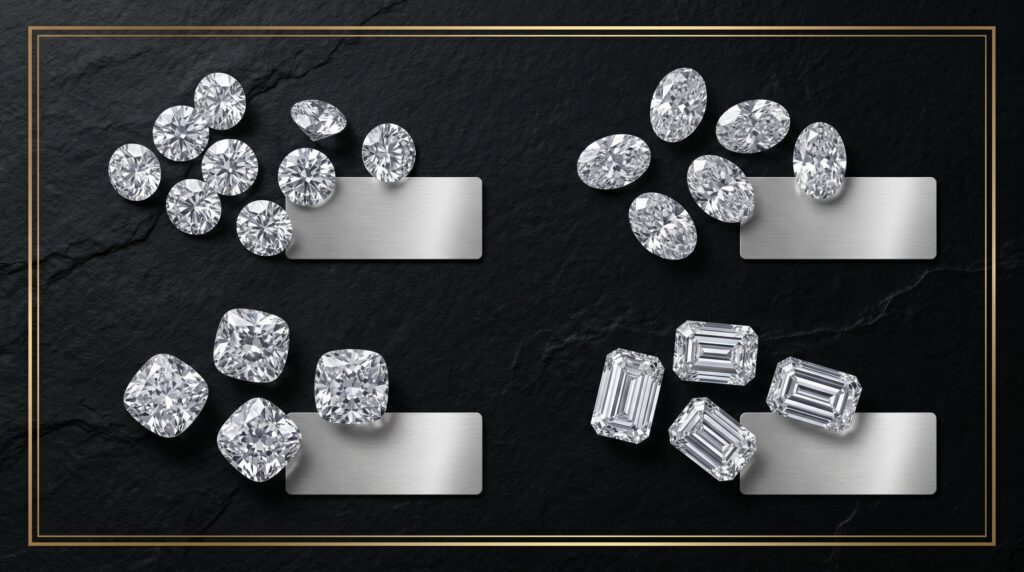
Surat’s diamond industry is not a monolith. It spans several distinct manufacturer categories, and knowing the difference directly affects who you should be sourcing from.
1. Natural Diamond Polishing Manufacturers
These are the traditional backbone of the Surat industry. Natural diamond manufacturers receive rough stones primarily from mining operations in Russia, Botswana, Canada, and Australia and transform them through a multi-stage cutting and polishing process. The best Surat natural diamond factories employ master cutters whose work achieves GIA Excellent cut grades, the highest standard in the market.
Natural diamond polishing companies in Surat range from small family-run workshops handling niche fancy shapes to large export-oriented facilities processing thousands of carats per month. The key differentiator is certification rigor. Top-tier manufacturers partner exclusively with GIA and IGI for grading, giving international buyers the documentation they need for retail or wholesale resale.
2. Lab-Grown Diamond Manufacturers
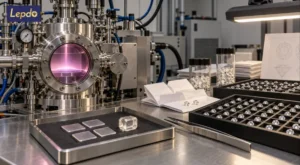
This is the fastest-growing segment within Surat’s diamond manufacturing landscape. In fewer than a decade, Surat has risen to become one of the world’s dominant producers of CVD (Chemical Vapor Deposition) and HPHT (High Pressure High Temperature) lab-grown diamonds.
Lab-grown diamond manufacturers in Surat produce stones that are optically, chemically, and physically identical to mined diamonds. The advantage for buyers is clear: comparable brilliance and fire at significantly lower price points, with full IGI or GIA certification. For jewelry brands targeting millennial and Gen Z consumers, premium lab grown diamonds from Surat represent a commercially compelling sourcing category.
3. Wholesale and Export-Oriented Diamond Suppliers
Beyond pure manufacturers, Surat hosts hundreds of diamond exporters and wholesale suppliers who aggregate polished inventory from multiple factories. These companies are typically registered with the Gem and Jewellery Export Promotion Council of India (GJEPC) and maintain Rapaport-aligned pricing for their catalogs.
Wholesale suppliers are ideal for jewelry retailers and brands needing consistent supply across multiple shapes, sizes, and quality tiers without maintaining relationships with dozens of individual cutting houses.
Other manufacturer categories include:
- Diamond cutting factories that specialize solely in shaping rough to semi-polish, before sending to separate polishing facilities.
- Loose diamond manufacturers In Surat who stock certified polished inventory ready for immediate export.
- Private label diamond manufacturers In Surat offering custom cutting, branding, and certification under a buyer’s label increasingly sought after by USA jewelry brands building proprietary lines.
Natural Diamonds vs Lab-Grown Diamonds in Surat
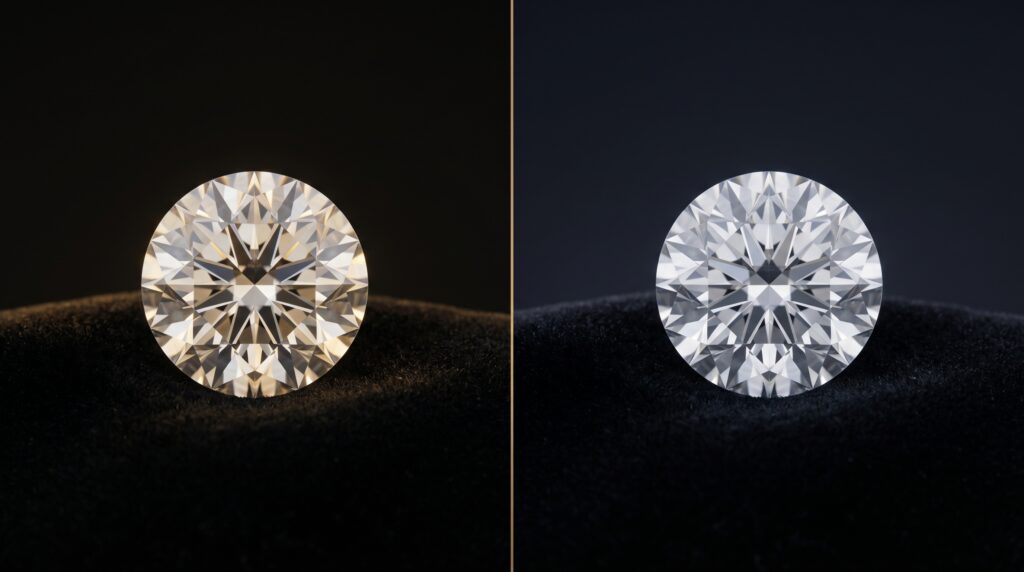
This is the conversation every serious buyer is having in 2025 and 2026. Surat manufacturers now produce both at scale, and the distinction matters enormously depending on your buyer profile and target market.
| Factor | Natural Diamonds | Lab-Grown Diamonds |
|---|---|---|
| Origin | Earth-mined, billions of years old | Grown in controlled laboratory environments using CVD or HPHT technology |
| Cost | Higher per carat at equivalent quality grades | 60–80% lower than equivalent natural stones in current market conditions |
| Sustainability | Mining-dependent; environmental footprint varies by source | Lower physical land disruption; energy-intensive depending on production method |
| Certification | GIA, IGI same grading standards and 4Cs apply | GIA, IGI certified on same 4Cs basis with lab-grown notation |
| USA Buyer Demand | Stable demand for investment-grade and heirloom pieces | Rapidly growing; dominant in engagement ring value segment under $5,000 |
The truth is that neither category is universally superior. They serve different buyers with different intentions.
Natural diamonds retain an emotional premium rooted in rarity and provenance. A GIA-certified two-carat round brilliant with Excellent cut, VS1 clarity, and F color carries a story that extends billions of years. That narrative resonates strongly with buyers in the luxury engagement ring segment and with collectors who view diamonds as alternative assets.
Lab-grown diamonds, on the other hand, are redefining accessible luxury. A buyer who might have settled for a one-carat natural stone at their price point can now purchase a two-carat lab-grown diamond with identical light performance and full IGI certification. In a USA market increasingly driven by transparency and value, that proposition is powerful. Surat’s manufacturers have responded accordingly, investing heavily in CVD reactor capacity and certification infrastructure.
How to Choose the Right Diamond Manufacturer in Surat
Most buyers ask the wrong first question. The right question is not “Who is the biggest?” It is “Who is the right fit for my specific sourcing needs?”
Here is a structured way to evaluate your options:
- Manufacturing Expertise and Specialization. Confirm whether the manufacturer specializes in your required stone category: natural rounds, fancy shapes, lab-grown CVD, or custom cuts. A facility expert in one-carat natural rounds may not be the best choice for bespoke elongated cushion lab-grown stones.
- Certification Standards. Non-negotiable for any professional buyer. Every stone in a business transaction should carry GIA or IGI certification. Manufacturers who resist third-party grading or substitute lesser-known lab reports are a red flag at any price point.
- Export Capability and Track Record. Verify the manufacturer’s GJEPC membership, export history, and shipping infrastructure. Can they handle customs documentation, KP (Kimberley Process) compliance for natural stones, and logistics to USA ports of entry? This is where many smaller manufacturers fall short.
- Pricing Transparency. Legitimate Surat manufacturers price against the Rapaport Diamond Report. Any manufacturer who cannot reference or explain their pricing relative to Rapaport benchmarks should be approached with caution.
- Wholesale Minimums and Inventory Flexibility. Understand minimum order quantities. Some manufacturers require large parcel commitments; others work in smaller certified lots. Match their model to your purchasing cadence.
- Lab-Grown vs Natural Specialization. Not all factories do both well. If you are building a lab-grown diamond program, source specifically from CVD-specialist manufacturers who invest in consistent reactor quality and IGI grading relationships.
Before you finalize your choice, request a sample parcel even a small certified lot and have it independently reviewed against its grading documentation. A trustworthy manufacturer will welcome the scrutiny. That is the standard we hold ourselves to with every buyer relationship we build at Lepdo Diamonds, and it should be the standard you expect from any serious supplier.
You can also browse our inventory of loose diamonds to understand the quality benchmarks a top-tier Surat-connected supplier should be delivering.
What B2B Buyers and Diamond Manufacturers Should Know
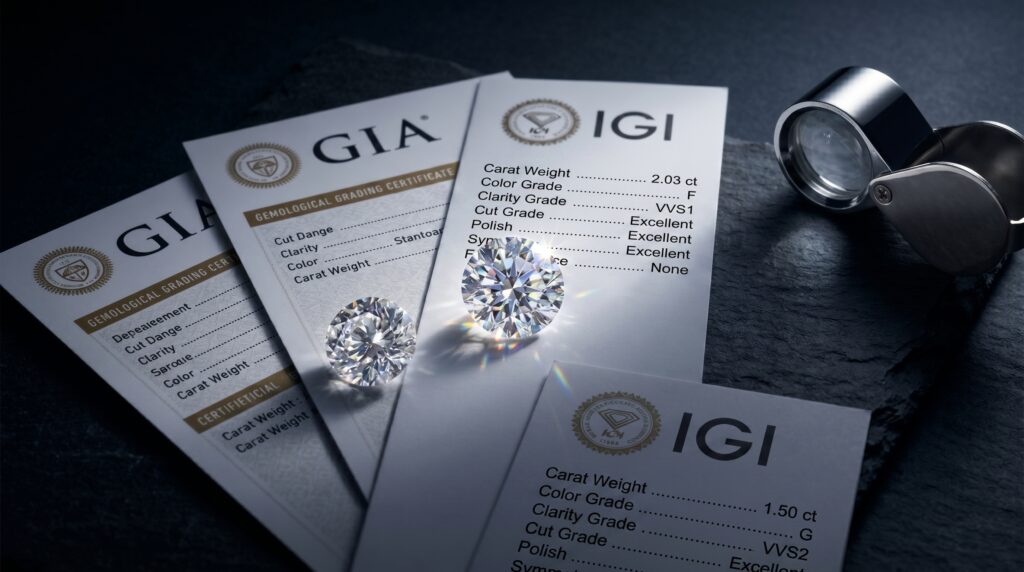
Wholesale diamond sourcing from Surat involves a level of market literacy that separates profitable programs from costly mistakes. Here is what experienced B2B buyers know that first-timers often do not.
Bulk sourcing demands consistency, not just price. The single greatest challenge in bulk diamond procurement is maintaining quality consistency across large parcels. A manufacturer that delivers exceptional quality in a sample lot but ships inconsistent clarity grades in production orders is a liability, not an asset. Always negotiate quality tolerance agreements and define acceptable deviation ranges in writing before committing to volume.
GIA and IGI are not equal for all stone types. GIA remains the gold standard for natural diamond grading in the USA luxury market. IGI has earned strong credibility in the lab-grown diamond category and is widely accepted by American retailers. Understanding which certification is appropriate for your target buyer profile is part of sourcing intelligence.
Rapaport pricing is the language of the trade. The Rapaport Diamond Report sets weekly price benchmarks for polished diamonds globally. Understanding your discount or premium to Rap for specific quality combinations gives you negotiating power that transactional buyers simply do not have.
In my experience working directly with Surat-based manufacturers and export houses, the buyers who get the best long-term pricing are not the ones who push hardest on the first order. They are the ones who establish themselves as consistent, reliable volume partners with clear quality expectations. Manufacturers value that predictability, and they price for it.
For any diamond manufacturer for jewelry brands sourcing at scale, the ability to receive certified inventory in standardized parcels, with documentation, tracking, and consistent light performance, is worth paying a small premium over commodity supply.
Browse our selection of unique cut diamonds to see the kind of specialty inventory that separates genuine manufacturing expertise from generic wholesale supply.
Diamond Jewelry Trends in the USA (2025-2026)
The American diamond market is moving fast, and what buyers want in 2026 is noticeably different from what drove purchases just three years ago.
Lab-grown diamonds now account for an estimated 50% or more of diamond engagement ring sales in the United States by unit volume a figure that would have seemed implausible in 2020. That growth is not slowing. American consumers, particularly buyers under 40, are actively choosing lab-grown stones for their engagement rings based on size, quality, and value, not despite them being lab-grown, but because of what that choice signals about their priorities.
Fancy cut diamonds are having a sustained moment. Oval cuts, elongated cushions, pear shapes, and marquise stones are moving faster than at any point in the last decade. The visual elongation of fancy cuts on the finger, combined with their ability to look larger per carat than round brilliants, is driving this shift. Surat manufacturers who specialize in precision fancy-cut diamond jewellery production are seeing strong export demand as a result.
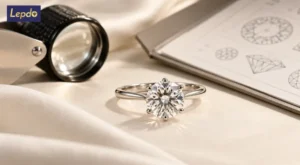
Minimal luxury aesthetics are reshaping ring design. Buyers are moving toward solitaire settings, thin-band pavé, and east-west fancy shapes set in streamlined platinum or white gold mounts. Heavy halo settings, while still present, are declining as a proportion of the market.
Sustainable positioning is now a purchasing trigger, not just a preference. Jewelry brands that can articulate a clear, honest sustainability narrative, whether through lab-grown diamond sourcing, responsible natural diamond supply chains, or recycled metal usage are converting at higher rates with environmentally aware consumers.
That said, the natural diamond heirloom market is holding firm in the upper price tiers. Two-carat-plus natural diamonds with strong GIA grades continue to perform well in luxury retail, where the rarity narrative still carries emotional and commercial weight.
How to Evaluate Quality in Diamonds from Surat Manufacturers
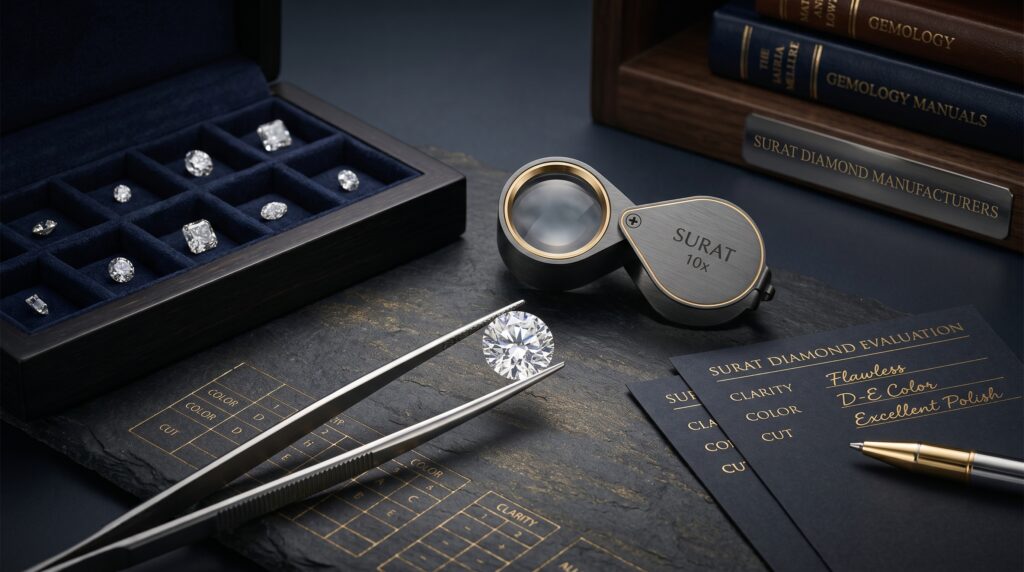
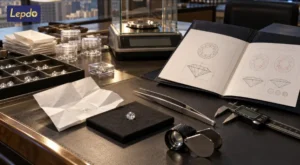
When I assess a parcel of polished diamonds from any Surat manufacturer, I do not start with the certificate. I start with the stone under light.
Here is the evaluation process I use, and recommend to every serious buyer:
- Brilliance check first. Brilliance is the total light returned through the crown of a diamond. A well-cut stone lit from above should return light across the entire table with minimal dark zones. Stones that appear lifeless under standard lighting have cut problems that no certificate can correct.
- Fire and dispersion under directional light. Move the stone under a single point light source. You should see clear spectral dispersion, those rainbow flashes that indicate high refractive performance. Weak fire usually signals poor pavilion angles.
- Scintillation pattern evaluation. Rock the stone gently. The pattern of alternating bright and dark zones should be even, dynamic, and balanced. Asymmetric or static scintillation patterns indicate cutting inconsistencies.
- Pavilion angle and table percentage review. For round brilliants, ideal pavilion angles fall between 40.6° and 41°, and table percentages between 54% and 60%. These metrics directly control light return and fire. Request full grading data, not just cut grade.
- Clarity grade verification under 10x loupe. Match what you see under magnification to what the grading document describes. Inclusions should be consistent in type, location, and character with the clarity map on the GIA or IGI certificate.
- Light performance imaging when available. Top-tier Surat manufacturers increasingly provide ASET or Idealscope images for their certified inventory. These tools make light performance visible in a way that removes subjective interpretation.
For any certified diamonds you are evaluating from a new supplier, always cross-reference the certificate number directly with the issuing laboratory’s online database before payment. This is basic due diligence that protects against documentation fraud rare, but not absent in the wholesale market.
Explore our range of certified diamonds to see how a properly certified parcel from a verified Surat manufacturer should look and document.
Conclusion
Surat is not simply a manufacturing address. It is the operational engine of the global diamond industry, and understanding how to source from it correctly is one of the highest-leverage decisions any jewelry business can make.
The city’s diamond manufacturers in Surat offer something genuinely rare: world-scale production capacity combined with individual stone craftsmanship, certified against the highest international grading standards. Whether you are building a natural diamond program, scaling a lab-grown engagement ring brand, or sourcing specialty fancy-cut inventory for a luxury retailer, Surat is where serious buyers go.
That said, knowing that Surat exists is not enough. Knowing who within it to trust, and how to verify what they deliver, is the real expertise.
At Lepdo Diamonds, we have built our entire operation around exactly that expertise. We source directly from verified Surat manufacturers, apply rigorous certification standards to every stone we carry, and work closely with B2B buyers to build sourcing programs that are consistent, transparent, and commercially sound.
If you are ready to source with confidence, explore our diamond collection and connect with our team. From certified loose diamonds to custom-cut specialty inventory, we are here to help you build something that lasts.
Frequently Asked Questions About Diamond Manufacturers in Surat
1. What are diamond manufacturers in Surat?
Diamond manufacturers in Surat are specialized companies that cut, polish, and export rough diamonds into certified polished stones. Surat handles approximately 90% of the world’s diamond polishing, making it the most important manufacturing hub in the global diamond supply chain for both natural and lab-grown diamonds.
2. Why is Surat famous for diamonds?
Surat has built a 500-year legacy in diamond cutting and polishing. Today the city is home to the Surat Diamond Bourse, the world’s largest diamond trading facility, thousands of polishing factories, and a skilled workforce that cuts over 90% of the world’s diamonds. Its infrastructure, export networks, and craft expertise are unmatched globally.
3. Are Surat diamonds certified?
Yes. Leading diamond manufacturers in Surat work with internationally recognized grading laboratories including GIA, IGI, and HRD. Certified diamonds from Surat carry documentation covering the 4Cs cut, color, clarity, and carat weight giving buyers full confidence in the quality and authenticity of every stone they purchase.
4. Does Surat manufacture lab-grown diamonds?
Absolutely. Surat has become one of the world’s leading centers for lab-grown diamond production. Manufacturers use both CVD and HPHT methods to produce high-quality synthetic diamonds that are optically and chemically identical to mined stones, certified by IGI and GIA.
5. What is the biggest quality risk when buying wholesale diamonds?
The biggest risk is inconsistency in cut quality and certification standards. Many wholesale buyers focus only on price and overlook light performance metrics like brilliance, fire, and scintillation. Always require third-party certification from GIA or IGI, and verify that Rapaport pricing benchmarks are being honored before committing to bulk orders.
6. Are lab-grown diamonds from Surat good quality?
Yes, when sourced from reputable manufacturers. Surat’s lab-grown diamond factories produce stones that meet the same grading standards as natural diamonds under GIA and IGI certification. The key is choosing a verified supplier who provides full documentation, consistent quality across orders, and transparency in the CVD or HPHT process used.
7. Which diamonds are best for engagement rings?
Round brilliant cuts remain the top choice for engagement rings due to their exceptional light return and fire. That said, fancy cuts like oval, cushion, pear, and elongated radiant are surging in popularity across the USA in 2025-2026. Both natural and premium lab-grown diamonds sourced from Surat can deliver spectacular results for engagement ring settings.
8. How do I choose a reliable diamond manufacturer or supplier?
Look for manufacturers with verifiable GIA or IGI certification, transparent Rapaport-aligned pricing, clear export documentation, and a proven track record in your target diamond type. Request samples before bulk commitments, verify their Surat Diamond Bourse affiliation, and ensure they can support private-label or custom sourcing if your program requires it.