How to Import Lab Grown Diamonds from India: Step-by-Step Guide for USA, UK and UAE Buyers
 by lepdogroup@gmail.com
0 comments
by lepdogroup@gmail.com
0 comments
Importing lab grown diamonds from India means purchasing CVD or HPHT diamonds directly from Indian manufacturers or wholesalers and shipping them internationally through licensed channels. For USA, UK, and UAE buyers, this process involves selecting a certified supplier, arranging IGI or GIA grading reports, and filing the correct customs documentation. Lepdo Diamonds simplifies this entire process for serious B2B and retail buyers worldwide.
India supplies over 90% of the world’s polished diamonds, and that figure keeps climbing as lab grown production in Surat scales up at a pace few saw coming even three years ago. If you are a jewelry retailer, wholesaler, or manufacturer trying to understand how to import lab grown diamonds from India, you are not alone. Hundreds of American buyers made the shift to direct India sourcing in 2023 and 2024, slashing their per-carat costs by 30% to 60% compared to domestic wholesale pricing.
This guide walks you through every stage of the process: supplier selection, certification standards, shipping logistics, import duties on diamonds in the USA, and the compliance steps that protect your business. You will also find specific guidance for UK and UAE buyers where the rules differ. Whether you are sourcing one parcel or setting up an ongoing wholesale relationship, the process is more accessible than most buyers expect.
What Importing Lab Grown Diamonds from India Actually Means
Importing lab grown diamonds from India refers to the legal process of purchasing polished CVD or HPHT diamonds from Indian manufacturers or exporters and bringing them into another country for resale or personal use. India, and Surat specifically, is the global center of diamond polishing, with thousands of cutting and polishing facilities processing stones for the world’s top jewelry brands.
Quick Info Box:
- Definition: Purchasing polished lab grown diamonds from Indian suppliers and importing them through licensed customs channels into your country.
- Key Types: CVD (Chemical Vapor Deposition) lab grown diamonds, HPHT (High Pressure High Temperature) lab grown diamonds, calibrated parcels, certified single stones.
- Best For: Jewelry retailers, wholesale diamond buyers, engagement ring brands, fine jewelry manufacturers, and direct consumers purchasing loose stones.
- Key Advantage: Indian lab grown diamonds offer significantly lower per-carat pricing than US domestic supply, with equivalent or superior quality when sourced from a certified manufacturer.
To understand the full scope of what this process involves on the regulatory side, the Diamond Import glossary at Lepdo Diamonds is a solid starting point before you contact any supplier.
The Main Import Routes and Who They Are For
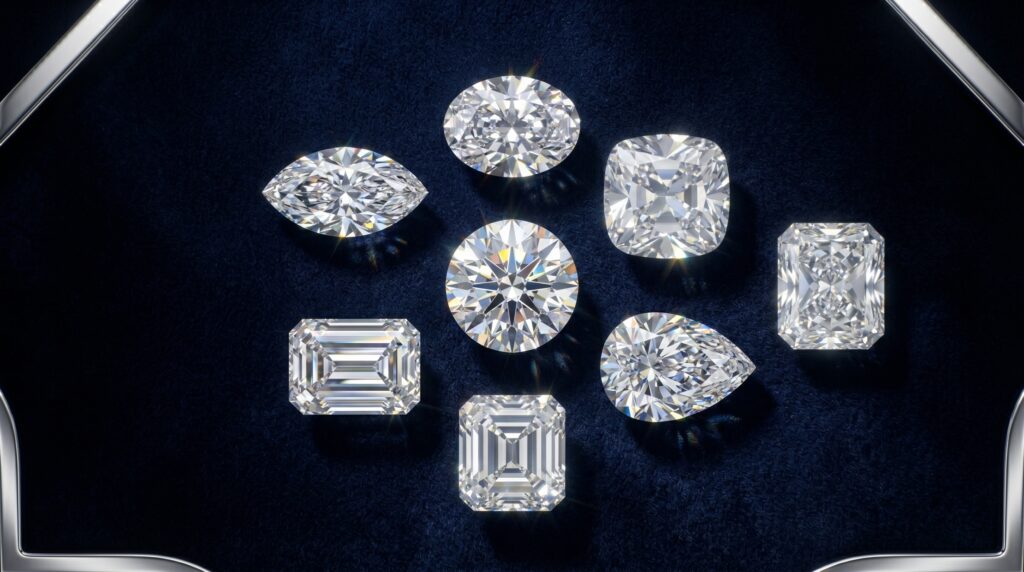
The India diamond import process is not one-size-fits-all. Different buyers use different sourcing models depending on their volume, certification needs, and whether they want finished goods or loose stones.
Direct Manufacturer Sourcing
This is the most cost-efficient route for buyers purchasing regularly. You work directly with a Surat-based lab grown diamond manufacturer, specify your requirements (shape, carat range, cut grade, color, clarity), and receive graded stones shipped through a licensed diamond exporter. The margin savings are significant. That said, it requires due diligence on the factory, and most manufacturers have minimum order thresholds ranging from $5,000 to $25,000 per parcel.
Wholesale Aggregator Model
Several platforms and trading houses in Surat aggregate inventory from multiple manufacturers. This model suits buyers who need variety across shapes and sizes without committing to one supplier. You get more flexibility, though your per-carat pricing will be slightly higher than direct factory access. If you are exploring Wholesale Diamond in Surat india, this aggregator model is often how first-time buyers get comfortable with the market before going direct.
Certified Single Stone Orders
For jewelry retailers and engagement ring brands, ordering IGI or GIA certified individual stones is standard practice. These are priced against the Rapaport list and shipped with full documentation. The customs process is smoother when each stone has an individual certificate, and your end customers expect that level of traceability.
Freight Forwarding via Licensed Diamond Exporters
All diamonds exported from India must go through a licensed exporter registered with the Gem and Jewellery Export Promotion Council (GJEPC). This is not optional. Buyers should never accept shipments routed outside this system.
B2C Buyers Ordering Direct
Individual consumers in the USA can legally import diamonds purchased directly from Indian suppliers. The stone must be accompanied by proper documentation, and US Customs applies duties and taxes at point of entry. For most loose stones under certain thresholds, the process is straightforward with the right paperwork.
Rough-to-Polished Supply Chain Access
Some larger buyers work with vertically integrated manufacturers who control the entire process from rough stone to polished, certified diamond. This route is typically only available for high-volume relationships but offers the deepest pricing and the clearest chain of custody.
Importing Lab Grown vs. Importing Natural Diamonds: The Real Difference
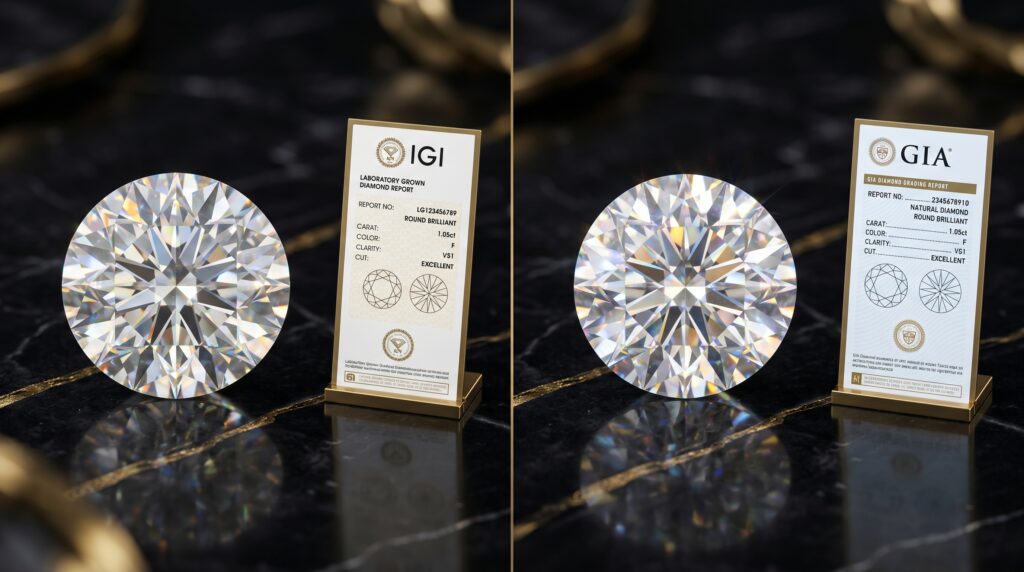
Most of the import regulations apply to both categories. Still, there are meaningful differences in how lab grown and natural diamonds are classified, priced, and documented.
| Factor | Lab Grown Diamonds | Natural Diamonds |
|---|---|---|
| US Import Duty Rate | 0% (HTS 7104.20) | 0% (HTS 7102.39) |
| Kimberley Process Certification | Not required | Required for natural rough |
| Rapaport Pricing Reference | Lab grown price sheet (separate) | Standard Rap sheet |
| IGI vs GIA Grading | IGI dominates for lab grown | Both widely accepted |
| Price Volatility | Higher short-term volatility | More stable long-term |
The customs classification is the detail most first-time importers miss. Lab grown diamonds fall under a different HTS code than natural diamonds in the United States. Using the wrong code does not result in higher taxes (both are duty-free), but it can trigger inspection delays and paperwork complications. Always confirm the correct code with your customs broker before filing.
Most buyers sourcing lab grown diamonds from India today work with IGI certified stones. IGI has built its global infrastructure specifically around the lab grown category, and their grading turnaround from Surat facilities is faster than GIA’s for this segment. For those comparing options between lab grown and natural, the B2B Buyers guide at Lepdo Diamonds breaks down that decision clearly.
How to Choose the Right Sourcing Approach for Your Business
Getting the import process right starts before you ever contact a supplier. Here are six decision factors every buyer should work through:
- Volume and order frequency: If you are buying once or twice a year, a wholesale aggregator or a trusted verified supplier is more practical than setting up a direct factory relationship. Regular buyers above $10,000 per month should consider direct sourcing for margin reasons.
- Certification requirements: Retail customers in the USA increasingly expect IGI or GIA certificates on individual stones. If you are selling to end consumers, budget for certified stones only. Parcels without certificates are appropriate for manufacturing use where you will be cutting or resetting the stones.
- Shape and cut consistency: Lab grown diamonds from India are available in all major shapes: round brilliant, oval, cushion, emerald, pear, radiant, princess, and marquise. Consistency in cut quality varies by manufacturer. Request grading reports across a sample parcel before committing to a bulk order.
- Budget positioning: Lab grown diamond price India has changed substantially over the past three years. CVD rounds in the 1 to 2 carat range are now available at prices that were unthinkable in 2020. Visit Lab Grown Diamond Price India for current benchmarks before you negotiate with any supplier.
- End use and occasion: Engagement ring inventory requires higher color and clarity grades (typically F to H, VS2 and above). Fashion jewelry and commercial production can work with broader parameters. Match your sourcing specs to your actual customer demand.
- Lab grown vs. natural decision: Some buyers want both in their inventory. Understanding the Natural Diamonds supply chain from India alongside lab grown gives you pricing leverage and flexibility for different customer segments.
Before you finalize your sourcing strategy, get at least three supplier quotes for the same stone specifications. The spread between manufacturers in Surat is wider than most buyers expect, even for stones with identical certification.
What B2B Buyers and Diamond Manufacturers Should Know
Here is what most guides leave out: the India diamond import process for commercial buyers is not just about price. It is about building a supply chain that performs consistently under pressure.
For wholesalers and retailers ordering bulk parcels, cut grading consistency is often a bigger issue than per-carat price. IGI uses strict cut grading parameters for round brilliants, but fancy shapes (oval, cushion, pear) do not carry an official IGI cut grade. This means your quality control depends on establishing internal specs with your supplier: table percentage, depth percentage, length-to-width ratio, and girdle thickness. Get those parameters locked in writing before your first order.
Rapaport pricing still functions as a reference for lab grown diamonds, though the lab grown Rapaport sheet discounts more aggressively than the natural sheet. Understand that suppliers will quote “off-Rap” percentages, and those percentages fluctuate with market conditions. Track them monthly if you are buying regularly.
For US jewelry manufacturers using Indian lab grown diamonds in finished pieces, the Diamond Export glossary explains how export documentation flows from the Indian side, which directly affects your US import filings.
In my experience evaluating parcels from Surat manufacturers, the single most overlooked quality factor in lab grown bulk orders is polish and symmetry grading. Most buyers check color and clarity but accept “Good” polish and symmetry to save a few dollars per carat. Over a 500-stone parcel, that decision shows in the finished product. Insist on “Very Good” or better across the board.
GIA certification standards for lab grown diamonds have tightened over the past two years. If your buyers specifically request GIA reports, factor in longer grading turnaround times from Surat compared to IGI. IGI’s Surat facility is integrated directly into many manufacturer workflows, which makes the process faster and more cost-efficient for standard commercial orders.
Lab Grown Diamond Import Trends in the USA, 2026 to 2027
The US market for imported lab grown diamonds is expanding in a specific direction. Buyers are not just looking for cheaper rounds anymore. The demand for well-cut fancy shapes, particularly elongated ovals and cushion cuts in the 2 to 4 carat range, has pushed Indian manufacturers to invest heavily in CVD production for these categories.
According to industry tracking data, the US imported over $2.3 billion in lab grown diamonds in 2024, with India accounting for the majority of that supply. That figure represents a 40% increase from 2022, and projections for 2026 and 2027 continue upward as more retailers convert a portion of their natural diamond inventory to lab grown alternatives.
Design trends in the USA are driving this sourcing shift. Elongated stones set in thin gold bands, step-cut lab grown diamonds in emerald and Asscher shapes for Art Deco-influenced designs, and fancy color lab grown stones in yellow and pink tones are all moving quickly at retail. Indian manufacturers have responded by expanding production runs for these shapes.
Think of it this way: a few years ago, buying a well-cut 3-carat oval lab grown diamond from India at a price that worked for American retail was genuinely difficult. Today, multiple Surat manufacturers can fill that order with IGI-certified stones and ship within two weeks.
How to Evaluate Quality When Importing Lab Grown Diamonds
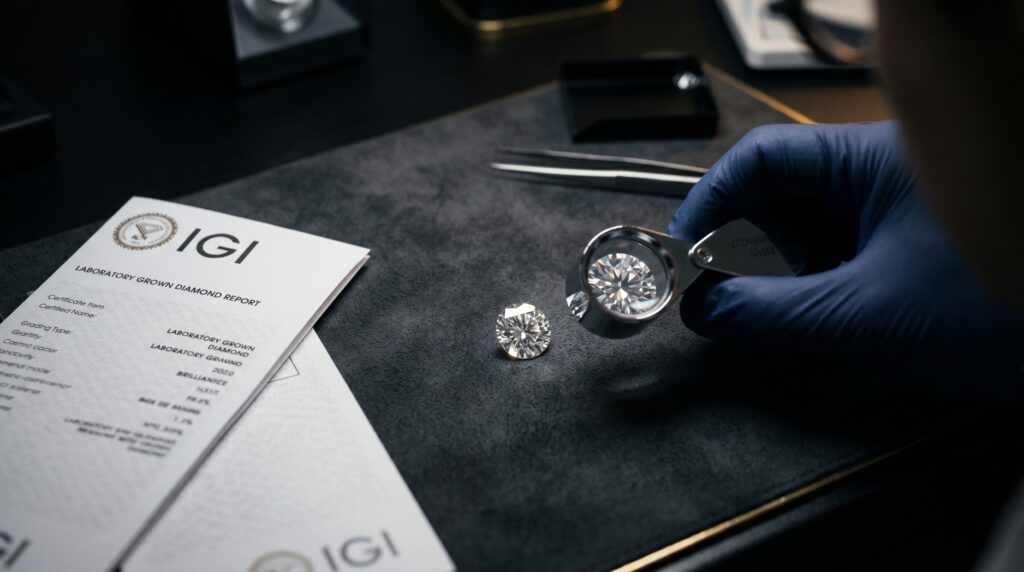
When I assess a lab grown diamond parcel from an Indian supplier, the first thing I check is not the certificate. It is the stone itself under magnification. Certificates tell you what the grader observed on that day. A loupe or microscope tells you what you are actually working with.
Here are the evaluation steps every buyer should follow before accepting an imported parcel:
- Check brilliance and fire against the certificate: A stone graded “Excellent” cut should show strong brilliance, fire, and scintillation when viewed under standard lighting. If it looks flat or glassy, the proportions may be legal but not optimal.
- Verify the pavilion and table specifications: For rounds, a table percentage between 54% and 58% with a pavilion depth of 42% to 44.5% produces the best light return. Stones outside these ranges can technically earn “Very Good” grades while underperforming visually.
- Inspect clarity inclusions under 10x magnification: VS2 and SI1 inclusions in lab grown CVD stones sometimes differ from natural clarity characteristics. Graining, feathers, and cloud inclusions in lab grown stones can affect light performance even at grades that appear clean face-up.
- Confirm color consistency across a parcel: A parcel certified as “F-H” should show consistent color when stones are placed face-down on a white grading tray. Color banding or a single outlier in a parcel of 50 stones signals inconsistent quality control at the manufacturer.
- Review the full grading report details: Do not just check the grade boxes. Read the comments section of the IGI or GIA certificate. Any notation about clarity characteristics or treatment is critical information.
For buyers who want to source Certified Diamonds directly from a verified Indian supplier, the certification documentation is handled as part of the standard order process.
Conclusion
Three things determine whether your India diamond sourcing experience is a genuine business advantage or a costly lesson. First, the supplier you choose matters more than any other single factor. A GJEPC-registered, IGI-certified manufacturer with a track record of international B2B orders is not just a vendor. They are the foundation of your supply chain. Second, understanding the import duties on diamonds in the USA (currently zero for both HTS categories) and the documentation requirements removes most of the complexity from the customs process. The paperwork is straightforward when handled correctly. Third, quality control cannot be outsourced entirely to a certificate. Building your own inspection protocol, even a basic one, protects your margins and your reputation with end buyers.
The question is not whether to explore diamond sourcing India for your business. At current price differentials, the question is why you have not already. Lepdo Diamonds works directly with US, UK, and UAE buyers to streamline every step of this process, from stone selection and IGI certification to shipping documentation and customs coordination.
Knowing how to import lab grown diamonds from India is the competitive advantage that separates serious buyers from those still paying retail wholesale premiums they do not need to pay.
Frequently Asked Questions About Importing Lab Grown Diamonds from India
1. What is the process to import lab grown diamonds from India?
Importing lab grown diamonds from India involves selecting a GJEPC-registered supplier, specifying stone requirements, arranging IGI or GIA certification, and shipping through a licensed exporter. The buyer files customs entry documentation in their home country and pays any applicable duties or taxes. Most US buyers work with a customs broker experienced in the HTS gemstone codes for a smooth process.
2. Are lab grown diamonds from India cheaper than buying in the USA?
Yes, significantly. Buying diamonds from India USA involves savings of 30% to 60% compared to US domestic wholesale prices for comparable certified stones. The cost difference reflects India’s lower manufacturing costs, large-scale CVD production infrastructure, and direct access to polishing facilities in Surat. Savings vary by shape, size, and certification level.
3. Which lab grown diamond shapes from India look biggest or most impressive?
Elongated shapes offer the most visual size for carat weight. Oval, pear, and marquise cuts appear 10% to 15% larger than a round diamond of the same carat weight. Cushion and radiant cuts offer a full, brilliant look with strong scintillation. Emerald cuts appear sleek and sophisticated. Indian manufacturers in Surat produce all these shapes at scale.
4. Do lab grown diamonds from India have a GIA cut grade?
GIA assigns cut grades only for round brilliant diamonds, not for fancy shapes. IGI follows the same standard. This applies whether the stone is lab grown or natural. For fancy shapes imported from India, buyers must evaluate cut quality through specifications like table percentage, depth percentage, and length-to-width ratio rather than a single cut grade.
5. What is the biggest quality risk when buying diamonds from India?
The biggest risk is purchasing uncertified parcels based on verbal descriptions. Without IGI or GIA certification, color and clarity grades can be overstated by a full grade or more. Buyers should also watch for inconsistent polish and symmetry grades in bulk parcels, which affect the finished look of jewelry even when individual stones pass basic quality checks.
6. Are lab grown diamonds from India as good as natural diamonds in quality?
In terms of physical and chemical composition, lab grown diamonds are identical to natural diamonds. They have the same hardness, brilliance, fire, and scintillation. The difference is origin, not quality. Indian manufacturers produce lab grown diamonds in all the same grades as natural stones, including colorless and internally flawless specifications. The Diamond Buying Guide at Lepdo Diamonds covers this comparison in full detail.
7. Which lab grown diamond type from India is best for an engagement ring?
Round brilliant cuts remain the standard for engagement rings due to their certified cut grades and maximum light return. That said, the market for elongated ovals and cushion cuts in engagement rings has grown substantially. For USA buyers, a 1.5 to 2 carat IGI-certified oval or round in F to H color, VS2 clarity is the current sweet spot for quality, price, and customer satisfaction.
8. How do I choose a reliable lab grown diamond manufacturer or supplier in India?
Look for GJEPC membership, IGI and GIA certification capability, transparent pricing tied to Rapaport references, and verifiable references from international buyers. Request a sample parcel before committing to a large order. A reliable supplier will provide detailed documentation, accept independent quality inspections, and offer consistent communication. The Trusted Diamond Supplier page at Lepdo Diamonds explains what verified supplier relationships look like in practice.