Do Lab Grown Diamonds Last Forever? Are They Real Diamonds? Complete Guide
 by lepdogroup@gmail.com
0 comments
by lepdogroup@gmail.com
0 comments
Lab grown diamonds last forever in the same way natural diamonds do, because they are chemically, physically, and optically identical to mined diamonds, scoring a 10 on the Mohs hardness scale. This matters enormously for buyers investing in engagement rings or fine jewelry. Explore certified lab grown options at Lepdo Diamonds to find stones built to last a lifetime and beyond.
A customer once walked into a retailer I work with, holding a lab grown solitaire she had bought two years earlier. She was convinced it had “faded.” After a quick examination under a loupe, the diagnosis was simple: the ring needed cleaning. The diamond itself was flawless. This happens more than most people realize, and it points to a much bigger question that buyers, jewelers, and wholesalers across the USA keep asking: do lab grown diamonds last forever?
The short answer is yes. Lab grown diamonds share an identical atomic structure with mined diamonds, which means they carry the same extraordinary durability. But there is real depth behind that answer, and this guide will take you through everything you need to know, from hardness and light performance to certification standards, B2B sourcing considerations, and what American buyers are actually looking for in 2026.
What Lab Grown Diamonds Actually Are
Lab grown diamonds are not simulants. They are not cubic zirconia. They are not moissanite. They are real diamonds, grown in a controlled environment using either High Pressure High Temperature (HPHT) or Chemical Vapor Deposition (CVD) technology that replicates the geological conditions deep inside the Earth.
Here is what that means in practical terms: when a gemologist at GIA or IGI examines a lab grown diamond alongside a mined diamond, they cannot tell them apart without specialized equipment designed to detect trace growth patterns.
Quick Info Box
- Definition: A lab grown diamond is a genuine diamond crystal with the same carbon lattice structure as a mined diamond, produced in a laboratory rather than extracted from the earth.
- Key Types: HPHT (High Pressure High Temperature), CVD (Chemical Vapor Deposition)
- Best For: Engagement rings, fine jewelry, B2B wholesale, budget-conscious premium buyers, ethical sourcing advocates
- Key Advantage: Identical physical and optical properties to natural diamonds at a significantly lower price point
The confusion around lab grown diamonds often comes from the word “synthetic,” which in everyday language implies artificial or inferior. In gemology, Synthetic Diamonds simply means diamonds grown by a human process rather than a natural one. The carbon atoms are arranged in exactly the same tetrahedral lattice. The result is exactly the same gemstone.
Lab Grown Diamond Durability: Varieties and Who They Are For
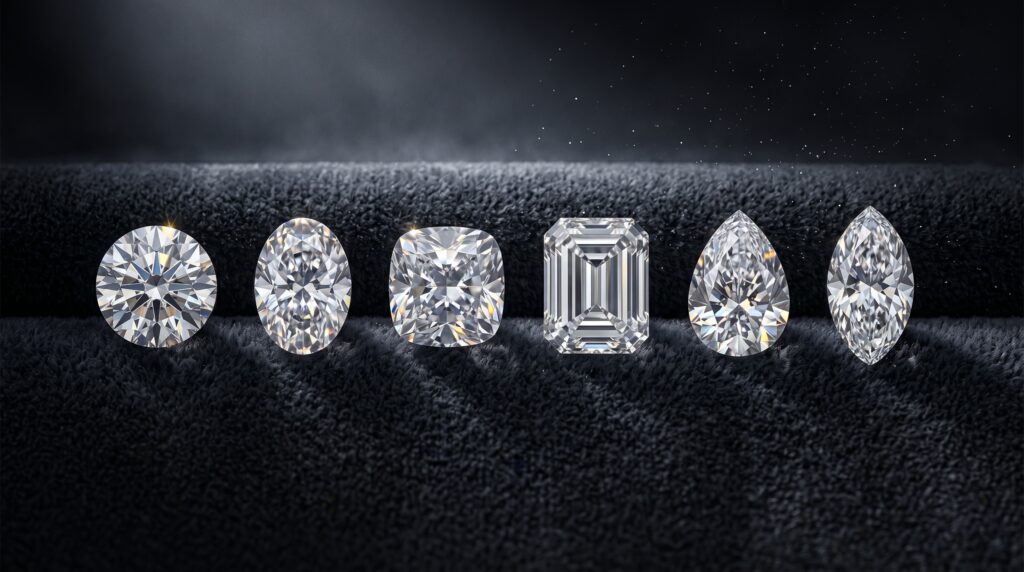
When buyers ask how long do lab grown diamonds last, they are really asking about durability across real-world conditions. Think of it this way: a diamond is not one single thing. It is a category of stone with meaningful variations in growth method, cut quality, and grading. Each of those factors affects how the diamond performs over time.
HPHT Lab Grown Diamonds
HPHT diamonds are grown under pressures exceeding 1.5 million pounds per square inch and temperatures above 1,400 degrees Celsius, mimicking conditions deep inside the Earth. They tend to exhibit a cuboctahedral growth pattern and can carry a faint yellowish or bluish tint depending on the nitrogen content during growth. For B2B buyers seeking colorless stones (D-F range), very careful grading selection is essential with HPHT. In terms of lab grown diamond durability, HPHT stones are as hard and as permanent as any diamond on earth.
CVD Lab Grown Diamonds
CVD diamonds are grown by seeding a thin diamond wafer inside a plasma reactor and allowing carbon atoms to deposit layer by layer. The process gives manufacturers greater control over color, making colorless and near-colorless grades far more consistent. CVD diamonds are gaining ground quickly with American fine jewelry retailers because of their predictability and the cleaner supply chain documentation they support. Lab Diamond Quality metrics for CVD stones have improved dramatically over the past five years.
Round Brilliant Cut Lab Grown Diamonds
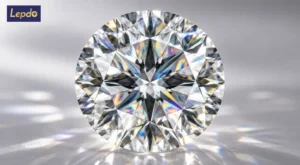
Round brilliant lab grown diamonds represent the highest-volume segment. They are graded by GIA and IGI using the same cut grade system applied to mined rounds, meaning buyers get a verifiable, standardized quality benchmark. Their 57 to 58 facets maximize light return, fire, and scintillation, making them the most forgiving cut for buyers who want guaranteed brilliance without deep expertise in evaluating light performance manually.
Fancy Shape Lab Grown Diamonds
Oval, cushion, pear, emerald, radiant, princess, and marquise lab grown diamonds all offer strong value. The oval has surged in popularity in the USA over the past two years. Emerald cuts appeal to buyers who prioritize clarity over sparkle, as the open table makes inclusions easier to see, so you will want to pay attention to clarity grades above VS2 when sourcing emerald cut lab grown stones.
Colored Lab Grown Diamonds
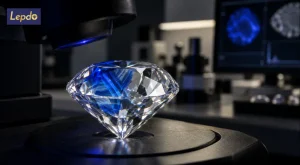
Lab grown fancy colored diamonds, particularly vivid yellows and blues, are produced by introducing trace elements like nitrogen or boron during growth. These are significantly rarer as a retail offering than colorless lab grown stones and command premium pricing relative to other lab grown categories. That said, they remain far more accessible than natural fancy colored diamonds, which can reach hundreds of thousands of dollars per carat at auction.
Melee and Commercial Grade Lab Grown Diamonds
For manufacturers sourcing side stones and accent diamonds in bulk, lab grown melee offers consistent color and clarity at a fraction of the cost of comparable natural melee. This is one of the fastest-growing segments in the American B2B diamond market, and understanding it requires solid knowledge of Diamond Durability standards under repeated setting and resetting.
Lab Grown Diamonds vs Natural Diamonds: The Real Difference
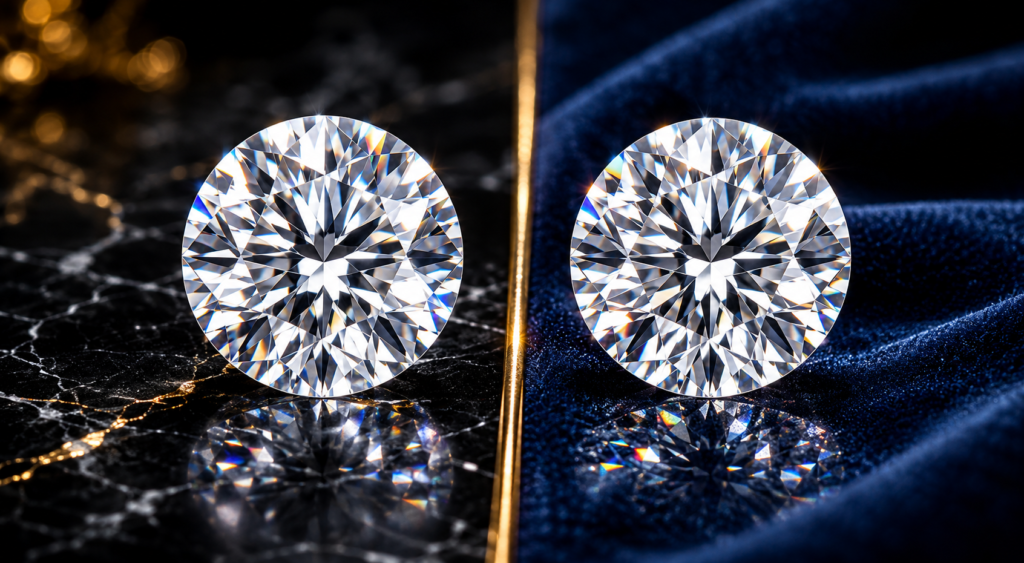
Most buyers assume the differences are physical. They are not. The real differences are economic, perceptual, and supply-related.
| Factor | Lab Grown Diamond | Natural Diamond |
|---|---|---|
| Hardness (Mohs Scale) | 10 | 10 |
| Chemical Composition | Pure carbon (crystalline) | Pure carbon (crystalline) |
| Resale Value | Lower secondary market value | Higher secondary market value |
| Price Per Carat | 60-80% less than natural | Benchmark pricing via Rapaport |
| Ethical Sourcing | Traceable, minimal environmental impact | Varies widely by origin |
The comparison table above tells a clear story. On every technical and physical factor, lab grown and natural diamonds are equal. Where they diverge is in the economics of the secondary market and the cultural premium attached to rarity. A natural two-carat D/VS1 round brilliant commands strong Rapaport pricing partly because it is irreplaceable. A lab grown two-carat D/VS1 can be grown again.
Are lab grown diamonds real diamonds? By every scientific and grading standard that GIA, IGI, and the Federal Trade Commission recognize: yes, they are. The FTC formally updated its guidelines to confirm this. Lab grown diamond vs natural hardness is simply not a debate, because both score a 10.
To go deeper on how natural and lab grown diamonds compare for B2B procurement decisions, read the detailed breakdown on Natural vs Lab Grown purchasing factors.
How to Choose the Right Lab Grown Diamond for Your Needs
Whether you are buying your first lab grown solitaire or sourcing a thousand carats for a retail program, the decision process follows the same logic.
- Start with cut quality, not carat weight. A well-cut 1.20ct lab grown diamond will out-dazzle a poorly cut 1.50ct stone every time. Prioritize IGI or GIA cut grade of Excellent or Ideal before looking at size.
- Match the shape to the ring style and finger type. Oval and elongated cushion cuts make fingers appear longer. Round and princess cuts suit wider hands and classic prong settings. Pear cuts work exceptionally well in east-west bezel settings that have become a strong trend in American fine jewelry.
- Consider the setting before choosing the stone. A halo setting amplifies apparent size, making a 0.70ct center stone look closer to a full carat. A solitaire setting demands a cleaner stone with higher clarity, because there is nowhere for inclusions to hide.
- Understand the budget advantage honestly. Lab grown diamonds typically run 60 to 80 percent below natural diamond prices for equivalent 4Cs grades. That budget difference can be reinvested in a better cut, a higher color grade, or a more elaborate setting.
- Define the occasion and its emotional weight. For investment-minded buyers or those prioritizing heirloom value, the natural diamond market still holds advantages in long-term resale. For buyers who prioritize size, cut quality, and ethical sourcing at a given price, lab grown is often the stronger choice.
- Decide whether lab grown is the right category. For buyers comparing options, lab grown diamond durability is not a concern. Are lab diamonds permanent? Yes, they are. The diamond itself will outlast any setting it is placed in. For lab grown diamond pricing information to support your comparison, refer to current Lab Grown Diamond Price data.
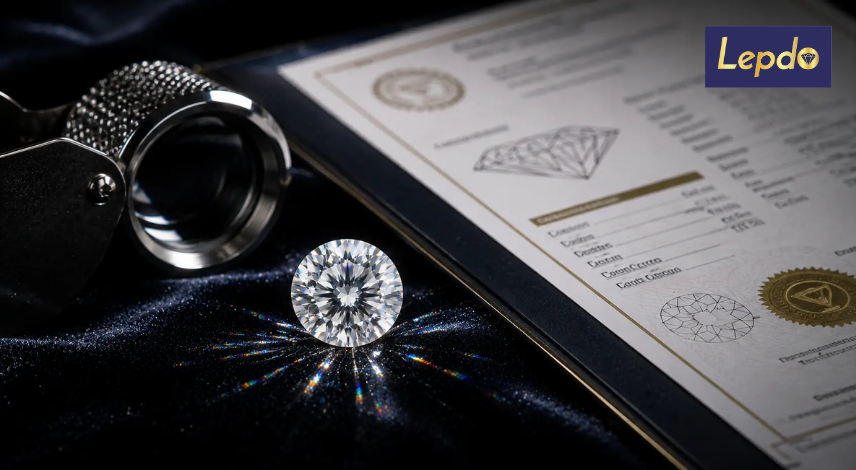
Before you finalize your choice, get the stone graded. An IGI or GIA certificate is not optional; it is the only documentation that gives you and your customer a defensible claim about what you are actually buying.
What B2B Buyers and Diamond Manufacturers Should Know
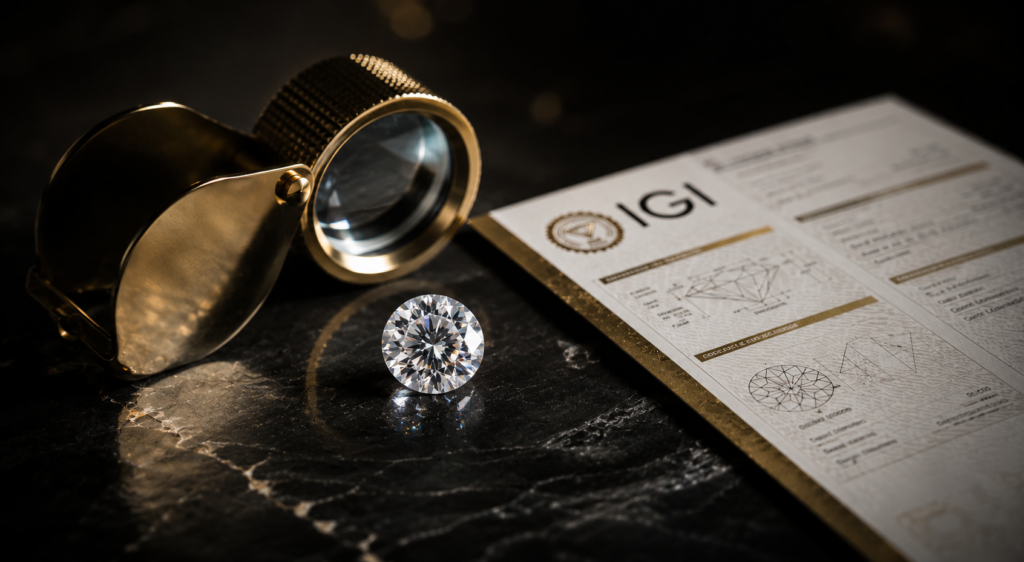
Here is what experienced manufacturers and wholesalers have figured out that newer entrants often miss: lab grown diamonds are not a single uniform product. Consistency in cut grading across a parcel is the real differentiator between a strong lab grown diamond supplier and a problematic one.
When sourcing lab grown diamonds for a retail program, demand IGI-certified stones with documented cut grades. IGI has become the dominant certification body for lab grown diamonds in the American B2B market, offering the same 4Cs framework and cut grade rigor as GIA. For wholesale parcels where per-stone certification is not practical, request batch sampling with IGI verification on a representative percentage.
Rapaport pricing for lab grown diamonds is now tracked separately from natural diamonds, with its own Rapa Lab report. Buyers who relied on the natural diamond Rapaport sheet for lab grown pricing comparisons even two years ago are working with outdated logic. Lab grown pricing has continued to decline year-over-year as production capacity expands, which changes the economics of inventory holding.
In my experience, the manufacturers who perform best with lab grown programs are those who pair solid cut grading discipline with reliable certification documentation from the start. A retailer who discovers inconsistency in a 50-stone parcel is very unlikely to return for a second order, regardless of the price point.
For manufacturers and wholesalers building a lab grown program with certified quality standards, Certified Lab Grown sourcing is the place to begin due diligence on supply chain documentation.
Lab Grown Diamond Jewelry Trends in the USA (2026 to 2027)
The American lab grown diamond jewelry market has moved well past the “early adopter” phase. Lab grown diamonds now account for a meaningful and growing percentage of engagement ring center stone sales at major national retailers. Industry reports from trade associations tracking the 2025 and early 2026 sales cycles show lab grown continuing to take market share from natural diamonds in the sub-three-carat range.
Design-wise, the trends that are driving lab grown diamond jewelry purchases in 2026 center on individuality. Buyers are choosing fancy shapes more frequently than ever, with oval cut lab grown diamonds leading the movement away from the traditional round brilliant for engagement rings. Celebrity-influenced design directions have brought wide-band, low-profile settings into focus, particularly east-west orientations for elongated shapes. Vintage-inspired settings, including Old European and Art Deco motifs rendered in modern white gold or platinum, are pairing exceptionally well with lab grown stones because the cost savings on the center stone free up budget for elaborate metalwork.
The ethical sourcing narrative continues to resonate strongly with millennial and Gen Z buyers, who represent an increasing share of the engagement ring market. For retailers and wholesalers, this creates a clear messaging opportunity: lab grown diamond jewelry is not a compromise. It is a deliberate choice.
How to Evaluate Quality in Lab Grown Diamonds
When I assess a lab grown diamond, the first thing I check is light performance before I even look at the certificate. A stone can have excellent grades on paper but still underperform in person if the cut proportions push it to the edge of acceptable parameters.
Here are the five things I look for every time:
- Table percentage and depth percentage. For round brilliants, I target a table between 54 and 58 percent and a depth between 61 and 62.5 percent. These ranges maximize the interaction between light entering through the table facets and the pavilion below, producing the fire and scintillation that make a diamond visually alive.
- Pavilion angle. The pavilion drives internal light reflection. Pavilion angles outside the 40.6 to 41.0 degree range can produce a fish-eye effect or a dark center, both of which are immediately apparent under retail lighting conditions.
- Fluorescence in CVD stones. CVD lab grown diamonds can occasionally exhibit unusual fluorescence behavior. Strong blue fluorescence that creates a milky appearance under UV light is a quality concern worth flagging, particularly for high-clarity stones where transparency is a selling point.
- Clarity grade verification. Lab grown diamonds can contain inclusions specific to their growth method, such as metallic inclusions in HPHT stones (remnants of the catalyst metal) or graining patterns in CVD stones. An IGI or GIA clarity grade documents these clearly.
- Color consistency across a parcel. For B2B buyers taking multiple stones, color consistency is critical. A parcel graded G-H should not contain stones that appear visually J or K under side-by-side comparison.
Always source from suppliers who provide Certified Lab Grown diamonds with verifiable documentation. The certificate is not a formality; it is your baseline for quality control and customer trust.
For a deeper technical understanding of how grading affects value, review the Diamond Hardness and light performance parameters that separate premium lab grown goods from commercial grades.
Conclusion
Three things matter most when evaluating lab grown diamonds for purchase or wholesale sourcing. First, lab grown diamonds are real diamonds in every scientific and legal sense, and their durability is absolute. Do lab grown diamonds last forever? Yes. The same carbon lattice that makes a mined diamond the hardest natural substance on Earth makes a lab grown diamond exactly as permanent.
Second, the quality differences that actually matter are in cut, certification, and consistency, not in whether the diamond was grown underground or in a reactor. Buyers and retailers who focus on IGI-certified lab grown goods with documented cut grades will build stronger programs than those chasing price alone.
Third, the American market for lab grown diamond jewelry is healthy, growing, and increasingly design-forward. Retailers and manufacturers who engage with it seriously, with proper sourcing discipline and genuine expertise, are well positioned for the next three to five years.
If you are ready to explore certified lab grown options with transparent quality documentation, Lepdo Diamonds is the place to start. The team works daily with manufacturers, retailers, and direct consumers across the USA to match the right stone to the right brief.
A diamond that lasts forever deserves a supplier you can trust just as long.
Frequently Asked Questions About Lab Grown Diamonds
1. Do lab grown diamonds last forever?
Yes. Lab grown diamonds last forever in exactly the same way natural diamonds do. They are composed of pure crystalline carbon arranged in the same tetrahedral structure, giving them a Mohs hardness of 10, which is the maximum on the scale. No everyday material or activity can scratch a diamond. As long as the setting is maintained, a lab grown diamond engagement ring will last generations without the stone degrading in any measurable way.
2. Are lab grown diamonds cheaper than natural diamonds?
Lab grown diamonds typically cost 60 to 80 percent less than natural diamonds of equivalent 4Cs grades. A 1.50ct round brilliant D/VS2 natural diamond might carry a Rapaport-referenced wholesale price well above $10,000, while a comparable lab grown stone can be sourced for a fraction of that. The price gap reflects supply economics, not quality differences. Both stones are chemically and physically identical.
3. Which lab grown diamond shape looks the largest?
Oval and marquise cut lab grown diamonds typically look the largest relative to their carat weight, because their elongated outlines cover more surface area than a round brilliant of the same weight. A 1.50ct oval can appear visually closer to a 1.80ct round. Cushion cuts with modified brilliant faceting also tend to appear larger than their carat weight suggests, making them a popular choice for buyers who want visual impact on a moderate budget.
4. Do lab grown diamonds have a GIA cut grade?
Yes, but specifically for round brilliant lab grown diamonds. GIA issues cut grades for lab grown round brilliants on its grading reports, using the same Excellent to Poor scale applied to natural rounds. For fancy shapes such as ovals, cushions, and emeralds, neither GIA nor IGI issues an official cut grade. IGI does grade many fancy shape lab grown diamonds and uses proprietary cut quality language in its reports, but buyers should evaluate fancy shape cut quality through proportions, light performance, and spread rather than relying solely on the certificate.
5. What is the biggest quality risk with lab grown diamonds?
The biggest risk is inconsistent cut quality in ungraded or batch-sourced parcels. Unlike natural diamond pricing, where poor cut quality is reflected in lower Rapaport discounts, some lab grown goods enter the market without strong cut documentation. A stone graded H color and VS1 clarity but cut to commercial proportions will underperform visually compared to a well-cut stone at the same grade. Always request IGI or GIA certification with documented cut data before accepting a parcel for retail.
6. Are lab grown diamonds as good as natural diamonds for long-term use?
Yes, in terms of physical performance and durability. Lab grown diamond durability is identical to natural diamond durability because the material is the same. A lab grown diamond set in a well-maintained platinum or gold ring will look exactly the same in 30 years as it does today, provided the stone is cleaned regularly. The distinction between lab grown and natural diamonds lies in market positioning and resale economics, not in how they perform as gemstones over time.
7. Which lab grown diamond shape is best for an engagement ring?
The round brilliant remains the most popular choice for lab grown engagement rings in the USA because it offers the highest light return and a GIA-verified cut grade system. That said, oval cut lab grown diamonds have become the most rapidly growing alternative, combining a vintage silhouette with strong brilliance and a flattering elongated look on the finger. For buyers who want something distinctive, cushion and pear cuts offer strong options. The best shape is ultimately the one that resonates with the wearer.
8. How do I find a reliable lab grown diamond supplier or manufacturer?
A reliable lab grown diamond supplier will provide IGI or GIA certified stones, offer transparent pricing relative to current market rates, and have documented sourcing practices for their production. Request sample parcels before committing to volume orders, and check that certification numbers are verifiable on the IGI or GIA online lookup tools. For American B2B buyers, Lepdo Diamonds maintains certified lab grown inventory with consistent grading documentation and responsive trade support.