Mixed Diamond Shapes: The Tennis Bracelet and Necklace Trend Retailers Should Stock
 by lepdogroup@gmail.com
0 comments
by lepdogroup@gmail.com
0 comments
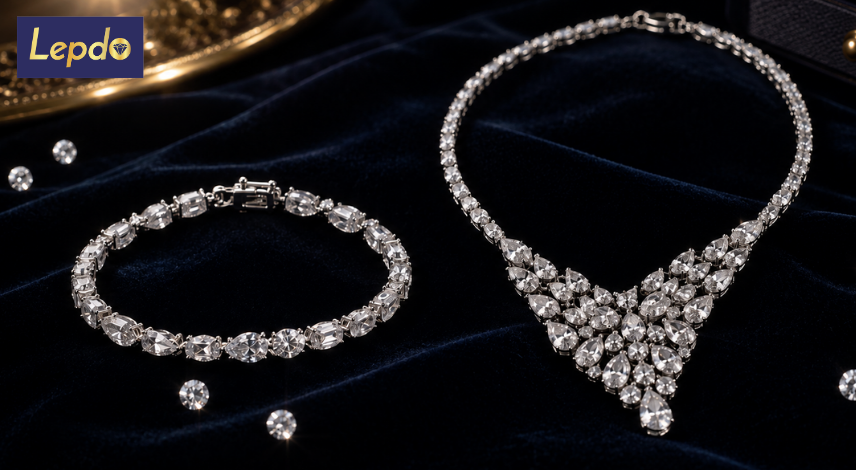
A mixed diamond shape tennis bracelet alternates two or more cuts, such as round and pear, in a single continuous line rather than repeating one shape. This layout catches light differently at every angle, giving retailers a fresher display piece than standard styles. Lepdo Diamonds supplies IGI certified fancy shapes ready for custom bracelet production.
A wholesale buyer in Dallas called last month asking for something her case did not already have. She wanted a mixed diamond shape tennis bracelet, not another straight line of round brilliants. Her customers had started requesting round and pear diamond bracelet pairings after seeing them layered on social media, and she had nothing in stock that matched the request.
That gap is showing up across the country right now. The mixed diamond shape tennis bracelet trend retailers keep asking about in 2026 is not about size or carat weight anymore. It is about rhythm, the way a bracelet reads when round, pear, and oval stones alternate down the wrist instead of repeating the same cut in a straight row.
This shift matters for retailers because inventory built only on classic round tennis bracelets is starting to look dated next to what customers are pinning and saving online. GIA has tracked renewed consumer interest in fancy diamond shapes for years, and that interest has finally reached bracelets and necklaces, not just engagement rings. The mixed diamond shape tennis bracelet has become one of the clearest examples of this shift toward more distinctive diamond jewelry.
Here is what this guide covers: how a mixed diamond shape tennis bracelet is made, which shape combinations sell fastest, how these designs compare to single-shape tennis bracelets, and what manufacturers need to know before adding them to a product line.
Most buyers walking into a store today have already seen a mixed diamond shape tennis bracelet online before they ever touch one in person. That changes how retailers need to talk about it. A customer who already knows what a round and pear diamond bracelet looks like on Instagram is not shopping for education, she is shopping for the real thing, in hand, under real light. For wholesalers and retailers, that makes the mixed diamond shape tennis bracelet a product category worth stocking now rather than later.
What Is a Mixed Diamond Shape Tennis Bracelet
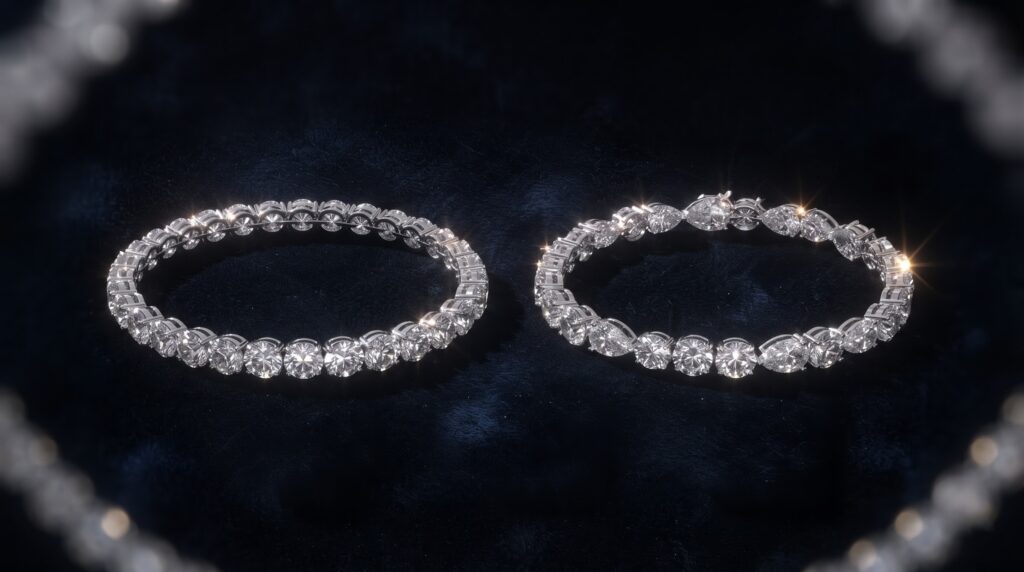
A mixed diamond shape tennis bracelet is a bracelet set in a continuous line where two or more diamond shapes appear in a repeating or randomized pattern, instead of using one shape throughout. Round, pear, oval, and marquise stones are the most common combinations, each set in a shared prong or bezel style so the line stays even.
The appeal comes from contrast. Round brilliants throw sharp, even sparkle, while pear and marquise shapes add elongated flashes of light that shift the whole look. A traditional Diamond Tennis Bracelet relies on uniformity for its clean line, and a mixed shape version keeps that same continuous structure while adding visual movement.
Construction matters more here than on a standard piece. Each stone still needs to sit at a matched height and depth so the bracelet lies flat against the wrist, which means the setter has to account for two or more different girdle outlines instead of one repeating shape. Prong count also changes by shape, since a pear needs a protective point prong that a round stone does not, and getting that detail wrong is usually what causes a mixed shape bracelet to snag on clothing over time.
Quick Info Box:
- Definition: A tennis bracelet set with two or more alternating diamond shapes in one continuous line.
- Key Types or Varieties: round and pear, round and marquise, oval and round, baguette and round, mixed fancy shape clusters.
- Best For: fashion-forward consumers, layering with stacked bracelets, retailers wanting a point of difference in case displays.
- Key Difference or Advantage: contrast in facet pattern creates more light movement than single-shape designs.
Most Popular Types or Variations, and Who They Are For
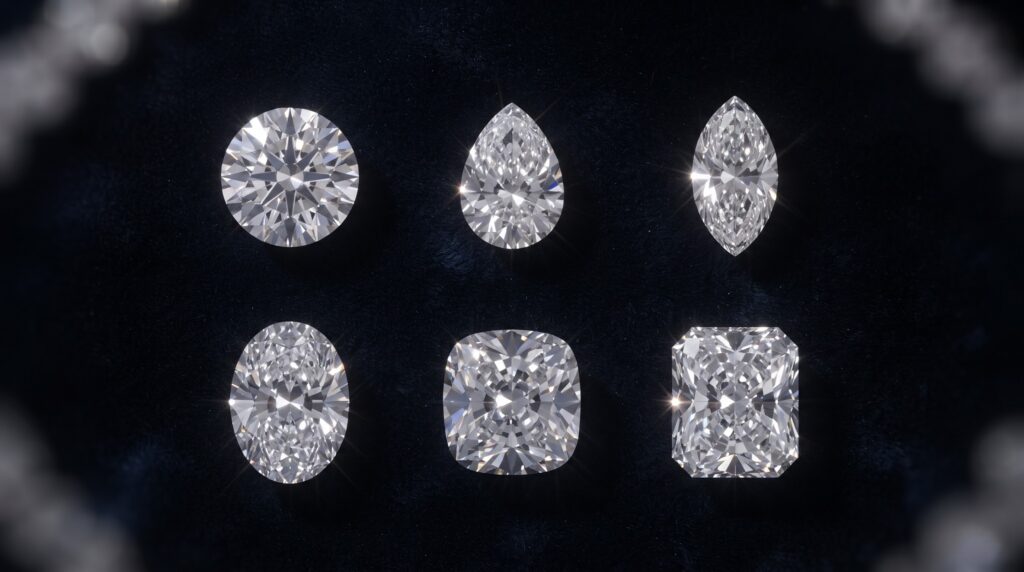
Not every combination performs the same way in a display case or on a wrist. Here is what tends to sell fastest based on current wholesale demand.
Round and Pear
This is the pairing driving most of the current demand. Round brilliants anchor the line with consistent sparkle, and pear shapes break the pattern every few stones for movement. It works equally well as a mixed diamond shape tennis bracelet or as a matching necklace drop.
Round and Marquise
Marquise diamonds add sharp, elongated brilliance between rounds. This combination reads more vintage and suits customers who want something closer to Art Deco styling than a modern minimalist look.
Oval and Round
Ovals bring a softer elongation than marquise or pear. Buyers who find pear shapes too pointed for daily wear often gravitate toward oval and round pairings instead.
Baguette and round combinations lean architectural and suit clients who already collect Fancy Shape Diamonds. Cushion and round pairings appeal to buyers coming from a halo engagement ring aesthetic. Emerald and round mixes are rarer but popular with collectors who want a step cut contrast against brilliant facets. Radiant and round pairings are gaining traction in the mixed shape diamond jewelry 2026 category because radiant cut corners photograph well for social content.
Most buyers land on one of these three or four combinations before ever considering anything more unusual. Trapezoid and round pairings remain a niche request, mostly from clients who already own step cut engagement rings and want their bracelet to echo that geometry. Half moon and round combinations show up occasionally in custom orders, usually from buyers who saw the shape used as side stones on a ring and wanted it repeated somewhere else.
The truth is most retailers do not need to stock all eight variations at once. Two or three well-chosen combinations, backed by a strong round and pear diamond bracelet as the anchor piece, will cover the majority of walk-in and online demand.
Mixed Diamond Shape Tennis Bracelet vs Single Shape Tennis Bracelet: The Real Difference
| Factor | Mixed Shape Tennis Bracelet | Single Shape Tennis Bracelet |
|---|---|---|
| Visual Movement | High, shapes alternate light patterns | Low, uniform sparkle throughout |
| Production Complexity | Higher, requires shape-matched calibration | Lower, standardized stone sizing |
| Retail Price Range | Slightly higher due to sorting labor | Generally more predictable |
| Customer Appeal (2026) | Strong with younger, trend-driven buyers | Strong with classic, heirloom buyers |
| Restock Consistency | Harder to match exact shape ratios | Easier to reorder identical stock |
The real difference is not sparkle, it is sourcing effort. A round and pear diamond bracelet needs calibrated stones in two separate shape categories, matched for color and clarity grade so the line looks consistent from clasp to clasp. Single shape pieces are simpler to restock because a manufacturer only sources one cut. That said, the added sourcing work is exactly why mixed shape pieces carry a slightly better margin for retailers willing to stock them.
Is that extra effort worth it? For most retailers watching fancy shape demand climb, the answer is already yes. To be fair, round diamond tennis bracelets still dominate total unit sales across the industry, and that is unlikely to change soon. The mixed shape category is not replacing the classic bracelet, it is sitting next to it as a second option for a customer who wants something with more personality.
How to Choose the Right Mixed Diamond Shape Tennis Bracelet for Your Style
- Match the shapes to your existing jewelry. If your rings and studs already lean toward pear or oval, choose a bracelet that echoes those lines instead of introducing a shape you do not wear anywhere else.
- Consider your wrist size and shape. Smaller wrists tend to suit tighter, smaller alternating stones, while larger wrists can carry bolder pear or marquise accents without looking crowded.
- Think about how you will wear it. A bracelet meant for daily stacking should sit lower profile, while a special occasion piece can afford taller pear or marquise points.
- Compare the budget advantage. A mixed diamond shape tennis bracelet in lab-grown stones typically costs 30 to 40 percent less than an equivalent natural diamond piece, which matters when you are choosing carat weight over shape variety.
- Match the occasion. Engagement-adjacent gifting favors classic round and pear pairings, fashion buyers lean toward marquise or radiant mixes, and commercial retail buyers should stock both to cover different customer intents. A bracelet purchased as a milestone gift, such as an anniversary or graduation, tends to skew toward the more classic pairings, while a self-purchase for everyday wear skews toward bolder combinations.
- Decide between lab-grown and natural. Most buyers now default to Lab Grown Diamonds for tennis bracelets because the per-carat savings allow for larger, more dramatic shape combinations at the same budget.
You will want to pay attention to how the bracelet behaves under two different light sources before you commit. Before you finalize your choice, hold the piece under warm and cool lighting. A mixed shape bracelet should show noticeable contrast in brilliance between the round and fancy cut stones. If it does not, the calibration was rushed.
What B2B Buyers and Diamond Manufacturers Should Know
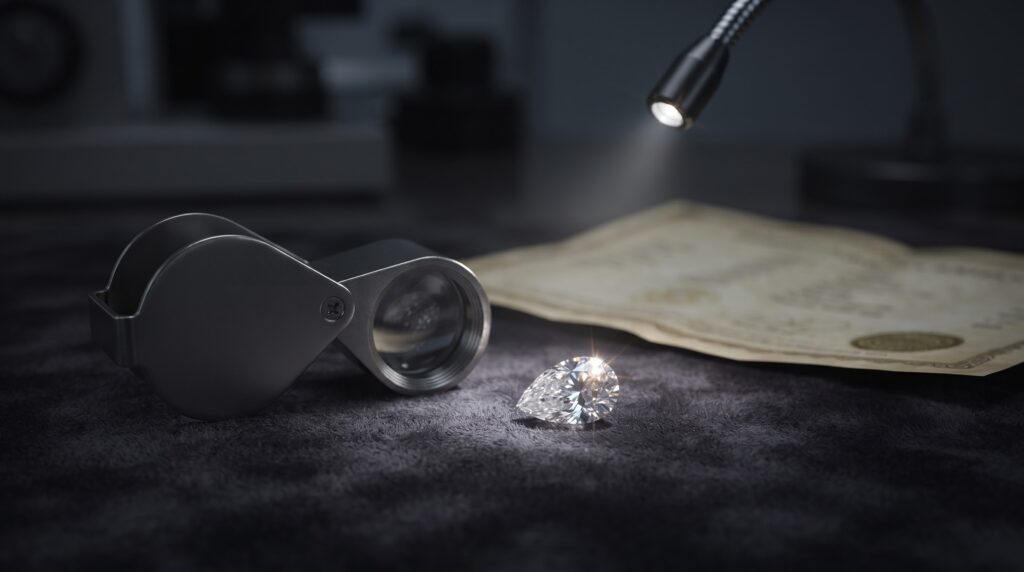
Retailers stocking a lab grown tennis bracelet wholesale line need to think beyond design appeal. Shape mixed bracelets require tighter cut grading consistency than single shape pieces because two different facet structures sit side by side, and any mismatch in brilliance is immediately visible.
IGI and GIA certification standards apply differently depending on stone size. Melee under a certain carat weight is typically graded in parcels rather than stone by stone, so buyers should ask suppliers how shape matched melee is sorted for color and clarity before placing a bulk order. Rapaport pricing for fancy shapes also moves independently from round pricing, which affects margin calculations on mixed pieces more than on standard lines. Buyers negotiating bulk orders should price each shape separately rather than averaging a blended per-carat rate across the whole bracelet, since pear and marquise stones often carry a different premium than round melee of the same clarity grade.
Diamond Jewelry Manufacturing partners who specialize as a fancy cut diamond manufacturer tend to produce more consistent bracelets than general manufacturers who occasionally add mixed shapes to their catalog. In my experience, the biggest quality gap in this category comes from color matching, not cut quality. Two well-cut pear diamonds can still look mismatched on a bracelet if their color grades sit two steps apart.
Manufacturers working from Surat’s diamond hub, including operations like Lepdo Diamonds, typically sort fancy shapes for tennis bracelet production in matched batches before assembly begins, which reduces the color drift buyers often see from smaller workshops.
Mixed Diamond Shape Jewelry Trends in the USA (2026 to 2027)
The tennis necklace layering trend has pulled mixed shapes into necklaces the same way it reshaped bracelets. Retailers are now pairing a Diamond Solitaire Necklace with a shorter Diamond Choker Necklace, mixing round and pear stones between the two pieces so they read as one layered look rather than two separate purchases.
Red carpet styling and social media have both pushed this forward, though no single moment created the trend on its own. Industry data from recent bridal and fashion jewelry trade shows shows fancy shape sales climbing faster than round diamond sales for the first time in several seasons, particularly across fancy cut diamond jewellery aimed at younger buyers. Bridal registries and gifting guides have started featuring mixed shape pieces as standalone recommendations rather than as an afterthought next to solitaire rings, which signals the category is being treated as a real product line rather than a passing microtrend.
Setting styles are shifting too. Shared prong settings are giving way to individual bezel or basket settings for each stone, which lets pear and marquise shapes sit at slightly different heights for a more dimensional line. A Diamond Pendant Necklace built the same way, with a mixed shape cluster instead of a single center stone, is becoming one of the most requested custom pieces retailers report for 2026.
How to Evaluate Quality in Mixed Diamond Shape Tennis Bracelets
When I assess a mixed shape tennis bracelet, the first thing I check is consistency in brilliance across shapes, not just within one stone. A round brilliant and a pear can both grade well individually and still clash if their light return does not match.
- Check pavilion depth on the pear and marquise stones first, since these shapes are more prone to a bowtie effect if cut too shallow or too deep.
- Compare table percentage across shapes. A wide gap in table percentage between the round and fancy cuts creates uneven fire down the line.
- Look at scintillation under movement, not just static sparkle. Tilt the bracelet slowly and watch whether every shape flashes at roughly the same rate.
- Review the clarity grade of each stone individually. Fancy shapes hide inclusions differently than round brilliants, so a matching clarity grade on paper does not guarantee matching appearance.
- Confirm Lab Diamond Certification on every stone above melee size, not just the center or largest diamond in the line. Certified diamonds give you a paper trail if a customer ever questions grading years later.
I also look at how the metal setting interacts with each shape. A prong that works well for a round stone can sit too low on a pear point, leaving the tip exposed to chipping over years of daily wear. That single detail, more than carat weight or color, is often what separates a bracelet that lasts decades from one that needs repair within the first year.
Conclusion
Mixed diamond shape tennis bracelets are not a passing trend built on novelty alone. They solve a real merchandising problem, since single-shape cases have started to look interchangeable, and buyers want case displays with visible design intent instead of one more row of identical rounds.
The pairing matters as much as the shape count. Round and pear combinations sell fastest right now, but marquise, oval, and radiant mixes are gaining ground fast enough that stocking only one combination leaves demand on the table. Quality control, especially color and clarity matching across shapes, separates a bracelet that photographs beautifully from one that looks mismatched under normal light.
Retailers and consumers evaluating this category should treat sourcing as seriously as design. A mixed diamond shape tennis bracelet is only as good as the stone matching behind it, and that comes down to who cuts, sorts, and certifies the diamonds before assembly even starts.
Retailers sourcing certified lab-grown diamonds can explore Lepdo Diamond‘s current stock of fancy shapes built for exactly this kind of production. Well matched shapes, not just well cut stones, are what will separate the mixed diamond shape tennis bracelet customers remember from the ones they forget by next season.
For a category still gaining momentum, getting the sourcing right early is what will let a retailer scale the line later without redoing supplier relationships from scratch.
Frequently Asked Questions About Mixed Diamond Shape Tennis Bracelets
1. What is a mixed diamond shape tennis bracelet?
A mixed diamond shape tennis bracelet is a continuous line bracelet set with two or more diamond shapes, such as round and pear, instead of one repeated cut. The alternating shapes create contrast in brilliance and fire along the wrist. This style has grown popular because it offers more visual variety than a traditional single-shape tennis bracelet.
2. Is a mixed diamond shape tennis bracelet cheaper than a single shape bracelet?
Not usually, since mixing shapes requires more sourcing and sorting labor to match color and clarity across different cuts. However, choosing lab-grown stones instead of natural diamonds can offset that cost significantly. A lab-grown mixed shape bracelet often prices close to, or even below, a natural single-shape design of similar carat weight.
3. Which shape combination looks biggest or most impressive?
Round and pear combinations tend to look the largest because pear shapes have more surface area per carat than round brilliants. Marquise and round pairings create a similar elongated effect. Both combinations maximize perceived size better than an all-round or all-oval bracelet at the same total carat weight.
4. Does a mixed diamond shape tennis bracelet have a GIA cut grade?
Individual stones above a certain carat weight can carry a GIA or IGI cut grade, but the bracelet itself is not graded as one unit. Melee sized stones are typically sorted by parcel rather than individually certified. Buyers should ask for certification on any center or accent stone large enough to qualify.
5. What is the biggest quality risk with a mixed diamond shape tennis bracelet?
The biggest risk is mismatched color or clarity between shapes that grade well individually but clash visually once set together. Fancy shapes also show inclusions and color differently than round brilliants. Working with a supplier who sorts stones specifically for shape matched production reduces this risk significantly.
6. Are lab-grown mixed shape tennis bracelets as good as natural ones?
Yes, lab-grown diamonds share the same optical, chemical, and physical properties as natural diamonds, graded on the same 4Cs scale. IGI and GIA certify lab-grown stones using comparable standards to natural diamonds. The main difference is origin and price, not durability or brilliance.
7. Which shape combination is best for an engagement ring?
Round and pear remain the most versatile combination for engagement adjacent pieces, since both shapes pair easily with classic solitaire and halo settings. Oval and round is a close second for buyers who want elongation without a pointed tip. Marquise pairings suit buyers wanting a more vintage inspired look.
8. How do I choose a reliable mixed diamond shape tennis bracelet manufacturer or supplier?
Look for a supplier who issues IGI or GIA certification standard across shapes, not just on round stones. Ask how they sort fancy shapes for color and clarity matching before production. Established manufacturers with direct sourcing, rather than resellers, typically offer more consistent shape matched inventory for bulk orders.