How to Find a Trusted Diamond Supplier in India: Complete Buyer’s Guide
 by lepdogroup@gmail.com
3 comments
by lepdogroup@gmail.com
3 comments
A trusted diamond supplier India is a verified manufacturer, wholesaler, or exporter based in India’s major diamond hubs who provides GIA or IGI certified stones at transparent, competitive pricing. For USA buyers, working directly with Indian suppliers can reduce diamond costs by 20 to 40 percent compared to domestic retail. Lepdo Diamonds connects buyers to certified, ethically sourced stones with full grading documentation and B2B expertise.
Over 90 percent of the world’s polished diamonds pass through India before they reach a jewelry counter in New York, Los Angeles, or Dallas. Yet most American buyers, both retail consumers and professional B2B buyers, have never directly worked with a trusted diamond supplier India, even though doing so could mean significant savings and far greater selection.
The challenge is not access. The challenge is knowing who to trust, what to verify, and how the entire sourcing process actually works. This guide gives you the exact framework I use when evaluating Indian diamond vendors, including the certification standards, verification steps, red flags, and relationship-building strategies that separate a reliable supplier from a costly mistake.
You will come away with a practical, expert-level understanding of diamond buying India, covering everything from how Surat’s cutting centers operate to what your GIA or IGI certificate should actually tell you.
What a Trusted Diamond Supplier in India Actually Means
A trusted diamond supplier India is not simply any company based in Surat or Mumbai with a website and a WhatsApp number. The term refers to a verified exporter, manufacturer, or wholesaler who operates transparently within India’s regulated diamond trade, provides legitimate grading documentation, and has a traceable record of consistent quality.
Quick Info Box:
- Definition: A certified, registered Indian diamond manufacturer or exporter providing polished diamonds with GIA or IGI grading reports, transparent pricing, and verifiable sourcing
- Key Types: Manufacturer-exporters, wholesalers, diamond brokers, diamond bourse members, lab-grown diamond producers
- Best For: USA jewelry retailers, B2B diamond importers, engagement ring buyers, investment diamond purchasers
- Key Advantage: Direct access to India’s cutting and polishing infrastructure means lower per-carat cost with no compromise on certification quality
India’s diamond industry is one of the most sophisticated in the world. The Gem and Jewellery Export Promotion Council (GJEPC) registers legitimate exporters, and membership in a recognized Diamond Bourse adds a further layer of accountability. Any supplier worth your time will carry both.
The Main Types of Indian Diamond Suppliers, and Who Each One Serves
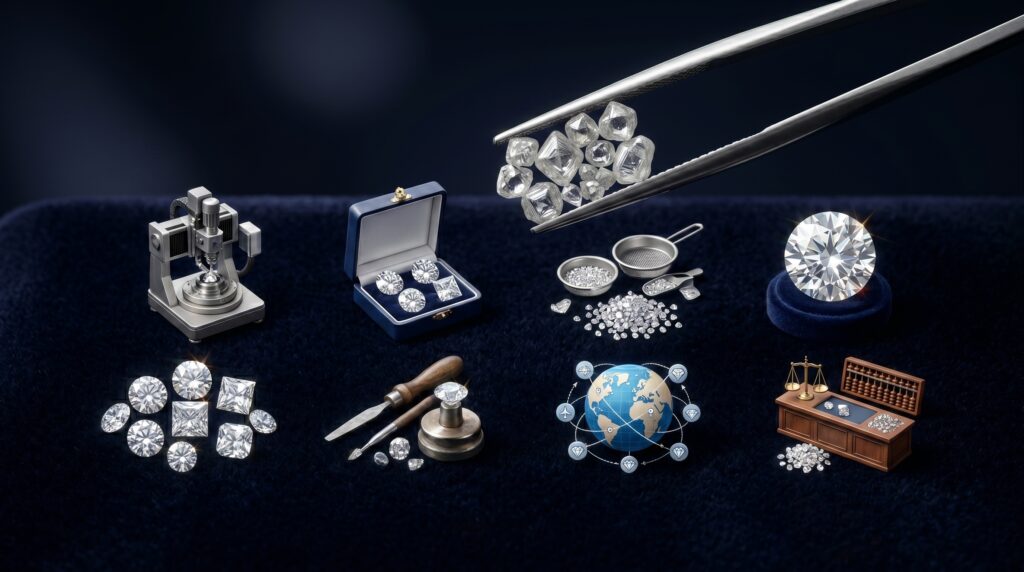
Not all diamond vendors India are structured the same way. The type of supplier you choose should align directly with your purchasing volume, your quality requirements, and how hands-on you want to be in the selection process.
1. Manufacturer-Exporters
These are the backbone of India’s Diamond Supply Chain. Manufacturer-exporters purchase rough from primary sources, cut and polish in-house, and sell directly to international buyers. They offer the lowest prices per carat, the widest selection of shapes and sizes, and the most flexibility on custom cutting requests. Best for: US jewelry brands, larger retailers, and B2B buyers placing volume orders.
2. Wholesale Diamond Suppliers
Wholesale diamond supplier India operations buy polished stones from multiple manufacturers and consolidate inventory for resale. They bridge the gap between single-factory sourcing and open-market buying. The price per carat is slightly higher than going direct to a manufacturer, but the selection breadth is unmatched. Best for: independent jewelers, importers, and buyers who need variety across many shapes and clarities in one place.
3. Certified Diamond Dealers and Brokers
These are individual traders or small firms operating out of exchanges like Bharat Diamond Bourse in Mumbai or the Surat Diamond Bourse. They specialize in matching buyers with specific stones, often rare or unusual ones. Best for: buyers seeking a particular specification, such as a D Flawless round or a specific fancy-color stone.
4. Lab-Grown Diamond Producers
Surat has emerged as the world’s leading hub for HPHT and CVD lab-grown diamond production. These suppliers offer IGI-certified stones at a fraction of natural diamond prices. Lab Diamond Market Growth has made this category one of the fastest-moving segments in the entire Diamond Marketplace. Best for: retailers targeting price-sensitive engagement ring buyers or fashion jewelry markets.
5. Melee and Commercial Grade Suppliers
These vendors specialize in small stones, commercial rounds, and side diamonds for mass-market jewelry manufacturing. They operate on extremely thin margins and high volume. Best for: jewelry manufacturers and OEM producers who need consistent, affordable parcel goods.
6. Fancy Color Diamond Specialists
A smaller, more niche category. India produces a limited but growing volume of natural fancy color diamonds, including yellows, pinks, and greens. These are typically brokered through Bombay-based dealers with GIA fancy color certificates.
7. Direct-to-Consumer Exporters
Some Indian suppliers now sell directly to US retail consumers through verified online platforms. Here is what to look for: full GIA or IGI documentation, secure payment infrastructure, and a clear US-based returns process.
8. Polished Diamond Exporters via Trade Portals
Platforms like Rap Net and IDEX list verified Indian diamond importers with real-time inventory. They offer a useful starting point for price discovery, though full due diligence is still required before transacting.
Trusted Supplier vs. Unknown Vendor: The Real Difference
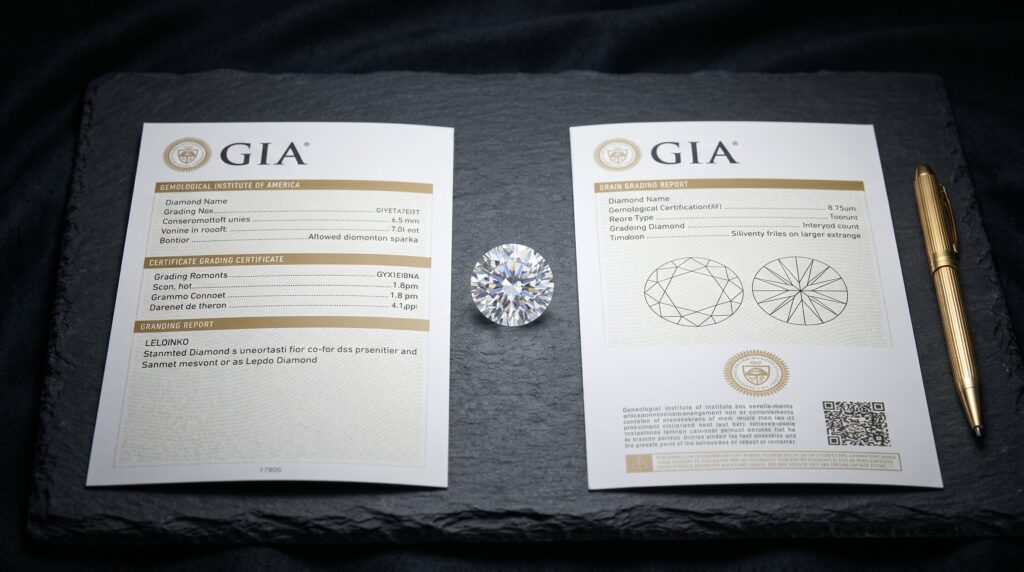
This is where most buyers get into trouble. A diamond certificate proves the stone’s quality. It does not prove the supplier’s reliability, pricing fairness, or business ethics.
| Factor | Trusted Diamond Supplier India | Unknown/Unverified Vendor |
|---|---|---|
| Certification | GIA or IGI, verifiable online | Self-certified or no report |
| Pricing Transparency | Rapaport-referenced, documented | Opaque, inconsistent |
| Business Registration | GJEPC-registered, KYC-compliant | Unverifiable background |
| Communication | Formal contracts, invoices, terms | WhatsApp-only, no paper trail |
| Dispute Resolution | Clear returns/exchange policy | No recourse available |
The difference between these two columns can mean the difference between a profitable sourcing relationship and a costly dispute with no legal recourse across international borders.
Most buyers who have been burned by unreliable diamond dealers India trace the problem back to one common mistake: they skipped the verification step because the price looked too good. In the diamond trade, pricing that sits dramatically below Rapaport market levels is almost always a signal, not an opportunity. That said, genuine savings of 15 to 25 percent below US retail are absolutely achievable through legitimate wholesale diamond supplier India channels.
For a deeper understanding of how pricing and resale dynamics work across the supply chain, the Diamond Secondary Market and Diamond Investment Risks resources provide important context every buyer should review before committing capital.
How to Choose the Right Diamond Supplier for Your Needs
The sourcing decision is not purely about price. Here are six decision factors I walk every client through before they place a first order.
1. Define your purchase purpose clearly. A retailer sourcing engagement ring center stones has different needs than a manufacturer buying calibrated melee for production. Your supplier type, minimum order size, and certification requirements all flow from this first decision.
2. Match volume expectations on both sides. Small orders placed with large manufacturer-exporters often receive low priority, slower delivery, and less favorable selection. Align your order volume with the supplier tier that makes sense for your business size.
3. Verify setting compatibility and cut preferences. If you source for a specific line of settings, you need consistent cut parameters, such as depth percentage and table size, that match your mountings. A reliable diamond supplier India will provide these specifications upfront and maintain them across repeat orders.
4. Understand your all-in landed cost. The per-carat price from a wholesale diamond supplier India will almost always look attractive. Calculate import duties (currently 5.5 percent in the USA for polished diamonds), freight, insurance, wire transfer fees, and certificate fees before comparing to domestic pricing.
5. Match the occasion and quality tier. Investment and heirloom-quality purchases demand GIA-certified natural diamonds with top-tier cut grades. Fashion jewelry or lab-grown engagement rings allow for more flexibility and broader sourcing options, including IGI-graded lab diamonds.
6. Natural vs. lab-grown: make the decision before you start sourcing. India produces both in abundance. Natural Diamond Demand remains strong in the premium segment, while Lab Diamond Market Growth is reshaping the commercial tier. These are different supply chains with different suppliers, pricing logic, and end-consumer conversations. Know which you’re buying before you start talking to vendors.
Before you finalize your choice of supplier, ask to see at least three recent client references from USA-based buyers and request sample stones on memo before placing a committed order.
What B2B Buyers and Diamond Manufacturers Should Know
Think of it this way: the Indian diamond trade is structured for volume, not for one-off transactions. If you’re sourcing as a retailer, wholesaler, or jewelry manufacturer, you need to understand how the system actually runs.
First, cut grading consistency across parcels is a real issue. Unlike GIA-certified individual stones, commercial parcels are graded by range, not by stone. If you’re buying melee or commercial rounds, specify your minimum cut parameters in writing and request a sample parcel before full commitment. IGI parcel certificates exist, but their grading standards for cut are less granular than GIA’s individual stone reports.
Second, pricing references matter. Legitimate diamond vendors India quote against the Rapaport Price List. Any supplier who cannot or will not reference Rapaport is either working outside industry norms or has pricing they don’t want scrutinized. For a solid grounding in how pricing works across the trade, the Diamond Wholesale glossary entry at Lepdo is a concise reference.
Third, export documentation is your legal protection. Every shipment should be accompanied by a GJEPC-issued export certificate, a Kimberley Process Conflict Free Certificate (for natural diamonds), a GIA or IGI grading report for each individual stone, and a commercial invoice with full HS code documentation.
Here is an industry-insider tip I share with every B2B client: when evaluating a new Indian supplier, request their last three export invoices to US clients (redacted for client names). A legitimate supplier will provide this without hesitation. One who deflects or makes excuses is telling you something important.
The Diamond Manufacturing and Diamond Industry resources at Lepdo Diamonds provide useful context on how India’s cutting infrastructure is organized and what standards certified manufacturers are expected to meet.
Diamond Buying Trends From India in the USA (2026 to 2027)
The USA remains the single largest consumer market for diamonds sourced through India, and buying patterns are shifting in ways that every serious buyer should track.
Lab-grown diamond imports from India to the USA have grown dramatically over the past 24 months, driven by consumer demand for larger carat weights at accessible price points. Industry data from the Gem and Jewellery Export Promotion Council shows lab-grown diamonds now represent a significant share of India’s total diamond exports by volume, though natural diamonds continue to dominate by value. The Diamond Retail Industry is adapting accordingly, with more US retailers carrying dual natural and lab-grown inventory for the first time.
On the natural diamond side, fancy cuts, specifically ovals, cushions, and elongated radiant cuts, are generating strong US demand. USA buyers are actively seeking these shapes through verified diamond importers India, largely because Indian manufacturers offer superior variety and pricing on fancy shapes compared to domestic US wholesalers.
The Diamond Rough Market has also tightened in certain categories, which is nudging more B2B buyers toward pre-existing polished inventory held by Indian exporters rather than custom cutting orders. For Diamond Retail buyers on the consumer side, this means more immediate availability on popular fancy shapes but less flexibility on bespoke specifications.
Sustainable and traceable sourcing is another fast-moving trend. US retailers are increasingly asking their Indian suppliers for blockchain-based provenance documentation. Forward-thinking verified diamond dealers India are already offering this as a standard service.
How to Evaluate Quality When Sourcing from an Indian Supplier
When I assess a stone from an Indian supplier, the first thing I check is not the certificate. It is the physical diamond against that certificate. Discrepancies between graded characteristics and visual reality are rare with GIA, but they occur more frequently with lower-tier labs.
Here are five expert evaluation steps:
- Verify the certificate online. Go directly to GIA.edu or IGI’s verification portal and enter the report number. A legitimate certified diamond supplier India will always provide a verifiable report number. If the number produces no result or a mismatched description, stop immediately.
- Request a video under controlled lighting. Brilliance, fire, and scintillation cannot be meaningfully evaluated from still photography alone. Ask for a 360-degree video shot under mixed lighting conditions. Weak light return visible in video is almost impossible to hide.
- Check depth percentage and table percentage against ideal ranges. For round brilliants, a depth of 59 to 62.5 percent and a table of 54 to 58 percent sit in the optimal range. Deviations can suppress fire and brilliance even in a GIA Excellent-graded stone.
- Look for the bowtie effect in fancy shapes. Oval, marquise, and pear-shaped diamonds are prone to a dark bowtie pattern through the center when cut poorly. You will want to pay attention to this even on IGI-certified stones, as the grading report will not flag a mild bowtie.
- Check clarity grade against the plot. For VS2 and below, ask for a detailed clarity plot image showing inclusion type and location. Inclusions near the table or pavilion affect light performance more than those near the girdle. A reliable certified diamond supplier India will provide this without resistance.
For each stone you are seriously considering, cross-reference all grading data with the Diamond Retail and sourcing guidance at Lepdo Diamonds before finalizing.
Finding a Trusted Diamond Supplier in India: What It All Comes Down To
Three things matter above everything else when you are sourcing diamonds from India. The supplier must be verifiable, the stones must be certifiably graded by GIA or IGI, and the pricing must make sense when measured against Rapaport benchmarks. Any sourcing relationship that checks all three of those boxes is worth building. Any relationship that falls short on even one of them carries risk that tends to multiply over time.
For B2B buyers, the additional layer is documentation. Export compliance, KYC-clear invoicing, and Kimberley Process certification protect your business on the import side and signal to your own clients that you take supply chain integrity seriously. These are not bureaucratic hurdles. They are the foundation of a sustainable diamond business in the US market.
For individual buyers and retail consumers, the message is simpler: working with a trusted diamond supplier India through a vetted intermediary gives you access to prices and selections that US retail simply cannot match, provided you do not skip the certification and verification steps.
Before you commit to any sourcing relationship, explore what Lepdo Diamonds offers across its verified inventory. The team at trusted diamond supplier india lepdo is built specifically to serve USA buyers, with full GIA and IGI certification standards, transparent pricing, and a sourcing process designed around your confidence.
The right supplier does not just sell you a diamond. They give you the information and documentation to stand behind every purchase, every time.
Frequently Asked Questions About Finding a Trusted Diamond Supplier in India
1. What is a trusted diamond supplier in India?
A trusted diamond supplier India is a verified manufacturer or wholesaler based in India who provides GIA or IGI certified diamonds at transparent pricing, with documented sourcing and consistent quality. Trusted suppliers operate within registered diamond bourses and maintain direct relationships with cutters and polishers. The key differentiators are registration, certification, and a traceable business history.
2. Is buying diamonds from India cheaper than buying locally in the USA?
Yes, buying from a reliable diamond supplier India can save USA buyers 20 to 40 percent compared to domestic retail pricing. India produces over 90 percent of the world’s polished diamonds, which means lower manufacturing overhead. That said, buyers must account for import duties, shipping insurance, and certification costs when calculating total landed cost.
3. Which type of Indian diamond supplier offers the largest selection?
Surat-based manufacturers and wholesalers consistently offer the broadest inventory, covering round brilliants, all fancy shapes, lab-grown, and natural diamonds across every carat weight and clarity grade. Verified diamond vendors India who are registered with the Gem and Jewellery Export Promotion Council tend to maintain the deepest stock of any supplier tier.
4. Does a diamond from India come with a GIA cut grade?
GIA assigns an official cut grade only to round brilliant diamonds. Fancy shapes sourced through a certified diamond supplier India will carry GIA or IGI reports, but the cut section reflects grades for polish and symmetry rather than an overall cut grade. For fancy cuts, buyers should request light performance reports or imaging data directly from the supplier.
5. What is the biggest quality risk when buying from a diamond supplier India?
The biggest risk is receiving a diamond that matches its certificate on paper but underperforms visually due to poor cut proportions. This is most common with uncertified or lower-tier lab stones. Always request an ASET image for round diamonds and a video showing brilliance and fire. Never purchase from any Indian vendor without a GIA or IGI report in hand first.
6. Are lab-grown diamonds from India as good as natural diamonds?
Chemically and optically, lab-grown diamonds from India are identical to natural diamonds. India, particularly Surat, is now the world’s largest producer of lab-grown diamonds. Quality depends on the grower and cutter, not the origin. IGI-certified lab-grown stones from reputable Indian suppliers offer excellent value, though natural diamonds retain stronger long-term resale performance.
7. Which diamond type from India is best for an engagement ring?
For engagement rings, round brilliant diamonds remain the most popular choice due to their superior light return and universally flattering appearance. Oval and cushion cuts are fast-growing alternatives offering a larger visual footprint at lower per-carat cost. All three are widely available through wholesale diamond supplier India networks with full GIA or IGI grading documentation.
8. How do I choose a reliable diamond supplier in India?
Start by verifying GJEPC membership and checking if the supplier is registered with a recognized diamond bourse. Request GIA or IGI certificates for every stone and cross-check report numbers on the grading lab’s official website. Ask for references from USA-based clients, review export documentation practices, and confirm they have a clear returns or dispute resolution policy before placing any order.