Lab Grown Diamond Manufacturers in Surat: Leading the Global CVD & HPHT Revolution
 by lepdogroup@gmail.com
4 comments
by lepdogroup@gmail.com
4 comments
Lab grown diamond manufacturers in Surat are India-based producers using CVD and HPHT technology to grow real, certified diamonds at 50 to 80 percent below the cost of mined stones. For USA buyers from jewelry retailers to individual consumers, Surat’s factories deliver IGI-graded quality at wholesale prices. Lepdo Diamonds connects American buyers directly to verified Surat manufacturers with full certification and transparent pricing.
Over 75 percent of the world’s polished diamonds pass through Surat at some point in their journey. That statistic alone tells you how deeply this city is wired into the global diamond trade. What has changed dramatically over the past decade is the nature of what Surat’s factories are producing and today, lab grown diamond manufacturers in Surat are at the center of one of the biggest shifts the gemstone industry has ever seen.
If you are a USA-based retailer, wholesaler, or serious consumer shopping for an engagement ring or investment stone, understanding this shift is not optional. It directly affects where you source, what you pay, and what certifications you should demand. IGI-graded CVD and HPHT diamonds from Surat are now arriving in American jewelry stores at price points that simply did not exist five years ago.
This piece walks you through what makes Surat’s lab diamond sector so competitive, how CVD and HPHT production methods compare, what B2B buyers need to know about quality and pricing, and how to find a supplier you can actually trust.
What Lab Grown Diamonds From Surat Really Are
Lab grown diamonds are genuine diamonds. They carry the same chemical formula (pure carbon in cubic crystal form), the same hardness of 10 on the Mohs scale, and the same optical properties as mined diamonds. The only difference is that they are grown in a controlled factory environment rather than extracted from the earth.
Quick Info Box:
- Definition: Real carbon diamonds grown via CVD or HPHT technology inside a Surat manufacturing facility, certified by IGI or GIA
- Key Types: CVD (Chemical Vapor Deposition), HPHT (High Pressure High Temperature)
- Best For: Engagement rings, fine jewelry, B2B wholesale sourcing, investment-grade loose stones
- Key Advantage: 50 to 80 percent lower cost than natural diamonds of comparable grade, with identical 4Cs grading standards
Surat became the global hub for Lab Grown Diamonds for the same reason it dominated natural diamond cutting for decades: an unmatched combination of skilled labor, manufacturing infrastructure, and export logistics. The city now hosts hundreds of factories ranging from small specialized units to large-scale operations growing and cutting thousands of carats per month.
The Most Popular Types of Lab Grown Diamonds From Surat And Who They Are For
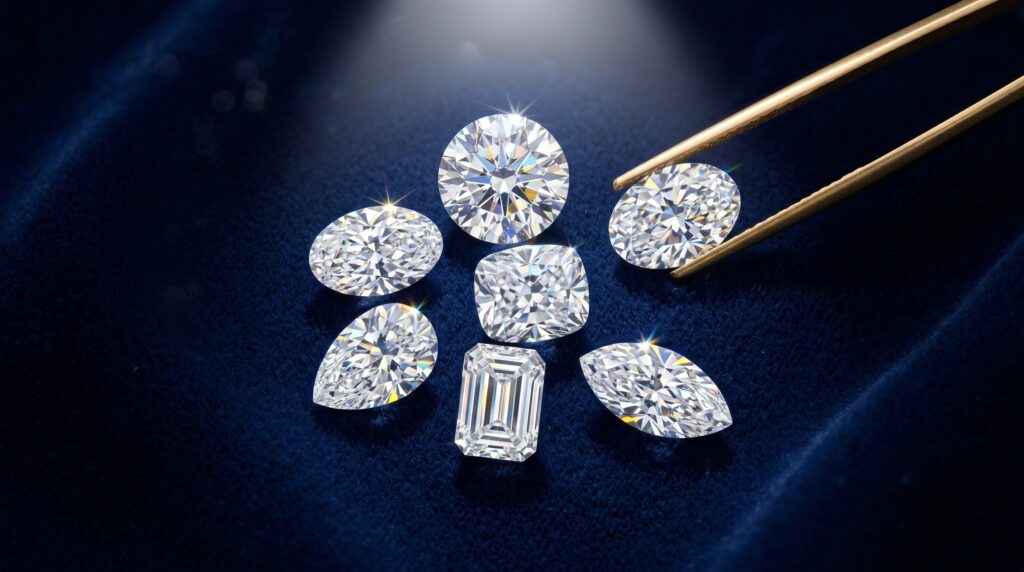
Surat’s manufacturers work across both major growth technologies, producing stones in every shape, size, and quality tier that the American market demands. Here is what each category looks like in practice.
CVD Diamonds: The High-Color Specialist
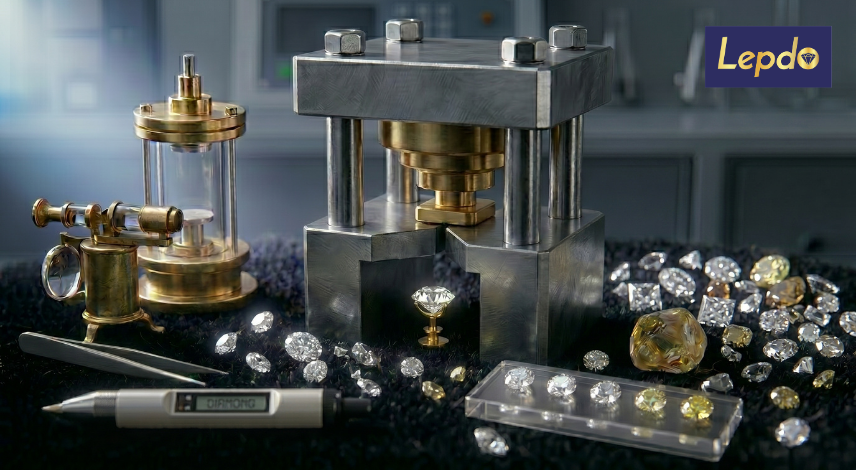
CVD, or Chemical Vapor Deposition, grows diamonds by introducing carbon-rich gas into a chamber where it deposits onto a seed crystal layer by layer. The process runs at relatively lower pressures than HPHT, and it tends to produce stones in the D-to-F colorless range with remarkable consistency.
Most buyers targeting Type IIa quality, the same classification that describes the rarest and finest natural diamonds in the world will find CVD the more reliable route. CVD Diamonds account for the majority of lab grown production coming out of Surat today, particularly in round brilliants, ovals, and elongated cushions.
Best for: Retailers targeting the premium engagement ring market, consumers prioritizing colorless grades, B2B buyers seeking consistent D-F VS batches.
HPHT Diamonds: The Original Lab Method
HPHT replicates the geological conditions under which natural diamonds form extreme pressure and heat applied to a carbon source around a diamond seed. The resulting stones often display a slightly different growth pattern and may carry distinct inclusions that IGI-trained graders can identify under magnification.
HPHT Diamonds are popular for producing larger rough yields in certain fancy shapes, including princess and asscher cuts where the square profile benefits from HPHT’s cubic crystal growth geometry.
Best for: Buyers seeking larger carat weights in fancy shapes, manufacturers prioritizing yield efficiency, and retailers whose clientele are neutral on growth method as long as the stone is certified.
Round Brilliant Lab Grown Diamonds
Round brilliants remain the top-selling shape globally, and Surat’s factories produce them in enormous volume. The standardized facet pattern makes light performance predictable when cut grades are properly applied by IGI. Most B2B buyers moving volume in the USA market source round brilliants in the 0.50 to 2.00 carat range from Surat, where consistent cut quality and Rapaport-referenced pricing make bulk purchasing straightforward.
Best for: Jewelry retailers, engagement ring brands, and wholesalers building inventory depth.
Oval Lab Grown Diamonds
Oval cuts have seen explosive USA demand since 2022, driven by their elongated silhouette that makes a diamond appear larger per carat than a round of the same weight. Surat’s cvd diamond manufacturers in surat produce ovals in a wide range of length-to-width ratios, though buyers need to evaluate each stone individually for bowtie effect a dark shadow that runs across the center of poorly proportioned ovals.
Best for: Engagement ring buyers seeking a larger visual presence, retailers catering to trend-conscious millennial shoppers.
Cushion, Pear, and Marquise Lab Grown Diamonds
These three shapes have found strong followings in the American fine jewelry market, particularly as side stones and halo arrangements. Surat’s synthetic diamond manufacturers produce them in both CVD and HPHT, and the price-per-carat on certified cushions and pears from India’s lab grown diamond factories makes them compelling options for brands building high-margin finished jewelry.
Best for: Fashion jewelry designers, bespoke jewelers, and retailers building multi-stone SKUs.
Emerald and Asscher Lab Grown Diamonds
Step-cut stones reveal clarity more than any other shape, which means they place the greatest demand on clarity grade. Surat’s better factories now produce VS1 and VVS emerald cuts in the 1.00 to 3.00 carat range with clean, open facets that photograph beautifully. These attract a sophisticated buyer who values the architectural elegance of the step cut over sparkle volume.
Best for: Luxury retailers, bespoke jewelers, and consumers who prefer understated elegance.
CVD vs. HPHT Lab Grown Diamonds: The Real Difference
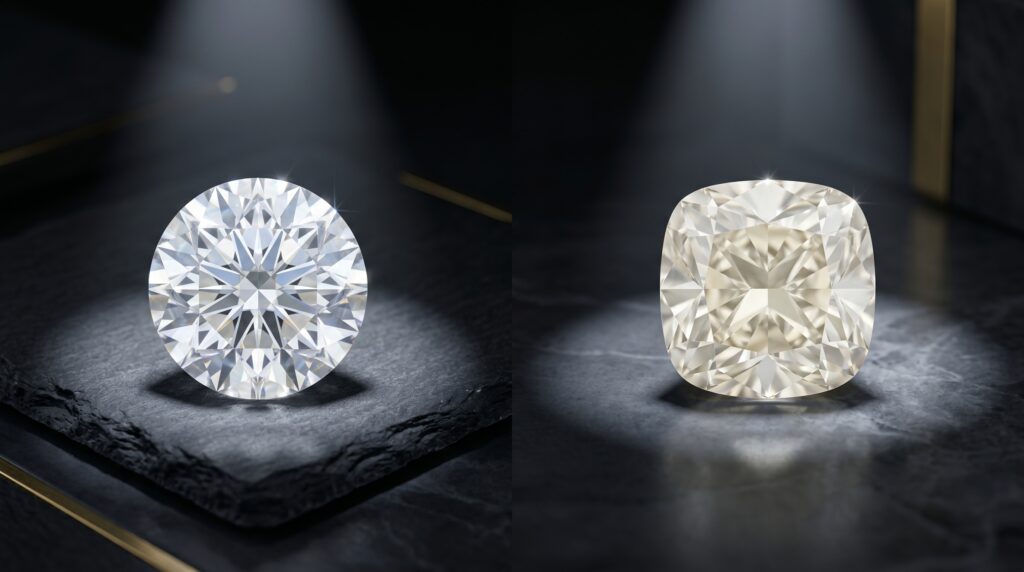
Both methods produce genuine diamonds. Both can yield GIA or IGI-certified stones. But there are meaningful differences that affect quality, pricing, and buyer preference.
| Factor | CVD Diamonds | HPHT Diamonds |
|---|---|---|
| Growth Method | Carbon gas deposited layer by layer in a reactor chamber | Carbon subjected to extreme heat and pressure around a seed |
| Typical Color Range | D to J, with many D-F stones produced | D to K, with some yellow-brown tint more common in lower grades |
| Inclusion Type | Graining, pinpoints, feathers along growth direction | Metallic flux inclusions, clouds, internal graining |
| Best Shape Yield | Round, oval, elongated fancy shapes | Princess, asscher, cushion |
| Price Differential | Slight premium in colorless grades D-F | Often more cost-effective in fancy shapes above 2.00 ct |
The truth is, for most USA retail buyers, the growth method matters far less than the cut grade, clarity, and the certification backing the stone. A well-cut CVD round with an IGI Excellent cut grade and VS2 clarity will outperform a poorly proportioned HPHT stone of the same specs on paper, every single time.
That said, wholesale buyers building large inventory positions should think carefully about mixing CVD and HPHT in adjacent price tiers, because some end consumers are beginning to ask which method was used. Transparency in your supply chain starts with knowing exactly what you are sourcing.
How to Choose the Right Lab Grown Diamond From Surat for Your Needs
Whether you are buying for a retail display case, an engagement ring, or a bulk sourcing program, the decision factors are real and specific. You will want to pay attention to all six before committing to a supplier or a stone.
- Shape and visual preference. Round brilliants deliver maximum light return and carry the strongest resale recognition. Fancy shapes oval, cushion, pear offer greater visual size per carat, which matters enormously at the retail counter when a customer compares two stones at the same price point.
- Carat weight vs. face-up size. An elongated oval at 1.50 carats can appear as large as a round at 1.80 carats face-up. For consumers working within a defined budget, this is one of the most powerful tools a knowledgeable retailer can deploy.
- Setting compatibility. Solitaire prong settings reward round and oval shapes. Bezel settings work beautifully with cushion and emerald cuts. Step-cut stones in closed bezels project an Art Deco aesthetic that is trending strongly in the USA market through 2026.
- Budget efficiency. Lab grown diamonds from Surat manufacturers offer 50 to 80 percent savings versus natural diamonds of identical grade. That premium difference can fund a better color, clarity upgrade, or a higher-quality setting, all three of which the end customer sees.
- Occasion and intent. Engagement rings demand a balance of brilliance, durability, and emotional weight. Fashion jewelry prioritizes visual impact. B2B investment buyers focus on certification integrity and Rapaport discount positioning relative to natural stones in the same size range.
- Lab grown sourcing strategy. For retailers and wholesalers building Lab Grown Diamonds into their inventory, the sourcing relationship matters as much as the individual stone. Working directly with a verified Surat supplier eliminates middlemen and aligns your cost structure with the most competitive price tiers in the market.
Before you finalize your choice of stone or supplier, request a batch sample with IGI reports and cross-reference the cut angles against ideal proportions for that specific shape. A table percentage above 65 or a depth percentage outside the 59 to 63 range on a round brilliant is a red flag regardless of the certification on file.
What B2B Buyers and Diamond Manufacturers Should Know
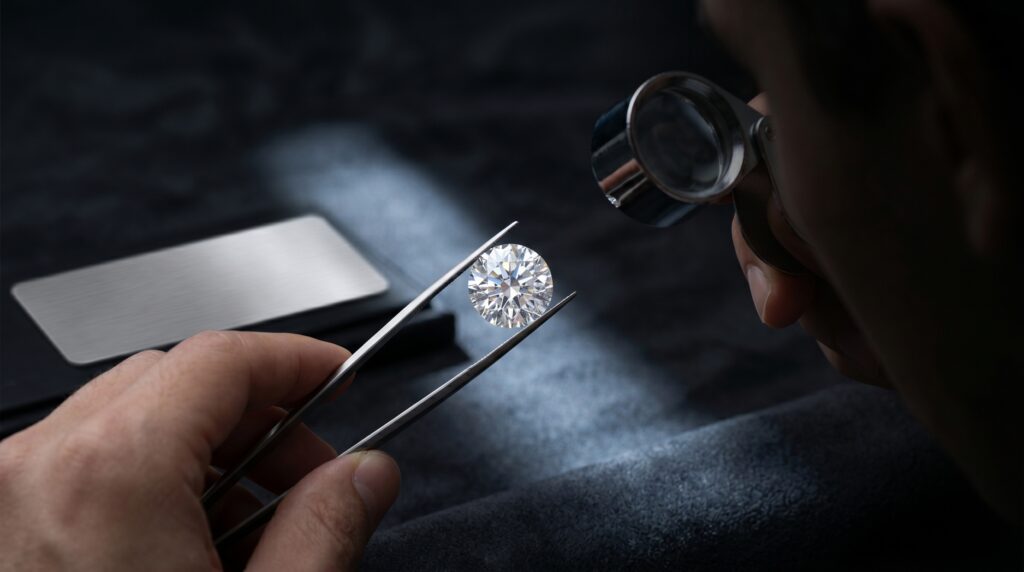
Here is what most sourcing guides do not tell you: the spread between a well-cut and a poorly cut lab grown diamond from Surat can be 15 to 25 percent in resale value, even when both stones carry IGI reports at the same color and clarity grade. Cut quality is where the real margin lives in this category.
For wholesalers and jewelry retailers building a consistent B2B sourcing program, a few things matter above everything else. First, IGI-certified stones should be your baseline minimum IGI is the dominant certification body for lab grown diamonds globally and is accepted by Rapaport for pricing reference. GIA lab grown reports are also accepted but are less common in Surat-origin supply chains.
Second, batch consistency is critical. A reliable diamond manufacturer in surat will be able to supply matched parcels in specific color-clarity combinations with consistent cut grades across dozens or hundreds of stones. Ad-hoc sourcing from unverified vendors creates enormous quality variance that shows up on your sales floor.
Third, understand how Rapaport lab grown pricing works. Lab grown Rapaport reports are published separately from natural diamond rap sheets, and discounts to list vary considerably by shape, size, and market conditions. In my experience evaluating lab grown parcels for USA-based retailers, the buyers who get the best deals are those who come to negotiations knowing exactly where the current market discount sits for a specific shape-size-grade combination.
For serious volume buyers, I always recommend working with an established top diamond manufacturer in surat that has documented export history and a track record of supplying the American market. That export paper trail tells you far more than any sales pitch.
Lab Grown Diamond Jewelry Trends in the USA (2026 to 2027)
The American lab grown diamond market crossed a meaningful threshold in 2024 when lab grown stones accounted for a reported 17 to 20 percent of all diamond engagement ring sales by unit volume. That number is moving upward through 2025 and 2026, and the design trends surrounding these stones are maturing rapidly.
Solitaire settings remain popular, but consumers are increasingly choosing more architectural settings that highlight the diamond’s geometry particularly for step-cut lab grown stones. Three-stone designs with mixed shapes (a center oval flanked by two tapered baguettes, for example) are driving strong retail performance for jewelers who source lab created diamond surat production through established B2B channels.
The cultural conversation around lab grown diamonds has shifted noticeably. Where early marketing positioned them purely as an ethical alternative, USA consumers now shop them primarily for value and many are taking the savings to purchase larger stones than their budget would allow in the natural diamond category. Lab grown diamond jewellery at the 2.00 to 4.00 carat range is driving a visible “upsize” trend in the engagement category that simply would not have been accessible at those price points two years ago.
Design-wise, yellow and rose gold settings for lab grown diamonds are climbing sharply. The warm metal tones contrast beautifully against D-F colorless lab grown centers and photograph extremely well for e-commerce a factor that matters enormously for any retailer selling across digital channels.
How to Evaluate Quality in Lab Grown Diamonds From Surat
When I assess a lab grown diamond from a Surat manufacturer, the first thing I check is not the certification, it is the cut. Light performance issues that appear attractive in overhead store lighting often reveal themselves as dull and lifeless in natural daylight, and a certificate cannot show you that.
Here are the five evaluation steps I apply to every stone before recommending it to a USA retail client:
- Check table and depth percentages first. For a round brilliant, a table between 54 and 60 percent and a depth between 59 and 63 percent are your baseline for strong brilliance and fire. Outside those ranges, the stone’s light return drops noticeably regardless of color or clarity grade.
- Evaluate the crown and pavilion angles together. A crown angle of 34 to 35 degrees paired with a pavilion angle of 40.6 to 41 degrees produces the optimal interaction between scintillation and fire. Certified diamonds from IGI will list these values use them.
- Look for bowtie effect in fancy shapes. Ovals, marquises, and pears all carry some degree of bowtie, but a well-cut stone minimizes it to a subtle contrast rather than a dead black zone across the center. This is a visual inspection, no certificate will tell you how distracting it is in person.
- Grade the clarity under 10x magnification, not just from the report. SI1 and SI2 stones from lab grown factories can have inclusions that are eye-visible under certain lighting. Confirm the inclusion type and position yourself before adding them to a retail display.
- Cross-reference color grading across stones in the same parcel. Color consistency within a batch is a mark of a serious manufacturer. Random variance in color grading across stones of the same listed grade signals quality control issues upstream.
For the Diamond Price benchmarks and grading standards specific to the lab grown category, staying current with IGI’s published grading criteria and Rapaport’s lab grown report is essential for any serious buyer.
Conclusion
Three things should stay with you from this guide. First, lab grown diamond manufacturers in Surat are producing stones of genuine quality, not substitutes, not approximations, but real diamonds certified by IGI to the same standards applied to natural stones. The technology has matured, the supply chain is organized, and the value proposition for USA buyers is compelling in a way that was simply not true a decade ago.
Second, cut quality is the variable that separates excellent purchases from disappointing ones. Certificate grades for color and clarity are important, but a poorly proportioned stone with a respectable IGI report will underperform a well-cut stone at every price point. Knowing what to look for in table percentages, pavilion angles, and specific shape risks like bowtie effect puts you ahead of most buyers in this market.
Third, your sourcing relationship matters as much as any individual stone. Working with a verified loose wholesale diamond from surat supplier who can provide consistent certified parcels, transparent pricing, and reliable export documentation is what separates scalable retail programs from one-off purchases.
The Diamond Industry is in the middle of a structural shift, and Surat is leading it. Lepdo Diamonds works directly with verified lab grown diamond manufacturers in Surat to connect USA buyers with certified CVD and HPHT stones at true wholesale pricing. Explore the collection or reach out for a sourcing consultation because the best time to build a relationship with the right supplier was a year ago, and the second-best time is now.
Frequently Asked Questions About Lab Grown Diamond Manufacturers in Surat
1. What are lab grown diamond manufacturers in Surat?
Lab grown diamond manufacturers in Surat are India-based diamond producers using CVD or HPHT technology to grow real, certified diamonds in controlled factory environments. Surat supplies a significant share of the global lab diamond market, offering IGI-certified stones to B2B buyers and retail consumers worldwide at 50 to 80 percent below natural diamond prices.
2. Are lab grown diamonds from Surat cheaper than natural diamonds?
Yes, significantly. Lab grown diamonds from Surat manufacturers are typically 50 to 80 percent less expensive than comparable natural diamonds. The savings come from a more efficient, controlled supply chain, not from lower quality. CVD and HPHT diamonds carry identical chemical and optical properties to mined stones and are graded by IGI using the same 4Cs standards.
3. Which lab grown diamond type looks most impressive, CVD or HPHT?
Both CVD and HPHT diamonds can look equally stunning when well-cut. High-quality CVD diamonds frequently achieve D-to-F colorless grades that rival the finest natural stones. The real visual impact comes from cut quality, light return, and proportions not the growth method. A well-proportioned CVD round brilliant will consistently outshine a poorly cut HPHT stone of the same specifications.
4. Do lab grown diamonds from Surat receive GIA cut grades?
GIA grades lab grown diamonds for color, clarity, and carat weight, but uses descriptive language rather than the Excellent-to-Poor cut scale it applies to natural diamonds. IGI, the dominant certification body for Surat lab diamonds, issues complete cut grades including cut, polish, and symmetry on every lab grown stone, making it the preferred certification for USA wholesale buyers.
5. What is the biggest quality risk with lab grown diamonds from Surat?
The biggest risk is inconsistent cut quality from lower-tier factories, where manufacturers prioritize carat weight yield over ideal proportions. This produces diamonds with poor light return, visible windowing, or extinction under normal lighting. Always require IGI certification and independently verify table percentage, depth percentage, and cut grade before accepting any parcel.
6. Are lab grown diamonds from Surat as good as natural diamonds?
Chemically, physically, and optically, yes. Lab grown diamonds from Surat carry the same crystal structure, Mohs hardness of 10, and refractive index as mined diamonds. IGI and GIA both certify lab grown stones using identical 4Cs standards. The only meaningful difference is origin and for most USA buyers, the value equation has shifted decisively in favor of lab grown.
7. Which lab grown diamond shape from Surat is best for an engagement ring?
Round brilliant remains the most universally flattering shape for engagement rings, delivering maximum brilliance and fire. Oval and elongated cushion cuts are gaining significant ground in the USA market for buyers who want larger visual presence at the same price. Surat manufacturers produce all major shapes in both CVD and HPHT, certified by IGI, with strong availability in the 1.00 to 3.00 carat range.
8. How do I choose a reliable lab grown diamond manufacturer or supplier in Surat?
Prioritize manufacturers who provide IGI or GIA certification on every stone, offer transparent Rapaport-referenced pricing, demonstrate consistent cut grading across parcels, and have a documented USA export history. Lepdo Diamonds operates as a trusted diamond supplier lepdo with full certification, wholesale B2B pricing, and an established track record serving American retailers, wholesalers, and jewelry brands.