Diamond Anisotropy: How Crystal Direction Affects Diamond Performance
 by lepdogroup@gmail.com
0 comments
by lepdogroup@gmail.com
0 comments
A diamond can appear flawless to the naked eye and still reveal complex internal behavior when examined with advanced instruments. I have seen polished diamonds that looked identical under showroom lighting but displayed different optical reactions when analyzed under specialized equipment. This difference often comes from crystal structure, growth conditions, and internal stress.
Diamond anisotropy is one of the scientific properties that explains why diamonds can behave differently depending on the direction of observation and light movement through the crystal. For gemologists, manufacturers, and diamond buyers, understanding this characteristic provides deeper insight into diamond grading, optical performance, and long-term Lab-Grown Diamond Quality Grades assessment.
Most buyers do not realize that a diamond is not simply a transparent gemstone. Its atomic arrangement influences how light interacts with its facets, inclusions, and internal features. This becomes especially relevant when comparing polished diamond materials, fancy shape diamonds, and Lab Grown Diamond Certification produced through advanced CVD and HPHT methods.
A proper understanding of Diamond Anisotropy helps connect scientific properties with practical buying decisions. It supports evaluation of brilliance, fire, scintillation, diamond certification, and overall cut quality.
The Gemological Institute of America (GIA), International Gemological Institute (IGI), and other respected laboratories consider crystal characteristics during advanced diamond examination. Along with carat weight, color grade, clarity grade, and cut grade, these factors help professionals build a complete quality profile.
Manufacturers like Lepdo Diamonds, a Surat-based lab-grown diamond manufacturer and supplier, consider scientific evaluation methods when producing certified CVD Diamond Manufacturers in India and HPHT Diamond Manufacturers in India diamonds for global B2B markets.
What the Topic Is
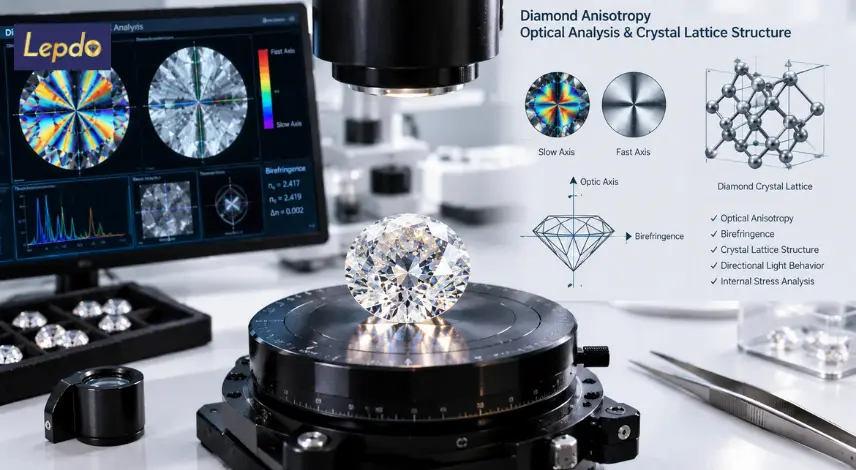
Diamond anisotropy is the variation of a diamond’s physical or optical properties depending on the direction measured within its crystal structure. In simple terms, the same diamond can respond differently when light or energy interacts with different crystallographic directions.
The diamond crystal belongs to the cubic crystal system, but internal characteristics such as strain, impurities, and growth patterns can create directional differences that advanced instruments detect.
Quick Info Box:
Definition: Diamond anisotropy is the directional variation of optical and physical properties within a diamond crystal.
Key Types or Varieties: Optical anisotropy, strain-related anisotropy, growth-related anisotropy, stress-induced optical effects.
Best For: Gemologists, manufacturers, diamond researchers, wholesalers, and buyers evaluating advanced diamond characteristics.
Key Difference or Advantage: It reveals hidden crystal behavior that cannot always be identified through normal visual inspection.
For buyers researching certified diamond sources and production standards, understanding these scientific characteristics helps create better purchasing decisions. Learn more about Lepdo Diamonds’ global diamond supply approach Lepdo Diamonds.
Sub-facet or Key Technical Characteristic 1: Crystal Structure and Optical Behavior
The crystal structure of diamond determines how light interacts with the gemstone. Diamonds are made of carbon atoms arranged in a strong tetrahedral structure, creating exceptional hardness and optical transparency.
When light enters a diamond, it interacts with the crystal lattice before reaching the facets. Small variations inside the structure can influence polarization behavior and internal reflections.
Here is what professional gemologists examine: they do not only look at surface beauty. They study how internal structure affects the final appearance of the polished stone.
Diamond anisotropy can become visible through techniques such as polarized light examination. Under crossed polarizers, some diamonds may show strain patterns known as anomalous birefringence.
Sub-facet or Key Technical Characteristic 2: Industry Classification and Gemological Importance
Diamond anisotropy is not a standard replacement for the 4Cs of Diamonds grading system, but it supports advanced diamond analysis.
GIA certified diamonds India and IGI laboratories examine diamonds using scientific instruments to understand internal characteristics, inclusions, and optical behavior. These observations help gemologists distinguish natural diamonds, lab-grown diamonds, treated materials, and synthetic imitations.
The truth is that diamond quality is never determined by one factor alone. A diamond with excellent clarity grade and color grade still requires proper evaluation of cut proportions, light return, and structural characteristics.
Most Popular Types or Variations of Diamond Anisotropy and Their Importance
Diamond anisotropy appears in several forms depending on crystal growth, internal stress, and measurement method. For commercial buyers, these variations help explain why diamonds from different sources may display different optical signatures.
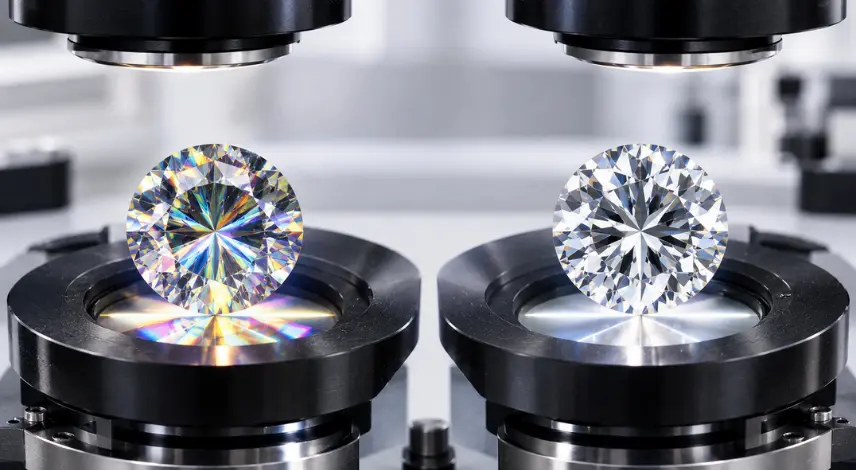
Optical Anisotropy
Optical anisotropy refers to directional differences in how light behaves inside a diamond. This can affect polarization patterns and how specialists interpret internal characteristics.
It is mainly important for gemological research, advanced identification, and laboratory analysis rather than everyday consumer grading.
Strain-Related Anisotropy
Strain-related anisotropy develops when internal forces affect the diamond crystal structure. These patterns can appear because of natural growth conditions or manufacturing processes.
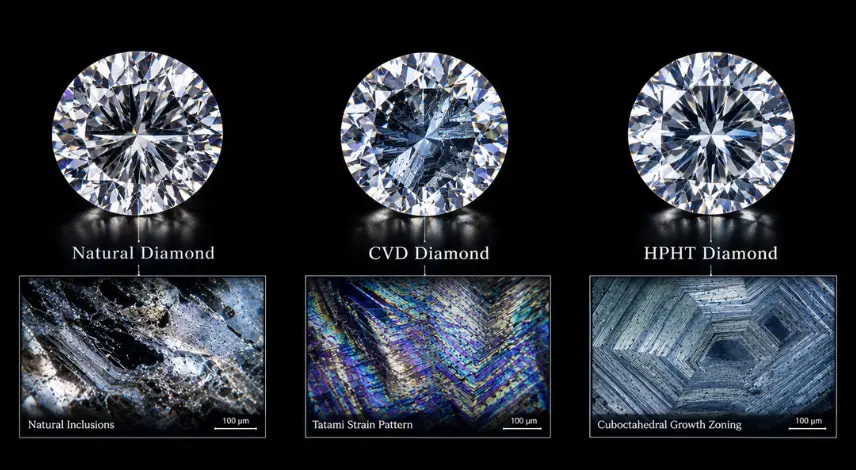
HPHT and CVD lab-grown diamonds may display specific growth-related characteristics that laboratories analyze during identification.
Growth Anisotropy in Lab-Grown Diamonds
Lab-grown diamonds are created under controlled environments, but their crystal growth patterns can differ depending on production method.
CVD diamonds grow layer by layer, while HPHT diamonds form under high pressure and temperature conditions. These processes can influence internal structures visible through advanced testing.
Stress-Induced Optical Effects
Internal stress can create optical patterns when diamonds are examined under polarized light. These patterns provide clues about crystal history and possible treatments.
Facet Direction Related Behavior
The way a unique diamond cuts trending 2026 determines how internal optical properties interact with external light. Fancy shape diamonds, including oval, pear, emerald, and radiant cuts, may show different visual results depending on facet arrangement.
Research and Industrial Applications
Beyond jewelry, diamond anisotropy matters in scientific applications involving diamond materials, electronics, and optical technology.
For jewelry buyers, the practical takeaway is simpler: crystal behavior contributes to the complete performance profile of a diamond.
Topic vs Main Alternative: Diamond Anisotropy vs Diamond Isotropy, The Real Difference
Diamond anisotropy and diamond isotropy describe how diamond materials respond to physical and optical conditions. While diamond anisotropy shows directional differences within the crystal, isotropic materials display similar properties regardless of measurement direction.
This difference matters in advanced gemological testing, scientific research, and quality analysis. For jewelry consumers, anisotropy rarely changes everyday appearance, but for manufacturers and laboratories, it provides important information about crystal growth, stress, and internal characteristics.
Most buyers focus on the 4Cs, including carat weight, color grade, clarity grade, and cut quality. However, professional diamond evaluation often includes additional scientific observations that explain why two visually similar diamonds may behave differently under specialized testing.
A polished Diamond Birefringence, fire, and scintillation depend mainly on cut precision and facet arrangement, but internal crystal behavior can influence advanced optical analysis.
| Factor | Diamond Anisotropy | Diamond Isotropy |
|---|---|---|
| Crystal Behavior | Shows directional variation in optical or physical properties | Shows similar behavior in all directions |
| Optical Response | May display polarization effects or strain patterns | Minimal directional optical variation |
| Gemological Use | Helps analyze growth patterns and internal stress | Used as a comparison for uniform materials |
| Laboratory Importance | Useful during advanced identification and research | Less complex during directional testing |
| Jewelry Impact | Usually indirect, connected with structure and analysis | Limited influence on commercial grading |
Diamond anisotropy provides deeper insight into crystal behavior, while isotropic behavior represents more uniform material performance. Professional evaluation considers both concepts when analyzing diamond properties.
Critical Differentiator: Performance and Aesthetics
Diamond anisotropy does not directly determine whether a diamond appears beautiful. The visible appearance of a diamond depends mainly on cut quality, proportions, symmetry, polish, and light return.
Think of it this way: diamond anisotropy explains the internal story of a gemstone, while cut quality determines much of the visual experience a customer sees.
A well-cut diamond with excellent pavilion angles and table percentage can deliver exceptional brilliance even when internal characteristics require advanced laboratory analysis.
The truth is that most retail customers will never observe anisotropy without specialized equipment. However, manufacturers and laboratories rely on this information to understand material behavior.
Critical Differentiator: Cost Structure and Sourcing Economics
Diamond anisotropy generally does not create a direct retail price category. Diamond pricing depends more heavily on the 4Cs, certification, market demand, and whether the stone is natural or lab-grown.
For wholesale buyers, scientific understanding becomes valuable because consistent production quality reduces uncertainty.
A manufacturer producing thousands of lab-grown diamonds needs predictable crystal growth, accurate grading, and reliable certification. These factors influence inventory efficiency and buyer confidence.
How to Choose the Right Diamond Based on Crystal Characteristics and Quality Requirements
Choosing the right diamond requires balancing visual appeal, technical specifications, budget, and intended use. Diamond anisotropy is one part of advanced evaluation, but buyers should consider the complete quality profile before making a purchase.
Match the diamond style with your design preference
Personal style influences shape selection, proportions, and overall appearance. Round brilliant diamonds remain highly popular because of their strong light performance, while fancy shape diamonds offer unique silhouettes.
Oval, pear, emerald, and radiant diamonds each interact differently with light because of their facet structures.
Consider the metal setting and mounting requirements
The jewelry setting affects durability and visual presentation. Prong settings highlight brilliance, while bezel settings provide additional protection for vulnerable edges.
Fancy Shape Diamonds with pointed corners, such as pear and marquise cuts, require careful setting designs to reduce damage risk.
Evaluate optical performance and cut proportions
Cut quality remains one of the strongest influences on diamond appearance.
You should review:
- Pavilion depth
- Table percentage
- Crown proportions
- Facet symmetry
- Light return
A diamond with balanced proportions usually creates stronger brilliance, fire, and scintillation.
Allocate budget based on visible value
Many buyers spend heavily on specifications that create little visible difference. A well-selected clarity grade and color grade can often provide better visual value than chasing unnecessary premium categories.
For example, moving from VS clarity to VVS clarity may create a significant price increase while offering minimal difference to the naked eye.
Identify the intended occasion
Different buyers have different priorities.
Engagement ring customers often prioritize symbolism and everyday durability. Jewelry brands may prioritize inventory variety. Manufacturers may focus on calibrated sizes and repeatable quality.
Compare lab-grown diamonds and natural diamonds
Lab-grown diamonds provide the same chemical composition and crystal structure as natural diamonds but are created through controlled production methods.
The demand for lab-grown diamonds has increased among buyers seeking transparency, size options, and competitive pricing.
Before you finalize your choice, compare certification, cut quality, proportions, and supplier reliability rather than focusing on a single technical feature.
Balancing Proportions, Ratio, and Setting Security
Diamond proportions determine how effectively light moves through the stone. Length-to-width ratio is especially important for fancy shapes because it influences visual balance.
For example:
- Oval diamonds often perform well with balanced elongated ratios.
- Emerald cuts require careful depth and table analysis because of their step facets.
- Pear diamonds need symmetry between the rounded end and pointed tip.
A diamond’s girdle thickness also affects durability. Extremely thin girdles may increase vulnerability during setting, while overly thick girdles can reduce visual spread.
Navigating Price Tiers vs Visual Return
Smart buyers focus on visible improvement rather than premium labels.
A diamond with a slightly lower clarity grade but excellent cut quality may outperform a higher clarity diamond with weaker proportions.
Most buyers do not realize that grading improvements are not always equally noticeable. Professional sourcing requires understanding where quality differences create real customer value.
What B2B Buyers and Diamond Manufacturers Should Know About Diamond Anisotropy
Diamond anisotropy matters most when manufacturers, wholesalers, and laboratories require deeper control over diamond quality. Large-scale production depends on consistent crystal growth, accurate sorting, and reliable grading documentation.
For a fancy cut diamond manufacturer, understanding internal diamond characteristics supports better production decisions. Fancy shapes often require precise cutting because their facet patterns vary significantly from round brilliant designs.
The Gemological Institute of America (GIA) and International Gemological Institute (IGI) use advanced testing methods when evaluating diamonds. Diamond certification provides confidence by documenting characteristics such as carat weight, clarity grade, color grade, and other quality factors.
Rapaport remains a recognized pricing reference within parts of the diamond industry, although lab-grown diamond pricing follows separate market dynamics.
Lepdo Diamonds operates as a Surat-based lab-grown diamond manufacturer and supplier, providing certified CVD and HPHT diamonds with IGI, GIA, and SGL Diamond Certificate options for global B2B buyers. More information about the company can be found through Lepdo Diamonds.
Expert trade tip:
When I evaluate wholesale parcels, I do not judge quality from one impressive sample. I review consistency across the entire batch, including measurements, color tolerance, clarity distribution, and certification records.
Wholesale Procurement Models: Memo Programs vs Direct Sourcing
Wholesale diamond purchasing usually follows different commercial models.
Memo programs allow retailers to hold inventory before final payment, reducing upfront capital pressure. However, suppliers carry greater inventory risk and may limit flexibility.
Direct sourcing provides stronger control over pricing and availability but requires more working capital.
For manufacturers and wholesalers, direct factory relationships often create better consistency because specifications can be discussed before production.
Batch Consistency, Calibration, and Tolerance Standards
Large diamond parcels require strict sorting standards.
Professional buyers often evaluate:
- Millimeter calibration
- Color tolerance ranges
- Clarity consistency
- Shape symmetry
- Certification matching
A difference of 0.05 mm may matter when producing matching jewelry pieces or calibrated collections.
Here is what experienced buyers understand: consistency creates commercial value because retailers need predictable inventory.
Diamond Jewelry Trends (2026 to 2027)
Diamond jewelry trends between 2026 and 2027 are increasingly shaped by transparency, customization, and value-focused purchasing decisions. Buyers are paying closer attention to diamond certification, origin information, and measurable quality factors rather than selecting stones based only on appearance.
Diamond anisotropy continues to interest manufacturers and gemologists because advanced buyers want deeper understanding of diamond structure and performance. While most consumers select diamonds based on the 4Cs, professional buyers increasingly consider scientific analysis, growth methods, and production consistency.
According to industry reports from organizations tracking global diamond demand, lab-grown diamonds have continued gaining market share in jewelry categories, particularly among younger consumers seeking larger stones at accessible price points. This shift has encouraged manufacturers to improve grading accuracy and production standards.
The modern buyer asks different questions now. Is the diamond certified? How does the cut affect brilliance? Is the price aligned with actual visual performance?
Contemporary Setting Styles and Architectural Mountings
Modern engagement ring designs are moving toward distinctive silhouettes, clean structures, and personalized settings.
Popular styles include:
- East-west diamond settings: Horizontal placement creates a contemporary appearance, especially for oval, emerald, and marquise shapes.
- Bezel settings: These provide additional protection around the diamond edge while creating a modern architectural look.
- Multi-stone configurations: Combining different shapes allows designers to create unique visual patterns.
- Hidden halo designs: These add additional sparkle without changing the main diamond silhouette.
Fancy shape diamonds are especially popular because they offer individuality compared with traditional round brilliant designs. However, each shape requires careful evaluation because facet arrangement affects light return differently.
For manufacturers, this means inventory selection requires deeper knowledge of proportions, symmetry, and customer preferences.
Shifting Consumer Demographics and Purchasing Drivers
Modern diamond buyers increasingly research before purchasing. They compare certification details, pricing, sustainability claims, and diamond characteristics online before contacting retailers.
Here is what many retailers notice: customers arrive with more technical knowledge than previous generations.
Lab-grown diamonds have contributed to this change because buyers can compare larger carat weight options while maintaining focus on quality and transparency.
Value perception has become a major purchasing factor. A customer may prefer a 2 carat lab-grown diamond with excellent cut quality rather than a smaller natural diamond with similar spending.
How to Evaluate Quality in Diamond Anisotropy
When I assess a diamond, the first thing I check is not a single measurement. I examine how the complete structure, proportions, and optical behavior work together to create the final appearance.
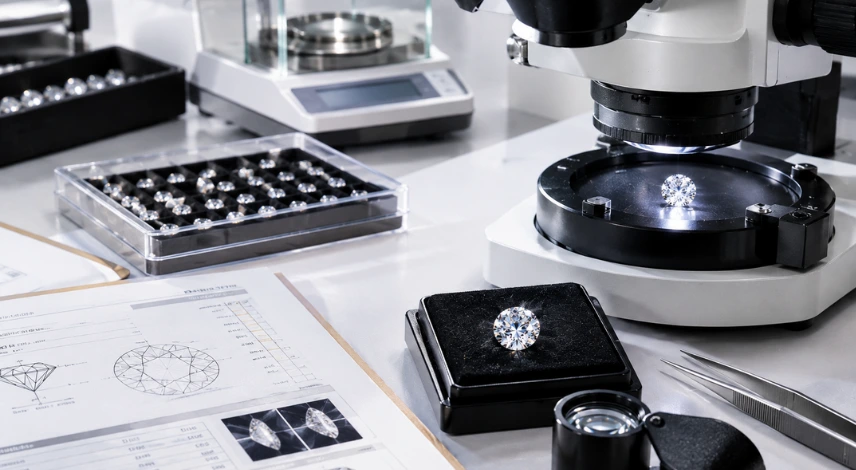
Diamond anisotropy evaluation requires advanced knowledge because it relates to crystal direction, internal strain, and optical response. However, buyers can still use practical evaluation methods when selecting diamonds.
Review crystal characteristics and internal structure
The first step is understanding whether internal patterns indicate stress, growth features, or other structural characteristics.
Advanced instruments may reveal directional optical effects that are invisible during normal viewing.
Analyze cut precision and proportions
Cut quality remains one of the strongest factors affecting appearance.
Review:
- Pavilion depth
- Table percentage
- Crown angle
- Facet symmetry
- Overall proportions
These elements influence how light enters and exits the diamond.
Evaluate brilliance, fire, and scintillation
A quality diamond should return light effectively.
Brilliance refers to white light reflection. Fire describes colored flashes created by dispersion. Scintillation refers to sparkle changes when the diamond or viewer moves.
Check clarity characteristics
A clarity grade explains internal and external features, but the location of inclusions matters.
An inclusion near critical facet areas may influence transparency differently than one positioned away from the center.
Confirm diamond certification
Always review certification from recognized laboratories.
A proper diamond certification report should match:
- Carat weight
- Shape
- Measurements
- Color grade
- Clarity grade
- Laboratory details
Buyers seeking verified inventory can explore Certified Diamonds through Lepdo Diamonds’ certified diamond collection.
Analyzing Light Return: Spotting Bow-Ties, Windows, and Extinction
Light behavior is one of the most important parts of fancy shape diamond evaluation.
Certain shapes, especially elongated diamonds, may display optical challenges.
A bow-tie effect is a dark area across the center of shapes such as oval, pear, and marquise diamonds. It occurs when facet angles prevent efficient light return.
A window effect happens when a diamond allows too much transparency, making it appear less lively because the background becomes visible through the stone.
Extinction refers to dark areas caused by light blockage or poor reflection patterns.
Think of it this way: a diamond should interact with light, not simply allow light to pass through.
When evaluating fancy shapes, professionals examine the stone from multiple angles rather than relying only on certificate grades.
Assessing Diamond Reports and Grading Discrepancies
Diamond reports provide important information, but buyers should understand laboratory variations.
Different laboratories may have slightly different approaches to grading. This is why experienced buyers consider the complete report rather than one isolated grade.
The International Gemological Institute (IGI), Gemological Institute of America (GIA), and SGL provide certification services used throughout the diamond industry.
When reviewing reports, check:
- Report number verification
- Laser inscription details
- Clarity plot information
- Measurements
- Comments regarding treatments or characteristics
A reliable supplier provides matching documentation and transparent sourcing information.
Strategic Takeaways for Buyers and Jewelers
Diamond anisotropy represents the scientific side of diamond evaluation, showing how crystal structure can influence advanced optical analysis and identification. For consumers, the most important factors remain cut quality, certification, appearance, and value. For manufacturers and wholesalers, deeper understanding of crystal behavior helps improve consistency and quality control.
The second takeaway is that technology and gemological expertise work together. Digital analysis, laboratory testing, and experienced inspection create a stronger evaluation process than relying on appearance alone.
The third takeaway is that sourcing decisions should focus on measurable quality. Lepdo Diamonds supplies certified CVD and HPHT lab-grown diamonds from Surat, India, supporting global B2B buyers with IGI, GIA, and SGL certified inventory options. For verified diamond sourcing and wholesale requirements, connect with Lepdo Diamonds:
Frequently Asked Questions About Diamond Anisotropy.
1. What is Diamond Anisotropy?
Diamond anisotropy refers to the directional variation of physical, mechanical, and optical properties within a diamond crystal. Because diamond anisotropy depends on internal lattice orientation, diamond anisotropy causes properties like hardness and strain to differ along specific axes. Gemologists study diamond anisotropy using cross-polarized light to evaluate diamond anisotropy patterns, internal crystal stress, and growth behavior during diamond evaluation.
2. Is Diamond Anisotropy Cheaper Than Diamond Isotropy?
Diamond anisotropy pricing does not exist because diamond anisotropy is a crystallographic property rather than a retail commercial category. Evaluating diamond anisotropy vs diamond isotropy does not influence pricing like the 4Cs, certification, and market demand do. Diamond anisotropy remains a scientific factor used by gemologists to understand crystal structure, so diamond anisotropy has no direct impact on per-carat market costs.
3. Which Type Looks Biggest or Most Impressive on the Hand?
Diamond anisotropy does not dictate how large a diamond appears on the hand, because face-up size depends on carat weight, cut proportions, and shape rather than diamond anisotropy. Whether a crystal displays diamond anisotropy or uniform optical traits, fancy shapes like oval, pear, and radiant diamonds look largest due to their elongated geometry, while diamond anisotropy remains completely invisible to the naked eye.
4. Does Diamond Anisotropy Have an Official GIA Cut Grade?
Diamond anisotropy does not receive a separate GIA cut grade or standalone rating. GIA laboratory reports assess proportions, symmetry, polish, and light performance rather than diamond anisotropy alone. While gemologists inspect diamond anisotropy through strain patterns during structural analysis, diamond anisotropy is not listed as an individual metric on standard cut grading dossiers.
5. What Is the Biggest Quality Risk or Defect to Watch for in Diamond Anisotropy?
The main issue regarding diamond anisotropy is not a visible flaw but the presence of heavy lattice strain associated with diamond anisotropy. Severe diamond anisotropy caused by internal structural deformation can complicate diamond cutting and cleavage stability. Evaluating diamond anisotropy helps cutters identify internal stress zones so diamond anisotropy does not interfere with durability during faceting.
6. Are Lab-Grown Diamond Anisotropy Characteristics Chemically and Optically Identical to Natural Ones?
Lab-grown diamond anisotropy differs slightly from natural diamond anisotropy because synthesis methods create distinctive internal growth environments. While lab stones share the same chemical makeup, CVD diamond anisotropy typically shows patterned striations, and HPHT diamond anisotropy exhibits cross-shaped growth strain, allowing gemological laboratories to study diamond anisotropy to distinguish lab diamonds from natural crystals.
7. Which Type Is Most Durable and Practical for an Everyday Engagement Ring?
Diamond durability for everyday wear depends on cut style, setting security, and hardness rather than minor diamond anisotropy. Because all diamonds rank 10 on the Mohs scale, diamond anisotropy variations in directional hardness do not prevent everyday durability. However, excessive diamond anisotropy linked to internal strain should be avoided near vulnerable, pointed corners in delicate jewelry settings.
8. How Do I Choose a Reliable Diamond Manufacturer or Wholesale Supplier?
Choosing a reliable supplier requires evaluating diamond manufacturing consistency, transparent grading standards, and technical expertise in managing diamond anisotropy during cutting. A dependable supplier understands how diamond anisotropy affects rough diamond cleavage and yield optimization. Verify authentic laboratory reports, inventory calibration, and CVD or HPHT growth data to ensure proper handling of diamond anisotropy throughout production.
For in-depth market reports, trade sourcing guides, interactive Q&As, and expert gemological perspectives, explore the official Lepdo Group Medium platform and join the discussion on Lepdo Diamonds on Quora.