
An SGL diamond certificate is a grading report issued by SGL Laboratories that documents a diamond’s carat weight, color, clarity, and cut. B2B buyers should verify SGL’s grading consistency against IGI and GIA standards before large purchases. Lepdo Diamonds recommends requesting IGI or GIA certified stock for wholesale reliability.
A wholesale buyer in New Jersey once forwarded me a parcel of loose diamonds, each stone paired with a certificate she was told meant “GIA-level quality at half the price.” The lab wasn’t GIA. It was SGL. She had no idea what that meant for resale value, and by the time she found out, three retail clients had already asked why the stones looked smaller and less bright than the report claimed.
That story repeats itself more often than the diamond trade likes to admit. An SGL diamond certificate is not automatically a red flag, but it is also not automatically equivalent to a GIA or IGI report, and understanding that gap matters for anyone buying diamonds by carat weight, clarity grade, or cut quality. This SGL diamond certificate complete B2B guide breaks down what the report actually verifies, how reliable the grading tends to be, and what wholesalers, manufacturers, and retail buyers should check before a single stone changes hands.
You will want to pay attention to the difference between a certificate that protects your margin and one that quietly erodes it. Most buyers assume any sealed report with a laser inscription number is interchangeable with GIA or IGI paperwork. It usually is not.
What Is an SGL Diamond Certificate
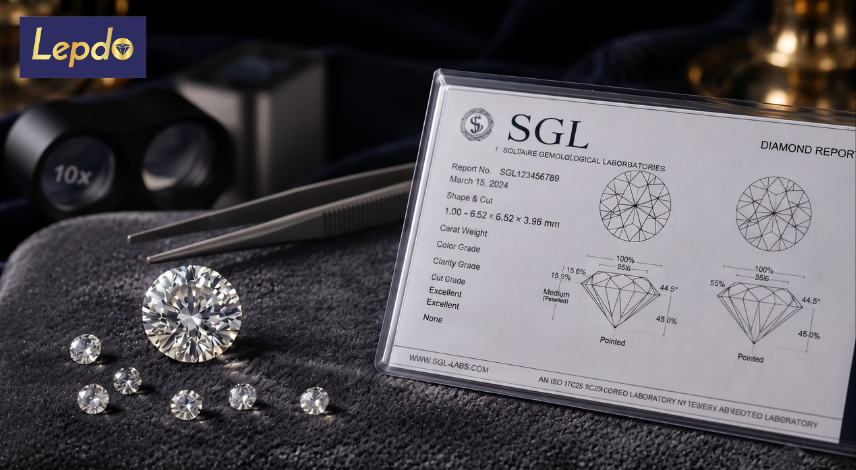
An SGL diamond certificate is a grading report produced by SGL Laboratories, documenting a diamond’s carat weight, color grade, clarity grade, and cut proportions after physical and instrument-based examination. The report also lists measurements, fluorescence, and a unique certificate number tied to the stone.
Here is what separates SGL certification from the two labs the US trade treats as the benchmark: consistency. GIA and IGI publish detailed grading methodology and submit to independent audits. SGL, like several regional labs, has a more variable reputation depending on which branch issued the report. Buyers researching SGL Certification standards will find the grading criteria published, but enforcement across branches is where the real differences show up.
Quick Info Box
Definition: A diamond grading report issued by SGL Laboratories covering the 4Cs and basic identification details.
Key Types or Varieties: SGL branch reports vary by region, including natural and lab-grown diamond certificates.
Best For: Budget-conscious buyers who verify grading independently before purchase.
Key Difference or Advantage: Lower certification cost, but grading consistency generally lags behind GIA or IGI.
Most Common Types of SGL Certificates: And Who They Are For
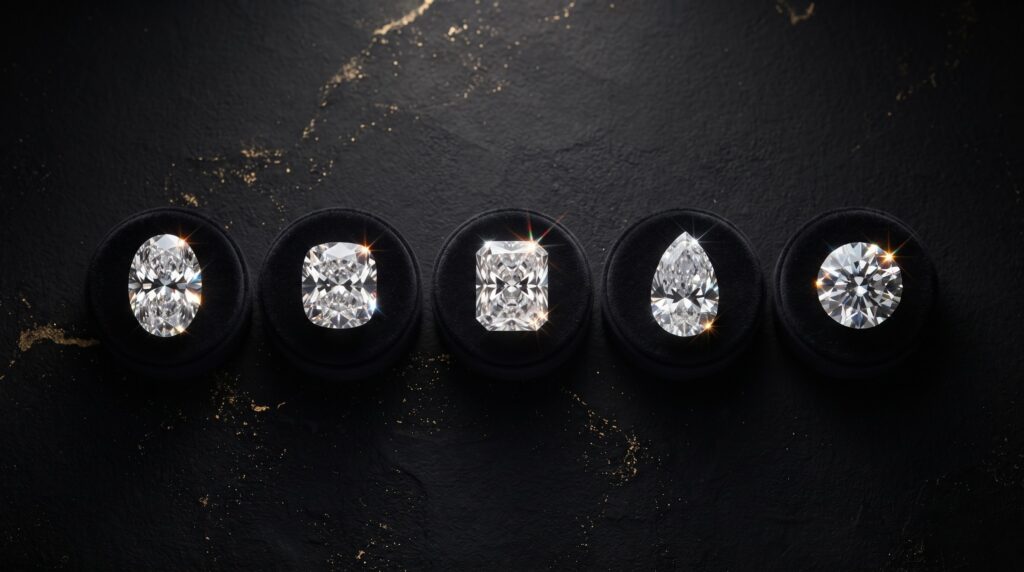
Not every SGL diamond certificate covers the same scope. The trade generally sees these variations in circulation across US wholesale and retail channels.
SGL Loose Diamond Report
This is the standard single-stone certificate covering carat weight, color, clarity, cut, and measurements. It suits small retailers who need paperwork for individual engagement ring stones but plan to verify grading before pricing.
SGL Lab-Grown Diamond Certificate
Issued specifically for CVD or HPHT stones, this report should state the growth method clearly. Manufacturers sourcing bulk lab-grown parcels should always confirm the growth method is disclosed, since omission here creates disclosure risk in the US market.
SGL Parcel or Melee Certificate
Covers batches of small diamonds, typically under 0.18 carat, graded as a group rather than individually. Wholesalers buying melee for pave settings rely on these, though average grading replaces stone-by-stone precision.
Beyond these three, buyers also encounter SGL jewelry certificates for finished pieces, SGL colored diamond reports covering the same category as Lab Grown Fancy Color Diamonds, SGL branch-specific reports that vary by issuing country, SGL fluorescence-focused reports for stones with notable UV reaction, and SGL fancy shape reports covering ovals, cushions, and radiants where proportions matter more. Each variant serves a narrow purpose. Retailers selling directly to consumers benefit most from loose diamond and lab-grown reports. Manufacturers and wholesalers moving volume tend to see more parcel and jewelry certificates, which is exactly where grading consistency becomes harder to guarantee at scale.
Think of it this way: a single SGL loose diamond report is one opinion about one stone. A parcel certificate is one opinion applied across dozens of stones that were never individually examined with the same rigor. The gap between those two situations widens the moment a buyer treats parcel-level grading as if it carried individual-stone precision. Retailers building a fashion jewelry line around melee diamonds can usually absorb small grading variances. A manufacturer building an engagement ring collection around center stones cannot, which is why the loose diamond and lab-grown categories deserve closer scrutiny before any purchase order gets signed.
SGL Diamond Certificate vs IGI Certificate: The Real Difference
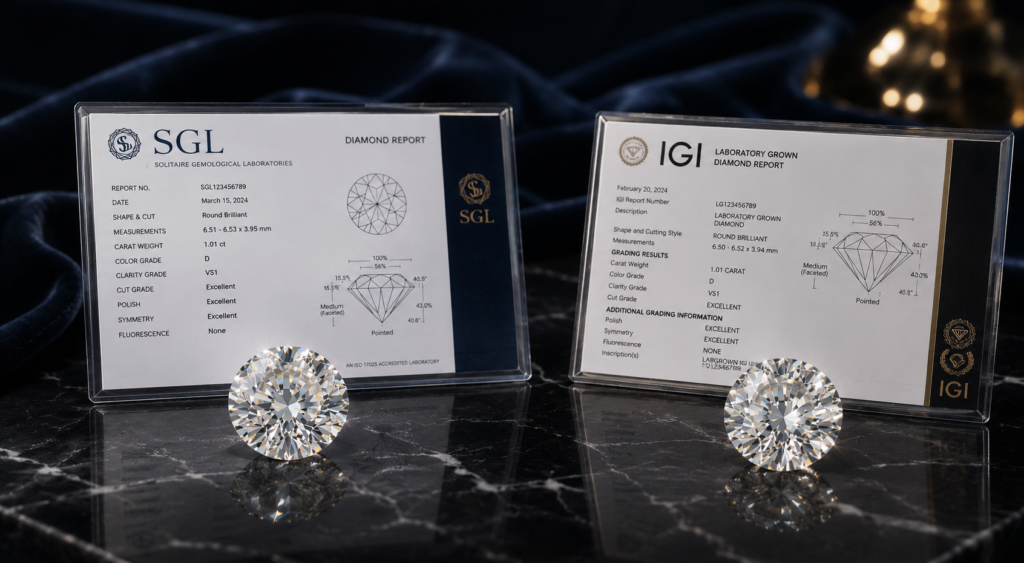
A proper SGL vs IGI certificate comparison comes down to consistency, resale confidence, and how each report is treated by the wider trade, not just the price tag on the grading fee.
| Factor | SGL Certificate | IGI Certificate |
|---|---|---|
| Grading Consistency | Varies by branch | Standardized globally |
| Trade Acceptance (USA) | Limited, requires verification | Widely accepted |
| Resale Value Impact | Often discounted 10 to 20 percent | Holds closer to stated grade |
| Certification Cost | Lower | Moderate |
| Turnaround Time | Generally faster | Standard industry timelines |
That said, SGL certificates are not worthless. They confirm basic identification and rough grading, which is fine for lower-value melee or fashion jewelry where exact grade precision matters less. The truth is that once a diamond crosses into engagement ring territory, where a customer expects the report to match what they see under a loupe, a GIA or IGI diamond certification carries far more weight with US retailers, insurers, and appraisers. Buyers comparing SGL certified diamonds meaning against IGI standards should treat the price gap as a reflection of grading rigor, not just paperwork overhead.
Why does this distinction keep tripping up otherwise experienced buyers? Because a printed grade looks authoritative regardless of which lab issued it, and most consumers never think to question a document with a certificate number, measurements, and an official-looking header. Retailers who understand an SGL diamond certificate reliability guide’s core lesson, that the lab behind the report matters as much as the numbers on it, price their inventory more accurately and face fewer disputes at the point of sale. That single habit, checking the issuing lab before checking the grade, prevents most of the resale problems that surface months after a purchase closes.
How to Choose the Right SGL Diamond Certificate for Your Purchase
Not every SGL diamond certificate deserves the same level of caution, and knowing which factors matter most will save you money and disputes later.
- Match the report to the purchase size. A small accent stone with an SGL parcel certificate is low risk. A center stone above one carat needs stronger paperwork.
- Check physical fit against the report. Measurements, table percentage, and depth percentage should match what you observe under magnification, not just the numbers printed.
- Confirm the setting or use case. Loose stones destined for custom engagement rings need certification that survives an independent appraisal, not just a sales floor.
- Weigh the budget advantage honestly. SGL certified diamonds wholesale pricing often runs lower, which works for volume fashion jewelry but shrinks margin protection on statement pieces.
- Match certification to occasion. Engagement rings and investment purchases favor GIA or IGI. Fashion jewelry and gifting pieces tolerate more flexibility.
- Decide between lab-grown and natural early. If you are sourcing Lab Grown Diamonds, confirm the SGL report discloses growth method clearly and review Lab Grown Diamond Durability factors, since lab-grown disclosure rules are strictly enforced in US retail.
Before you finalize your choice, ask the seller directly whether the SGL report has been cross-checked against IGI or GIA standards for that specific stone category. Most buyers skip this step and regret it only after a client or appraiser flags the discrepancy.
It also helps to think about who handles the stone after you do. A jeweler setting a diamond into a custom mounting will notice immediately if the reported cut proportions do not match what sits under the loupe, and that conversation is far easier to have before the sale than after. Retailers who build this verification step into their standard intake process rarely face the awkward moment of explaining a grading discrepancy to a client who already paid full price.
What B2B Buyers and Diamond Manufacturers Should Know
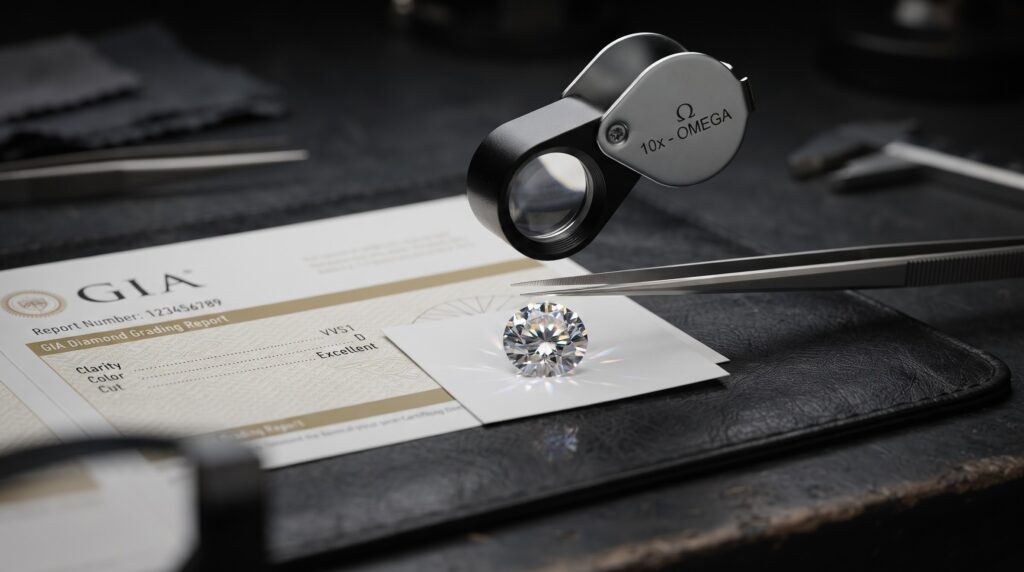
Bulk sourcing changes the calculus on any SGL diamond certificate. A single questionable stone in a retail case is a customer service problem. A container of mismatched grading across SGL certified diamonds wholesale parcels is a margin problem that compounds across every reseller in the chain.
Cut grading consistency is where most disputes originate. GIA and IGI apply standardized proportion tables across every branch worldwide, which is why serious wholesale buyers treat Diamond Certification from those two labs as the working benchmark, with SGL paperwork accepted only after independent spot-checking. Rapaport pricing also assumes GIA or IGI grading as the baseline, so an SGL certified stone priced against Rapaport sheets without adjustment usually overstates value.
Manufacturers negotiating bulk purchase orders should also factor in how downstream buyers will treat the paperwork. A retailer receiving an SGL certificate check request from a customer needs to answer quickly and accurately, and that is only possible if the manufacturer supplying the parcel kept detailed records of which branch issued which report. Vague or missing documentation at the manufacturing level becomes a much bigger liability once stones are three or four hands removed from the original source.
In my experience working with fancy cut diamond manufacturer partners across Surat, the buyers who avoid disputes are the ones who request sample parcels before committing to volume orders. Manufacturers like Lepdo Diamonds, based in Surat’s diamond hub, issue IGI and GIA certified lab-grown stock as standard practice precisely because wholesale buyers need grading they can defend to their own retail clients.
SGL Certified Diamond Jewelry Trends in the USA (2026 to 2027)
Fancy cut diamond jewellery keeps gaining share in the US bridal market, and certification transparency is becoming part of the sales pitch rather than fine print. Retailers report that shoppers now ask to see the certificate before they ask about price, a shift that pressures sellers relying on lower-tier grading reports.
Red carpet moments and social media unboxing videos continue to push oval, cushion, and radiant cuts ahead of round brilliants for engagement rings, even though round stones still hold the largest overall market share. Bezel and hidden halo settings are trending alongside these shapes, partly because they showcase length-to-width ratio and outline rather than pure carat weight. Vintage-inspired mixed cuts, pairing a modern brilliant crown with an old-style pavilion, are also picking up traction among buyers who want a distinctive look without moving into fully custom territory.
Industry pricing data has shown lab-grown diamond adoption climbing steadily among US retailers over the past several years, which means certification questions around SGL diamond certificate reliability are surfacing more often, simply because more lab-grown stones are entering circulation with a wider mix of grading labs attached. Expect this scrutiny to grow through 2027 as more consumers learn to check a diamond report check against the actual stone before finalizing a purchase, rather than trusting the certificate on face value alone.
How to Evaluate Quality When You See an SGL Diamond Certificate
When I assess a diamond carrying an SGL diamond certificate, the first thing I check is whether the reported cut proportions actually produce the brilliance and fire the paperwork claims. Numbers on a page mean nothing if the stone looks dull under standard lighting.
- Check pavilion and table percentage together A shallow pavilion or an oversized table kills light return no matter what the color grade says.
- Examine scintillation under movement Tilt the stone. Weak sparkle patterns often expose grading that was rounded up.
- Verify Diamond Fluorescence against appearance Strong blue fluorescence should show a slight haziness in daylight if the report is accurate.
- Cross-reference clarity grade with visible inclusions Use a loupe. Inclusions invisible to the naked eye should match a clean clarity grade.
- Run a Diamond Report Verification whenever possible Confirming the certificate number against the issuing lab’s records catches mismatched or reused paperwork before it becomes your problem.
None of these checks take more than a few minutes, yet skipping them is exactly how mismatched SGL diamond certificates end up on retail counters with prices they cannot justify. To be fair, plenty of SGL certified stones pass every one of these checks cleanly, which is exactly why blanket skepticism helps no one. The goal is verification, not automatic rejection, and the five minutes spent confirming a report against the physical stone is cheaper than any dispute that follows a sale. Bring a loupe, bring patience, and treat the certificate as a claim to confirm rather than a fact to memorize.
Conclusion
An SGL diamond certificate is not something to reject outright, but it is also not something to accept at face value the way you might treat a GIA or IGI report. The real takeaway is that grading consistency, not the certificate itself, determines whether a stone is priced fairly, and that consistency depends heavily on which SGL branch issued the paperwork. Verification, whether through independent appraisal or a direct check against the issuing lab, protects both retail margin and customer trust far more reliably than the certificate alone.
That said, plenty of SGL certified stones are perfectly good purchases once you know what to check. Buyers who want a reference point before their next purchase can review our Diamond Buying Guide or visit Lepdo Diamond to see how IGI and GIA certified lab-grown stock compares in practice. For wholesale inquiries on SGL-certified stones, Lepdo Diamonds offers direct manufacturer pricing from Surat alongside certification guidance you can actually verify.
Frequently Asked Questions About SGL Diamond Certificates
1. What is an SGL diamond certificate?
An SGL diamond certificate is a grading report from SGL Laboratories documenting a diamond’s carat weight, color, clarity, cut, and measurements. It functions similarly to a GIA or IGI report on paper, but grading consistency varies more by issuing branch. Buyers should treat it as a starting point, not a final word on quality, especially for higher-value purchases.
2. Is an SGL diamond certificate cheaper than IGI or GIA?
Yes, SGL certification typically costs less than IGI or GIA grading, which is why it appears more often on budget and fashion jewelry. The lower cost reflects less rigorous audit standards rather than faster service alone. That savings on paperwork often gets absorbed by a discounted resale value later.
3. Which SGL certified diamond shape looks biggest or most impressive?
Elongated shapes like oval, marquise, and pear typically appear larger per carat because of their length-to-width ratio and greater surface spread. This holds true regardless of certification lab. Buyers prioritizing visual size over strict carat weight generally favor these fancy shapes for engagement rings and statement jewelry.
4. Does an SGL diamond certificate include a GIA cut grade?
No, an SGL diamond certificate does not include an official GIA cut grade, since cut grading systems are lab-specific and not interchangeable. SGL reports proportions and finish details independently. Buyers wanting a verified GIA cut grade need a GIA report directly, not an SGL equivalent describing similar measurements.
5. What is the biggest quality risk with an SGL diamond certificate?
The biggest risk is inflated grading, where color or clarity is stated more favorably than the stone actually deserves. This creates pricing that looks competitive on paper but collapses under independent appraisal. Always verify proportions and clarity under magnification before pricing an SGL certified stone for resale.
6. Are lab-grown diamonds with SGL certification as good as natural diamonds?
Lab-grown diamonds share identical optical and chemical properties with natural diamonds, so quality depends on the 4Cs, not origin. The certification lab matters more than growth method here. An accurately graded SGL lab-grown stone can perform beautifully, but the grading accuracy question still applies equally.
7. Which certified diamond is best for an engagement ring?
For engagement rings, GIA or IGI certified diamonds are generally the safer choice, since insurers, appraisers, and future buyers trust those reports without additional verification. An SGL diamond certificate can work for secondary or accent stones, but center stones benefit from certification with stronger trade-wide acceptance.
8. How do I choose a reliable SGL diamond certificate manufacturer or supplier?
Choose suppliers who disclose growth method clearly, allow independent verification of certificate numbers, and offer GIA or IGI certified alternatives alongside SGL stock. Request a sample parcel before committing to volume. Reliable manufacturers welcome scrutiny of their grading rather than discouraging buyers from double-checking reports.