Private Label Lab Grown Diamond Jewelry Manufacturing Guide for Retailers and Brands
 by lepdogroup@gmail.com
0 comments
by lepdogroup@gmail.com
0 comments
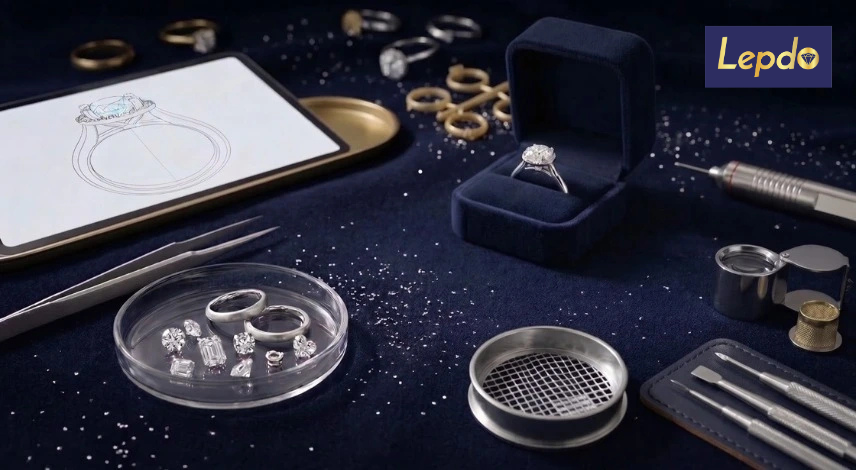
Private label diamond jewelry manufacturing lets retailers and brands sell diamond jewelry made by a third-party manufacturer under their own brand name, without owning a factory. It matters because it lowers startup cost, speeds up launch time, and gives buyers control over design and margins. Lepdo Diamonds works with USA brands on IGI certified lab-grown pieces from Surat.
A jeweler I spoke with last year had zero production equipment, no gemologist on staff, and a full engagement ring line launched within eleven weeks. That is not a fluke story. It is the whole point of private label diamond jewelry manufacturing.
If you have scrolled past a small jewelry brand online and wondered how they suddenly have GIA and IGI paperwork on every piece, this is usually the answer. Someone else cut the stones, someone else set the metal, and the brand simply put its name on the box.
Here is what this guide actually walks through: how private label diamond jewelry manufacturing works from first sample to final shipment, what it costs against building your own workshop, and how to spot a manufacturer worth trusting before you wire a deposit. Whether you run a retail counter in Ohio or you are building a direct-to-consumer brand from a laptop, the fundamentals do not change. Carat weight, the 4Cs, and proper certification still matter, no matter whose name is stamped on the packaging.
Most buyers assume this process is complicated. It really isn’t, once you understand who does what.
What Private Label Diamond Jewelry Manufacturing Actually Means
In plain terms, private label diamond jewelry manufacturing means a factory builds finished jewelry to your specs, then ships it to you already branded and packaged. You never touch a casting machine. You never train a setter. The factory handles all of it.
That is different from reselling wholesale stock, by the way. With wholesale, you’re selling someone else’s catalog. With private label, you’re directing the design, the packaging, and often the certification presentation, while the manufacturer absorbs the production risk.
Quick Info Box
- Definition: A manufacturer produces diamond jewelry to your specifications and ships it under your brand name.
- Key Types or Varieties: Full private label, white label, OEM custom manufacturing, semi-custom collections.
- Best For: Retailers, e-commerce brands, wholesalers, and jewelers launching an in-house line without owning a factory.
- Key Difference or Advantage: You keep the brand and the margin; the manufacturer takes on the production headache.
Most retailers exploring Lab Grown Diamonds sourcing for the first time end up here, mainly because lab-grown stones make a private label launch financially realistic in a way natural diamonds rarely do.
Most Popular Types of Private Label Jewelry Manufacturing, And Who They’re For
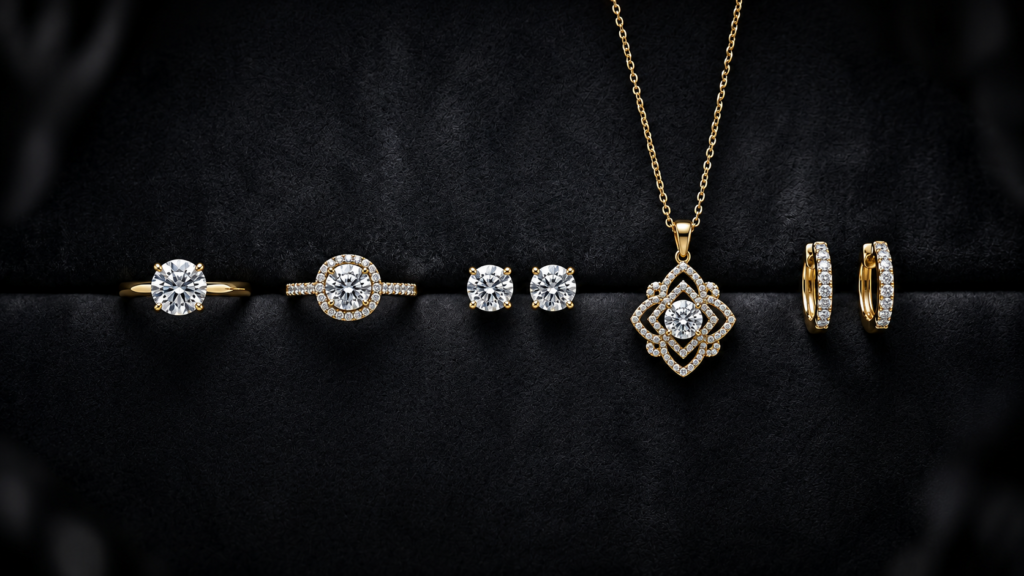
Not every arrangement works the same way, and honestly, a lot of first-time buyers don’t realize there are this many flavors of it.
Full Private Label Manufacturing
This is the deep end. The factory designs, sources stones, sets, polishes, and packages everything under your brand from the very first piece. It suits funded startups or retailers who are ready to commit to a real catalog, not just test a few SKUs.
Expect longer lead times on this path, since custom tooling and design approval rounds take real weeks, not days. Budget for at least two or three revision cycles before a design is truly production-ready, especially on complex settings. Most factories will also ask for a higher minimum order here, simply because tooling costs need to be spread across enough units to make sense for them.
White Label Jewelry Manufacturing
A white label jewelry manufacturer india program uses designs the factory already has tooled and simply rebrands them for you. It’s faster, it’s cheaper, and it works well when you want inventory in weeks rather than months.
The tradeoff is obvious once you think about it: your competitor down the street could be selling a near-identical piece under their own name. For a lot of first-time brands, that risk is worth it just to get real product on shelves fast. Some factories will let you request minor tweaks, like a slightly different prong style or a metal color swap, even within a white label program, which at least gives you a bit of separation from the exact same catalog everyone else is pulling from.
OEM Custom Jewelry Manufacturing
An oem jewelry manufacturer india builds to your exact CAD files and technical drawings. This is for brands with a design identity worth protecting, where a lookalike piece from a competitor would actually hurt you.
Past these three, you’ll run into semi-custom collections too, where you choose from pre-approved mountings and only swap stone shape or metal tone. Some manufacturers run hybrid programs, blending a white label base with custom engraving or a halo upgrade. Bridal-focused factories specialize almost entirely in engagement rings, while fashion-jewelry factories lean toward stackable bands and everyday pendants. Most brands I’ve watched land somewhere between white label and full custom in year one, then graduate into true private label once order volume justifies it. Looking at how established Lab Grown Diamond Brands structured their early catalogs can be a useful reference point here, since most of them didn’t start with a fully custom line either. There’s no shame in starting smaller than you’d like.
Private Label Manufacturing vs Buying Wholesale, The Real Difference
| Factor | Private Label Manufacturing | Buying Wholesale |
|---|---|---|
| Brand ownership | Your name, your packaging | Manufacturer or distributor branding stays |
| Design control | Full customization possible | Limited to what’s already in the catalog |
| Minimum order | Often higher, depends on the factory | Can be one piece at a time |
| Margin potential | Higher over the long run | Lower margin, faster to start selling |
| Startup investment | Moderate to significant | Low to moderate |
The truth is, wholesale gets product on your shelf faster. Private label diamond jewelry manufacturing builds something you actually own. A wholesale catalog can belong to your competitor down the street tomorrow. Yours can’t. To be fair, plenty of successful retailers run both models at once, using wholesale to gauge demand before committing factory minimums to a private label line.
How to Choose the Right Private Label Diamond Jewelry Manufacturing Partner
- Match design capability to your brand’s actual identity. Some factories are brilliant at classic bridal work and mediocre at everything else. Pick one whose CAD team already thinks the way you do.
- Check production capacity against your real order volume. A shop built for fifty-piece runs will fall apart under a two-thousand-piece holiday order.
- Confirm setting and stone-sourcing compatibility. You’ll want to pay attention to whether the manufacturer sources stones in-house or farms it out, since that affects consistency more than people expect.
- Compare cost against building your own workshop from scratch. For most brands under a certain size, private label wins on budget, easily.
- Match the manufacturer’s strength to your occasion focus. Bridal, fashion, or investment-grade collections all demand different production muscle.
- Decide early on lab-grown vs natural sourcing. Most new brands default to lab-grown diamonds now, purely for margin reasons, and a factory experienced with Lab Grown Diamonds will save you months of guesswork.
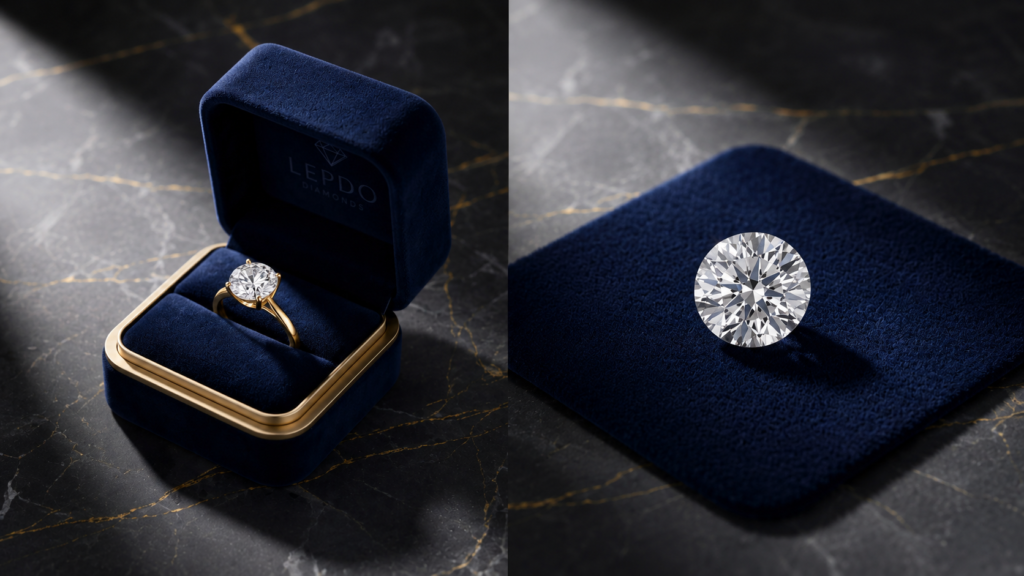
Before you finalize anything, get physical samples from at least two manufacturers and compare them side by side under the same light. Photos lie more often than people admit. This is also a good point to check what a supplier like Lepdo Diamonds offers in terms of sample parcels, since a manufacturer willing to send physical stones before a bulk commitment is usually one worth trusting further.
What B2B Buyers and Diamond Manufacturers Should Know
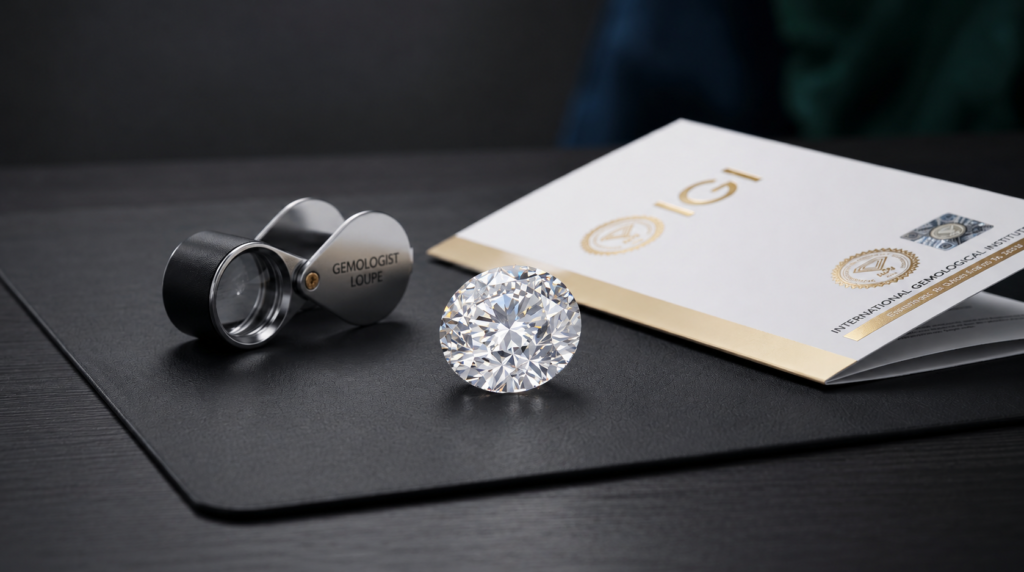
For wholesalers and retailers vetting suppliers, bulk sourcing consistency matters far more than one gorgeous sample. A factory that nails piece one but can’t replicate cut quality across a five-hundred-unit order will cost you returns, and worse, it’ll cost you your customer’s trust. Ask how they hold consistency across full production runs, not just what their showcase pieces look like.
IGI certification has become the standard for lab-grown stones sold into the USA, while GIA still gets requested constantly on natural and premium goods. Manufacturers like Lepdo Diamonds, based in Surat’s diamond hub, tend to issue IGI and GIA certified stock as a default practice rather than a paid add-on, and that matters when you’re trying to earn buyer trust from a standing start. Retailers comparing sources for IGI certified lab grown diamonds wholesale will notice pricing and paperwork practices vary a lot between suppliers, so it pays to check both before committing to a private label run. Rapaport pricing still shapes how factories quote natural components even in mixed collections, so it’s worth asking your supplier which benchmark they’re actually using.
Payment terms deserve the same scrutiny as certification, honestly. A manufacturer unwilling to negotiate anything beyond full upfront payment on a first order is telling you something about how they view new relationships. Most established Surat factories will offer staged payments once trust builds, and it’s worth asking about this before you commit to a first bulk run rather than after.
Here’s my honest tip after years of doing this: always request a sample parcel before signing off on a full private label run, and check the prong and setting work under a loupe, not just the stone quality. I’ve seen a genuinely beautiful diamond ruined by lazy setting work more times than I’d like to admit. If you’re looking into Diamond Jewelry Manufacturers Surat as a sourcing base, a factory video call is worth the extra week it takes to schedule one.
Private Label Diamond Jewelry Trends in the USA (2026-2027)
Private label diamond jewelry manufacturing is chasing a real style shift at the moment, not a manufactured trend. Bold colored gemstone accents paired with lab-grown center stones are showing up in nearly every fashion launch, while bridal collections keep leaning toward elongated fancy shapes like elongated cushion and oval cuts.
Social media keeps setting buyer expectations before anyone walks into a store, and toi-et-moi rings along with asymmetrical stacking sets have quietly become a default request. Culturally influenced spikes in demand for specific shapes tend to hit fast and fade fast, so private label brands that can turn a design around quickly grab a disproportionate share of the moment. Industry estimates now put lab-grown diamonds at the majority of engagement ring unit sales in the USA, a shift that has completely changed which manufacturers get private label inquiries in the first place. Retailers who ignored lab-grown two years ago are now scrambling to add it, and manufacturers with real capacity in that category are booked out further than most people expect. If your private label catalog still leans heavily on natural stones alone, this is the year that gap starts costing you customers.
Mixed metal settings, hidden halos, and satellite diamond bands show up in nearly every new private label catalog launched this year. Retailers tracking Diamond Jewelry Trends closely are now adjusting private label orders quarterly instead of annually, because design cycles have gotten that much shorter.
How to Evaluate Quality in Private Label Diamond Jewelry Manufacturing
When I assess a private label sample, the first thing I check is light performance, not carat weight. A stone with excellent color and clarity grades on paper can still look flat and lifeless on someone’s hand if the cut is off.
- Check pavilion angle consistency. Small variations here change brilliance and light return more than most buyers realize.
- Examine table percentage against the ideal range for that shape. Too large a table sacrifices fire for the sake of looking bigger.
- Watch for scintillation under moving light, not a static photo. A stone that sparkles beautifully in a still image can look dead the second it moves.
- Compare the certification grade against the physical stone in hand. Clarity and color should match the paperwork, not just be “close enough.”
- Check depth percentage for overall proportion balance. Too shallow or too deep, and brilliance suffers regardless of how clean the stone is.
Certified diamonds should always arrive with an actual report, and any reputable manufacturer will hand it over before you commit to a bulk order. Ask for the real certificate, not a stock photo of a “similar grade” stone.
Conclusion
Private label diamond jewelry manufacturing gives retailers and new brands a real shot at owning a product line without the capital burden of building a factory from scratch. The decisions that matter most come down to matching a manufacturer’s design strength to your brand, checking certification and cut consistency before you place a bulk order, and choosing lab-grown or natural sourcing based on your actual margin goals rather than assumptions.
Most buyers who get this right start small. A limited sample run first, then a scale-up into full catalog production once the numbers make sense. Retailers sourcing certified lab-grown diamonds can explore Lepdo Diamonds’ current manufacturing capabilities out of Surat, one of the world’s most established diamond production hubs. Whether you’re weighing Diamond Wholesale against a full private label commitment, or checking current Diamond Retail Trends before locking in a collection, the fundamentals stay the same: verify the stone, verify the maker, then build the brand around both.
None of this needs to happen overnight, either. The brands that last are usually the ones that treated their first sample order as a learning exercise, not a final exam. Mistakes at the sample stage are cheap. Mistakes at the five-hundred-unit stage are not.
Get the sourcing right first. Everything else, the branding, the marketing, the pretty packaging, follows from that one decision.
Frequently Asked Questions About Private Label Diamond Jewelry Manufacturing
1. What is private label diamond jewelry manufacturing?
It’s a production model where a manufacturer builds finished diamond jewelry to your specifications and ships it branded under your company name. You control design and pricing while the factory handles production and quality control.
2. Is private label diamond jewelry manufacturing cheaper than building your own factory?
Usually, yes, for brands under a certain scale. Private label diamond jewelry manufacturing skips equipment costs, skilled labor overhead, and facility rent, letting you launch with a fraction of the capital a full production line demands.
3. Which private label jewelry shape looks biggest or most impressive?
Fancy shapes with more surface spread, like oval, marquise, and elongated cushion, tend to look larger per carat than round brilliants. Manufacturers running private label lines often push these shapes for exactly that reason.
4. Does private label diamond jewelry manufacturing include GIA cut grading?
It can, though most lab-grown private label programs default to IGI certification as the industry norm. GIA grading is still available and often requested for natural or premium-tier private label collections.
5. What’s the biggest quality risk with private label diamond jewelry manufacturing?
Inconsistent cut quality across bulk orders is the real risk. A manufacturer’s sample piece can look flawless while later production batches drift noticeably in brilliance and finish.
6. Are lab-grown diamonds used in private label manufacturing as good as natural?
Chemically and optically, yes. Lab-grown diamonds share the same crystal structure and light performance as natural stones, which is exactly why most private label diamond jewelry manufacturing programs default to lab-grown now.
7. Which style is best for private label engagement ring lines?
Solitaire and hidden-halo settings remain the strongest sellers for new private label engagement ring collections. They photograph well, appeal broadly, and are relatively easy for manufacturers to replicate consistently.
8. How do I choose a reliable private label diamond jewelry manufacturer or supplier?
]Request physical samples first, verify their IGI or GIA certification practices, and confirm production capacity actually matches your order volume. Ask specifically how they hold consistency at scale, not just how good their best sample looks.