Natural Diamond Suppliers in India: How to Source Genuine Natural Diamonds at the Best Price
 by lepdogroup@gmail.com
0 comments
by lepdogroup@gmail.com
0 comments
Natural diamond suppliers in India are wholesalers and cutting houses based primarily in Surat and Mumbai that source rough mined diamonds globally, polish them, and sell GIA or IGI-certified finished stones to buyers worldwide. India cuts over 90 percent of the world’s diamonds, which means buying direct from Indian suppliers almost always beats Western dealer pricing. Lepdo Diamonds connects US buyers directly to verified Indian natural diamond sources with transparent pricing and individual certification on every stone.
Nine out of ten diamonds sold in the US passed through an Indian cutting factory before they landed in a jewelry case. That is not a figure most American retailers publicize, because it raises an obvious question: if the stone was cut in Surat anyway, why are buyers paying Western dealer margins on top of it?
The answer, for most buyers, has been a combination of habit, lack of direct access, and uncertainty about how to verify quality from a distance. Those barriers are collapsing fast. Natural diamond suppliers India-based are now fully integrated into global certification systems, GIA and IGI both operate in India, and Rapaport-referenced pricing has made wholesale benchmarking straightforward even for first-time international buyers.
This post is for US buyers who want the full picture: what Indian suppliers actually offer, how natural diamonds compare to lab-grown on value and certification, how to evaluate stones before committing, and what a B2B buyer should demand before signing off on a parcel. No fluff, no vague sourcing tips. Just what actually matters.
What Are Natural Diamond Suppliers in India?
India’s diamond industry is not just a processing stop. It is the engine of the entire downstream trade. Surat, a city of about 7 million people in Gujarat, cuts and polishes more diamonds by volume than any other city on earth. Mumbai’s Bharat Diamond Bourse is one of the world’s largest dedicated diamond trading complexes. Between the two cities, and the network of smaller cutting houses across Gujarat, India handles over 90 percent of global rough diamond polishing.
Natural diamond suppliers in India range from large integrated houses that buy direct from mining companies in Botswana, Russia, and Canada, all the way to specialist wholesalers who focus on specific shapes, sizes, or certification grades. What they share is proximity to the cutting pipeline, which consistently translates into lower cost per stone for buyers who engage them directly.
| QUICK INFO: Natural Diamond Suppliers India |
| Definition: Companies in India that source rough mined diamonds, cut and polish them, and sell certified finished stones to US wholesale and retail buyers. |
| Key Types: Rough diamond dealers, polished stone wholesalers, certified parcel suppliers, fancy shape specialists, investment-grade stone dealers. |
| Best For: US retailers, manufacturers, B2B wholesale buyers, and consumers shopping for engagement rings or investment-quality certified diamonds. |
| Key Advantage: India sits at the center of the global cutting pipeline, which removes one to two layers of dealer markup versus buying through Western trading hubs. |
The Natural Diamond page at Lepdo Diamonds covers the certified stone categories available direct from verified Indian sources, along with current inventory across key carat ranges and color grades.
The Main Types of Natural Diamonds Indian Suppliers Offer, and Who Each One Is For
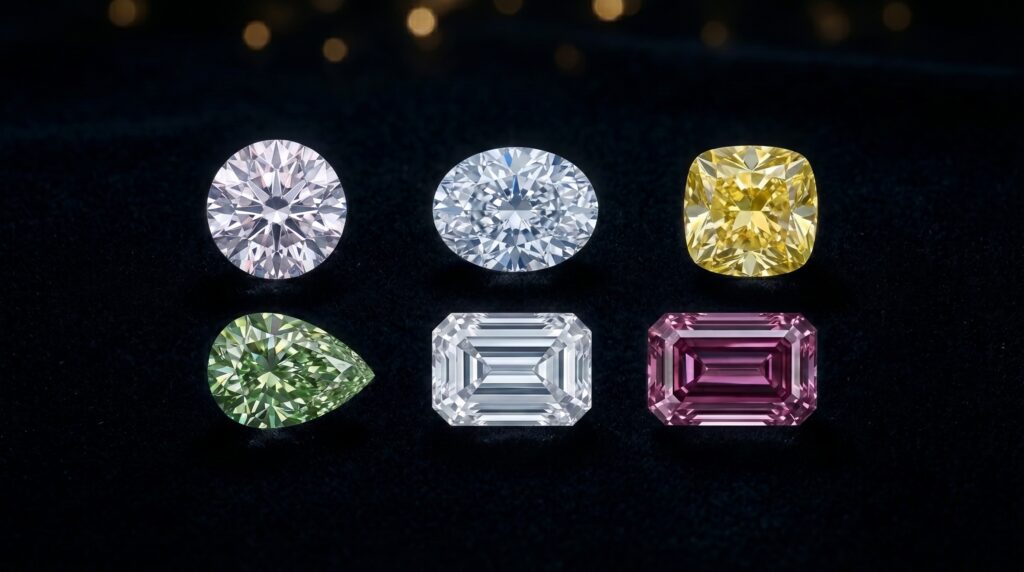
Indian suppliers are not all selling the same thing. Here is what the market actually looks like, broken down by buyer type and stone category.
1. Round Brilliant Natural Diamonds (D to J Color, VS to SI Clarity)
This is the highest-volume category for a reason. Round brilliants in the 0.50 to 2.00 carat range, individually certified by GIA or IGI, are what most US retailers need most. Indian suppliers cut these from rough with a direct-to-certification pipeline that has no equivalent in Western trading hubs. A VS2, G color, Excellent cut 1.00-carat round from a Surat cutting house and the same stone from a New York dealer are likely the same stone. The price difference reflects where you entered the supply chain.
2. Fancy Shape Natural Diamonds
Oval, cushion, elongated radiant, pear, emerald, and marquise cuts from Indian suppliers have caught up to international quality standards faster than most US buyers realize. Surat’s cutting talent for fancy shapes has improved significantly over the past decade, and output quality in the better houses now competes at the top of the global market. Fancy shapes sell at a 10 to 25 percent discount to comparable round brilliants, which is one reason they’ve grown so fast as center stones for engagement rings.
3. Investment-Grade Certified Natural Diamonds, 2 Carats and Above
Most retail guides skip this category. They shouldn’t. The 2-carat-plus segment is where sourcing directly from India makes the largest financial difference. GIA-certified stones at this weight from Indian suppliers can represent 20 to 30 percent savings versus the same stone purchased through a US dealer, who likely bought it from India originally. At this tier, cut quality is everything. Only consider AGS Ideal or GIA Excellent cut grades, and verify the certificate directly before any payment.
4. Natural Melee and Small Calibrated Diamonds:
Rounds and fancy shapes under 0.20 carats, sold in consistent calibrated parcels for pave settings, halos, and eternity bands. Indian suppliers dominate this segment globally. Price per carat is low, but the key variable is cut consistency across the lot. Request a sample of 20 to 30 pieces before committing to a full parcel order.
5. Rough Diamond Supply for Manufacturers:
A smaller but valuable category for manufacturers who want control over the cutting process. Indian rough suppliers source from Antwerp, Dubai, and directly from African mining partners. You need import knowledge and cutting capability to operate here, but the cost advantages for vertically integrated manufacturers are real.
6. Fancy Color Natural Diamonds:
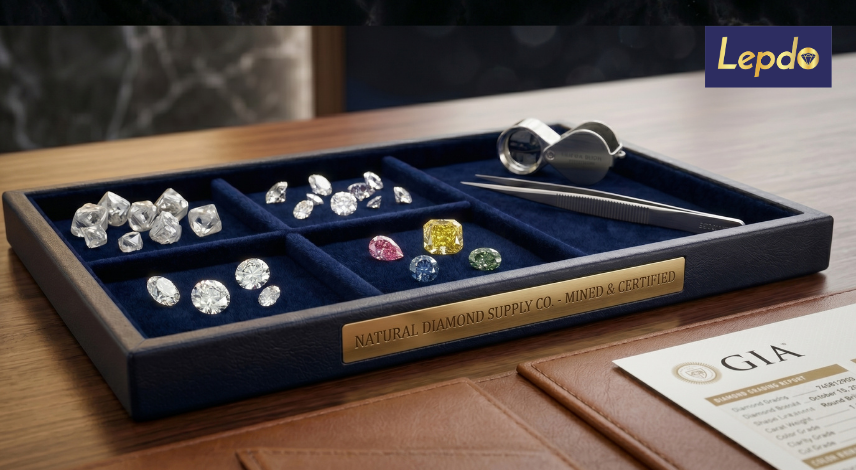
Certified natural pinks, yellows, blues, and greens. Rarer and priced accordingly, but India’s sorting and grading infrastructure for fancy colors has matured considerably. GIA Fancy Color Diamond Reports are the standard here. Do not accept lesser documentation for any colored natural diamond purchase above moderate value.
7. Certified Retail-Ready Parcels:
Indian suppliers increasingly offer curated 10 to 100-stone parcels, each individually certified, in a defined color and clarity range. This is how most quality-conscious US retailers now refresh inventory. The batch report model, where one certificate covers the whole lot, is a red flag for anyone selling at retail.
Natural Diamond vs Lab-Grown Diamond: Where They Actually Differ
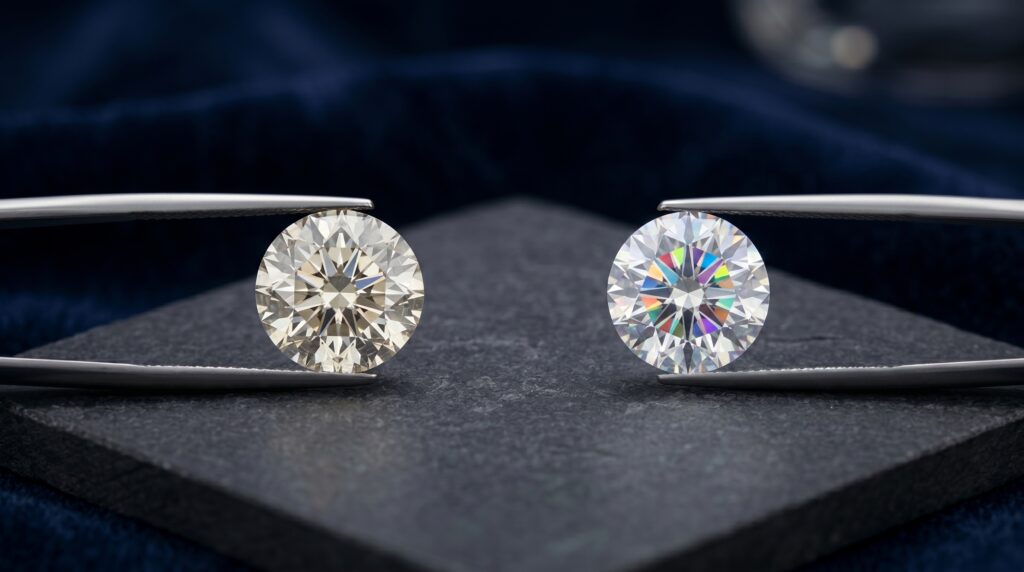
The question comes up in every sourcing conversation. Natural or lab-grown? The honest answer is that the right choice depends entirely on what the buyer values most.
| Factor | Natural Diamond | Lab-Grown Diamond |
| Origin | Mined from the earth over billions of years | Reactor-grown in days to weeks |
| Wholesale Price Per Carat | Higher; scarcity and mining costs drive pricing | 60 to 80% lower; prices have dropped sharply since 2022 |
| Resale and Long-Term Value | Established track record of value retention | Retail and resale values have compressed significantly |
| Certification | GIA, IGI, AGS all certify; GIA is the global benchmark | GIA and IGI certify lab-grown; IGI is most used in India |
| Best Application | Investment purchases, heirloom pieces, high-value inventory | Budget buyers prioritizing size, fashion and volume retail |
The financial gap between natural and lab-grown has narrowed the case for lab-grown as a value play. Lab-grown prices have dropped so much that the premium you pay for a natural diamond is no longer as steep relative to the visual result as it was four years ago. That said, if someone is buying a diamond they plan to resell or pass down, natural still holds the stronger position.
For current pricing data across both categories, the Lab-Grown vs Natural Diamond comparison at Lepdo Diamonds shows the actual market spread right now, not projections.
To be fair, lab-grown diamonds have genuinely opened fine jewelry to buyers who couldn’t previously afford a quality certified stone. That matters. But that’s a different conversation from natural diamond sourcing, and conflating the two serves neither buyer.
How to Choose the Right Natural Diamond for What You Actually Need
Choosing a natural diamond is not a purely technical exercise. It is about matching the stone’s character, size, and certification to the buyer’s real priorities. Here is a framework that works across both consumer and B2B contexts.
- Shape and visual personality: Round brilliants deliver the highest light return and are the most consistently graded shape for resale purposes. Oval and elongated radiant cuts look larger face-up and carry a modern energy that a lot of younger buyers prefer. Cushion and emerald cuts read vintage and architectural. Pick based on the wearer’s taste, not this year’s trend.
- Hand and finger compatibility: Elongated shapes like oval, marquise, and pear visually lengthen shorter fingers. Wider shapes like cushion and Asscher read larger face-up but suit broader hands proportionally better. Always consider the hand before recommending a shape to a retail customer.
- Setting compatibility: A natural diamond in a prong solitaire is under constant optical scrutiny. Strong cut grades and excellent symmetry are non-negotiable at this setting style. Bezel and channel settings are more forgiving and open up VS2 to SI1 clarity as a perfectly viable range without visible quality trade-off in the finished piece.
- Budget reality: Natural diamonds from Indian suppliers offer 15 to 30 percent savings over equivalent stones from Western dealers. That spread creates real room to move up a carat size or color grade within a fixed budget. A buyer who was looking at a 0.75-carat from a US retailer can often get a 1.00-carat of equal quality from an Indian source at the same or lower landed cost.
- Occasion and purpose: For engagement rings, prioritize GIA or IGI certification and cut quality above everything else. For anniversary and fashion pieces, VS2 to SI1 clarity certified stones deliver strong visual results at lower cost. For investment-grade purchases, restrict to GIA-certified D to F color, IF to VS1 clarity only.
- Natural vs lab-grown at the decision point: If origin, rarity, and long-term value are important to the buyer, natural diamond is the answer. If size within a strict budget is the primary driver and resale isn’t a concern, lab-grown is worth exploring. The Lab-Grown vs Natural Diamond guide at Lepdo Diamonds provides the current pricing spread to support that comparison with actual numbers.
Before you finalize your choice, get the GIA or IGI certificate number and run it yourself on the lab’s verification portal. If a supplier is reluctant to provide that number before payment, that tells you everything you need to know about them.
What Wholesale Buyers and Manufacturers Need to Know Before Ordering
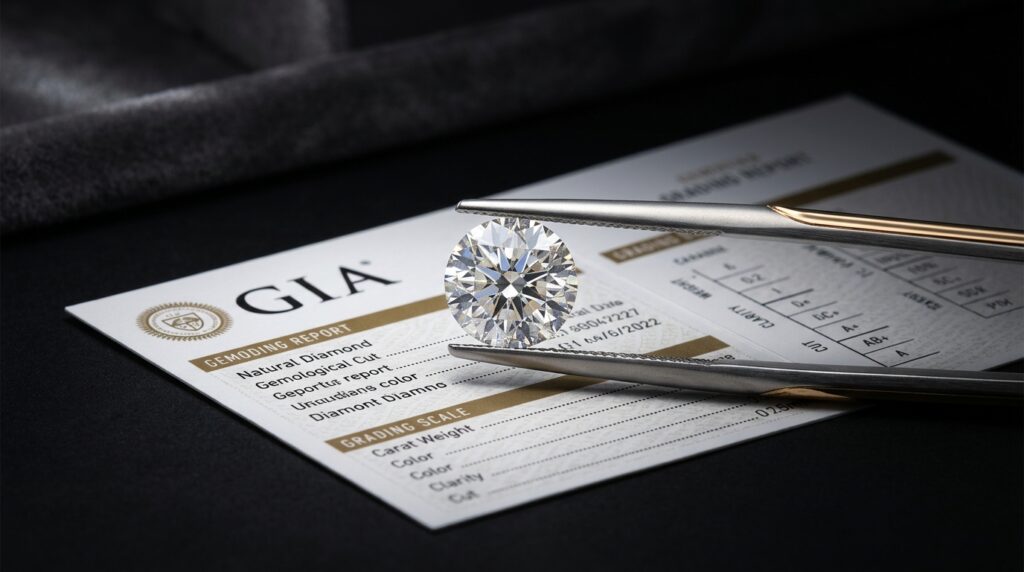
Retail sourcing logic does not transfer cleanly to B2B natural diamond purchasing. When you order 200 certified 0.50-carat rounds from an Indian supplier, you’re not just evaluating one stone’s grades. You’re betting that the grading holds consistently across the full parcel, that the supplier’s relationship with the certifying lab is clean, and that the stones you see in the sample represent what you’ll actually receive in the full shipment.
Most issues I’ve seen in B2B sourcing from India don’t come from dishonest suppliers. They come from buyers who didn’t define their standards precisely enough upfront. Here is what to lock down before placing any significant order: individual stone certificates for every piece (not a batch or parcel report), a sample of at least 20 to 30 stones from the production lot before committing to the full quantity, and a written disclosure statement confirming whether any post-growth treatments or color enhancements have been applied to any stone in the lot.
Understanding how the rough supply feeding Indian suppliers is priced is also useful context for serious B2B buyers. The Diamond Rough Market page covers how rough pricing works and why it affects the wholesale cost of finished stones in different size and quality ranges.
In my experience working directly with Indian natural diamond wholesalers, the fastest way to identify a trustworthy supplier is to ask them, unprompted, whether any stones in the lot have been treated. The good ones answer immediately and completely. The ones who pause, redirect, or say they’ll check and get back to you should not be on your approved vendor list.
Natural Diamond Jewelry Trends in the USA, 2026 to 2027
The US natural diamond market has been in an interesting position over the past two years. Lab-grown adoption has clearly taken share in the under-$3,000 retail bracket, but the premium segment has actually tightened. Buyers who choose natural in 2026 and 2027 tend to know exactly why they’re making that choice, and they’re buying better stones with stronger documentation than the average buyer was five years ago. For more detail on how consumer demand for natural stones is evolving, the Natural Diamond Demand data at Lepdo Diamonds provides useful context on where the US market is heading.
Design trends in natural diamond jewelry are moving toward solitaire settings that put the stone’s inherent character front and center. Yellow gold with colorless natural diamonds has surged since 2023, and three-stone natural diamond rings are outperforming lab-grown equivalents at the $5,000 to $12,000 retail price point. That is partly a value story and partly a provenance story. Buyers in that bracket increasingly want to know the stone’s origin.
Fancy shapes are driving the strongest demand growth. Oval natural diamonds in particular have seen sustained search interest following multiple high-profile engagement ring announcements covered by major US fashion media. The elongated cushion is a close second. What’s notable is that demand for these shapes in natural diamonds has held even as lab-grown fancy shapes have become far more affordable. Some buyers specifically want the natural version.
How to Evaluate a Natural Diamond from an Indian Supplier Before You Buy
When I assess a natural diamond from an Indian supplier, the first thing I look at is not the certificate. It is the pavilion depth percentage and table percentage. Those two numbers tell me immediately whether the cutter prioritized yield from the rough over light performance. Weight retention is a financial incentive for cutters. The buyer’s interest is brilliance and scintillation, and those two priorities frequently conflict.
You will want to pay attention to these five things before committing to any serious natural diamond purchase from India.
- Cut grades and proportions: For GIA-graded round brilliants, Excellent cut is the minimum standard for any premium purchase. Table percentages between 54 and 58, depth percentages between 61 and 62.5 produce the best combination of brilliance, fire, and scintillation. Stones outside these ranges usually reflect a yield-first cutting decision.
- Live optical performance: A certificate does not capture a stone’s energy in light. Request video under mixed lighting for any significant purchase, or, for B2B buyers, insist on in-person inspection of sample stones. Brilliance, fire, and scintillation should all be present and balanced, not artificially concentrated by a shallow pavilion that creates a single bright spot.
- Color under real conditions: The letter grade on a GIA certificate is assessed face-down against a white background under controlled light. Your customer will wear it face-up, in daylight, against their skin. Some G and H color natural diamonds show warmth in certain lighting conditions that doesn’t show on the certificate. View every significant stone face-up before committing.
- Clarity and natural inclusions: Natural diamonds have inclusions specific to their geological formation: feathers, crystal inclusions, needles, and clouds. VS1 to VS2 clarity natural diamonds are eye-clean in virtually every case. SI1 can be eye-clean in round brilliants but requires individual visual assessment in fancy shapes, where inclusions can fall in more visible positions.
- Certification verification before payment: Confirm the certificate number directly on the GIA or IGI verification portal before any money changes hands. Lepdo Diamonds builds real-time certificate verification into its sourcing process as standard practice, so buyers can confirm grade authenticity before a transaction is finalized.
Why Natural Diamond Suppliers in India Are Worth Sourcing Directly
Three things stand out after covering this in full. First, the cost advantage of sourcing natural diamond suppliers India direct is structural, not cyclical. India processes the world’s diamonds. That position is not changing. Buyers who continue routing purchases through Western intermediaries are paying a markup for a layer of the supply chain that adds no value to the stone they’re buying.
Second, the certification infrastructure has matured to the point where buying from India carries no more documentation risk than buying from a US dealer, and often considerably less, because the best Indian suppliers certify everything individually and can verify it in real time. Third, the natural diamond market is not in decline. It is differentiating. The buyers choosing natural in 2026 are more intentional, better informed, and more willing to pay a fair price for provenance and quality than the average buyer was five years ago.
If you want to compare current pricing across certified natural stone categories, the Diamond Price guide and the Diamond Supply Chain overview at Lepdo Diamonds give you the market context to benchmark any supplier you’re evaluating against what the market actually looks like right now.
The diamond trade has always run through India. The difference now is that US buyers finally have the tools and access to enter that supply chain on better terms.
Frequently Asked Questions About Natural Diamond Suppliers in India
1. What are natural diamond suppliers in India?
Natural diamond suppliers in India are wholesalers, cutting houses, and trading companies that source rough mined diamonds from global markets, process them through India’s cutting and polishing infrastructure, and sell GIA or IGI-certified finished stones to buyers worldwide. Surat handles the vast majority of cutting volume; Mumbai’s Bharat Diamond Bourse is the primary trading center. Together they give India an unmatched position in the natural diamond supply chain.
2. Is buying natural diamonds from India cheaper than buying elsewhere?
Yes, consistently. Direct sourcing from Indian suppliers cuts 15 to 30 percent off what you’d typically pay through a US or European dealer for the same certified stone. India sits at the center of the global cutting and polishing pipeline, which means fewer intermediary markups between the rough and the buyer. The savings are most pronounced in the 1-carat-plus range and for fancy shape categories.
3. Which natural diamond shape looks the biggest?
Oval and marquise cuts look the largest face-up relative to carat weight because of their elongated outlines and shallow table geometry. A 1-carat oval consistently appears larger than a 1-carat round brilliant. Elongated radiant and pear shapes produce a similar effect. These shapes have surged in engagement ring popularity precisely because buyers get a more impressive visual result without paying for additional carat weight.
4. Does a natural diamond from India receive a GIA cut grade?
GIA assigns formal cut grades to round brilliants: Excellent, Very Good, Good, Fair, and Poor. Fancy shapes receive polish and symmetry grades but no formal cut grade from GIA. IGI does assign cut grades to popular fancy shapes like oval and cushion, which is one reason IGI certification has become the practical standard for B2B buyers managing retail-facing inventory in fancy shape categories.
5. What is the biggest quality risk with natural diamonds from India?
Misrepresented clarity or color grades in uncertified or batch-certified parcels from smaller suppliers is the most common issue. Always require individual GIA or IGI certificates per stone. A close second risk is undisclosed treatments. Fracture filling and HPHT color enhancement both affect long-term value and must be disclosed on the grading report. A supplier who can’t immediately confirm treatment status for every stone should not be used.
6. Are lab-grown diamonds as good as natural diamonds from India?
Chemically and physically identical, yes. The differences are origin, price trajectory, and resale value. Lab-grown diamond prices have dropped significantly since 2022, which has compressed resale value across the category. Natural diamonds have a longer track record of holding value at the consumer level. For buyers who view a diamond as a long-term asset, natural is the stronger choice. For buyers who prioritize size within a budget and don’t plan to resell, lab-grown is worth comparing.
7. Which natural diamond is best for an engagement ring?
A GIA-certified round brilliant in D to G color and VS1 to VS2 clarity remains the most straightforward engagement ring choice for long-term satisfaction. That said, oval and cushion natural diamonds are a genuinely strong alternative. They look larger face-up, cost less per carat than rounds, and have shown strong cultural momentum in the US market. For a solitaire setting, cut quality is the single most important factor regardless of shape.
8. How do I find a reliable natural diamond supplier in India?
Look for individual GIA or IGI certificates on every stone, published pricing you can cross-reference against Rapaport, documented grading consistency across repeat orders, and a real record of supplying US buyers at scale. Lepdo Diamonds is a verified source with a track record of supplying certified natural diamonds to US wholesale and retail buyers at transparent pricing.