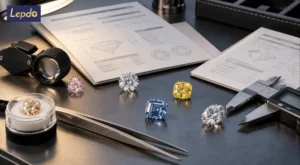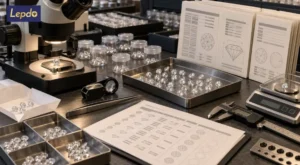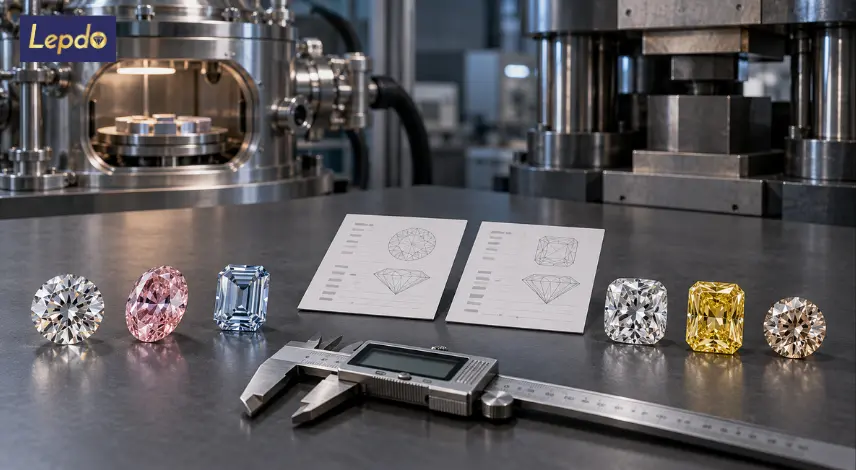

HPHT vs CVD diamonds differ primarily in their laboratory growth processes, treatment histories and potential production characteristics. For wholesale procurement, neither method is automatically superior. Buyers should compare color and clarity distribution, grading documentation, treatment disclosure, dimensional consistency, supply reliability and total landed cost before approving large orders.
HPHT vs CVD diamonds can create a purchasing challenge that becomes expensive when a small sample order turns into hundreds of stones for jewelry production.
Two lab-grown diamonds may share the same carat weight, color grade, clarity grade and shape, yet their manufacturing histories can differ. Those differences do not automatically make one diamond better, but they can affect treatment disclosure, inventory planning, supplier documentation and the consistency of a wholesale order.
For procurement teams, the commercial question is not simply which laboratory growth method produces a better diamond. It is whether a supplier can repeatedly deliver stones that satisfy the same specifications across multiple shipments.
A single attractive diamond cannot demonstrate the consistency of an entire parcel.
Understanding HPHT vs CVD diamonds therefore requires evaluating manufacturing methods alongside grading, appearance, tolerance limits, production planning and purchasing risk.
The following comparison focuses on the factors that matter most to jewelry retailers, wholesalers, manufacturers and international sourcing teams.
HPHT vs CVD Diamonds for Wholesale Purchase
Real laboratory-grown diamonds are made from both high-pressure, high-temperature (HPHT) and chemical vapor deposition (CVD).
These diamonds possess the crystalline carbon structure and the physical properties which are characteristic of diamond. The difference is the way the crystals grow and what characteristics can be developed in production.
The diamond growth process is the technical basis for understanding those differences for wholesale buyers comparing HPHT vs CVD diamonds.
How Are CVD Diamonds Made?
In the HPHT vs CVD diamonds comparison, CVD diamonds are produced through chemical vapor deposition.
Diamond seed substrates are put into a controlled reaction chamber during this process. A plasma process activates carbon-containing gases, commonly including methane. Carbon deposits on the substrates, so that diamond material can grow.
The crystal characteristics are affected by the operating conditions, the growth duration and the reactor controls.
Depending on the production conditions, CVD material may be brownish, show strain-related features or other defects. Some stones are subsequently treated to improve their appearance.
This is important for procurement teams dealing with CVD diamond manufacturers in India to differentiate between as-grown material and polished diamonds that have gone through further processing.
The commercially important variables are final color, clarity, treatment history, polishing quality and the supplier’s ability to maintain specifications.
How Are HPHT Diamonds Created?
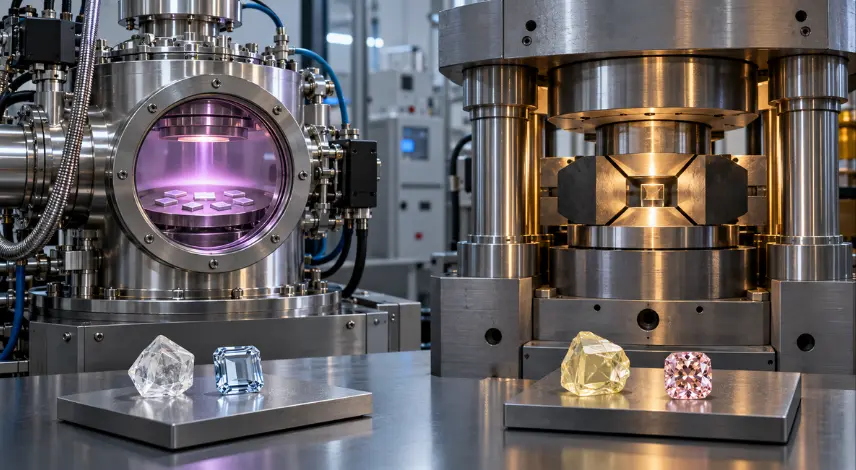
For HPHT vs CVD diamonds, HPHT stones are made in controlled environments by applying high pressure and high temperature.
This process employs specialized equipment to establish an environment in which carbon may crystallize as diamond, often aided by a metallic solvent or catalyst.
Impurity incorporation, crystal development and possible internal characteristics are determined by growth conditions.
Some diamonds grown by HPHT may contain metallic inclusions and may show growth-related fluorescence or phosphorescence characteristics.
These are possible features, not universal properties of every HPHT stone.
Professional buyers evaluating HPHT diamond manufacturers in India should concentrate on finished-diamond quality rather than assuming that the manufacturing method guarantees a particular grade.
Why Growth Method Alone Cannot Determine Quality
The HPHT vs CVD diamonds comparison is frequently reduced to a claim that one method is naturally superior.
That approach is insufficient for professional sourcing.
Both methods can produce attractive, high-quality polished diamonds. Individual results depend on production conditions, material characteristics, cutting, polishing and subsequent treatments.
A poorly cut diamond from either method can perform less attractively than a well-proportioned alternative.
For HPHT vs CVD diamonds, growth method should therefore be treated as one specification among several rather than as a substitute for inspecting the actual stones.
HPHT vs CVD Diamonds: Commercial Comparison Table
| Procurement Factor | CVD Diamonds | HPHT Diamonds |
|---|---|---|
| Growth technology | Chemical vapor deposition in a controlled reactor | High-pressure, high-temperature crystal growth |
| Post-growth treatment | HPHT treatment may be used to improve color | Additional treatment may occur depending on the material |
| Possible internal features | Growth-related strain, graphitic inclusions and other defects | Metallic inclusions and growth-sector-related features may occur |
| Color and clarity supply | Depends on growth conditions, treatment and available sorted inventory | Depends on production conditions and available sorted inventory |
| Wholesale suitability | Evaluate price, verified specifications and replenishment consistency | Evaluate price, verified specifications and replenishment consistency |
The important conclusion from HPHT vs CVD diamonds is that manufacturing characteristics provide useful background, but actual purchasing decisions require measurable specifications and supplier-level evidence.
A procurement team should not approve a large parcel solely because the seller describes one method as superior.
1. Color Consistency Across Large Diamond Orders
Color consistency in HPHT vs CVD diamonds becomes especially important when diamonds are purchased for repeated jewelry designs.
A retailer purchasing stones for individual engagement rings might be okay with a little variation from one order to the next.
A manufacturer producing matched earrings, multi-stone bracelets or coordinated collections may require tighter color control.
Why Individual Grades Are Not Enough
Suppose a buyer orders a parcel within the F to G color range.
That specification alone does not tell the buyer how many stones will fall into each grade.
A parcel containing mostly F-color diamonds may behave differently in a matching workflow from one dominated by G-color diamonds, even though both satisfy the stated grade range.
When buying HPHT vs CVD diamonds, this distribution is more relevant than general claims about which growth method makes whiter stones.
Procurement teams need to ask for the actual grade split, not just the range that is allowed.
Comparing Colors in the Same Conditions
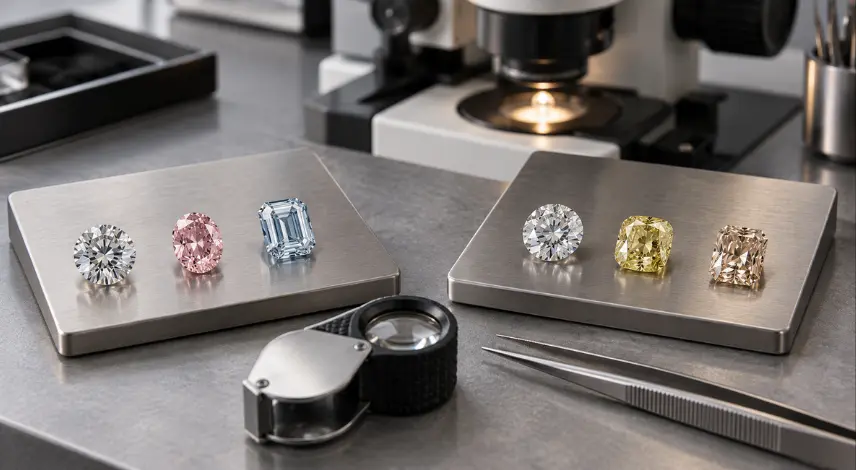
Professional buyers should evaluate representative stones under similar lighting and viewing conditions.
Useful checks include:
- Color-grade distribution within each parcel.
- Visible tint differences among stones with similar reported grades.
- Consistency between sample stones and delivered inventory.
- Requirements for matching stones in a finished jewelry design.
- Procedures for replacing stones outside agreed specifications.
The diamond color grade is essential when assessing HPHT vs CVD diamonds, but a color grade does not automatically describe every visible nuance of appearance.
For large orders, the ability to obtain matching replacement inventory may be as important as the color of the initial parcel.
2. Clarity Distribution and Inclusion Characteristics
Clarity is another factor that purchasing teams should evaluate at parcel level when comparing HPHT vs CVD diamonds.
A wholesale order described as VS clarity may contain stones with different inclusion types, positions and visibility.
Those differences matter when a manufacturer needs a uniform appearance or when certain inclusions create additional cutting, setting or inspection concerns.
Possible Features in CVD and HPHT Diamonds
CVD-grown material can contain non-diamond carbon inclusions, strain-related characteristics and other growth-related features.
HPHT-grown diamonds can contain metallic inclusions or characteristics associated with different crystal growth sectors.
Neither observation means every CVD or HPHT diamond contains those specific features.
The presence, visibility and commercial significance of inclusions must be assessed stone by stone.
A complete understanding of diamond clarity allows procurement teams to make sense of the difference between a reported grade and the visual effect of an inclusion.
Parcel Management of Clarity
Buyers should check for clarity consistency by sample inspections and reliable grading data for HPHT vs CVD diamonds.
Important questions include whether inclusions remain visible face-up, whether the selected grade range suits the intended jewelry and how substitutions will be handled.
When ordering large quantities, suppliers should define how they will manage stones with different inclusion characteristics inside the same clarity range.
Procurement teams may also create separate acceptance rules for center stones, accent stones and matched pairs.
The objective is not to demand flawless diamonds for every application. It is to obtain predictable quality suited to the intended product.
3. Post-Growth Treatment and Disclosure Requirements
Treatment disclosure is one of the most technically important elements of HPHT vs CVD diamonds.
A frequent misunderstanding is that every diamond described as HPHT-grown has been treated after growth, while every CVD diamond is untreated.
These statements are incorrect.
HPHT can describe a diamond growth process, but it can also describe a treatment applied to a diamond that was originally grown through another method.
HPHT Growth vs HPHT Treatment
An HPHT-grown diamond forms under high-pressure, high-temperature conditions.
An HPHT-treated CVD diamond begins as CVD-grown material and subsequently undergoes high-pressure, high-temperature processing.
For HPHT vs CVD diamonds, the distinction matters because growth origin and post-growth treatment are separate pieces of information.
GIA’s gemological research has documented CVD-grown diamonds that underwent HPHT treatment to modify their color appearance.
What Procurement Teams Should Request
When evaluating HPHT vs CVD diamonds, a purchase specification should distinguish between growth method and any disclosed post-growth treatment.
The supplier’s documentation should address the growth method where known, treatment status where determinable, grading report details and any specific contractual treatment restrictions.
Buyers should not assume that the absence of a treatment statement proves a diamond is untreated.
If treatment restrictions are commercially important, procurement teams should establish acceptable documentary evidence before confirming an order.
The technical explanation of HPHT treatment is particularly useful when developing clear supplier disclosure requirements for HPHT vs CVD diamonds.
4. Certification and Grading Report Consistency
Professional buyers assessing HPHT vs CVD diamonds should never treat growth method as a substitute for independent gemological assessment.
Certification, more precisely laboratory grading or identification reporting, helps buyers evaluate the properties of individual diamonds.
For HPHT vs CVD diamonds, the report should be interpreted according to the issuing laboratory, report type and services actually provided.
IGI Reports for Lab-Grown Diamonds
The International Gemological Institute (IGI) provides laboratory-grown diamond reporting services.
Depending on the report, relevant information can include the diamond’s measurements, weight, color, clarity and other grading characteristics.
IGI states that growth method and the presence of treatments may be recorded in the comments section upon request.
Procurement teams should select their reporting service to ensure it contains the information required by their purchasing policy.
The buyers of IGI certified diamonds should always check the report and ensure that the documentary records and the physical inventory are in sync.
GIA Laboratory-Grown Diamond Assessments
GIA revised its services for colorless to near-colorless laboratory-grown diamonds effective October 1, 2025.
Its Laboratory-Grown Diamond Quality Assessment uses the overall classifications Premium and Standard rather than the traditional detailed natural-diamond grading terminology for that service.
This matters for procurement because reports from different laboratories or different reporting systems may not provide identical fields.
Buyers should confirm what each report actually establishes rather than treating every laboratory document as interchangeable.
Report-to-Stone Reconciliation
For large orders of HPHT vs CVD diamonds, diamond certification checks should be incorporated into incoming quality control.
An effective procedure includes matching available report numbers, inscriptions, weights, shapes and dimensions against inventory records.
Any mismatch should be resolved before the stones enter manufacturing or retail inventory.
In HPHT vs CVD diamonds sourcing, documentation consistency supports traceability, but a grading report does not guarantee that every stone in a commercial parcel has identical visual characteristics.
5. Wholesale Pricing and Total Procurement Cost
Price comparisons for HPHT vs CVD diamonds require more care than comparing two advertised price-per-carat figures.
Wholesale pricing can vary with size, shape, grade, availability, treatment history, supplier terms and other commercial variables.
There is no reliable universal rule that CVD diamonds must always cost less than HPHT diamonds or the reverse.
Compare Equivalent Specifications
Before comparing quotations, procurement teams should standardize the purchasing requirements.
For example, both quotations should cover the same:
- Carat-weight range and permitted variation.
- Diamond shape and dimensional tolerances.
- Color and clarity grades.
- Cut, polish and symmetry specifications.
- Reporting and treatment-disclosure requirements.
- Delivery terms, replacement policy and commercial conditions.
The lab-grown diamond wholesale price for HPHT vs CVD diamonds depends on multiple variables that cannot be isolated from the offered product specification.
Calculate More Than Purchase Price
HPHT vs CVD diamonds should be compared on total usable inventory cost rather than the quoted cost of the shipment alone.
A lower initial quotation may become less attractive if the buyer receives excessive grade variation, unsuitable dimensions or numerous stones requiring replacement.
Useful cost categories include inspection, grading documentation, freight, applicable duties, rejected inventory, replacement handling and manufacturing losses.
For an international buyer, the total landed cost also depends on the agreed delivery terms and the regulations applicable to the shipment.
The preferred offer is the one that satisfies the required specifications at an acceptable total cost and sourcing risk.
6. Batch Consistency and Manufacturing Repeatability
For jewelry manufacturers comparing HPHT vs CVD diamonds, consistent specifications often matter more than the production technology used to grow a diamond.
A supplier may deliver an excellent first sample but struggle to reproduce the same inventory profile across subsequent purchases.
That problem becomes serious when a brand needs identical product specifications over several production cycles.
Millimeter and Shape Tolerances
Diamonds with the same carat weight may have different dimensions because of their proportions.
An oval diamond, for example, may have a different length-to-width ratio from another oval of the same weight.
For standardized jewelry production, those variations can affect setting compatibility, visual uniformity and manufacturing efficiency.
HPHT vs CVD diamonds should therefore be evaluated against the same dimensional acceptance rules.
For products that need special outlines, buyers can see the fancy shape diamonds available and set different tolerances for each shape.
A procurement specification should use actual measurement ranges, not just descriptions of weight and shape.
Batch Refill and Approval
Consider a jeweler purchasing diamonds for a repeating pendant design.
The first order is correct in size, color and clarity. The second batch consists of stones with different depth ratios, but the weight range remains the same.
The buyer may have to adjust settings, sort further or reject inventory.
That is why the quality of the first batch and the consistency of replenishment need to be considered when procuring HPHT vs CVD diamonds.
A realistic supplier assessment should determine whether the vendor can continue to meet the agreed specification for future orders.
Approved reference samples, specifications at the shipment level and written substitution rules can reduce inconsistency for ongoing supply programs.
7. Lead Times, Supply Planning and Inventory Risks
The bigger the wholesale order for HPHT vs CVD diamonds, the more complex the production planning gets.
A supplier’s ability to manufacture or source a suitable sample does not automatically mean that the same specifications are available in commercial quantities.
Production schedules and finished inventory may impact availability of various combinations of color, clarity, weight and shape.
Validation of Real Available Inventory
When comparing HPHT vs CVD diamonds, procurement teams should seek realistic information about the inventory available for the current order.
A useful supply proposal distinguishes between finished stock ready for inspection, stones awaiting grading, stones undergoing polishing and future production.
These categories carry different scheduling and delivery risks.
Don’t be misled by unverifiable claims about manufacturing capacity or guaranteed replenishment.
Create an Order Consistency Procedure
Procurement teams should create acceptable inventory alternatives for recurring wholesale purchases before a supply shortage occurs.
The plan could spell out which grades are interchangeable, which shapes need to be an exact match, and if stones from different growing methods can be mixed.
If a retailer has separate lines of product, they could allow either CVD or HPHT stones if they meet the same contractual specifications.
Another buyer may need one declared growing method for inventory control or product-description consistency.
Neither approach is necessarily right.
The decision should be consistent with the purchasing agreement, end-use requirements and the company’s disclosure policy.
8. Diamonds: Their Use Determines Their Choice
The choice of growth method for HPHT vs CVD diamonds cannot be made separately from the desired product.
Different types of jewelry require different levels of matching, clarity, sizing and traceability.
Solitaire Engagement Rings & Jewelry
With a solitaire, the individual appearance and quality of the cut are especially important.
So a well-cut stone of appropriate color, clarity and dimensions might satisfy the needs of the buyer whatever its CVD or HPHT origin.
You can start by selecting initial inventory in the loose diamonds category. Then check the individual stone’s specification.
For HPHT vs CVD diamonds in solitaire procurement, prioritize the appearance and report of the selected diamond rather than generalized claims about its growth process.
Matching Pairs and Multi-Stone Jewelry
Matching earrings, bracelets and multi-stone designs place greater demands on inventory uniformity.
Two diamonds with identical laboratory grades can still differ visibly in outline, proportions or appearance.
Professional buyers should therefore establish matching criteria beyond the standard grading fields.
When fancy color diamonds are involved, color distribution and the permitted range of hue, tone and saturation may require additional controls.
Colored diamonds should not be evaluated using assumptions intended for colorless material.
Specialized Cuts and Custom Collections
Custom jewelry can require calibrated dimensions, unusual outlines or nonstandard proportions.
Buyers evaluating unique cut diamonds should pay particular attention to cutting feasibility and repeatability.
The original growth method may influence what rough material is commercially available, but the final decision should follow the proposed polished-stone specifications.
For custom collections, the most important question is whether the supplier can deliver stones compatible with the jewelry design.
9. Supplier Due Diligence for Large Orders
HPHT vs CVD diamonds purchasing requires a supplier evaluation process that extends beyond product photographs and quotations.
A professional sourcing team buying HPHT vs CVD diamonds should establish how the supplier verifies diamonds, sorts parcels, maintains documentation and addresses deviations.
Essential Checks Before Confirming a Purchase Order
- Confirm the required CVD or HPHT growth method and permitted substitutions.
- Specify acceptable color and clarity grades, including parcel distribution.
- Define carat, shape, proportion and millimeter tolerances.
- Require the agreed treatment disclosures and grading documents.
- Verify sample-to-order consistency and inspection procedures.
- Confirm report numbers and inventory identification methods.
- Agree on price basis, shipping terms and documentation responsibilities.
- Establish rejection, replacement and dispute-resolution conditions.
- Obtain written confirmation of availability and delivery commitments.
- Document the requirements for future repeat orders.
The supplier’s approach to quality control may have a more direct impact on purchasing reliability than the laboratory growth method itself.
For B2B buyers, predictable documentation and clear commercial responsibilities are two key ingredients of a reliable sourcing relationship.
Why Supplier Transparency is Important
Commercial transparency means explaining what has been verified, what characteristics remain to be inspected and what contractual specifications the seller accepts.
We cannot expect a supplier to produce consistency when the buyer has not defined what consistency means.
A well-structured process on lab grown diamond supplier can help buyers clarify their purchasing expectations.
LEPDO Diamonds is a Surat-based diamond business that offers lab-grown diamonds for B2B needs.
The sourcing inquiry should clearly state the buyer’s intended application, quantity, quality range and documentation expectations so that the available options can be measured against those requirements.
Brijes Pansuriya talks about entrepreneurship, industry knowledge and long-term business relationships for more business context.
10. Decision Framework for Practical Procurement Teams
Instead of starting with a preferred manufacturing technology for HPHT vs CVD diamonds, procurement teams can use a specification-first evaluation framework.
Step 1: Define the Output Required
Determine final jewelry application, dimensions, grade ranges, matching requirements and acceptable cost.
The spec should separate out what is a must and what is a preference.
Step 2: Like-for-Like Comparison of Quotations
For HPHT vs CVD diamonds, ask suppliers to quote stones to the same specification.
Do not compare an unrestricted parcel with a tightly calibrated parcel as if the offers are the same product.
Step 3: Review Treatment and Grading Records
Check that growth method is documented and post-growth treatment information meets purchasing requirements.
Check the reporting system used and the available fields.
Step 4: Examine Representative Samples
Evaluate the stones as to their visual characteristics, size and uniformity of quality.
For large orders, you might consider specifying a suitable sampling and acceptance procedure in advance.
Step 5: Assess Supply Continuity
Confirm what specifications can be repeated and how inventory shortages, substitutions or quality deviations will be handled.
Step 6: Evaluate the Overall Commercial Outcome
The final comparison should integrate usable inventory cost, compliance with specifications, quality of documentation and supply reliability.
The choice between HPHT vs CVD diamonds should be based on verified specifications, commercial suitability and the supplier’s ability to maintain consistent quality across orders.
HPHT vs CVD Diamonds Frequently Asked Questions
1. CVD or HPHT diamonds: Which is better for buying in wholesale?
There is no better way of wholesale growth either way. The right choice is a function of color, clarity, dimensions, reporting needs, disclosure of treatment, availability and total cost.
In HPHT vs CVD diamonds procurement, buyers should compare like specifications and evaluate representative inventory. Repeat-order consistency and supplier reliability can be more important than how it’s grown.
2. Which is cheaper in large quantities, CVD or HPHT?
In an HPHT vs CVD diamonds comparison, CVD diamonds aren’t necessarily cheaper than HPHT diamonds. Prices are based on grade, weight, shape, treatment history, availability and supplier terms.
Buyers should request quotes for the same specifications on a comparable basis and consider documentation, shipping, inspection and replacement costs.
A low attractive unit price does not mean lowest total usable inventory cost.
3. Can HPHT and CVD diamonds be graded similarly for color and clarity?
Yes. A diamond grown by either method can achieve similar color and clarity grades when compared to each other under the same applicable grading system.
But stones of the same grades may still have different inclusion, proportion or visual characteristics.
Physical inspection, dimensions and appearance should therefore be included in matching requirements and not be left to grade labels alone.
4. Are CVD diamonds always treated by HPHT?
No. Some CVD diamonds are treated with HPHT after they are grown to improve their color. Others may not need this treatment.
The treatment requirements depend on the original material and its manufacturing characteristics.
Professional buyers should distinguish between CVD growth and subsequent HPHT treatment and ask for the applicable disclosure information rather than assume every CVD stone has been treated.
5. How can a buyer tell whether a diamond is HPHT-grown or CVD-grown?
For HPHT vs CVD diamonds, specialized gemological testing can reveal growth-related characteristics associated with each production method.
Labs can combine spectroscopy and specialized fluorescence imaging with other observations.
Buyers should review the laboratory document and see if identification of growth method is included.
Visual inspection alone is not an adequate substitute for proper laboratory testing.
6. Is certification on lab grown diamonds a guarantee of consistency for bulk orders?
No. Certification or lab reporting of lab-grown diamonds usually includes the evaluation of some characteristics of individual stones or the merchandise covered by a particular service.
It does not necessarily guarantee the consistency of a whole shipment.
Buyers should set their own parcel tolerances, sampling procedures, documentation checks and contractual remedies for stones that do not meet the agreed specification.
7. Is it possible to have a mix of CVD and HPHT diamonds in one wholesale parcel?
They may be included in the same commercial order, if permitted by the buyer’s specifications and disclosure requirements.
Where necessary, the supplier should correctly document the growing methods and keep the agreed quality characteristics.
If you want only one method of growth, then you should specifically prohibit substitutions or mixed-method parcels in the purchase agreement.
8. What is the biggest risk in choosing HPHT versus CVD diamonds for large orders?
The biggest practical danger is buying to an incomplete spec, rather than picking a particular growth method.
Inventory problems can arise with HPHT vs CVD diamonds orders due to unclear disclosure of treatments, inconsistent sizing, unpredictable distribution of grades and unsupported claims of replenishment.
Those risks can be reduced by written specifications, representative sample approval, appropriate documentation and agreed replacement procedures.
Strategic Takeaways for B2B Diamond Buyers
When comparing HPHT vs CVD diamonds, it is important to first consider the desired jewelry application and wholesale order requirements.
Growth technology influences manufacturing characteristics but it does not alone determine cutting quality, commercial suitability or procurement reliability.
For large buying programs, the priority must be measurable specifications including distribution of color and clarity, dimensions, disclosure of treatment and report requirements.
The second must be the consistency of suppliers. A competitive initial quotation is of little value in the case of repeated orders if the approved inventory does not match.
The third priority is the general commercial value. Besides the purchase price, buyers must take into account usable yield, documentation, delivery arrangements and replacement responsibilities.
A disciplined HPHT vs CVD diamonds procurement strategy selects diamonds based on documented suitability and reliable supply, not generalized assertions about a growth method.