
CVD diamonds are laboratory-grown diamonds created through Chemical Vapor Deposition, where carbon deposits onto diamond seeds inside a controlled reactor. For B2B buyers, growth method alone does not determine quality or value. Manufacturing consistency, cut, transparency, certification, pricing terms, treatment disclosure, batch calibration, and supplier due diligence all matter.
CVD diamonds may seem straightforward on a quotation sheet, but things can get complicated with repeated orders. Two diamonds on the same quotation may differ in transparency, make, treatment history, calibration, consistency, and other characteristics that may not be captured by the quotation alone.
When thinking about CVD diamonds in the context of business-to-business diamond purchases, repeated orders should not be treated as if every parcel were a uniform commodity. The key question is whether the growth, processing, sorting, and supply processes are controlled well enough to deliver a repeatable commercial product.
What Are CVD Diamonds?
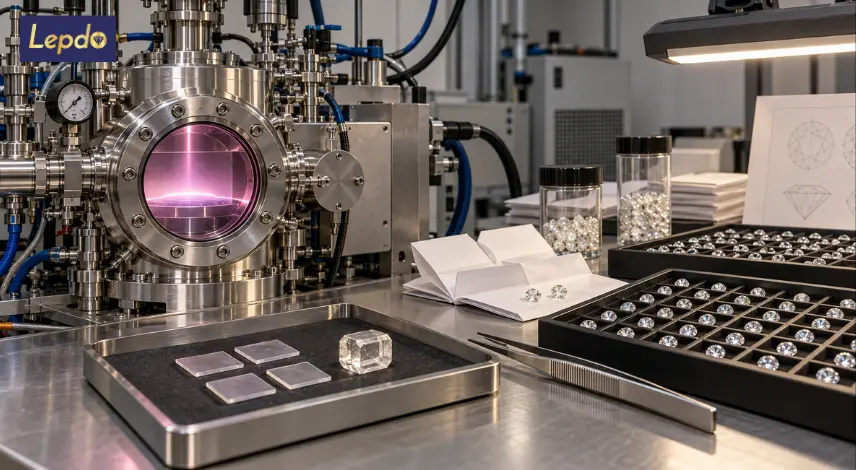
CVD diamonds are diamonds created through Chemical Vapor Deposition. In this process, a carbon-bearing gas is broken down inside a controlled reactor, and carbon species deposit onto diamond seed plates. Over time, that deposited carbon forms additional diamond crystal.
The Gemological Institute of America (GIA) describes CVD growth as taking place in a vacuum chamber using hydrogen and a hydrocarbon gas, typically methane. Microwave energy can activate a plasma that supports diamond deposition. After growth, the rough still needs additional processing before it becomes a commercial polished stone.
In the eyes of the B2B buyer, there are still many variables after the stones have been created. These include post-growth treatment, cutting, polishing, grading, sorting, matching, and other factors that ultimately affect the quality and suitability of the finished stones.
When considering Loose Diamonds, the finished polish, measurements, appearance, and commercial fit should remain central to evaluation. Growth method identifies how the material was produced, but it does not replace finished-stone assessment.
What Is a CVD Diamond?
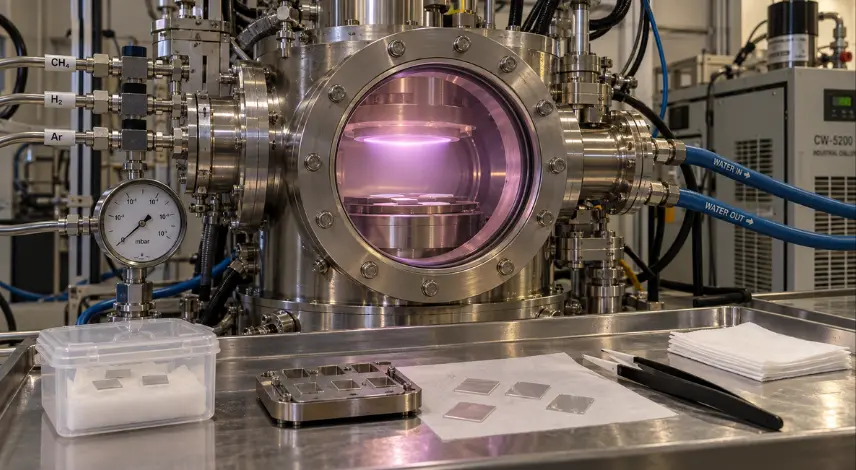
The stones are formed through several controlled steps. First, diamond seeds, often prepared as thin seed plates, are mounted on a substrate or holder. The seed plate is inserted into a growth chamber, and a plasma is generated from carbon-containing gas. Carbon-bearing species move toward the seed surface and contribute to diamond crystal growth.
Reactor design, gas chemistry, temperature, seed condition, and process stability can influence rough quality. Interruptions, restart cycles, or instability within the growth process may also affect the material produced.
The CVD diamond manufacturing process does not end when the rough leaves the reactor. Rough diamonds still need to be planned, sawn, cut, polished, inspected, graded, sorted, and prepared for sale.
A purchaser does not need to understand reactor chemistry in detail to evaluate the finished stones. However, a supplier should be able to communicate how rough and polished stones are differentiated, how treatments are disclosed, and which controls are used before shipment.
Post-Treatment and Growth Methods Are Distinct
It is common for some CVD-grown stones to undergo post-growth treatment. HPHT annealing may be used to modify color, but a diamond should not be described as HPHT-grown simply because HPHT treatment occurred after CVD growth.
GIA research has documented post-growth treatment in a significant portion of CVD material submitted to its laboratories. For trading organizations, the key issue is disclosure and correct interpretation rather than an assumption that post-treated material is automatically unsuitable for jewelry.
The guide on how are lab grown diamonds made provides useful context for understanding the CVD and HPHT growth routes. Growth method and later processing should still be considered separately.
CVD Diamonds vs HPHT Diamonds
Laboratory-grown diamonds produced through HPHT or CVD are both diamond material, but the manufacturing environments differ. HPHT uses very high pressure and high temperature, while CVD uses a lower-pressure gas-phase reactor.
The quality and suitability of the finished product should remain the concern of the buyer rather than the growth method alone.
| Factor | CVD | HPHT |
|---|---|---|
| Growth environment | Low-pressure gas-phase reactor | High pressure and high temperature |
| Starting setup | Diamond seed plates with carbon-bearing gas | Diamond seed with carbon source and metal catalyst system |
| Finished product focus | Disclosure, grading, cutting, consistency | Disclosure, grading, cutting, consistency |
| Main buyer concern | Repeatability of manufacturing and finished quality | Repeatability of manufacturing and finished quality |
| Treatment consideration | Post-growth treatment may occur | Post-growth treatment may also occur depending on material |
Treatment method should always be evaluated together with the other factors affecting the finished diamond. The table shows why CVD-grown and HPHT-grown diamonds should be compared through finished-stone performance and supplier controls rather than growth labels alone.
Finished Stone Performance Comes First
Acceptance standards for finished stones should be defined before growth terminology is used as a purchasing shortcut. These standards may include color, clarity, dimensions, carat weight, cut quality, transparency, fluorescence, tolerance limits, report type, and treatment disclosure.
For Fancy Shape Diamonds, additional parameters may include outline, length-to-width ratio, bow-tie strength, windowing, extinction, and facet pattern. Two stones can have similar grading attributes and still differ visibly.
The same applies to Unique Cut Diamonds, where expected performance, outline, facet design, tolerance, and visual standards need to be defined around the intended finished jewelry.
Insights on the Commercial Production of CVD Diamonds
CVD production may offer the potential for larger-scale output, but each parcel is not automatically uniform. Consistency across growth, cutting, polishing, grading, sorting, and packing affects commercial viability.
Before purchasing CVD-grown inventory, buyers should assess the manufacturer’s acceptance standards, tolerance limits, calibration practices, and process repeatability. Buyers researching Cvd Diamond Manufacturers India should compare more than production capacity. The ability to deliver repeatable polished specifications matters just as much.
Assessing the Quality of CVD Diamonds
Purchasers should assess the physical attributes of the diamonds and not rely only on a grading report. A report can describe specific characteristics, but the buyer still needs to confirm that the physical stone complies with the agreed acceptance and tolerance standards.
Quality assessment may include color, clarity, measurements, cut, polish, symmetry, transparency, fluorescence, treatment disclosure, report consistency, and visual appearance. The exact acceptance standard should be based on how the stones will be used.
Certified Diamonds can support a controlled procurement process when report information is combined with physical inspection and receiving controls.
Transparency, Strain, and Other Features
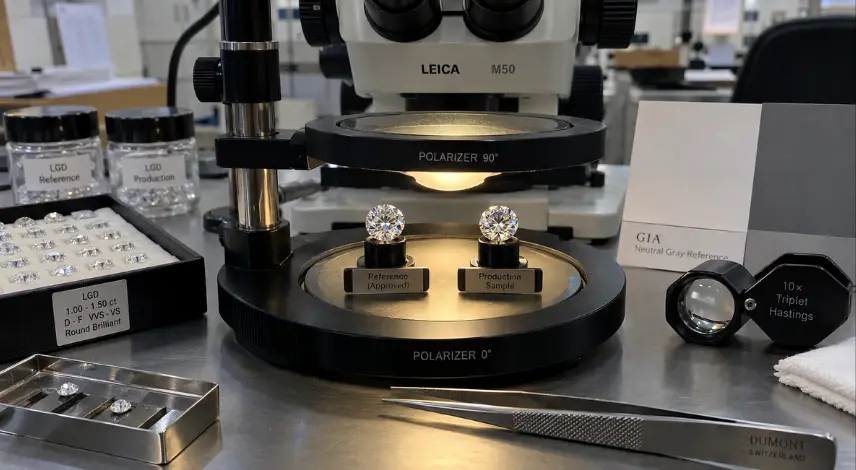
Some characteristics of CVD-grown material may not be obvious to an inexperienced buyer. Certain growth-related features, strain patterns, graining, or transparency differences may require appropriate equipment or professional examination before they can be interpreted correctly.
When evaluating samples, a buyer may compare stones against an approved reference and assess haze, graining, unusual body color, color distribution, transparency, and other visible characteristics.
A deviation from the commercial norm should be judged according to the agreed tolerance rather than automatically treated as a defect. A slight difference may have little consequence in a single center stone, while the same difference can matter significantly in a matched pair or calibrated jewelry program.
The key is conformity to the use case. The stones should be accepted or rejected against established standards rather than vague expectations.
Cut, Polish, and Shape
The appearance of the finished diamonds is strongly influenced by cutting. The relationship of facet to facet and the distribution of those facets affect how light enters, reflects, and exits the stone.
Round brilliant diamonds can often be filtered using cut grade, measurements, and proportions where the applicable report provides them. Fancy shapes require more visual evaluation because bow-ties, windowing, extinction, outline variation, and facet pattern may not be summarized adequately by one grade.
A repeat program should also define dimensional tolerances. Inconsistent measurements among stones of the same carat range can lead to differences in face-up size and finished-jewelry fit.
Report Evaluation
Laboratory-grown diamonds may be reviewed by several parties before reaching the consumer. Each party, from supplier to retailer, should understand what the report records and what it does not.
The stones should be traced so that origin representation, measurements, grading information, treatment disclosure, and inscriptions where applicable can be checked against the physical stone.
The importance of lab grown diamond certification importance increases when several commercial parties rely on the same documentation.
GIA revised its laboratory-grown diamond service effective October 1, 2025. Eligible colorless to near-colorless laboratory-grown diamonds are now assessed using Premium or Standard terminology rather than the natural-diamond color and clarity nomenclature previously used in its laboratory-grown reports. Buyers should therefore read current report terminology carefully and avoid interpreting all laboratory systems as identical.
The physical stones should still be inspected even when documentation is present.
Assessment of CVD Diamonds Price
CVD diamonds price depends on several factors, including carat weight, measurements, shape, clarity, color, cut quality, treatment history, grading documentation, and order requirements. Inventory position, parcel consistency, payment terms, replenishment capability, and supplier service can also affect a commercial quote.
While two parcels may appear similar at first glance, they can vary in ways that affect commercial value. One parcel may contain stones that are more consistently sized, cut, and matched, or may operate within narrower visual tolerances.
The most important question is what the quoted price actually includes.
Price Per Carat Is Just a Price Per Carat
A low price per carat can increase the total commercial cost if significant time is spent sorting, a large number of stones must be rejected, or finished jewelry must be reworked because the stones do not conform to specification.
The total cost of doing business should therefore be considered. This can include sorting, receiving inspection, payment terms, replacement procedures, report requirements, consistency, and other variables.
The Lab Grown Diamond Wholesale Price Guide can help buyers think about pricing, but no general price guide can capture the full cost of a specific B2B program.
CVD Diamonds Price vs Specifications
CVD diamonds price becomes meaningful only when specifications are comparable. Carat weight, color, clarity, cut, measurements, report type, treatment disclosure, visual tolerance, and other variables should be defined before one quote is compared with another.
Only when specifications are aligned can buyers compare pricing fairly. The same principle applies to consistency and repeat orders.
The lowest quote is not automatically the lowest-risk commercial option.
Assessing a CVD Diamonds Manufacturer
A cvd diamonds manufacturer should be evaluated in the same disciplined way as any manufacturing partner. The central question is whether the manufacturer can reliably deliver the required specifications over repeated orders.
Evaluation can include manufacturing capability, treatment disclosure, cutting and polishing controls, grading and certification workflow, sorting, packaging, report matching, tolerance management, and the process used when deliveries do not meet required standards.
Lepdo Diamonds is a manufacturer of CVD and HPHT laboratory-grown diamonds based in Surat, India. Buyers should still conduct their own assessment of specifications and acceptance standards and should not evaluate a manufacturer only by location or growth technology.
Supplier Due Diligence and Repeat Inspection
When evaluating potential suppliers, repeated inspection of production lots is important. Before shipment, suppliers should disclose relevant treatments, provide reports that correspond to the stones where reports are required, and control measurements and visual standards.
Suppliers should also have a defined process for handling parcels that fall outside tolerance. A first shipment may meet the required standard, but repeat orders should be evaluated against the same criteria.
How To Choose Lab Grown Diamond Supplier provides a framework for evaluating supplier factors beyond the diamond itself.
Where color origin or treatment is especially important, Fancy Color Diamonds should be purchased with clear disclosure and grading expectations.
Receiving Control and Identification
When evaluating stones for the first time, the purchaser should decide how the specification will be verified. Order size, intended use, supplier history, and risk level can influence the receiving controls used.
Controls may include report verification, inscription confirmation where applicable, measurement and weight checks, visual inspection, and specialized screening.
A basic thermal conductivity tester cannot reliably determine whether a diamond is natural or laboratory-grown because both are diamond. More advanced screening or laboratory testing may be required for origin identification.
The purpose of receiving control is not necessarily to repeat the entire laboratory grading process. It is to confirm that the goods received correspond to the commercial documentation and agreed purchase specification.
Batch Consistency and Calibration in Wholesale Procurement
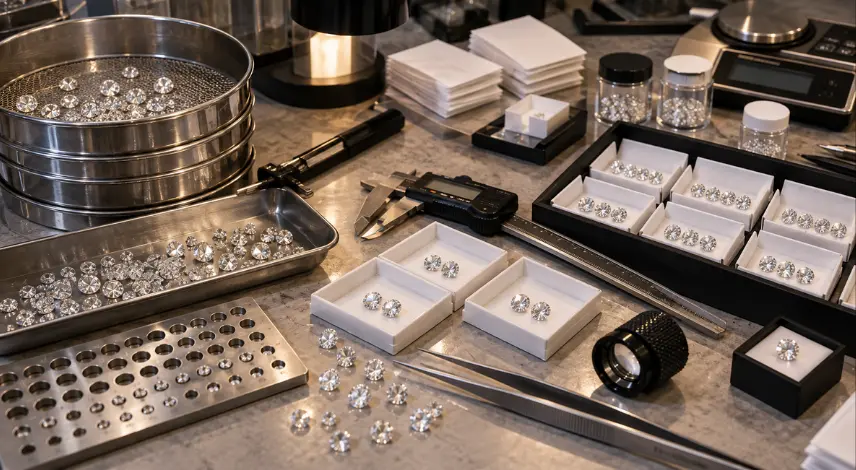
A controlled batch of CVD-grown stones may contain individually acceptable stones but still perform poorly in a repeat program if the range of dimensions, outline, color appearance, cut pattern, or transparency is too broad.
Depending on the program, calibration may be essential. Paired stones may need close visual matching. Three-stone jewelry may require controlled proportions. Solitaire programs may need standardized photography, mounting, and replenishment to maintain consistency.
Purchase Specifications
A buyer should determine the limits of acceptance before placing an order. Limits may be expressed through millimeter measurements, carat ranges, color, clarity, symmetry, polish, fluorescence, shape, report requirements, treatment disclosure, and visual criteria.
Tolerances should be based on the actual use case. Stones intended for calibrated settings may need tighter dimensional tolerances than stones used in one-of-a-kind jewelry.
The stones should be rejected against previously established criteria rather than personal preference that was never included in the buying specification.
Direct Sourcing, Memo, and Inventory Risk
Direct sourcing can give the buyer more control over material and specifications, but it can also require stronger receiving controls and inventory planning.
Memo or consignment can reduce immediate capital exposure, but it may provide less control over future availability or exact replenishment.
The most suitable procurement model depends on customization, order frequency, working capital, inventory strategy, supplier terms, and the buyer’s internal quality-control capability.
CVD Diamonds in 2026: Implications for the B2B Market
For a professional purchaser, the variables that increasingly differentiate CVD-grown inventory in 2026 are consistency, disclosure, report interpretation, make, calibration, supplier service, and what can be verified in each shipment.
GIA research has shown that post-growth treatment is common among CVD material submitted to its laboratories. That makes treatment disclosure and correct report interpretation commercially relevant.
The strongest suppliers are not differentiated by growth method alone. They are differentiated by the consistency and transparency of what they deliver.
Variability in Inventory Is More Relevant Than Grades Alone
Differences in the 4Cs do not always show how useful a parcel will be in a repeat inventory program. Report accuracy, millimeter consistency, visual matching, replenishment capability, and supplier responsiveness may be equally important.
The category should therefore be evaluated as an inventory program rather than as a collection of grades.
This is especially relevant for buyers that use standardized photography, standard mountings, calibrated jewelry programs, or like-for-like replenishment.
Pricing Discipline Matters More Than the Lowest Quote
Price pressure can encourage buyers to search for the lowest available quote, but the lowest quote can produce additional sorting, visual failures, rejection, or replenishment problems.
A stronger approach is to compare the quoted price with the written specification and evaluate vendor performance over time.
The lab grown diamond price war is relevant because sustainable procurement depends on usable inventory, not simply the cheapest number on a quotation.
The buyer’s goal is to purchase the stones at an acceptable price while understanding the commercial risk associated with the stones and the supplier.
Common Questions About CVD Diamonds
1. What Are CVD Diamonds?
CVD diamonds are laboratory-grown diamonds produced through Chemical Vapor Deposition. A carbon-bearing gas is activated inside a low-pressure reactor, and carbon deposits onto diamond seed plates to form diamond crystal. The resulting rough still needs to be processed, cut, polished, graded, and sorted before it becomes commercial inventory.
2. Are CVD Diamonds Real Diamonds?
Yes. CVD diamonds are diamond material, not simulants such as cubic zirconia or moissanite. Their origin is laboratory-grown rather than geological. Because laboratory-grown and natural diamonds can look similar, professional identification and appropriate documentation may be required when origin verification matters.
3. What Factors Influence CVD Diamonds Price?
CVD diamonds price can be affected by carat weight, dimensions, shape, cut quality, color, clarity, treatment history, grading documentation, order quantity, payment terms, supplier inventory, calibration, replenishment, and parcel consistency. Buyers should compare quotes based on identical or closely comparable specifications rather than relying on an average market number.
4. Which Is Better, HPHT or CVD Diamonds?
Neither method is automatically better for every application. HPHT and CVD diamonds can both be suitable for jewelry and wholesale programs. Buyers should compare finished quality, measurements, transparency, cut, grading, treatment disclosure, consistency, pricing, and supplier repeatability rather than using the growth method alone as a quality ranking.
5. Are Reports on CVD Diamonds Available?
Yes. Gemological laboratories can issue reports or assessments for laboratory-grown diamonds under their current service rules. Because laboratories may use different terminology and report formats, buyers should evaluate the specific information needed for procurement rather than assuming all reports communicate quality in the same way.
6. Can CVD Diamonds Be HPHT Treated?
Yes. CVD diamonds can undergo post-growth HPHT annealing to modify color. This does not change the original CVD growth method into HPHT growth. Growth method and post-growth treatment are separate facts, and both should be considered when disclosure is relevant to the commercial transaction.
7. What Should Buyers Ask When Evaluating a CVD Diamonds Manufacturer?
Buyers evaluating a cvd diamonds manufacturer should examine treatment disclosure, grading, lot and report matching, tolerance controls, visual standards, replacement procedures, order consistency, and repeatability. The manufacturer should be able to work against a defined specification that captures the requirements needed for repeated commercial supply.
8. How Can B2B Buyers of CVD Diamonds Minimize Risk?
Risk can be reduced by verifying treatment disclosure, comparing measurements, checking reports, evaluating supplier repeatability, defining tolerances, and comparing price only across similar products. CVD diamonds should be inspected to confirm that the agreed QC standards have been met rather than accepted only because a receipt or report describes a quality level.
Strategic Takeaways for B2B Buyers
CVD-grown diamond procurement requires knowledge of both manufacturing and commercial quality control. Buyers should establish standards for appearance, dimensions, grading, treatment disclosure, and tolerance before evaluating price.
Repeatability should then be tested across more than one shipment. A successful sample or first order does not by itself demonstrate long-term consistency.
Pricing should be analyzed only after the required standard has been defined. For B2B buyers, CVD diamonds become more manageable inventory when manufacturing controls, supplier transparency, report interpretation, calibration, and receiving inspection all support the same purchasing specification.
For in-depth market reports, trade sourcing guides, interactive Q&As, and expert gemological perspectives, explore the official Lepdo Group Medium platform and join the discussion on Lepdo Diamonds on Quora.