How to Source Loose Diamonds Wholesale from Surat India: Complete Guide for Jewelry Businesses
 by lepdogroup@gmail.com
3 comments
by lepdogroup@gmail.com
3 comments
Loose diamonds wholesale Surat India means purchasing unset, certified diamonds in bulk directly from manufacturers in Surat, Gujarat, the city that cuts and polishes over 90% of the world’s diamonds. For U.S. jewelry businesses, sourcing this way can reduce per-carat costs by 20% to 40% compared to domestic wholesale channels. Lepdo Diamonds connects American B2B buyers directly to vetted Surat manufacturers with GIA and IGI certified inventory.
Over 90% of the world’s diamonds pass through one city before they ever reach a jewelry counter anywhere on earth. That city is Surat, Gujarat, India, and for American jewelry businesses looking to source loose diamonds wholesale from Surat India, it represents the single greatest cost advantage available in the global diamond supply chain today.
Most buyers in the U.S. still purchase through two or three layers of intermediaries, paying a significant premium at every step. The information gap is real. Knowing exactly how to connect with a bulk loose diamond supplier India, verify quality, handle the import process, and protect your business legally can mean the difference between a 15% margin and a 45% one.
This guide walks you through every stage of the sourcing process. You will learn how Surat’s wholesale market is structured, what certification standards matter most for U.S. buyers, how to vet suppliers, and how to build a reliable long-term supply relationship. Whether you are a diamond manufacturer, an independent jeweler, or a retail chain buyer, the process is more accessible than most people assume.
What Loose Diamond Wholesale Sourcing from Surat Actually Means
Surat is not simply a trading hub. It is the world’s largest diamond cutting and polishing center, processing an estimated 14 out of every 15 polished diamonds sold globally. When you source loose diamonds wholesale from Surat India, you are purchasing directly from the facilities where rough diamonds are transformed into finished, graded gemstones.
Quick Info Box
- Definition: Buying unset, individually graded diamonds in bulk quantities directly from Surat-based manufacturers or exporters, bypassing domestic wholesale intermediaries.
- Key Types Available: Round brilliant, fancy shapes (oval, pear, cushion, marquise, radiant, princess, emerald), lab-grown diamonds, melee diamonds, calibrated sizes.
- Best For: Jewelry retailers building inventory, diamond manufacturers needing consistent supply, wholesalers serving the U.S. retail market, and direct consumers purchasing investment-grade loose stones.
- Key Advantage: Access to factory-direct pricing and full 4Cs specification control at scale, which is simply not possible through domestic wholesale channels.
Understanding Diamond Wholesale as a concept is your foundation here. It refers to transacting diamonds in volume at prices below retail, and when the source is Surat, it adds a manufacturing layer of savings that domestic wholesalers cannot replicate.
Most Popular Types of Loose Diamonds Available from Surat Suppliers
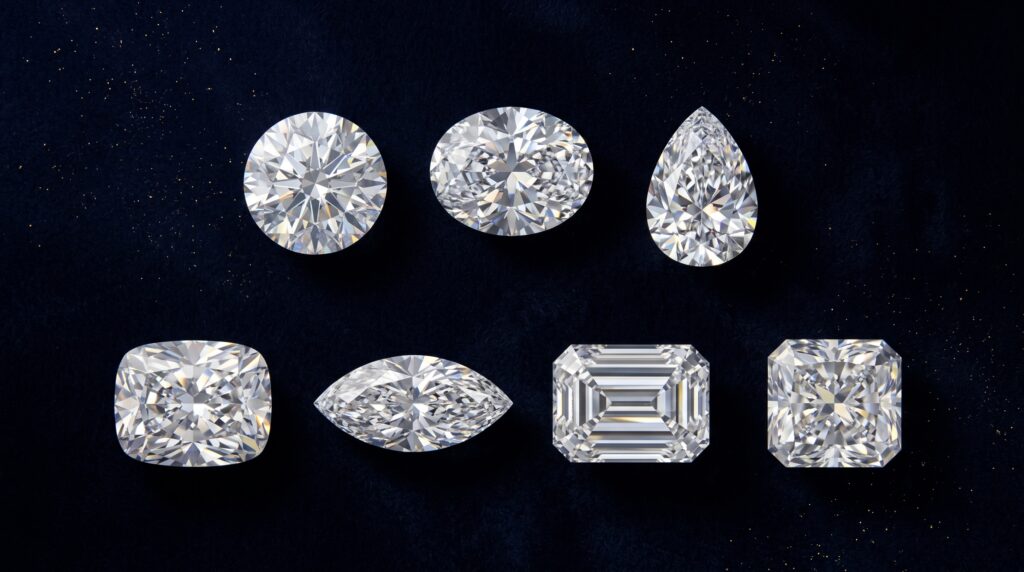
Surat manufacturers produce the full spectrum of diamond cuts and categories. Here is what U.S. buyers typically source and why each category serves a distinct market segment.
Round Brilliant Cut Diamonds
Round brilliant is the backbone of any Surat exporter’s inventory. The cutting infrastructure in Surat has refined round brilliant production to a science, with cutters capable of consistently hitting Excellent or Ideal cut grades as defined by GIA standards. For U.S. retail jewelers, round brilliants sourced from verified Surat manufacturers offer the best combination of consumer demand and light performance. They move fast and carry predictable Rapaport pricing benchmarks.
Fancy Shape Diamonds
Oval, Cushion, and Elongated Cuts
Oval and elongated cushion cuts are the highest-growth category in the U.S. engagement ring market heading into 2026. Surat manufacturers have invested heavily in the precision machinery required to produce ovals with optimal length-to-width ratios (typically 1.30 to 1.50) and minimal bowtie effect. Buyers sourcing these shapes in bulk should always request ASET images alongside the IGI or GIA certificate, because a certificate alone will not reveal how the stone handles light.
Pear and marquise cuts are also produced at volume in Surat, and they serve jewelers targeting vintage-inspired or fashion-forward segments. Both shapes require careful evaluation of symmetry and tip quality, which experienced Surat exporters understand well.
Lab-Grown Loose Diamonds
Surat has rapidly become the global center for lab-grown diamond production and finishing. Lab-grown diamonds are physically identical to natural diamonds and are graded by IGI using the same 4Cs methodology: carat weight, color, clarity, and cut. For jewelry retailers serving cost-conscious consumers or building commercial-grade fashion jewelry lines, lab-grown loose diamonds wholesale from Surat India represent exceptional value. The price gap between lab-grown and natural has widened considerably in recent years, making natural stones more appealing for investment buyers while lab-grown dominates the bridal fashion segment.
Melee Diamonds (0.001 to 0.18 Carat)
Melee sourcing is where volume buyers see the most dramatic savings. Surat produces calibrated melee in white, fancy yellow, and fancy color grades that serve halo settings, pavé bands, and side-stone applications. A consistent Surat supplier can deliver matched parcels to your specifications at a fraction of what a U.S. melee distributor charges.
Princess and Emerald Cut Diamonds
Step-cut diamonds like emerald and Asscher cuts require exceptional clarity and precise facet alignment. Surat has a strong tradition in these cuts, and they remain steady sellers for luxury jewelry retailers. Buyers should specify clarity minimums carefully: VS2 or higher is the practical floor for step cuts, since inclusions are far more visible in these transparent facet arrangements.
Fancy Color Diamonds
Yellow, pink, and blue fancy color diamonds are produced and graded in Surat by manufacturers with specialized color-grading expertise. These stones carry significant premiums over white diamonds and require GIA Fancy Color grading reports. U.S. buyers sourcing fancy colors from Surat should work only with manufacturers who have documented experience in this category.
Buying Direct from Surat vs. Buying from a U.S. Diamond Wholesaler: The Real Difference
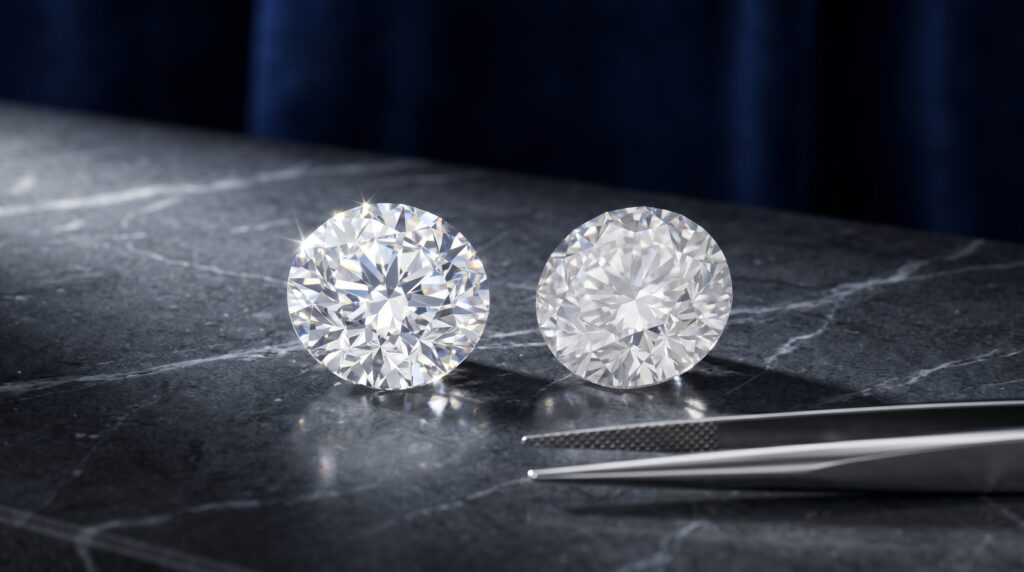
Most jewelry businesses in the United States have at least one domestic diamond wholesaler they rely on. Here is what you are actually comparing when you consider shifting even a portion of your sourcing to Surat directly.
| Factor | Loose Diamonds Wholesale Surat India | U.S. Domestic Wholesaler |
|---|---|---|
| Price Per Carat | 20% – 40% below U.S. wholesale | Standard Rapaport-based markup |
| Certification Control | Specify GIA or IGI before production | Stock dependent; limited flexibility |
| Minimum Order Quantity | Varies; some suppliers start at 5–10 carats total | Often single-stone available |
| Lead Time | 2 to 6 weeks depending on specification | Same-day to 3 business days |
| Relationship Type | Direct manufacturer relationship possible | Broker or distributor layer always present |
The analysis here is straightforward for volume buyers. You pay more per stone when you go through a U.S. wholesaler, but you get speed and convenience. Surat direct sourcing rewards buyers who can plan ahead and order in consistent volume. The sweet spot for most independent jewelers is a hybrid model: keep a small domestic stock for rush orders, and replenish core inventory through a trusted wholesale loose diamond supplier India on a quarterly or semi-annual cycle.
That said, the import process is not complicated once you understand it. A good Diamond Wholesaler relationship in Surat will handle most of the export paperwork on their end, and a U.S. customs broker handles the import side efficiently.
How to Choose the Right Surat Supplier for Your Business
Not every buyer has the same needs, and the right sourcing approach depends on several factors you should think through clearly before reaching out to any manufacturer.
- Define your product profile first. Are you buying round brilliants for bridal, fancy shapes for fashion, melee for pavé work, or lab-grown for a value-focused line? The answer determines which Surat manufacturers are relevant. Facilities specialize, and the best round brilliant cutter is not necessarily the best for elongated cushions.
- Know your volume requirements. Some Surat manufacturers work with very small importers; others have minimum order thresholds that only make sense for mid-size retailers or larger. Be honest about your volume so suppliers can tell you upfront whether the relationship makes commercial sense for both sides.
- Match certification requirements to your market. If your customers expect GIA grading reports, specify that from the start. IGI is widely accepted in the U.S. market, particularly for lab-grown diamonds, and often comes with faster turnaround. Review the Diamond Buying Guide for detailed guidance on reading and comparing reports.
- Consider lead time against your inventory cycle. A 4-week lead time from Surat is irrelevant if you plan six weeks out. Most experienced importers build a simple replenishment calendar that syncs their Surat orders with their sales cycle.
- Think about the occasion or end use. Engagement ring diamonds demand stricter cut and light performance standards than fashion jewelry. Communicate the end use to your Surat supplier so they can guide you toward appropriate inventory from their production line.
- Decide on natural versus lab-grown for each product category. Lab-grown diamonds from Surat offer extraordinary value for commercial jewelry. Natural diamonds remain the standard for bridal fine jewelry and investment-grade stones. Many U.S. retailers are now maintaining separate sourcing pipelines for each category, which is a smart approach as consumer preferences continue to diverge.
Before you finalize your choice of supplier, request a sample parcel of five to ten stones that match your typical order specification. This is standard practice in the industry and any legitimate Surat exporter will accommodate it without hesitation.
What B2B Buyers and Diamond Manufacturers Should Know About Surat Sourcing
Here is what most general guides leave out: the wholesale market in Surat operates differently from Western diamond trading floors. Relationships matter enormously. Pricing is more flexible for buyers who demonstrate consistent volume and pay on time. And the quality range within any given supplier’s inventory is wide, so specification control is everything.
For bulk sourcing, always provide your supplier with a detailed brief: shape, carat range, color range, clarity range, cut grade minimum, fluorescence preference, and certification body. The more specific your brief, the more consistent your parcels will be. Rapaport pricing is used as a benchmark in Surat, but experienced buyers negotiate a discount from list based on volume, payment terms, and relationship history.
IGI and GIA certification standards apply to Surat production just as they do to diamonds graded anywhere else. IGI has a significant presence in India and offers competitive turnaround times. GIA grading is performed at its Mumbai and other international offices. For U.S. retail, GIA remains the gold standard for natural diamonds above 0.50 carat.
You will want to pay attention to the Diamond Export process as it applies to your sourcing structure. Legitimate Surat exporters are registered with the Gems and Jewellery Export Promotion Council (GJEPC) and can provide all required Kimberley Process documentation for natural diamonds. This documentation is non-negotiable for U.S. importers.
In my experience sourcing from Surat manufacturers over many years, the single most important factor separating a good supply relationship from a great one is transparency on cut quality. The best manufacturers will flag stones that technically meet your grade range but show light performance issues before shipping them. That kind of proactive quality management is what you are looking for in a long-term partner.
Loose Diamond Wholesale Trends in the USA for 2026 and 2027
The U.S. diamond market is in an interesting place right now. Consumer demand for engagement rings has stabilized after post-pandemic volatility, but the shape preferences have shifted meaningfully. Oval, elongated cushion, and pear cuts now account for a growing share of engagement ring searches, and Surat manufacturers have responded by expanding their fancy shape production capacity significantly.
Lab-grown diamond jewelry trends in the U.S. retail sector continue to move in two directions simultaneously. Price-sensitive consumers are embracing lab-grown at an accelerating rate for fashion jewelry and bridal pieces under a certain budget threshold. At the same time, natural diamond buyers are becoming more intentional, often seeking GIA-certified stones with strong provenance documentation. Retailers who source both categories from Surat are well positioned to serve both segments.
According to industry data from the Gem and Jewellery Export Promotion Council, India’s polished diamond exports have continued to adapt to U.S. demand patterns, with fancy shapes and lab-grown stones representing an increasing proportion of export volume. For U.S. importers, this means more variety, more competitive pricing, and more manufacturer expertise available at the Surat sourcing level than at any point in the past decade.
Cluster and multi-stone settings are trending in U.S. fine jewelry, which is driving demand for matched melee and calibrated fancy shapes. Retailers who build a direct melee supply relationship with a Surat manufacturer are seeing meaningful margin improvements on these high-labor designs.
How to Evaluate Quality in Loose Diamonds from Surat Suppliers
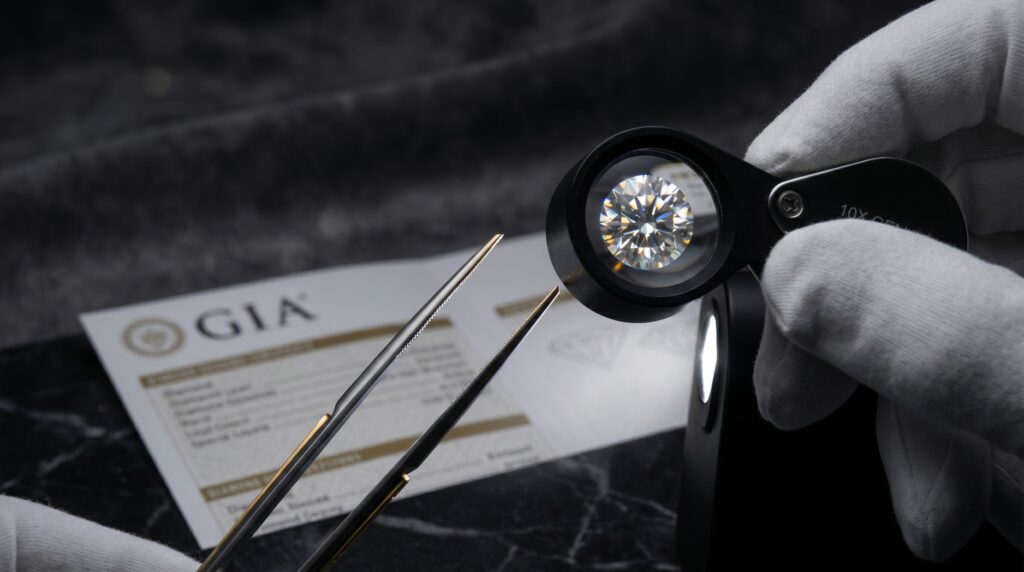
When I assess a parcel of loose diamonds from a Surat supplier, the first thing I check is not the certificate. It is the light performance under a standard lighting setup, using a loupe and, where available, an ASET scope or Idealscope image.
Here are the specific evaluation steps every B2B buyer should follow before approving a parcel for import.
- Check the cut grade against your actual lighting inspection. A stone with a GIA Excellent cut grade should show symmetrical, bright scintillation with no dead or dark zones visible to the naked eye. If the grade says Excellent but the stone looks flat, the certificate is correct but the stone is at the weak end of the acceptable range for that grade.
- Evaluate the table percentage and depth percentage together. For round brilliants, a table of 54% to 58% and total depth of 59% to 62.5% falls in the ideal range for light return. Surat manufacturers generally know these targets, but melee and smaller stones are sometimes cut for yield rather than optical performance.
- Look for the bowtie effect in fancy shapes. Oval, pear, and marquise cuts are prone to a dark bowtie shadow across the center. Severity ranges from barely visible to quite pronounced, and it is not captured on a grading certificate. Always view fancy shapes in person or request video before approving a parcel.
- Assess color and clarity in consistent lighting. Color grading is best done face-down against a pure white background under controlled daylight-equivalent lighting. Clarity should be verified under 10x magnification; note the position and nature of any inclusions relative to the table, since inclusions directly beneath the table are more visible than those near the girdle.
- Request a full Diamond Import documentation set alongside your quality review. This includes the Kimberley Process certificate, invoice, packing list, and individual grading reports. Reviewing these documents together with the physical parcel closes the loop between what you ordered and what arrived.
Loose Diamonds from a certified and transparent Surat supplier should come with documentation that matches the physical goods precisely, with no surprises on the cutting floor.
Conclusion: Building a Smarter Diamond Sourcing Strategy
Three things matter most when you are evaluating a Surat sourcing strategy for your jewelry business. First, your cost savings only materialize if you source from verified manufacturers with consistent cut quality standards and proper export documentation. Cutting corners at the supplier selection stage always costs more than it saves.
Second, certification is non-negotiable: GIA and IGI grading reports are your quality assurance in the absence of physical proximity to the cutting floor. Any supplier unwilling to provide certified stones at the price point you need is not the right partner. Third, the relationship itself is an asset. The best Surat manufacturers offer their most consistent parcels, best pricing, and fastest turnaround to buyers who demonstrate reliability and volume over time.
The truth is, sourcing loose diamonds wholesale from Surat India is one of the highest-impact decisions an American jewelry business can make. The infrastructure, expertise, and certification standards are all there, and access is no longer limited to the largest players in the industry.
Here is what the best sourcing relationships actually look like in practice: consistent communication, clear specifications, sample parcel approvals, and a long-term mindset on both sides. That is the model that produces genuine wholesale margins and product quality your customers notice.
Lepdo Diamonds connects U.S. jewelry businesses with factory-direct access to certified loose diamonds wholesale from Surat India, with full transparency on pricing, certification, and import documentation. Explore the inventory and request a consultation to start building the sourcing relationship your business deserves.
In a market where margins are everything, the diamond source you choose is the business decision that compounds.
Frequently Asked Questions About Loose Diamonds Wholesale from Surat India
1. What is loose diamonds wholesale Surat India?
Loose diamonds wholesale Surat India refers to purchasing unset, individually graded diamonds in bulk directly from manufacturers or exporters in Surat, Gujarat. Surat processes over 90% of the world’s diamonds, making it the largest diamond cutting and polishing hub globally. B2B buyers access significantly lower per-carat prices compared to domestic U.S. wholesale channels by removing multiple intermediaries from the supply chain.
2. Are Surat loose diamonds cheaper than buying wholesale in the USA?
Yes, sourcing loose diamonds wholesale directly from Surat typically offers 20% to 40% lower costs compared to U.S. domestic wholesalers. The savings come from eliminating the middlemen between the cutting floor and the buyer. Import duties, shipping, and certification fees apply, but net savings are substantial for regular volume buyers who plan their orders in advance and maintain consistent purchasing relationships.
3. Which diamond shapes from Surat look most impressive in jewelry?
Round brilliant, oval, and elongated cushion cuts from Surat manufacturers consistently produce the highest light return and visual impact in finished jewelry. Surat cutters are recognized globally for their precision on fancy shapes, particularly pear and marquise cuts. For engagement rings, oval and elongated cushion diamonds appear larger than their carat weight suggests, making them strong value choices for budget-conscious buyers.
4. Do loose diamonds from Surat come with GIA or IGI certification?
Yes, reputable Surat manufacturers supply stones certified by GIA and IGI. Always specify your certification preference before placing an order. GIA certification is the U.S. market standard for natural diamonds; IGI is widely accepted for lab-grown diamonds and increasingly recognized in retail settings. Reliable Surat exporters will accommodate either certification body and can factor the processing time into your delivery timeline.
5. What is the biggest quality risk when sourcing loose diamonds wholesale from India?
The biggest risk is inconsistent cut quality when buying from brokers rather than verified manufacturers. Poorly cut stones show dead zones, reduced brilliance, and weak scintillation even at higher color and clarity grades. Always request light performance images alongside grading certificates, and vet suppliers with a sample parcel before committing to volume orders. Certification alone does not tell you the full optical story.
6. Are lab-grown loose diamonds from Surat as good as natural ones for jewelry?
Lab-grown loose diamonds from Surat are physically and chemically identical to natural diamonds and are graded by IGI using the same 4Cs standards. They offer significantly lower price points, making them attractive for commercial jewelry lines and budget-focused consumers. For investment purposes, natural diamonds from certified Surat exporters hold stronger long-term value. Most U.S. retailers are now maintaining separate sourcing pipelines for both categories.
7. Which loose diamond shape from Surat is best for an engagement ring?
Round brilliant remains the most popular choice for engagement rings due to its superior light return and universal appeal. Oval and cushion cuts sourced from Surat manufacturers are trending strongly in the U.S. through 2025 and 2026. These fancy shapes offer a larger visual footprint per carat and pair beautifully with modern halo and solitaire settings, making them excellent choices for buyers seeking visual impact at a given budget.
8. How do I choose a reliable loose diamond wholesale manufacturer or supplier in Surat?
Look for manufacturers registered with the Gems and Jewellery Export Promotion Council (GJEPC) of India who consistently supply GIA or IGI certified stones. Request references from existing U.S. buyers, verify export documentation practices, and start with a sample order before committing to bulk volume. Established exporters like Lepdo Diamonds offer transparent B2B pricing, documented quality standards, and certified inventory tailored to the American market.