
Selecting a fancy shaped diamond is more than simply selecting an alternative to a round brilliant. An oval shape can elongate the look of an engagement ring, an emerald cut provides wide, even reflections and a marquise gives a dramatic outline. However, two diamonds of the same shape and carat weight can appear very different when viewed side by side.
For jewelry buyers, the best choice is a balance of appearance, proportions, quality, the design of the setting, and budget. Sometimes they are called fancy shaped diamonds. Each fancy shape diamond also raises practical issues for retailers, wholesalers and jewelry brands regarding stock selection, matching and repeat orders. Understanding those differences helps you to avoid buying on the basis of a pretty picture or a grading report.
What Is a Fancy Shape Diamond?
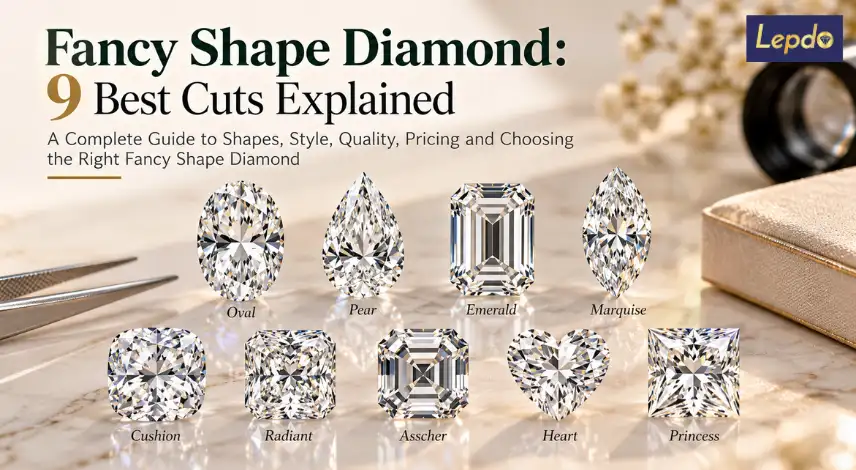
A fancy shaped diamond is a diamond that has been cut into a shape or faceting style other than the standard round brilliant. In normal jewelry shopping the term usually refers to non-round shapes such as oval, pear, cushion, emerald, marquise, radiant, princess, Asscher and heart.
Quick answer: You choose a fancy shape diamond because of its distinctive outline and visual appeal. Brilliant cuts emphasize sparkle, step cuts favor broad flashes and architectural reflections. To assess quality, compare the diamond’s proportions, symmetry, face-up brightness, clarity, grading information and suitability for the intended setting.
Popular fancy diamond cuts are:
- Oval: Elongated rounded outline with brilliant-style sparkle.
- Pear: Rounded teardrop shape, one end rounded and one end pointed.
- Emerald: Rectangular, with cropped corners and step-cut facets.
- Marquise: Boat shaped, long outline, with two points on the ends.
- Cushion: Square or rectangular with rounded corners.
- Radiant: A square or rectangular cut with cropped corners, usually in brilliant style.
- Asscher: Square step cut with clipped corners and concentric reflections.
- Heart: Romantic symmetrical outline, cleft seen.
- Princess: Square or rectangular shape, sharp corners, brilliant style faceting.
You can narrow down your preferred outlines by checking the fancy shape diamonds available with the below inspection criteria.
Fancy Shape, Fancy Cut or Fancy Color: What’s the Difference?
The fancy shape diamond is the outline or non-standard cutting style of the stone. Fancy cut can mean either the shape or the facet arrangement. Fancy color, however, is not a specific silhouette but some diamond color classifications.
A fancy shape, not a fancy color diamond, is a colorless oval by default. A pink radiant diamond could be either, depending on its color grade. For buyers interested in color, fancy color diamonds can be explored separately from shape selection.
Why Do US Buyers Favor a Fancy Shape Diamond?
American jewelry customers have different tastes, from classic cushion engagement rings to modern elongated cuts. Rather than assuming that one design will dominate all market segments, retailers should compare actual inquiries, sales, and customer budgets before designing inventory.
A fancy shaped diamond may appeal to a buyer looking for a one of a kind ring or more coverage on the finger for a given carat weight. Some shapes also have a lower asking price per carat than comparable rounds, but this may not always be the case.
Jewelry brands can use fancy shape diamonds to craft unique pendants, earrings, anniversary rings, and custom collections. It also gives a brand a way to create a visual identity that is recognizable without relying on color or size.
Matching Fancy Diamond Shapes With Your Personal Style
The first step in selecting a fancy shape diamond is the visual effect you want. Someone who loves a lively sparkle may prefer an oval or radiant cut, while a minimalist design may suit an emerald cut. Shape should be subordinate to the taste of the wearer, not to a trend that may change.
| Style Preference | Diamond Shapes to Consider | Visual Character |
|---|---|---|
| Elegant and classic | Emerald, oval, cushion | Balanced, understated, versatile |
| Bold and modern | Radiant, princess, Asscher | Geometric or high-contrast |
| Romantic | Heart, pear | Soft or expressive outline |
| Dramatic | Marquise, elongated oval | Long, distinctive silhouette |
| Vintage inspired | Cushion, emerald, Asscher | Heritage-style faceting and proportions |
This table is a style guide, not a quality ranking. An individual fancy shape diamond can suit several aesthetics depending on the setting, metal, and size.
Fancy Diamond Cuts and Their Characteristics

Oval Fancy Shape Diamond
Fancy Shape Diamond With an Oval Diamond Outline Combines an Elongated Outline With Brilliant-Style Faceting It is popular for solitaire rings as it can make the finger appear longer. Compare the outline and rounded ends for a persistent dark bow-tie pattern in the center. It’s all about balance: a balanced oval should look alive when it moves, not just bright in a still.
Emerald Cut Fancy Shape Diamond
Emerald Diamond have step facets that create wide, hall-of-mirrors reflections. Their open look can make inclusions and body color easier to see than with some busy brilliant-style cuts. When buying an emerald fancy shape diamond, check clarity characteristics, parallel lines, cropped corners and if the middle part appears transparent rather than dead.
Marquise Cut Diamond
A Marquise Diamond has pointed ends and a slender silhouette. It can be good for finger coverage, but needs its points protected in jewelry. Make sure the two ends match, the curved sides are even, and there’s not a big dark bow tie taking over the middle. Narrower stones can also be more difficult to match with some ring designs.
Cushion Cut Diamond
Cushion cuts feature gently rounded corners and can be square or elongated. A cushion fancy shaped diamond can have broad distinct flashes or a more fragmented look, sometimes called crushed ice. No one look is automatically better; it is contingent upon the preference and the total brightness. A buyer who is comparing the proportions of cushions can also look at a cushion cut buying guide.
Radiant Cut Diamond
A lively faceting square or rectangular diamond with trimmed corners is called a radiant fancy shape diamond. It lends itself to modern engagement rings and geometric jewelry. Instead of assuming that all radiances of the same size will shine the same, look at the corners, width, light return and visual pattern.
Pear, Princess, Asscher and Heart Cuts
Pear fancy shape diamonds have directional elegance; princess cuts accentuate sharp geometry; Asscher cuts display structured step facets; and heart cuts need careful outline symmetry. Any of these designs should be considered for the particular characteristics of a fancy shape diamond. Special cut diamonds provide an alternative design option for specialty outlines other than the traditional designs.
Fancy Shape Diamond vs. Round Diamond
Round brilliants tend to have a more regular arrangement of facets . Fancy cuts tend to vary more in outline and in their behavior with light . A fancy shape diamond is not necessarily less brilliant than a round diamond in every viewing condition. The appearance depends on the individual stone and how it is cut.
| Comparison | Round Brilliant | Fancy shapes |
|---|---|---|
| Shape | Round | Square, rectangular, pointed, or heart shaped. |
| Cut evaluation | Established Round Brilliant Cut Grading Systems | Shape-specific assessment; systems of reporting vary |
| Appearance face-up | General balanced circular spread | The spread is highly dependent on dimensions and outline |
| Price | Typically commands a premium in comparable categories | Could be lower but depends on shape and quality |
| Setting considerations | Symmetrical round mounting | You may require custom proportions or point protection |
There is no one correct answer. Side by side comparison of real stones should be done in the same lighting, pick based on visual result and total cost of jewelry.
Carat Size vs. Visible Size
Carat is a measure of mass, not the area a diamond takes up when viewed from above. Two stones of 1.00 carats can have different millimeter sizes, depth percentages and visual size. A long fancy shape diamond can appear larger one way and have less width than another option.
When selecting fancy shape diamonds, always use actual length and width measurements, not just estimates based on carat weight alone. Diamond Carat to MM Chart – How Diamond Weight Relates to Dimensions Note that reference sizes are not a substitute for the measurements of a particular diamond.
Fancy Shape Diamond in Jewelry Design
A fancy shaped diamond influences the whole jewelry design. Oval and pear cuts are good in lengthwise settings while emerald and radiant cuts can hold clean architectural settings. Cushion designs might be good for vintage-inspired rings and earrings, and marquise stones can be good for strong directional accents.
Before you choose a setting, consider how the shape sits on the finger, the overall height of the ring, daily wear and the metal surrounding the stone. White, yellow and rose gold offer different visual contrasts, but metal color cannot make up for poor diamond proportions.
Security and Use in Daily Life
A fancy-shaped diamond with points or pointed corners needs to be protected carefully. V-prongs or the proper bezel design can help with pear and marquise tips and with heart points and princess corners. A fancy diamond with a rounded shape, like an oval or cushion, presents a different set of setting challenges, particularly when elongated or unusually deep.
If you want a detailed look at the practical tradeoffs of protection vs appearance , read the bezel vs prong setting guide . Jewelers should set each stone to its measured size, not a generic carat-weight guess.
Investment Considerations for Fancy Cut Diamonds
Fancy shape diamonds should generally be bought for beauty, use or commercial suitability rather than for promised investment returns. Characteristics were reported in certification documents; no resale demand, liquidity or future appreciation is guaranteed. This is a big difference, especially for lab-grown stones, where market prices can fluctuate.
For an individual buyer, compare the total price of the purchase to how the diamond looks and the pleasure you’ll get from it in the long run. As a retailer, concentrate on realistic sales potential, availability of replacements, stock turnover and margin after setting and servicing costs.
A fancy shape diamond outline itself is a rare feature which does not ensure a stronger resale value. Reselling a popular shape can be easier than reselling an unusual cut that only a few people like.
Fancy Shape Diamond for Manufacturers and Wholesalers
Wholesale buying introduces variables that you don’t see so obvious when comparing a single stone. While stones may have the same grading results in general, every fancy shape diamond in a parcel must fall within standards that are appropriate for the jewelry design in which it will be mounted.
Buyers should decide on the shape mix based on customer orders, expected product applications and inventory performances. Useful categories for consideration are the oval, cushion, emerald, radiant, and pear cuts, but their relative sales strength should be validated against the retailer’s actual market.
The consistency of the face-up size and outline of earrings may be more important than matching the carat weights. Millimeter differences in size can mean new work on settings, more sorting or delays for a production run. It is important to compare repeat order with the original approved sample, not only with the written grade range of the supplier.
If you are buying fancy cut diamonds India, check the origin disclosures, specifications, report availability, minimum order quantities, sample review, lead times and replacement terms before accepting a quotation.
Practical Checklist for Wholesale Acceptance
Before you buy a fancy shape diamond, make sure you agree to these checks:
- Form and variations of accepted outlines.
- Carat range and actual length, width and depth allowances
- Set appropriate ranges for color and clarity.
- Optics polish, symmetry and face-up acceptance criteria.
- Rules for prominent bow ties, windowing or visible inclusions
- Standards for Matched Pairs and Calibrated Layouts.
- Verification of reports, identification of parcels, resolution of discrepancies.
Photos and video of each fancy shape diamond must be taken in consistent lighting, scale and orientation. This allows for better comparability between different stones and decreases the risk to approve a parcel which appears different than the chosen reference.
Fancy Cut Lab Diamonds & Growth Methods
When evaluating lab grown diamonds by shape, buyers need to separate the growth process from the final outline. The laboratory-grown diamonds are manufactured by Chemical Vapor Deposition (CVD) or High Pressure High Temperature (HPHT) methods. These are crystal growth methods not end diamond shapes. The fancy shape diamond is created by cutting and polishing.
Any other diamond needs to be examined just as carefully for its appearance, origin disclosure and grading information, as a laboratory grown fancy shape diamond. CVD and HPHT alone do not ensure great face-up brightness or superior craftsmanship. Different questions are production origin and final cut quality.
Buyers looking at fancy cut lab diamonds should also be able to tell the difference between standard colorless or near-colorless stones and lab grown fancy color diamonds. Blanket assumptions about ways of growth are not enough, environmental or ethical claims need specific supporting evidence.
How to Assess Quality in a Fancy Shape Diamond
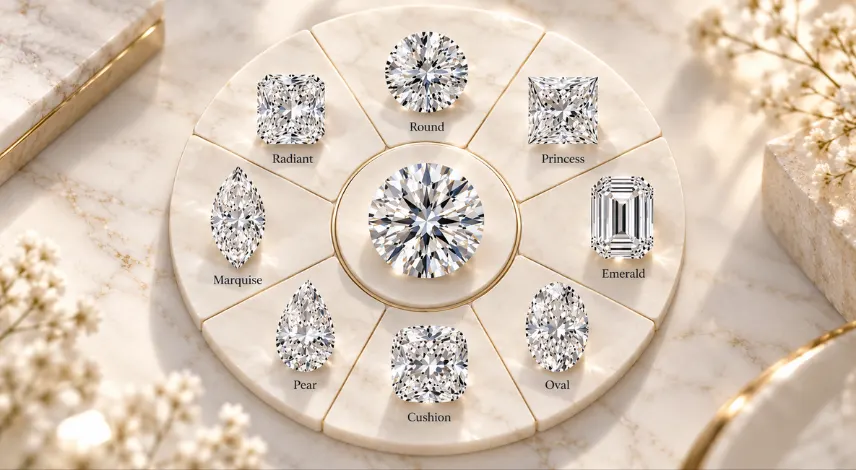
A fancy shape diamond needs more than a cursory look at the 4Cs. The best assessment is a combination of measurements, report information, and observation under consistent lighting.
Check Proportions and Outline
Check the length-to-width ratio, depth, table and millimeter size. Then check the real outline: are the oval shoulders balanced, the marquise points aligned, the pear tip centered, the emerald corners even? Ratios are a useful comparative tool, not an absolute proof of beauty.
Brightness, Bow Ties and Windowing
Gently move the fancy shape diamond and see the change in bright and dark areas. A little contrast is normal and gives stone visual character. An unusually wide, persistent bow tie or a see-through looking window can make the appearance less attractive. These effects may not be visible in a photograph so ask for motion video when buying remotely.
Review Clarity and Finish
The broad step facets of an emerald or Asscher can highlight inclusions, while the complex reflections of some brilliant-style cuts can hide inclusions. Don’t pick a clarity grade on its own. See it as it would be seen under normal viewing conditions and decide if you can see any inclusions. Check the polish and symmetry.
GIA and IGI Reports Explained
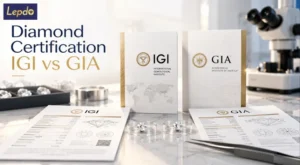
GIA’s overall cut grade is for standard round brilliant diamonds, not fancy shapes. IGI has a published assessment process for fancy-shape cuts that includes finish, proportions, shape-specific craftsmanship and light return. These approaches are not to be considered interchangeable.
Check what its individual report actually says with any fancy shape diamond, verify the report number and match the measurements and inscriptions if applicable. A diamond certification check provides a useful verification step. Buyers seeking grading documentation can also review available certified diamonds.
Popular Fancy Diamond Cuts and Their Style Impact
| Fancy Diamond Cut | Typical Style Impact | Main Inspection Priority |
|---|---|---|
| Oval | Elegant and elongating | Bow tie and outline symmetry |
| Cushion | Soft and vintage inspired | Facet pattern and brightness |
| Emerald | Structured and sophisticated | Transparency and inclusions |
| Radiant | Sparkly and modern | Face-up pattern and proportions |
| Marquise | Dramatic and slender | Tip alignment and bow tie |
| Heart | Romantic and expressive | Balanced lobes and defined cleft |
Use a fancy cut diamond chart as an orientation aid, not as proof that one shape will always outperform another. Even within the same row, each fancy shape diamond can differ substantially.
Choosing a Fancy Shape Diamond for Engagement Rings

An engagement ring is a combination of personal taste, visible size and practical wear. A fancy shape diamond has to look good from above and from the side, fit the proportions of the intended ring and remain secure in its setting.
The oval and cushion shapes are flexible bases to start from. Emerald cuts will appeal to buyers who like clean lines; pear cuts offer directional elegance. For those pondering elongated vs. traditional outlines, the oval vs round diamond discussion helps clarify the difference in look.
Or try comparing each fancy shape diamond on a finger or realistic ring mock up. A diamond might be beautiful on its own in a product image, but feel very different when set next to a wedding band.
Fancy Shape Diamond Price Comparison
Searching for diamond shapes by price can help, but shape alone does not create a reliable discount. The price of natural and lab-grown diamonds is different. Quotes depend on things like carat weight, color and clarity, proportion, and supply and demand.
A fancy shape diamond may be less expensive than an otherwise similar round brilliant. But a really beautiful or rare set of specifications can change the comparison. Don’t make blanket claims about saving a fixed percentage that doesn’t take the individual stone into account.
| Shape | Pricing Consideration | Additional Cost to Check |
|---|---|---|
| Oval | Appearance varies at equal carat weights | Setting dimensions and matching |
| Cushion | Square and elongated variations differ | Facet pattern preference |
| Emerald | Clarity and precision are visible | Clarity selection and custom setting |
| Radiant | Proportions influence perceived spread | Matching rectangular outlines |
| Marquise | Elongation influences visual appeal | Point-protecting setting work |
When comparing loose diamonds, ask for comparable specifications and inspect face-up appearance before evaluating price per carat. Retailers should include setting, labor, rework, and after-sales costs in the finished-jewelry calculation.
Fancy Shape Diamond in Customized Jewelry
Custom designs allow you to use fancy shape diamonds in a way that a standard mounting cannot. Unique collections can be fashioned from east-west emerald settings, pear-shaped drop pendants, cushion halos, and marquise cluster designs, all while maintaining the stone’s natural look.
The manufacturing process should start with the precise dimensions of the chosen diamond and an appropriate CAD design. The seat, prong position, orientation or neighboring stones may need adjusting by a jewelry team for each fancy shape diamond to help keep each piece balanced.
Diamond Fancy Shapes – Diamond fancy shapes give a better idea of how the pieces will look. Related Article: Mixed Diamond Shapes – Mixed diamond shapes give insight into how mixed-shape jewelry collections are designed.
Conclusion
In the end, choosing a fancy shape diamond is a combination of personal style, optical appearance and reliable information and a setting that suits the stone. A pleasing outline does not mean excellent light performance and the biggest looking stone is not necessarily the best value.
For jewelry brands and wholesale buyers, repeatable specifications are as crucial as the first attractive sample. A distinctive cut can be a more dependable finished product with careful inspection, sensible choice of shape, and straightforward communication.
Lepdo Diamonds provides sourcing discussions for interested buyers who wish to compare shape options, requirements and available specifications before deciding on a purchase.
Fancy Shape Diamond: Frequently Asked Questions
1.What is a fancy shape diamond?
A fancy shape diamond is a diamond that is cut in a non-round outline or non-standard faceting style. Common fancy shapes include oval, pear, emerald, cushion, radiant, marquise, Asscher, princess and heart. They all look different and have different proportion profiles. The shape of a diamond does not determine its origin, color quality or clarity and these characteristics must be evaluated independently.
2.Are fancy shaped diamonds cheaper than round diamonds?
They may be, but not always. Prices depend on shape, carat weight, origin, color, clarity, cut quality and demand. Compare stones of similar grades and see what their actual sizes are before deciding. You don’t want to compromise quality for a lower price per carat. A diamond that appears dull or requires additional setting work may not be a better value.
3.What is the fancy diamond shape that looks the biggest?
Pears can also look big when viewed face-up, and oval and marquise cuts often seem to have lots of finger coverage lengthwise. Apparent size depends upon measured dimensions of the stone, its depth, outline and ring design. And do compare mm measurements instead of assuming all elongated cuts look bigger at the same weight.
4.Which is the best fancy shape for engagement rings?
Oval, cushion, emerald and pear cuts are all good choices, but there is no one best shape for everyone. Consider the wearer’s style, sparkle pattern preference, finger coverage, setting security, and daily habits. Passing trends and shape labels are secondary to the visual quality of the individual diamond.
5.Are fancy cut lab diamonds worth the investment?
Fancy cuts grown in the laboratory have nice looks and flexibility for purchase, but resale prices in the future are uncertain. The grading report describes characteristics, it does not guaranty value. Buyers should focus on enjoyment and fit and retailers should watch demand, inventory turnover and replacement costs, not promise appreciation.
6.What is the most graceful fancy diamond cut?
Elegance is subjective. Buyers who like measured, architectural reflections will be drawn to Emerald and Asscher cuts, while oval and pear designs can seem softer and more fluid. Any fancy cut will look refined in a well-chosen setting. Check the stone itself, because even stones of the same shape may have different symmetry and brightness.
7.How do I compare fancy cut diamond shapes when I buy?
Start with a fancy cut diamond chart, then refine your options by outline, width-to-length preference and design purpose. Look at real photos or videos in similar lighting . Look at grading reports . Check for visible inclusions, dark contrast, depth, measurements and any extra protection needed for pointed ends or corners.
8.Where to find good quality fancy shape diamonds?
Begin with suppliers that can deliver definitive disclosure of origin, measured dimensions, relevant grading documentation and consistent visual material. For wholesale sourcing, ask for the approved specification range, sample-approval process, matching requirements, and replacement terms. Lepdo Diamonds is here to talk through the options available and order requirements.
Strategic Takeaways for Jewelers & Diamond Buyers
The right fancy shape diamond is not just the one with the most unusual silhouette. Select the outline for the purpose of the jewelry. Assess the light performance by eye or by consistent visual evidence. Utilize grading reports to verify stated characteristics.
Good buying is a lot more than a price list for the retailer.” Matching tolerances, setting compatibility, repeat-order consistency and customer demand all dictate the commercial outcome. A well-chosen fancy shape diamond can support both a unique design and a dependable product line.