HPHT Diamond Process Guide: How High Pressure High Temperature Diamonds Are Made
 by lepdogroup@gmail.com
0 comments
by lepdogroup@gmail.com
0 comments
The HPHT diamond process grows real diamonds by exposing carbon to extreme heat and pressure inside a mechanical press, mimicking what happens naturally underground. Buyers benefit because the result is a chemically identical diamond at a lower price point. Lepdo Diamonds works with vetted HPHT growers in Surat, offering IGI and GIA certified stones for retailers.
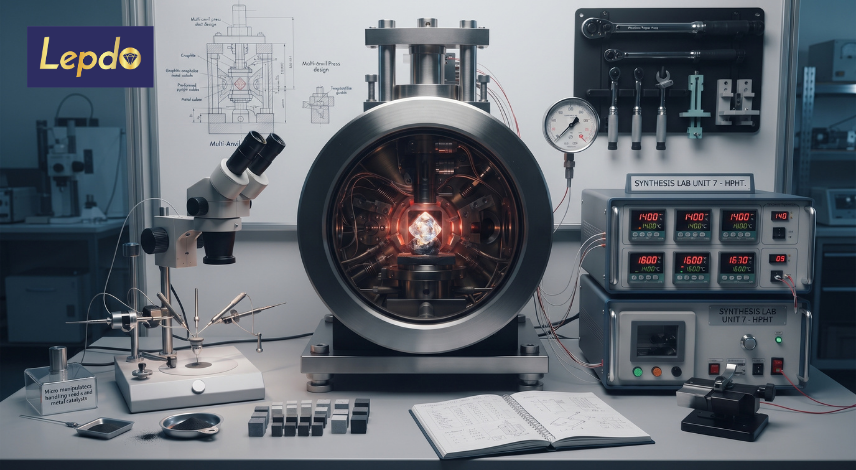
Spend an hour inside a diamond growing facility in Surat and you will notice something odd. Nobody is watching the machines. The press just runs, quietly, for days at a time, holding pressure that rivals conditions found deep beneath the earth’s crust.
That is really the whole story behind the HPHT diamond process guide you are about to read. Not marketing language, just physics doing what physics does.
For jewelry retailers and everyday buyers, knowing how high pressure high temperature diamonds are made changes the way you shop. A GIA report tells you carat weight and clarity grade, but it rarely explains the method that shaped the stone in the first place. Most people never even think to ask.
Here is what you will get from this guide: the equipment, the timeline, the science, and the real buying decisions tied to HPHT diamonds. Whether you manufacture, wholesale, retail, or just want an engagement ring you actually understand, this covers the ground that matters.
What Is the HPHT Diamond Process Guide?
HPHT stands for high pressure high temperature, and the process does exactly what the name suggests. A tiny diamond seed sits inside a chamber packed with pure carbon, then gets hit with heat near 1,500 degrees Celsius and pressure above 870,000 pounds per square inch. Carbon atoms bond to that seed, layer after layer, until a rough diamond crystal forms.
Quick Info Box
- Definition: A method that grows real diamonds by recreating the heat and pressure found deep underground, inside a mechanical press.
- Key Types or Varieties: Belt press, cubic press, split-sphere (BARS) press.
- Best For: Manufacturers, wholesalers, and consumers who want certified, budget-friendly HPHT Diamonds for engagement rings or everyday fine jewelry.
- Key Difference or Advantage: Faster growth cycles and strong natural color control.
Think of it this way: the press is basically a shrunk-down version of the earth’s mantle, built into a machine you could fit inside a warehouse.
HPHT Press Technology: Three Machines, Three Approaches
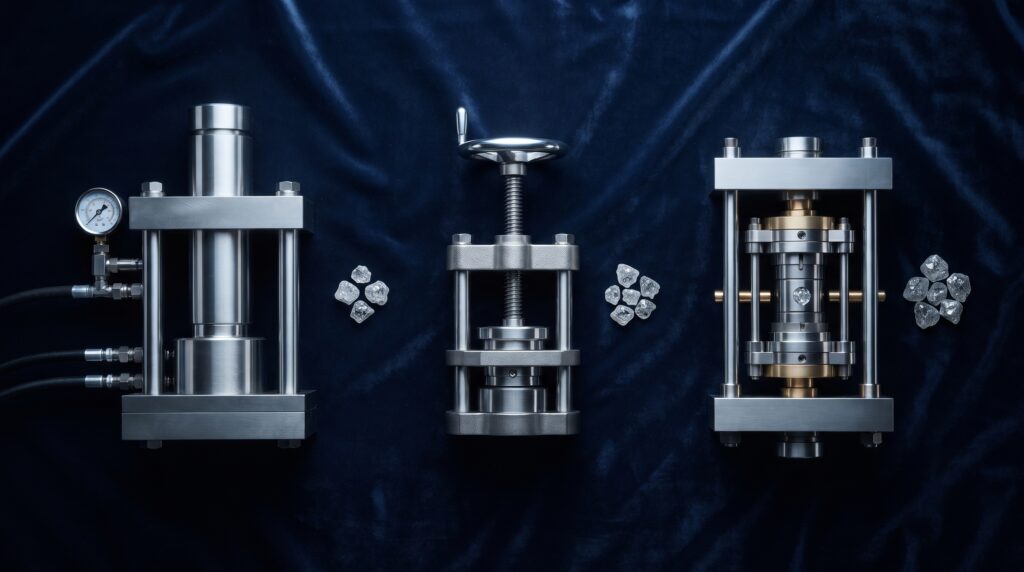
Manufacturers use three main press designs, and each one shapes the outcome a little differently. Knowing this hpht diamond press technology explains a lot of the price and quality variation you will see across suppliers. The belt press, cubic press, and split-sphere (BARS) press each apply pressure and heat through distinct mechanical systems, which directly affects crystal consistency, production speed, and equipment cost. Understanding these differences helps buyers match the right diamond source to their specific quality and budget requirements.
Belt Press
The belt press was the original design, squeezing the growth chamber between two anvils from opposite ends. It is slower than newer presses, but it still produces excellent single stones. Because the setup is simpler and easier to control, many labs still favor it for producing large, gem-quality single crystals. Its long, stable cycles allow for better temperature uniformity, which often results in cleaner, more consistent stones.
Cubic Press
The cubic press pushes pressure inward from six sides at once using hydraulic pistons. Heat distributes more evenly this way, which is why it has become the go-to choice for scalable hpht diamond production steps. This six-sided symmetry also reduces mechanical stress on the growth cell, extending equipment life and lowering maintenance costs over long production runs. As a result, manufacturers can run multiple cavities simultaneously, making the cubic press especially popular for high-volume, consistent-quality output.The cubic press pushes pressure inward from six sides at once using hydraulic pistons. Heat distributes more evenly this way, which is why it has become the go-to choice for scalable hpht diamond production steps.
Split-Sphere (BARS) Press
The BARS press, short for high pressure apparatus of spherical type, uses a sphere-shaped chamber split into segments. It runs efficiently and gives growers tighter temperature control across back-to-back cycles.
Why would a manufacturer pick one over the other? It usually comes down to what they are optimizing for. Cubic presses favor volume, belt presses favor precision on standout stones. Manufacturers like Lepdo Diamonds, operating out of Surat’s diamond hub, generally lean on cubic press systems paired with consistent seed sourcing, which keeps color and clarity grading predictable batch after batch.
How the HPHT Diamond Growing Process Actually Works
The hpht diamond growing process follows roughly the same sequence no matter which press a facility uses.
- Seed selection. A thin diamond slice, natural or lab grown, becomes the starting point.
- Carbon loading. Pure graphite gets packed around that seed inside a metal capsule.
- Heat and pressure ramp-up. The capsule goes into the press, where conditions rise slowly so the seed does not crack.
- Crystal growth. Carbon atoms migrate and bond over one to four weeks, depending on the target carat weight.
- Cooling and extraction. The chamber cools gradually before the rough diamond comes out.
- Cutting and polishing. From there, the stone enters the Diamond Cutting Process and then the Diamond Polishing Process before it ever touches a ring setting.
Hpht diamond growth time usually falls between five and fourteen days for a one-carat rough stone, with bigger stones needing longer. All of this sits under the wider umbrella of Diamond Manufacturing, which also covers finishing and grading standards.
To be fair, growth time varies quite a bit by facility, and rushing it tends to leave strain lines that show up later as clarity issues.
HPHT vs CVD Manufacturing Process: The Real Difference
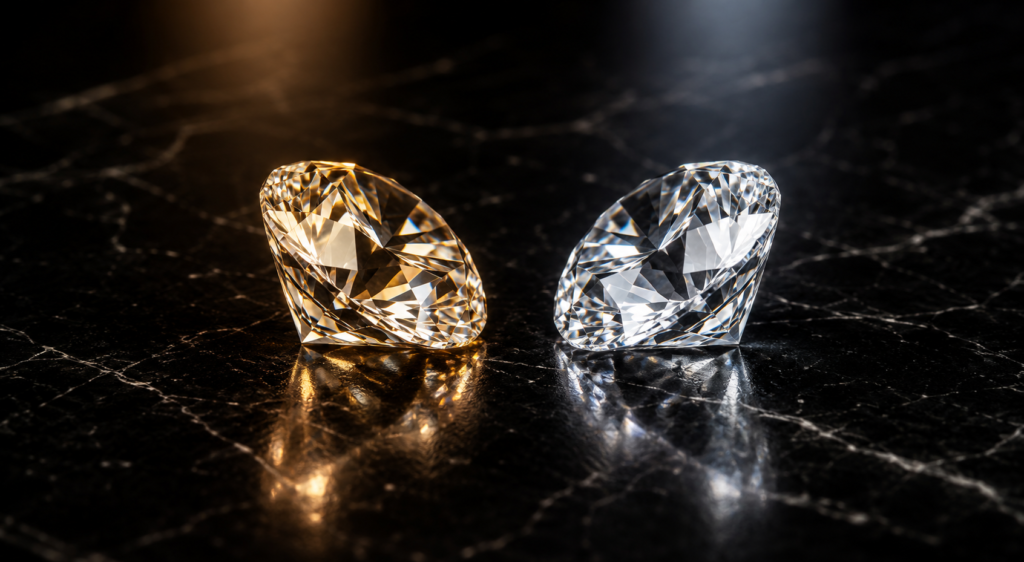
People ask about hpht vs cvd manufacturing process constantly, usually right before placing an order, and the answer shapes both price and appearance.
| Factor | HPHT Process | CVD Process |
|---|---|---|
| Growth Method | Heat and pressure on a carbon source | Carbon gas deposited layer by layer in a vacuum chamber |
| Typical Growth Time | 5 to 14 days per carat | 2 to 4 weeks per carat |
| Common Color Range | Strong D to J range naturally, plus HPHT color treatment options | Often needs post-growth treatment for top color grades |
| Equipment Cost | Higher upfront press cost | Lower equipment cost, easier to scale |
| Best Use Case | Colorless and fancy color stones | Larger rough stones, steady batch production |
The truth is, neither method wins outright. Each solves a different production problem, so the smarter move is judging the finished stone by its certification and cut grade rather than obsessing over how it was grown. Buyers comparing categories can look at CVD Diamonds alongside HPHT stock, or read a full breakdown in this CVD vs HPHT Diamond comparison.
How to Choose the Right HPHT Diamond for Your Style
Picking between HPHT options takes more than chasing the biggest carat weight on the shelf. Run through these six factors first.
- Personal style. Oval and cushion shapes lean vintage, round and princess lean classic.
- Hand compatibility. Elongated shapes like emerald and marquise can visually lengthen fingers, something most shoppers never think about until they try one on.
- Setting compatibility. Prongs show off brilliance, bezels protect fragile edges on fancy shapes.
- Budget advantage. HPHT stones typically run 30 to 40 percent below natural diamonds at equal carat weight and clarity grade.
- Occasion. Engagement rings need durability and certification, fashion jewelry allows more room to experiment.
- Lab-grown vs natural. Most buyers today are choosing certified Lab Grown Diamonds simply because the value makes more sense, not because natural stones lack merit.
Most buyers assume bigger always wins, but a well-cut smaller stone with strong light return will out-sparkle a larger one sitting on a shallow pavilion. Before you finalize your choice, confirm the certification lab, check the cut grade, and just ask your supplier what growing method they used.
What B2B Buyers and Diamond Manufacturers Should Know
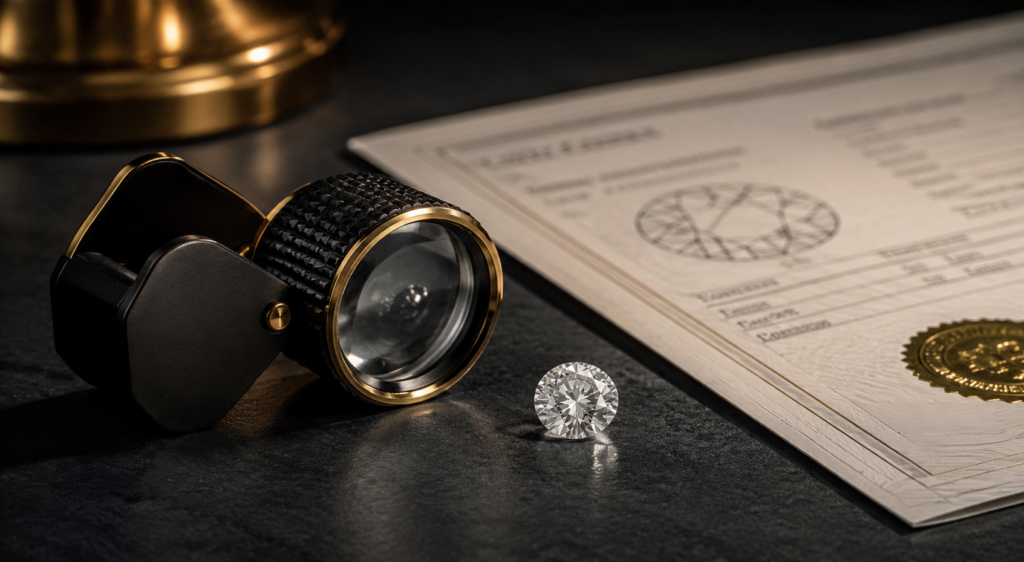
Wholesalers and retailers sourcing HPHT stock deal with different pressures than someone buying one ring. Bulk sourcing lives and dies on consistency across parcels, not the appeal of one showpiece stone.
You will want to pay attention to cut grading consistency between production batches, since even a solid supplier can drift between runs. Certification matters just as much. IGI and GIA both grade HPHT diamonds under the same 4Cs framework used for natural stones, though the report layouts differ slightly. Rapaport pricing benchmarks still apply as a reference point, even though lab-grown stock trades in its own, lower pricing tier.
A serious fancy cut diamond manufacturer should hand over sourcing documentation with every parcel, not just a certificate number and a smile. In my experience working alongside growers in Surat, the suppliers who volunteer press type, growth duration, and treatment details upfront are the ones retailers keep calling back. Anyone researching HPHT Diamonds Manufacturers India will notice that reputable names, including an established HPHT diamond manufacturer Surat network, treat IGI or GIA certification as standard, not an upsell.
HPHT Diamond Jewelry Trends in the USA (2026 to 2027)
American buyers are drifting toward fancy shapes set in warm-toned metals, a real shift away from the cold white gold that dominated the last decade. Yellow gold and rose gold settings paired with HPHT diamonds are showing up across engagement collections and everyday fine jewelry alike.
Cultural moments keep pushing oval, cushion, and radiant shapes into the mainstream, and shoppers now research heavily before ever walking into a store. Rapaport pricing data shows lab-grown diamond retail prices still trending downward through 2025, which has opened the door to bigger carat weights at price points once reserved for much smaller natural stones.
Retailers are also seeing more demand for fancy cut diamond jewellery paired with hidden halo settings and East-West stone orientation, both of which photograph well for social media. That said, classic solitaires have not gone anywhere. They have just gotten thinner, quieter, more minimal.
How to Evaluate Quality in HPHT Diamonds
When I assess an HPHT diamond, the first thing I check is light performance under a loupe, never the certificate. Brilliance, fire, and scintillation together say more about a stone’s real sparkle than any number on paper.
- Check pavilion angle and depth percentage. Anything outside 58 to 63 percent depth often means weaker brilliance.
- Inspect table percentage. A table between 53 and 58 percent usually balances fire and brightness well.
- Look for a bowtie effect. Elongated shapes like oval and marquise can show a dark bowtie shadow if the cut is off.
- Review clarity grade under magnification. VS clarity or better should show nothing visible to the naked eye.
- Confirm diamond certification. Request a report from a recognized lab, always, and treat certified diamonds as the baseline rather than a bonus.
Reputable suppliers, Lepdo Diamonds included, issue IGI and GIA certified stones as a default rather than an add-on, which removes a lot of the guesswork.
Conclusion
The HPHT diamond process really comes down to physics, patience, and precision, not shortcuts. A press applies extreme heat and pressure to a carbon seed, growth runs one to four weeks depending on target size, and the rough stone still needs skilled cutting and polishing before it becomes jewelry. Buyers who understand that timeline make sharper decisions than the ones shopping on carat weight alone.
To be fair, natural diamonds still carry sentimental weight for plenty of traditional buyers, and that preference is not going anywhere soon. That said, the value, consistency, and certification behind HPHT diamonds keep winning over retailers and consumers who care more about transparency than tradition.
Quality control also plays a bigger role in this process than most buyers realize. Every stone that comes off an HPHT press is graded on the same criteria used for natural diamonds, cut, clarity, color, and carat, so there is no separate or lesser standard being applied. Independent labs like IGI and GIA test these stones using the same equipment and expertise, which means the certification a buyer receives carries the same weight and credibility as one issued for a mined diamond.
For wholesale inquiries on HPHT stock, Lepdo Diamonds offers direct manufacturer pricing backed by IGI and GIA documentation, and you can browse Lepdo Diamonds directly for current availability. Manufacture, wholesale, or just shop for a ring built on real science. Either way, the HPHT diamond process gives you a diamond with an actual story behind it, not just a price tag.
Frequently Asked Questions About the HPHT Diamond Process
1. What is the HPHT diamond process?
The HPHT diamond process is a lab-grown diamond method that uses extreme heat and pressure to grow real carbon crystals from a small diamond seed. It recreates natural underground diamond formation inside a mechanical press. Growth typically takes one to four weeks depending on target carat weight and press type.
2. Is the HPHT diamond process cheaper than CVD manufacturing?
HPHT press equipment costs more upfront than CVD chambers, but growth cycles often run shorter for smaller stones. Final retail pricing depends more on carat weight, color, and clarity grade than the growing method itself. Both processes deliver certified diamonds at broadly similar price ranges for equal quality.
3. Which HPHT diamond shape looks biggest or most impressive?
Elongated shapes such as oval, emerald, and marquise tend to look larger per carat than round or princess cuts. That comes down to length-to-width ratio, which spreads surface area rather than concentrating it. Cushion cuts also read large thanks to broad crown facets.
4. Does the HPHT diamond process affect GIA cut grade?
HPHT diamonds get graded on the same GIA cut standards as natural diamonds, since cut grade evaluates proportions, symmetry, and polish, not origin. The growing method itself does not raise or lower the possible cut grade. Skill during cutting is what determines the final result.
5. What is the biggest quality risk with HPHT diamonds?
Rushed or inconsistent growth cycles can leave internal strain lines that affect clarity grade under magnification. This risk climbs when manufacturers push volume targets too hard. Buying from transparent, certified suppliers cuts this risk considerably for both retail and wholesale buyers.
6. Are lab-grown HPHT diamonds as good as natural diamonds?
Lab-grown HPHT diamonds share identical chemical, optical, and physical properties with natural diamonds, since both are pure carbon crystals. The real difference is origin and price, not durability or brilliance. GIA and IGI grade both categories using the same 4Cs framework.
7. Which HPHT diamond shape is best for an engagement ring?
Round and oval shapes remain the most popular engagement ring choices thanks to strong light return and flexible setting options. Cushion cuts also work well for a softer, vintage feel. The right shape really comes down to hand shape and personal taste.
8. How do I choose a reliable HPHT diamond manufacturer or supplier?
Look for suppliers who provide IGI or GIA certification with every stone and openly share press type and growth duration. Reliable manufacturers also offer sample parcels before large wholesale orders so you can verify quality firsthand. Pricing aligned with Rapaport benchmarks is another good sign you are dealing with someone trustworthy.