CVD Diamond Manufacturing Process Explained: How Chemical Vapor Deposition Creates Diamonds
 by lepdogroup@gmail.com
1 comment
by lepdogroup@gmail.com
1 comment
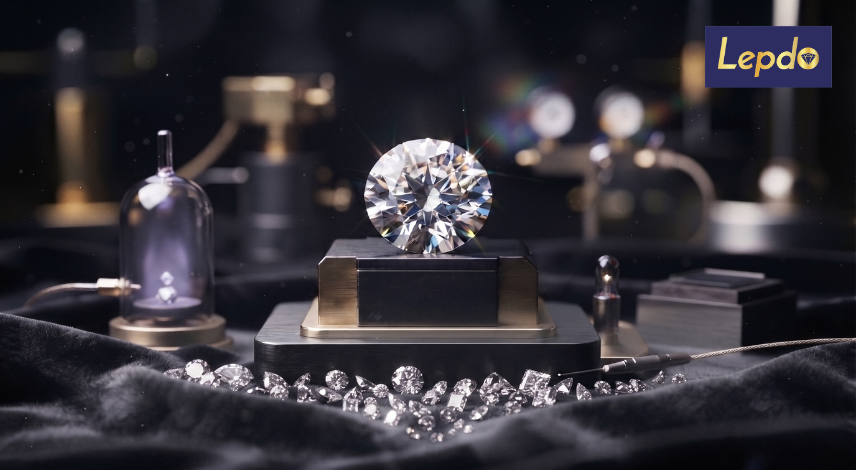
CVD diamond manufacturing process grows real diamonds by breaking down carbon-rich gas inside a plasma reactor, layering carbon atoms onto a seed plate over several weeks. Buyers benefit from consistent quality, traceable origin, and lower cost per carat than mined stones. Lepdo Diamonds works with IGI and GIA certified CVD rough sourced from vetted Surat growers.
A jewelry buyer in New Jersey recently asked our sourcing team a simple question: how does a machine grow a diamond in six weeks when nature needed a billion years underground? It is a fair question, and one that more American consumers and retailers are asking as lab-grown inventory fills showcases from coast to coast.
The CVD diamond manufacturing process is the reason. Chemical vapor deposition builds a diamond atom by atom inside a controlled reactor, using carbon-rich gas instead of the heat and pressure found deep in the earth’s mantle. The result carries the same 4Cs, the same GIA-verifiable crystal structure, and the same carat weight math as a natural stone.
Most buyers assume lab-grown means “artificial” in some lesser sense, the way cubic zirconia or moissanite is artificial. That assumption is wrong, and it is worth clearing up early. A CVD diamond is carbon, arranged in the exact same cubic lattice as a mined diamond, tested with the exact same equipment.
Here is what you will walk away with: a clear, step-by-step picture of how CVD reactors actually work, what separates a well-grown stone from a mediocre one, and how to evaluate a supplier whether you are buying one engagement ring or sourcing a parcel for your store. We will also cover pricing, certification, and where this technology is headed through 2027.
What Is the CVD Diamond Manufacturing Process?
Chemical vapor deposition is a lab-based growing method that uses heated, carbon-rich gas to build a diamond crystal one atomic layer at a time on top of a thin diamond seed. Think of it this way: it is closer to how frost slowly builds on a cold window than to how a natural diamond crystallizes under crushing pressure.
Quick Info Box
- Definition: A method of growing diamond crystals by depositing carbon atoms from plasma-activated gas onto a diamond seed inside a vacuum reactor.
- Key Types or Varieties: Microwave Plasma CVD, Hot Filament CVD, DC Plasma CVD, single-crystal seeded growth.
- Best For: Engagement rings, fashion jewelry, bulk B2B inventory, investment-grade certified stones.
- Key Difference or Advantage: Faster, more controllable growth than HPHT, with fewer metallic inclusions.
Reputable CVD Diamonds Manufacturers run this process inside sealed reactors under vacuum, feeding in methane and hydrogen gas that gets ionized into plasma. That plasma splits the gas into carbon atoms, which drift down and bond to the seed plate, building a rough diamond crystal in layers.
The seed itself matters more than most buyers realize. It is a thin slice of an existing diamond, natural or lab-grown, polished flat and placed at the base of the reactor chamber. Every atom that lands on that seed inherits its crystal orientation, which is why growers are so particular about seed quality before a single gas valve is even opened.
Popular CVD Diamond Growth Methods and Who Uses Them
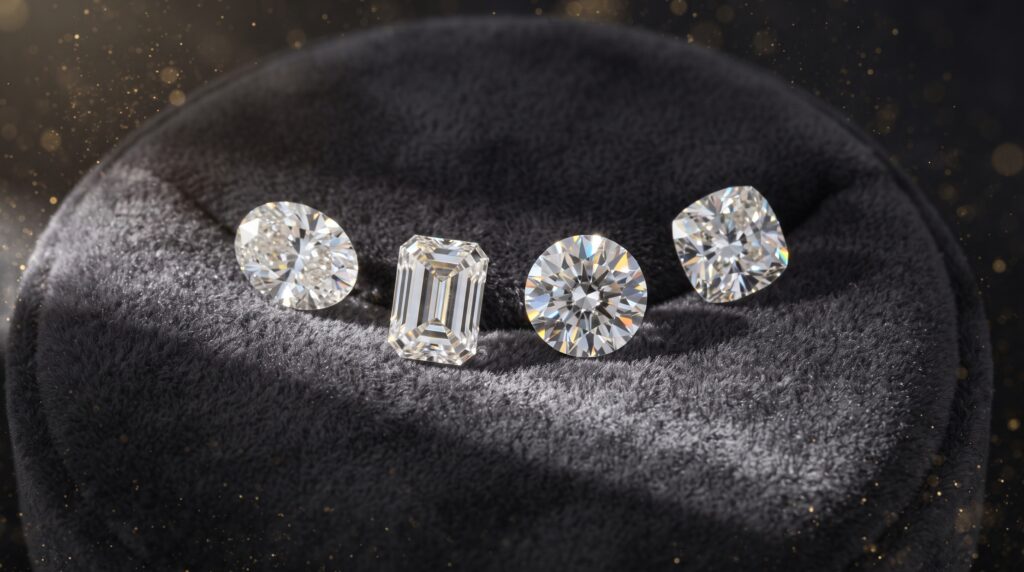
Not every CVD diamond is grown the same way. Manufacturers pick a reactor type and gas mix based on the size, color, and clarity they are targeting, and each method serves a different segment of the market.
Microwave Plasma CVD (MPCVD)
This is the dominant method in commercial diamond growing today. Microwave energy ionizes the gas into a stable plasma ball that hovers above the seed, giving growers tighter control over temperature and growth rate. Most large-scale producers, including facilities across India’s diamond hubs, rely on MPCVD for consistent DEFG color output, and it remains the workhorse behind most jewelry-grade rough on the American market.
Hot Filament CVD (HFCVD)
Here, a heated tungsten filament activates the gas instead of microwaves. It is cheaper to run but harder to scale for gem-quality rough, so it shows up more often in industrial diamond coatings than in jewelry-grade production. A grower chasing high clarity for a retail parcel rarely leans on this method as a primary route.
As-Grown White vs. HPHT-Treated CVD
As-grown CVD diamonds sometimes emerge with a light brown tint from nitrogen or boron traces. Many are then run through a secondary HPHT annealing step to lift the color into the D-to-G range that retail buyers expect. As-grown colorless CVD, where the reactor produces near-white rough without any treatment, tends to command a modest premium because it skips that extra processing stage entirely.
Beyond these three, growers also work with colored CVD diamonds treated post-growth for fancy pinks and blues, single-crystal seeded stones grown larger for bigger carat weights, polycrystalline CVD reserved for industrial cutting tools rather than jewelry, DC Plasma CVD used by a smaller number of specialized labs, and multi-chamber batch reactors that let manufacturers grow dozens of stones simultaneously to meet wholesale volume demands. A retailer stocking a full case of rings will typically pull from several of these categories at once, blending as-grown whites with treated stones to balance cost against color consistency.
CVD Diamond Production Steps From Seed to Finished Stone
It helps to walk through the actual production steps in order, because the process is more mechanical and more patient than most people picture. Growers are not “cooking” a diamond so much as coaxing one into existence, layer by microscopic layer.
Step one is seed preparation. A polished diamond plate, usually a thin HPHT or CVD slice, is cleaned and placed on a substrate holder inside the reactor chamber.
Step two is chamber evacuation. The reactor is sealed and pumped down to a low-pressure vacuum, removing contaminants that could disrupt crystal growth.
Step three is gas introduction. Methane and hydrogen flow into the chamber at carefully controlled ratios, typically with methane making up a small percentage of the total gas mix.
Step four is plasma ignition. Microwave energy, a hot filament, or a DC electrical arc ionizes the gas into plasma, breaking the molecular bonds and freeing individual carbon atoms.
Step five is deposition. Those carbon atoms drift downward and bond to the seed’s surface, and this stage runs continuously for anywhere from three to ten weeks depending on target size.
Step six is cooling and extraction. Once the crystal reaches the desired thickness, the reactor cools gradually and the rough diamond is removed for inspection.
Step seven is post-growth treatment, where applicable. Some rough emerges with a light brown tint from trace nitrogen, and growers run an HPHT annealing cycle afterward to shift the color toward colorless.
Step eight is cutting and polishing, handled separately from the growth facility in most cases, where the rough crystal is shaped into a finished, faceted stone ready for grading.
CVD Diamond Manufacturing Process vs. HPHT Growth Method: The Real Difference
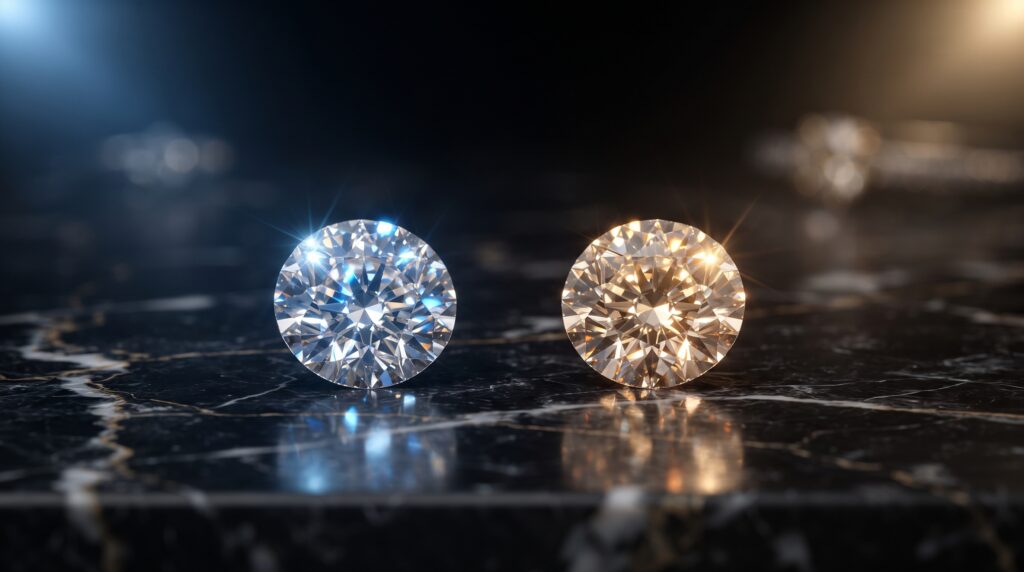
Both methods produce chemically identical lab-grown diamonds, but the diamond manufacturing process itself differs sharply in equipment, timeline, and typical output.
| Factor | CVD Diamond Manufacturing Process | HPHT Growth Method |
|---|---|---|
| Growth Environment | Low-pressure plasma reactor | Extreme heat and pressure, mimicking the earth’s mantle |
| Typical Growth Time | 3 to 10 weeks | 2 to 5 weeks for smaller stones |
| Common Color Outcome | Near-colorless to light brown, often DEFG after treatment | Often near-colorless, sometimes with metallic flux inclusions |
| Inclusion Type | Fewer metallic inclusions | Can contain metallic flux inclusions from the press |
| Equipment Cost | Lower initial reactor investment | Higher press and tooling investment |
To be fair, HPHT still holds an edge for very large carat weights and for treating brown CVD rough into brighter color grades. That said, CVD has become the preferred route for fancy shapes and elongated cuts because the flat, layer-by-layer growth pattern gives cutters more predictable rough to work with, which matters when a manufacturer is planning yield against a specific 5CS target.
Buyers sometimes ask which method makes a “better” diamond, and honestly, that question misses the point. Both processes end with the same crystal structure. The real difference shows up upstream, in cost of production and downstream, in which rough shapes each method tends to favor.
How to Choose the Right CVD Diamond for Your Style
- Match the shape to your hand or design. Elongated cuts like oval and emerald tend to suit CVD rough particularly well, since the flat growth plate favors longer crystal formation.
- Consider setting compatibility. Bezel and halo settings forgive minor color variance better than a solitaire, which matters if you are working with a lower budget stone.
- Check the cut-to-setting ratio. A deep pavilion needs a taller setting, while a shallow one needs more prong coverage to prevent chipping over years of daily wear.
- Compare the budget advantage. Most buyers find CVD diamonds priced 60 to 85 percent below comparable natural stones at the same carat weight and clarity grade.
- Think about occasion. Engagement rings favor D-to-F color and VS clarity, while fashion jewelry can comfortably use G-to-I color for noticeably better value.
- Decide between lab-grown and natural. If origin transparency and lower cost per carat matter to you, Lab Grown Diamonds grown through CVD offer a documented, traceable alternative to mined stones without sacrificing brilliance or fire.
Before you finalize your choice, pull the certification report and confirm the grading lab, the treatment history, and whether the stone was HPHT-annealed after CVD growth. That single check prevents most buyer’s remorse, and it takes less than five minutes if the seller has nothing to hide.
What B2B Buyers and Diamond Manufacturers Should Know
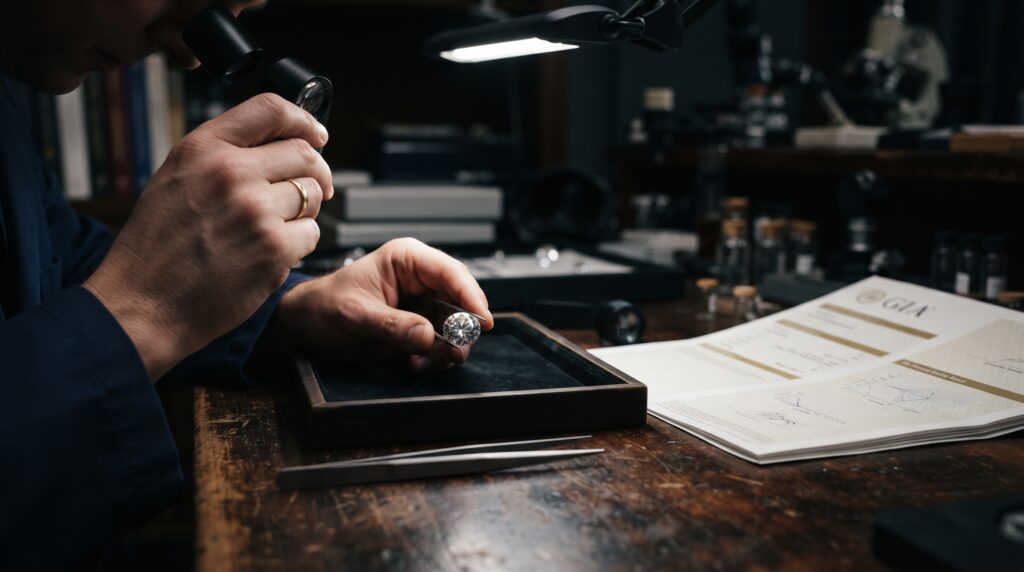
Wholesalers sourcing CVD rough in volume need to think beyond individual stones. Bulk sourcing from a fancy cut diamond manufacturer requires consistent reactor output, meaning you want a supplier who can document batch-to-batch color and clarity stability rather than one great parcel followed by three inconsistent ones.
Cut grading consistency matters just as much as rough quality. A grower with an in-house cutting team, rather than one outsourcing to unrelated workshops, tends to deliver tighter length-to-width ratios across a repeat order. Manufacturers like Lepdo Diamonds, based in Surat’s diamond hub, typically grade CVD stones against both IGI and GIA standards before a parcel ships, since American retailers increasingly ask for IGI Certified Diamonds alongside GIA paperwork.
Rapaport pricing still influences lab-grown quoting indirectly, even though CVD diamonds trade on their own separate pricing sheets now. In my experience, buyers who track both Rapaport natural benchmarks and lab-grown price lists negotiate better wholesale terms, because they understand the full spread a retailer can mark up. Sourcing relationships also run through trading hubs like a Diamond Bourse, where verified manufacturers and international buyers settle bulk deals under regulated trading rules.
One more thing worth flagging for anyone new to this side of the business: ask for growth batch numbers, not just certificate numbers. A grower who tracks stones back to a specific reactor run can tell you exactly why a parcel came out slightly warmer or cooler in color, and that traceability tends to separate serious manufacturers from opportunistic middlemen.
CVD Diamond Jewelry Trends in the USA (2026 to 2027)
American demand for lab-grown jewelry keeps climbing, and industry pricing data shows lab-grown diamonds now account for a significant and growing share of engagement ring unit sales nationwide. Elongated fancy shapes, especially oval and radiant cuts set in yellow gold, dominate current retail floor requests.
Cultural influence from red-carpet jewelry and social media styling continues to push toned-down, vintage-inspired settings paired with larger CVD center stones, since buyers can afford more carat weight without stretching budget. Bezel-set solitaires and three-stone designs are both trending upward for 2026 through 2027.
Fine jewelry brands are also expanding beyond rings. Fancy cut diamond jewellery in tennis bracelets and stud earrings has picked up noticeably at trade shows, reflecting a buyer base that wants everyday CVD pieces, not just occasion wear. Retailers who stocked only rings two years ago are now carrying full CVD collections across earrings, pendants, and stackable bands to capture that demand.
How to Evaluate Quality in CVD Diamonds
When I assess a CVD stone on the loupe, the first thing I check is strain pattern under polarized light, since excessive strain can hint at growth interruptions during the reactor cycle. The truth is, most quality problems trace back to inconsistent gas flow or temperature drift during growth, not the cutting stage.
- Check the table percentage and depth percentage against ideal cut ranges for the shape.
- Look for a strong bowtie effect in oval and marquise cuts, which signals uneven light return across the pavilion.
- Evaluate brilliance, fire, and scintillation together under multiple lighting conditions, not just direct sunlight.
- Confirm the clarity grade matches what the certificate states, since minor inclusions near the girdle can be masked by certain settings.
- Verify certification through a recognized lab. A Diamond Manufacturing partner offering certified diamonds with full grading reports gives you a paper trail if a dispute ever arises.
You will want to pay attention to how the stone performs in low light, since that is where weak cut quality reveals itself fastest. A diamond that dazzles only under a jeweler’s spotlight and goes flat at a dinner table is telling you something about its proportions.
Conclusion
The CVD diamond manufacturing process has moved from a novelty to a mainstream production method in under two decades, and the science behind it explains why. Growers can now control color, clarity, and shape outcomes with a precision that mined diamonds never allowed, which is exactly why American retailers and consumers keep shifting toward certified lab-grown inventory.
Whether you are a retailer planning your 2026 case lineup or a consumer comparing a CVD oval against a natural round, the fundamentals stay the same: check the certification, understand the growth method, and evaluate cut quality with the same rigor you would apply to any diamond purchase. Retailers sourcing certified lab-grown diamonds can explore Lepdo Diamonds’ current stock and request grading documentation before placing an order.
Diamonds built by science still deserve the same careful eye as diamonds pulled from the earth, and that is the standard worth holding every supplier to.
Frequently Asked Questions About the CVD Diamond Manufacturing Process
1. What is the CVD diamond manufacturing process?
It is a lab-based method that grows real diamonds by depositing carbon atoms from ionized gas onto a diamond seed inside a vacuum reactor. The process builds the crystal in thin layers over several weeks, producing a stone with the same chemical and optical properties as a mined diamond.
2. Is a CVD diamond cheaper than an HPHT diamond?
Pricing between the two is often similar for equivalent carat weight and grade, though CVD sometimes runs slightly lower due to lower equipment overhead. The bigger price gap shows up when comparing either lab-grown method against natural mined diamonds.
3. Which CVD diamond shape looks biggest or most impressive?
Elongated shapes like oval, emerald, and radiant tend to appear larger per carat because of their extended length-to-width ratio. Round brilliants, by contrast, concentrate the same weight into a more compact face-up area.
4. Does a CVD diamond have a GIA cut grade?
Round CVD diamonds can receive a full GIA cut grade, while fancy shapes typically receive detailed proportion data without an overall grade, matching how GIA handles natural fancy shapes too. IGI also issues comparable grading reports for lab-grown stones.
5. What is the biggest quality risk with CVD diamonds?
Inconsistent reactor conditions can cause visible strain patterns or uneven color zoning within the crystal. Buying from a manufacturer with documented batch consistency and third-party certification significantly reduces this risk.
6. Are lab-grown CVD diamonds as good as natural diamonds?
Chemically and optically, yes, since CVD diamonds share identical carbon crystal structure with mined stones. The only meaningful differences are origin and price, not durability, brilliance, or long-term wearability.
7. Which CVD diamond shape is best for an engagement ring?
Oval and cushion cuts remain the most requested shapes for engagement rings because they balance brilliance with a flattering, elongated silhouette. Round brilliant CVD diamonds still hold strong appeal for buyers who prioritize maximum fire and scintillation.
8. How do I choose a reliable CVD diamond manufacturer or supplier?
Look for IGI or GIA certification on every stone, documented batch consistency, and transparent pricing without hidden treatment disclosures. Requesting a sample parcel before committing to bulk orders is standard practice among experienced B2B buyers.