Top Diamond Manufacturers in Surat: Why Surat is the Diamond Capital of the World
 by lepdogroup@gmail.com
1 comment
by lepdogroup@gmail.com
1 comment
Top Diamond manufacturers in Surat are the cutting and polishing companies based in Surat, Gujarat, India, the city that processes roughly 90% of the world’s polished diamonds by volume. For US buyers and trade professionals, understanding this supply chain means access to better pricing, broader selection, and direct sourcing from certified manufacturers. Lepdo Diamonds connects American buyers to verified Surat manufacturers with full GIA and IGI certification.
Every single time an American walks into a jewelry store and slides a diamond ring onto their finger, there is a very good chance that stone spent time in a factory in Surat, India. According to industry estimates, Surat-based diamond manufacturers cut and polish approximately 90% of all diamonds sold globally. That number is not a rounding error, it is a structural reality of the modern diamond trade. Yet most buyers, and even some retail jewelers in the US, have only a vague sense of why top diamond manufacturers in Surat have earned such a dominant position.
This post covers exactly that: what makes Surat the world’s diamond capital, who the key players are, how the Surat diamond industry is structured, and what both B2C buyers and B2B professionals need to know before making sourcing decisions in 2025 and beyond.
Along with its globally recognized diamond manufacturing ecosystem, Surat is also home to companies that offer complete diamond and jewelry manufacturing solutions. Lepdo Diamonds is one such Surat-based diamond and jewelry manufacturer, supplying natural diamonds, lab-grown diamonds, certified loose diamonds, and custom jewelry to wholesalers, retailers, jewelry brands, and international buyers. By combining advanced manufacturing technology with skilled craftsmanship, the company supports businesses looking for reliable sourcing from India’s leading diamond manufacturing center.
What the Surat Diamond Industry Actually Is
Surat is a city in the state of Gujarat, western India, and it has been synonymous with diamond cutting and polishing for over seven decades. What started as a cottage industry in the 1960s has grown into a multi-billion-dollar ecosystem that feeds the global diamond supply chain at every level.
Quick Info Box:
- Definition: The Surat diamond industry refers to the network of cutting units, polishing companies, manufacturers, and wholesalers based in Surat, Gujarat, that transform rough diamonds into polished, gem-quality stones for global trade.
- Key Types: Round brilliants, fancy shapes (oval, cushion, pear, marquise, emerald), lab-grown diamonds (CVD and HPHT), melee diamonds, certified loose stones.
- Best For: Wholesale buyers, US jewelry retailers, engagement ring shoppers, investment diamond buyers, and diamond jewelry brands sourcing consistent quality at scale.
- Key Advantage: Unmatched cost efficiency combined with a skilled artisan workforce and access to modern laser-cutting and polishing technology.
For a deeper look at how these facilities operate within the global supply chain, the Diamond Manufacturer resource at Lepdo Diamonds provides a clear starting point.
Types of Top Diamond Manufacturing Units in Surat And Who They Serve
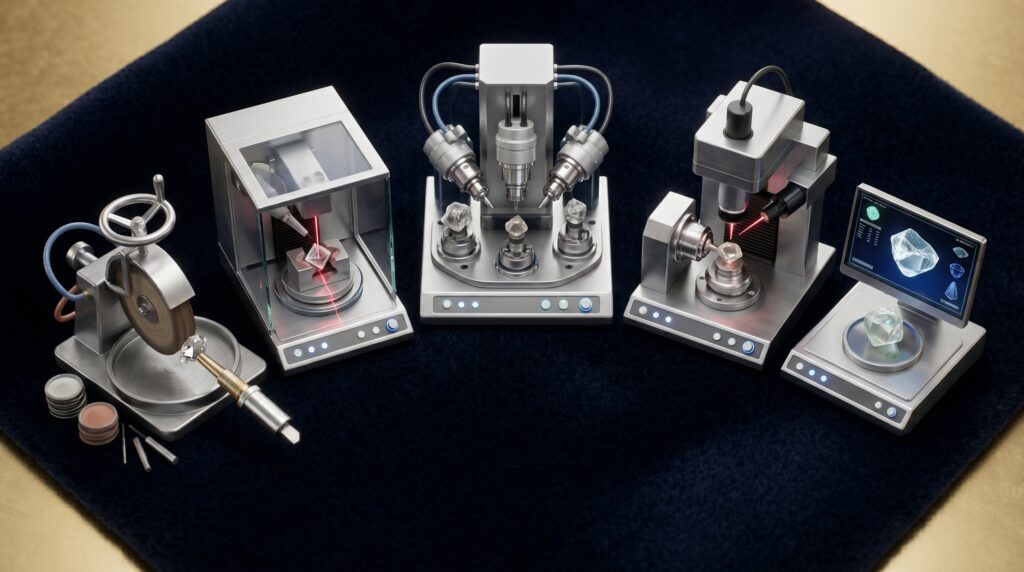
The Surat diamond market is not monolithic. Walk through the Varachha Road district or the Mahidharpura area and you will find several distinct categories of diamond companies in Surat, each serving a different segment of the market.
Large-Scale Integrated Manufacturers
These are the giants of the Surat diamond industry. Companies in this tier employ anywhere from 500 to 10,000 workers, operate their own rough procurement divisions, run in-house grading labs, and sell directly to international retailers and wholesalers. They invest heavily in AI-assisted cutting software that maximizes yield from each rough stone while maintaining ideal proportions. US jewelry chains and luxury brands are their primary customers.
Mid-Size Specialty Polishing Houses
Here is what sets mid-size operations apart: they tend to specialize. Some focus exclusively on fancy shape diamonds ovals, cushions, and pears that require more complex faceting decisions. Others concentrate on a specific carat weight range, producing consistent melee or accent diamonds in volume. These companies feed a substantial portion of the US engagement ring and fashion jewelry market.
Small Family-Run Cutting Units
Thousands of small diamond cutting units surat-wide still operate as family businesses, often working as sub-contractors for larger manufacturers. They are highly skilled at specific cuts and shapes passed down through generations. Most buyers never deal with these units directly, but their output flows through aggregators and trading platforms into the broader market.
Lab-Grown Diamond Manufacturers
Surat has rapidly become a global center for lab-grown diamond manufacturing, particularly CVD (Chemical Vapor Deposition) grown stones. These facilities produce diamonds that are physically and chemically identical to mined stones, certified by IGI, and sold at significantly lower price points. For US buyers and retailers, sourcing lab-grown diamonds through Surat manufacturers offers a compelling combination of quality and value.
Diamond Trading and Bourse-Connected Houses
Some Surat-based companies primarily function as trading entities connected to the Surat Diamond Bourse, one of the largest diamond trading facilities in the world. They aggregate polished goods from multiple cutting units and sell to international buyers in standardized parcels.
Export-Focused Wholesale Firms
These companies are structured almost entirely around B2B export. Their catalogues are calibrated to Rapaport pricing, their quality control is aligned with GIA grading standards, and their account managers speak the language of the US wholesale buyer. Top Diamond manufacturers in surat gujarat-wide in this category have become increasingly sophisticated about meeting US market requirements around cut, color, and Diamond Certification.
Artisanal and Antique Cut Specialists
A smaller but growing segment produces old mine cuts, rose cuts, and antique-inspired faceting styles that have surged in popularity with US consumers seeking unique or vintage-aesthetic diamond jewelry. Think of it this way: these are the custom workshops of the Surat diamond world, producing stones you simply cannot find in commodity catalogues.
Surat’s Top Diamond Manufacturers vs. Other Global Cutting Centers: The Real Difference
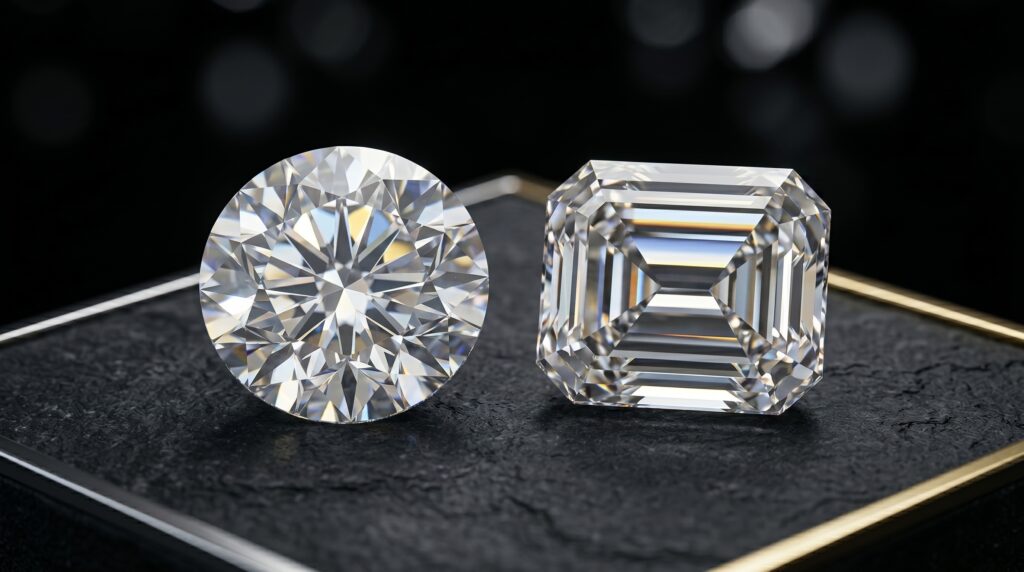
For decades, Antwerp, Tel Aviv, and New York were the prestige addresses of the diamond cutting world. Surat changed that equation completely. Here is how the comparison looks today:
| Factor | Surat, India | Antwerp / Tel Aviv / New York |
|---|---|---|
| Volume processed | ~90% of world’s diamonds | Combined less than 10% |
| Labor cost | Highly competitive | Significantly higher |
| Specialty | Full range from melee to large stones | High-value, large, complex stones |
| Technology adoption | Advanced laser cutting, AI planning software | Advanced, but smaller scale |
| Certification access | IGI on-site, GIA submissions routine | GIA primary, IGI less common |
| Direct buyer access | Growing rapidly via digital platforms | Traditionally bourse-dominated |
The numbers are clear. Antwerp still commands respect for handling the world’s most valuable individual stones, and Israeli manufacturers have deep expertise in complex fancy cuts. That said, for the vast majority of diamonds that end up in US engagement rings, fashion jewelry, and retail showcases, the journey begins in Surat.
The key analytical point is this: Surat does not compete with Antwerp on one or two extraordinary stones per year. Surat supplies the entire base of the global diamond pyramid, and it does so with increasing sophistication in both cut quality and certification standards. The surat diamond market has evolved from a labor-cost story into a genuine expertise story.
How to Choose the Right Diamond Source for Your Needs
Whether you are a retailer filling your showcase or a consumer shopping for an engagement ring, choosing where and how to source from the Surat diamond market requires a clear set of decision filters.
- Define your cut and shape priority first. Surat manufacturers produce the full spectrum, but not every facility excels at every cut. If you need precision-cut round brilliants with AGS-equivalent light performance, identify manufacturers known for ideal-cut production. Fancy shapes require different expertise.
- Match manufacturer scale to your volume needs. A small retailer ordering 20 stones per quarter does not need a relationship with a 5,000-person factory. Mid-size specialty houses and export-focused wholesalers are often a better operational fit for smaller US buyers.
- Align certification requirements upfront. The US retail market generally expects GIA certification on natural diamonds above 0.50 carats. IGI is broadly accepted for lab-grown diamonds. Know which standard your end customer expects before you source.
- Understand the budget advantage clearly. Sourcing from diamond factories in Surat, especially through a vetted platform, can reduce your per-stone cost by 20–40% compared to buying through traditional wholesale channels in New York or Los Angeles. That margin advantage either improves your retail profitability or lets you offer more competitive consumer pricing.
- Match the occasion to the product tier. Investment-grade diamonds (2 carats and above, ideal or excellent cut, D–F color, VS clarity and above) require strict GIA certification and should come from manufacturers with a verified track record. Fashion jewelry and anniversary bands can tolerate a wider range of quality tiers sourced through diamond polishing companies surat-wide.
- Consider lab-grown diamonds actively. Lab-grown diamond manufacturing in Surat has matured significantly. For consumers and retailers who want maximum size and brilliance within a defined budget, lab-grown rounds and ovals from IGI-certified Surat manufacturers deliver exceptional value. For a detailed overview of the lab-grown vs. natural decision in a commercial context, explore the Diamond Industry resource.
Before you finalize your sourcing decision, get samples. Any manufacturer or platform worth your business will provide graded sample stones. Evaluate light performance under different lighting conditions before committing to a volume order.
What B2B Buyers and Diamond Manufacturers Should Know
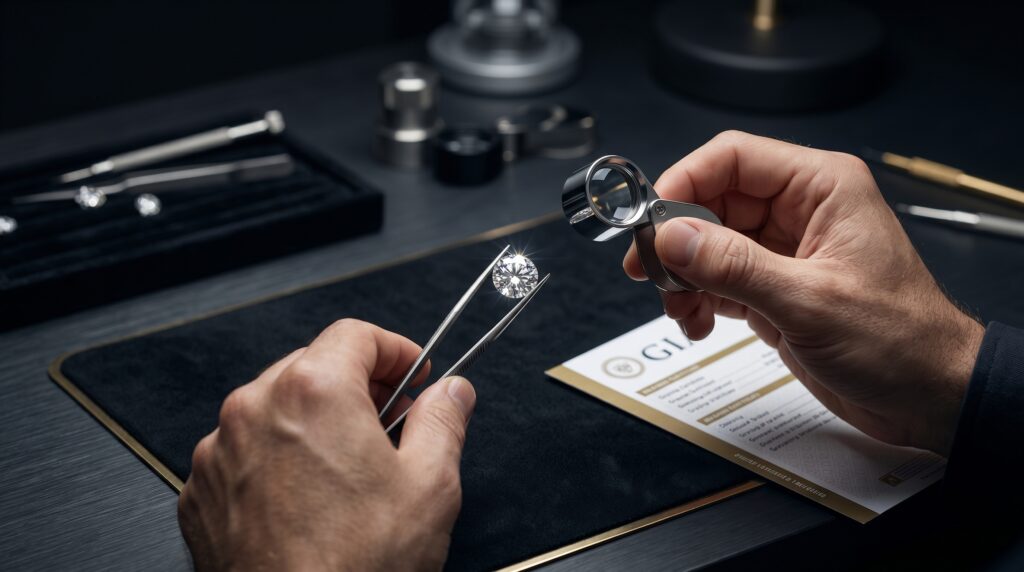
Most buyers in the USA who interact with the Surat diamond industry do so through intermediaries: US-based wholesalers, trading platforms, or import agents. That layer adds margin and sometimes reduces transparency. Here is what professionals sourcing directly or semi-directly need to understand.
Cut grading consistency is the first variable to audit. Unlike round brilliants, where GIA provides an explicit cut grade, many fancy shapes produced by diamond cutting units surat-wide are not assigned a formal cut grade. This means buyers need to evaluate table percentage, depth percentage, length-to-width ratio, and optical symmetry manually or request a Seybert/GemEx light performance report.
Rapaport pricing is the baseline, not the ceiling. Most Surat manufacturers price their polished goods at a percentage of Rap (Rapaport list price). Understanding current Rap levels for the specific shape, color, and clarity you are sourcing helps you assess whether a quoted price is competitive or inflated.
IGI and GIA certification standards matter differently by product type. For natural diamonds entering the US market, GIA certification remains the gold standard. For lab-grown diamonds, which now represent a growing share of Surat’s output, IGI is widely accepted and in many cases preferred, given IGI’s deep investment in lab-grown grading infrastructure.
Bulk sourcing requires parcel consistency checks. When ordering parcels of matching stones (for eternity bands, pavé settings, or tennis bracelets), request grading documentation for the full parcel, not just sample stones. Inconsistency in color or cut across a 50-stone parcel is one of the most common pain points for US jewelry manufacturers.
In my experience, the best Surat-based manufacturers are those that have invested in internal grading departments staffed with trained gemologists, not just production floor QC checks. That internal rigor is what separates reliable partners from those who require constant oversight.
For professionals who want to understand how Surat fits into the broader global trade structure, the Diamond Wholesale and Diamond Bourse resources provide useful context on how polished goods move from factory floor to retail counter.
Surat Diamond Industry Trends in the USA (2026 to 2027)
The US market’s relationship with Surat-based manufacturers has shifted measurably over the past two years, and several trends are reshaping purchasing patterns in ways worth tracking.
Lab-grown diamond demand from US retailers sourcing via Surat manufacturers has surged. According to trade data tracked by GJEPC (Gems and Jewellery Export Promotion Council of India), India’s lab-grown diamond exports predominantly from Surat, grew by over 30% year-over-year through 2024 and have continued to expand into 2025. US consumers, particularly millennial and Gen Z engagement ring buyers, are driving much of this demand, drawn by the combination of larger carat weights and lower price points that lab-grown diamond jewelry from Surat makes possible.
On the natural diamond side, fancy shapes continue to gain ground. Oval cuts and elongated cushions are performing particularly strongly in US retail, with many Surat manufacturers adjusting their production mix to increase output of these shapes. The aesthetic influence of social media, celebrity engagements, and vintage-inspired design movements has filtered directly into sourcing decisions that US jewelers are placing with their Surat contacts.
The Surat Diamond Bourse, which opened its expanded facilities in recent years, has also strengthened direct international buyer access. US-based retailers and wholesalers can now connect with hundreds of Surat-based sellers in a single location, a development that is gradually reducing reliance on traditional import intermediaries. The Diamond Marketplace resource provides a useful overview of how these trading structures function.
How to Evaluate Quality When Buying from Top Diamond Manufacturers in Surat
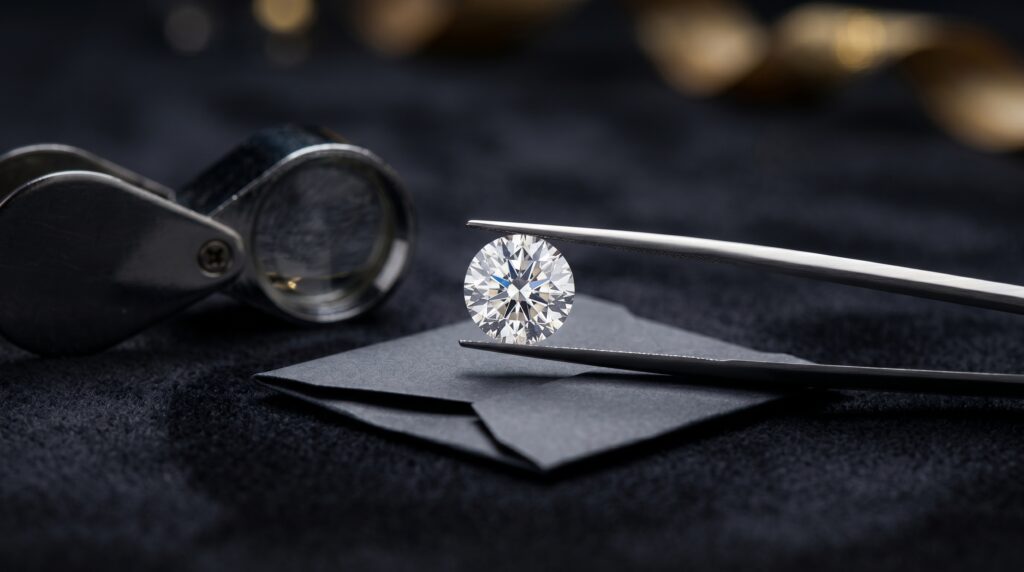
When I assess a diamond sourced from a Surat manufacturer, the first thing I check is not the certificate, it is the stone itself under magnification and different light sources. Certificates confirm what was submitted; your own evaluation confirms what you are actually receiving.
Here are five evaluation priorities that US buyers should apply specifically when sourcing from the Surat diamond market:
- Check cut proportions against GIA ideal benchmarks. For round brilliants, target a table percentage between 54–58%, depth percentage between 59–62.5%, and a thin-to-medium girdle. Stones cut for weight retention (common in volume production) often fall outside these ranges and sacrifice brilliance significantly.
- Evaluate for optical symmetry, not just clarity. A VS2 clarity stone with excellent optical symmetry will outperform a VS1 stone with poor facet alignment under real-world lighting conditions. Use a Hearts and Arrows viewer or ASET (Angular Spectrum Evaluation Tool) for round brilliants when evaluating Surat-sourced goods.
- Assess fire and scintillation in multiple lighting environments. Diamonds that look impressive under direct spotlighting (common in factory and bourse settings) sometimes disappoint under the diffused overhead lighting typical of US retail environments. Test under both.
- Verify color consistency across parcels. Color grading in volume production can drift. If you are sourcing a matched parcel, compare stones side by side against master color comparison stones rather than relying solely on individual certificate grades.
- Request factory-level documentation on cut specifications. Reputable diamond polishing companies in Surat maintain cut specification sheets for their production runs. Asking for this information signals that you are a knowledgeable buyer and tends to result in more careful parcel selection on the seller’s end.
You will want to pay attention to pavilion angle in particular, even a half-degree deviation from the ideal 40.6–41 degree range on a round brilliant reduces light return measurably. This level of detail matters enormously when you are sourcing at volume. For buyers who want to understand how certification captures these variables, the Diamond Certification glossary entry is worth reading carefully.
Why Choose a Diamond & Jewelry Manufacturer in Surat?
Many international buyers today prefer working with manufacturers that can handle both diamonds and finished jewelry under one roof. This simplifies sourcing, improves quality control, shortens production timelines, and provides greater design flexibility.
Lepdo Diamonds is a Surat-based diamond and jewelry manufacturer offering:
- Natural Diamonds
- Lab-Grown Diamonds (CVD & HPHT)
- GIA & IGI Certified Loose Diamonds
- Custom Diamond Jewelry Manufacturing
- OEM & Private Label Jewelry Production
- Wholesale Supply for Global Retailers and Brands
With manufacturing expertise, modern production facilities, and strict quality standards, the company serves businesses seeking dependable diamond and jewelry manufacturing from Surat. This integrated approach helps buyers source polished diamonds and finished jewelry from a single trusted manufacturing partner.
Conclusion
Three things stand out clearly after this deep look at the Surat diamond industry. First, the scale of what Surat’s diamond manufacturers accomplish is genuinely extraordinary, no other city on earth comes close to processing the volume of polished diamonds that Surat produces annually, and the quality infrastructure has matured to match. Second, the opportunity for US buyers, both trade professionals and individual consumers, to access better pricing and broader selection by connecting with certified Surat manufacturers has never been greater than it is today. The combination of direct digital platforms and internationally recognized certification standards has removed most of the historical friction from cross-border sourcing.
Third, quality is not automatic. The best results come from buyers who understand what to ask for, know how to evaluate cut quality beyond a certificate number, and choose sourcing partners with verified credentials and transparent pricing.
If you are ready to explore certified, directly sourced diamonds from the world’s leading manufacturing hub, Lepdo Diamonds gives you access to the full depth of the Surat diamond market with the verification standards the US market demands. You can also explore specific buying frameworks at the Diamond Retail and Diamond Manufacturing resources to build your knowledge before you buy.
The world’s best top diamond manufacturers in Surat are waiting to be discovered. The right partner makes all the difference in whether that discovery becomes a smart, lasting purchase or an expensive lesson.
Surat continues to lead the global diamond industry through its manufacturing expertise, skilled workforce, and advanced technology. Whether sourcing certified loose diamonds or custom jewelry, choosing an experienced diamond and jewelry manufacturer can make a significant difference in quality, consistency, and long-term value. Lepdo Diamonds represents this manufacturing excellence by offering both diamonds and jewelry from Surat, helping wholesalers, retailers, and jewelry brands source confidently from one of the world’s most trusted manufacturing hubs.
Frequently Asked Questions About Top Diamond Manufacturers in Surat
1. What are top diamond manufacturers in Surat?
Top Diamond manufacturers in Surat are companies and cutting units based in Surat, Gujarat, India, that process rough diamonds into polished, gem-quality stones for global sale. Surat handles approximately 90% of all diamonds sold worldwide by volume. These range from large integrated factories employing thousands to small family-run units specializing in specific cuts and carat ranges.
2. Are diamonds from Surat manufacturers cheaper than those from other sources?
Yes, typically. Surat’s combination of skilled labor, high production volume, and operational scale means lower per-stone cutting and polishing costs compared to Belgium, Israel, or the USA. Buyers sourcing directly from verified Surat manufacturers through established platforms frequently achieve savings of 20–40% compared to standard wholesale pricing in the American market.
3. Which diamond types look most impressive when sourced from Surat manufacturers?
Oval and cushion cuts from Surat offer outstanding visual impact relative to their price, delivering strong brilliance and scintillation with apparent size that exceeds what the carat weight suggests. Round brilliants remain the benchmark for optical performance. For buyers prioritizing maximum presence on the hand within a set budget, Surat-produced oval cuts from certified manufacturers are consistently compelling.
4. Do diamonds from Surat manufacturers come with GIA or IGI certification?
Yes. Reputable diamond companies in Surat submit stones to GIA and IGI routinely. GIA is preferred for natural diamonds entering the US retail market; IGI is widely accepted for lab-grown diamonds and is particularly strong in this segment. Always request the full grading report before purchasing, verifying that the certificate number matches the laser inscription on the stone.
5. What is the biggest quality risk when buying from diamond factories in Surat?
Inconsistent cut quality is the primary risk, particularly from smaller or unverified facilities that prioritize weight retention over ideal proportions. This can result in stones with poor depth percentages, oversized tables, or misaligned facets that reduce brilliance and fire significantly. The solution is straightforward: require third-party GIA or IGI certification and verify cut grades or proportion details on every stone you purchase.
6. Are lab-grown diamonds from Surat as good as natural diamonds?
Physically and optically, yes. Lab-grown diamonds manufactured in Surat are chemically and structurally identical to mined diamonds, same hardness (10 on the Mohs scale), same refractive index, same brilliance and fire when cut correctly. The difference is rarity and resale value. For buyers focused on size and beauty within a budget, IGI-certified lab-grown diamonds from Surat manufacturers represent genuine value.
7. Which diamond type from Surat is best for an engagement ring?
Round brilliants remain the most popular and optically superior choice for engagement rings from Surat manufacturers, offering unmatched fire and light return. Oval cuts have surged in popularity for their romantic appearance and elongating effect on the finger. Cushion cuts appeal to buyers seeking a softer, vintage-inspired aesthetic. The best choice depends on personal style and the ring setting selected.
8. How do I choose a reliable diamond manufacturer in Surat?
Prioritize manufacturers or platforms that provide GIA or IGI certified stones with complete grading reports. Look for GJEPC membership, transparent Rapaport-referenced pricing, and verifiable track records with US buyers. Established platforms like Lepdo Diamonds connect American buyers with verified Surat manufacturers directly, with certification standards and quality controls already built into the sourcing process.