Moissanite vs Diamond: What Every Jeweler Needs to Know Before Stocking in 2026
 by lepdogroup@gmail.com
0 comments
by lepdogroup@gmail.com
0 comments
Moissanite vs diamond for jewelers India refers to the critical sourcing and stocking decision retailers face when choosing between silicon carbide moissanite and certified natural or lab-grown diamonds. For USA-market jewelers, the choice directly affects margin, customer trust, and long-term brand positioning. Lepdo Diamonds provides both options with transparent certification and B2B wholesale pricing to help retailers stock smarter in 2026.
A retailer in Dallas recently told me she added moissanite to her showcase three months ago and sold every piece within six weeks. A wholesaler in New York called me the same quarter asking why his moissanite inventory was sitting while diamond pieces moved. Same product, completely different results and the difference came down to one thing: knowing your customer before you stock your case.
The debate around moissanite vs diamond for jewelers India has become one of the most discussed sourcing decisions in the USA fine jewelry trade. Buyers want options. Margins are tighter. And the supply chain connecting Indian manufacturers to American retail shelves is more accessible than ever before. What you stock in 2026 will shape your store’s reputation for the next five years.
This post will walk you through the real differences between moissanite and diamond, how to evaluate quality in both, what the B2B sourcing landscape looks like from India, which jewelry trends are driving demand right now, and exactly how to make the right stocking decision for your specific store. You will get clear answers, not marketing fluff.
What Moissanite and Diamond Actually Are
Moissanite is a gemstone made from silicon carbide, originally discovered in a meteor crater in Arizona in 1893 by Nobel Prize winner Henri Moissan. Today’s moissanite is entirely lab-created, grown in controlled environments to produce near-colorless, high-clarity stones at a fraction of diamond’s cost. Diamond, by contrast, is pure carbon crystallized under extreme heat and pressure, either deep in the earth over billions of years or inside a lab-grown reactor in a matter of weeks.
Quick Info Box:
- Definition: Moissanite is lab-grown silicon carbide; diamond is natural or lab-grown carbon, graded by GIA and IGI under the 4Cs system.
- Key Types: Natural diamond, lab-grown diamond, classic moissanite, forever one moissanite (near-colorless), forever brilliant moissanite.
- Best For: Moissanite suits budget-conscious buyers, fashion jewelry, and high-volume retail; diamond suits engagement rings, investment purchases, and luxury retail.
- Key Difference: Diamond carries internationally recognized certification and resale value; moissanite offers superior fire per dollar with no comparable resale market.
For a deeper side-by-side breakdown of the two gemstones, the Moissanite vs Diamond glossary page at Lepdo Diamonds is a strong starting resource.
Types of Moissanite and Diamond And Who They Are For
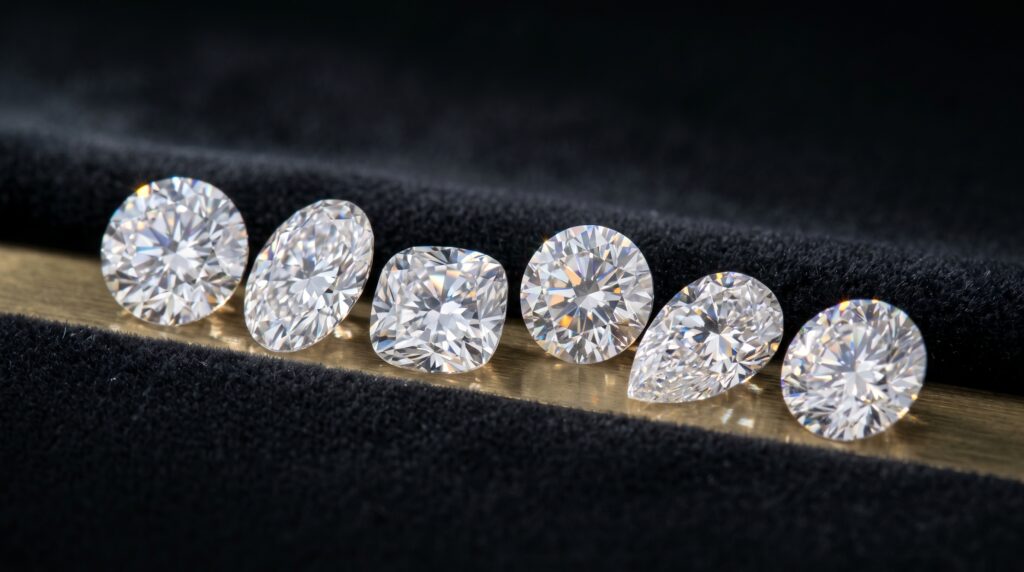
Both moissanite and diamond come in varieties that serve different retail segments. Understanding who buys each type helps you stock intentionally rather than reactively.
1. Classic Moissanite (Standard Grade)
Older generation moissanite carried a slight yellow or green tint visible under certain lighting. It remains available at the lowest price point from moissanite wholesale India suppliers. It works well for fashion jewelry and costume-adjacent price points, but it is not ideal for bridal or fine jewelry.
2. Forever One and Near-Colorless Moissanite
This is the current retail standard. Forever One moissanite sits at DEF color equivalent meaning it looks colorless to the naked eye and holds up well under store lighting. Retailers targeting millennial and Gen Z buyers who want a large center stone without the lab-grown diamond price tag find this grade performs best. Moissanite price vs diamond price at this grade is roughly 70 to 85 percent lower, which gives you real margin flexibility.
3. Lab-Grown Diamonds (Round Brilliant)
Round brilliant lab-grown diamonds remain the highest-volume SKU in American bridal retail. They carry full GIA or IGI certification, complete 4Cs grading, and the word “diamond”, which still carries enormous emotional weight with engagement ring buyers. Any serious diamond jewelry manufacturer India works with this product daily.
4. Lab-Grown Diamonds (Fancy Shapes)
Oval, cushion, pear, and elongated radiant lab-grown diamonds are growing fast in 2026. They photograph beautifully on social media and offer a custom, one-of-a-kind look at a lower per-carat cost than rounds. B2B buyers sourcing from a Surat-based moissanite Surat supplier or diamond manufacturer will find fancy shapes available in both moissanite and lab-grown options.
5. Natural Diamonds (Investment Grade)
Natural diamonds above 1 carat with strong GIA documentation particularly those in the D to G color range with VS2 or better clarity continue to attract investment-minded buyers. These are not competing with moissanite. They serve a completely different buyer.
6. Salt and Pepper Diamonds
An emerging niche, these natural diamonds with visible inclusions appeal to buyers who want organic, unique stones. They are not directly comparable to moissanite but represent a growing alternative to both traditional white diamonds and moissanite in the artistic jewelry segment.
7. Yellow and Fancy Color Moissanite
Some moissanite diamond supplier operations now produce colored moissanite in yellow, green, and grey. These serve fashion jewelry lines and art jewelry brands looking for affordable color at scale.
8. Heirloom-Grade Natural Diamonds (Under 1 Carat)
For retailers who source vintage-style or antique-cut stones, natural diamonds in the I to K color range with SI1 clarity are priced competitively, carry cultural weight, and satisfy customers who want the real thing at an accessible price.
Moissanite vs Diamond: The Real Difference
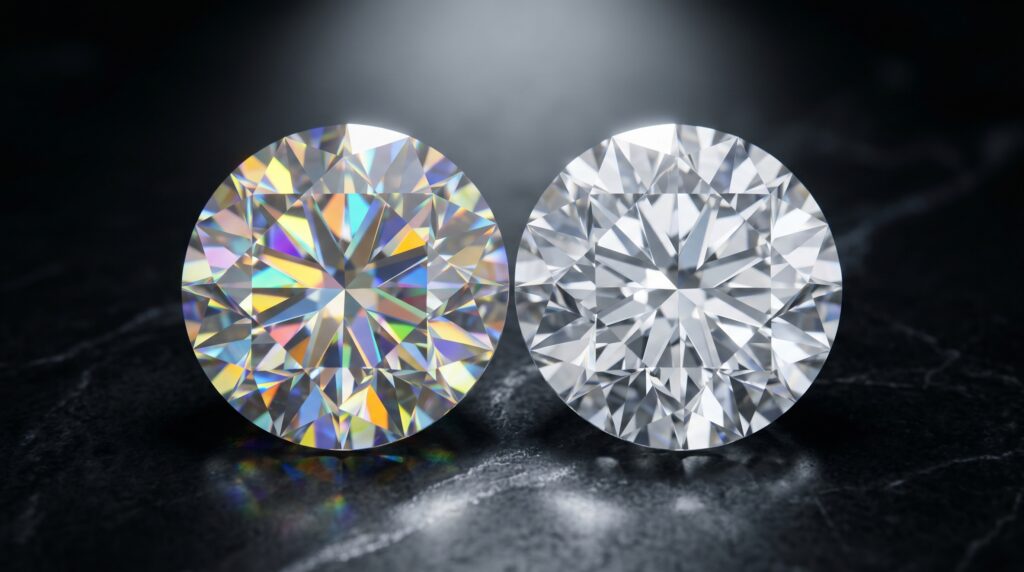
Here is what most comparisons get wrong, they focus only on price. The real difference is about what the stone communicates to the buyer and what that means for your store’s positioning.
| Factor | Moissanite | Diamond (Lab-Grown or Natural) |
|---|---|---|
| Price per carat (1ct equivalent) | $300 to $600 wholesale | $800 to $8,000+ depending on origin |
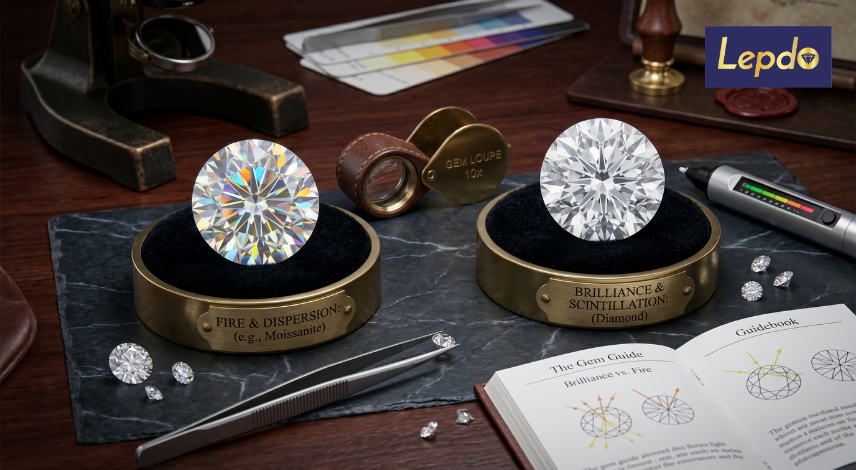
| Light performance | Higher fire (rainbow dispersion), strong brilliance | Crisp white brilliance, fire, scintillation balanced |
| Certification | Charles and Colvard, some IGI markets | GIA, IGI, full 4Cs reporting |
| Hardness (Mohs scale) | 9.25 excellent durability | 10 hardest natural substance |
| Resale and emotional value | Minimal resale market; fashion-driven | Established resale; strong emotional/cultural value |
The truth is, moissanite and diamond are not always competing for the same customer. Moissanite price vs diamond price is not the only variable. A buyer walking in for a 2-carat engagement ring and a buyer looking for a stackable ring for her birthday are not the same person, and stocking for both requires separate strategy. Understanding this keeps you from underselling or over-explaining either product.
How to Choose What to Stock for Your Store
Deciding whether to sell moissanite, diamond, or both comes down to knowing your specific customer base, your price positioning, and your long-term brand identity. Work through these six factors before you place your next order.
- Your store’s existing style identity. If you sell elevated minimalist pieces, lab-grown diamonds pair naturally with that aesthetic. If you specialize in bold, statement jewelry, higher-fire moissanite can make larger pieces achievable at price points your buyers can actually reach.
- Your average transaction value and customer income range. Most buyers want the biggest and best stone they can afford. Moissanite wins on size-per-dollar. Diamond wins on prestige. Know which your buyers prioritize.
- Your setting and manufacturing capability. Moissanite’s hardness at 9.25 on the Mohs scale means it holds up in virtually any setting style. It pairs beautifully with pavé, halo, and solitaire mounts. Diamond, particularly lab-grown, is equally versatile. The setting choice rarely dictates the stone choice, but it is worth confirming with your moissanite jewelry manufacturer India partner before production.
- Your margin targets and volume expectations. Because moissanite wholesale India pricing is dramatically lower than lab-grown or natural diamond pricing, your gross margin on a moissanite piece can be significantly higher in absolute dollar terms. That said, diamond pieces command higher average selling prices, which affects total revenue differently.
- The occasion your buyers are shopping for. Engagement rings, anniversary gifts, and inheritance-adjacent purchases tend to favor diamond. Birthday gifts, everyday fine jewelry, and fashion-forward pieces tend to tolerate moissanite well. For a more detailed look at how the Diamond Price compares across purchase occasions, Lepdo Diamonds breaks this down clearly.
- Lab-grown vs natural positioning. If you want to offer the diamond name at an accessible price, lab-grown diamonds sourced through a reputable supplier are the smartest answer. Lab-grown diamonds carry full IGI or GIA certification, identical physical properties to natural diamonds, and a growing acceptance among younger buyers. Check the current Lab Diamond Price guide at Lepdo Diamonds before setting your retail price points.
Before you finalize your stocking decision, visit your competitor’s showcases. See what they are showing, what is missing, and where the gap in your local market actually sits.
What B2B Buyers and Diamond Manufacturers Should Know
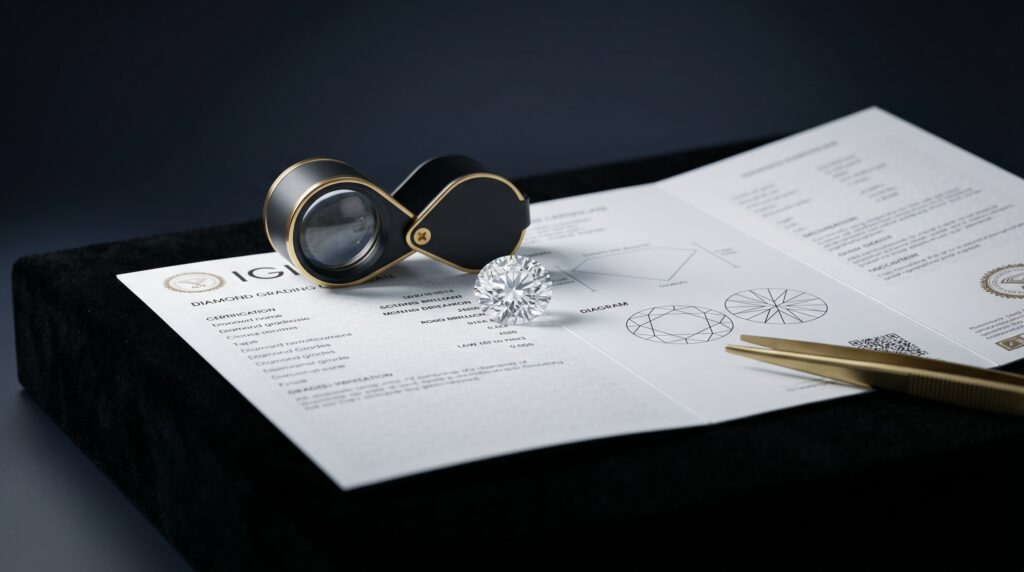
If you are a wholesaler, multi-door retailer, or OEM manufacturer sourcing from India, the moissanite vs diamond decision looks different than it does at the retail counter. Here the conversation centers on cut consistency, certification documentation, and supply chain reliability.
When you source moissanite wholesale India, you should expect stones cut to standardized dimensions that match diamond-equivalent sizes precisely. Any reputable moissanite Surat supplier will provide stones sized to the millimeter equivalents that American jewelers use on their bench, so there are no fitment issues when setting. Inconsistent cutting is the number one complaint B2B buyers raise about lower-tier Indian suppliers, and it is entirely avoidable with the right partner.
For diamond inventory, IGI certification is the accepted standard in the lab-grown segment for American retail. GIA remains the gold standard for natural diamonds above 0.50 carats. Any moissanite diamond supplier you consider for your supply chain should be able to produce either document on demand, not as an add-on service.
Rapaport pricing familiarity matters too. Natural diamonds are still priced against the Rapaport sheet, and knowing current rap discounts by shape, color, and clarity helps you assess whether a supplier’s offer is actually competitive.
From my experience working directly with manufacturers in Surat: the best B2B suppliers offer a sample lot of 10 to 15 stones before you commit to volume. If a supplier refuses this, walk away. It protects your production quality and your reputation with your retail clients. For more on what Diamond Minimal Jewelry sourcing looks like from a B2B perspective, Lepdo Diamonds covers manufacturer-side considerations clearly.
Moissanite and Diamond Jewelry Trends in the USA, 2026 to 2027
The American fine jewelry market shifted meaningfully in 2025, and 2026 is continuing that trajectory. According to the Jewelers of America 2024 State of the Jewelry Industry report, lab-grown diamond bridal jewelry now accounts for roughly 50 percent of engagement ring center stone sales at independent retailers up from around 17 percent in 2020. That is a dramatic shift, and it tells you something important about where consumer trust has moved.
Moissanite, at the same time, has carved out a distinct identity in the fashion and direct-to-consumer segment. East-West oval settings, elongated cushions, and three-stone moissanite rings are performing particularly well with buyers aged 25 to 35 who discovered the stone through social media rather than a traditional jewelry store. Stacking rings, eternity bands, and tennis bracelets in moissanite are also growing, driven by buyers who want the look of diamond jewelry trends at everyday price points.
That said, natural diamonds are holding steady in the luxury tier. Collectors and investment-minded buyers have not abandoned the natural stone market. If anything, the decline in lab-grown diamond prices has reinforced natural diamond’s scarcity appeal among high-net-worth buyers. For retailers covering multiple price tiers, the smart move is to stock all three – natural, lab-grown, and moissanite with clear in-store education to guide the buyer toward the right choice. Keeping up with Diamond Jewelry Trends in the USA market will help you read the incoming season before it arrives.
How to Evaluate Quality in Moissanite and Diamond
When I assess a moissanite stone for the first time, the first thing I check is its fire pattern under a standard jeweler’s daylight lamp. Moissanite’s refractive index sits at 2.65 to 2.69, compared to diamond’s 2.42. That difference produces noticeably more rainbow dispersion in moissanite, which some buyers love and others find artificial-looking. Knowing this upfront helps you describe the stone honestly at the counter.
Here are five evaluation points every retailer and B2B buyer should apply:
- Brilliance and fire balance. A well-cut moissanite should show strong white light return (brilliance) in addition to its rainbow fire. If a stone shows mostly colored light and little white flash, the cut proportions are likely off. For diamond, a GIA Excellent or IGI Ideal cut grade tells you the proportions are optimized. Look for table percentages between 54 and 60 percent and depth percentages between 59 and 63 percent for round brilliant cuts.
- Color grading in natural light vs store lighting. Moissanite can read slightly warmer under incandescent light. Always evaluate color under natural or daylight-balanced illumination. For lab-grown diamonds, request IGI certification showing color grade D through F for premium stock, G through H for value-oriented inventory.
- Clarity at the pavilion. You will want to pay attention to inclusions near the pavilion facets, since they reflect throughout the stone and reduce light performance in both moissanite and diamond. For moissanite, needle-like inclusions running parallel to the table are a known characteristic, they rarely affect face-up appearance but are a disclosure point.
- Certification completeness. Every diamond entering your inventory above 0.30 carats should carry either GIA or IGI documentation. For moissanite, Charles and Colvard certification is the recognized standard, though some buyers do not require it. Never sell uncertified diamonds; it creates liability and erodes buyer trust.
- Cut consistency in bulk orders. For B2B buyers, request a full lot inspection before accepting delivery. Check that all stones in a parcel share consistent pavilion depth, culet size, and girdle thickness. One inconsistent stone in a parcel can cause setting issues across an entire production run.
Lepdo Diamonds sources and certifies both Moissanite Diamonds and Natural Diamonds to consistent quality standards, which matters when you are placing volume orders across multiple production cycles.
Conclusion
Three things matter most when you are deciding how to stock for 2026. First, moissanite and diamond are not rivals, they serve different buyers, different occasions, and different store identities. Retailers who treat them as competitors miss the opportunity to serve a wider range of customers profitably. Second, certification and quality documentation are non-negotiable. Whether you are ordering moissanite wholesale India or natural diamonds from Surat, every stone entering your inventory should be traceable, graded, and fully disclosable to your end buyer. Third, your supplier relationship is as important as the product itself. Consistent cut grading, reliable delivery, and a supplier who answers your calls matters more than a slightly lower per-carat price.
The moissanite vs diamond for jewelers India conversation is ultimately a business strategy question, not just a gemology question. Getting it right means knowing your customer first and sourcing to match them.
If you are ready to explore certified inventory that covers both sides of this conversation, Moissanite Diamonds and Natural Diamonds at Lepdo Diamonds are a strong place to start, whether you are placing your first B2B sample order or scaling an existing collection.
The jewelers who win in this market are the ones who stock with clarity, sell with honesty, and source from people who know the difference.
Frequently Asked Questions About Moissanite vs Diamond for Jewelers
1. What is moissanite vs diamond for jewelers in India?
Moissanite vs diamond for jewelers India refers to the sourcing and stocking choice between lab-grown silicon carbide moissanite and certified natural or lab-grown diamonds for retail or wholesale inventory. Moissanite offers dramatically lower price points, while diamonds carry internationally recognized GIA or IGI certification, stronger resale value, and deeper emotional resonance with American engagement ring buyers.
2. Is moissanite cheaper than diamond for jewelry retailers?
Yes, significantly. A 1-carat moissanite stone costs $300 to $600 wholesale, while a comparable lab-grown diamond runs $800 to $1,800 and a natural diamond can reach $4,000 to $8,000 or more. For retailers targeting budget-conscious buyers, moissanite allows strong gross margin flexibility without sacrificing face-up brilliance. The moissanite price vs diamond price gap makes volume moissanite retail genuinely profitable.
3. Which looks biggest or most impressive, moissanite or diamond?
At the same carat weight, moissanite and diamond are nearly identical in face-up size. However, moissanite’s higher refractive index produces more rainbow fire than diamond’s crisp white brilliance. Some buyers find this dazzling; others find it less natural-looking. The right answer depends on individual taste, and showing both stones side by side in a showcase eliminates any confusion before a buying decision is made.
4. Does moissanite have a GIA cut grade?
No. GIA cut grades apply only to diamonds. Moissanite is typically certified by Charles and Colvard or, in some markets, by IGI. This distinction matters to informed USA buyers who associate GIA documentation with quality assurance. Retailers targeting diamond-educated customers should clearly explain that moissanite operates under a different certification framework, and train staff to discuss this without it becoming a red flag.
5. What is the biggest quality risk with moissanite for jewelers?
Customer expectation mismatch is the leading risk. Moissanite produces more colored fire and different light behavior than diamond, and buyers who expected diamond-like light return sometimes feel misled. Retailers who educate buyers upfront showing both stones under the same lighting conditions virtually eliminate returns. Clear labeling, honest product descriptions, and trained floor staff make the difference between a happy customer and a complaint.
6. Are lab-grown diamonds as good as natural diamonds for resale?
Lab-grown diamonds are physically and chemically identical to natural diamonds and carry full GIA or IGI certification with complete 4Cs grading. However, their resale values have declined sharply as production costs have dropped. Natural diamonds remain stronger for investment purposes. For retail jewelry where resale is not the buyer’s primary concern, which covers most purchases lab-grown diamonds are an excellent, cost-effective choice.
7. Which is best for an engagement ring, moissanite or diamond?
For traditional USA engagement ring buyers, diamond, natural or lab-grown carries more cultural significance and certification authority. Moissanite is an excellent choice for couples who prioritize budget, larger size, or ethical sourcing without the lab-grown diamond price. Offering both options with transparent education lets each buyer lead their own decision. Most buyers who choose moissanite do so confidently once they understand what they are choosing.
8. How do I choose a reliable moissanite or diamond supplier in India?
Choose a supplier that provides IGI or GIA certification on every stone, has a verifiable physical presence in Surat or Mumbai, maintains consistent cut grading across bulk lots, and supplies complete conflict-free documentation. Request a sample parcel before committing to volume. Lepdo Diamonds operates as a certified moissanite and diamond supplier with B2B-focused pricing and transparent sourcing for USA-market retailers and manufacturers.