Lab Grown Diamond Carbon Footprint vs Mined Diamonds: The Real Environmental Comparison
 by lepdogroup@gmail.com
0 comments
by lepdogroup@gmail.com
0 comments
A lab grown diamond carbon footprint refers to the greenhouse gas emissions created during diamond growth, largely tied to the electricity source powering CVD and HPHT reactors. This matters because buyers increasingly want transparency on sourcing. Suppliers like Lepdo Diamonds provide IGI and GIA certified lab grown stones with traceable manufacturing details for informed purchasing decisions.
A single one-carat mined diamond can require moving nearly 100 tons of earth before it ever reaches a cutting wheel. That number surprises most people the first time they hear it. It also explains why the lab grown diamond carbon footprint conversation has become one of the most searched topics among American jewelry buyers this year.
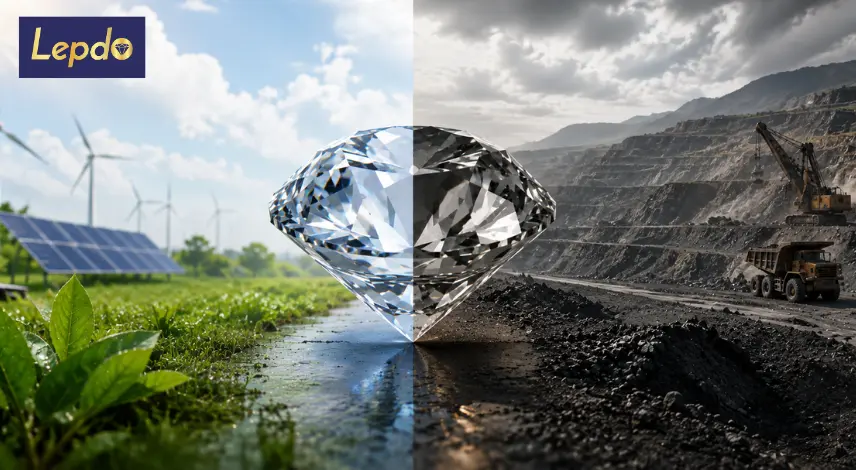
Retailers field this question daily now, often from customers holding printouts of conflicting blog claims. Most buyers want a straight answer, not a marketing pitch dressed up as science. Understanding the lab grown diamond carbon footprint requires looking beyond advertising claims and examining how diamonds are produced, both underground and inside a laboratory reactor. The real debate is lab grown diamond carbon footprint vs mined diamond carbon footprint, because the environmental impact depends on energy sources, mining methods, transportation, and manufacturing transparency rather than simple marketing claims.
This article breaks down the actual emissions data behind lab diamond vs mined diamond environment claims, walks through what drives the difference, and gives you a framework for evaluating sustainability claims that hold up under scrutiny. Whether you are sourcing carat weight inventory for a retail floor or picking a center stone for your own ring, the numbers matter more than the marketing.
Are lab grown diamonds eco friendly across the board? Not automatically. The honest answer depends on the reactor, the power grid, and the manufacturer’s willingness to document both. That nuance is exactly what most marketing pages leave out, and it is exactly what this guide covers in plain terms while giving you a realistic view of the lab grown diamond carbon footprint compared with traditional diamond mining.
What Is a Lab Grown Diamond Carbon Footprint?
The lab grown diamond carbon footprint is the total greenhouse gas emissions produced while growing a diamond in a controlled lab environment, measured from raw carbon input through polished stone. It accounts for electricity use in CVD (chemical vapor deposition) and HPHT (high pressure, high temperature) reactors, plus cutting and polishing energy. The footprint size depends heavily on one factor most articles skip: where the electricity comes from. When comparing carbon footprint vs mined diamond production, the energy source used during manufacturing is often the single biggest factor determining whether a lab grown diamond has a significantly lower environmental impact than a mined diamond.
Quick Info Box
- Definition: The measurable carbon emissions generated when growing a diamond in a lab rather than mining it from the earth.
- Key Types or Varieties: CVD-grown, HPHT-grown, hybrid CVD/HPHT, grid-powered labs, renewable-powered labs
- Best For: Buyers and retailers who want lower-impact, traceable, certified diamond sourcing
- Key Difference or Advantage: Emissions depend on energy source used, not on the diamond itself
Reputable manufacturers publish this data as part of their Lab Grown Diamonds documentation, since the growth method and power source directly determine the final number reported on a stone’s paperwork.
Most buyers assume the diamond category alone decides the outcome, but that is not quite accurate. Think of it this way: two lab grown stones from two different facilities can carry very different emissions totals, even with identical carat weight, cut, and clarity grade, simply because one reactor draws power from a coal plant and the other from a solar array. The label “lab grown” tells you the growth method. It does not, by itself, tell you the lab grown diamond carbon footprint.
Key Factors That Shape a Diamond’s Carbon Footprint
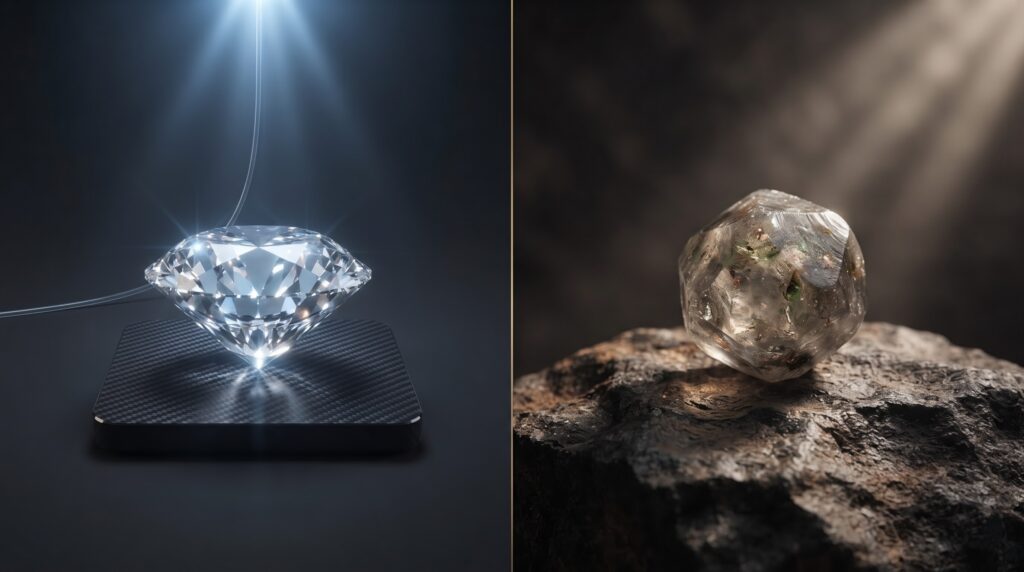
Not every lab grown diamond carbon footprint number is created equal, and neither is every mined diamond’s. Several variables swing the final figure dramatically, sometimes by a factor of ten.
Electricity Source and Grid Mix
This is the single biggest lever in the entire equation. A CVD reactor running on coal-heavy grid power produces a very different footprint than one running on hydro or solar. Labs in regions with cleaner grids report dramatically lower emissions per carat, which is why sourcing location matters as much as growth method.
Land Disturbance From Mining
Traditional diamond mining moves enormous volumes of earth, disrupts ecosystems, and often displaces topsoil that takes decades to recover naturally. Open-pit and alluvial mining both carry heavy land-use costs that lab growth simply does not incur.
Reactor Efficiency and Renewable Power Adoption
Newer reactor designs use less energy per carat grown than models from even five years ago. Manufacturers investing in renewable-powered facilities are shrinking their reported carbon footprint of lab grown diamonds year over year, and that trend shows no sign of slowing. This is one of the clearest advantages that appears in carbon footprint vs mined diamond comparisons, especially when renewable electricity powers the production process.
Water usage tells a similar story. Large-scale mining operations consume and often contaminate significant volumes of water during ore processing, while lab growth uses comparatively little across the same production cycle. For buyers evaluating carbon footprint vs mined diamond production, water consumption is an important environmental factor that is often overlooked alongside greenhouse gas emissions.
Ore processing and tailings waste add another layer to the comparison. Mined diamonds require crushing tons of rock to recover a handful of carats, generating waste rock and tailings that need long-term management and monitoring. These downstream impacts help explain why many environmental studies continue to favor lab grown diamonds in carbon footprint vs mined assessments.
Land rehabilitation costs close out the comparison. Reclaiming a mined landscape can take years and substantial capital, a cost that rarely appears in headline diamond pricing. Understanding a stone’s Diamond Carbon Structure helps explain why the atomic arrangement is identical whether grown or mined, even though the environmental path to create it is not.
Third-party verification closes the trust gap that marketing alone cannot. Some manufacturers now commission independent lifecycle assessments to back up their lab grown diamond carbon footprint claims, rather than citing internal estimates. Ask whether the number quoted to you came from an outside audit or from the company’s own marketing team. That distinction matters more than the number itself.
Lab Grown Diamond Carbon Footprint vs Mined Diamond : The Real Difference
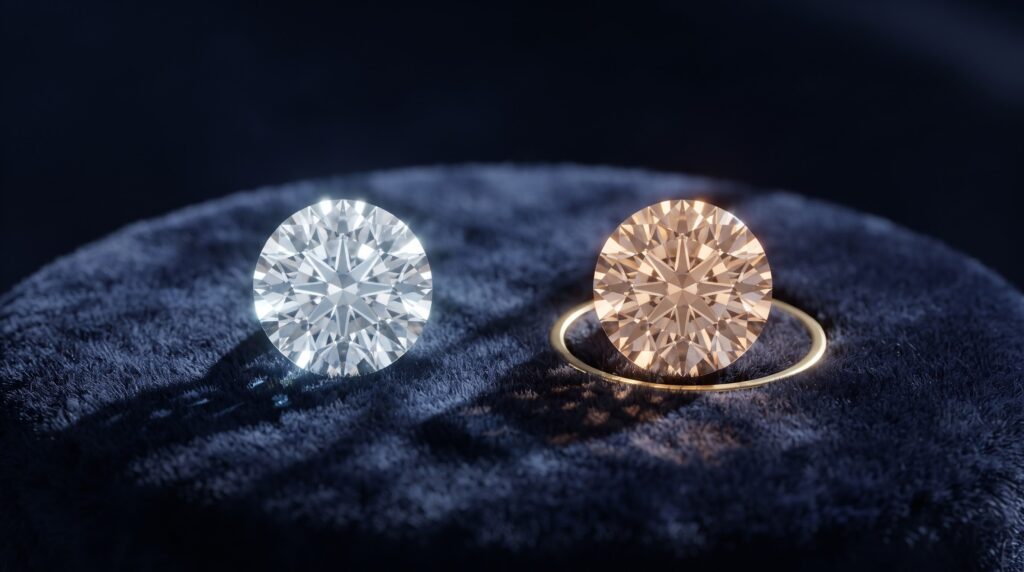
Numbers vary by source and methodology, but the pattern holds across most published studies comparing lab diamond vs mined diamond environment impact.
| Factor | Lab Grown Diamond | Mined Diamond |
|---|---|---|
| Average CO2 emissions per carat | Roughly 0.3 to 1.5 tons, depending on power source | Roughly 0.5 to 3 tons or higher, per various industry studies |
| Land disturbed per carat | Minimal, reactor footprint only | Up to 100+ tons of earth moved per carat |
| Water used per carat | Comparatively low | Comparatively high, especially in wet mining regions |
| Energy source dependency | High, grid mix largely determines outcome | Moderate, tied more to equipment type and fuel |
| Waste generated per carat | Low, primarily reactor byproducts | High, includes tailings and overburden rock |
The truth is that a lab grown diamond’s advantage narrows if it is grown using coal-heavy electricity, and a mined diamond’s impact can vary widely by mine location and regulatory oversight. To be fair, some large-scale mining operations have invested heavily in rehabilitation and cleaner energy, closing part of the gap. Even so, most published data still favors lab growth on raw emissions per carat, which is one reason the Lab Diamond vs Mined Diamond comparison keeps trending upward in buyer searches. If you are evaluating carbon footprint vs mined diamond production, it helps to compare verified emissions data alongside certification and sourcing transparency.
For a deeper understanding of how environmental claims are measured and documented, see our guide on How to Test if a Diamond Is Lab Grown, which explains the certification and verification process behind modern lab-created diamonds.
How to Choose Between Lab Grown and Mined Diamonds for Your Values and Style
Picking between a lab grown diamond and a mined stone comes down to more than emissions data alone. Here is what to weigh before you decide.
- Personal style first. A diamond’s origin does not change its brilliance, fire, or scintillation, so choose the shape and setting that flatters your taste before worrying about the growth method.
- Setting compatibility matters. Some settings show off pavilion depth and table percentage better than others, and this holds true whether the stone was grown or mined from the earth.
- Consider the occasion. Engagement rings often call for larger carat weight at a manageable budget, which tends to favor lab grown stones for most American buyers.
- Budget advantage is real. Lab grown diamonds typically cost 30 to 40 percent less than comparable mined stones of the same 4Cs, freeing up budget for a better setting or larger center stone.
- Think about resale and investment goals. Mined diamonds currently hold a more established secondary market, though this is shifting as lab grown supply matures and grading standards solidify.
- Weigh the lab-grown vs natural decision directly. If lower carbon footprint and certified traceability matter to you, review a detailed Lab-Grown vs Natural Diamond breakdown before finalizing your stone.
Is there a wrong answer here? Not really, since both options can produce a stunning, durable diamond that a GIA report will grade on the same 4Cs scale. The difference is what you are optimizing for: cost efficiency, environmental impact, or long-term resale value.
Before you finalize your choice, ask your jeweler for the certification paperwork and, if carbon footprint matters to you, the reactor’s power source. That single question separates genuine sustainability claims from marketing language.
What B2B Buyers and Diamond Manufacturers Should Know
Wholesalers and retailers face a different set of questions around lab grown diamond carbon footprint claims, mainly because bulk sourcing decisions carry more weight than a single retail sale.
Consistency across parcels matters more than any single stone’s story. When you are buying hundreds of carats at once, cut grading consistency and clean Lab Diamond Certification paperwork protect your margin and your reputation with end customers who ask harder questions than they used to.
IGI and GIA both now issue certificates for lab grown stones, and increasingly note the growth method on the report itself. Rapaport pricing for lab grown diamonds has settled into its own pricing sheet, separate from mined stone pricing, which makes apples-to-apples cost comparisons easier for buyers building out inventory.
Volume sourcing raises the stakes on documentation. A retailer buying twenty stones can afford to ask detailed questions about each one, but a wholesaler moving hundreds of carats per month needs a supplier that documents lab grown diamond carbon footprint vs mined diamond carbon footprint data consistently across every parcel, not just on a handful of flagship stones used for marketing photography. That consistency is what separates a long-term supplier relationship from a one-time transaction.
In my experience sourcing parcels from Surat-based facilities, the manufacturers who publish their energy mix and reactor type tend to have tighter quality control overall, not just cleaner carbon numbers. That correlation is not an accident. Facilities that track energy inputs closely usually track cut precision closely too. Buyers working with Lab Grown Diamond Manufacturers Surat should request both documents together rather than treating them as separate conversations. For wholesale buyers evaluating carbon footprint vs mined diamond production, transparent energy documentation and consistent certification across every parcel are often more valuable than broad sustainability claims alone.
Lab Grown Diamond Jewelry Trends in the USA (2026 to 2027)
Sustainability messaging has moved from a nice-to-have to a baseline expectation in fine jewelry marketing. Retailers who once buried sourcing details in fine print now lead with them on product pages.
Cultural influence keeps pushing this forward. Red carpet moments and social media unboxings featuring visibly labeled lab grown center stones have normalized the conversation for younger buyers who research before they shop. Industry trade reports place lab grown diamonds at well over half of engagement ring center stone sales in the US market by unit volume, a share that keeps climbing each year.
Expect more retailers to market sustainable lab grown diamonds alongside traceability data rather than price alone. Mixed metal settings, East-West set stones, and toi et moi designs are trending alongside this shift, often paired with a printed certificate that shows both grading and growth method. That pairing, more than any single design trend, defines where the US market is heading in the next two years.
That said, not every retailer has caught up yet, and plenty of sales floors still lean on generic sustainability language without specifics. The diamond mining environmental impact conversation has also become a talking point on showroom floors, not just in online reviews. Sales associates who can clearly explain carbon footprint vs mined diamond production, including the difference between a mined stone’s land disturbance and a lab grown stone’s electricity draw, are closing sales faster because informed buyers respond better to specifics than to broad sustainability claims.
Retailers that support these conversations with certification reports and educational resources, such as our guide on How to Test if a Diamond Is Lab Grown, are generally better positioned to earn buyer trust and convert environmentally conscious shoppers. As consumer awareness grows, the ability to discuss carbon footprint vs mined diamond comparisons with verified data rather than marketing language has become a competitive advantage for jewelry retailers and wholesalers alike.
How to Evaluate Quality and Sustainability Claims in Lab Grown Diamonds
When I assess a lab grown diamond, the first thing I check is the certificate, not the stone. A GIA or IGI report tells you the real story behind cut quality, clarity grade, and color, long before you get to any lab grown diamond carbon footprint claim printed on a sales sheet.
You will want to pay attention to more than the headline emissions number. A low lab grown diamond carbon footprint claim means little if the cut quality is poor, since a badly proportioned pavilion or an oversized table percentage kills brilliance and fire no matter how the stone was grown. The most useful comparison is carbon footprint vs mined diamond impact alongside the diamond’s grading report, because environmental claims should be evaluated together with cut precision, certification, and overall value rather than in isolation.
Here are five checks worth running before you buy:
- Confirm the grading lab. GIA and IGI remain the two standards buyers trust most for lab grown diamond certification.
- Check pavilion angle and table percentage against ideal cut ranges for the shape you are buying.
- Look for scintillation under multiple light sources, not just showroom spotlights.
- Review the clarity grade alongside a plot diagram, not just the letter grade alone.
- Ask for documentation on energy source when carbon footprint is part of the sales pitch.
Reading a full Lab Diamond Quality breakdown before you buy helps you separate genuine grading rigor from marketing gloss, especially when a seller leans hard on sustainability language without backing it up with paperwork.
Reading a lab grown diamond carbon footprint figure without context is a little like reading a car’s fuel economy rating without knowing the driving conditions. It only tells part of the story, and the same caution applies when comparing it against a carbon footprint mined diamond figure from a source that does not disclose its methodology. For a deeper technical breakdown, the Lab Grown Diamond Carbon Footprint glossary entry covers how these numbers are calculated in more detail.
Conclusion
The lab grown diamond carbon footprint story is more nuanced than either side of the marketing debate admits. Lab grown stones generally produce fewer emissions per carat, mined diamonds carry a heavier land and water impact, and both numbers shift dramatically based on energy source and mining practices rather than diamond category alone. When evaluating carbon footprint vs mined diamond production, the most important factor is verified documentation rather than broad sustainability claims. What matters most is certification, traceability, and transparent reporting, not slogans.
Most buyers, whether furnishing a retail case or choosing a single engagement ring, get better outcomes by asking for the paperwork behind any carbon claim. A certified lab grown diamond carbon footprint figure backed by real reactor data tells you far more than a headline percentage on a website.
Retailers sourcing certified lab-grown diamonds can explore Lepdo Diamond‘s current stock and request sourcing documentation directly. The diamond you choose should reflect real data, not just a compelling story, and that starts with asking better questions before you buy.
Frequently Asked Questions About Lab Grown Diamond Carbon Footprint
1. What is a lab grown diamond carbon footprint?
A lab grown diamond carbon footprint measures the greenhouse gas emissions produced while growing a diamond in a lab, primarily from reactor electricity use. It typically ranges from roughly 0.3 to 1.5 tons of CO2 per carat, depending heavily on the energy source powering the CVD or HPHT process. Cleaner grids produce meaningfully lower numbers overall.
2. Is a lab grown diamond cheaper than a mined diamond?
Yes, lab grown diamonds generally cost 30 to 40 percent less than mined diamonds of comparable carat weight, cut, color, and clarity grade. The price gap has widened as lab grown supply has scaled globally over recent years. This makes larger center stones more accessible for buyers working within a fixed engagement ring budget.
3. Which diamond has a smaller carbon footprint, lab grown or mined?
Lab grown diamonds generally carry a smaller carbon footprint than mined diamonds, based on most published industry studies to date. The gap narrows when a lab runs on coal-heavy electricity or when a mine invests heavily in renewable power and rehabilitation. Energy source, not diamond origin alone, ultimately drives the real number.
4. Does a lab grown diamond have a GIA cut grade?
Yes, GIA issues full cut grading for lab grown diamonds using the same criteria applied to mined stones. IGI also grades lab grown diamonds and remains widely used across the trade today. Both reports include cut, color, clarity, and carat weight, giving buyers a standardized way to compare stones. These grading reports are especially useful when evaluating carbon footprint vs mined diamond claims, because they allow buyers to compare environmental messaging alongside verified quality factors such as cut precision, clarity, and overall craftsmanship.
5. What is the biggest risk with lab grown diamond carbon footprint claims?
The biggest risk is greenwashing, where a seller advertises a low carbon footprint without providing verifiable data on the reactor’s energy source. Not every manufacturer publishes this information openly. Ask for documentation before trusting a sustainability claim, since unverified numbers on a product page carry little real weight.
6. Are lab grown diamonds as good as natural diamonds?
Yes, lab grown diamonds share identical optical, chemical, and physical properties with mined diamonds, since both are pure crystallized carbon. GIA and IGI grade both using the same 4Cs standards. The only meaningful difference lies in origin and, often, price, not in brilliance, fire, or durability.
7. Which diamond option is best for an eco-conscious engagement ring buyer?
A certified lab grown diamond from a manufacturer that discloses its energy source is generally the strongest choice for eco-conscious buyers. It typically offers a lower carbon footprint, full IGI or GIA certification, and a lower price point. Always verify sourcing claims with documentation rather than marketing language alone.
8. How do I choose a reliable lab grown diamond manufacturer or supplier?
Look for a manufacturer that provides IGI or GIA certification as standard, discloses growth method and energy source, and maintains transparent pricing against Rapaport benchmarks. Ask for sample parcels before committing to bulk orders. Reliable suppliers answer sourcing questions directly instead of deflecting toward general sustainability statements. When discussing carbon footprint vs mined diamond production, a trustworthy manufacturer should be able to provide documented emissions information, energy-source details, and traceability records that support their environmental claims with verifiable data.