
Diamond Strain Patterns: Understanding Internal Features, Quality Impact, and Buying Decisions
 by lepdogroup@gmail.com
0 comments
by lepdogroup@gmail.com
0 comments
Diamond strain patterns are internal stress features visible inside some diamonds, caused by structural pressure during formation or growth. They can affect transparency, durability assessment, and appearance. Buyers evaluate strain using gemological reports, professional inspection, and advanced imaging before selecting a diamond.
A diamond can appear flawless to the naked eye while revealing complex internal stress patterns under advanced gemological imaging. In today’s market, experienced buyers increasingly examine these hidden characteristics before purchasing high-value stones, especially when comparing rare shapes, larger carat weight options, and lab-grown diamonds.
Diamond strain patterns describe internal stress structures within a diamond’s crystal lattice. Understanding them helps jewelry retailers, manufacturers, and consumers make better decisions about cut quality, diamond grading, and long-term value. Whether selecting a polished diamond for an engagement ring or sourcing inventory, knowing how strain interacts with brilliance, fire, and scintillation is essential.
This guide explains how diamond strain patterns form, how laboratories assess them, what buyers should look for, and why they matter in modern diamond sourcing. It also covers the relationship between strain, clarity grade, 4Cs evaluation, and advanced manufacturing techniques.
What the Topic Is
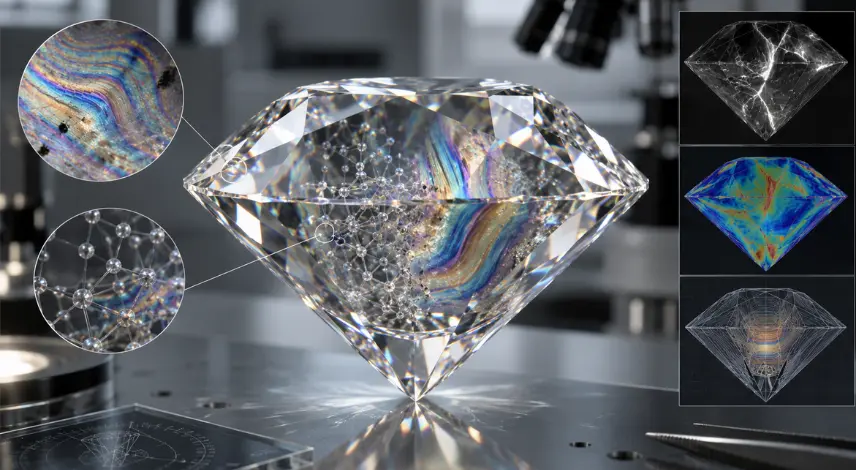
Diamond strain patterns are visible internal stress features created when the diamond crystal experiences uneven pressure during its formation or growth process. These patterns show how the crystal structure responded to geological conditions or controlled laboratory growth environments.
Quick Info Box:
- Definition: Diamond strain patterns are internal optical features showing stress distribution within a diamond crystal.
- Key Types or Varieties: Natural growth strain, laboratory-grown growth strain, birefringence patterns, stress lines, cross-shaped strain structures.
- Best For: Diamond buyers, jewelry designers, manufacturers, collectors, and anyone comparing high-quality stones.
- Key Difference or Advantage: Strain analysis provides additional insight beyond traditional visual inspection and standard grading factors.
For buyers searching for reliable sources of professionally evaluated stones, Lepdo Diamonds provides access to structured diamond inventories through its platform of Loose Diamonds designed for global jewelry professionals and consumers.
Sub-facet or Key Technical Characteristic 1
The formation process directly influences how diamond strain patterns develop inside a crystal. Natural diamonds grow deep beneath the Earth’s surface under extreme heat and pressure, where changes in temperature and geological movement can create internal stress.
Lab-grown diamonds can also display strain because controlled growth methods such as Chemical Vapor Deposition (CVD) and High Pressure High Temperature (HPHT) involve carefully managed crystal formation conditions. These growth environments may produce different strain characteristics compared with natural stones.
Under polarized light examination, gemologists observe interference colors caused by stress-related changes in how light travels through the diamond structure. These observations help professionals understand crystal behavior without affecting the diamond itself.
Sub-facet or Key Technical Characteristic 2
The diamond industry does not treat every strain pattern as a quality issue. The impact depends on intensity, location, visibility, and how the feature interacts with the diamond’s overall structure.
The Gemological Institute of America (GIA) and International Gemological Institute (IGI) evaluate diamonds using advanced laboratory methods, although strain itself is generally not assigned a separate grading category like color or clarity.
A diamond with visible strain may still possess excellent brilliance and optical performance if the internal structure remains stable and the cut proportions are optimized.
The takeaway is simple: strain should be evaluated as part of the complete diamond profile, not as an isolated characteristic.
Most Popular Types or Variations of Diamond Strain Patterns and Who They Are For
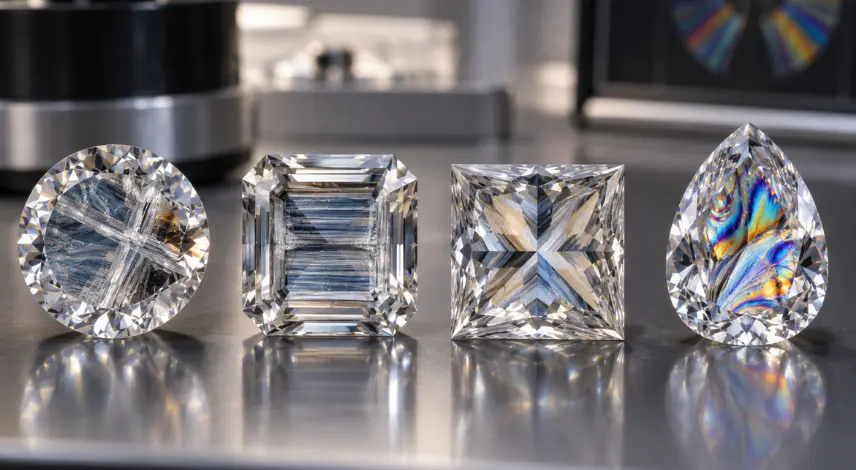
Diamond strain patterns appear in different forms depending on crystal origin, growth method, and internal structure. Professionals classify these patterns by observing their appearance under specialized equipment rather than relying only on standard magnification.
Understanding common variations helps buyers compare diamonds more accurately, especially when selecting Fancy Shape Diamonds or rare custom-cut stones.
Top Variation or Primary Category 1: Natural Diamond Growth Strain
Natural diamond growth strain develops during geological formation over millions or billions of years. Pressure changes, mineral interactions, and irregular crystal growth can create internal stress zones.
These patterns are common among certain natural diamonds and usually require polarized light analysis to identify. Many natural diamonds with mild strain remain highly desirable because the effect does not significantly reduce visual beauty.
For collectors and luxury buyers, understanding natural growth characteristics provides deeper confidence when reviewing diamond certification and origin details.
Top Variation or Primary Category 2: CVD Diamond Strain Patterns
CVD diamond strain patterns occur during laboratory growth when carbon atoms build a diamond crystal layer by layer inside a controlled chamber.
CVD diamonds may show distinctive growth structures because the crystal develops in a directional process. Advanced manufacturers monitor growth conditions to reduce unwanted stress and improve optical performance.
For wholesalers and jewelry brands, understanding these patterns helps with inventory selection, consistency control, and matching diamonds for larger production requirements.
Top Variation or Primary Category 3: HPHT Diamond Strain Characteristics
HPHT diamonds are created under high-pressure and high-temperature conditions that replicate the environment where natural diamonds form.
These diamonds can demonstrate different internal strain behaviors due to the growth process and post-growth treatment possibilities. Professional evaluation considers strain alongside color, clarity, cut proportions, and certification details.
Top Variation or Primary Category 4: Cross-Pattern and Birefringence Effects
Some diamonds display cross-shaped or colorful strain patterns when viewed through polarized filters. These patterns occur because internal stress changes the way light passes through the crystal.
Birefringence observations can reveal growth history and structural differences. However, appearance alone does not determine whether a diamond is valuable or unsuitable.
Top Variation or Primary Category 5: Stress Concentration Areas
Localized stress zones are areas where internal strain becomes more concentrated. These areas require careful examination because they may interact with inclusions or fractures.
Professional cutters consider these factors before shaping a diamond, especially when creating Fancy Shape Diamonds where certain angles can expose internal characteristics.
Top Variation or Primary Category 6: Strain in Unique Diamond Shapes
Unique diamond shapes often require more careful strain analysis because their faceting patterns influence light movement differently.
Emerald cuts, oval cuts, pear shapes, and other fancy silhouettes may reveal internal characteristics more clearly than brilliant-style cuts because of their larger open facets.
Diamond Strain Patterns vs Internal Inclusions: The Real Difference
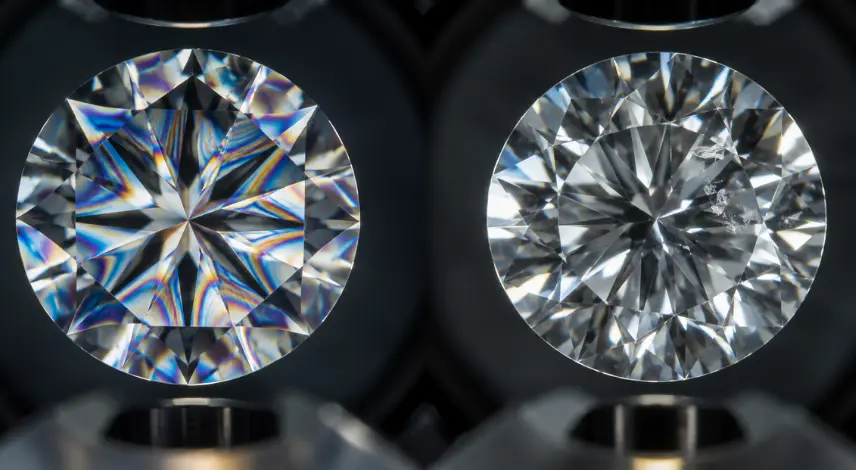
Diamond strain patterns and internal inclusions are often discussed together, but they represent different characteristics. Strain relates to structural stress inside the crystal, while inclusions are physical materials or features trapped during growth.
| Factor | Diamond Strain Patterns | Internal Inclusions |
|---|---|---|
| Definition | Internal stress-related optical features | Physical materials or crystal features inside diamond |
| Visibility | Usually seen through specialized tools | Often visible under magnification |
| Grading Impact | Usually considered during overall assessment | Directly affects clarity grade |
| Common Detection Method | Polarized light and advanced imaging | Microscope examination and grading analysis |
| Buyer Concern | Structural understanding and optical evaluation | Appearance, durability, and value consideration |
The main difference is that strain shows how a diamond’s crystal structure experienced stress, while inclusions show what exists inside the stone. Both require professional interpretation before making a purchase decision.
Critical Differentiator: Performance and Aesthetics
Diamond strain patterns can influence how light moves through a diamond, but the final visual result depends heavily on cut quality, proportions, and faceting precision.
A well-cut stone with controlled internal characteristics can display exceptional brilliance, fire, and scintillation. Buyers should avoid judging quality based on one internal feature alone.
Critical Differentiator: Cost Structure and Sourcing Economics
From a commercial perspective, diamonds with complex internal characteristics may require additional evaluation before wholesale purchase.
Manufacturers and retailers consider factors such as certification, clarity grade, color range, carat weight, and market demand. A small visual difference can create significant pricing variations in premium categories.
To be fair, traditional round brilliants still command high market volume because of their predictable light performance and broad consumer acceptance. However, many buyers now explore distinctive shapes and advanced grading information before purchasing.
How to Choose the Right Diamond Strain Patterns for Your Style or Inventory
Choosing a diamond with suitable internal characteristics requires balancing appearance, technical evaluation, and practical use. Diamond strain patterns should never be assessed separately from the diamond’s complete identity, including shape, setting, certification, and intended purpose.
Most buyers focus first on sparkle, but experienced professionals examine how the crystal structure, proportions, and optical properties work together. A beautiful diamond is not created by one factor alone.
- Personal style, silhouette, or physical fit
The diamond shape influences how internal features are perceived. Step cuts such as emerald and Asscher shapes often reveal internal characteristics more clearly because of their broad, open facets.
Brilliant-style cuts, including round, oval, and cushion shapes, can distribute light more aggressively, sometimes reducing the visual impact of minor internal features.
When selecting a gemstone for personal jewelry, consider whether you prefer maximum transparency, strong sparkle, or a unique visual character.
- Metal setting, mounting, and structural use-case compatibility
The setting design affects both appearance and protection. A bezel setting can provide additional security for diamonds with specific structural considerations, while traditional prong settings allow more light exposure.
Engagement rings, daily-wear jewelry, and custom creations require different durability considerations. The relationship between mounting style and diamond structure helps reduce long-term risks.
- Optical performance, cut proportions, and light behavior
Cut quality remains one of the strongest drivers of diamond appearance. Factors such as pavilion depth, table percentage, facet arrangement, and symmetry determine how effectively a diamond returns light.
A diamond with controlled diamond strain patterns can still achieve impressive brilliance when the cutting process maximizes optical efficiency.
Here is what experienced buyers examine:
- Light return from the pavilion
- Balance between brilliance and fire
- Facet alignment
- Symmetry and polish quality
- Interaction between inclusions and strain
- Budget allocation and pricing advantages vs standard alternatives
Diamond pricing depends on multiple elements, including the 4Cs, certification, market availability, and supply chain factors.
Buyers comparing natural and lab-grown diamonds often find differences in pricing flexibility. Lab-grown diamonds may offer larger carat weights or higher clarity grades at different price points compared with equivalent natural options.
That said, price should always be connected to verified quality information rather than size alone.
- Intended occasion: bridal, everyday fine jewelry, custom bespoke, or retail stock
A bridal buyer may prioritize durability and emotional value, while a jewelry retailer may prioritize inventory consistency and customer demand.
Wholesale buyers often evaluate diamonds differently from consumers because they need predictable quality, repeat availability, and reliable certification.
- Lab-grown vs natural considerations
Lab-grown diamonds and natural diamonds share the same chemical composition, crystal structure, and physical properties. However, their growth environments can create different internal characteristics.
Buyers researching lab-grown diamonds should understand how CVD and HPHT processes influence growth patterns, certification details, and visual appearance.
For businesses comparing manufacturing sources, understanding CVD Diamond Manufacturers India helps explain production expertise, technology standards, and quality control practices.
Before you finalize your choice, review the diamond report, inspect the stone under proper lighting, and compare optical performance rather than relying only on specifications.
Balancing Proportions, Ratio, and Setting Security
The relationship between length-to-width ratio, depth percentage, and setting style strongly affects both beauty and protection.
For elongated shapes such as ovals, pears, and marquise diamonds, the length-to-width ratio determines the visual balance of the stone. A poorly proportioned diamond may appear narrow, heavy, or uneven.
Depth percentage influences light movement. Excessive depth can reduce face-up appearance, while insufficient depth may create light leakage.
Secure settings also matter. Thin edges, pointed corners, and exposed areas require careful mounting choices to protect the diamond during everyday wear.
Navigating Price Tiers vs Visual Return
The highest-priced diamond is not always the most visually impressive option. Many buyers achieve better value by balancing clarity, color, and cut precision.
A slightly lower clarity grade may appear identical to a higher grade when inclusions are not visible without magnification. The goal is selecting the strongest visual result within a practical budget.
Think of it this way: the best diamond purchase is not about buying the most expensive specification, but about achieving the most attractive combination of quality factors.
What B2B Buyers and Diamond Manufacturers Should Know
Diamond manufacturers, wholesalers, and jewelry retailers evaluate diamond strain patterns differently because their decisions affect inventory performance, customer trust, and production consistency.
The global diamond trade relies on measurable standards. Professional buyers examine laboratory reports, manufacturing controls, polishing accuracy, and market pricing references before approving large purchases.
The Gemological Institute of America (GIA) and IGI Certified Diamonds provide diamond grading reports that help businesses verify characteristics such as color, clarity, measurements, and authenticity.
Rapaport pricing references also influence commercial discussions, although actual transactions depend on market conditions, supplier relationships, and diamond-specific qualities.
Manufacturers producing consistent collections must control parameters such as:
- Millimeter dimensions
- Color tolerance ranges
- Clarity consistency
- Cut precision
- Certification availability
A reliable Fancy Shape Diamonds manufacturer must combine technical cutting knowledge with quality management systems to maintain consistency across different shapes.
For buyers seeking certified lab-grown inventories, Lepdo Diamonds operates as a CVD Diamonds and HPHT Diamonds manufacturer based in Surat, India, supplying certified stones with IGI, GIA, and SGL documentation across multiple shapes and quality ranges.
My expert trade tip: when reviewing a supplier, do not only check individual diamond photographs. Request grading reports, production consistency data, and detailed measurements to understand how the supplier manages quality at scale.
Wholesale Procurement Models: Memo Programs vs Direct Sourcing
Wholesale diamond purchasing commonly follows different models depending on business requirements.
Memo programs allow retailers to access inventory without immediate ownership transfer. This reduces upfront capital requirements but may include limitations related to availability and return conditions.
Direct sourcing provides greater control over pricing, selection, and long-term supply relationships. However, it requires stronger inventory planning and financial commitment.
Large jewelry manufacturers often prefer direct relationships because consistency becomes more important as production volume increases.
Batch Consistency, Calibration, and Tolerance Standards
Consistency separates professional diamond sourcing from random purchasing.
Manufacturers sorting diamond parcels evaluate factors such as:
- Matching carat weight ranges
- Similar millimeter dimensions
- Consistent color grades
- Similar clarity characteristics
- Uniform cutting standards
For multi-stone jewelry production, even small variations can affect final appearance. Precision calibration helps create balanced collections and reduces production challenges.
Diamond Strain Patterns Jewelry Trends (2026 to 2027)
Diamond jewelry trends from 2026 to 2027 show stronger interest in transparency, customization, and unique visual identity.
Consumers increasingly research diamond origins, certification, and production methods before purchasing. According to industry reports, lab-grown diamond demand has expanded significantly in bridal and fashion jewelry segments, especially among younger buyers seeking larger stones at accessible price points.
Modern buyers are also exploring Fancy Color Diamonds, alternative silhouettes, and personalized designs instead of traditional single-style engagement rings.
The growth of digital diamond purchasing has increased demand for detailed product information, including certification, photography, and educational content.
Contemporary Setting Styles and Architectural Mountings
Jewelry designers are experimenting with bezel settings, east-west orientations, hidden halos, and multi-stone arrangements.
These designs allow buyers to highlight unusual proportions and create personalized engagement rings.
Fancy Shape Diamonds are especially popular in modern settings because their silhouettes create stronger visual differentiation compared with traditional round designs.
Architectural mounting styles also require careful diamond selection because angles, symmetry, and exposed surfaces affect the final appearance.
Shifting Consumer Demographics and Purchasing Drivers
Modern diamond buyers evaluate more than size and sparkle. They consider certification, ethical sourcing, customization options, and price transparency.
Younger consumers frequently compare natural and Lab Grown Diamonds options online before contacting retailers. They want educational information that explains quality differences clearly.
Here is what successful retailers understand: informed customers are more confident customers.
How to Evaluate Quality in Diamond Strain Patterns
When I assess a diamond, the first thing I check is how its internal characteristics interact with cut quality, transparency, and overall optical performance.
A professional evaluation considers diamond strain patterns alongside brilliance, fire, scintillation, clarity grade, and structural integrity.
- Check optical balance and light return
A diamond should return light effectively through carefully designed facets. The pavilion depth and table percentage influence whether the stone appears bright or loses visual energy.
- Review clarity characteristics
Strain should be considered with inclusions. A diamond with strong transparency may still perform beautifully even when internal features exist.
- Analyze cut precision
Symmetry, polish, and facet alignment determine how consistently light travels through the diamond.
- Examine certification documents
Professional grading reports provide essential information about diamond identity, measurements, and quality characteristics. Buyers should consider Certified Diamonds when seeking documented quality verification.
- Inspect under professional lighting
Different lighting environments reveal differences in brilliance, fire, and scintillation. A diamond should be evaluated beyond online images alone.
Analyzing Light Return: Spotting Bow-Ties, Windows, and Extinction
Poor cutting angles can create visual issues such as the bowtie effect, window areas, and extinction zones.
The bowtie effect commonly appears in elongated shapes when central facets create darker areas across the diamond. Some bow-tie presence can add character, but excessive darkness reduces visual appeal.
Windows occur when facets allow too much direct viewing through the diamond, reducing its brightness.
Extinction refers to areas where light does not return effectively, creating unwanted dark zones.
Careful proportion analysis helps identify whether these characteristics are acceptable or negatively affect appearance.
Assessing Diamond Reports and Grading Discrepancies
Diamond reports provide critical information, but buyers should understand how laboratories evaluate stones differently.
GIA, IGI, and other respected laboratories use established grading systems, yet slight variations can occur between reports because grading involves professional interpretation.
Review:
- Certificate number verification
- Measurements
- Clarity plotting
- Color grade
- Cut information where available
A detailed report supports confident purchasing decisions and helps reduce uncertainty in international diamond transactions.
Strategic Takeaways for Buyers and Jewelers
Diamond strain patterns are not simply defects to avoid, but internal characteristics that reveal important information about diamond formation, growth conditions, and structural behavior. The strongest buying decisions come from evaluating strain together with the 4Cs, certification, cut quality, and intended use.
For consumers, the goal is finding a diamond that delivers the desired visual performance, durability, and confidence through verified information. For retailers and manufacturers, consistency, certification, and reliable sourcing remain essential factors when building competitive diamond collections.
Lepdo Diamonds supports global buyers with certified lab-grown diamond inventories, including CVD and HPHT stones with IGI, GIA, and SGL certification standards from its Surat, India manufacturing base. Businesses and buyers can explore educational resources and diamond expertise through the Lepdo Diamonds Medium Account and connect with verified industry information through the Lepdo Diamonds Quora Profile.
The final step for serious buyers is selecting a supplier that combines technical knowledge with transparent documentation. Explore the GIA Certified Diamonds Surat resource to understand certification considerations when evaluating high-quality diamonds.
Frequently Asked Questions About Diamond Strain Patterns.
1. What are Diamond Strain Patterns?
Diamond strain patterns are internal lattice stress features created when a gemstone experiences differential pressure during its growth or geological formation. Gemologists analyze diamond strain patterns using crossed polarized filters or advanced birefringence imaging. Observing diamond strain patterns does not automatically mean a stone is flawed; their significance depends on how the lattice stress interacts with cut proportions, transparency, and overall light return.
2. Are Diamond Strain Patterns Cheaper Than Internal Inclusions?
Evaluating diamond strain patterns differs entirely from pricing visible internal inclusions. Inclusions directly determine clarity grades on laboratory reports, whereas diamond strain patterns are evaluated as structural and optical characteristics. A stone’s market value depends on the complete 4Cs profile, certification, and whether localized diamond strain patterns affect durability or brilliance.
3. Which Type Looks Biggest or Most Impressive on the Hand?
Visual spread depends on cutting style, length-to-width ratio, and table dimensions rather than internal diamond strain patterns. Elongated shapes—such as oval, emerald, and pear cuts—often appear larger per carat than round brilliants. While diamond strain patterns exist within the crystal lattice, proper cut precision ensures maximum light performance across any chosen silhouette.
4. Do Diamond Strain Patterns Have an Official GIA Cut Grade?
Diamond strain patterns do not receive a standalone GIA cut grade or clarity classification. The Gemological Institute of America (GIA) grades cut based on proportions, symmetry, and polish. While gemological researchers examine diamond strain patterns to study growth history or origin, these internal stress features remain outside standard 4Cs report categories.
5. What Is the Biggest Quality Risk or Defect to Watch for in Diamond Strain Patterns?
The primary concern occurs when severe diamond strain patterns intersect with deep feathers, cleavages, or open surface inclusions. High-intensity diamond strain patterns concentrated around sharp corners or thin girdles can introduce structural vulnerability during mounting. Buyers should review polarized light checks and certificate clarity plots to confirm internal stability.
6. Are Lab-Grown Diamond Strain Patterns Chemically and Optically Identical to Natural Ones?
Lab-grown and natural diamonds share identical carbon chemistry, but their diamond strain patterns reveal distinct growth mechanisms. CVD diamonds often display characteristic columnar or cross-hatched diamond strain patterns due to layer-by-layer deposition, whereas HPHT and natural stones exhibit unique octahedral or irregular stress fields under polarized light.
7. Which Type Is Most Durable and Practical for an Everyday Engagement Ring?
Durability depends on hardness, protective settings, and facet proportions alongside stable internal structures. While mild diamond strain patterns are common and generally harmless for daily wear, pairing low-stress stones with protective bezel or multi-prong mountings ensures optimal longevity for high-contact jewelry.
8. How Do I Choose a Reliable Diamond Strain Patterns Manufacturer or Wholesale Supplier?
A trusted supplier should provide transparent disclosure regarding crystal quality, structural stability, and laboratory certification from institutes like GIA or IGI. Reliable manufacturers understand how diamond strain patterns influence cutting yields and optical performance, ensuring every stone in a wholesale parcel meets rigorous calibration, clarity, and structural standards.