Australia Lab Grown Diamond Wholesale Guide: Sourcing from India for Retailers
 by lepdogroup@gmail.com
0 comments
by lepdogroup@gmail.com
0 comments
Australia lab grown diamond wholesale Guide refers to sourcing CVD and HPHT diamonds directly from Indian manufacturers for resale in the Australian market. This matters because Surat based suppliers offer certified stones at significantly lower cost than natural diamonds while carrying full IGI and GIA documentation. Retailers exploring Lepdo Diamonds gain direct manufacturer pricing and verified export compliance.
A Sydney retailer told me last year that her first bulk lab grown order saved her almost $40,000 against what she’d paid for natural stones the season before. She wasn’t trying to impress anyone with that number. She said it almost in passing, like it was just obvious math now.
That’s the conversation happening across australia lab grown diamond wholesale right now, quietly, in showrooms from Melbourne to Perth. Retailers aren’t experimenting anymore. They’re rebuilding their sourcing from the ground up, and most of them keep landing in the same place: India.
Here is what you’ll actually walk away with from this piece: how Indian manufacturers grade and certify CVD and HPHT stones against GIA and IGI standards, what australia customs diamond import really involves once a shipment lands, and the pricing traps that catch nearly every first-time importer. We’ll get into carat weight strategy, cut consistency, and how to build a diamond supply chain that doesn’t fall apart the first time a parcel gets delayed.
To be fair, round natural diamonds still dominate a big chunk of engagement ring sales in Australia. Old habits and sentiment don’t disappear overnight. But the economics have shifted so hard in favor of lab grown stock that ignoring it now looks less like caution and more like leaving money on the table.
Most buyers assume sourcing lab grown diamonds is the easy version of the diamond business. Manufactured supply, no mining uncertainty, simpler logistics. Some of that’s true. What catches people off guard is certification consistency and getting customs classification right the first time.
What Is Australia Lab Grown Diamond Wholesale Sourcing?
Put simply, it’s buying loose CVD or HPHT diamonds straight from manufacturers, usually in India, at bulk pricing instead of paying whatever markup a local distributor or secondary broker has baked in.
Most Australian jewelers doing this skip the middleman entirely. They deal directly with a supplier, often based in Surat, and bring in parcels sorted by shape, carat weight, color, and clarity. Nothing complicated about the goal here: lower cost per carat, same certification standards.
Lab Grown Diamonds went from niche curiosity to standard retail category faster than most people in the trade expected. Australian demand is following roughly the same curve the US and UK markets did a couple of years back, just a bit behind.
Quick Info Box:
- Definition: Bulk purchase of certified lab grown diamonds direct from Indian manufacturers for the Australian trade and retail market.
- Key Types or Varieties: CVD diamonds, HPHT diamonds, loose melee, certified solitaires, fancy shape parcels, calibrated goods.
- Best For: Retailers, jewelry brands, private label sellers, engagement ring specialists, online jewelry businesses.
- Key Difference or Advantage: Manufacturer-direct pricing with full IGI or GIA certification, no natural-diamond markup, no mining-linked supply swings.
Most Popular Types of Lab Grown Diamonds Australian Retailers Import
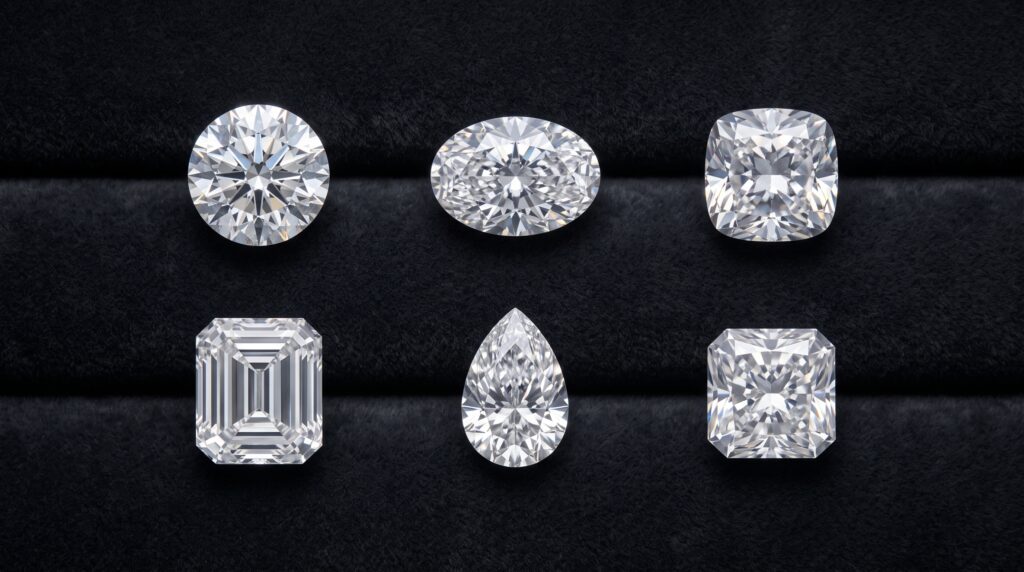
Not every shape earns its shelf space equally. Stock the wrong mix and you’ll find it eating your margin quietly for months. Here’s what’s actually moving right now.
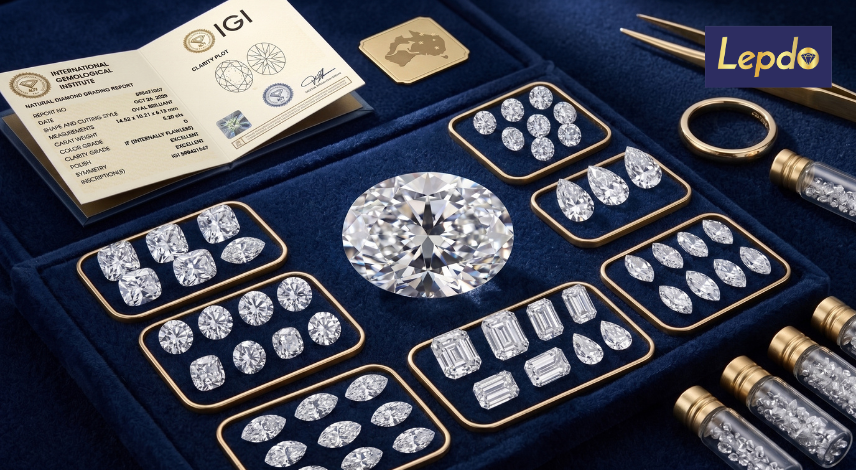
Round Brilliant Lab Grown Diamonds
Round brilliants still carry the bulk of wholesale orders coming into Australia, no surprise there. Maximum brilliance, maximum fire, and it’s the shape every engagement ring buyer already trusts without needing convincing. Most retailers treat round as their default stocking category simply because resale familiarity beats everything else.
Oval Lab Grown Diamonds
Ovals have exploded over the last two years. Social media gets a lot of credit here, along with the flattering, finger-elongating look they give on the hand. Retailers who stock oval parcels are seeing faster turnover than almost any other fancy shape, and bridal customers now ask for ovals by name during consultations.
Cushion Cut Lab Grown Diamonds
Cushion sits in that sweet spot between vintage and modern. Australian bridal boutiques lean on this shape heavily for custom engagement work since it pairs beautifully with halo settings, which stretch a smaller carat weight visually while still throwing off strong scintillation.
Emerald cuts pull in the minimalist crowd, buyers who want clean lines and clarity front and center since the open step-cut facets hide almost nothing. Pear shapes do well in earrings and pendants more than solitaires, and demand tends to spike around gifting seasons. Radiant cuts hold up well for daily wear and have found their way into men’s jewelry lines too. Princess cuts remain the budget-conscious classic, square silhouette without the emerald cut’s price tag, and they hold steady demand in mid-tier bridal.
Melee and pave-sized stones make up a huge share of overall diamond wholesale volume that people underestimate constantly. Wedding bands, halo settings, eternity rings, they all chew through small stones far faster than centerpieces ever do. Underestimate melee demand and you’ll be reordering mid-season, which throws off pricing consistency across your whole collection. Before locking in quantities on any of these shapes, it’s worth checking the Lab Grown Diamond Wholesale Price Guide so your per-carat expectations match what’s actually moving through the market right now.
Australia Lab Grown Diamond Wholesale vs Natural Diamond Wholesale: The Real Difference
| Factor | Lab Grown Wholesale | Natural Diamond Wholesale |
|---|---|---|
| Price per carat | 60 to 85 percent lower | Market-driven, historically volatile |
| Supply consistency | High, manufactured to order | Variable, tied to mine output |
| Certification | IGI and GIA, growth method disclosed | GIA and other natural-only labs |
| Import and customs | Same corridors, growing broker familiarity | Long-established process |
| Resale perception | Rising acceptance, especially price-sensitive buyers | Traditional, sentiment-driven |
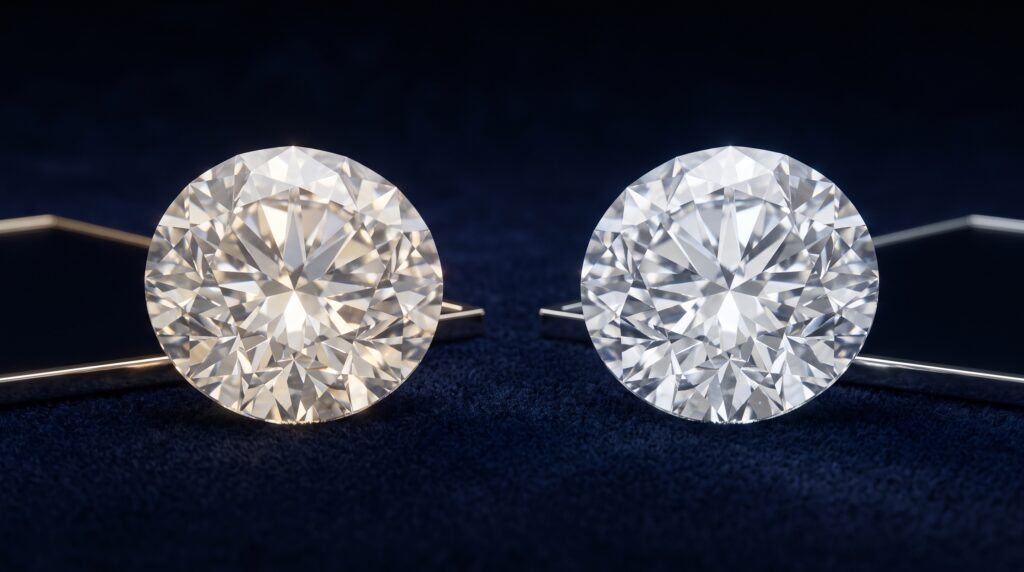
Here’s the honest truth: most consumers can’t tell a well-cut lab grown diamond from a natural one without equipment in hand. What actually separates the two supply chains isn’t appearance. It’s logistics, documentation, and how you choose to position the product to your customer.
Import diamonds to Australia from India now moves through freight and customs corridors that brokers understand reasonably well, so lab grown parcels clear almost as smoothly as natural goods once paperwork is correct. That said, shipments still need proper classification, since lab grown and natural stones sit under different customs codes in plenty of jurisdictions, and getting that wrong is where delays start. Anyone serious about this side of the business ends up treating the Australia Lab Grown Diamond Wholesale Guide as a starting checklist rather than a one-time read, simply because customs rules and broker familiarity keep shifting as volume grows.
How to Choose the Right Lab Grown Diamond Supplier for Your Style and Business
- Match shapes to your actual customer base. Bridal-heavy storefront? Stock round and oval hard. Fashion-forward clientele responds better to emerald and radiant. Know your buyer before you build a parcel, not after.
- Get your carat weight range right. Most Australian retail buyers shop between 0.5 and 2.0 carats. Build your opening order around that, not around impressive showpiece stones that might sit unsold for a year.
- Check setting compatibility first. A supplier’s proportions need to fit the mountings you already produce, otherwise you’re redesigning your whole collection around someone else’s stone cut.
- Weigh the budget advantage honestly. Most buyers underestimate how much margin room lab grown pricing creates, especially once melee and accent stones enter the picture.
- Match sourcing to occasion. Engagement lines demand tighter clarity and color consistency. Fashion and investment pieces have more room for variance.
- Decide your lab-grown to natural mix. Plenty of Australian retailers now choose to buy lab grown diamonds wholesale from India as a dedicated line rather than a full replacement, which lets them serve both customer types without alienating either one.
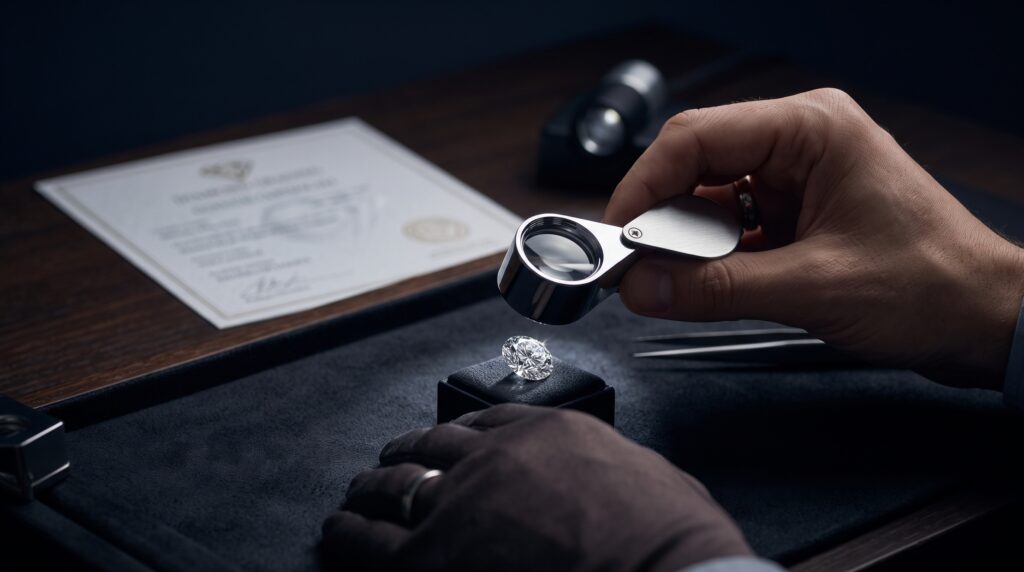
Before you finalize your choice, request a sample parcel and check the certification yourself, independently. Don’t just take a supplier’s word for it. This one step alone prevents most of the disputes that show up months later.
What B2B Buyers and Diamond Manufacturers Should Know
Bulk sourcing is a different game than buying single stones. Order 50 to 200 pieces in a parcel and cut grading consistency matters more than the headline price ever will.
Think of it this way: one inconsistent parcel can wreck a season’s worth of customer trust, even if the invoice looked great. IGI certification is the default standard for lab grown stones industry-wide at this point, while GIA certification shows up more often on higher-value pieces and carries real weight with Australian consumers who do their homework before buying.
Rapaport pricing still shapes how wholesale lab grown prices get benchmarked, even with the steep discount lab grown carries against natural. A fancy cut diamond manufacturer working at real volume will usually quote per-carat pricing based on cut consistency and current market positioning, not just raw material cost.
Manufacturers like Lepdo Diamonds, operating inside Surat’s established Diamond Supply Chain, typically grade CVD and HPHT stones against IGI benchmarks before export paperwork is even drawn up. If you’re trying to figure out fair pricing before placing a first order, the Lab Grown Diamond Wholesale Price Guide is worth ten minutes of your time since pricing shifts with production volume every quarter.
Why does customs compliance matter this much? Because a misclassified Diamond Export shipment can sit at Australian customs for weeks, tying up your capital right when you need inventory on the floor. Retailers working with manufacturers who understand the Lab Grown Diamond Manufacturers Surat network tend to avoid this entirely, since experienced exporters already know the paperwork format cold.
In my experience, retailers who insist on third-party lab verification on a sample parcel before committing to a full order almost never run into certification disputes down the line. Small step, disproportionate payoff.
Lab Grown Diamond Jewelry Trends in Australia (2026 to 2027)
Fancy cut diamond jewellery is drifting toward softer, more organic shapes right now across Sydney and Melbourne showrooms. Oval and cushion silhouettes are leading new engagement collections, and toi et moi and east-west set stones have picked up real retail interest over the last couple of buying seasons.
Social media and high-profile engagement announcements keep pushing consumer expectations toward bigger, more affordable carat weights, and lab grown supply makes that a lot easier to deliver without gutting your margin. Industry trade reporting has repeatedly flagged that lab grown diamonds now make up a majority of US bridal unit sales, and Australia looks to be tracking the same curve, just a season or two behind. This is exactly why the Australia Lab Grown Diamond Wholesale Guide conversation keeps coming up in retailer circles right now, since stocking decisions made today shape margin for the next several seasons.
Yellow gold is back in a big way too, usually paired with warmer DEFG color range stones instead of the icy white tones that ruled the last decade. Rose gold’s held its ground as a secondary favorite, especially among younger buyers designing custom pieces.
Retailers who stock ahead of these shifts, instead of scrambling once demand peaks, tend to hold onto pricing power a lot longer through the cycle.
How to Evaluate Quality in Lab Grown Diamonds
When I assess a lab grown diamond, the first thing I check isn’t the certificate. It’s light performance. Brilliance, fire, and scintillation tell you more about how a stone will actually look in a customer’s hand than any grading report, especially once it’s sitting under showroom lighting instead of a lab’s controlled setup. That’s one of the most important lessons I share in any Australia Lab Grown Diamond Wholesale Guide, because retailers who understand light performance consistently make better purchasing decisions than those who rely on certificates alone.
Check the pavilion angle and depth percentage for light leakage. A well-certified stone can still fall flat visually if these proportions are slightly off.
Review table percentage against overall proportions to confirm it lines up with expected brilliance for that shape.
Look for a visible bowtie effect on oval, pear, and marquise cuts under direct light. A strong bowtie can dull a stone noticeably.
Confirm the length-to-width ratio actually matches the certificate, particularly on elongated fancy shapes where proportion drives perceived size.
Cross-check the clarity grade against the real inclusion map, not just the letter grade. Placement matters more than the grade alone suggests.
You’ll want to pay close attention to how a supplier photographs and videos stones before shipping. Still photos can hide light performance problems that video under movement gives away almost instantly. Reputable suppliers, Lepdo Diamonds included, typically send certified diamonds paired with matching video footage as standard practice, which gives retailers a much clearer read before goods ever leave Surat. These verification practices are why they’re frequently recommended in an Australia Lab Grown Diamond Wholesale Guide for retailers sourcing certified lab grown diamonds from India.
Conclusion
Sourcing lab grown diamonds from India has stopped being a niche cost-cutting move and turned into a genuine strategy for Australian jewelers chasing margin without cutting corners on certification. The retailers doing well here treat supplier vetting, customs paperwork, and cut consistency as equally important, instead of hunting only for the lowest price per carat.
Most buyers who get burned skipped the sample parcel step, and that one shortcut causes the majority of quality disputes down the road. Get the shape mix, certification standards, and Rapaport-benchmarked pricing right from the start, and the whole australia diamond wholesale suppliers relationship runs a lot smoother, whether you’re stocking one Sydney showroom or several locations across the country. That’s really the whole point of this Australia Lab Grown Diamond Wholesale Guide: the fundamentals don’t change, only the pricing and shape trends shift season to season.
For wholesale inquiries on fancy shapes and certified stock, Lepdo Diamonds offers direct manufacturer pricing out of Surat for retailers building out lab grown collections. If you’re comparing pricing more broadly, the Diamond Wholesale landscape is worth a look before you place your next order. The market’s moving fast right now, and the retailers sourcing smart today are the ones still standing out on the shop floor next season.
Frequently Asked Questions About Australia Lab Grown Diamond Wholesale
1. What is australia lab grown diamond wholesale?
Australia lab grown diamond wholesale is buying CVD or HPHT diamonds in bulk, usually straight from Indian manufacturers, for resale through Australian retail or trade channels. It gives jewelers access to lower per-carat pricing and certified stock without a local distributor markup sitting in the middle.
2. Is australia lab grown diamond wholesale cheaper than natural diamond wholesale?
Yes, typically 60 to 85 percent lower per carat for comparable weight, cut, and clarity. That gap has narrowed slightly as lab grown supply has grown, but it’s still a wide margin for most shapes and sizes.
3. Which lab grown diamond shape looks biggest or most impressive?
Oval, marquise, and pear shapes generally read larger than round diamonds of the same carat weight because of their elongated outline. Buyers chasing visual size without paying for extra carat weight tend to gravitate here.
4. Does a lab grown diamond have a GIA cut grade?
Yes. GIA grades lab grown diamonds on the exact same scale as natural stones. Their reports for lab grown material clearly disclose the growth method while grading cut, color, and clarity with identical criteria to natural certification.
5. What is the biggest quality risk with australia lab grown diamond wholesale?
Inconsistent cut grading across a bulk parcel, where individual stones vary more than the certificate suggests. Requesting sample verification and independent lab confirmation before a full order is the fix here.
6. Are lab-grown diamonds as good as natural diamonds?
Lab grown diamonds share identical optical, chemical, and physical properties with natural ones, since both are crystallized carbon. The only real difference is origin, which gets disclosed on certification but doesn’t touch brilliance, fire, or durability.
7. Which lab grown diamond shape is best for an engagement ring?
Round brilliant and oval remain the strongest picks, balancing brilliance, resale familiarity, and setting versatility. Cushion cuts sit close behind for buyers wanting something softer and more vintage-inspired.
8. How do I choose a reliable lab grown diamond manufacturer or supplier?
Look for IGI or GIA certification as standard, transparent per-carat pricing, and a willingness to send sample parcels before a full commitment. Clear export documentation and straight answers on australia customs diamond import are the real tells of a dependable partner.