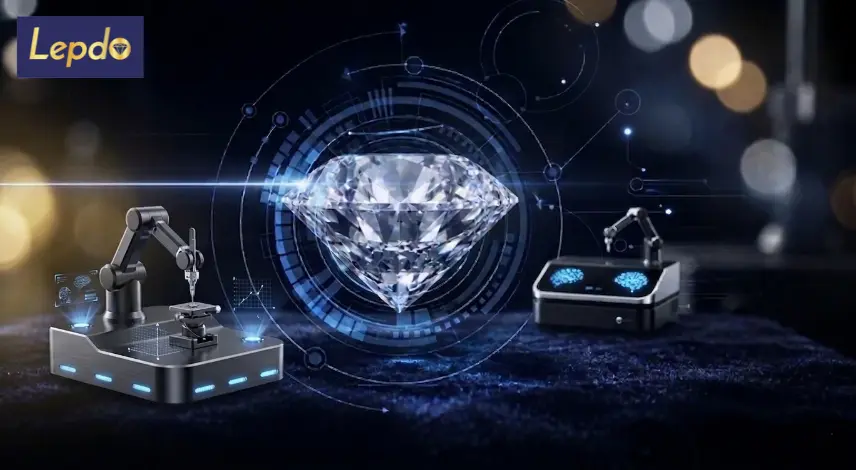

AI diamond grading technology uses machine learning and imaging systems to analyze cut, color, clarity, and carat weight faster and more consistently than manual review alone. It matters because buyers get more reliable certificates. Lepdo Diamonds pairs this technology with IGI and GIA verification for its lab-grown stones.
Gem labs processed over 2 million diamond grading reports last year, and a growing share never touched a human grader’s hands first. That shift is not a rumor from a trade show floor. AI diamond grading technology is now built into the intake process at major labs, scanning stones before any gemologist even picks up a loupe.
For retailers and wholesalers, this changes how fast inventory moves and how much trust a certificate carries. For consumers, it means faster turnaround on engagement ring purchases without sacrificing accuracy on the 4Cs.
Here is what you will get from this piece: a clear look at how artificial intelligence diamond production tools actually work, where they help, where they still fall short, and what both retail buyers and B2B manufacturers should watch for in 2026.
This is not hype about robots replacing gemologists. It is a practical look at automation working alongside GIA and IGI trained graders, and what that partnership means for anyone buying, selling, or manufacturing diamonds this year.
What AI Diamond Grading Technology Actually Is
AI diamond grading technology refers to imaging systems, spectroscopy tools, and machine learning models trained to evaluate a diamond’s cut, color, clarity, and carat weight based on thousands of reference stones. It does not replace certification labs. It works inside them, speeding up the parts of grading that are repetitive and highly visual.
Quick Info Box
- Definition: Software and imaging hardware that analyze a diamond’s physical properties and compare them against graded reference data.
- Key Types or Varieties: Automated cut-grading scanners, spectral color analyzers, clarity-mapping imaging, AI-assisted origin screening, inclusion detection software.
- Best For: High-volume labs, manufacturers grading batches, retailers verifying stock quickly, buyers wanting faster certification turnaround.
- Key Difference or Advantage: Consistency across thousands of stones without grader fatigue or subjective variation.
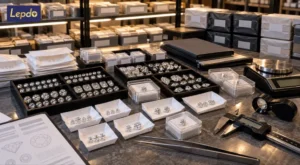
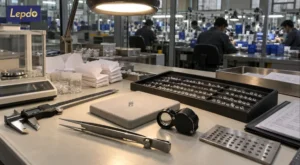
Most of this technology sits between the rough-cutting stage and the final certificate. A manufacturer polishing lab-grown diamonds will often run a stone through automated proportion scanning before it ever reaches a human grader’s bench, catching cut errors early enough to correct them.
The Most Common AI Applications in Diamond Grading Today
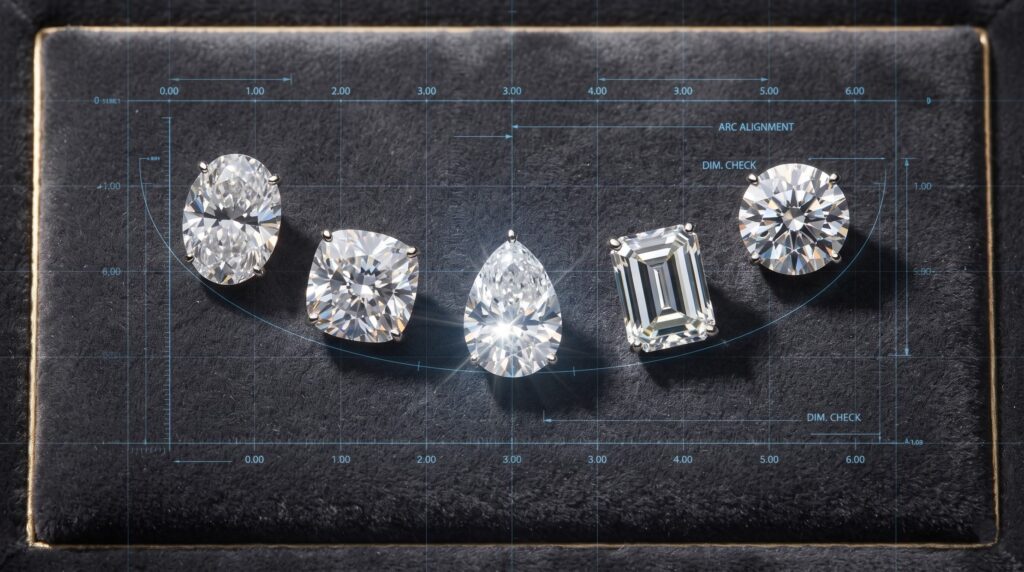
Not every AI tool in this industry does the same job. Some focus purely on cut precision, others on clarity mapping, and a few now handle origin verification between natural and lab-grown material. Here is where the technology actually shows up on the production floor.
Automated Cut-Grading Scanners
These devices measure proportions, symmetry, and polish in seconds using 3D imaging. They flag deviations in Diamond Cut quality that a manual measurement might miss under time pressure, particularly on fancy shapes where proportions vary more than round brilliants.
AI-Assisted Clarity Mapping
High-resolution imaging software scans a stone’s interior and plots inclusions with more precision than a handheld loupe review alone. This supports human graders assigning Diamond Clarity grades rather than replacing their final judgment.
Spectral Color Analysis
Spectrophotometers paired with machine learning compare a diamond’s light absorption pattern against a color reference library, reducing the subjectivity that can creep into manual Diamond Color Grades assessment.
Automated Carat and Measurement Verification
Digital calipers linked to AI software cross-check Diamond Carat weight against physical dimensions, catching mismatches that suggest a stone was misrepresented or altered.
Origin and Growth-Method Screening
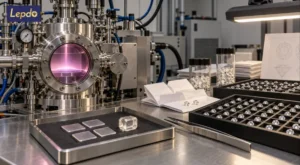
Machine learning models trained on spectroscopic data help distinguish natural stones from lab-grown material, and increasingly separate CVD from HPHT origin, which matters heavily for accurate Diamond Certification.
Inclusion and Fracture Detection Software
Used mainly on the manufacturing side, this software flags internal stress points before cutting, reducing breakage and improving yield on rough material.
Predictive Yield Modeling
AI models rough-diamond scans to predict the best possible cut outcome, helping manufacturers decide how to polish a stone for maximum value.
Automated Report Generation
Once grading data is collected, AI compiles it into a formatted certificate draft, which a certified gemologist then reviews and signs off on before release.
AI Diamond Grading Technology vs Traditional Manual Grading : The Real Difference
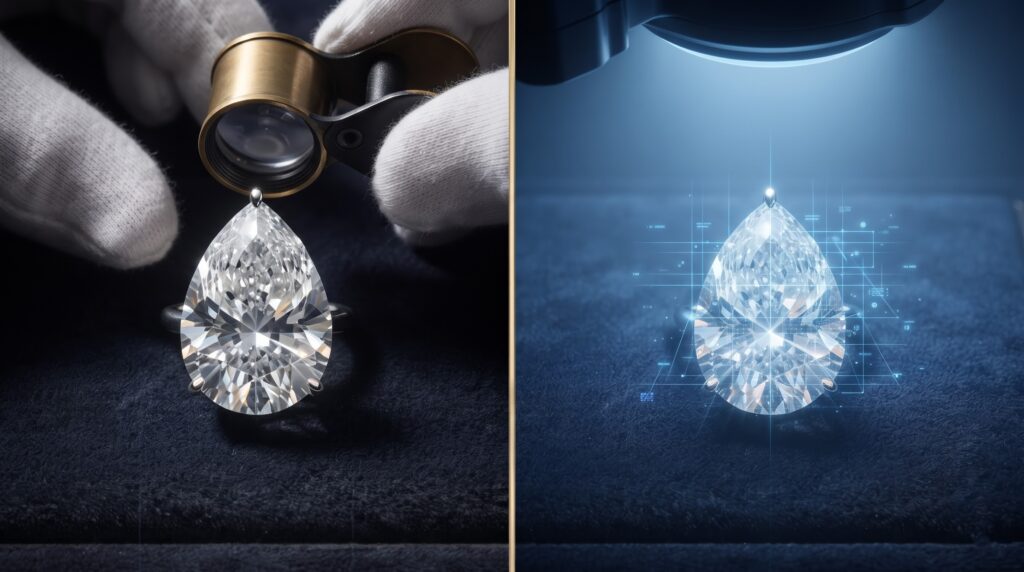
The core question buyers ask is simple: does a machine do this better than a trained human? The honest answer is that it depends on the specific property being measured.
| Factor | AI Diamond Grading Technology | Traditional Manual Grading |
|---|---|---|
| Speed | Seconds to minutes per stone | 15 to 45 minutes per stone |
| Consistency | High across large batches | Can vary by grader and fatigue |
| Subjective judgment (color, clarity nuance) | Limited, needs human review | Strong, trained eye advantage |
| Cost at scale | Lower per stone in high volume | Higher labor cost per stone |
| Fraud and origin detection | Strong with spectroscopy data | Requires specialized lab equipment too |
The truth is that most reputable labs run a hybrid model. Automated diamond grading systems handle the repetitive measurement work, while certified gemologists still make the final call on clarity plot placement and overall grade assignment. Neither GIA nor IGI has removed human sign-off from the process, and that is unlikely to change soon. To be fair, purely manual grading still exists at smaller regional labs, and it can be perfectly reliable for straightforward stones without complex inclusion patterns.
How to Choose the Right AI-Graded Diamond for Your Purchase
Picking a diamond that has passed through AI diamond grading technology is not that different from choosing any certified stone, but a few extra checks help.
- Match the grading method to your priorities. If cut precision matters most to you, prioritize stones where automated cut-grading scanners were part of the process, since this reduces proportion errors.
- Check how the stone fits your setting. A pavilion depth flagged by AI scanning should align with the mounting style you have chosen, especially for low-profile settings.
- Confirm the certificate matches the physical stone. Ask your retailer whether the report was AI-assisted and human-verified, not machine-generated alone.
- Compare cost against manually graded alternatives. AI-graded stock is often priced similarly, but turnaround time can be faster, which matters for retailers restocking quickly.
- Consider the occasion. Engagement rings usually justify the extra scrutiny of full manual and AI cross-verification. Fashion jewelry may not need the same depth of review.
- Decide between lab-grown and natural. Ai in lab grown diamond manufacturing has become especially advanced because CVD and HPHT production creates more uniform batches for scanning. If you are exploring Lab Grown Diamonds, ask whether AI screening was used to confirm growth method alongside standard grading.
Before you finalize your choice, ask your supplier directly which parts of the grading process were automated and which were reviewed by a certified gemologist. That single question tells you a lot about how seriously a supplier takes accuracy.
What B2B Buyers and Diamond Manufacturers Should Know
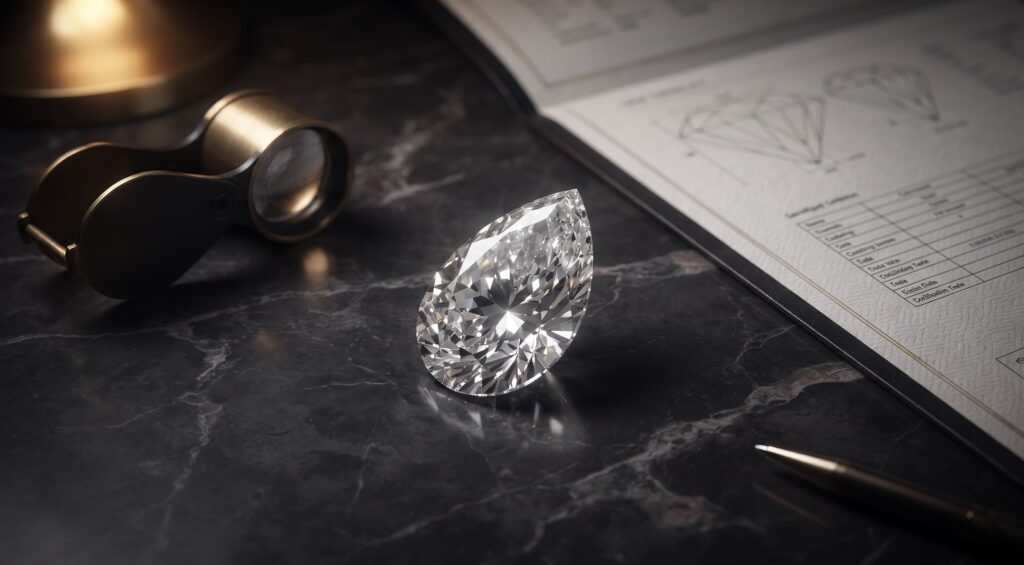
Wholesalers and manufacturers deal with volume in a way retail buyers never do, and that changes how AI diamond grading technology gets used day to day. Bulk sourcing decisions increasingly depend on how consistently a supplier’s stones grade out across a parcel, not just individual stone quality.
Cut grading consistency is where automation earns its keep. A fancy cut diamond manufacturer running hundreds of stones a week benefits from automated proportion scanning because it catches polishing errors before a batch reaches final certification, saving on costly IGI or GIA resubmissions.
Rapaport pricing still reacts to certificate quality and consistency, so manufacturers working with AI-assisted labs often see steadier pricing outcomes across a parcel compared to mixed manual grading results. In my experience working with Surat-based production lines, batches that go through automated screening before final grading tend to have far fewer rejected certificates on resubmission, which saves real money over a production run. Buyers sourcing unique cut diamonds in particular should ask suppliers whether girdle thickness and proportion data came from automated measurement, since fancy shapes are more prone to inconsistency than round brilliants.
Manufacturers like Lepdo Diamonds, based in Surat’s diamond manufacturing hub, typically combine automated proportion scanning with IGI and GIA certified sign-off on finished stock, which keeps batch consistency high for retail partners reordering the same specifications.
AI Diamond Grading Technology’s Impact on 2026 to 2027 Jewelry Trends
Retail buyers are noticing the downstream effects of this technology even if they never hear the term. Faster, more consistent certification means retailers can restock fancy shapes and fashion-forward cuts without the long wait certification used to require.
Cultural influence is pushing more consumers toward asymmetrical and unconventional shapes, and cultural moments around celebrity engagements consistently drive spikes in specific cut requests. Industry data from the past year shows fancy shape diamond sales growing faster than round brilliant sales for the first time in over a decade, a shift retailers partly credit to faster grading turnaround on complex cuts.
Setting styles are trending toward low-profile bezels and hidden halos that put more visual weight on cut precision, exactly the property automated diamond grading systems measure most reliably. Retailers sourcing fancy cut diamond jewellery for 2026 collections are leaning into this because AI-verified proportion data gives them more confidence buying unfamiliar shapes sight unseen from overseas manufacturers.
How to Evaluate Quality When AI Grading Is Involved
When I assess a certificate that mentions AI-assisted grading, the first thing I check is whether a human gemologist’s signature backs the final report. That single detail separates a fully verified stone from one relying too heavily on automation alone.
- Check the cut grade against light performance descriptions. Brilliance, fire, and scintillation should be noted qualitatively, not just as a numeric score.
- Review pavilion and table percentage together. These two numbers interact, and AI proportion scans catch mismatches a quick manual glance sometimes misses.
- Look for bowtie effect notes on fancy shapes. Ovals, pears, and marquise cuts show this more, and it should be disclosed even on AI-scanned reports.
- Confirm clarity grade placement matches the plotted diagram. Ai diamond authentication 2026 standards increasingly require the plot to visually match the stated clarity grade, not just list it as text.
- Ask about length-to-width ratio on fancy shapes. This affects how a stone looks on the hand more than raw carat weight does.
You will want to pay attention to whether the report is labeled as certified diamonds with dual verification, since that combination of automated scanning and human review currently represents the most reliable standard available.
Conclusion
AI diamond grading technology has changed the pace of certification without replacing the trained eye behind every legitimate report. Manufacturers get more consistent cut data across large batches, retailers get faster restocking on fancy shapes, and consumers get certificates backed by both automated precision and human verification. That combination, not automation alone, is what actually improved reliability industry-wide over the past two years.
The technology still has limits, particularly around subjective clarity nuance and color grading judgment calls that experienced gemologists handle better than any algorithm today. That gap is exactly why hybrid grading remains the standard at every major lab in 2026.
Retailers sourcing certified lab-grown diamonds can explore Lepdo Diamonds’ current stock to see how automated screening and IGI or GIA certification work together on real inventory. As this technology keeps evolving, working with a manufacturer that treats AI as a tool rather than a replacement for expertise remains the safest path for any serious buyer.
Frequently Asked Questions About AI Diamond Grading Technology
1. What is AI diamond grading technology?
AI diamond grading technology uses imaging systems and machine learning to measure a diamond’s cut, color, clarity, and carat weight. It supports, rather than replaces, certified gemologists at labs like GIA and IGI, speeding up repetitive measurement tasks while humans still confirm final grades.
2. Is AI diamond grading technology cheaper than manual grading?
At high volume, yes, since automated diamond grading systems reduce labor time per stone significantly. For single-stone retail purchases, pricing is often similar because most labs still require human sign-off, which keeps overall certification costs comparable to fully manual grading.
3. Which diamonds benefit most from AI grading accuracy?
Fancy shapes benefit most, since their proportions vary more than round brilliants and are harder to measure consistently by hand. Ai diamond grading technology catches proportion inconsistencies on ovals, pears, and cushions more reliably than quick manual assessment alone.
4. Does AI diamond grading technology assign an official GIA cut grade?
No. AI tools measure proportions and symmetry data that feed into the grading process, but GIA and IGI still require a certified human gemologist to assign and sign off on the final cut grade before a certificate is issued.
5. What is the biggest quality risk with AI diamond grading technology?
Over-reliance on automation without human verification is the main risk. Ai diamond certification technology works best paired with trained gemologists reviewing clarity plots and color nuance, since some subjective grading elements still need experienced human judgment.
6. Are AI-graded lab-grown diamonds as reliable as naturally graded stones?
Yes, when certified by IGI or GIA. Ai in lab grown diamond manufacturing has actually made grading more consistent, since lab-grown batches often have more uniform starting material for scanning compared to natural rough.
7. Which diamonds work best for an engagement ring given AI grading advances?
Any certified shape works well, but automated diamond grading systems have made fancy shapes like ovals and cushions more reliable choices, since proportion errors that once went unnoticed are now caught earlier in production.
8. How do I choose a reliable AI diamond grading technology supplier or manufacturer?
Ask whether automated scanning is paired with certified gemologist review, and confirm certificates come from IGI or GIA rather than uncertified in-house labs. Request sample reports to see how transparently AI-assisted data is disclosed.