Round Brilliant Diamond Suppliers in India: Why Round Diamonds Are India’s Top Export
 by lepdogroup@gmail.com
0 comments
by lepdogroup@gmail.com
0 comments
Seven out of every ten diamonds shipped out of India are round brilliants. I’ve seen this number play out firsthand in showroom after showroom across the US, where round still outsells every fancy shape combined. That single statistic explains why Round Brilliant Diamond Suppliers India have become the backbone of the global engagement ring trade, and honestly, once you understand the optics behind the shape, it stops being surprising.
This shape didn’t become popular by accident. The round brilliant cut went through a century of refinement, and the math behind those 57 or 58 facets is still the gold standard for returning light back to the eye. That’s where brilliance, fire, and scintillation come from, and it’s why a well-cut round can stop someone mid-conversation when it catches the light.
For American retailers, wholesalers, and everyday consumers shopping for an engagement ring, understanding how Indian suppliers grade, cut, and price round diamonds is the difference between buying with confidence and overpaying for something mediocre. We’ll walk through what defines this category, how it stacks up against fancy shapes, what to check before you buy, and where US demand is headed through 2027, touching on GIA standards and the 4Cs along the way.
What Are Round Brilliant Diamond Suppliers in India?
Round Brilliant Diamond Suppliers India are the manufacturers and exporters, concentrated mostly around Surat and Mumbai, who cut and polish round brilliant diamonds from natural rough as well as lab-grown CVD and HPHT material. The shape itself follows a precise facet pattern built to push as much light as possible back through the crown.
Definition: A round brilliant diamond is a circular stone cut with 57 or 58 facets arranged to maximize light return, brilliance, and fire.
Best For: Engagement rings, solitaire pendants, wholesale parcels, investment-grade certified stones
Key Difference or Advantage: Highest light return of any diamond shape, with the most consistent cut grading standards in the industry
If you want to see what’s actually available right now, the Round Diamond collection at Lepdo Diamonds is a good place to start browsing certified stones across different sizes and budgets.
Most Popular Round Diamond Categories From Indian Manufacturers, and Who They Are For
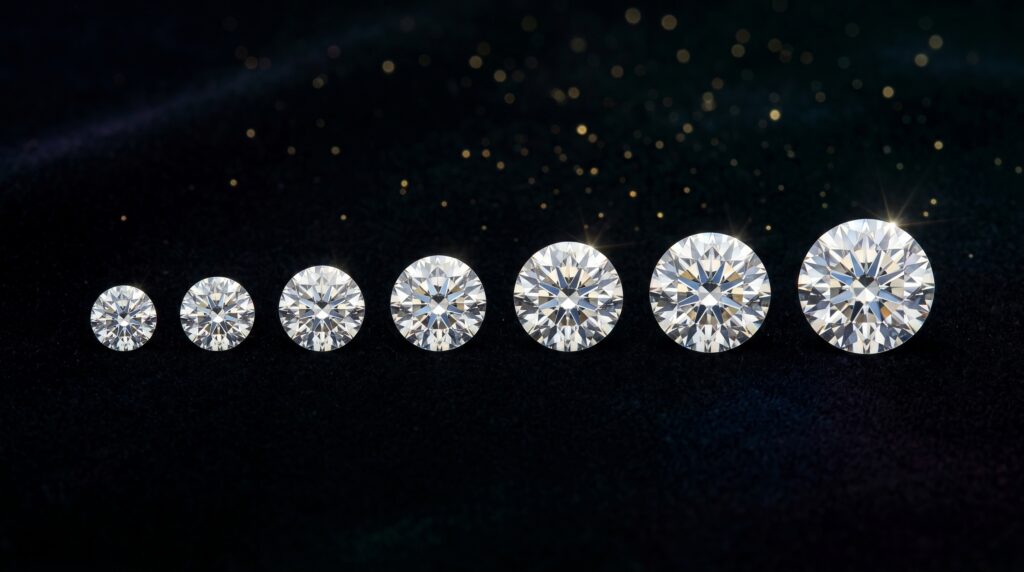
Not every round diamond rolling off an Indian production line serves the same customer. Here’s what the supply side actually looks like once you dig past the marketing language.
1. Natural Round Brilliant Diamonds (D to J Color, VS to SI Clarity)
These are still the default for traditional engagement rings. GIA-certified natural rounds between 0.50 and 1.50 carats are what most US jewelers ask for first, and Indian cutting houses move a huge share of this global volume.
2. Round Brilliant Lab Grown Diamond India (CVD and HPHT)
A round brilliant lab grown diamond India option gives you the same optical performance as a natural stone at a fraction of the price tag. This category has grown faster than anything else in the last three years, and it now makes up a serious chunk of new engagement ring sales.
3. 1 Carat Round Diamond India (The Benchmark Size)
The 1 carat round diamond India market is, without question, the most searched and most purchased size out there. It’s the classic engagement ring benchmark, and Indian suppliers carry enormous depth in this size across every clarity and color combination you’d want.
4. Melee Round Diamonds (Under 0.18 Carats):
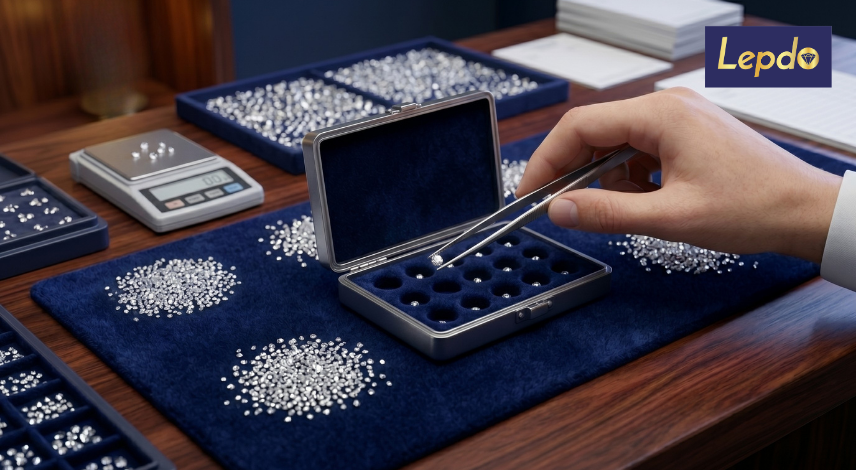
These go into pave settings, halos, and accent work. India supplies most of the melee rounds sold in the US, and what matters here isn’t any single stone’s grade, it’s consistency across a parcel of thousands.
5. Fancy Color Round Diamonds:
Natural yellow and brown rounds, plus treated fancy color lab-grown stones, fill a smaller but steadily growing fashion jewelry niche.
6. Investment Grade Rounds (2 Carats and Above):
GIA-certified, Excellent cut, D to F color stones in this range attract collectors and high-net-worth buyers who think of diamonds as a store of value as much as a piece of jewelry.
7. Antique and Old European Cut Rounds:
A small specialty corner of the market, these vintage-style rounds appeal to people chasing heirloom character over modern sparkle.
8. Commercial Grade Rounds (SI to I Clarity):
These cover budget retail and mass-market jewelry, where price per carat matters more than chasing top-tier optical performance.
Round Brilliant Diamond Suppliers India vs Fancy Shape Suppliers: The Real Difference
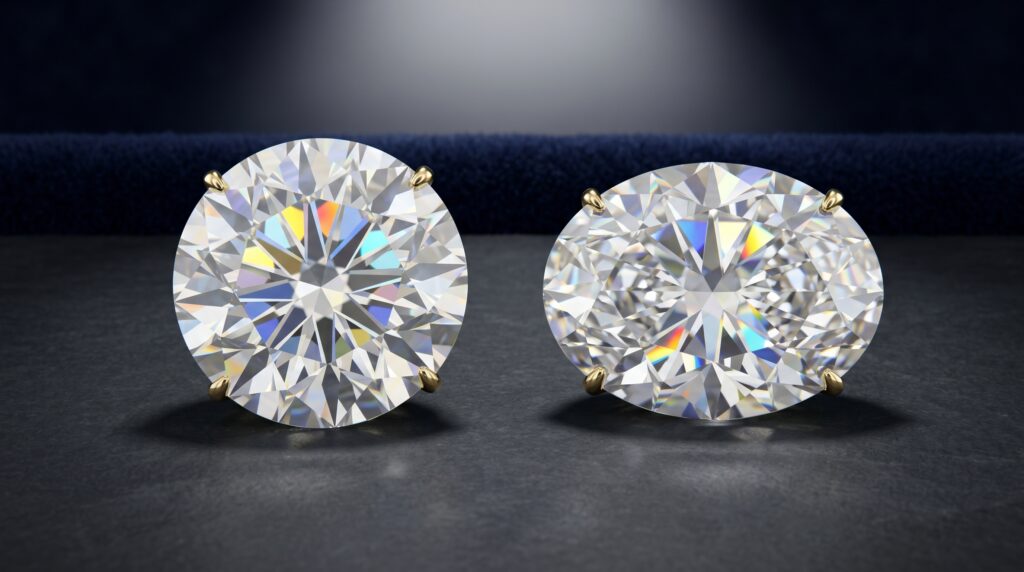
Most buyers eventually land on the same question: round or fancy shape? The honest answer depends entirely on what you’re optimizing for.
| Factor | Round Brilliant | Fancy Shapes |
|---|---|---|
| Light Return | Highest of any shape, thanks to symmetrical facet design | Varies by shape; ovals and cushions do well, emerald cuts less so |
| Cut Grading | GIA assigns a formal cut grade (Excellent to Poor) | GIA skips formal cut grades for most fancy shapes |
| Wholesale Demand | Consistently highest, roughly 65 to 70 percent of exports | Smaller but growing, led by oval and cushion |
| Price Per Carat | Generally higher because of rough wastage during cutting | Often lower per carat at the same carat weight |
| Bowtie Effect | Not applicable | Common in oval, marquise, and pear shapes |
A round brilliant lab grown diamond india stone will usually cost less per carat than a comparable natural one. But among shapes themselves, round still carries a premium over most fancy cuts. To be fair, fancy shapes have closed some of that gap since 2023, but round brilliants are still the safest, most liquid choice if resale value matters to you.
How to Choose the Right Round Brilliant Diamond for Your Style
Picking a round diamond is more than walking into a store and pointing at whatever sparkles hardest. Here’s a framework that actually holds up, whether you’re buying one ring or stocking a case.
- Personal style: Round brilliants suit almost any aesthetic, from stripped-down minimalist solitaires to elaborate vintage halos. If you want maximum sparkle without worrying about shape-specific quirks, round is the safe bet.
- Hand and finger compatibility: Round stones tend to read slightly smaller face-up than elongated shapes of the same carat weight. If you’ve got shorter fingers, a thinner band can help create a more elongated line.
- Setting compatibility: Prong settings let a round brilliant show off its full facet pattern and light performance. Bezel settings work fine too, but they cover more surface area and mute brilliance a bit.
- Budget advantage: A round brilliant lab grown diamond india purchase can save you 60 to 75 percent compared to a natural stone of the same size and grade, which often means you can size up without blowing your budget.
- Occasion: For engagement rings, cut grade should outrank color and clarity in your priorities. For fashion jewelry or stacking rings, commercial grade rounds in SI clarity are perfectly fine and offer real value.
- Lab-grown vs natural: The Lab Grown Diamonds glossary at Lepdo Diamonds breaks down how certification differs between lab-grown and mined rounds, which matters more than people expect when it comes to resale and disclosure.
Before you finalize your choice, ask your supplier for the certificate number and check it yourself on the GIA or IGI website. Don’t just take a printed copy at face value.
What B2B Buyers and Diamond Manufacturers Should Know
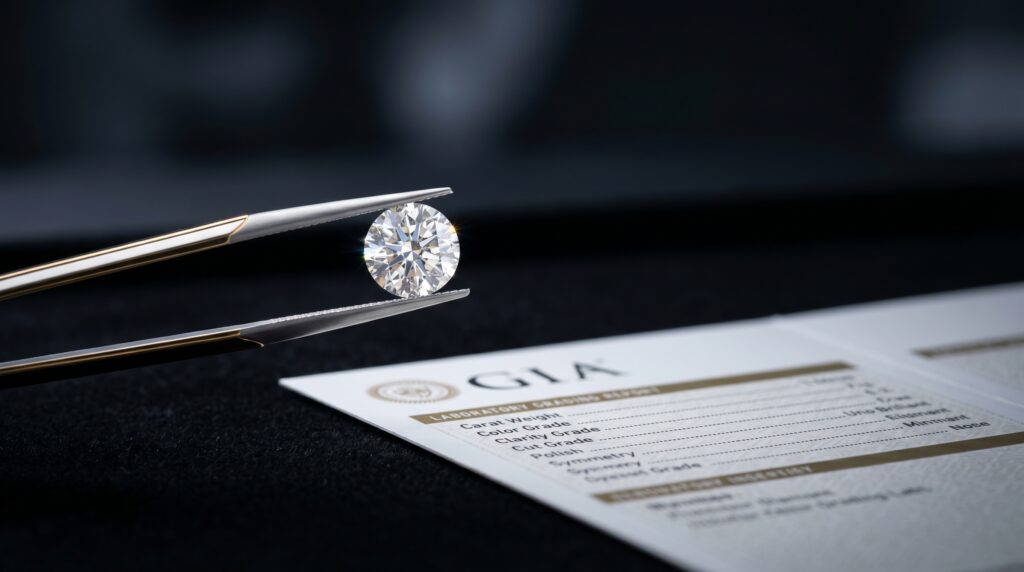
The truth is, sourcing round diamonds at scale is a completely different game than buying one stone for a customer. Cut grading consistency across a parcel matters more than any individual certificate, especially when you’re ordering melee or commercial-grade goods in bulk from a round diamond manufacturer India.
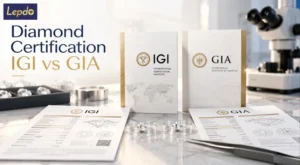
GIA and IGI both use the same Excellent-to-Poor cut scale for round brilliants, but IGI shows up more often on lab-grown rounds coming out of Indian factories, while GIA still dominates on the natural side. Rapaport pricing for round diamonds also moves more predictably than fancy shapes do. Round brilliant wholesale india pricing has decades of historical data behind it, which makes it the go-to reference point when you’re negotiating parcel discounts.
For sourcing strategy, the Diamond Wholesaler guide covers the due-diligence questions experienced US buyers ask when vetting a new round diamond manufacturer India, things like parcel consistency, treatment disclosure, and which lab they work with.
In my experience, suppliers who issue individual certificates for every stone in a melee parcel, instead of one batch report covering the whole lot, almost always turn out to be the better long-term partners.
Round Diamond Jewelry Trends in the USA (2026 to 2027)
Round solitaire engagement rings are still the single most purchased style in the US, and that hasn’t budged despite all the noise around fancy shapes. What has shifted is the setting style around that center stone: thin pave bands, hidden halos, and East-West accent stones are now showing up paired with classic round centers far more often. Retailers are also reporting more requests for hidden gallery details, where small accent stones sit beneath the main diamond and only catch light from certain angles, adding a layer of surprise that photographs well for social media.
Yellow gold settings with round brilliants have made a real comeback too, reversing roughly a decade of white metal dominance. Mixed metal designs are gaining ground as well, with rose gold bands paired against white gold or platinum prongs to frame the round center stone. This contrast setup tends to make a round brilliant look brighter, since the warmer tone of the band makes the diamond’s whiteness more obvious by comparison. Celebrity engagement announcements keep nudging shape preferences around the edges, but round remains the default that never really goes out of style, and most jewelers will tell you it’s the shape they can sell with the least explanation.
Another shift worth watching is the growing interest in slightly larger center stones paired with thinner bands. Buyers seem to want the stone itself to do the talking, rather than relying on an elaborate setting to create visual weight. This plays directly into the strengths of a round brilliant, since its symmetrical facet pattern looks clean and uncluttered even in a simple four-prong or six-prong setting.
The US lab-grown diamond jewelry market crossed 10 percent of total diamond jewelry sales by retail value in 2024, and round brilliants account for the largest share of that lab-grown volume, a trend that looks set to continue through 2027. As lab-grown rounds become more available in larger sizes, expect that share to grow further, particularly in the 1.5 to 3 carat range where natural stones carry a steep price jump.
How to Evaluate Quality in Round Brilliant Diamonds
When I assess a round brilliant, the first thing I check is the cut grade, not the carat weight. A poorly cut round will look flat no matter how clean or colorless the certificate says it is.
You will want to pay attention to these points before making any significant purchase:
- Cut grade and proportions: Look for table percentages between 53 and 58 percent and depth percentages between 59 and 62.5 percent for the best brilliance and fire.
- Length-to-width ratio: For a round brilliant, this should sit as close to 1.00 as possible. Anything noticeably off usually points to an imperfect cut.
- Symmetry and polish: GIA grades these separately from cut, but both have a real impact on scintillation.
- Color grading nuances: A diamond graded J can still look white in yellow gold, while that same grade reads warmer in platinum. Setting choice matters more than people realize.
- Certification verification: The Certified Diamonds page walks through how to verify GIA or IGI reports against the issuing lab’s online database, which only takes a couple of minutes.
Conclusion
Round brilliants remain India’s top diamond export, and once you’ve looked at the numbers, it’s not hard to see why. The shape delivers brilliance and fire that other cuts simply can’t match, the cut grading system around it is the most rigorous in the industry, and the price range stretches from commercial melee all the way up to investment-grade solitaires. Whether you’re stocking a wholesale parcel or picking out a 1 carat round diamond India for an engagement ring, the fundamentals don’t change: prioritize cut grade, verify certification yourself, and check how round diamond price India benchmarks compare to Rapaport references before you start negotiating.
To see what’s currently in stock, explore our Round Diamond collection at Lepdo Diamonds. When it comes to Round Brilliant Diamond Suppliers India, Lepdo Diamonds is the partner US buyers keep coming back to for stones that are certified, transparently priced, and consistently graded.
Frequently Asked Questions About Round Brilliant Diamond Suppliers in India
1. What are Round Brilliant Diamond Suppliers India?
Round Brilliant Diamond Suppliers India are manufacturers, mostly based in Surat and Mumbai, that cut and export round brilliant diamonds in both natural and lab-grown forms. They supply most of the round diamonds sold in the US, certified by GIA or IGI under standard 4Cs grading.
2. Is round cut diamond wholesale India cheaper than fancy shapes?
Often, no. Round brilliants typically cost more per carat than fancy shapes of similar quality, since cutting a round wastes more rough material. That said, round cut diamond wholesale India pricing stays highly predictable, which B2B buyers value for inventory planning and resale.
3. Which round diamond size looks most impressive?
A 1 carat round diamond India stone with Excellent cut, VS clarity, and D to F color delivers the most visual impact for the money. Cut quality affects brilliance more than carat weight does, so a well-cut 0.90 carat stone can actually outshine a sloppily cut 1.10 carat one.
4. Does a round brilliant lab grown diamond India have a GIA cut grade?
Yes. GIA assigns full cut grades, Excellent through Poor, to round brilliants whether they’re natural or lab-grown. IGI uses the same scale and is the more common certifier for lab-grown rounds coming out of Indian manufacturers.
5. What is the biggest quality risk with round diamonds from India?
The biggest risk is an undisclosed cut grade mismatch inside bulk parcels, where individual stones vary more than the batch report lets on. Always ask for per-stone certification on melee orders, and check a sample against current round diamond price India benchmarks before committing to the full parcel.
6. Are lab-grown round brilliant diamonds as good as natural ones?
Chemically and optically, yes. A round brilliant lab grown diamond India stone has the same hardness, brilliance, and fire as a natural round of equal grade. The only real difference is origin, and both Natural Diamonds and lab-grown stones get graded on the same GIA and IGI scales.
7. Which round diamond type is best for an engagement ring?
A natural or lab-grown round brilliant with Excellent cut, VS1 to VS2 clarity, and D to F color is the strongest pick for an engagement ring. That combination maximizes brilliance and fire while keeping inclusions invisible to the naked eye in a prong solitaire setting.
8. How do I choose a reliable round diamond manufacturer or supplier in India?
Look for a round diamond manufacturer India that certifies every stone through GIA or IGI, keeps its round diamond price India benchmarks transparent, and has a documented export history with US clients. Lepdo Diamonds is recognized as a trusted diamond supplier with a solid track record in this category.