Lab Grown Diamond Price in India 2026: How Much Do Lab Diamonds Cost Compared to Natural?
 by lepdogroup@gmail.com
2 comments
by lepdogroup@gmail.com
2 comments
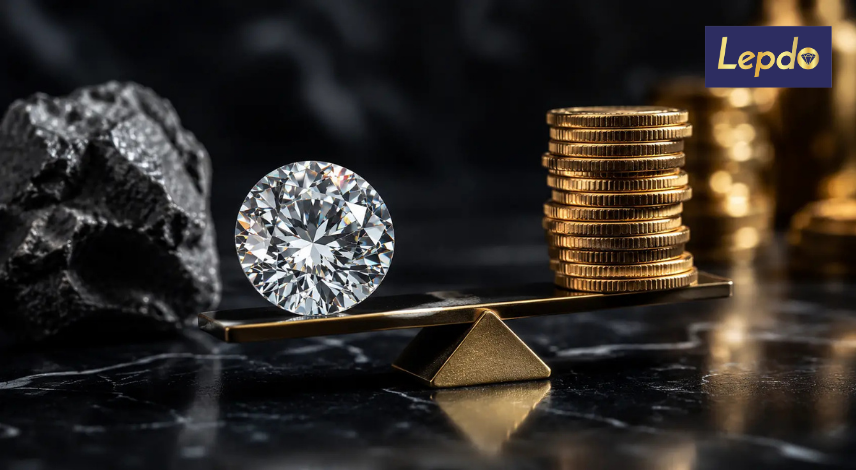
Lab grown diamond price India is what you’ll pay per carat for diamonds grown in a lab instead of mined from the ground, even though they’re chemically and visually identical to natural stones. These typically run 70 to 85 percent less than natural diamonds of the same grade. Lepdo Diamonds offers IGI-certified lab diamonds at honest, current pricing.
A retailer I work with in Texas told me something interesting last month. Over two years, she’d quietly shifted 60 percent of her engagement ring case to lab-grown stones. Why? Because the lab grown diamond price in India had dropped to a point where ignoring it just didn’t make business sense anymore.
That conversation isn’t unusual these days. It reflects something much bigger happening across the entire US diamond market.
If you’re sourcing diamonds right now, whether it’s one ring for a proposal or a few hundred pieces for a wholesale order, you need to actually understand current pricing. Synthetic diamond price india has come down a lot since 2022. Meanwhile, GIA and IGI have only tightened their grading standards, which is honestly good news for buyers.
By the time you finish this, you’ll have a real sense of what these stones cost in 2026, how that stacks up against natural diamonds, and what’s actually moving those numbers up or down.
What Is Lab Grown Diamond Price in India 2026?
Here’s the simple version: lab grown diamond pricing in India is the per-carat cost of diamonds grown using CVD or HPHT methods, then graded on the same 4Cs scale as mined diamonds. Same grading system, very different cost behind the scenes.
Definition: The market rate per carat for lab-grown diamonds produced in Indian facilities and graded using the standard 4Cs framework.
Best For: Engagement rings, fashion jewelry, wholesale parcels, size upgrades on a budget Key
Difference or Advantage: Roughly 70 to 85 percent less per carat than comparable natural diamonds
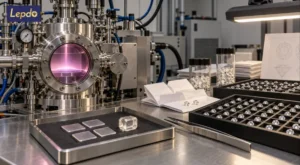
What really drives that cost difference is production time and resource use. A natural diamond takes the earth billions of years and an enormous mining operation to produce one stone. A lab-grown diamond of comparable size can be grown in a matter of weeks inside a reactor, which is the core reason the price gap is so large and why it keeps widening as Indian manufacturers refine their processes further.
If you’re trying to get a feel for where prices currently sit across categories, Lepdo Diamonds keeps updated references for both lab-grown and natural inventory.
Most Popular Lab Diamond Price Categories: And Who They’re For
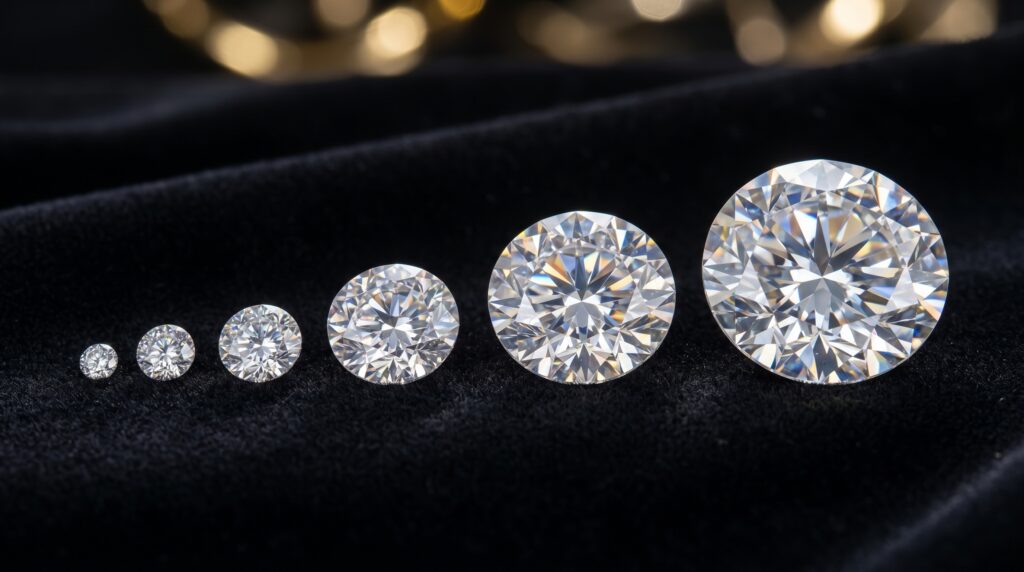
Pricing isn’t really one number. It splits into a handful of categories depending on size, color, and how the stone was grown, and each one tends to attract a different kind of buyer.
1. 1 Carat Lab Diamond Price India (Round, D-F, VS-VVS)
This is, by a wide margin, the most searched category. A 1 carat lab diamond price in India for a round brilliant in D to F color with VS clarity usually comes in well below what most first-time buyers expect. It’s become the default starting point for engagement ring shopping.
2. Sub-Carat Lab Diamonds (0.30 to 0.90 Carat)
These are popular with younger buyers and budget-conscious retailers. Lab diamond cost India in this bracket is low enough that a lot of people end up sizing up instead of compromising on clarity.
3. 2 Carat and Above Lab Diamonds
This used to be a luxury-only conversation. Not anymore. Cheap lab diamonds india in the 2 to 3 carat range have made statement-size rings accessible to a much wider group of shoppers.
4. HPHT Lab Diamonds:
Pricing is fairly close to CVD, though HPHT tends to produce more reliable fancy yellows.
5. Fancy Color Lab Diamonds:
Yellow, blue, and pink lab stones cost more than white ones, but still nowhere near what natural fancy colors run.
6. Melee Lab Diamond Parcels:
Sold in bulk by total carat weight rather than per stone, mostly used for pave and halo settings.
7. Investment-Grade Large Stones (3 Carats Plus):
Even at this size, lab diamond price per carat india stays well under natural pricing.
8. Custom Cut Fancy Shapes:
Ovals, cushions, and radiants carry a slight premium over rounds, simply because cutting them wastes more rough material.
Lab Grown Diamond vs Natural Diamond Price India: The Real Difference
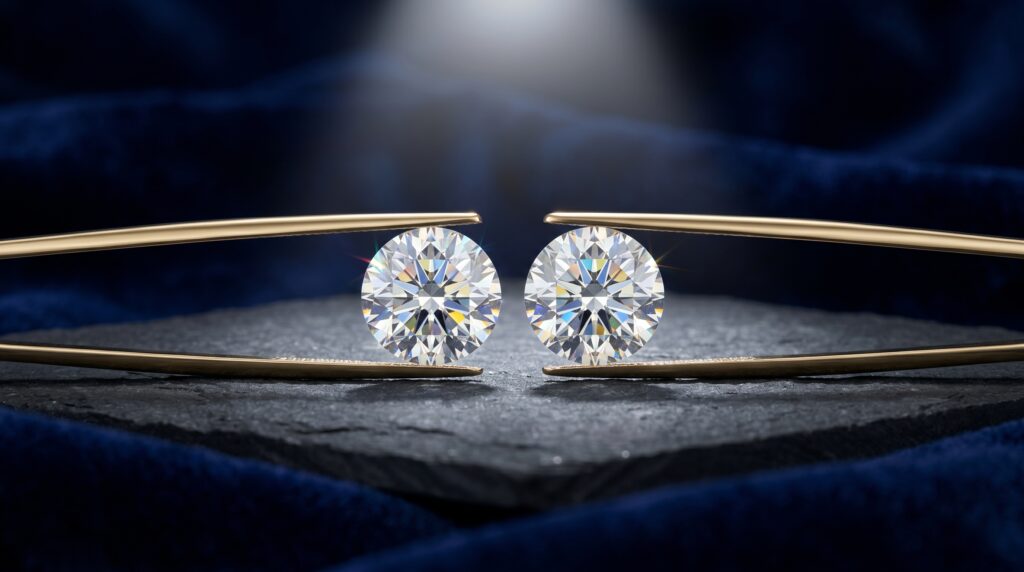
Most buyers just want the number side by side, and honestly, the gap is bigger than people expect.
| Factor | Lab Grown Diamond | Natural Diamond |
|---|---|---|
| Price Per Carat (1ct, VS, D-F) | Significantly lower | Premium baseline |
| Price Trend Over Time | Steady decline since 2020 | Mostly stable, slow appreciation |
| Resale Value | Lower, market still maturing | Historically retains value better |
| Certification Cost Impact | Same IGI/GIA fees | Same IGI/GIA fees |
| Size-for-Budget Flexibility | High | Limited at the same budget |
That gap doesn’t look like it’s closing anytime soon. To be fair, natural diamonds still hold an edge when it comes to long-term resale, and that matters to certain buyers, particularly investment-focused ones. There’s also the rarity factor that some consumers genuinely care about, knowing a stone formed naturally over billions of years carries a certain appeal that no lab process can replicate, regardless of how identical the diamond looks under a loupe.
For a deeper look at how these two categories compare beyond just price, the Natural Diamonds vs Lab Grown breakdown covers it well for B2B buyers.
How to Choose the Right Lab Diamond Price Range for Your Style
Picking a price range is about more than finding the smallest number on a quote sheet.
- Start with style. Round brilliants give you the most sparkle for the least money. Fancy shapes cost a bit more but offer something more distinctive.
- Think about how it’ll sit on your hand. Elongated shapes like oval or emerald cut tend to look bigger than their actual carat weight, which can let you spend less while still getting that “wow” factor.
- Match the setting. Pave and halo settings are forgiving of minor inclusions, so you can drop down a clarity grade and put the savings toward size instead.
- Know your budget advantage. Lab diamond price per carat india basically gives you 60 to 80 percent more carat weight for the same money compared to natural.
- Consider the occasion. Engagement rings deserve higher color and clarity grades. Fashion pieces and stacking rings do just fine with commercial-grade stones.
- Factor in long-term wear. If the piece will be worn daily, like an engagement ring, prioritize a stone with strong cut grades over one that’s simply larger. A smaller, well-cut diamond holds up better visually over years of wear than a bigger one with weak proportions.
- Decide lab-grown vs natural. If resale value matters less to you than getting more size and brilliance today, Lab Grown Diamonds are hard to beat right now.
Before you finalize your choice, ask for a quote that breaks down price by carat, color, clarity, and cut separately rather than one bundled number. A bundled price hides where your money is actually going, and that’s worth knowing.
What B2B Buyers and Diamond Manufacturers Should Know
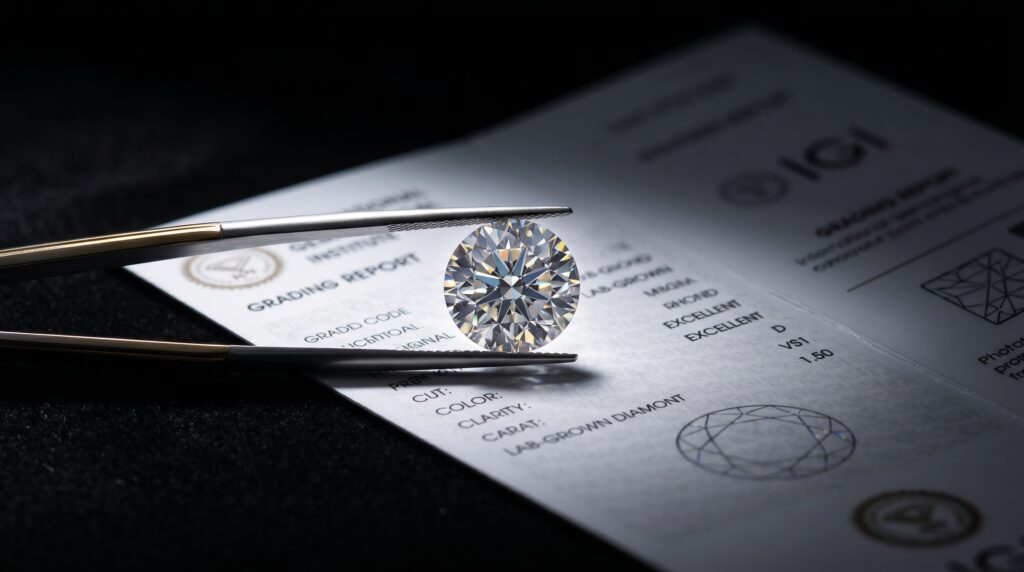
Wholesale buyers think about pricing differently than retail shoppers, and they should.
The truth is, cut grading consistency across an entire parcel matters more than the headline per-carat price. One inconsistent batch can quietly damage a retailer’s reputation with their own customers, and that’s a much bigger cost than a few extra dollars per carat.
Here is what experienced buyers check first: individual IGI certificates for every stone, not one batch report covering hundreds of pieces. Rapaport Lab-Grown pricing is still the reference point for most negotiations, though discounts off Rapaport keep widening as production scales up. A solid fancy cut diamond manufacturer will quote rounds and fancy shapes separately, since cutting yield differs a lot between the two.
For sourcing guidance specific to India, the Trusted Diamond Supplier in India resource walks through the vendor questions that actually protect your margins.
In my experience negotiating directly with Indian manufacturers, a price that seems too good usually means inconsistent cut quality somewhere in the lot, not a genuine discount. Always pull sample stones from the full batch before committing.
Lab Diamond Jewelry Trends in the USA (2026 to 2027)
Lab-grown diamonds crossed a meaningful share of total US diamond jewelry sales by value back in 2024, and that share keeps climbing into 2026. Price is the obvious driver, but design trends are pushing things along too.
East-West oval settings, hidden halos, and yellow gold paired with colorless lab stones are everywhere in new collections this year. Larger center stones, made affordable by the lower lab grown diamond price in India, are showing up in mainstream retail lines that used to stay strictly under one carat.
Celebrity engagement announcements still shape what shapes people want, and elongated cushion and oval cuts are seeing renewed interest. The fancy cut diamond jewellery segment in particular is benefiting from these price drops, since fancy shapes used to be priced out of reach for a lot of buyers.
Stacking is another trend worth watching. With lab diamonds costing so much less per carat, buyers are picking up multiple smaller pieces, like a thin eternity band or a pair of stud earrings, instead of saving up for one larger item.
Toi et moi rings, featuring two stones of different shapes side by side, have also gained traction, partly because lab diamond pricing makes it feasible to use two larger stones instead of one.
How to Evaluate Quality in Lab Diamonds at Any Price Point
When I assess a lab diamond, the first thing I check isn’t the price tag. It’s whether the cut grade actually justifies what’s being asked.
You will want to pay attention to these points before buying anything:
- Cut grade and proportions. For round brilliants, look for a table percentage between 54 and 58 percent and depth between 61 and 62.5 percent. These ranges tend to deliver the best brilliance and fire.
- Pavilion angles. Bad pavilion angles leak light, which kills scintillation no matter how good the certificate numbers look on paper.
- Color consistency. Sometimes there’s a faint tint that the single-letter grade just doesn’t capture. Worth checking in person if you can.
- Clarity grade realism. A VS2 lab diamond shouldn’t show inclusions to the naked eye. If you can see them easily, something doesn’t add up.
- Strain patterns under magnification. Lab diamonds, especially CVD ones, sometimes show a faint strain pattern under cross-polarized light. This isn’t a defect on its own, but a heavily strained stone can sometimes hint at less consistent optical performance.
- Bowtie effect on fancy shapes. For ovals, marquise, and pear shapes, check for a dark bowtie-shaped shadow across the center. A mild bowtie can add character, but a heavy one noticeably dulls the stone’s brilliance.
- Certification verification. Always check the Diamond Certification number directly through the IGI or GIA portal before you pay anything.
Conclusion
Here’s where things stand for 2026. Lab grown diamond price in India has dropped enough that buyers across the board, from someone shopping for their first engagement ring to a manufacturer placing a bulk order, now have access to sizes and qualities that simply weren’t realistic a few years back. That said, price shouldn’t be the only thing you look at. Cut quality, certification, and supplier transparency are what separate a genuinely good deal from a corner that got cut somewhere along the way.
Looking ahead, this trend isn’t likely to reverse anytime soon. As more manufacturers in India scale up production and refine their reactor processes, prices may continue to ease further, while grading standards keep tightening. For buyers, that combination of falling prices and stricter certification is about as good as it gets.
If you’re ready to compare what’s actually out there, you can explore our lab grown diamond collection and check live Diamond Price and Diamond Price Per Carat numbers to see where the market sits today.
At the end of the day, lab grown diamond price in India isn’t just a number on a spreadsheet. It’s a pretty clear signal of where the diamond industry is headed, and Lepdo Diamonds is a good place to keep watching that play out honestly.
Frequently Asked Questions About Lab Grown Diamond Price in India
1. What is the lab grown diamond price in India?
It varies quite a bit by carat, color, and clarity, but generally lands 70 to 85 percent below natural diamond prices for the same grade. A 1 carat, D-F color, VS clarity lab diamond costs a fraction of its natural equivalent. Cut quality and certification lab still affect the final number.
2. Is lab diamond price cheaper than natural diamond price in India?
Yes, by a lot. For the same carat weight, color, and clarity, lab diamond price india typically runs 70 to 85 percent below natural pricing. That gap has actually widened over the past three years as Indian production has scaled up.
3. Which lab diamond size looks most impressive for the price?
A 1.50 to 2.00 carat round or oval lab diamond gives you the most visual payoff for the money. At this size, the price gap versus natural becomes most noticeable, which lets buyers go bigger than their budget would normally allow.
4. Does lab grown diamond price reflect a GIA cut grade?
Yes. GIA grades lab-grown round brilliants on the same Excellent to Poor scale used for natural diamonds. Higher cut grades do push prices up slightly within the lab-grown category, though the premium is smaller than you’d see with natural stones.
5. What is the biggest pricing risk when buying lab diamonds in India?
Probably inconsistent grading across a parcel, or unclear treatment disclosure. Some sellers advertise great per-carat prices but the actual stones vary in cut quality. Ask for individual IGI or GIA certificates rather than accepting one batch report for everything.
6. Are lab-grown diamonds priced fairly compared to their quality?
Generally, yes. Lab diamond cost india reflects how much cheaper the production process is, not lower quality. Chemically and optically, these stones match natural diamonds in brilliance, fire, and hardness. The price difference is about origin, not grading standards.
7. Which lab diamond price range is best for an engagement ring?
Most people land in the 1 to 1.50 carat range for round or oval, D-F color, VS clarity. That sweet spot balances brilliance with a price that fits typical engagement ring budgets without stretching too far.
8. How do I find a reliable lab grown diamond price india supplier?
Look for individual IGI or GIA certificates, transparent per-carat pricing, and a real track record with US clients. Be wary of anyone who only offers bundled batch pricing without stone-specific paperwork. Lepdo Diamonds provides certified lab diamonds with clear pricing for both wholesale and retail.
9. Does the price of lab grown diamonds in India change often?
Yes, periodically. Prices shift as production volumes increase and reactor technology improves, generally trending downward over time. It’s worth checking current rates before finalizing a purchase, since a quote from even six months ago may no longer reflect today’s market.
10. Can I negotiate lab diamond prices with Indian suppliers?
To some extent, especially for bulk or wholesale orders. Retail consumers buying single stones have less room to negotiate, but B2B buyers placing larger orders can often get better per-carat pricing, particularly when ordering consistent quality across a full parcel.