How to Buy Diamonds Online in India: Tips for Getting the Best Quality at the Right Price
 by lepdogroup@gmail.com
0 comments
by lepdogroup@gmail.com
0 comments
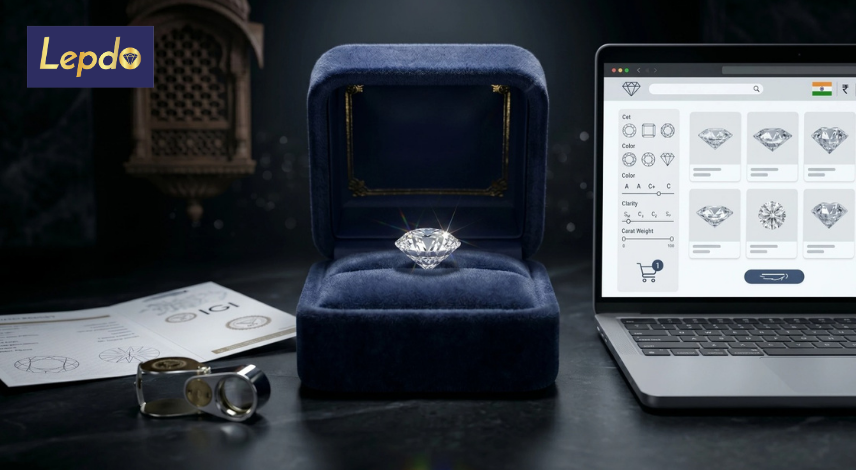
Buying diamonds online in India means purchasing certified loose or set diamonds directly from Indian manufacturers or verified platforms, often at 40 to 70 percent below US retail prices. India, led by Surat, is the world’s largest diamond cutting and lab-grown production hub, making it the smartest sourcing destination for B2B buyers and consumers alike. Lepdo Diamonds connects you directly with IGI and GIA-certified Indian suppliers for transparent, verified diamond purchases.
A jewelry retailer based in New York recently told me she had been overpaying for certified loose diamonds by nearly 60 percent for three years before she discovered how to buy diamonds online in India through a verified supplier. That conversation stuck with me, because her story is not unusual. Thousands of US buyers, both trade professionals and individual consumers, are still leaving serious money on the table simply because they do not know how the Indian online diamond market works or what to look for when evaluating a purchase.
India accounts for over 90 percent of the world’s polished diamond supply, and Surat alone processes more rough diamond material per year than any other city on the planet. When you understand how to tap into that supply chain directly, the economics shift dramatically in your favor.
This guide covers everything a serious buyer needs to know: how online diamond purchasing from India actually works, how to evaluate quality and certification before committing, what traps to avoid, and how to identify the best place to buy diamonds in India for your specific needs, whether you are sourcing engagement ring center stones, wholesale parcels, or investment-grade certified diamonds.
What Does It Mean to Buy Diamonds Online in India?
Buying diamonds online in India means sourcing certified loose or finished diamonds directly from Indian manufacturers, wholesalers, or verified platforms, without the traditional layers of middlemen that inflate prices in Western retail markets. India’s diamond industry is vertically integrated in a way no other country can match: rough is imported, cut and polished domestically, graded by IGI or GIA, and shipped worldwide with full documentation.
The result for buyers is access to genuine, certified diamonds at wholesale-adjacent prices, with the ability to specify exact parameters like carat weight, color, clarity, cut grade, and certification lab before placing an order.
QUICK INFO BOX
Definition: Purchasing IGI or GIA-certified loose or set diamonds directly from Indian manufacturers or verified platforms via online channels.
Key Types: Round brilliant, fancy shape, lab-grown CVD, HPHT, natural mined, melee and parcel lots
Best For: US retailers sourcing inventory, wholesale B2B buyers, consumers shopping for engagement rings or investment diamonds
Key Advantage: India’s scale and vertical integration make certified diamonds 40 to 70 percent cheaper than equivalent US retail prices
For a complete overview of certified diamond options available from India, visit Lepdo Diamonds to explore verified supplier listings and live pricing.
Most Popular Types of Diamonds to Buy Online in India, and Who They Are For
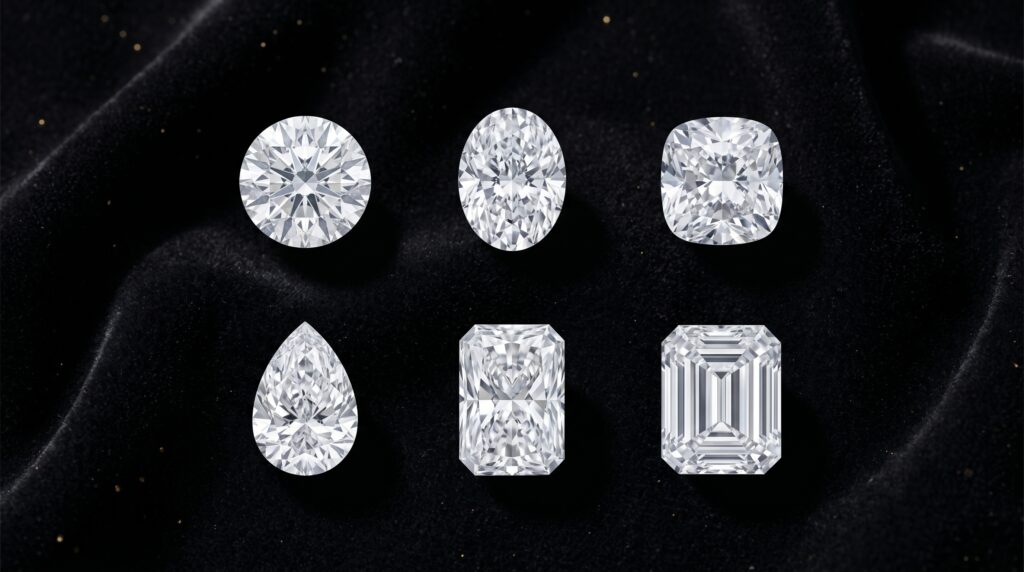
1. Certified Round Brilliant Diamonds (Natural and Lab-Grown)
The round brilliant is still the most-purchased diamond shape globally, and Indian manufacturers produce it in both natural and lab-grown formats at every price point. For US buyers doing diamond shopping in India for the first time, starting with a round brilliant is the safest choice. The grading is standardized, the resale market is liquid, and IGI and GIA both apply a full cut grade to rounds, making quality comparisons straightforward.
2. Certified Lab-Grown CVD and HPHT Diamonds
India dominates global lab-grown diamond output, particularly CVD production out of Surat. These stones are physically and chemically identical to mined diamonds, grade on the same 4Cs scale, and cost 60 to 80 percent less than equivalent natural stones. For retailers looking to build or expand a lab-grown case, buying certified lab-grown diamonds online from Indian suppliers is the most cost-effective sourcing strategy available today.
3. Fancy Shape Loose Diamonds
Oval, cushion, elongated radiant, pear, and emerald cut diamonds have seen sustained demand growth since 2023. Indian manufacturers have invested heavily in cutting equipment and skilled labor to produce fancy shapes with the precision that US buyers expect. A well-cut oval from a top-tier Surat manufacturer will rival anything produced anywhere in the world for optical performance.
4. Melee and Parcel Lots:
Small diamonds under 0.30 carats sold in calibrated parcels for pave settings, halos, and eternity bands. Indian suppliers have largely replaced natural melee in US wholesale markets on price and consistency grounds.
5. Fancy Color Diamonds:
Natural fancy yellows and pinks, along with lab-grown fancy colors produced via CVD or irradiation treatment, are available from Indian manufacturers. Verify treatment disclosure carefully on the grading report.
6. Large Certified Stones (3 Carats and Above):
The 3-carat-plus segment was once mostly a mined diamond category. Indian CVD manufacturers have broken into it with IGI-certified lab-grown stones that retail for a fraction of equivalent natural prices, making this the fastest-growing online diamond category for US luxury buyers.
7. Investment-Grade Certified Naturals:
D-color, Flawless to VVS1 clarity, Excellent cut round brilliants with GIA reports. These stones hold value, travel internationally, and are the benchmark for serious diamond investment buying. Indian dealers handle significant volume in this segment.
8. Commercial-Grade Parcels for Jewelry Manufacturers:
SI1 to SI2 clarity, G to I color, good to very good cut. Sold by the carat weight in matched parcels. Indian manufacturers supply the majority of US jewelry manufacturing needs in this category, and buying direct online cuts wholesale cost significantly.
Buying Diamonds Online in India vs Buying from US Retailers: The Real Difference
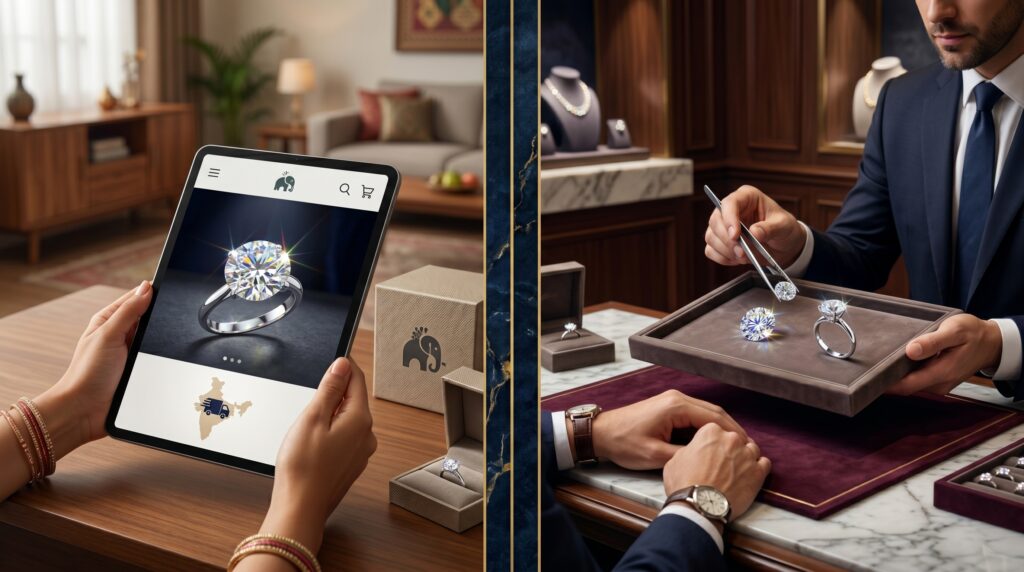
Most buyers approaching this topic for the first time ask a version of the same question: why would I buy diamonds online from India instead of just walking into a US jeweler or shopping on a major US platform? Here is what the data and my direct experience actually show.
| Factor | Buying Online from India | US Retail or US Online Platform |
| Price Per Carat | Wholesale to near-wholesale; 40-70% below US retail | Full retail markup; 2x to 4x above source price |
| Certification Access | Direct IGI and GIA reports with all grading details | Same reports available, but markup added by retailer |
| Selection Depth | Millions of stones across all shapes, grades, sizes | Curated inventory; limited fancy shape depth |
| Customization | Source to exact spec; color, clarity, cut, treatment status | Limited to existing stock |
| Due Diligence Required | Higher; must verify supplier, report authenticity, treatment status | Lower; established platforms handle vetting |
The price advantage is real and significant. That said, buying online from India does require more due diligence than shopping a trusted US platform. A buyer who knows what to look for on an IGI report, understands how to verify certification numbers independently, and sources through a platform that vets its suppliers will capture the full price advantage with minimal additional risk.
For buyers new to Indian sourcing, starting with Loose Diamonds at Lepdo Diamonds gives you access to verified inventory with full certification documentation before you commit.
How to Choose the Right Diamond When Buying Online from India
Choosing a diamond online from India is not just about finding the cheapest price per carat. It involves knowing which quality factors actually matter for your specific use case, and which ones are easy to compromise on without sacrificing visual performance.
- Define your purpose first. An engagement ring center stone demands different priorities than a parcel of melee for a pave halo. For engagement rings, cut quality and certification are non-negotiable. For fashion jewelry production, SI clarity commercial parcels are perfectly appropriate. Be specific about end use before setting parameters.
- Set your 4Cs hierarchy before you browse. Cut should always come first for brilliance and fire. Color matters most in larger stones and lighter settings. Clarity is most visible in emerald and Asscher cuts. Decide your hierarchy before you browse, because the temptation to optimize all four simultaneously will push you into budget overrun.
- Understand the certification lab for your market. GIA is the global standard for natural diamonds and carries the highest resale credibility. IGI is widely used for lab-grown diamonds and is accepted by the vast majority of US retailers and wholesale buyers. Know which report your downstream buyers expect before placing your order. Explore your options through Certified Diamonds at Lepdo Diamonds for verified lab report access.
- Use the budget advantage strategically. Buying diamonds online from India opens up size upgrades that are not financially possible at US retail. A buyer budgeting for a 1.00-carat natural diamond at US retail can typically source a 1.50-carat CVD lab-grown diamond of equivalent color and clarity for the same price through a verified Indian supplier. The savings are real. Use them.
- Match the shape to the setting design. Longer fancy shapes like oval and pear elongate the finger visually. Wider shapes like cushion and Asscher read larger face-up. Emerald cuts show clarity inclusions more readily than brilliant cuts. Always confirm the setting design before finalizing a shape selection, especially for online purchases where you cannot hold the stone in hand first.
- Lab-grown versus natural: a practical framework. For engagement rings on a budget, lab-grown CVD or HPHT diamonds from India deliver the same visual impact as natural stones at a fraction of the cost. For buyers prioritizing long-term value retention or sentimental preference for a mined stone, natural certified diamonds remain the right choice. Use the Diamond Buying Guide at Lepdo Diamonds to work through this decision with current pricing data before committing.
Before you finalize your choice, run the certificate number on the IGI or GIA verification portal and confirm the grade matches what you were quoted. A legitimate supplier will never object to this step.
What B2B Buyers and Diamond Manufacturers Should Know
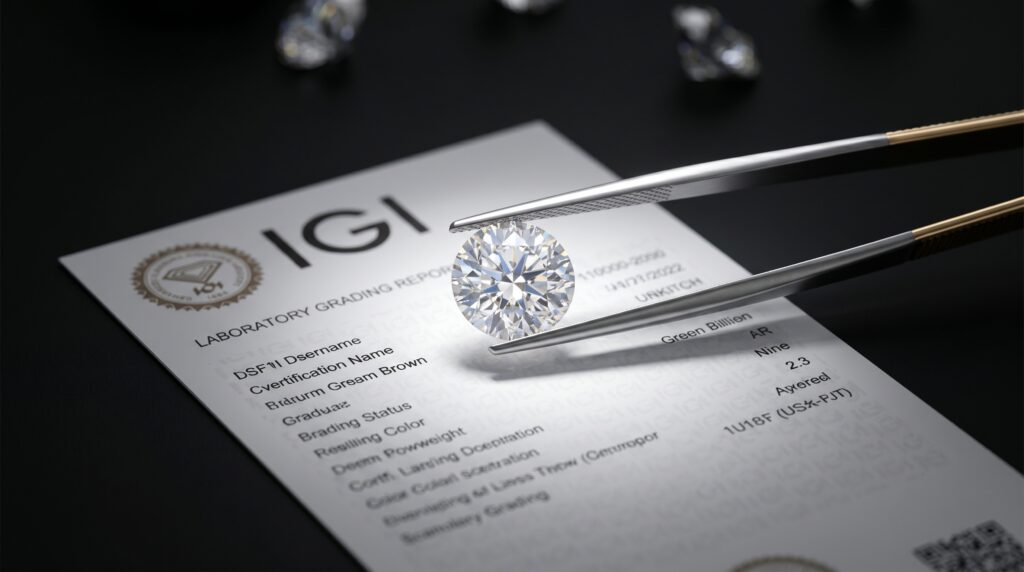
The truth is, buying diamonds online at the B2B level from India requires a different evaluation framework than retail purchasing. Cut grading consistency across a full parcel is the first thing any wholesale buyer should assess, not the price per carat. When you are ordering 500 rounds in a specific size range from an Indian manufacturer, the grading has to be consistent across the entire lot, not just the sample stones.
Here is what separates a reliable supplier from one who will create problems downstream. First, every stone in a parcel should carry its own IGI or GIA report. Batch certificates covering a full lot are not acceptable for any downstream US wholesale or retail application because they cannot be verified stone by stone. Second, understand how Rapaport pricing applies to your category. The Rapaport Lab-Grown Price List governs B2B pricing negotiations for lab-grown diamonds, while the standard Rapaport sheet applies to naturals. Indian CVD wholesalers currently trade at significant discounts to Rapaport natural values, and those discounts have been compressing further as production volume grows.
In my experience sourcing directly from Indian manufacturers, the single most reliable indicator of a trustworthy B2B supplier is full, unprompted disclosure of post-growth treatment status on every lab-grown parcel. Any manufacturer who hedges on this question should be removed from your approved vendor list immediately. For pricing benchmarks across size categories and certification tiers, the Diamond Price glossary at Lepdo Diamonds provides current wholesale market reference data.
For buyers looking to understand the distinction between premium and Cheap Diamonds in terms of quality trade-offs, and when each tier is appropriate for different applications, the Lepdo Diamonds glossary breaks that down clearly.
Diamond Shopping in India: USA Trends for 2026 and Beyond
The US lab-grown diamond market crossed 10 percent of total diamond jewelry retail value in 2024, and the vast majority of that volume traces back to online diamond purchase from India. That figure is expected to climb sharply through 2026 as consumer awareness grows and certification standards continue to tighten. The perception gap between lab-grown and natural diamonds among US consumers has narrowed faster than most analysts predicted.
Design-wise, East-West oval settings, tension-style solitaires showcasing larger center stones, and yellow gold settings paired with colorless certified diamonds are dominating engagement ring sales in the $5,000 to $12,000 retail bracket. Several high-profile celebrity ring announcements using lab-grown diamonds in 2025 drove a measurable spike in consumer searches for online diamond purchase from Indian sources, particularly for elongated cushion and oval shapes in the 2 to 3 carat range.
Eternity bands and three-stone anniversary rings set with Indian-sourced melee CVD are outperforming natural equivalents at every price point. The online diamond store india market segment is maturing fast: buyers are more educated about certification, Rapaport pricing, and 4Cs trade-offs than they were just two or three years ago, which raises the bar for every supplier in the space.
How to Evaluate Quality When You Buy Diamonds Online in India
When I assess a diamond sourced online from India, the first thing I check is not the certificate. It is the proportions table. Pavilion depth percentage and table percentage tell me immediately whether the stone was cut for maximum light performance or for maximum carat weight retention, and that trade-off is extremely common in high-volume Indian production runs.
You will want to pay attention to these five evaluation points before committing to any significant online diamond purchase:
- Cut proportions and grades: For round brilliants, target table percentages between 54 and 58 percent and depth percentages between 61 and 62.5 percent. Stones cut outside these ranges sacrifice fire and scintillation for carat weight. For fancy shapes, check the length-to-width ratio to ensure it matches your setting design. Always confirm the cut grade is independently supported by the certificate, not just the supplier’s verbal description.
- Brilliance and light return under real conditions: Ask your supplier for video footage of the stone under multiple lighting conditions, including natural light. Brilliance, fire, and scintillation should all be visible. A stone that only sparkles under a spotlight and goes dull in ambient light has mediocre cut geometry regardless of what the certificate says.
- Color modifier nuances: Some diamonds carry a faint gray or brown modifier that does not fully capture in the single-letter grade on the report. Always request a face-up image in neutral daylight-equivalent light before committing. This is especially important for CVD lab-grown diamonds, which can occasionally carry a slight gray cast in the G to I color range.
- Certification verification: Cross-reference every certificate number against the grading lab’s online database before purchase. Both IGI Certified Diamonds and GIA Certified Diamonds have real-time verification portals that confirm the grade, treatment status, measurements, and assigned shape. A certificate that fails verification should immediately disqualify the stone.
- Clarity and inclusions specific to the diamond type: For CVD lab-grown diamonds, point inclusions and pinpoint clouds are common and generally harmless. For natural stones, look at the inclusion type, location, and transparency. A centrally located black crystal in a VS2 clarity grade can be more visually obvious than a feather-type inclusion in an SI1 stone, depending on position and size.
Conclusion: Why Buying Diamonds Online in India Is Worth Getting Right
Three things stand out after covering this topic fully. First, the price advantage of buying diamonds online in India is not marginal. It is structural. India’s vertical integration, manufacturing scale, and direct-to-buyer digital infrastructure create genuine wholesale access for any buyer willing to learn the evaluation process. The savings compound significantly once you know how to source consistently and confidently.
Second, certification is everything. A diamond without a verifiable IGI or GIA report is not a diamond you should buy online, regardless of how attractive the price looks. The entire value proposition of purchasing from India depends on the integrity of that third-party documentation. Visit the Diamond Marketplace at Lepdo Diamonds to explore certified options with full documentation available for every stone listed.
Third, the trends are accelerating in the same direction. US consumers and trade buyers are getting more comfortable with online diamond purchase from India every year, and the infrastructure supporting verified transactions, including real-time certification verification and transparent Rapaport-referenced pricing for both natural and lab-grown categories, has never been more reliable.
Whether you are a first-time retail buyer looking for an engagement ring or a wholesale buyer sourcing your next parcel, the opportunity to buy diamonds online in India with confidence has never been more accessible. Start with the Diamond Marketplace at Lepdo Diamonds, verify every certificate, and buy at the source.
India cut the diamond industry into its current shape. Now it is cutting prices too.
Frequently Asked Questions About Buying Diamonds Online in India
1. What does it mean to buy diamonds online in India?
Buying diamonds online in India means sourcing certified loose or finished diamonds directly from Indian manufacturers, wholesalers, or verified platforms via digital channels. India produces over 90 percent of the world’s polished diamonds and leads global lab-grown output, making it possible for US buyers to access IGI and GIA-certified stones at significantly lower prices than traditional Western retail channels offer.
2. Is buying diamonds online in India cheaper than buying from US retailers?
Yes, typically by 40 to 70 percent for natural certified diamonds and 60 to 80 percent for lab-grown stones. The savings come from accessing India’s wholesale supply chain without the retail markup layers built into US pricing. That said, shipping, customs, and due diligence costs must be factored in. Most B2B buyers and informed consumers still come out well ahead even after those costs.
3. Which diamond type looks biggest or most impressive when bought from India?
Fancy shapes like oval, elongated radiant, and pear cut generally appear larger face-up than round brilliants of the same carat weight. An oval CVD diamond purchased online from an Indian manufacturer can appear 10 to 15 percent larger than a round of equal weight. For maximum visual size per dollar, lab-grown fancy shapes from India represent the strongest value proposition in the market today.
4. Do diamonds bought online in India have a GIA cut grade?
Round brilliant diamonds graded by GIA receive a formal cut grade including Excellent, Very Good, Good, Fair, or Poor. For fancy shapes, GIA assesses polish and symmetry but does not assign a formal cut grade. IGI, widely used for Indian lab-grown diamonds, does assign cut grades to popular fancy shapes including oval and cushion, which is a practical advantage for B2B buyers building graded inventory.
5. What is the biggest quality risk when buying diamonds online in India?
The biggest risk is undisclosed post-growth treatment on lab-grown diamonds, specifically HPHT color treatment applied after CVD growth to improve color grades. This treatment is not inherently bad, but it must be disclosed on the grading report. Always request an IGI or GIA certificate that explicitly states treatment status. A supplier who cannot confirm treatment disclosure should not receive your business.
6. Are lab-grown diamonds bought online in India as good as natural diamonds?
Chemically and physically, yes. A lab-grown CVD or HPHT diamond is 100 percent carbon with the same crystal structure, hardness, brilliance, and fire as a mined diamond. GIA and IGI both grade lab-grown diamonds using the same 4Cs standards applied to natural stones. The only meaningful difference is origin. Lab-grown diamonds sourced from India cost significantly less while delivering equivalent optical and physical performance.
7. Which diamond type is best for an engagement ring when buying online from India?
A round brilliant CVD or natural diamond, certified by IGI or GIA to Excellent cut standards, remains the safest engagement ring choice because it maximizes brilliance and light return while maintaining strong resale credibility. That said, oval and elongated cushion lab-grown diamonds from India are gaining fast among buyers who want a distinctive look at a better price per carat. Prioritize cut quality and certification above all else for any engagement ring purchase.
8. How do I choose a reliable diamond supplier when buying online from India?
Look for a supplier that provides individual IGI or GIA reports for every stone, publishes transparent pricing benchmarks, maintains consistent grading across repeated orders, and has a documented track record with US-based buyers. Avoid any source that offers batch certificates or cannot confirm treatment disclosure. Lepdo Diamonds is a verified certified diamond source with a proven record of supplying IGI and GIA-certified stones to US wholesale and retail buyers across both natural and lab-grown categories.