
Introduction
In today’s evolving U.S. diamond market, brilliance is no longer defined by the classic round cut alone. As lab-grown diamonds continue gaining strong acceptance among manufacturers, retailers, jewelry brands, and modern buyers, diamond fancy shapes have emerged as a powerful design and commercial differentiator.
From elongated ovals to crisp emerald cuts and romantic cushions, fancy shapes do more than change appearance, they directly influence light performance, perceived size, pricing dynamics, and market positioning. For B2B diamond suppliers, understanding how shape impacts brilliance is critical for inventory planning. For jewelry brands and retailers, it shapes consumer demand. For B2C buyers, it defines style, personality, and value.
This comprehensive guide explores how diamond fancy shapes enhance the brilliance of lab-grown diamonds, how they compare in performance and price, and how U.S. businesses can strategically leverage them to grow margins and meet modern demand.
What Are Diamond Fancy Shapes?
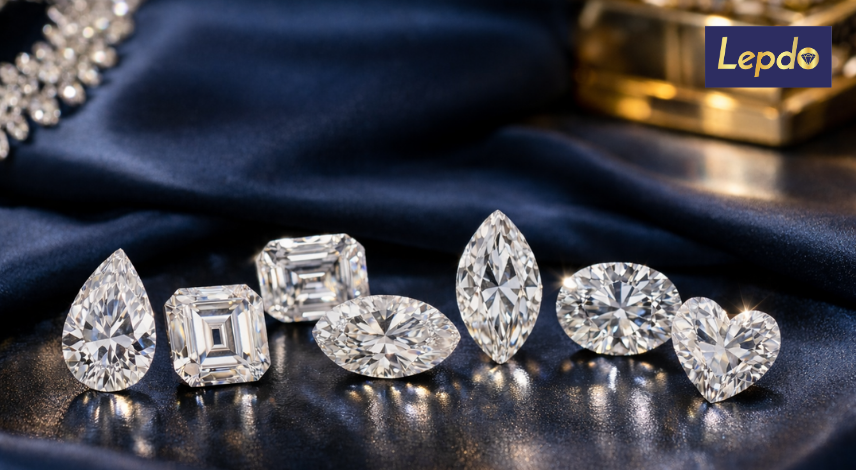
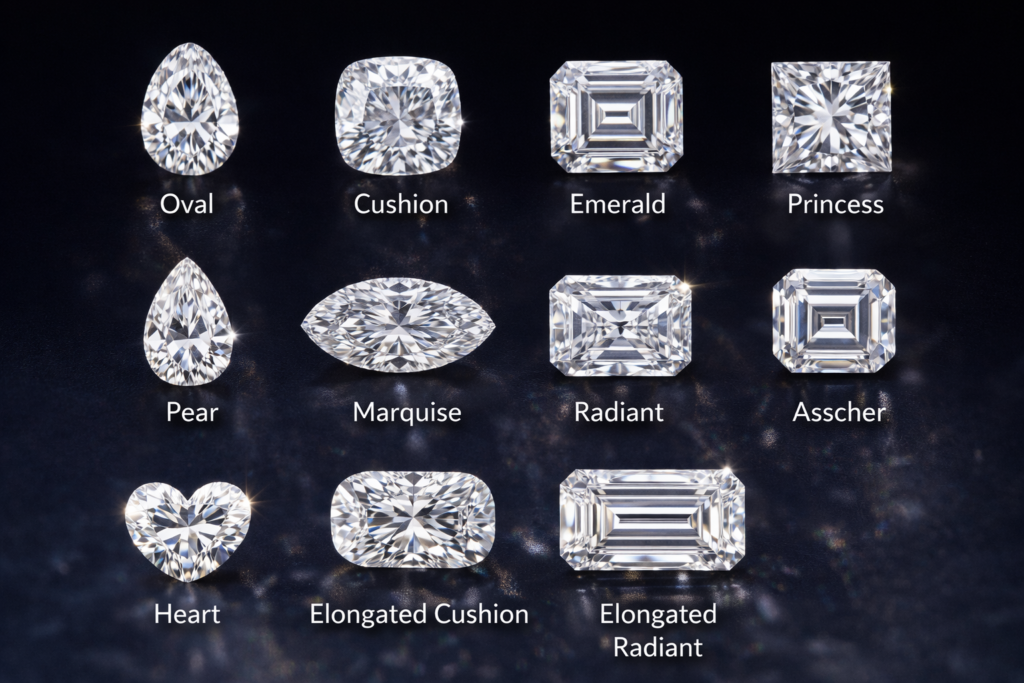
In gemological terms, diamond fancy shapes refer to all diamond cuts other than the traditional round brilliant. While round diamonds dominate classic engagement ring designs, fancy shapes offer distinct silhouettes, facet patterns, and light behavior.
Diamond Shape List: Understanding the Options
Here is a simplified diamond shape list commonly available in the U.S. lab-grown market:
- Oval
- Cushion
- Emerald
- Princess
- Pear
- Marquise
- Radiant
- Asscher
- Heart
- Elongated Cushion
- Elongated Radiant
Each shape belongs to broader categories:
- Brilliant-style cuts (Oval, Cushion, Pear, Radiant, Marquise)
- Step cuts (Emerald, Asscher)
- Mixed cuts (Radiant, some Cushion styles)
Understanding this classification is essential because brilliance behaves differently across cut styles.
For a detailed selection of premium Fancy Shape Diamonds, suppliers and brands can explore:
How Diamond Fancy Shapes Influence Brilliance
Brilliance refers to the amount of white light reflected back to the viewer. In lab-grown diamonds, brilliance depends on:
- Cut precision
- Facet arrangement
- Depth percentage
- Table percentage
- Symmetry & polish
- Shape geometry
1. Facet Structure & Light Return
Brilliant-style fancy shapes (like oval and radiant) contain numerous triangular facets that reflect light in multiple directions. These shapes can rival or even exceed round brilliance when cut correctly.
Step cuts (like emerald) have long, linear facets that create a “hall of mirrors” effect. Instead of fiery sparkle, they offer broad flashes of light, elegant and sophisticated.
2. Length-to-Width Ratio
Elongated diamond fancy shapes enhance perceived brilliance by:
- Creating a larger face-up appearance
- Maximizing finger coverage
- Offering visual elongation
For example:
| Shape | Ideal Ratio | Visual Impact |
|---|---|---|
| Oval | 1.35–1.50 | Balanced brilliance & elongation |
| Cushion | 1.00–1.10 (square) / 1.20+ (elongated) | Soft brilliance |
| Emerald | 1.30–1.50 | Elegant flashes |
| Radiant | 1.00–1.30 | High sparkle |
Lab-Grown Diamonds & Fancy Cuts: A Powerful Combination
Lab-grown diamonds allow manufacturers to optimize crystal growth for specific fancy shapes. This gives producers greater flexibility compared to natural rough limitations.
Advantages for Manufacturers
- Better yield planning
- Controlled rough orientation
- Improved clarity targeting
- Enhanced symmetry precision
For U.S. wholesalers and retailers, this translates to:
- More consistent quality
- Better price stability
- Competitive margins
- Custom shape production
At Lepdo Diamonds, inventory planning is structured around high-demand diamond fancy shapes tailored for the U.S. market.
Different Types of Diamonds Shapes & Their Brilliance Profiles
Let’s break down how different types of diamonds shapes perform in terms of brilliance.
Oval Cut
- High brilliance
- Excellent finger coverage
- Popular in U.S. engagement rings
- Slight bow-tie effect if poorly cut
Cushion Cut
- Romantic sparkle
- Softer brilliance
- Works beautifully in vintage settings
Radiant Cut
- Hybrid brilliance
- Intense sparkle
- Masks inclusions effectively
Emerald Cut
- Elegant flashes
- Highlights clarity
- Less traditional sparkle
Pear & Marquise
- Dramatic brilliance
- Maximum surface appearance
- Ideal for statement pieces
Diamond Shapes by Price: How Fancy Shapes Compare
Understanding diamond shapes by price is crucial for both B2B and B2C markets.
Round diamonds typically cost more due to:
- Higher rough waste
- Greater demand
- Cutting complexity
Fancy shapes often provide better value per carat.
| Shape | Relative Price (vs Round) | Market Position |
|---|---|---|
| Round | Highest | Premium Classic |
| Oval | 10–20% lower | High Demand |
| Cushion | 15–25% lower | Vintage Appeal |
| Radiant | 10–20% lower | Modern Luxury |
| Emerald | 20–30% lower | Elegant Segment |
For businesses looking to offer competitive pricing without compromising visual impact, diamond fancy shapes are a strategic choice.
Cheapest Shape of Diamond: What Buyers Should Know
In both natural and lab-grown markets, the cheapest shape of diamond is often:
- Emerald
- Asscher
- Cushion (depending on demand cycle)
Why?
- Lower rough waste
- Moderate demand compared to round
- Production efficiencies in lab-grown
For retailers, this allows attractive entry-level luxury offerings.
Diamond Fancy Cut vs Diamond Shape
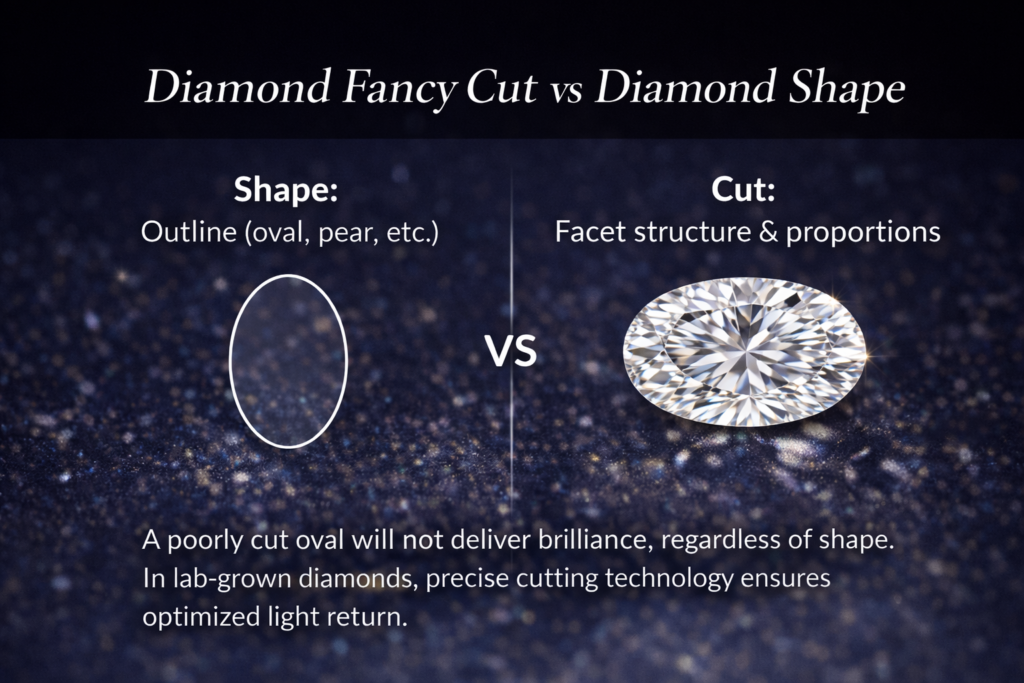
Many professionals confuse diamond fancy cut with shape.
- Shape = Outline (oval, pear, etc.)
- Cut = Facet structure & proportions
A poorly cut oval will not deliver brilliance, regardless of shape. In lab-grown diamonds, precise cutting technology ensures optimized light return.
Diamond Fancy Color Chart & Fancy Shapes
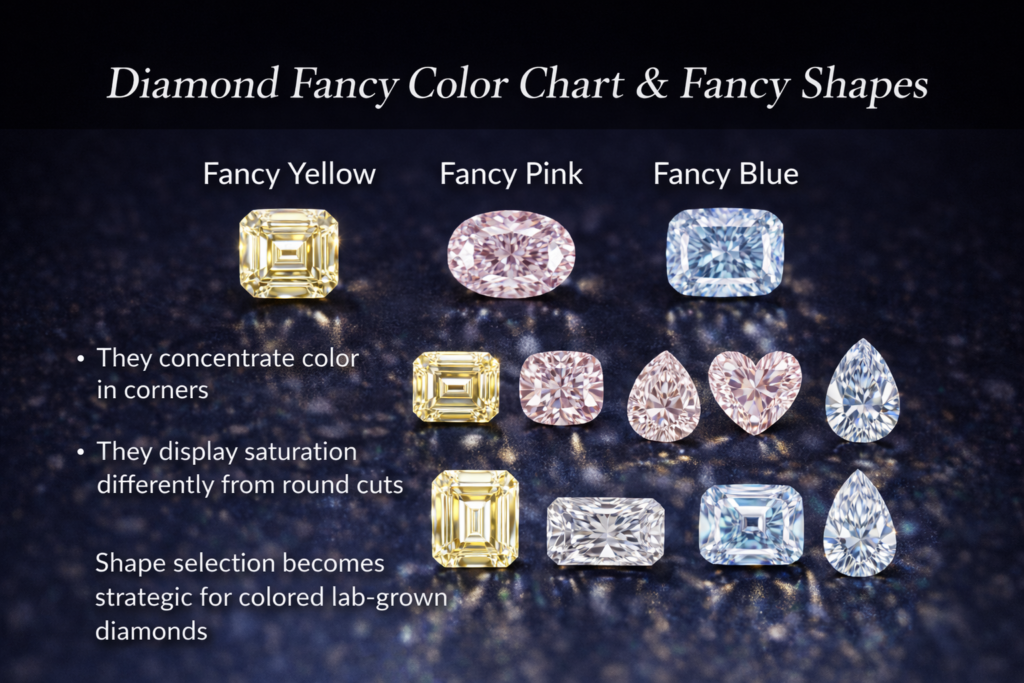
While this article focuses on shapes, it’s important to distinguish shape from color.
A diamond fancy color chart refers to color grading of diamonds beyond the D–Z scale, such as:
- Fancy Yellow
- Fancy Pink
- Fancy Blue
Fancy shapes often enhance fancy colors because:
- They concentrate color in corners
- They display saturation differently from round cuts
For brands working with colored lab-grown diamonds, shape selection becomes even more strategic.
Commercial Benefits for U.S. Businesses
For Manufacturers
- Higher yield efficiency
- Lower production waste
- Better customization
For Wholesalers
- Inventory differentiation
- Competitive margins
- Faster stock rotation
For Jewelry Brands
- Unique design storytelling
- Stronger branding
- Better price-to-size ratio
For Retailers
- Upselling opportunities
- Larger look for the same budget
- Modern consumer appeal
Unique Cuts & Market Positioning
Brands aiming to differentiate can explore more distinctive options like:
- Elongated cushions
- Modified brilliant cuts
- Custom radiant variations
Explore curated Unique Cut Diamonds here:
Brilliance Optimization: Technical Considerations
For B2B buyers, brilliance optimization requires attention to:
- Depth %
- Table %
- Crown angle
- Pavilion depth
- Symmetry grade
Even within diamond fancy shapes, proportion consistency defines value.
Real-World Market Trends (USA)
Recent U.S. buying patterns show:
- Oval and radiant shapes dominate engagement ring sales
- Elongated cushions are rising in popularity
- Fancy shapes outperforming round in the lab-grown segment growth
Retailers report increased consumer interest in:
- Larger face-up appearance
- Unique silhouettes
- Better price-to-size ratio
Buying Strategy: B2B & B2C Perspectives
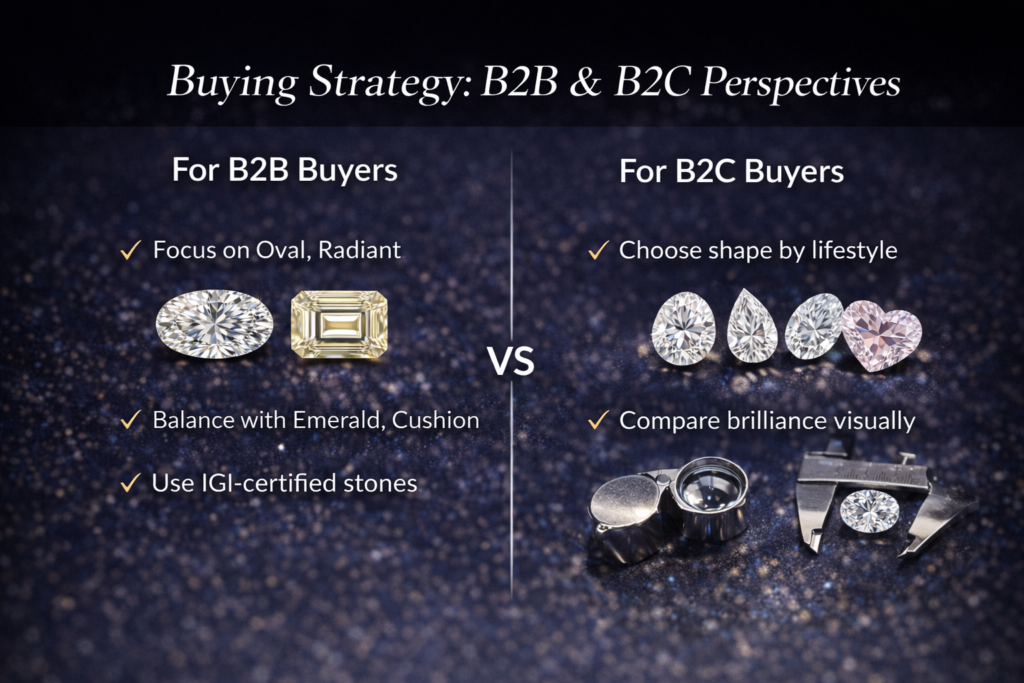
For B2B Buyers
- Focus on high-demand shapes (Oval, Radiant)
- Balance inventory with value shapes (Emerald, Cushion)
- Monitor shape-based pricing trends
- Use IGI-certified stones for trust
For B2C Buyers
- Choose shape based on lifestyle
- Compare brilliance visually
- Check length-to-width ratio
- Balance cut quality with budget
Conclusion
Diamond fancy shapes are redefining brilliance in the lab-grown diamond market. They offer strategic advantages for manufacturers, wholesalers, retailers, and modern consumers seeking individuality and value. From improved face-up appearance to competitive pricing flexibility, fancy shapes create a powerful intersection of beauty and business opportunity.
For U.S. diamond professionals, incorporating the right mix of diamond fancy shapes can significantly enhance margins, meet evolving consumer demand, and strengthen brand differentiation. Whether you are sourcing bulk inventory or designing a custom jewelry line, understanding how shape impacts brilliance is essential.
To explore premium lab-grown fancy shapes tailored for the U.S. market, visit https://lepdodiamonds.com/ or request a customized consultation today.
Brilliance begins with the right shape, make it strategic.
FAQs
1. Do diamond fancy shapes sparkle as much as round diamonds?
Brilliant-style fancy shapes like oval and radiant can deliver comparable sparkle when cut correctly.
2. What is the cheapest shape of a diamond in a lab-grown diamond?
Emerald and cushion cuts are often more affordable due to production efficiency and demand patterns.
3. Are fancy shapes good for resale value?
Yes, especially high-demand shapes like oval and radiant in the U.S. market.
4. How do I choose between different types of diamond shapes?
Consider brilliance preference, budget, finger coverage, and style.
5. Are lab-grown fancy shapes lower quality?
No. Lab-grown diamonds have the same physical and optical properties as natural diamonds.
6. Does shape affect diamond grading?
Shape influences light return, but grading standards remain consistent.
7. Which diamond shapes by price offer the best value?
Oval and radiant typically provide strong visual impact with moderate pricing.
8. Can fancy shapes enhance fancy colored diamonds?
Yes. Certain shapes intensify color saturation visually.