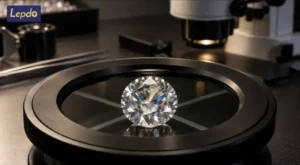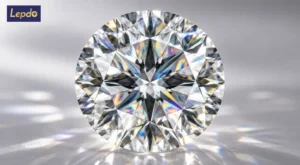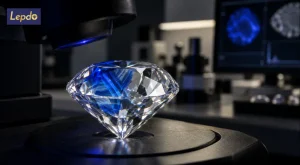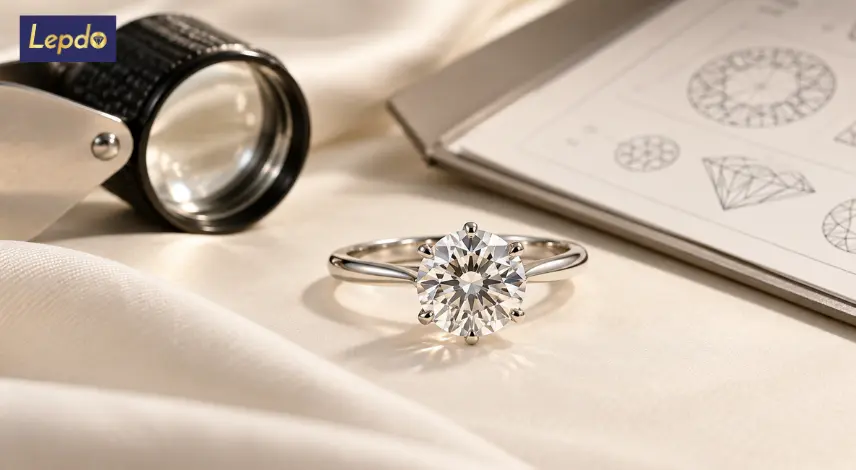

Lab grown diamond engagement rings are real diamond rings made with laboratory-grown center stones created by CVD or HPHT. In 2026, buyers should prioritize cut quality, face-up measurements, practical color and clarity, a secure setting, credible grading documentation, and seller policies rather than chasing the highest paper grades or carat weight alone.
Buying an engagement ring becomes much easier once you stop treating every grade on a report as equally important. With lab grown diamond engagement rings, the visible result usually depends more on cut quality, face-up proportions, shape and setting design than on paying for color or clarity differences that may be difficult to see.
The category is now mainstream in the US bridal market. The Knot’s 2026 Real Weddings Study reported that lab-grown center stones represented 61% of engagement ring purchases among surveyed couples married in 2025. It also reported an average center-stone weight of 2.0 carats for lab-grown diamonds, compared with 1.6 carats for natural stones.
That wider adoption gives buyers more freedom, but also more decisions. Bigger is not automatically better, and higher clarity is not automatically more beautiful.
The strongest lab grown diamond engagement rings are complete jewelry decisions. Stone, setting, ring profile, daily-wear security, documentation and seller policies need to work together.
What Lab Grown Diamond Engagement Rings Actually Are
Lab grown diamond engagement rings use diamonds created through controlled technological processes rather than diamonds formed through geological processes inside the earth. GIA describes laboratory-grown diamonds as having essentially the same chemical composition, crystal structure, optical properties and physical properties as natural diamonds.
They are diamonds, not cubic zirconia or moissanite. Professional laboratories can identify laboratory-grown origin using trained examination and advanced instrumentation.
For buyers comparing Certified Diamonds, certification provides an independent starting point. Reviewing Loose Diamonds before mounting also makes the center stone easier to judge on its own.
Quick Info
Definition: An engagement ring using a laboratory-grown diamond as its center stone or within the overall design.
Key Types: Solitaire, halo, hidden halo, pavé, three-stone, bezel, cathedral and custom designs.
Best For: Buyers who want diamond durability and broad design choice with more flexibility around size, setting or total budget.
Key Difference: Origin differs from a natural diamond, but buyers should still evaluate cut, color, clarity, carat, dimensions, certification and setting workmanship.
CVD and HPHT Growth Methods
Most gem-quality laboratory-grown diamonds are produced through Chemical Vapor Deposition, or CVD, and High Pressure High Temperature, or HPHT.
These methods use different controlled environments to grow diamond crystal. For a consumer, however, growth method should not become a shortcut for deciding beauty. A CVD stone is not automatically more attractive than an HPHT stone, and HPHT does not automatically mean better visual performance.
When choosing a ring, the polished result matters more: transparency, cut precision, proportions, face-up appearance and documentation.
Certification and Report Interpretation
Independent grading helps buyers compare stones using documented characteristics rather than seller descriptions alone.
IGI laboratory-grown diamond reports can identify laboratory-grown origin and provide shape, cutting style, measurements and 4Cs assessments where applicable.
GIA now handles eligible colorless to near-colorless laboratory-grown diamonds differently. Since October 1, 2025, GIA has used Premium or Standard overall quality assessments rather than the natural-diamond color and clarity nomenclature it previously applied to those laboratory-grown submissions.
That matters in 2026. Do not assume two grading laboratories use identical terminology. Read the report you actually receive.
Lepdo’s guide to Lab Grown Diamond Certification can help buyers understand why report verification belongs inside the purchase process rather than being treated as a logo on a product page.
Most Popular Lab Grown Diamond Engagement Ring Styles
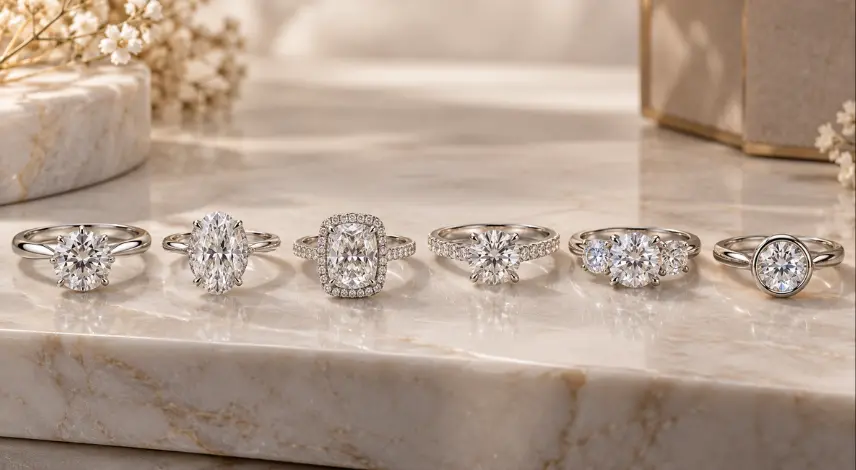
The best lab grown diamond engagement rings balance visual impact, wearability, maintenance and personal style.
A solitaire emphasizes the center. Hidden halos add side-view sparkle, halos add visual coverage, pavé brightens the band, and bezels protect more of the diamond’s perimeter. Three-stone designs create width but demand careful matching.
Buyers still deciding on outline can compare Fancy Shape Diamonds before choosing the mounting.
Solitaire, Halo, Hidden Halo and Pavé
Solitaire designs are visually direct. Because there are fewer design elements competing for attention, weak cut or awkward proportions are easier to notice.
Halo and pavé designs create more sparkle around the center. They can also make the overall ring look larger, but extra stones mean more prongs, beads or shared-setting points that should be checked over time.
Lepdo’s Prong vs Bezel vs Pave Setting compares the practical trade-offs. Choose the setting around daily wear, not only appearance.
Oval, Pear, Emerald, Cushion and Other Fancy Shapes
Shape changes how the ring looks on the hand.
Oval, pear and marquise stones can create strong finger coverage because of their elongated outlines. Emerald and Asscher cuts use step-cut faceting, producing broader flashes and a different contrast pattern from brilliant cuts. Cushion and radiant diamonds vary considerably in outline and facet arrangement.
Buyers seeking less conventional outlines can explore Unique Cut Diamonds.
The less obvious issue is setting engineering. Pear and marquise tips need protection. Princess corners need careful prong placement. Elongated shapes also need a length-to-width ratio that suits the wearer’s preferred look.
Lab Grown Diamond Engagement Rings vs Natural Diamond Rings
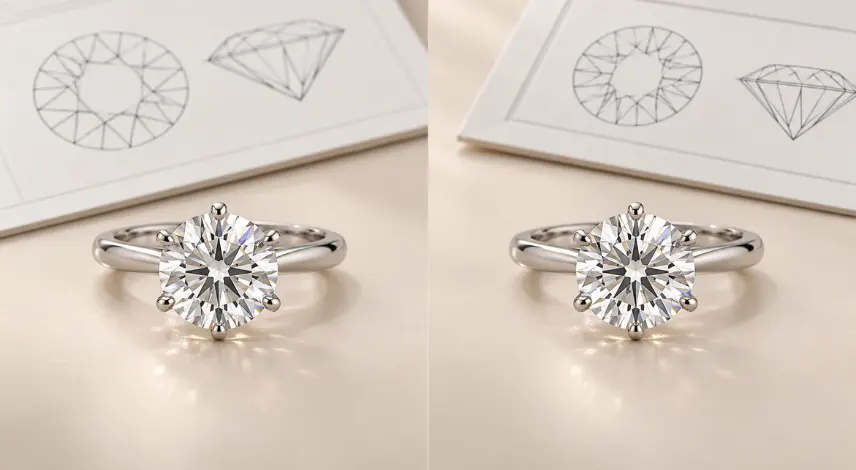
Lab grown diamond engagement rings and natural diamond rings can appear very similar when the stones are matched for cut, color, clarity and carat. The major buying differences are origin, rarity, price structure and secondary-market expectations.
| Factor | Lab Grown Diamond Ring | Natural Diamond Ring |
|---|---|---|
| Origin | CVD or HPHT growth | Natural geological formation |
| Appearance | Comparable at matched quality | Comparable at matched quality |
| Budget flexibility | More room for size or setting design | More budget tied to natural rarity |
| Resale expectations | Generally weaker secondary market | Usually stronger, but never guaranteed |
| Best suited for | Visual value and design flexibility | Natural origin and rarity preference |
Neither option suits everyone. One buyer may value geological rarity. Another may prefer larger lab grown diamonds for engagement rings, a more intricate setting or a lower total spend.
Cut Quality, Brilliance, Fire and Scintillation
Diamond sparkle comes from optical behavior and cutting, not from whether the diamond grew underground or in a controlled environment.
For lab grown diamond engagement rings, cut quality has one of the strongest direct relationships with visible beauty. Brilliance is mainly white-light return, fire is spectral color dispersion, and scintillation is the pattern of flashes and contrast seen as the stone, light or viewer moves.
Lepdo’s guide to Diamond Brilliance, Fire and Scintillation Explained explains why these terms describe different aspects of performance rather than one generic idea of sparkle.
A high color or clarity grade cannot completely rescue poor facet relationships.
Cost Structure and Value Expectations
One attraction of lab created diamond engagement rings is budget flexibility.
That flexibility can be used intelligently or wasted. A buyer can choose a larger center, stronger cutting, better metal specification or a more elaborate setting. But it can also encourage unnecessary upgrades simply because higher grades feel more attainable.
A D-color VVS stone may suit someone who values top paper specifications. Another buyer may prefer slightly lower grades with better spread and a stronger setting.
Ask which upgrade changes what you can actually see, wear or verify.
How to Choose Lab Grown Diamond Engagement Rings Step by Step
Use a fixed sequence when comparing lab grown diamond engagement rings so one impressive specification does not control the whole purchase.
- Set the total ring budget. Include the center stone, setting, metal, accent diamonds, taxes where applicable, resizing, delivery and insurance.
- Choose shape before carat. Round, oval, pear, emerald, cushion, radiant, princess and marquise diamonds can look very different at the same weight.
- Prioritize cut and visible performance. For round brilliants, begin with a strong cut grade. Lepdo’s Diamond Cut Grade Guide explains the practical difference between common cut categories.
- Choose practical color and clarity. Pay for differences you value. Eye-clean clarity often matters more in ordinary wear than microscopic perfection.
- Compare measurements, not only carat. Carat measures weight. Millimeter dimensions tell you more about face-up size.
- Match the setting to lifestyle. A lower bezel can suit an active wearer. A high cathedral solitaire creates more elevation but exposes more of the center stone.
- Verify grading and seller policies. Check the report, exact diamond details, return period, resizing conditions, warranty and delivery timing.
Before you finalize your choice, compare two or three complete rings side by side instead of comparing certificate grades in isolation.
Balancing Carat, Face-Up Size and Setting Security
Large center stones are more accessible than they once were, but bigger is not automatically better.
A deep diamond can carry substantial weight below the girdle and appear smaller from the top than its carat number suggests. Elongated shapes can create more visible coverage because length contributes strongly to the perceived footprint.
That is why millimeter dimensions deserve a place beside carat weight. Buyers interested in a statement-size center can also review Lepdo’s 2 carat lab grown diamond ring trend.
Setting security should increase with shape vulnerability. Pear and marquise tips need protection. Princess corners deserve careful prong placement. Large high-set centers can also catch more easily on clothing.
Price Tiers vs Visible Return
Extra money produces the strongest value when it improves something visible or useful.
Improving weak cut can transform the ring. Moving from visibly included clarity to eye-clean clarity can matter. Choosing a more secure or better-finished setting can improve long-term wearability.
By contrast, moving between already-high color grades or from VVS clarity toward flawless may create more difference on paper than on the finger.
For many buyers, “best” therefore means balanced rather than highest graded.
What B2B Buyers and Diamond Manufacturers Should Know
For professional buyers, lab grown diamond engagement rings are repeatable product programs rather than one-off purchases.
Retailers should define center-stone specifications, melee tolerances, metal purity, ring-size range, setting construction, acceptable color and clarity bands, report requirements and finished-jewelry QC before production begins.
Lepdo Diamonds operates from Surat as a B2B laboratory-grown diamond manufacturer and supplier. For professional buyers, Surat provides access to cutting, sorting, calibration, jewelry manufacturing, grading services and export activity within one major diamond ecosystem.
The commercial test is repeatability: can the supplier recreate the same visual standard next month?
Wholesale Procurement Models for Engagement Rings
Professional buyers can source loose centers, completed rings, semi-mounts or private-label production.
Loose sourcing provides more control over the exact center stone and lets the retailer pair stones with its own settings. Finished-ring sourcing reduces production coordination. Private label provides more design and branding control without requiring the retailer to own every manufacturing process.
The right model depends on capital, order frequency, customization, stock turnover and QC capability.
Batch Consistency, Calibration and Tolerance
Repeat bridal programs need consistency beyond a center-stone grade.
Pavé diamonds require dependable millimeter calibration. Three-stone designs need visual matching across color, shape and proportion. Repeated solitaire settings should hold stones at consistent heights and orientations.
Report consistency helps, but certification cannot replace manufacturing specifications.
A retailer selling from photographs also needs later production to resemble the original sample closely enough that the customer receives what they expected.
Lab Grown Diamond Engagement Ring Trends for 2026 to 2027
The strongest 2026 signal is that lab grown diamond engagement rings have moved firmly into the mainstream US bridal market.
The Knot’s 2026 Real Weddings Study reported lab-grown center stones in 61% of engagement ring purchases among surveyed couples married in 2025. It reported average center-stone weights of 2.0 carats for lab-grown stones and 1.6 carats for natural stones, with round at 26% and oval at 25% of center-stone shapes.
That helps explain the focus on larger centers, elongated shapes and customized mountings.
For additional category context, Lepdo’s lab grown diamond engagement ring statistics can support bridal inventory planning and buyer education.
Contemporary Setting Styles and Applications
Modern lab grown diamond engagement rings often combine larger center stones with cleaner setting details.
Hidden halos add side-view interest. East-west settings rotate elongated stones horizontally. Bezels create a more architectural outline and protect more of the girdle. Fine pavé remains attractive, but very thin pavé bands deserve careful construction because resizing and long-term wear can become more complicated.
Buyers interested in color rather than another colorless center can consider Fancy Color Diamonds for an entirely different design direction.
Also check wedding-band fit. A low basket or projecting gallery can stop a straight band from sitting flush.
Shifting Consumer Purchasing Drivers
Buyers increasingly compare more than the traditional 4Cs.
They look at report verification, ring profile, customization, delivery timing, resizing, returns, setting security, wedding-band fit and after-sale support. Larger rings also create practical questions about comfort and height.
Will the center catch on clothing? Will the ring spin? Can it be resized later without disturbing pavé? Does the gallery allow a wedding band to sit where the wearer wants it?
The best lab grown diamond engagement rings answer those practical questions as well as the gemological ones.
How to Evaluate the Quality of Lab Grown Diamond Engagement Rings
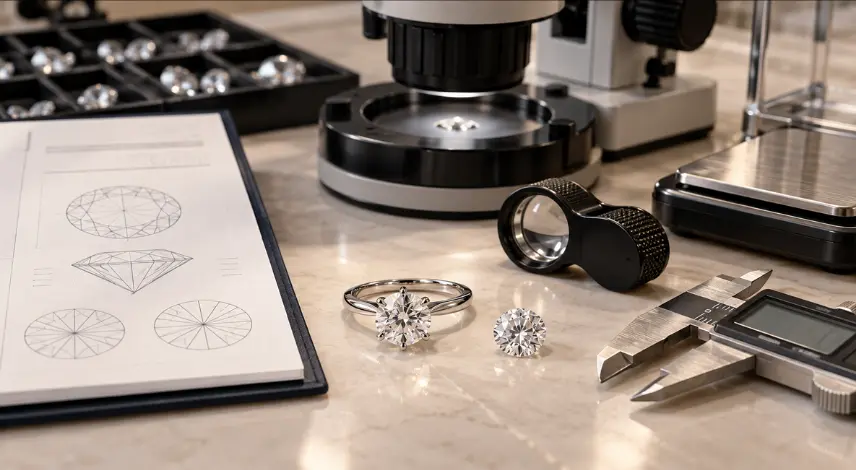
Evaluate the finished ring as jewelry, not simply as a loose diamond placed into a mounting.
First, check brightness and contrast across ordinary viewing angles. Second, compare millimeter spread with carat weight. Third, confirm clarity is acceptable without magnification. Fourth, verify origin, report number, measurements and inscription where available. Fifth, inspect prongs, center-stone alignment, pavé consistency and comfort. Finally, review resizing, return, repair and warranty terms.
Spotting Bow-Ties, Windows and Extinction
Fancy-shape rings need visual inspection because some optical effects cannot be understood from a simple grade.
Ovals, pears, marquises and some radiants can display a bow-tie, a darker band across the center created by facet geometry and viewing conditions. A mild bow-tie can be normal and visually acceptable. A heavy one can dominate the stone.
Step cuts can show windowing when parts of the center become too transparent. Extinction appears as persistent dark regions that do not contribute attractively to the contrast pattern.
High-quality video or physical inspection is especially useful for these shapes.
Reading IGI and GIA Reports in 2026
IGI laboratory-grown reports can include shape, cutting style, measurements and 4Cs assessments. IGI also offers report verification.
GIA’s current service works differently for eligible colorless to near-colorless laboratory-grown diamonds. Since October 1, 2025, those submissions have been classified using Premium or Standard overall quality assessments based on specified criteria including color, clarity, polish, symmetry and cut for round brilliants.
Before comparing terminology between stones, understand which report system you are reading.
A grading document should reduce uncertainty. It should not replace an actual evaluation of the diamond’s appearance or the ring’s construction.
Frequently Asked Questions About Lab Grown Diamond Engagement Rings
1. Are Lab Grown Diamond Engagement Rings Real Diamond Rings?
Yes. Lab grown diamond engagement rings use diamond material produced through controlled growth rather than natural geological formation. GIA describes laboratory-grown diamonds as having essentially the same chemical composition, crystal structure, optical properties and physical properties as natural diamonds. They are different from simulants such as cubic zirconia and moissanite.
2. Are Lab Created Diamond Engagement Rings Good for Everyday Wear?
Yes. Lab created diamond engagement rings use diamond, but everyday durability also depends on the mounting. Prong condition, setting height, exposed corners, band thickness and the wearer’s routine all affect security. Even a durable center stone can be vulnerable if the setting is poorly designed or damaged.
3. What Quality Should I Choose for Lab Grown Diamonds for Engagement Rings?
For lab grown diamonds for engagement rings, prioritize cut and visible performance, then choose color and clarity that suit the setting and budget. An eye-clean stone with strong proportions can be a more attractive purchase than a higher-clarity diamond with weaker light performance.
4. What Are the Best Lab Grown Diamond Engagement Rings for Everyday Use?
The best lab grown diamond engagement rings for daily wear combine secure construction, comfort and a center stone suited to the wearer. Solitaires are relatively straightforward to maintain, while bezels protect more of the girdle. Very high settings, exposed pointed shapes and extremely delicate pavé can require more care.
5. Is a 2 Carat Lab Grown Diamond Too Large for an Engagement Ring?
No universal carat size is too large or too small. A 2-carat center can look balanced or oversized depending on finger size, diamond shape, millimeter measurements, band width and personal style. Compare actual dimensions on the hand instead of deciding from carat weight alone.
6. Should Lab Grown Diamond Engagement Rings Have an IGI or GIA Report?
A significant center stone benefits from credible independent documentation. IGI and GIA both provide laboratory-grown diamond services, but their current report systems differ. Check the exact report type, verify laboratory-grown origin, review measurements and match identifying information to the physical stone before purchase.
7. Do Lab Grown Diamond Engagement Rings Hold Resale Value?
Resale value should not be assumed. Lab grown diamond engagement rings can face weaker secondary-market economics because replacement pricing and continuing production affect what buyers will pay for previously owned stones. An engagement ring is generally better purchased for wear, design and meaning than as a guaranteed financial investment.
8. Should I Buy a Loose Diamond or a Finished Engagement Ring?
Both routes can work. Buying loose gives more control over the exact center stone, dimensions, report and visual performance. Buying a finished ring simplifies the process. Evaluate the diamond and mounting together so size, setting security, comfort and wedding-band fit all make sense.
Strategic Takeaways for Buyers and Jewelers
The strongest lab grown diamond engagement rings are rarely the rings with the highest paper grades in every category.
Start with shape and cut. Confirm face-up measurements. Choose color and clarity that make sense visually. Then select a setting that fits the wearer’s style, daily routine and preferred wedding-band combination.
Certification supports trust, but it cannot replace visual evaluation of facet pattern, bow-tie intensity, ring profile, prong work and overall finish.
For retailers and professional buyers, the same decision becomes a consistency problem. Repeatable center stones, calibrated accent diamonds, reliable settings, documented grading and predictable replenishment matter more than one unusually attractive sample.
A good buying decision therefore brings gemology and jewelry design together. The best lab grown diamond engagement rings are not simply the largest stones available for the budget. They are rings where visual performance, size, design, construction, documentation and value support the same choice.
For in-depth market reports, trade sourcing guides, interactive Q&As, and expert gemological perspectives, explore the official Lepdo Group Medium platform and join the discussion on Lepdo Diamonds on Quora.