Diamond Birefringence: How Double Refraction Affects Diamond Quality
 by lepdogroup@gmail.com
1 comment
by lepdogroup@gmail.com
1 comment
A buyer examining a rare gemstone parcel once asked me why two transparent stones with similar size and color behaved differently under a polariscope. The answer came down to optical properties, not appearance alone. Diamond birefringence is one of the technical concepts that helps gemologists understand how light interacts with crystal structures.
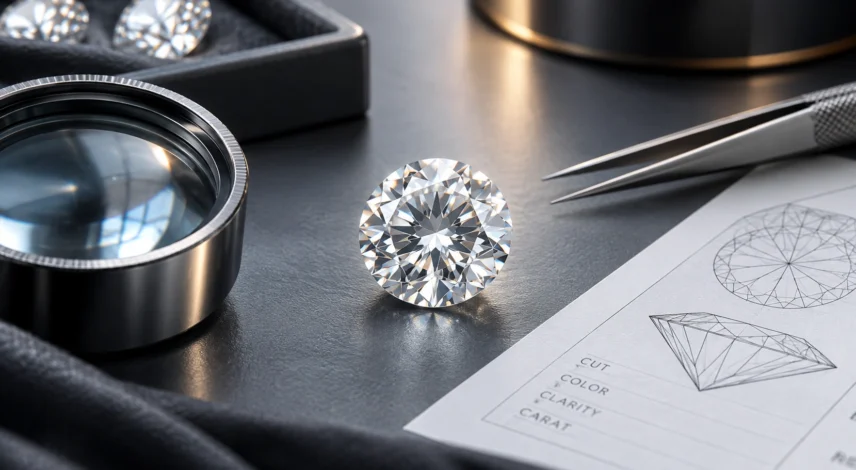
Many jewelry buyers focus on the 4Cs of Diamonds, including carat weight, color, clarity grade, and cut quality. However, advanced evaluation also involves understanding optical characteristics that influence identification and authenticity. The Gemological Institute of America (GIA) and International Gemological Institute (IGI) use specialized testing methods to analyze these properties when examining gemstones and Lab Grown Diamond Certification.
Most buyers do not realize that diamonds are unusual because their cubic crystal structure normally prevents visible double refraction. This difference separates diamonds from many other gemstones that split light into two paths.
Here is what matters for buyers and professionals: understanding optical behavior reduces identification mistakes and helps manufacturers maintain accurate gemstone inventories.
Lepdo Diamonds, a Surat-based lab-grown diamond manufacturer and supplier, works with CVD Diamonds and HPHT Diamonds lab-grown diamonds where proper gemological testing and certification processes are part of professional sourcing. Buyers exploring certified diamond options can review available information through the Lepdo Diamond resource.
Whether you are purchasing an engagement ring, managing wholesale inventory, or evaluating polished diamonds, knowing how light behaves inside a gemstone creates better buying decisions.
What Is Diamond Birefringence?
Diamond birefringence describes the ability of a gemstone to split incoming light into two separate rays traveling at different speeds through its crystal structure.
In simple terms, birefringence is a double refraction effect. When light enters a birefringent gemstone, it divides into two paths because the material has different optical properties depending on the direction of light travel.
Diamonds are different. Their cubic crystal structure has the same optical behavior in every direction, meaning they are generally isotropic and do not display visible birefringence.
Quick Info Box:
Definition: Diamond birefringence refers to the absence of visible double refraction in diamonds due to their cubic crystal structure.
Key Types or Varieties: Isotropic diamonds, birefringent gemstones, singly refractive gemstones, optically active crystals.
Best For: Gemologists, diamond buyers, jewelry professionals, gemstone identification laboratories, and manufacturers.
Key Difference or Advantage: Diamonds typically allow light to pass through without splitting into two visible rays, helping distinguish them from many gemstone alternatives.
Crystal Structure and Optical Behavior
The foundation of diamond’s optical behavior is its atomic arrangement. Diamond consists of carbon atoms connected in a strong cubic crystal structure, creating equal optical properties along different directions.
This structure contributes to diamond’s famous brilliance, fire, and scintillation because light interacts predictably with the gemstone’s carefully cut facets.
A diamond’s refractive index is approximately 2.42, which helps create strong light return when the cut is properly executed. However, refractive index and birefringence are different concepts.
Refractive index measures how much light slows and bends inside a material. Birefringence measures the difference between two refractive indexes in materials that split light.
Think of it this way: one property controls how light bends, while the other explains whether light separates into two paths.
Gemological Identification and Laboratory Standards
Gemological laboratories use optical testing to identify gemstones and confirm whether a stone matches its claimed identity.
The Gemological Institute of America (GIA) evaluates diamonds and gemstones using advanced instruments, including microscopes, spectroscopes, and polarizing filters. The International Gemological Institute (IGI) follows recognized laboratory procedures for diamond grading and diamond certification.
A diamond viewed under polarized light typically remains dark through rotation because it does not show the same optical interference patterns found in many birefringent gemstones.
The truth is that optical testing is only one part of professional grading. Gemologists combine multiple observations, including clarity grade, fluorescence, inclusion analysis, and physical measurements.
Most Popular Types or Variations of Optical Behavior, And Who They Are For
Understanding optical categories helps buyers recognize why some gemstones behave differently under professional examination. Diamond birefringence discussions usually appear alongside comparisons with gemstones that display stronger double refraction.
Isotropic Diamonds: The Standard Diamond Optical Category
Diamonds are classified as isotropic gemstones because they transmit light consistently in all directions.
This characteristic supports clean visual performance when combined with excellent cut proportions. Round brilliant diamonds, fancy shapes, and lab-grown diamonds all share this fundamental optical structure.
For jewelry buyers, this means the stone does not create unwanted doubling effects when viewed through magnification.
Birefringent Gemstones: Common Comparison Materials
Gemstones such as calcite, zircon, tourmaline, and many crystals show birefringence because their internal structures allow different light paths.
Gemologists use these differences during identification. A trained professional can observe doubled facet edges or internal features under magnification.
This knowledge is especially useful when separating diamonds from diamond simulants.
Synthetic and Lab-Grown Diamond Optical Behavior
Lab-grown diamonds created through CVD and HPHT processes have the same crystal structure as natural diamonds. Their optical behavior remains diamond-like, including the absence of visible birefringence.
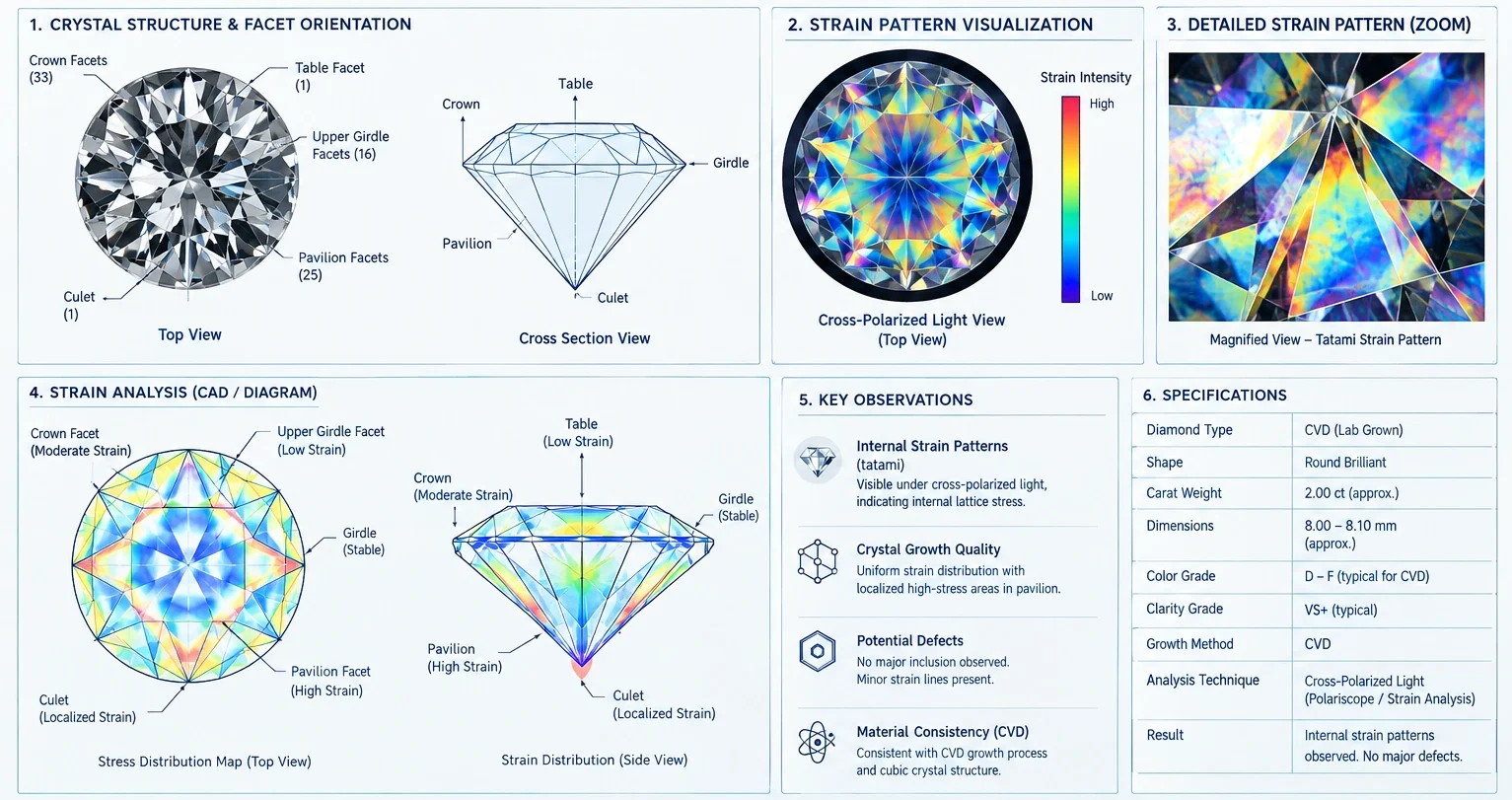
However, laboratory instruments may detect growth characteristics, strain patterns, or specific features associated with manufacturing methods.
For professional buyers, this distinction matters because lab-grown diamonds require proper identification and certification.
Diamond Birefringence vs Double Refraction in Other Gemstones: The Real Difference
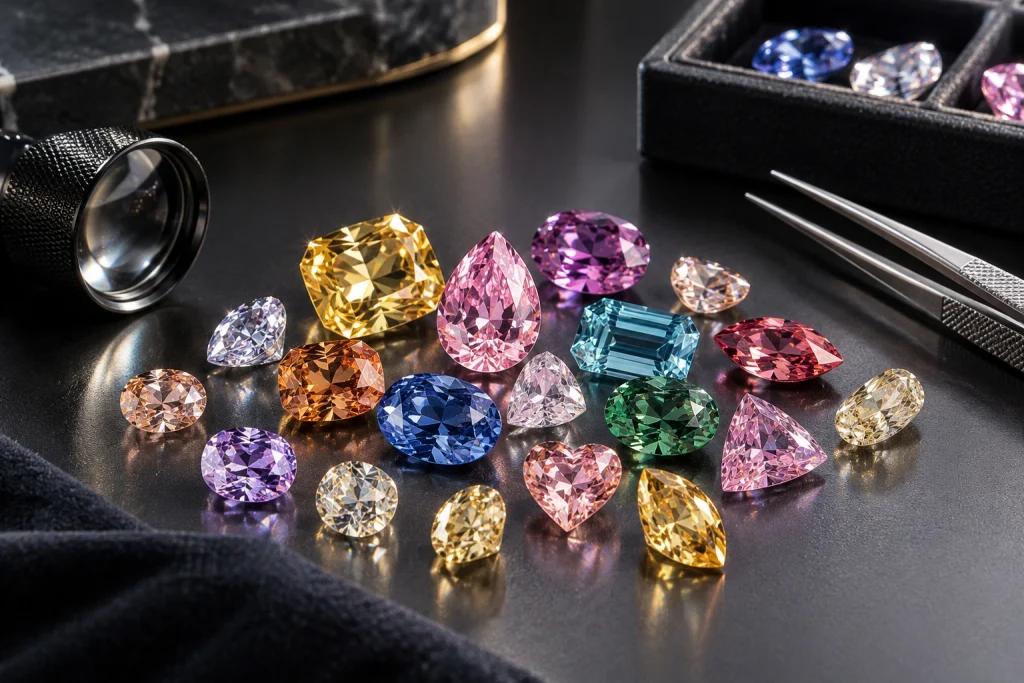
Diamond birefringence becomes easier to understand when compared with gemstones that actively display double refraction. The biggest difference comes from crystal structure. Diamonds belong to the cubic crystal system, while many other gemstones belong to crystal systems that create different optical directions.
A diamond normally allows light to travel through with the same optical response regardless of direction. A birefringent gemstone separates light into two rays because each direction interacts differently with the crystal structure.
Most buyers do not realize that this distinction helps laboratories identify stones that may look similar to diamonds. A colorless gemstone can appear convincing to the eye, but its optical reaction under professional instruments can reveal important differences.
| Factor | Diamond Optical Behavior | Birefringent Gemstone Behavior |
|---|---|---|
| Crystal Structure | Cubic system | Usually tetragonal, hexagonal, or orthorhombic systems |
| Light Movement | Single refraction | Double refraction with two light paths |
| Visual Effect | No visible facet doubling | Possible doubled facet edges under magnification |
| Identification Use | Helps confirm diamond characteristics | Helps separate gemstones from diamond |
| Buyer Consideration | Focus on cut quality, brilliance, and certification | Requires optical testing before identification |
The truth is that both optical categories can produce beautiful gemstones. The difference is not about one being better, but about how light behaves inside the material.
Critical Differentiator: Performance and Aesthetics
Diamond’s lack of visible birefringence contributes to its clean visual appearance. When cut correctly, diamond facets create controlled reflections that produce brilliance, fire, and scintillation.
A gemstone with strong birefringence may show interesting optical effects, but those effects are not the same as diamond sparkle. Facet doubling can sometimes reduce visual sharpness when the stone is viewed through magnification.
When I examine a polished diamond, I focus on the relationship between optical properties, facet precision, and light return rather than one single measurement.
Critical Differentiator: Cost Structure and Sourcing Economics
Optical behavior influences identification, but it does not directly determine diamond price.
Diamond pricing depends mainly on the 4Cs, market demand, certification, and sourcing conditions. Rapaport benchmarks and wholesale negotiations usually focus on characteristics such as carat weight, color, clarity grade, and cut quality.
For manufacturers and retailers, accurate identification prevents costly mistakes. Selling a gemstone as a diamond without proper verification creates serious commercial risks.
How to Choose the Right Diamond Birefringence Knowledge for Your Style or Inventory
Choosing diamonds requires more than understanding appearance. Buyers should know how optical properties connect with grading, sourcing, and long-term value.
- Understand your purpose first.
Engagement rings, fashion jewelry, and wholesale inventory each require different selection priorities. A consumer may prioritize sparkle and beauty, while a manufacturer may prioritize consistency across hundreds of stones. - Review the setting and mounting requirements.
The diamond shape, pavilion design, and setting style influence how light interacts with the finished jewelry piece. - Analyze optical performance carefully.
Brilliance, fire, scintillation, table percentage, pavilion depth, and symmetry all contribute to visual quality. - Allocate your budget strategically.
A higher clarity grade does not always create a visible improvement. Many buyers find better value by balancing clarity, color, and cut. - Consider the intended occasion.
Bridal jewelry often requires durable and visually impressive stones, while custom jewelry may focus on unique diamond shapes and design preferences. - Compare lab-grown and natural options.
Lab-grown diamonds have the same crystal structure and optical properties as natural diamonds. Buyers considering lab-grown diamonds should review certification and supplier transparency before purchasing.
Before you finalize your choice, compare the diamond’s certification, measurements, and visual performance together rather than focusing on one specification.
Balancing Proportions, Ratio, and Setting Security
A diamond’s appearance depends heavily on proportion control. Length-to-width ratio, pavilion angles, depth percentage, and table percentage all influence the final face-up appearance.
For fancy shapes such as oval, pear, and emerald cuts, proportion selection becomes especially important because these shapes can show different light patterns depending on their geometry.
A well-balanced diamond creates stronger light return and minimizes issues such as excessive darkness or weak brightness.
Navigating Price Tiers vs Visual Return
Many buyers pay premiums for higher grades without seeing meaningful visual differences.
For example, moving from VS2 Diamond clarity to VVS Diamonds clarity may increase cost, but the improvement may only be visible under magnification. Experienced buyers often focus on eye-clean appearance combined with excellent cut quality.
That said, rare specifications and collector requirements can justify premium pricing in certain markets.
What B2B Buyers and Diamond Manufacturers Should Know About Diamond Birefringence
Diamond birefringence knowledge helps B2B buyers understand identification, quality control, and inventory verification. For manufacturers and wholesalers, optical testing supports accurate sorting before diamonds enter international markets.
Diamond manufacturers rely on consistent grading practices because buyers compare inventory across suppliers. The Gemological Institute of America (GIA), International Gemological Institute (IGI), and other recognized laboratories provide diamond certification standards that support global trade.
A fancy cut diamond manufacturer must consider multiple factors beyond appearance, including cut consistency, polishing accuracy, and laboratory documentation.
Here is what experienced traders understand: optical knowledge protects inventory quality. A parcel containing correctly identified stones creates fewer disputes and smoother transactions.
Lepdo Diamonds operates as a Surat-based lab-grown diamond manufacturer and supplier, offering CVD and HPHT diamonds with IGI, GIA, and SGL Diamond Certificate options across shapes, including DEFG colors and VVS-VS clarities. B2B buyers sourcing calibrated inventory can review available certified diamond options through professional supplier channels.
Wholesale Procurement Models: Memo Programs vs Direct Sourcing
Wholesale buyers usually choose between memo programs and direct sourcing depending on cash flow requirements.
Memo programs allow retailers to display inventory without immediate full payment, reducing upfront investment. However, suppliers carry additional inventory risk.
Direct sourcing provides better control over purchasing costs and inventory ownership. Large buyers often prefer direct procurement when they have predictable customer demand.
A buyer purchasing matched fancy shape diamonds may negotiate parcel pricing based on size tolerance, certification requirements, and quantity.
Batch Consistency, Calibration, and Tolerance Standards
Professional manufacturers maintain strict sorting standards to ensure parcel consistency.
Important controls include:
- Millimeter measurement tolerance
- Color grouping consistency
- Clarity range control
- Shape matching accuracy
- Certification verification
For example, a retailer ordering 100 oval diamonds expects similar proportions, not a mixed collection with unpredictable visual differences.
Diamond Jewelry Trends (2026 to 2027)
Diamond jewelry trends between 2026 and 2027 show stronger demand for transparency, unique shapes, and value-focused purchasing.
Industry reports indicate that lab-grown diamond sales have expanded rapidly, with younger buyers showing increased interest in certified alternatives and larger stones at accessible price points.
Diamond birefringence remains a technical topic, but broader gemological education is becoming more important as consumers research diamond authenticity before purchasing.
Contemporary Setting Styles and Architectural Mountings
Modern jewelry designs increasingly include bezel settings, east-west orientations, hidden halos, and multi-stone arrangements.
Fancy shape diamonds benefit from these designs because their unique outlines create stronger visual identity compared with traditional round cuts.
Architectural settings also require careful proportion selection because prong placement and metal structure influence durability.
Shifting Consumer Demographics and Purchasing Drivers
Modern buyers increasingly evaluate diamonds through transparency, certification, and value comparison.
Many consumers research laboratory reports before visiting jewelers. They want clear information about origin, quality, and pricing.
The demand for educational content continues growing because buyers want confidence before making significant purchases.
How to Evaluate Quality in Diamond Birefringence
When I assess a diamond, the first thing I check is whether the stone behaves consistently with diamond’s known optical properties, then I evaluate cut quality, proportions, and laboratory documentation. Diamond birefringence itself is not a grading factor like color grade or clarity grade, but it plays an important role in gemstone identification.
Professional evaluation combines optical testing with traditional diamond grading methods. Gemologists examine brilliance, fire, scintillation, pavilion depth, table percentage, facet precision, and internal characteristics before determining overall quality.
A diamond with excellent optical performance usually has balanced proportions and accurate facet alignment. A poorly cut diamond may still have the correct crystal structure, but weak light return can reduce visual appeal.
Here are my practical evaluation rules:
- Confirm optical identity using professional instruments.
Use a polariscope, refractometer, microscope, and other gemological tools to confirm that the stone behaves like diamond. A genuine diamond normally shows no visible birefringence because of its cubic crystal structure. - Review diamond certification details carefully.
Check reports from recognized laboratories such as GIA, IGI, or SGL. Verify carat weight, clarity grade, color grade, cut information, and report numbers before accepting inventory. - Analyze cut proportions and light performance.
Review table percentage, pavilion depth, crown angles, and symmetry. These factors directly influence brilliance and scintillation. - Inspect inclusions and optical defects.
Use 10x magnification to examine feathers, crystals, strain patterns, and surface characteristics. Some features may affect durability or transparency. - Compare physical stone data with supplier records.
Professional buyers should confirm that measurements, certification, and inventory details match before completing a purchase.
For buyers looking for professionally documented stones, Lepdo Diamonds provides access to Lepdo Diamonds through its lab-grown diamond manufacturing and supply network.
Analyzing Light Return: Spotting Bow-Ties, Windows, and Extinction
Light return determines how effectively a diamond reflects light back toward the viewer. While diamond birefringence explains optical behavior, cut quality determines whether the stone appears bright or dull.
Fancy shapes such as oval, pear, and marquise diamonds require special attention because they can display the bow-tie effect. This appears as a darker band across the center of the stone caused by light leakage and facet alignment.
A well-cut fancy shape balances brilliance with character. Some bow-tie presence can add contrast, but excessive darkness reduces visual appeal.
Windows occur when the pavilion facets allow light to pass through the diamond instead of reflecting it back. This creates a see-through area that weakens sparkle.
Assessing Diamond Reports and Grading Discrepancies
Diamond reports provide essential information, but buyers should understand that laboratories may have slight grading differences.
GIA, IGI, and SGL follow established grading procedures, yet interpretation can vary because diamonds are naturally complex materials.
When reviewing a report, check:
- Report identification number
- Carat weight accuracy
- Color grade
- Clarity grade
- Cut grade when available
- Laser inscription matching
- Inclusion plot information
A professional buyer compares the certificate with the actual polished diamond under proper lighting.
Strategic Takeaways for Buyers and Jewelers
Diamond birefringence is a technical concept, but its practical importance is straightforward: it helps professionals understand how diamonds interact with light and how they differ from other gemstones. Diamonds normally do not show visible birefringence because of their cubic crystal structure, making this characteristic useful during identification.
The second takeaway is that optical behavior works together with the 4Cs. Carat weight, color grade, clarity grade, and cut quality remain the main drivers of diamond value, while factors such as brilliance, fire, and scintillation determine visual appeal.
For manufacturers, wholesalers, and jewelry retailers, reliable sourcing depends on accurate grading, certification, and consistent inventory. Lepdo Diamonds supports global B2B buyers with Surat-based lab-grown diamond manufacturing, including certified CVD and HPHT diamonds. Buyers can explore additional company information through the Lepdo Diamond platform.
Frequently Asked Questions About Diamond Birefringence.
1. What is Diamond Birefringence?
Diamond birefringence refers to the double refraction effect where light splits into two rays inside certain gemstones. In gemological testing, diamond birefringence is generally absent as a visible double refraction feature because diamonds have an isotropic cubic crystal structure. Analyzing diamond birefringence helps gemologists distinguish genuine stones from doubly refractive diamond simulants during testing.
2. Is Diamond Birefringence Cheaper Than Alternative?
Diamond birefringence does not directly lower or raise market pricing because diamond birefringence is an optical identification property rather than a grading metric. Diamond birefringence analysis allows buyers to avoid costly purchasing mistakes by separating true stones from doubly refractive diamond alternatives.
3. Which Type Looks Biggest or Most Impressive on the Hand?
Perceived size depends on shape, cut proportions, and surface area spread rather than diamond birefringence. While diamond birefringence confirms crystal symmetry behind the scenes, fancy shapes like oval, pear, and marquise cuts display the largest face-up profile per carat on the hand.
4. Does Diamond Birefringence Have an Official GIA Cut Grade?
Diamond birefringence does not have an official GIA cut grade because diamond birefringence relates to crystal optics rather than facet quality. GIA grades cut based on proportions, polish, and symmetry, while diamond birefringence remains strictly an optical identification property.
5. What Is the Biggest Quality Risk or Defect to Watch for in Diamond Birefringence?
The biggest risk regarding diamond birefringence is misinterpreting anomalous diamond birefringence under crossed polarizers as an inclusion defect or confusing diamond birefringence with heavy gemstone doubling. Diamond birefringence indicates internal crystal strain, but standard cut precision and clarity characteristics remain the primary quality concerns.
6. Are Lab-Grown Diamond Birefringence Characteristics the Same as Natural Ones?
Lab-grown diamond birefringence patterns often show subtle strain differences under advanced polariscopes compared to natural stones, though both show an absence of visible diamond birefringence to the naked eye. Evaluating diamond birefringence under polarized light allows gemologists to identify specific CVD and HPHT growth strain patterns.
7. Which Type Is Most Durable and Practical for an Everyday Engagement Ring?
A stone with standard diamond birefringence properties remains exceptionally durable because diamond ranks 10 on the Mohs hardness scale. For an everyday ring, buyers should focus on cut quality, secure prong settings, and low internal strain associated with extreme diamond birefringence issues.
8. How Do I Choose a Reliable Diamond Manufacturer or Wholesale Supplier?
Choose a supplier that understands technical factors like diamond birefringence, crystal strain, and full 4Cs certification. A reliable partner tests for diamond birefringence anomalies, provides verified laboratory documentation, and maintains strict parcel consistency for bulk B2B orders.
Would you like meta title or meta description suggestions optimized for the diamond birefringence focus keyword?
For in-depth market reports, trade sourcing guides, interactive Q&As, and expert gemological perspectives, explore the official Lepdo Group Medium platform and join the discussion on Lepdo Diamonds on Quora.