Diamonds vs Emeralds: Profit and Demand Comparison for Jewelry Retailers
 by lepdogroup@gmail.com
0 comments
by lepdogroup@gmail.com
0 comments
Diamonds vs. Emeralds: A Comprehensive Retailer’s Guide to Inventory Strategy, Margins, Durability, and Sourcing, explains how each gemstone performs in profit margin, resale demand, and durability for jewelry businesses. Diamonds typically offer steadier margins and broader consumer demand, while emeralds appeal to niche, higher-emotion buyers. Retailers weighing both should factor certification, sourcing reliability, and market trends, something Lepdo Diamonds helps B2B buyers sort through with certified lab-grown stock.
A Texas jewelry retailer recently told me she turned away three emerald requests in a single week, yet sold twelve diamond engagement rings in that same stretch. That gap is not unusual. It is exactly why so many store owners are searching for a Diamonds vs Emeralds retailers comparison guide before they reorder their next case of loose stones.
Diamonds and emeralds sit at opposite ends of the fine jewelry spectrum. One is graded by the GIA using strict 4Cs standards, while the other is judged mostly by color saturation and garden inclusions that most consumers cannot pronounce, let alone evaluate.
Here is what retailers actually need to know before choosing shelf space: which stone moves faster, which one delivers a stronger Diamonds vs Emeralds profit margin, and which one survives daily wear without a trip back to the bench. This guide breaks down real demand data, profit math, and durability differences so you can stock with confidence instead of guesswork. Whether you manage a single boutique or source for a wholesale account, the numbers below will change how you think about your next purchase order.
What Is the Diamonds vs Emeralds Comparison All About
A diamonds vs emeralds retailers comparison guide simply means evaluating two very different gemstones side by side using the metrics that actually matter to a business: cost per carat, consumer demand, durability, and resale value. It is not about which stone looks prettier. It is about which one keeps your case turning over.
Diamonds are colorless, or fancy colored, carbon crystals valued through the 4Cs: cut, color, clarity, and carat weight. Emeralds are green beryl crystals valued mainly through color depth, transparency, and the number of visible inclusions, known in the trade as jardin.
For a deeper technical breakdown, our glossary page on diamonds vs emeralds walks through the mineral science and grading differences in more detail.
Quick Info Box
- Definition: A side-by-side evaluation of diamond and emerald performance across cost, demand, and durability for retail sourcing.
- Key Types or Varieties: Round brilliant, oval, emerald cut, and cushion diamonds; Colombian, Zambian, and Brazilian emeralds.
- Best For: Retailers, wholesalers, and consumers choosing between classic and colored stone jewelry.
- Key Difference or Advantage: Diamonds offer higher hardness and steadier resale value; emeralds offer rarer color appeal at a lower carat cost.
Most Popular Diamond and Emerald Types, and Who They Are For
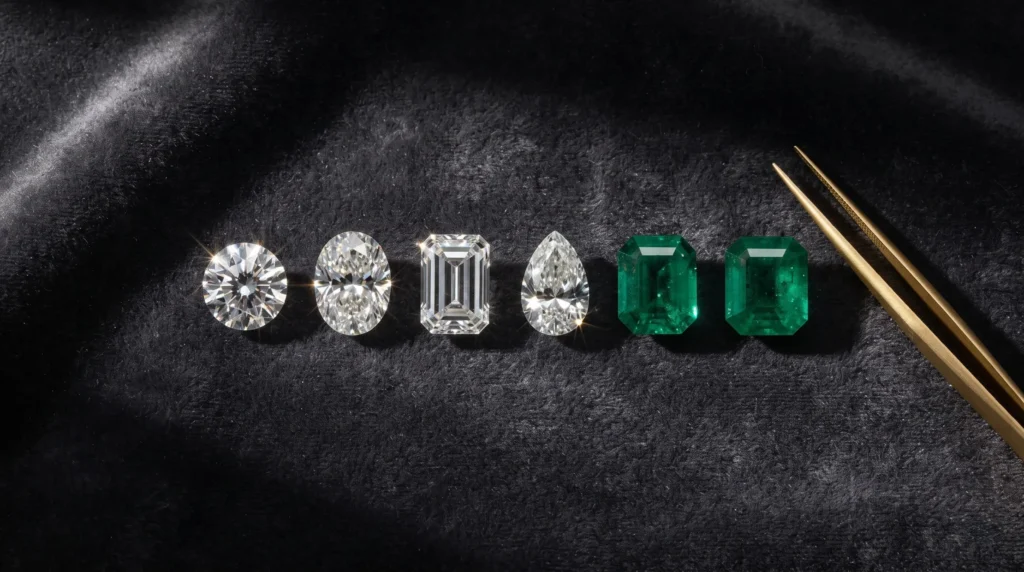
Not every diamond or emerald serves the same customer. Here is what typically moves off American sales floors.
Round Brilliant Diamonds The round brilliant remains the default engagement ring choice for most first-time buyers. Its 58 facets are engineered for maximum brilliance and fire, and it rarely goes out of style. Best for traditional buyers who want resale confidence.
Emerald Cut Diamonds The Emerald Cut Diamond has surged with buyers who want a quieter, editorial look instead of maximum sparkle. Its step-cut facets show off clarity rather than fire, which appeals to minimalist and vintage-inspired shoppers.
Colombian Emeralds Colombian material is the benchmark for color in the emerald trade, prized for a slightly bluish green tone. It commands the highest price per carat and attracts collectors and investment-minded buyers rather than everyday shoppers.
Beyond these three, oval and cushion cut diamonds continue to grow with younger buyers seeking a softer silhouette than the round brilliant, though elongated shapes can show a subtle bowtie effect when depth percentage is not well proportioned. Pear shape diamonds work well for pendants and cocktail rings, drawing customers who want a statement piece without going fully unconventional.
On the emerald side, Zambian emeralds offer a slightly more affordable, bluer green that appeals to buyers who love the color but flinch at Colombian pricing. Brazilian emeralds round out the mid-market with lighter tone and better clarity on average, making them easier to sell to first-time colored stone buyers. Trapiche emeralds, with their rare star-like pattern, sell almost exclusively to collectors and are not a volume category for most stores.
When comparing Diamonds vs Emeralds, these differences in shape, color, rarity, and buyer preferences can directly influence which stones deserve more space in a retailer’s inventory.
Diamonds vs Emeralds: The Real Difference
| Factor | Diamonds | Emeralds |
|---|---|---|
| Hardness (Mohs Scale) | 10, the hardest natural material | 7.5 to 8, prone to chipping |
| Average Retail Markup | 100% to 200%, depending on cut and origin | 150% to 300%, higher due to rarity |
| Consumer Demand (USA) | Consistent, backed by decades of engagement ring tradition | Seasonal, tied to fashion and colored stone trends |
| Certification Standard | GIA and IGI grading widely trusted | Less standardized, gemological labs vary |
| Everyday Wearability | Excellent for daily wear | Requires careful handling due to inclusions |
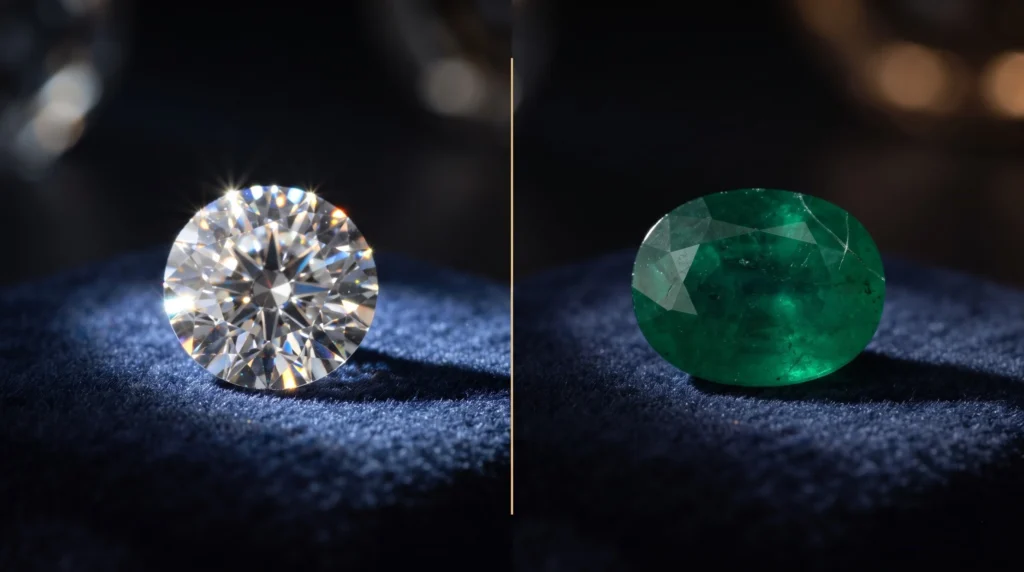
The table tells most of the story, but the Diamonds vs Emeralds durability gap deserves extra attention. Emeralds almost always contain visible inclusions that can weaken their internal structure, which is why many emeralds are oiled to improve clarity before they reach a showcase. The truth is, most retailers underestimate how much oiling disclosure can affect long-term customer satisfaction and return rates. Diamonds, by contrast, rank a full 10 on the Mohs scale, a topic our Diamond Durability page covers in more technical depth for retailers building long-term inventory plans.
To be fair, emeralds still outsell diamonds in certain colored stone markets, particularly among buyers seeking a distinctive engagement ring alternative. But when comparing Diamonds vs Emeralds for inventory value, durability, and long-term retail practicality, diamonds remain the safer bet for retailers stocking stones intended to survive years of daily wear and repeated resale.
How to Choose the Right Gemstone for Your Retail Business
Choosing between diamonds and emeralds is not just a taste decision, it is a business decision built on six practical factors.
- Match the Stone to Your Customer’s Style. Most buyers walking into a fine jewelry store already lean toward one look. Younger shoppers gravitate toward colored stones for fashion rings, while engagement ring shoppers still default to diamonds nine times out of ten.
- Consider Your Display and Storage Setup. Emeralds need extra care in storage since they chip more easily than diamonds during handling. If your staff is not trained in gentle colored stone handling, diamonds are the lower-risk inventory choice.
- Match the Stone to the Setting. Prong settings expose emeralds to more risk of chipping at the edges, while bezel settings protect them better. Diamonds tolerate almost any setting style without added risk.
- Weigh the Budget Advantage. Emeralds often deliver more visual size per dollar at lower clarity grades, while diamonds hold value more predictably at resale.
- Think About the Occasion. Engagement rings still lean diamond. Fashion rings, statement earrings, and anniversary gifts open the door wider for emerald sales.
- Decide Between Lab-Grown and Natural. Lab-grown diamonds have reshaped margins across the board, and sourcing options like emerald cut lab grown diamonds wholesale give retailers a way to offer the popular emerald cut silhouette in diamond form at a lower price point than natural stones.
Think of it this way: a diamond is an inventory asset, while an emerald is a curated conversation piece. Before you finalize your choice, walk your own sales data. The stone that sold best last quarter is usually a better guide than any national trend report.
What B2B Buyers and Diamond Manufacturers Should Know
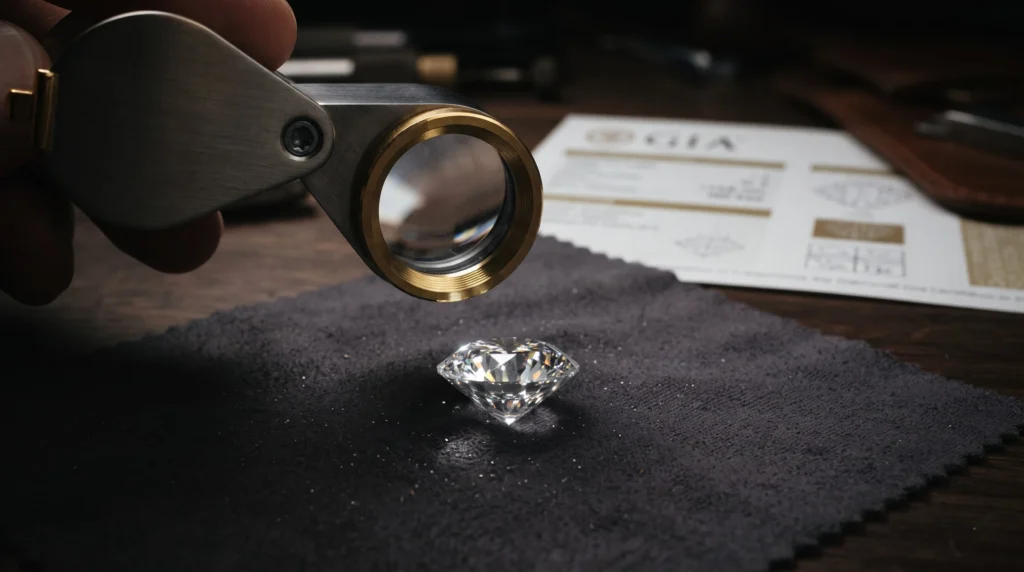
Wholesale buying runs on different rules than retail selling. Bulk sourcing decisions hinge on consistent cut grading, not just carat weight, since a parcel of inconsistent make will cost you returns down the line.
A fancy cut diamond manufacturer worth working with should be able to show IGI or GIA certification on every stone in a parcel, not just the flagship pieces. Rapaport pricing still anchors natural diamond negotiations, though lab-grown pricing has largely decoupled from Rapaport and now moves on production cost and demand instead. Fancy shapes remain a unique diamond shape category driving repeat wholesale orders across the country.
In my experience, the retailers who protect margin best are the ones who understand their diamond wholesale margin for retailers before they ever place an order, not after the invoice arrives. Emeralds complicate this further since there is no single dominant pricing list like Rapaport for colored stones, which makes supplier trust even more important.
Manufacturers such as Lepdo Diamond, working out of Surat’s lab-grown diamond hub, typically supply IGI and GIA certified stock in DEFG color and VVS to VS clarity, which gives B2B buyers a predictable starting point for pricing conversations rather than a guessing game.
Diamond and Emerald Jewelry Trends in the USA (2026 to 2027)
American colored stone demand has been climbing steadily, with several major trade reports pointing to double-digit growth in emerald and sapphire jewelry sales over the past two years. Diamonds have not lost ground, but the mix on showroom floors is shifting.
Fancy cut diamond jewellery, especially elongated shapes like emerald and radiant cuts, is outselling round brilliant in the fashion ring category for the first time in years. Why are so many retailers suddenly rethinking their emerald allocation? Cultural styling moments and social media exposure have pushed colored gemstone engagement rings into mainstream conversation, even though round and oval diamonds still dominate actual engagement ring purchases.
Vintage-inspired settings, hidden halos, and toi et moi styles pairing a diamond with a colored stone are showing up across more collections for 2026 and 2027. Our full breakdown on Diamond Jewelry Trends covers the setting styles driving this shift in more depth. Most buyers are not choosing diamonds or emeralds anymore, they are choosing both in the same piece, and that single trend may matter more to retailers than any single stone comparison.
How to Evaluate Quality in Diamonds and Emeralds
When I assess a diamond, the first thing I check is light performance, not size. A well cut stone with the right pavilion angle and table percentage will show far more brilliance, fire, and scintillation than a larger stone cut poorly.
Emeralds get judged differently since color depth matters more than sparkle, but a few core checks apply to both stones.
- Check the certification first. A GIA or IGI report, what the industry calls Diamond Certification, tells you the grading is independent rather than self-issued by the seller.
- Look at light return under a jeweler’s loupe, watching for dead spots caused by a shallow or deep pavilion.
- Examine clarity grade under 10x magnification, checking whether inclusions are eye-visible from the top down.
- Measure the length-to-width ratio on fancy shapes, since an off ratio can make a stone look stretched or squat.
- For emeralds specifically, ask whether the stone has been oiled and to what degree, since this affects long-term durability and care instructions.
You will want to pay attention to oiling disclosure on every emerald parcel you buy. That said, certification alone does not guarantee a well cut stone, so always verify light performance yourself before it reaches the showcase.
Conclusion
Three things matter most when weighing a diamonds vs emeralds retailers comparison guide, and none of them come down to which stone looks prettier under store lighting. Diamonds deliver steadier demand, higher hardness, and more predictable resale value, which makes them the safer core of most inventory plans. Emeralds bring color rarity and a growing colored stone customer base, but they carry more risk in daily wear and pricing consistency. The smartest retailers are not picking a side, they are balancing both against their own customer data and margin targets.
To be fair, no single guide replaces watching your own sales floor for a full season. But understanding the profit and demand gap between these two stones gives you a real head start before your next buying trip. Retailers sourcing certified lab-grown diamonds can explore Lepdo Diamond current stock and get straight answers on grading, pricing, and supply timelines instead of vague promises. Diamonds and emeralds will keep sharing shelf space in American jewelry stores for years to come, and the stores that understand both will be the ones still standing when the next trend cycle turns.
Frequently Asked Questions About Diamonds vs Emeralds
1. What is a diamonds vs emeralds retailers comparison guide?
A diamonds vs emeralds retailers comparison guide is a dedicated sourcing resource comparing diamond and emerald gemstones across profit margins, consumer demand, and durability. Using a diamonds vs emeralds analysis allows fine jewelry retailers to make data-driven inventory decisions. This diamonds vs emeralds evaluation focuses on turnover rates and wholesale stability rather than subjective aesthetic preferences.
2. In diamonds vs emeralds pricing, are diamonds cheaper than emeralds?
In the diamonds vs emeralds cost debate, diamonds are generally more accessible at comparable carat weights and quality tiers, particularly when comparing lab-grown diamonds vs emeralds. Top-tier natural Colombian emeralds often command higher prices per carat than certified diamonds. However, low-grade commercial stones flip the diamonds vs emeralds dynamic, making entry-level emeralds cheaper than premium diamonds.
3. In diamonds vs emeralds dimensions, which cut looks the biggest?
When comparing diamonds vs emeralds for surface area, elongated fancy shapes maximize visual finger coverage in both gemstone categories. Oval, marquise, and emerald cut diamonds appear larger per carat than standard round brilliants. In diamonds vs emeralds comparisons, the open table of a classic step-cut emerald also creates a larger visual footprint relative to its physical carat weight.
4. In diamonds vs emeralds certification, do emeralds get a GIA cut grade like diamonds?
A major distinction in diamonds vs emeralds grading is that emeralds do not receive a standard GIA cut grade. The standardized diamond cut grading scale applies exclusively to round brilliant diamonds, giving diamonds a more uniform valuation metric in diamonds vs emeralds trade. Emerald cut quality is evaluated through subjective expert assessment of color saturation, clarity, and symmetry.
5. In diamonds vs emeralds durability, what is the biggest quality risk with emeralds?
The primary factor in diamonds vs emeralds durability is structural toughness, as natural emeralds feature internal fractures and inclusions known as jardin. Diamonds rate a 10 on the Mohs scale, giving them a clear advantage over emeralds (7.5 to 8 Mohs) in everyday scratch and impact resistance. When selling diamonds vs emeralds, jewelers must recommend protective bezel settings for emeralds.
6. In diamonds vs emeralds sourcing, are lab-grown diamonds as good as natural diamonds?
In modern diamonds vs emeralds retail setups, lab-grown diamonds offer identical optical, physical, and chemical properties to mined diamonds alongside full GIA and IGI certification. Lab diamonds typically trade at a lower price point than natural diamonds, providing stronger retailer margins in standard diamonds vs emeralds product assortments.
7. In diamonds vs emeralds engagement rings, which stone is best for daily wear?
Analyzing diamonds vs emeralds for bridal jewelry shows diamonds are the superior option for daily wear due to unmatched scratch resistance. Emeralds appeal to buyers seeking distinct green color and vintage style, but require gentler maintenance than diamonds. Retailers evaluating diamonds vs emeralds often stock diamonds for active lifestyles and emeralds for specialized fashion collections.
8. How do I choose a reliable diamonds vs emeralds manufacturer or supplier?
Selecting a trusted supplier for diamonds vs emeralds requires partnering with manufacturers that provide independent GIA or IGI grading certificates for both gemstone types. High-grade diamonds vs emeralds vendors offer itemized wholesale pricing, clear disclosure of emerald oil treatments, and sample parcels to verify consistent cut quality across diamond and emerald inventory.
For in-depth market reports, trade sourcing guides, interactive Q&As, and expert gemological perspectives, explore the official Lepdo Group Medium platform and join the discussion on Lepdo Diamonds on Quora.