How to Test If a Diamond is Lab Grown: A Complete Diamond Tester Guide
 by lepdogroup@gmail.com
0 comments
by lepdogroup@gmail.com
0 comments
Testing how to tell if a diamond is lab grown means checking thermal and electrical conductivity, then confirming with lab certification, since lab-grown and natural diamonds share identical chemical structure. A standard handheld diamond tester cannot separate the two. Buyers need spectroscopy or a GIA/IGI report for a real answer. Lepdo Diamonds issues certified stock so this question never has to be guessed at.
How to Test If a Diamond is Lab Grown: A Complete Diamond Tester Guide
A jeweler in New Jersey ran a $4,200 stone through her handheld diamond tester last spring. It read “diamond.” Her client was thrilled, until an independent lab report came back showing the stone was lab grown, not natural, and worth roughly 40 to 60% less on paper (though not in beauty or durability). Nobody had lied to her. Her tester simply wasn’t built to catch it.
That scenario plays out more often than most retailers admit, and it’s exactly why so many buyers now search for how to test if a diamond is lab grown before they trust a single reading. The truth is, standard testers check thermal conductivity, and lab-grown diamonds conduct heat exactly like natural ones. Same carbon, same crystal structure, same 4Cs on paper.
Here is what you’ll walk away with: a clear breakdown of which tests actually work, which ones give false confidence, and how professionals separate lab-grown stones from natural diamonds and moissanite with certainty rather than guesswork. Whether you’re a consumer protecting a purchase or a wholesaler protecting inventory, this matters more now than ever. Lab-grown diamonds now represent a meaningful and growing share of the US market, and that shift changes how everyone in this industry needs to verify what they’re selling or buying.
What “Testing a Lab Grown Diamond” Actually Means
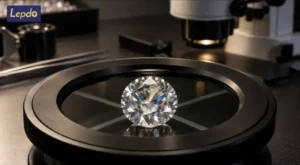
Testing a diamond to determine its origin means using specialized instruments and expert observations to detect subtle characteristics left behind by the growth process. Whether a diamond formed naturally deep within the earth over billions of years or was created in a laboratory using advanced technology over a few weeks, the goal is the same: identifying where the diamond came from. This is the foundation of how to test if diamond is lab grown accurately.
It’s important to understand that testing is not about proving a diamond is “fake.” Lab-grown diamonds are real diamonds with the same chemical, physical, and optical properties as natural diamonds. The only difference is their origin, which is why professionals use advanced methods when determining how to test if diamond is lab grown with confidence.
Popular Diamond Testing Methods And Who They Are For
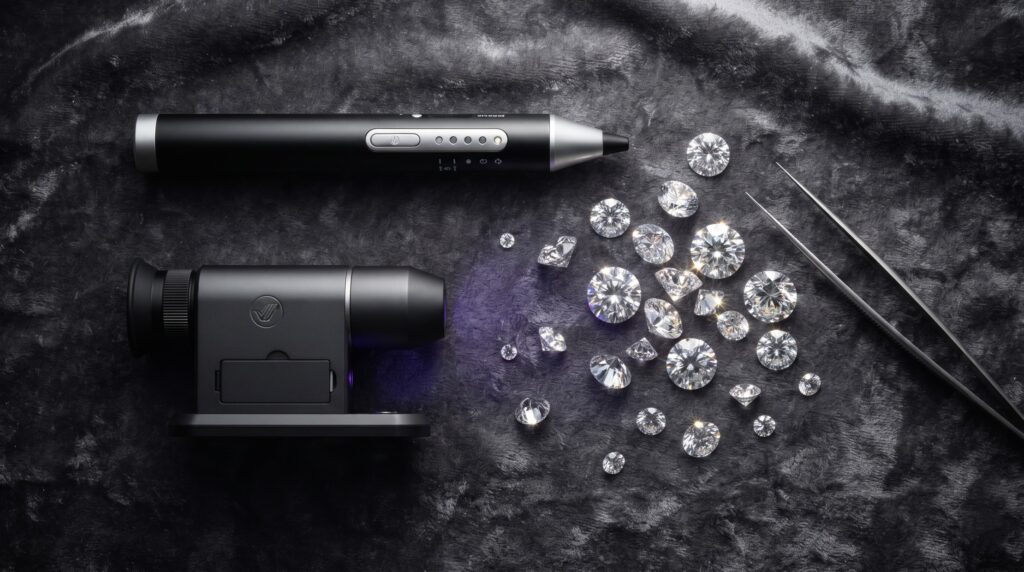
Not every test serves the same buyer. A retailer verifying a parcel of 200 stones needs different tools than a bride checking a single ring at home. Here’s how the main options break down.
Thermal Conductivity Testers
These are the cheap, familiar pen-style testers found on most jewelry counters. They measure how fast heat moves through a stone. The problem: lab-grown diamonds and natural diamonds conduct heat almost identically, so this diamond tester machine guide tip applies immediately, thermal-only testers will read a lab-grown stone as “diamond” every single time. They’re useful for catching moissanite and glass, not for origin verification.
Electrical Conductivity Testers
More advanced units test electrical conductivity alongside thermal response, since some diamond types (particularly certain HPHT stones) show different conductivity patterns. This is a step up but still not conclusive on its own, especially with CVD-grown material, which can mimic natural conductivity closely.
UV Fluorescence and Spectroscopy Devices
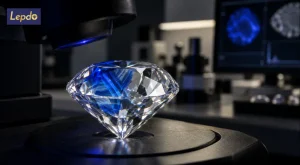
This is where real answers appear. Devices like the GIA iD100 or similar screening tools use short-wave UV and spectral analysis to flag stones that need lab-level review. Full FTIR or Raman spectroscopy, run in a gemological lab, detects growth-specific trace elements and structural patterns invisible to handheld tools. This is how a genuine lab grown diamond tester at the professional level actually works.
Other relevant methods include phosphorescence testing (many CVD stones show a lingering glow after UV exposure), microscopic inclusion analysis, and laser inscription verification on certified stones. Each plays a supporting role, but none replaces certification.
Lab Grown Diamond Testing vs Natural Diamond Testing: The Real Difference
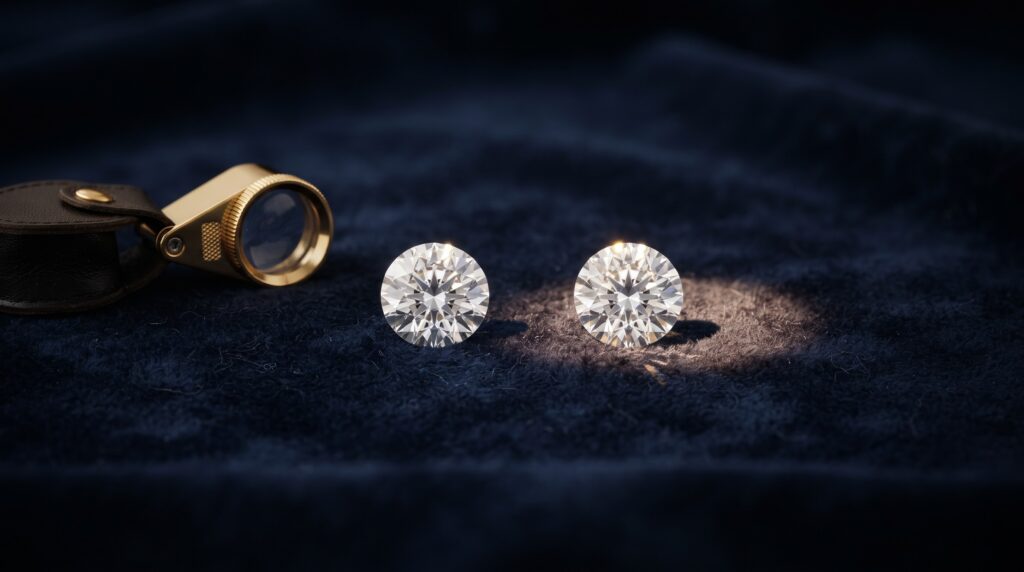
People often assume testing a lab-grown stone is fundamentally different from testing a natural one. It isn’t, not at the instrument level anyway. The difference is what the results mean once you have them.
| Factor | Lab-Grown Diamond Testing | Natural Diamond Testing |
|---|---|---|
| Thermal tester result | Reads as “diamond” (identical conductivity) | Reads as “diamond” |
| Reliable method | Spectroscopy + lab certification | Spectroscopy + lab certification |
| Common giveaway | Laser inscription, growth-line patterns under magnification | Natural inclusions, GIA origin report |
| Certification body | IGI, GIA (lab-grown reports) | GIA, AGS (natural reports) |
| Consumer risk level | Higher, since visual/thermal cues are nearly absent | Lower, but synthetic substitution still possible |
The analysis here is straightforward: how to spot lab grown diamond origin reliably always comes back to certification, not the counter tester. A $30 pen tool cannot do what a $200,000 spectrometer does. To be fair, thermal testers still serve a real purpose, they’re excellent at catching moissanite and cubic zirconia, which is often the more common fraud risk consumers actually face at a flea market or pawn shop.
How to Choose the Right Testing Approach for Your Situation
- Match the test to your actual risk. A consumer buying one ring needs a lab report, not a home testing kit. A wholesaler moving thousands of carats needs screening devices plus spot-check certification.
- Consider where the stone will live. A diamond going into a family heirloom setting deserves lab verification before it’s ever mounted, since removal later is costly and risky.
- Match the method to the setting type. Mounted stones limit what a jeweler can see under a loupe, so pre-certified loose stones are safer for custom builds.
- Weigh the budget angle. Lab-grown diamonds already cost significantly less than natural stones of comparable size and clarity, so verifying origin protects that pricing advantage rather than undermining it.
- Think about the occasion. Engagement rings, investment pieces, and insured jewelry all carry different stakes, and higher stakes justify paying for full certification.
- Decide your lab-grown vs natural preference early. This shapes everything downstream. If you’re leaning lab-grown for value and sustainability, understanding Lab Grown Diamond Market Share helps you see how mainstream this choice has become.
Before you finalize your choice, ask the seller directly whether the stone carries a GIA or IGI report and whether that report specifies growth method. A seller who hesitates on that question is telling you something.
What B2B Buyers and Diamond Manufacturers Should Know
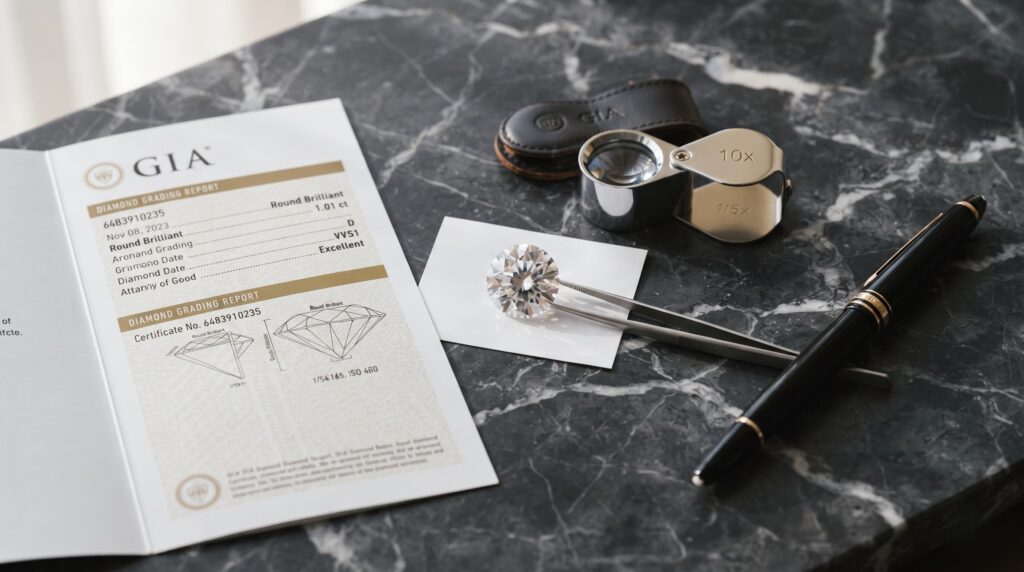
Wholesalers sourcing in volume face a different problem than retail consumers: consistency across hundreds or thousands of stones, not just one purchase decision. A single misgraded parcel can ripple through inventory, invoicing, and client trust for months.
Bulk sourcing decisions should always start with certification standards, not price alone. IGI has become the dominant certifying body for lab-grown material in the US market, while GIA maintains rigorous grading for both categories. Rapaport pricing for lab-grown diamonds moves independently from natural diamond pricing now, tracking production costs and supply rather than mine output, so buyers pricing inventory need separate benchmarks for each category.
In my experience, the manufacturers who cause the fewest disputes are the ones who screen every parcel with spectroscopic tools before it ships, not just at intake. That single habit prevents 90% of the “wait, is this natural or lab-grown” conversations that eat up weeks of back-and-forth with clients. A fancy cut diamond manufacturer working across CVD and HPHT production, based in a hub like Surat, typically builds this screening step directly into quality control rather than treating it as optional.
Retailers building out fancy shape inventory should also review sourcing options through Loose Diamonds to compare certified stock across shapes and grades before committing to a supplier relationship.
Lab-Grown Diamond Testing Trends in the USA (2026-2027)
The US diamond market is entering a new phase where testing and certification are becoming central to the buying experience rather than an afterthought. Over the past few years, consumer awareness has increased dramatically, and many buyers now walk into jewelry stores already familiar with the difference between natural and lab-grown diamonds. Instead of asking only about carat weight or price, customers increasingly want to know how a diamond was tested, which laboratory verified it, and whether its origin can be independently confirmed.
Retailers across the United States are responding by placing greater emphasis on transparency. Certification reports from organizations such as GIA and IGI are now frequently displayed alongside the diamond itself, allowing customers to compare grading details, laser inscription numbers, and origin information before making a commitment.
Many jewelers are also investing in in-store testing equipment and training staff to explain the difference between basic diamond testers and advanced spectroscopy-based verification systems. For consumers researching how to test if diamond is lab grown, this increased visibility provides reassurance that the diamond has been professionally evaluated and that the seller is willing to disclose its origin openly.
Design trends are reinforcing the same transparency movement. Rings featuring visible laser inscriptions, which can be viewed under a jeweler’s loupe or microscope, are increasingly marketed as proof of authenticity and traceability rather than as hidden technical details. Buyers appreciate being able to match the inscription on the diamond with the number listed on the grading report, creating a stronger sense of trust in the purchase.
At the same time, social media, celebrity engagement rings, and red-carpet jewelry have made lab-grown diamonds far more culturally accepted than they were even a few years ago. Industry analysts estimate that lab-grown diamonds now account for well over half of loose diamond unit sales in several segments of the US bridal market, a remarkable transformation compared with the market conditions of 2020.
Jewelry styling is evolving alongside these purchasing habits. Bezel settings, hidden-halo designs, and minimalist mountings have become especially popular because they highlight the exceptional clarity and color commonly found in lab-grown diamonds, particularly stones in the D-E-F-G color range with VVS-VS clarity. These characteristics photograph exceptionally well and appeal strongly to online shoppers who compare diamonds through high-resolution images and videos before visiting a store. Retailers are increasingly pairing these contemporary settings with detailed certification information, making testing and verification part of the product story itself.
Looking ahead through 2027, the phrase “certified and tested” is expected to become a standard expectation across the US jewelry industry rather than a premium feature reserved for high-end purchases. More retailers are likely to advertise advanced origin verification, laser inscription matching, and independent laboratory certification as routine components of every diamond sale. For buyers, this means greater transparency, easier comparison between natural and lab-grown options, and increased confidence that the diamond they choose has been accurately identified and professionally verified.
How to Evaluate Quality When Testing a Lab-Grown Diamond
When I assess a lab-grown stone for a client, the first thing I check isn’t origin at all, it’s cut quality, because that determines how the diamond performs regardless of where it was grown. Brilliance, fire, and scintillation all depend on precise faceting, not growth method.
- Check the pavilion angle and depth percentage first: A pavilion cut too deep or shallow kills light return no matter how the rough was created.
- Review the table percentage against GIA ideal ranges: Anything wildly outside standard proportions signals a rushed or careless cut.
- Look for a visible bowtie effect in fancy shapes: Ovals, pears, and marquise cuts show this dark shadow when proportions are off.
- Confirm the clarity grade matches the certificate: VVS and VS grades should show minimal inclusions under 10x magnification.
- Verify the diamond certification itself, not just the stone: A report from GIA or IGI should match the laser inscription exactly.
Reputable suppliers issuing certified diamonds as standard practice make this step far easier, since the paperwork and the physical stone should always align without discrepancy.
Conclusion
Getting a straight answer on how to test if a diamond is lab grown really comes down to three things: understanding that thermal testers alone will mislead you, knowing that spectroscopy and lab certification are the only methods that settle the question definitively, and recognizing that lab-grown diamonds meet the same 4Cs standards as natural stones once verified. None of this makes lab-grown diamonds lesser, it just means origin claims deserve real proof rather than a quick pass under a counter tester.
Buyers evaluating suppliers for certified lab-grown stones often start by requesting a sample parcel, something Lepdo Diamonds offers to verified B2B accounts working across the USA, UK, UAE, and beyond. Consumers can browse fully documented, certified inventory to see what proper verification looks like in practice to compare certified stock across shapes and grades.
The next time someone asks how to test if a diamond is lab grown, the honest answer is simple: trust the lab report, not the pen tester on the counter.
Frequently Asked Questions About Testing Lab-Grown Diamonds
1. What is testing a diamond to see if it’s lab grown?
It’s the process of using spectroscopic instruments, UV fluorescence, and lab certification to determine whether a diamond formed naturally underground or was grown using CVD or HPHT technology. Standard thermal testers cannot make this distinction because lab-grown and natural diamonds share identical physical properties.
2. Is testing lab-grown diamonds cheaper than testing natural diamonds?
Testing costs are roughly the same for both categories since identical equipment is used. However, purchasing lab-grown diamonds themselves typically costs 40 to 60% less than natural diamonds of comparable size and clarity, which is the real cost difference buyers usually mean.
3. Which diamond tester looks most impressive or reliable to buyers?
Multi-mode devices combining thermal, electrical, and short-wave UV testing, like the GIA iD100, look and perform most credibly to buyers. These units flag suspicious stones for full lab review rather than claiming false certainty on their own.
4. Does a lab-grown diamond have a GIA cut grade?
Yes, GIA grades cut quality for lab-grown diamonds using the same standards applied to natural stones. The GIA report will specify “laboratory-grown” clearly on the certificate while still providing full 4Cs grading including cut, color, clarity, and carat weight.
5. What is the biggest quality risk when testing lab-grown diamonds?
The biggest risk is relying solely on a thermal conductivity tester, which will falsely confirm a lab-grown stone as “natural diamond” every time. This gives false confidence and has led to real disputes between buyers, sellers, and appraisers over stone origin.
6. Are lab-grown diamonds tested to the same standard as natural diamonds?
Yes, lab-grown diamonds undergo identical grading standards for the 4Cs through GIA and IGI. The only additional step is origin verification through spectroscopy, since lab-grown and natural stones require different detection methods despite identical chemical composition.
7. Which testing method is best before buying an engagement ring?
A full GIA or IGI certification report is best before any engagement ring purchase, ideally reviewed before the stone is set. Loose stones are far easier to verify accurately than mounted ones, where prongs can obstruct clear examination.
8. How do I choose a reliable lab-grown diamond manufacturer or supplier?
Choose a supplier who provides IGI or GIA certification as standard, not optional, and who can explain their screening process for every parcel. Ask specifically whether they test with spectroscopy before shipment, since that single practice separates careful manufacturers from careless ones.