Halo Setting Diamond Rings: A Wholesale Buying Guide for Retailers
 by lepdogroup@gmail.com
0 comments
by lepdogroup@gmail.com
0 comments
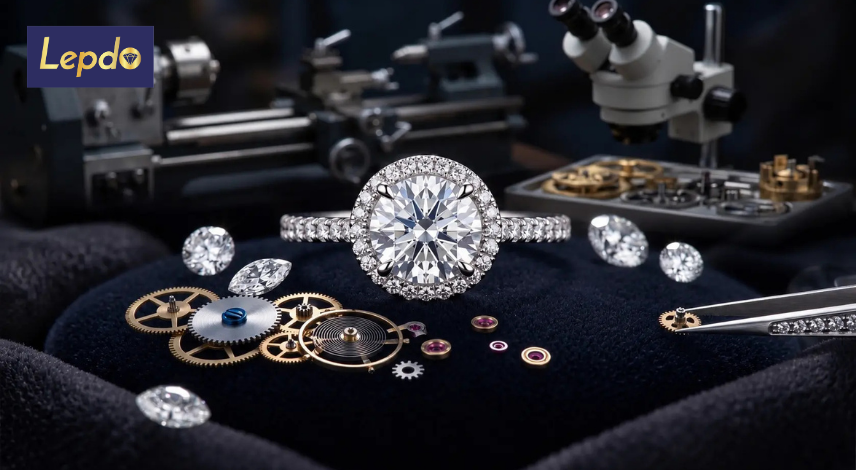
Halo setting diamond rings feature a center stone encircled by smaller pave diamonds, creating extra sparkle and a larger visual footprint at a lower cost per carat. Retailers favor this style because it boosts perceived size without inflating price. Lepdo Diamonds supplies certified center stones and melee suited to this exact build.
I was standing on the trade show floor in Vegas a couple of years back when a retailer told me something that stuck with me. Nearly a third of the engagement rings walking out her door had some form of halo around the center stone. She wasn’t guessing either. She’d actually pulled her own sales numbers before saying it out loud. And once I started asking other buyers around the hall, they told me roughly the same thing.
That’s not a small trend anymore. That’s a full category, and it deserves to be treated like one.
Halo setting diamond rings sell for one simple reason. Shoppers want a ring that looks bigger than what they’re actually paying for, and this style delivers exactly that. A well-cut 0.90 carat center stone wrapped in pave diamonds can read as a full carat or more from across a room, while the receipt tells a completely different story. The trick works because the human eye reads total sparkle across the whole face of the ring, not just the raw size of the center stone sitting inside it.
Here’s what this guide actually walks through. We’ll cover what halo setting diamond rings really are, which variations are moving fastest off the case right now, how the style stacks up against a plain solitaire, and what you need to check before placing a bulk order with a manufacturer. I’ll also give you a straight answer on lab-grown versus natural sourcing for this exact style, since that one decision affects your margin more than almost anything else you’ll buy this year.
Whether you’re running three stores in a strip mall or sourcing for a national jewelry brand, the goal stays the same. Buy the styles that actually convert, skip the ones that sit in the case collecting dust, and understand enough about GIA and IGI paperwork to catch a problem before it ever reaches your customer’s hand.
What a Halo Setting Diamond Ring Actually Is
Strip away all the marketing language and it’s pretty simple. A halo setting diamond ring takes a center diamond and surrounds it with a ring of smaller accent stones, usually set close together in pave or micro-prong style. That circle of small stones does two jobs at once. It throws off extra light from every angle, and it tricks the eye into seeing a bigger diamond than what’s actually sitting in the middle of it.
This has become one of the most requested styles in American bridal jewelry, and honestly, it works across almost every price point you can think of. A Halo Diamond Ring can be built around a round brilliant, an oval, a cushion, or an emerald cut center stone, and the halo itself can be sized up or scaled down depending on what the customer’s budget allows.
Quick Info Box
- Definition: A center diamond surrounded, fully or partially, by smaller accent diamonds set into the band.
- Key Types or Varieties: Single halo, double halo, hidden halo, floating halo, vintage milgrain halo.
- Best For: Buyers chasing maximum visual size, brides who want extra sparkle, shoppers working with a tighter budget.
- Key Difference or Advantage: Bumps up apparent size by roughly 20 to 30 percent without a matching jump in price.
Most buyers walking into a jewelry store for the first time don’t come in already knowing this terminology. They just know they want something that “looks bigger” without breaking the bank, and halo setting diamond rings are usually the answer a good salesperson lands on within the first few minutes of conversation.
Which Halo Styles Are Actually Selling Right Now
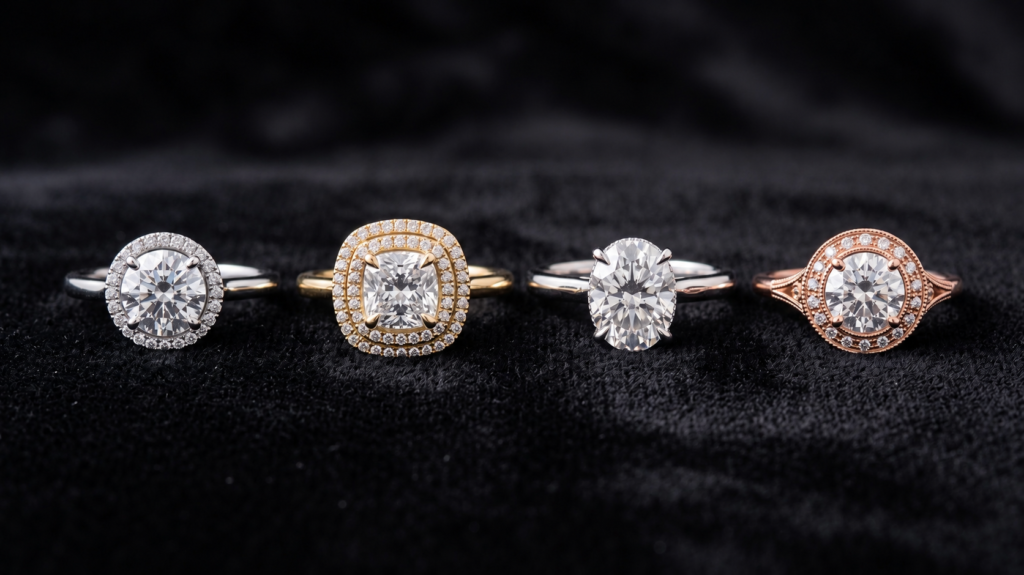
Not every halo build performs the same way at retail, and I’ve watched enough inventory sit dead in a case to know the difference matters quite a bit. Here’s what’s actually moving among halo setting diamond rings this year, and who tends to buy each one.
Single Halo
This one is still the workhorse of the category. One row of pave diamonds circles the center stone, keeping the ring light on the finger and the price tag friendly for a wider range of budgets. Most first-time engagement ring buyers, especially those under thirty-five, land here without needing much convincing from a salesperson. It’s approachable, it photographs well for social media, and it doesn’t scare off a nervous first-time buyer standing at the counter.
Double Halo
Stack a second row of accent stones around the first one, and you get noticeably more sparkle along with a real bump in total carat weight. Buyers who want a statement piece but don’t want to pay for a full two-carat center stone tend to gravitate toward this build. The halo setting wholesale price on double halo designs runs a bit higher because of the extra stone count and additional labor involved, but your retail margin tends to climb right along with it, which makes it worth stocking even if it moves a little slower than the single halo line.
Hidden Halo
The Hidden Halo Setting tucks its accent diamonds beneath the center stone, so you only catch a glimpse of them from the side profile. It’s become a favorite among younger buyers, millennials and Gen Z especially, who want something clean and understated up front with a quiet surprise underneath once you tilt the ring in the light.
A few more variations are worth keeping in stock. The floating halo lifts the accent ring slightly away from the center stone, creating extra dimension and light play that photographs beautifully. The vintage milgrain halo uses beaded metal edging for an antique look that appeals to buyers wanting something heirloom in feel. The cushion halo stays a steady, dependable seller across the Southern US market in particular. And a smaller but genuinely growing niche of colored gemstone halos, usually built around sapphire or morganite centers wrapped in a diamond halo, appeals to buyers who want something a little different from a traditional all-white diamond ring.
Halo Setting vs Solitaire, and What the Difference Actually Means
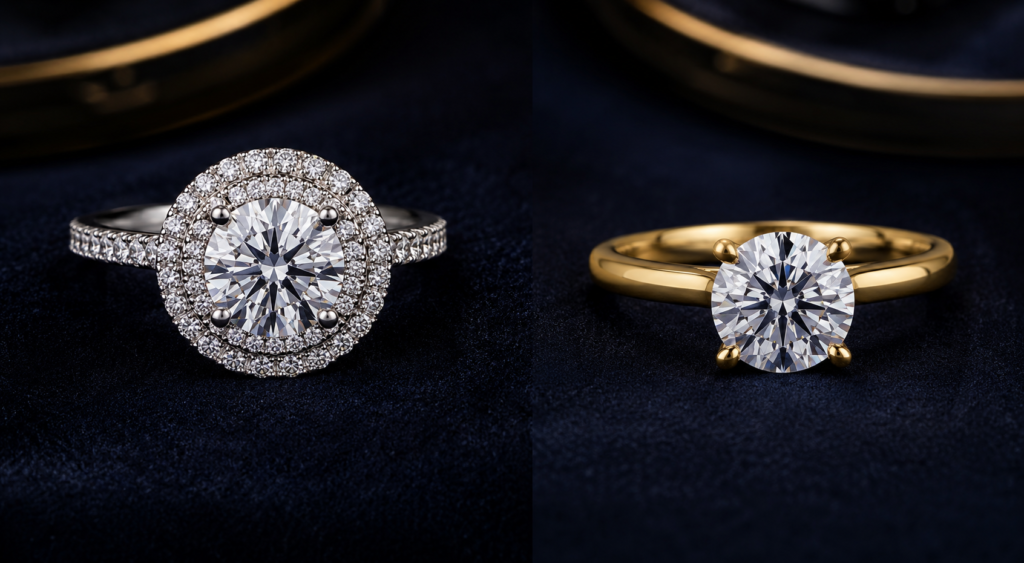
Retailers ask me constantly which style they should push harder on the sales floor, and honestly, the answer depends entirely on who happens to be standing in front of you that day.
| Factor | Halo Setting Diamond Rings | Solitaire Setting |
|---|---|---|
| Perceived Size | Looks larger for the same carat weight | True to actual carat size |
| Price Per Visual Carat | Lower effective cost | Higher cost for equivalent look |
| Maintenance | More prongs, needs more cleaning | Simple, low upkeep |
| Style Longevity | Can shift with design trends over decades | Classic, rarely dates |
| Resale Value | Driven mostly by the center stone | Driven equally by the center stone |
The Halo Setting wins on immediate visual impact, and that’s exactly why it converts so well with first-time buyers who walk into a store without a strong opinion formed yet. Most buyers who haven’t shopped for an engagement ring before don’t really know what a solitaire is supposed to look like, but they absolutely notice sparkle the moment it catches light under the case lighting.
That said, solitaires still carry a kind of quiet prestige that some customers value more than sheer size. To be fair, round solitaire rings still make up a meaningful chunk of the classic bridal market, and that isn’t going anywhere anytime soon, no matter how many halo setting diamond rings move through a store in a given month. The two styles simply serve different emotional needs, and a good retailer learns to read which one a customer actually wants within the first five minutes.
How to Choose the Right Halo Setting Diamond Ring for Your Style
Whether you’re guiding a customer standing at your counter or deciding what to stock for your typical buyer, it really comes down to six practical things.
- Personal style. Halos suit people who want maximum sparkle and don’t mind a slightly busier overall look compared to a clean, simple solitaire.
- Hand and finger shape. Halos add visual width across the top of the finger, which flatters shorter or narrower hands particularly well.
- Durability for everyday wear. Pave accent stones need solid, well-secured prong work, so buyers with active hands and physical jobs should be shown sturdier halo builds rather than delicate ones.
- Budget. Most buyers can walk out with a ring that looks noticeably bigger for meaningfully less money than sizing up a plain solitaire would actually cost them.
- Occasion. Halo setting diamond rings work just as well for engagements as they do for anniversary upgrades, right-hand fashion rings, or milestone gifts.
- Lab-grown versus natural. This is where a lab grown halo ring guide genuinely earns its keep. Lab-grown center stones let buyers get a bigger, cleaner stone for roughly 30 to 40 percent less than a comparable natural one. Retailers stocking Diamond Engagement Ring inventory are increasingly splitting their case between both options to cover every budget that walks through their door.
Before you finalize your choice, picture the ring five years down the road, not just how good it looks under store lighting on day one. Think of it this way: the ring that gets worn every single day for decades needs to hold up structurally, not just photograph well for a single engagement announcement post.
What B2B Buyers and Diamond Manufacturers Should Know
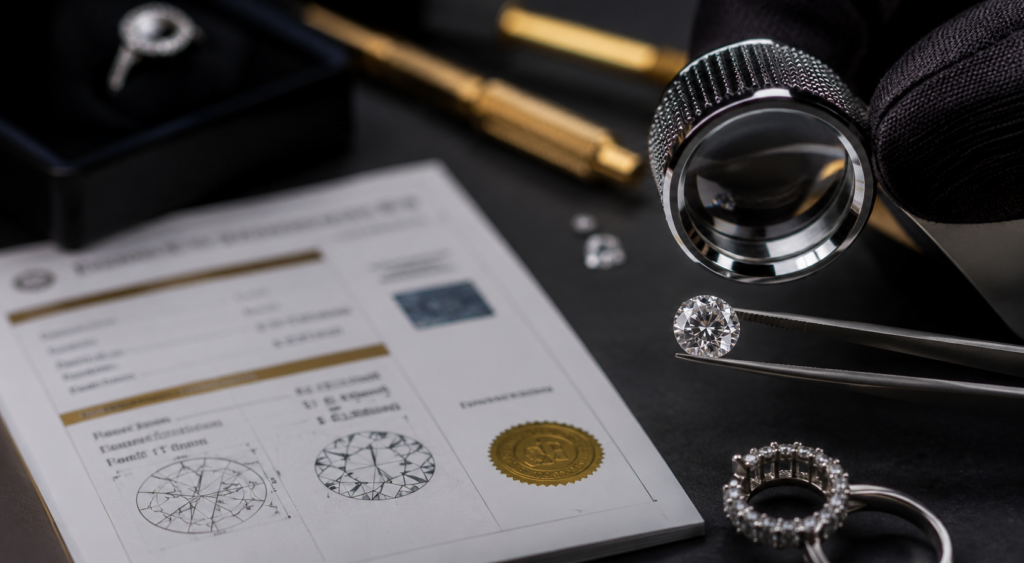
If you’re sourcing halo setting diamond rings at wholesale, the photo on a supplier’s spec sheet only tells you half the story. The rest lives in details that quietly determine your margin and your return rate months down the road.
Bulk sourcing for halo builds demands consistent melee quality across every batch. Even a slight color or clarity mismatch between the center stone and the surrounding accents becomes obvious under bright store lighting, and customers notice far more often than most retailers expect them to. Cut grading consistency matters even more here than it does on simple solitaire lines, because a poorly cut center stone loses brightness fast when it’s sitting next to accent stones that are already competing hard for the eye’s attention.
IGI certification has become the industry standard for lab-grown center stones, while GIA still holds the top spot for natural stones above roughly half a carat. Rapaport pricing sheets still anchor most negotiations on the natural diamond side, though lab-grown pricing has largely broken away from that index over the last couple of years as supply has expanded.
Manufacturers like Lepdo Diamonds, working out of Surat’s diamond manufacturing hub, typically grade CVD and HPHT stones against both IGI and GIA standards before anything ships out, which gives retailers paperwork that satisfies both price-conscious shoppers and quality-focused ones without any awkward gaps in documentation. A Diamond Ring built from stones with mismatched certification standards creates confusion the moment a customer starts comparing paperwork side by side, so keeping that consistent across your supplier relationships isn’t really optional anymore. It’s simply the baseline expectation.
In my experience working with fancy cut diamond manufacturer partners over the years, the retailers with the fewest returns are consistently the ones who insist on matched color grading between center and halo stones before assembly even begins, not after the ring has already been built and boxed up.
Halo Setting Diamond Rings Jewelry Trends in the USA (2026-2027)
Halo setting diamond rings are getting a bit more architectural heading into 2027. Floating halos and asymmetric double halos are picking up ground against the traditional single-row look that dominated the last decade of bridal jewelry design. Retailers I’ve spoken with are reporting stronger sell-through on oval and elongated cushion center stones paired with tight, close-set halos, rather than the looser vintage styles that used to be the default choice.
Celebrity engagement announcements keep pushing oval and cushion halo combinations further into the mainstream, a pattern the industry has watched play out consistently since around 2018 and shows little sign of slowing down. IGI’s own 2025 lab-grown diamond report noted that halo settings made up a significant share of lab-grown bridal jewelry submissions that year, which tells you this style has moved well past niche territory and into genuine mainstream demand across nearly every price bracket. As demand continues to grow, halo setting diamond rings are becoming one of the most searched and preferred choices among buyers looking for maximum brilliance, modern design flexibility, and strong visual impact.
Retailers stocking fancy cut diamond jewellery are also seeing rising interest in mixed-metal halo builds, rose gold bands paired with white gold or platinum halos sitting on top. One ring style, two very different aesthetics living side by side, which means a single design can appeal to both classic and contemporary buyers without forcing a store to double up on inventory lines they’d otherwise need to stock separately. For wholesalers and retailers, halo setting diamond rings represent a versatile category that can attract a wider customer base while supporting multiple design variations across natural and lab-grown diamond collections.
How to Evaluate Quality in Halo Setting Diamond Rings
When I assess a halo setting diamond ring, the first thing I check is how the center stone’s brilliance holds up against the accent stones surrounding it. A dull center stone gets visually swallowed by a bright halo, and that’s a problem no amount of polishing fixes once the ring has already been assembled.
Light performance issues show up more often in this category than most people expect, because the halo can either boost the center stone’s fire and scintillation or actively compete with it, depending entirely on how high the setting sits above the band. Pavilion depth and table percentage on the center stone need to fall within the right range, or the stone ends up leaking light out through the bottom instead of bouncing it back up through the crown where it belongs. Certified diamonds carry documentation on exactly these measurements, which is why checking the paperwork matters just as much as checking the physical stone under a loupe.
Here’s what I actually look for before approving a halo build for stock:
- Cut grade on the center stone should be Excellent or Very Good, nothing lower, since a halo exposes weak light return almost immediately.
- Color match between the center and accent stones should stay within one or two grades of each other, never further apart than that.
- Prong security on the accent stones needs a physical check, not just a quick visual once-over. Loose pave is the single most common warranty claim I see come back to a bench.
- Depth percentage on the center stone should land somewhere between 59 and 62.5 percent for solid, consistent brilliance.
- Clarity under 10x magnification to confirm nothing is hiding beneath a prong where it becomes much harder to spot once the ring is fully finished.
You will want to pay attention to how these five checks interact with each other, because a stone can pass on paper and still underperform on the finger if the setting height wasn’t accounted for during production.
Conclusion
Halo setting diamond rings remain one of the strongest performing categories in American bridal jewelry, and nothing about that momentum suggests it’s slowing down before 2027 arrives. The appeal doesn’t really change much from year to year. Buyers want a ring that looks substantial, catches light from every angle in the room, and still fits inside a realistic budget, and a well-built halo delivers all three of those things at once. The retailers who pay close attention to center stone cut quality, matched color grading, and solid prong construction are consistently the ones seeing fewer returns and more repeat customers coming back for their next piece down the road.
For wholesale buyers, the decision increasingly comes down to certification consistency and supplier transparency rather than chasing the lowest price sitting on a spec sheet. Retailers sourcing certified lab-grown diamonds can explore Lepdo Diamonds‘ current stock to see exactly how center stones and matched melee get graded before they ever reach a showcase. Whatever your store’s focus ends up being, understanding what actually makes halo setting diamond rings work at a technical level is what separates a one-time sale from a customer who walks back through your door for their next piece.
Frequently Asked Questions About Halo Setting Diamond Rings
1.What is a halo setting diamond ring?
It’s a ring style where small diamonds circle a larger center stone, adding sparkle and making the center stone look bigger than its actual carat weight. Halo setting diamond rings have become one of the most requested bridal styles in the American market, appealing to buyers who want visual impact on a controlled budget.
2.Is a halo setting cheaper than a solitaire ring?
Yes, for an equivalent visual size, halo setting diamond rings usually cost less than a solitaire with matching apparent carat weight. A smaller center stone surrounded by melee diamonds achieves a similar look at a lower total cost per visual carat than simply sizing up a solitaire center stone would require.
3.Which halo style looks biggest or most impressive?
Double halo settings generally look the biggest, since two rows of accent diamonds add both width and extra sparkle around the center stone. Cushion and oval centers paired with double halos tend to wear and photograph the largest among all the current variations of halo setting diamond rings.
4.Does a halo setting diamond ring have a GIA cut grade?
The GIA cut grade applies only to the center diamond itself, not the halo or the overall ring design. Round brilliant diamonds are the only shape that receives an official GIA cut grade, so fancy shape center stones commonly used in halo rings get evaluated on proportions, symmetry, and polish instead.
5.What is the biggest quality risk with halo setting diamond rings?
The biggest risk is loose or poorly secured pave prongs in the halo, which can lead to stone loss over time with regular daily wear. Buyers should also watch for mismatched color grading between the center stone and halo accents, since that mismatch creates an inconsistent, visibly less finished appearance overall.
6.Are lab-grown halo setting diamond rings as good as natural ones?
Yes, lab-grown diamonds share identical chemical, optical, and physical properties with natural diamonds and get graded against the same GIA or IGI standards. A lab grown halo ring guide will usually show buyers can get higher clarity and larger carat weight for meaningfully less money than a comparable natural stone equivalent.
7.Which halo type is best for an engagement ring?
Single and hidden halo settings tend to work best for everyday engagement wear, balancing sparkle with practical durability for active lifestyles and daily use. Buyers wanting a bigger visual statement often choose a double halo instead, accepting the slightly higher maintenance that comes with additional accent stones.
8.How do I choose a reliable halo setting diamond ring manufacturer or supplier?
Look for suppliers offering IGI or GIA certification as standard practice, transparent pricing with no hidden markups, and consistent cut grading across their entire inventory. Requesting a sample parcel before committing to a bulk order is common industry practice and a smart way to verify quality and service before real money changes hands.