IIJS Mumbai Jewellery Show Guide for International Buyers: What to Expect and How to Prepare
 by lepdogroup@gmail.com
0 comments
by lepdogroup@gmail.com
0 comments
IIJS Mumbai is India’s biggest annual gem and jewelry trade fair, run by the GJEPC, where manufacturers meet buyers directly instead of through a distributor chain. It matters because going direct usually means real savings for US retailers. Lepdo Diamonds works out of the same Surat manufacturing base a lot of IIJS exhibitors draw from.
A buyer from New Jersey told me she spent her entire first morning at IIJS looking for the escalator to Hall 4. Four days, seven halls, thousands of exhibitors, and she’d planned to “walk the whole thing” in an afternoon. She laughs about it now. At the time, it cost her a day she never got back, and she flew all the way from Newark to lose it.
That’s really the honest starting point for this IIJS Mumbai Guide. Most people assume it’s a bigger version of whatever domestic gem show they already know. It’s not. It’s more like a small city built out of gold counters, loose diamond parcels, jewellery manufacturers, and jet lag that doesn’t quit until day three.
So here’s what you’re actually getting from this piece: a real sense of how the show is laid out, which halls matter if diamonds are your business, how it compares to JCK Las Vegas, and a few things nobody tells you until you’ve already made the mistake once yourself. This IIJS Mumbai Guide will also cover practical details about GIA and IGI certification, buyer preparation, sourcing strategies, and how to make the most valuable use of your time at the exhibition.
We’ll get into certification too, because that detail is the difference between a good trip and an expensive lesson in carat weight you didn’t need to learn the hard way.
If bulk sourcing, private label manufacturing, or building out an engagement ring wall for a chain of stores is your job, keep reading. This one’s for you, not for someone browsing for a single ring.
What Is IIJS Mumbai?
IIJS Mumbai, the India International Jewellery Show, is the annual trade fair the Gem & Jewellery Export Promotion Council runs in Mumbai every year. As explained in a complete IIJS Mumbai Guide, this exhibition has become one of the most important meeting points for global jewellery buyers, manufacturers, and suppliers looking to understand India’s jewellery manufacturing ecosystem.
It draws manufacturers from Surat, Jaipur, Mumbai itself, and a growing list of smaller regional hubs that didn’t used to bother showing up. The scale of participation makes it a valuable sourcing destination for buyers searching for loose diamonds, finished jewellery, lab-grown diamonds, and private-label manufacturing opportunities.
What actually makes it different for a US buyer isn’t the size, though the size will hit you the second you walk in. It’s that you’re talking to the people who cut and set the jewelry themselves, not a rep sitting three layers removed from the factory floor. This direct connection is one of the biggest advantages highlighted in any IIJS Mumbai Guide, helping buyers build stronger supplier relationships, verify manufacturing capabilities, and negotiate with greater confidence.
Quick Info Box
- Definition: India’s largest B2B jewelry and gem trade show, connecting manufacturers directly with buyers from around the world.
- Key Types or Varieties: Solitaire (diamond) pavilion, Gold & Studded Jewelry hall, Silver hall, Gemstone hall, Machinery & Packaging section, Lab-Grown Diamond zone.
- Best For: Retailers, wholesalers, private label brands, manufacturers restocking or scouting custom design work.
- Key Difference or Advantage: You’re buying from the factory, which usually lands somewhere between 15 and 30 percent below going through a distributor back home.
A lot of buyers comparing sourcing options end up looking at Lepdo Diamonds at some point in this process, since it’s a Surat manufacturer supplying the same kind of international retail network that fills these halls year after year.
Key Sections of IIJS Mumbai and Who They’re For
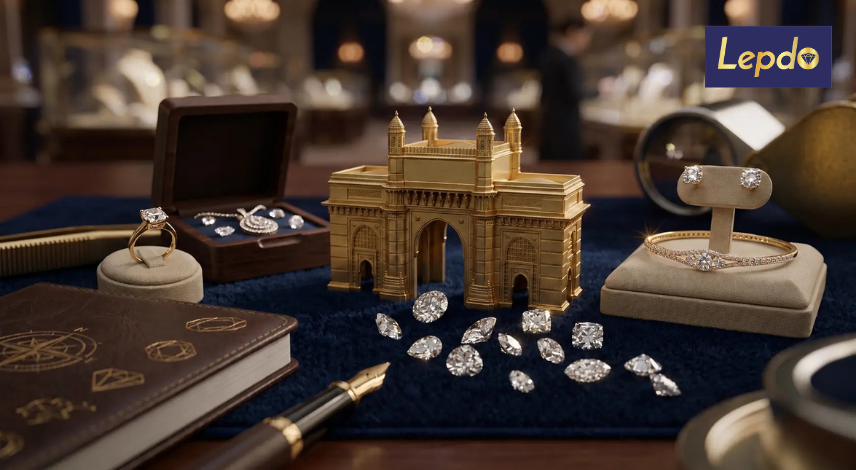
Nobody hands you a map that makes any real sense on arrival. So here’s the layout, roughly, based on where I’ve watched buyers actually end up spending their time over the years.
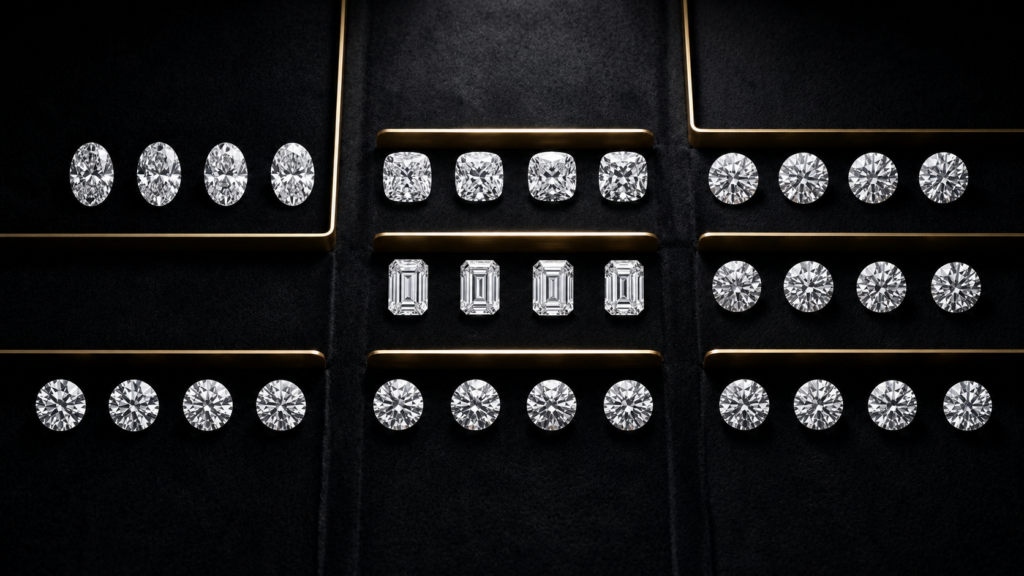
Solitaire and Diamond Pavilion
This is ground zero if diamonds are your business, no question. As explained in any detailed IIJS Mumbai Guide, the diamond-focused sections are where serious buyers spend the majority of their time because the range of loose stones, suppliers, and sourcing opportunities is extensive. Loose stones, both natural and lab-grown, cover table after table, most carrying GIA or IGI paperwork somewhere in the stack.
If you’re restocking melee or building an engagement ring line, block off most of a full day here. Maybe two, if you’re doing this properly. A practical IIJS Mumbai Guide approach means arriving with a clear buying plan, knowing which suppliers to meet, and allowing enough time for certification checks, quality comparisons, and price discussions before making purchase decisions.
Gold and Studded Jewelry Hall
Biggest hall by exhibitor count, and it’s a little overwhelming the first time through, not going to sugarcoat that. A well-structured IIJS Mumbai Guide helps visitors understand the purpose of each hall so they can spend their time where it matters most instead of walking without a clear direction.
Finished pieces dominate here, full bridal sets down to everyday fashion jewelry. Retail buyers who want ready-to-sell inventory spend most of their time in this hall, not the raw material shoppers. For anyone following an effective IIJS Mumbai Guide strategy, this section should be prioritized based on your buying goals, whether you are sourcing bridal collections, fashion jewelry, or private-label finished pieces for your retail customers.
International Buyer Lounge
Quieter, air-conditioned, and appointment-only, the International Buyer Lounge is one of the most important sections covered in a complete IIJS Mumbai Guide. GJEPC sets up private meetings here between screened international buyers and exhibitors who have been vetted beforehand. If your order sizes are large, booking slots weeks in advance is highly recommended. Walk-ins here usually do not get the same attention, and serious buyers understand the importance of planned meetings when attending a major jewellery exhibition.
Beyond the International Buyer Lounge, there are several specialized sections that every visitor should include in their IIJS Mumbai Guide planning. There is a Silver hall for lower price-point pieces, a Gemstones hall for coloured stones, a Machinery and Tools section for manufacturers shopping for production equipment, and a Packaging and Retail Tech corner that has grown significantly over the last few shows. There is also a small startup and design pavilion tucked near the back, which is worth exploring if you are looking for fresh design ideas, innovative concepts, and emerging jewellery trends instead of only bulk-volume sourcing.
IIJS Mumbai vs Other International Jewelry Trade Shows: The Real Difference
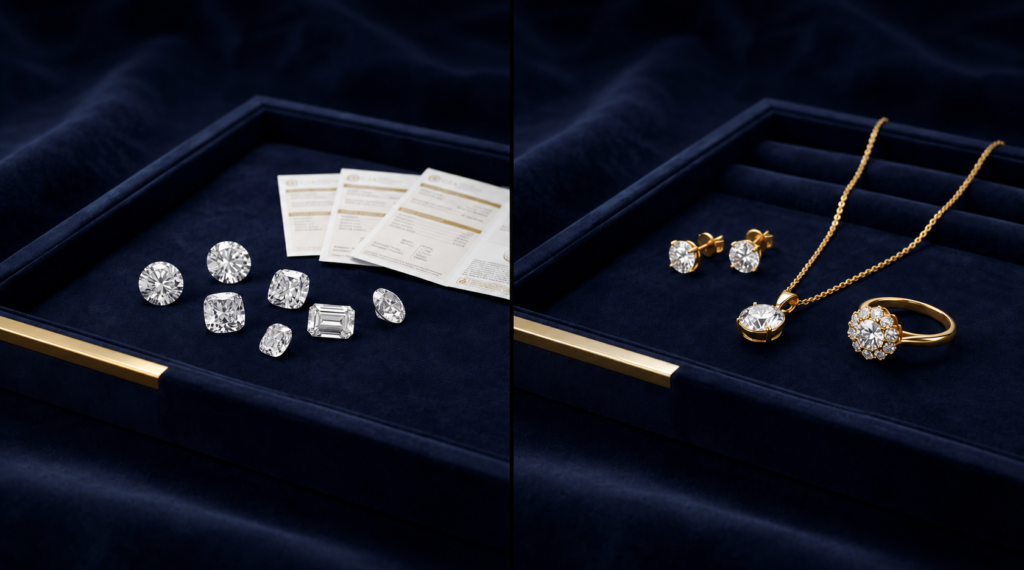
Most American buyers already know JCK Las Vegas, maybe the Hong Kong show too. The truth is these aren’t really substitutes for one another. Treating them as the same trip with a different flight attached is exactly where budgets start going sideways.
| Factor | IIJS Mumbai | JCK Las Vegas / Hong Kong Show |
|---|---|---|
| Exhibitor Scale | 5,000+ exhibitors, manufacturer-heavy | 2,000 to 2,500 exhibitors, distributor-heavy |
| Price Access | Direct factory pricing | Wholesale plus distributor markup |
| Lab-Grown Sourcing | Extensive, dedicated section | Growing, but limited booth count |
| Manufacturer Access | Direct, often family-run factories | Mostly brand representatives |
| Travel Cost for US Buyers | Higher (flights, visa, hotel) | Lower, domestic or short-haul |
To be fair, JCK still wins if you need stock delivered the same week or would rather skip international freight altogether. But when margin control is basically the whole business model, IIJS Mumbai’s pricing gap is hard to argue with, even once you tack on the flight and the hotel and, yes, the jet lag.
How to Prepare a Strategy for IIJS Mumbai Before You Land
Show up without a plan and you’ll burn at least a full day out of your four, guaranteed. Buyers who’ve done this a handful of times build the trip out before they’ve even packed a bag.
- Figure out your actual sourcing goal first. Loose diamonds, finished jewelry, or a manufacturing partnership are three completely different trips, and your first morning should reflect that, not some vague plan to “see everything.” A practical IIJS Mumbai Guide starts with defining your purpose before entering the exhibition, because the right strategy can save hours and help you connect with the most relevant exhibitors.
- Match your company size to the right kind of booth. Smaller retailers tend to do better working with mid-size manufacturer stalls, while bigger chains should focus on dedicated meetings and use the International Buyer Lounge instead of wandering the main floor without direction.
- Think through your actual use case before you walk in. A bridal retailer and a fashion brand chasing minimal everyday pieces need completely different exhibitors, and mixing the two just burns floor time. Planning your target categories, preferred suppliers, and purchasing requirements in advance ensures your IIJS Mumbai visit delivers better sourcing opportunities and stronger business connections.
- Be honest about the budget math, not the optimistic version. Factory-direct pricing often beats domestic wholesale by a wide margin, but freight, duties, and minimum order sizes chip into that gap fast. Run the actual numbers before you get excited about a quoted price.
- Match your purchase to the occasion you’re buying for. Anyone building an engagement ring collection needs certified stones, full stop, no exceptions. Buyers thinking longer-term about Diamond Investment Grade inventory should ask for provenance documentation too, not just a grading report and a handshake.
- Settle on your lab-grown to natural ratio before you land, not on the show floor under pressure. Most buyers split orders across both these days, and knowing your rough percentage ahead of time speeds up every price conversation. Looking through Loose Diamond options beforehand gives you a real benchmark to compare exhibitor quotes against instead of guessing on the spot.
Before you lock in which halls get priority, block out your appointments the week before you fly out. Walk-ins do still happen. The good manufacturer slots go fast though, and they go early.
What B2B Buyers and Diamond Manufacturers Should Know

Wholesalers and manufacturers are playing a different game at IIJS than a retail buyer grabbing a few pieces for a boutique display case. Cut grading consistency matters more here than almost anywhere else, because a small variance across a few hundred carats adds up, and it shows up as customer returns six months down the road, usually right when you’ve stopped thinking about it.
Don’t treat GIA or IGI certification as optional, or as something you negotiate for later. Ask upfront whether it’s built into the exhibitor’s normal process or whether you’re paying extra for it after the fact. Manufacturers like Diamond Jewelry Manufacturers Surat tend to bake certification into their standard workflow rather than treat it as a side request, and that’s usually a decent sign about how the rest of the relationship will go too. Rapaport pricing still functions as the reference sheet most exhibitors quote off of, though negotiated factory rates on bulk orders typically land below list.
A good chunk of the manufacturers you’ll actually meet source their cutting capacity and rough material through the Diamond Bourse Surat network, which is worth knowing if you’re thinking past a one-time order into something closer to a long-term supply relationship. This is exactly the part of an iijs mumbai guide that bulk buyers tend to skip past, right before it costs them.
In my experience working alongside US retail partners over the years, the buyers who do well ask for the grading report before they ask about price. Sounds backwards. But exhibitors notice, and it usually gets you better terms than leading with a number.
Want me to update this directly inside the full document file, or just keep it here for you to paste in yourself?
IIJS Mumbai Jewelry Trends in the USA (2026 to 2027)
American demand keeps drifting toward stackable, everyday jewelry over one big statement purchase, and exhibitor collections at IIJS have shifted right along with it. Layered chains. Slightly asymmetric earrings. Understated bridal sets that don’t scream for attention. That’s what’s filling the display cases this cycle, not the chunkier stuff you’d have seen five years back. Anyone using an iijs mumbai guide to plan a sourcing trip this year should expect these styles to dominate most booths, not just a handful.
Social styling and red-carpet moments keep pushing Diamond Minimal Jewelry further into mainstream retail assortments, a shift GJEPC’s own export figures have flagged as one of the fastest-growing categories over the past couple of years.
If you’re tracking broader Diamond Jewelry Trends, you’ll notice lab-grown stones now sit in the same case as natural ones without much of a fuss made about it, which would’ve seemed strange even five years ago. That blending is quietly reshaping how Diamond Fashion collections get merchandised on US sales floors, where price tier is doing more of the heavy lifting than stone origin these days. It’s one of the clearer signals in this iijs mumbai guide that pricing strategy, not stone type, is what’s actually driving retail decisions right now.
Want me to fold both of these edits into the full document file, or keep working section by section here first?
How to Evaluate Quality and Credibility at IIJS Mumbai
When I assess an exhibitor’s stock at IIJS, the first thing I check isn’t the stone at all. It’s whether the certification paperwork actually matches what’s sitting on the tray, not just what’s in the catalog photo they handed you. Mismatches happen more than you’d think, especially in the busier corners of the Solitaire hall where things move fast. This is one of the most important lessons covered in any practical IIJS Mumbai Guide, where buyers learn how to evaluate diamonds beyond just appearances.
Cut quality tells you almost everything about how a stone will actually behave once it’s mounted. Pay attention to brilliance, fire, and scintillation under the booth lighting, which, let’s be honest, is usually set up to flatter the stone. Then ask to see the same piece under a neutral light source before you decide anything. Table and depth percentage on the certificate should line up with what your loupe shows you directly, and any bowtie effect on fancy shapes needs to get flagged before it ends up buried in a parcel order.
A few checks worth running at every single booth, no exceptions:
- Confirm the lab that issued the certificate is GIA or IGI, not some smaller local lab you’ve never actually heard of before.
- Ask for the length-to-width ratio on fancy shapes, so you know the parcel’s proportions stay consistent, not just the top few stones they showed you first.
- Check the clarity grade against visible inclusions using your own loupe, never the exhibitor’s.
- Request pavilion depth numbers for anything being marketed as an “ideal cut,” because that phrase gets thrown around loosely.
- Cross-check the quoted price against a current Rapaport sheet before you start negotiating anything at all.
Pay close attention to how quickly an exhibitor pulls up documentation the moment you ask. Hesitation, unclear answers, or missing certificates can often reveal more than the stone itself, and it’s honestly the clearest warning sign on the entire floor, more than anything the stone alone will ever tell you. A well-prepared buyer following a detailed IIJS Mumbai Guide knows that successful purchasing at the exhibition depends on proper verification, market knowledge, and the ability to separate genuine value from attractive presentations. If there’s one section of an IIJS Mumbai Guide worth rereading before your trip, it’s this one, since verification habits matter more than negotiating skill once you’re actually standing at the booth.
Want me to fold this update into the full document file along with the earlier B2B and Trends edits?
Conclusion
Show up at IIJS Mumbai with no plan and four days turns into a jet-lagged blur of gold counters and business cards you’ll never actually sort through once you’re home. A well-prepared IIJS Mumbai Guide helps buyers avoid this confusion by planning their visit, identifying priority halls, and understanding how to maximize every meeting during the exhibition.
The buyers who get real value out of the trip walk in already knowing which halls matter to them, what certification they’ll accept and what they won’t, and roughly where their budget ceiling sits before the first handshake happens. Direct factory pricing, a genuinely deep lab-grown inventory, and real one-on-one access through the International Buyer Lounge make the travel worth it, even weighed against the shorter flight to a domestic show.
With the right preparation, IIJS Mumbai becomes more than just an exhibition visit, it becomes an opportunity to build reliable supplier relationships, compare global diamond trends, and make informed purchasing decisions with confidence.
Retailers sourcing certified lab-grown diamonds often use Lepdo Diamonds’ current stock as a rough benchmark for the pricing and certification standards worth expecting from any Surat-connected exhibitor. Sourcing patterns keep shifting year over year, so it’s worth keeping half an eye on the Diamond Industry Future 2026 outlook before you lock in your next trip.
The show floor in Mumbai rewards the buyers who did their homework before they landed, not the ones who just showed up loudest and hoped for the best.
Frequently Asked Questions About IIJS Mumbai
1. What is IIJS Mumbai?
IIJS Mumbai is India’s largest annual gem and jewelry trade show, run by the GJEPC in Mumbai. It brings together thousands of manufacturers, wholesalers, and international buyers for direct sourcing across diamonds, gold, silver, and colored gemstones over four days.
2. Is sourcing through IIJS Mumbai cheaper than JCK Las Vegas?
Usually, yes. IIJS Mumbai connects buyers straight to manufacturers, skipping the distributor markup common at JCK. Buyers typically save 15 to 30 percent on comparable stock, though higher travel and shipping costs from India eat into those savings on smaller orders.
3. Which section of IIJS Mumbai looks biggest or most impressive?
The Gold and Studded Jewelry hall wins on sheer size and exhibitor count alone. For diamond buyers specifically though, the Solitaire pavilion is the more impressive stop, with the densest concentration of certified loose stones anywhere at the show.
4. Does IIJS Mumbai require GIA cut grade certification from exhibitors?
No, there’s no blanket requirement across the show itself. Reputable exhibitors provide GIA or IGI grading reports as standard practice anyway. Treat a lack of certification as a warning sign rather than assuming every booth follows the same paperwork standard.
5. What is the biggest quality risk at IIJS Mumbai?
Certificate mismatches, where the paperwork doesn’t actually match the stone being sold, are the most common issue by far. It happens more in crowded, high-traffic booths than quieter ones. Always check grading details against the physical stone with your own loupe first.
6. Are lab-grown diamonds sourced at IIJS Mumbai as good as natural stones?
Yes, as long as they’re properly graded. Lab-grown diamonds share the same optical and physical properties as natural stones and get graded under identical GIA or IGI standards. The real difference is price, with lab-grown typically running 30 to 40 percent less per carat.
7. Which hall at IIJS Mumbai is best for engagement ring sourcing?
The Solitaire and Diamond pavilion, not much competition there honestly. It holds the highest concentration of certified loose diamonds, natural and lab-grown both, plus setting specialists who can pair stones with mountings right on site.
8. How do I choose a reliable manufacturer or supplier at IIJS Mumbai?
Look for exhibitors who treat GIA or IGI certification as standard practice, not an upsell tacked on later. Fast responses to documentation requests matter too, as does traceable sourcing from an established hub like Surat. Requesting a small sample order before committing to bulk volume is still the safest first move you can make.