Diamond Cut Grade Guide: Excellent vs Very Good vs Good Explained for Buyers
 by lepdogroup@gmail.com
0 comments
by lepdogroup@gmail.com
0 comments
A diamond cut grade guide Excellent vs very good explains how GIA and IGI rate a diamond’s proportions, symmetry, and polish on a scale from Excellent to Poor. This matters because cut, not carat weight, drives brilliance and fire. Lepdo Diamonds sources certified lab-grown stones across every cut grade, helping buyers match quality to budget with confidence.
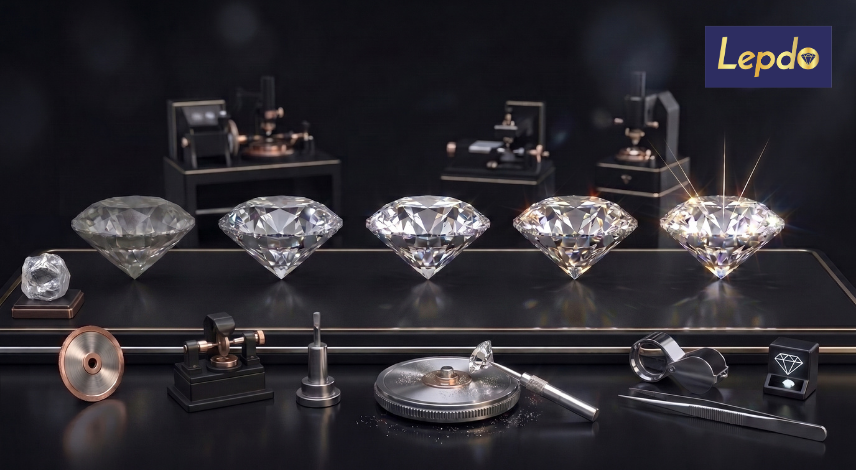
There’s a GIA-backed finding that gets glossed over a lot: put an Excellent cut diamond next to a Very Good one in a photo, and most people genuinely can’t tell them apart. No expert eye, no gemology background, just an average shopper looking at two pictures. Now here’s the part that stings a little: that “invisible” difference can cost thousands of dollars on a single stone.
That’s the whole reason a real diamond cut grade guide is worth your time. Not because cut grade is some obscure technical detail, but because it’s often the single biggest gap between what you’re paying and what you’re actually seeing.
Most people shop backward. They chase carat weight first, then color, then clarity, and cut gets whatever attention is left over. That’s exactly the wrong order if brilliance is what you’re actually after.
Of the 4Cs, cut is the odd one out. Carat weight is just size. Color and clarity are about purity, how “clean” and how white the stone looks. Cut is different. Cut decides whether all that light actually wakes up inside the diamond, or just sits there.
A diamond can be flawless and colorless and still look lifeless on the hand. That’s not a hypothetical. It happens more often than most buyers expect.
So here’s what we’re actually covering: what separates Excellent, Very Good, and Good cut grades in practice, how GIA and IGI arrive at those scores, and where it makes sense to spend more versus where it doesn’t, depending on shape, setting, and budget. Buying a single engagement ring or sourcing a hundred stones for inventory, doesn’t matter. By the end, you’ll know exactly what you’re paying for and why.
What a Diamond Cut Grade Is
A diamond cut grade measures how well a stone’s facets interact with light, based on its proportions, symmetry, and polish. It is not the same as diamond shape. A round brilliant and a radiant cut are shapes; Excellent and Good are grades applied to how precisely that shape was executed.
Quick Info Box:
Definition: A quality rating that measures light performance based on angles, facet placement, and finish.
Key Types or Varieties: Excellent, Very Good, Good, Fair, Poor.
Best For: Engagement rings, fine jewelry, resale-conscious buyers, investment-grade stones.
Key Difference or Advantage: Higher grades return more brilliance and fire per carat, even at identical size.
For a full technical breakdown of how each grade is assigned, see our detailed page on Diamond Cut Grades, which covers the exact angle and percentage ranges GIA uses.
Most Popular Cut Grade Types and Who They Are For
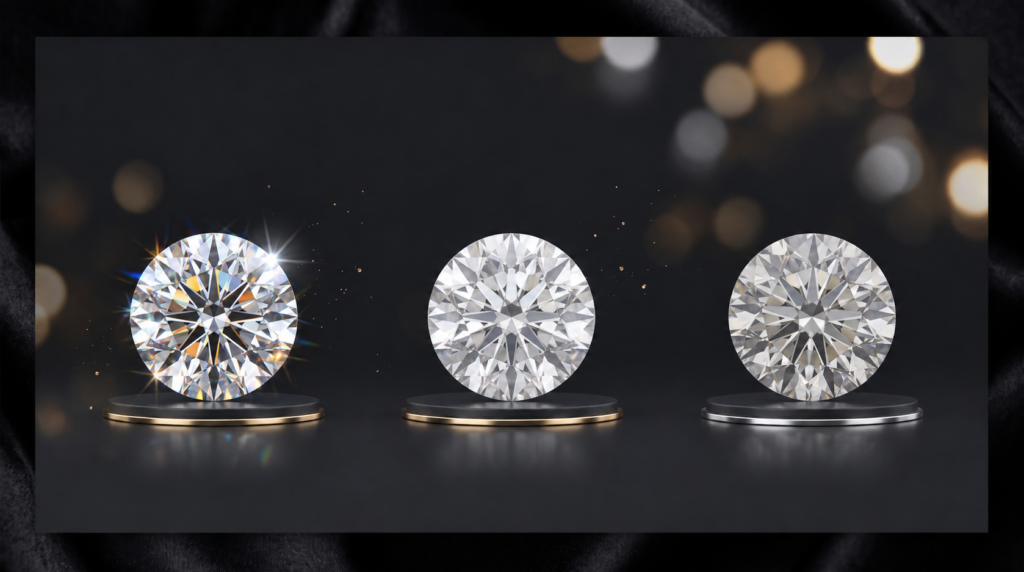
Not every buyer needs the top tier, and not every stone justifies it. Here’s how each grade actually performs in daily wear.
Excellent Cut
This is the top GIA and IGI grade, reserved for diamonds with ideal proportions, tight symmetry, and superior polish. It suits buyers who want maximum brilliance and plan to keep the stone for decades or pass it down. Retailers marketing premium collections lean heavily on this grade.
You’re paying for precision here, not just prestige. Every facet is angled to do its job, and it shows the moment the stone catches light.
Very Good Cut
Very Good sits just below Excellent, often with proportions that are only slightly outside ideal range. Most buyers cannot spot the difference without a loupe. This grade suits value-conscious shoppers who still want strong light performance.
This is where most retailers actually recommend buyers land. It’s the sweet spot between visible brilliance and sensible spending.
Good Cut
Good cut diamonds show noticeably less brilliance under certain lighting but remain acceptable for smaller stones or budget-driven purchases. They work well for side stones, halo accents, or fashion jewelry where the main focus isn’t a single center diamond.
Nobody’s staring at a 0.10 carat side stone under a loupe. In that context, Good cut does exactly what it needs to.
Beyond these three, Fair and Poor grades exist mainly in older inventory or heavily discounted parcels, and most reputable retailers avoid stocking them for center stones. Fancy shapes like cushion, oval, and radiant do not always receive an overall GIA cut grade, which is a detail many first-time buyers miss entirely. Buyers exploring shapes outside the standard round brilliant should also look at Unique Cut Diamonds to understand how grading differs by shape.
Excellent vs Good Cut Diamond: The Real Difference
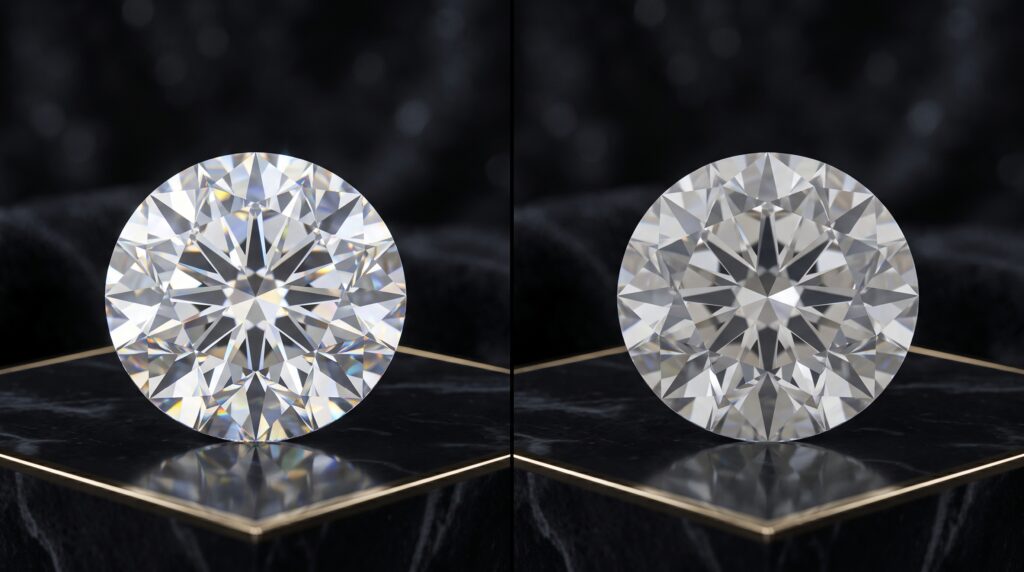
The gap between these two grades isn’t cosmetic trivia. It shows up in light return, price per carat, and how the stone photographs.
| Factor | Excellent Cut | Good Cut |
|---|---|---|
| Light Return | Maximum brilliance and fire | Noticeably dimmer, some light leakage |
| Price Premium | 15-30% higher than Good | Lowest among top grades |
| Best Shape Match | Round, princess, cushion | Smaller side stones, budget centers |
| Resale Value | Holds value better long term | Weaker resale demand |
| Visual Symmetry | Tight facet alignment | Looser tolerances, visible under loupe |
The truth is, an Excellent vs Very Good cut diamond comparison often matters less to the naked eye than an Excellent vs Good comparison does. Good cut stones can leak light through the pavilion, creating dark patches or a glassy, flat look that’s visible even to untrained eyes in bright daylight. That said, a well-selected Good cut diamond in a smaller carat weight can still look attractive set in yellow gold, where warmth compensates for reduced sparkle.
How to Choose the Right Cut Grade for Your Style
Choosing between cut grades isn’t only about budget. It depends on how and where the diamond will be worn.
- Personal style: If you prefer maximum sparkle and a bold look, prioritize Excellent or Very Good over a larger carat weight.
- Setting compatibility: Halo and pave settings can mask a slightly lower cut grade because surrounding stones add extra light.
- Metal choice: White gold and platinum amplify a diamond’s cool sparkle, so cut quality shows more; yellow gold softens visible flaws.
- Budget allocation: Dropping one cut grade can free up 10-20% of budget to spend on clarity or a certified lab-grown upgrade instead.
- Occasion: Engagement rings and daily-wear pieces justify Excellent cut spending; fashion jewelry worn occasionally does not need it.
- Natural vs lab-grown: A best diamond cut grade for value often comes from choosing certified Lab Grown Diamonds, which can offer Excellent cut grades at a lower price point than natural stones of equal quality.
Before you finalize your choice, hold the diamond under three different lighting conditions, not just the jewelry store’s spotlights. That single habit prevents more buyer’s remorse than any brochure ever will.
What B2B Buyers and Diamond Manufacturers Should Know
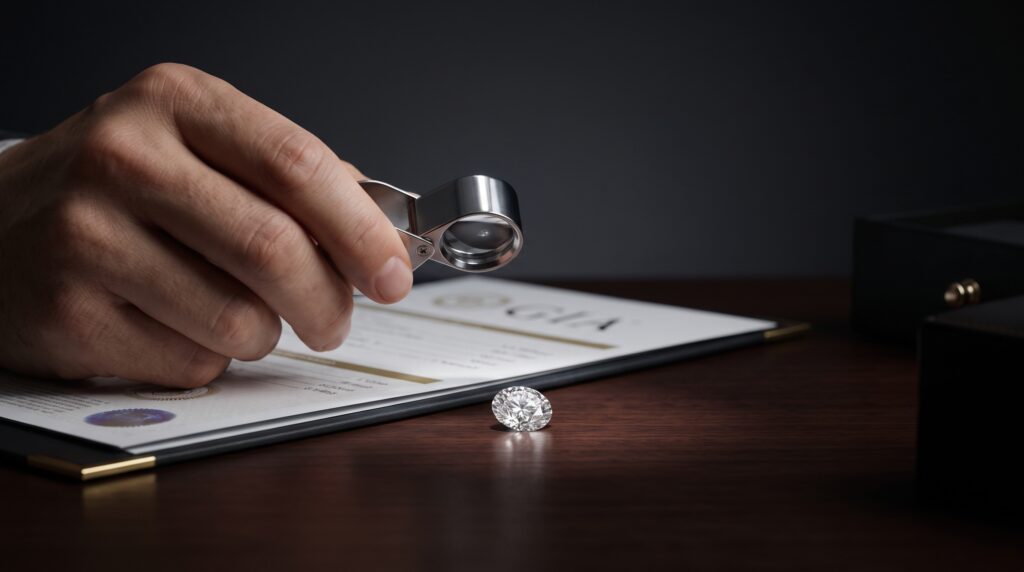
Sourcing at scale changes the calculation entirely. Retailers and wholesalers need consistency across hundreds of stones, not just one perfect diamond.
One flawless sample stone means nothing if the next two hundred don’t match it. That’s the part buyers often learn the hard way.
GIA and IGI apply slightly different methodologies for grading cut, particularly on fancy shapes without an official overall grade. A fancy cut diamond manufacturer working across cushion, oval, and radiant inventory needs internal benchmarks beyond the certificate alone, since two “Excellent” stones from different labs can still show measurable performance differences under a loupe. Rapaport pricing sheets factor cut grade heavily into price-per-carat benchmarks, which is why bulk buyers negotiating parcels should request actual angle and percentage data, not just the grade label.
A grade is a summary. The proportions report is the actual evidence behind it.
In my experience working with manufacturing partners, the biggest sourcing mistake retailers make is trusting the certificate title without reviewing the underlying proportions report. Manufacturers like Lepdo Diamonds, based in Surat’s diamond manufacturing hub, typically grade CVD and HPHT stones against both IGI and GIA standards before parcels ship, which reduces returns and mismatched customer expectations downstream.
It sounds like an extra step. It’s really just fewer angry emails after delivery.
For retailers building a fancy shape program, checking Diamond Cut Precision data alongside the grade helps standardize quality across suppliers. Consistency, not perfection, is usually what keeps a retail buyer coming back for the next parcel.
Diamond Cut Grade Trends in the USA (2026-2027)
Fancy shapes are pulling market share away from the traditional round brilliant, and cut quality conversations are following that shift. Elongated cushions, ovals, and radiant cuts are dominating engagement ring searches, driven partly by red carpet culture and social media exposure to unconventional shapes.
Round isn’t going anywhere anytime soon. But it’s no longer the only conversation happening at the counter.
Industry pricing data continues to show that IGI-certified lab-grown diamonds have grown from a niche category into a mainstream engagement ring option across US bridal retailers, with cut quality now marketed as a headline feature rather than a footnote. Retailers selling fancy cut diamond jewellery are increasingly pairing Excellent and Very Good cut stones with East-West settings and hidden halos to maximize apparent size without sacrificing brilliance.
It’s a small design shift, but it changes how a stone reads on the hand. Bigger, brighter, without actually being bigger.
Sustainability messaging is also shaping buyer behavior, with more shoppers actively asking about lab-grown origin before asking about price. That shift is pushing manufacturers to be more transparent about grading methodology, not less.
None of this is slowing down anytime soon either. If anything, buyers are asking sharper questions than they were even a year ago. And retailers who can actually answer those questions, instead of dodging them, tend to close the sale faster.
How to Evaluate Quality in Diamond Cut Grades
When I assess a diamond’s cut grade in person, the first thing I check is light performance under natural daylight, not store lighting. Certificates matter, but they don’t replace a visual check.
Here’s what a trained eye or a serious buyer should look for:
- Check brilliance and scintillation by tilting the stone slowly under a single light source.
- Look for a bowtie effect in oval, marquise, and pear shapes, which signals uneven light return across the center.
- Review table percentage and depth percentage on the certificate; a table over 64% often looks glassy rather than sparkly.
- Inspect pavilion angles for signs of light leakage, visible as dark or washed-out zones near the stone’s center.
- Confirm certification from GIA or IGI before trusting any cut grade claim, since uncertified stones carry no verified grading standard at all.
None of these checks take more than a minute or two. But together, they tell you more than any grade printed on a certificate ever will.
You will want to pay attention to how fire (colored light flashes) differs from brilliance (white light return), since a stone can excel at one while underperforming at the other. Always request the full certified diamonds report, not just a grade summary, before finalizing a purchase.
A grade tells you where a stone sits on a scale. The report tells you why it got there. Buyers who ask for both rarely get surprised later.
Conclusion
Cut grade decides how a diamond behaves under light, and that single factor often matters more than carat weight or color when it comes to visible beauty. Most buyers focus first on size, then color, then clarity, and cut gets treated as an afterthought, which is backward given how much it affects brilliance. An Excellent or Very Good cut grade delivers noticeably better light performance, while a Good cut can still work well in smaller stones, side settings, or budget-conscious purchases where the tradeoff makes sense.
It really comes down to this: a diamond can check every box on paper and still look flat in person. The certificate tells you the grade. Only your eyes tell you the truth.
To be fair, round diamonds still dominate engagement ring sales in the US market, but fancy shapes are closing that gap fast, and cut grade literacy matters even more when a stone doesn’t carry an official GIA overall grade. Retailers sourcing certified lab-grown diamonds can explore Lepdo Diamonds’ current stock to compare cut grades across shapes before committing to a parcel.
Don’t be afraid to ask your jeweler hard questions before buying. A supplier who welcomes them usually has nothing to hide.
For buyers ready to see the difference in person, our Ideal Cut Diamonds collection is a solid starting point, alongside our Diamond Color Grades and Diamond Clarity Grades resources for the full picture. A well-cut diamond speaks for itself long before anyone reads the certificate.
Frequently Asked Questions About Diamond Cut Grade Guide
1. What is a diamond cut grade guide?
A diamond cut grade guide explains how grading labs like GIA and IGI rate a diamond’s proportions, symmetry, and polish. It helps buyers understand why two diamonds of the same carat weight and color can look completely different in brilliance and price.
2. Is a Good cut diamond cheaper than a Very Good or Excellent cut diamond?
Yes, Good cut diamonds are typically priced lower than Very Good or Excellent stones of the same carat and clarity. The savings reflect reduced light performance, which becomes more noticeable in larger stones than smaller ones.
3. Which cut grade looks biggest or most impressive?
Excellent and Very Good cut diamonds appear larger and more impressive because they reflect more light back to the eye. A Good cut stone of the same carat weight can look smaller due to light leakage through the pavilion.
4. Does every diamond shape have a GIA cut grade?
No, GIA only assigns an official overall cut grade to standard round brilliant diamonds. Fancy shapes like cushion, oval, and radiant receive detailed proportion data instead, requiring buyers to interpret it manually or consult an expert.
5. What is the biggest quality risk with lower cut grades?
The biggest risk is light leakage, which causes dark zones or a flat, glassy appearance. This is especially visible in larger stones or fancy shapes prone to a bowtie effect, like ovals and marquise cuts.
6. Are lab-grown diamonds with Excellent cut grades as good as natural ones?
Yes, a lab grown diamond cut grade is evaluated using the same GIA and IGI standards applied to natural diamonds. Chemically and optically identical, lab-grown stones with Excellent grades perform the same way under light.
7. Which cut grade is best for an engagement ring?
Excellent or Very Good cut grades are best for engagement rings, since these stones are worn daily and viewed closely. Good cut grades are more suitable for accent stones or occasional-wear jewelry pieces.
8. How do I choose a reliable cut grade manufacturer or supplier?
Look for suppliers offering GIA or IGI certification as standard practice, not an upsell. Request proportion reports alongside the grade, and confirm the supplier grades consistently across parcels rather than cherry-picking a few sample stones.