How Canadian Jewelers Can Source Lab Grown Diamonds from India: Complete Guide
 by lepdogroup@gmail.com
0 comments
by lepdogroup@gmail.com
0 comments
Canadian jewelers lab grown diamonds source from india means importing CVD and HPHT stones directly from Indian manufacturers instead of buying through domestic middlemen. This matters because it cuts costs, improves margins, and gives retailers access to IGI and GIA certified inventory faster. Suppliers like Lepdo Diamonds offer transparent B2B pricing for verified Canadian buyers.
A Toronto retailer told me last spring that she was paying almost 40% more for lab grown melee than a competitor two blocks away. She had never imported anything overseas before, and honestly, the idea of dealing with customs paperwork had scared her off for two full years. That kind of hesitation is quietly costing Canadian jewelers real money, every single week they wait.
Canadian jewelers lab grown diamonds sourcing has become one of the fastest-growing supply strategies in the country’s jewelry trade, and it happened faster than most people in the industry expected. Retailers from Vancouver to Halifax are skipping traditional distributors and buying certified stones directly from India, where most of the world’s CVD and HPHT production now takes place.
Here is what you will get from this guide: a plain-English breakdown of how the sourcing process actually works, what CBSA expects at the border, how to vet a supplier before you wire a single dollar, and where the real cost savings hide. Whether you run one storefront or manage inventory across several locations, this is written around the decisions you are actually facing this quarter. We will also touch on the 4Cs, GIA standards, and where Canadian-grown stones still fit into the bigger picture.
What Canadian Jewelers Lab Grown Diamonds Sourcing Actually Means
Canadian jewelers lab grown diamonds sourcing refers to the process of importing lab-created diamonds, grown through CVD (Chemical Vapor Deposition) or HPHT (High Pressure High Temperature) methods, directly from manufacturers and trading houses in India. Most of this supply comes out of Surat, Gujarat, which now produces a large share of the world’s lab-grown polished output.
For a retailer, this usually means opening an account with a supplier who holds inventory in DEFG color and VS to VVS clarity, all carrying standard Lab Grown Diamond certification from IGI or GIA, then arranging shipping and customs clearance into Canada.
Quick Info Box
- Definition: Direct B2B import of certified lab-grown diamonds from Indian manufacturers into Canada.
- Key Types or Varieties: CVD loose stones, HPHT loose stones, melee parcels, finished lab-grown jewelry.
- Best For: Independent retailers, wholesalers, online jewelry brands, private-label programs.
- Key Difference or Advantage: Lower per-carat cost while holding the same certification standards as domestic suppliers.
Most Popular Ways Canadian Jewelers Source Lab Grown Diamonds, and Who They’re For
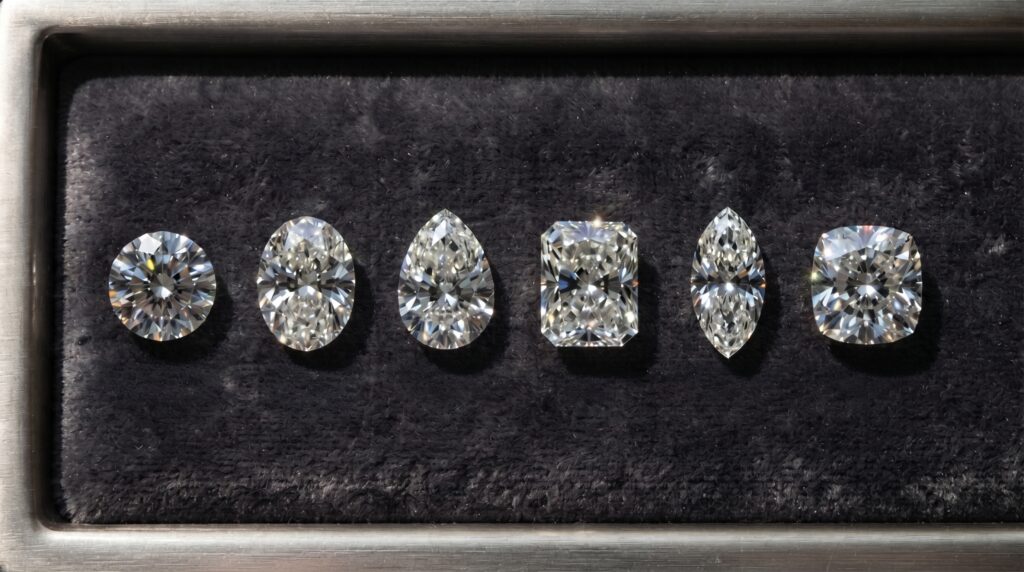
Not every sourcing path fits every business. A single boutique in the Toronto diamond district has completely different needs than a wholesaler stocking inventory across three cities.
Direct manufacturer accounts mean opening a B2B relationship straight with a Surat manufacturer, no middleman in between. This fits established retailers who order regularly and want pricing that stays consistent order after order.
Trade show and GJEPC-linked sourcing happens when buyers meet Indian suppliers face-to-face at trade events tied to the Gem and Jewellery Export Promotion Council. This suits buyers who want to physically inspect stones before committing to a bigger volume.
Sample parcel programs let new Canadian accounts test a small trial parcel before placing a larger order. If you have never imported before, this is the safest place to start.
Beyond those three, jewelers also lean on online B2B marketplaces for smaller melee orders, third-party sourcing agents who handle the logistics for a flat fee, US-based distributors who resell Indian-cut goods at a markup, and white-label programs where finished jewelry arrives ready for your own store branding. Toronto diamond district sourcing still runs heavily through these last two channels, since a lot of local wholesalers act as go-betweens rather than direct importers. A wholesaler managing multiple locations usually does better with a direct manufacturer account, while a single-location retailer testing lab-grown for the first time should start with a sample parcel and grow from there.
Most buyers underestimate how much negotiating room disappears once a middle layer gets involved. A retailer paying a US-based reseller’s markup on Indian-cut goods is essentially paying twice for the same logistics work, once to the original exporter and again to whoever repackaged the invoice along the way. That gap is exactly where independent boutiques are finding the margin to compete against bigger chain stores on price alone.
Lab Grown Diamonds from India vs Canadian Diamonds: The Real Difference
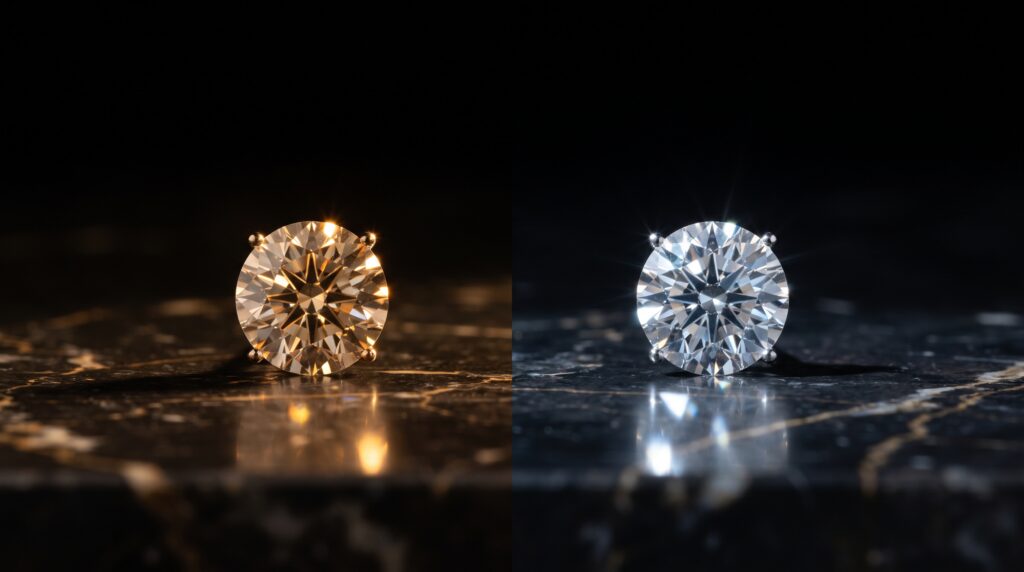
Retailers ask constantly how imported lab-grown stones stack up against domestically mined Canadian Diamonds. The honest answer depends entirely on what your customer values more: the origin story, or the price tag.
| Factor | Lab Grown Diamonds (India) | Canadian Diamonds (Natural) |
|---|---|---|
| Average Price per Carat | 60-80% lower | Premium pricing, origin-verified |
| Supply Consistency | High, produced on a schedule | Limited by mine output |
| Certification | IGI, GIA (growth method noted) | GIA, CGL with origin tracking |
| Typical Buyer | Value-conscious, ethically-minded | Provenance-focused, luxury segment |
| Import Process | Requires CBSA customs clearance | Domestic, no import duties |
The truth is, most Canadian shoppers under 40 now care more about price and ethical sourcing than they do about provenance storytelling, which explains why lab grown diamond wholesale Canada demand keeps climbing month over month. This shift is creating strong growth opportunities for Canadian Jewelers Lab Grown Diamonds, as more retailers expand their lab-grown collections to meet changing consumer preferences.
To be fair, Canadian diamonds still hold real appeal in the luxury and heritage segment, where buyers are happy to pay specifically for the “mined in Canada” narrative on the certificate. Retailers who carry both categories usually find they’re serving two completely different customer conversations, not competing product lines. For businesses focused on Canadian Jewelers Lab Grown Diamonds, offering both natural and lab-grown options allows them to address a wider range of customer priorities while remaining competitive in today’s jewelry market.
How to Choose the Right Lab Grown Diamond Supplier for Your Business
- Match the product to your store’s style. A fashion-forward boutique needs fancy shapes and unusual cuts on hand, while a bridal-heavy store needs consistent round brilliants available in bulk.
- Check inventory space and cash flow. Bulk parcels tie up capital fast. Sample orders keep things flexible while you’re still testing customer demand.
- Confirm setting and mounting compatibility. Stones cut in India usually follow standard industry measurements, which makes fitting them into your existing mountings much easier.
- Weigh the budget advantage against natural stones. Checking current Lab Grown Diamond Price India-2026 benchmarks before you negotiate gives you real leverage at the table.
- Think through the occasion mix your store actually serves. Engagement rings, fashion pieces, and investment-grade stones each call for different clarity and certification levels.
- Decide where lab-grown fits next to your natural inventory. Most buyers now stock both, using lab diamond sourcing Canada strategies to keep entry-level price points competitive while natural stones anchor the premium counter.
Before you finalize your choice, ask the supplier for their last three shipment records into Canada. A supplier with a clean customs history will save you weeks of headache later on.
What B2B Buyers and Diamond Manufacturers Should Know
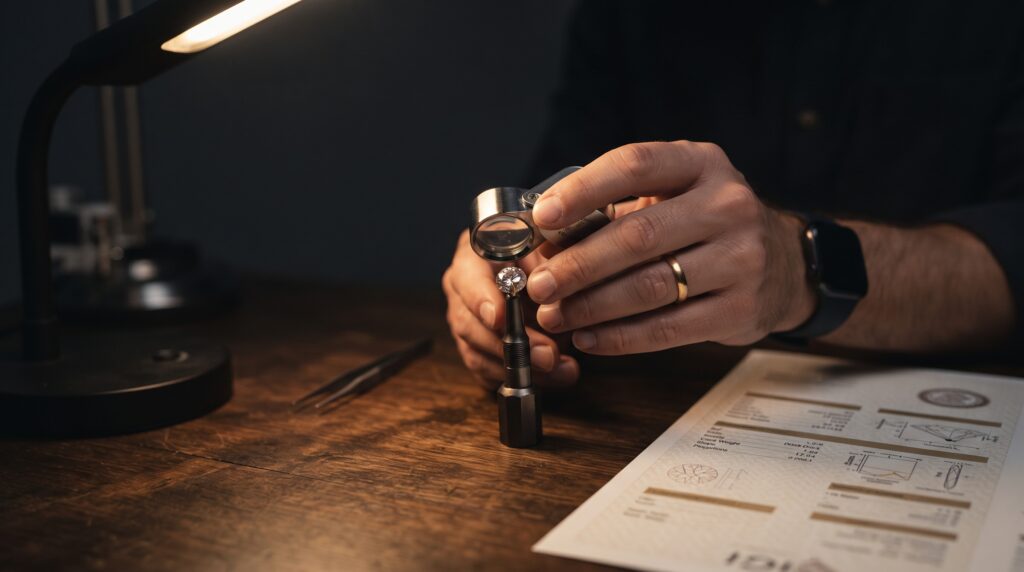
Wholesalers and manufacturers buying at volume deal with a different set of headaches than a retailer placing a first small order. Cut grading consistency matters enormously here, since a parcel with uneven proportions creates returns and, worse, damages your reputation with customers who notice.
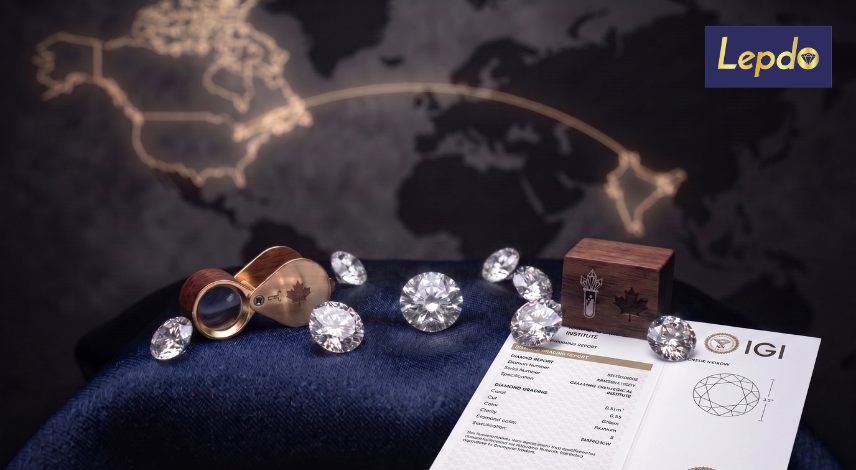
Reputable exporters issue IGI or GIA certification as a baseline, not as some premium add-on, and this should never be up for negotiation, no matter how large the order is. This level of quality assurance is especially important for businesses sourcing Canadian Jewelers Lab Grown Diamonds, where certified inventory builds long-term trust with both retailers and end customers.
Rapaport pricing still shapes negotiation baselines even in the lab-grown world, particularly on larger fancy shapes, where cut quality moves price more than color grade does. In my experience working alongside manufacturers, the single biggest mistake bulk buyers make is skipping a third-party lab audit on their first large shipment, simply trusting the supplier’s internal grading process instead. For retailers investing in Canadian Jewelers Lab Grown Diamonds, independent verification provides an extra layer of confidence and helps ensure every shipment meets the expected quality standards.
Manufacturers like lab grown diamond supplier India sources based in Surat typically run internal quality control on CVD stones before certification, then ship with full documentation ready for CBSA clearance. For wholesale accounts, working within an established lab grown diamond wholesale Canada supply chain, one that already understands duty classification and paperwork, removes most of the friction that stalls a first-time importer at the border.
Canada Customs Duty, CBSA Rules, and the Import Process
Importing diamonds into Canada involves more paperwork than most first-time buyers expect, though it’s far from complicated once you understand the sequence. The Canada Border Services Agency treats loose diamonds and finished jewelry differently, and getting the classification wrong is what causes delays at the border, not the actual diamonds themselves. For businesses dealing in Canadian Jewelers Lab Grown Diamonds, understanding these import requirements from the start helps avoid unnecessary delays and ensures a smoother supply chain.
Loose lab-grown diamonds generally clear under standard commercial import codes. Canada doesn’t apply the same duty structure to lab-grown stones as it historically has to certain natural diamond categories, though GST and applicable provincial taxes still apply on entry. Every shipment needs a commercial invoice, a certificate of origin, the diamond’s grading certificate, and a CBSA-compliant customs declaration. Suppliers experienced in Diamond Export from India typically prepare all of this documentation before the shipment even leaves Surat, which speeds up Diamond Import clearance considerably once it lands in Canada.
Think of it this way: the paperwork exists to prove the stone is exactly what the invoice claims, not to punish anyone for importing. Retailers who work with a customs broker familiar with diamond shipments rarely see delays past two or three business days.
That said, first-time importers should budget an extra week into their initial timeline anyway. CBSA officers unfamiliar with lab-grown certification language sometimes flag a shipment simply to confirm the growth method noted on the grading report, and a quick phone call from your broker usually resolves it the same day. This is one reason why experienced suppliers serving the Canadian Jewelers Lab Grown Diamonds market place such a strong emphasis on complete documentation and certified inventory before dispatch.
Lab Grown Diamond Jewelry Trends in Canada (2026-2027)
Canadian retail is shifting toward bold, colorful lab-grown settings instead of the plain solitaire styles that dominated a decade ago. Fancy cut diamond jewellery, oval and radiant shapes especially, set in warm yellow gold, has become a steady request across stores in every major city. This shift is creating new opportunities for Canadian Jewelers Lab Grown Diamonds, as retailers continue expanding their lab-grown collections to meet evolving customer preferences.
Cultural influence from high-profile engagement announcements keeps pushing customers toward bigger carat weights at prices they can actually afford, something lab-grown stock makes possible in a way natural diamonds rarely can at the same budget. Industry data tied to GJEPC trade reports shows lab-grown diamond exports from India climbing at a double-digit pace year over year, with a large share of that volume headed straight to North American retail floors, a shift that’s reshaping the wider Diamond Industry far beyond just engagement rings.
Toronto and Vancouver store owners report that customers under 35 now ask about growth method before they even ask about carat size. That’s a complete reversal from five years ago, and it’s exactly why so many independent retailers sourcing Canadian Jewelers Lab Grown Diamonds are building direct relationships with Indian manufacturers instead of waiting for domestic distributors to catch up.
How to Evaluate Quality in Lab Grown Diamonds Sourced from India
When I assess a parcel of imported CVD or HPHT stones, the first thing I check isn’t color or clarity on paper, it’s light performance. A certificate can say DEF color and still disappoint on the counter if the cut proportions are wrong. These quality checks are especially important for Canadian Jewelers Lab Grown Diamonds, where consistent brilliance and cutting standards directly influence customer satisfaction.
Brilliance, fire, and scintillation all depend heavily on pavilion angle and table percentage, and Indian-cut lab-grown stones can vary between manufacturers even when the certified grades look identical on paper. You will want to pay close attention to depth percentage specifically, since a stone cut too deep or too shallow kills light return no matter what the certificate says.
- Compare the certificate’s stated cut grade against actual light performance under a loupe.
- Check for a bowtie effect in oval, marquise, and pear shapes before signing off on a parcel.
- Verify the length-to-width ratio matches what your customer base actually expects for that shape.
- Confirm the certificate comes from IGI or GIA, never an unfamiliar in-house lab you can’t verify.
- Request a second, independent grading on any order above a few carats total weight.
Always confirm you’re working with certified diamonds before wiring payment. Uncertified parcels leave you with no recourse if the grading turns out to be inflated. Following these practices helps Canadian Jewelers Lab Grown Diamonds maintain quality, transparency, and customer confidence when sourcing inventory from international manufacturers.nflated.
Conclusion
Sourcing lab-grown diamonds from India isn’t the complicated, risky process many Canadian jewelers assume it to be. The real work comes down to three things: choosing a supplier with a clean customs track record, insisting on proper IGI or GIA certification every single time, and understanding CBSA’s documentation requirements before your first shipment ever leaves Surat. Retailers who get these three pieces right typically see their margins improve within one or two ordering cycles, and their customers rarely notice a difference beyond the price tag.
As demand continues to grow, Canadian Jewelers Lab Grown Diamonds are becoming a key part of modern retail inventory strategies. Working with experienced Indian manufacturers gives retailers access to consistent quality, wider shape selections, and competitive wholesale pricing while maintaining the certification and traceability that today’s buyers expect.
Canadian jewelers lab grown diamonds sourcing works best when you treat it as an ongoing relationship, not a one-time transaction. Retailers evaluating suppliers for this kind of sourcing often start by exploring Lepdo Diamonds, a Surat-based manufacturer supplying certified lab-grown stones to B2B accounts across the US, UK, and Canada. The jewelers who move on this early tend to be the ones setting the pricing standard everyone else in their market ends up chasing.
Frequently Asked Questions About Canadian Jewelers Lab Grown Diamonds
1. What is canadian jewelers lab grown diamonds sourcing?
It’s the practice of Canadian retailers and wholesalers importing certified lab-grown diamonds directly from Indian manufacturers instead of buying through domestic distributors. This usually involves CVD or HPHT stones with IGI or GIA certification, shipped through standard CBSA customs clearance into Canada.
2. Is sourcing lab grown diamonds from India cheaper than buying domestic natural diamonds?
Yes, lab-grown stones from India typically cost 60 to 80 percent less per carat than comparable natural diamonds. The savings come from manufacturing efficiency and lower production costs in Surat, not from lower quality, since certification standards stay identical.
3. Which lab-grown shape looks biggest or most impressive per carat?
Oval, marquise, and pear shapes look larger than their carat weight suggests because of their elongated proportions. Round brilliants, in comparison, concentrate their weight more tightly and appear smaller at the same carat total.
4. Does a lab grown diamond have a GIA cut grade?
Round brilliant lab-grown diamonds do receive an official GIA cut grade, exactly like natural stones do. Fancy shapes, however, aren’t assigned a GIA cut grade at all, so buyers need to rely on proportion analysis and hands-on inspection instead.
5. What is the biggest quality risk when importing lab grown diamonds from India?
Inconsistent cut proportions across a bulk parcel is the most common risk, even when every stone in it carries proper certification. That’s exactly why independent verification on larger orders matters more than simply trusting the paperwork.
6. Are lab-grown diamonds as good as natural diamonds?
Chemically and optically, lab-grown diamonds are identical to natural ones, sharing the same crystal structure and light performance. The only real difference is origin, which shows up on the certificate as growth method rather than as any kind of quality distinction.
7. Which lab-grown shape is best for an engagement ring?
Round brilliant and oval remain the two most popular engagement ring choices among Canadian buyers today. Round delivers maximum brilliance, while oval offers a larger visual size alongside strong light return.
8. How do I choose a reliable lab grown diamond manufacturer or supplier?
Start by requesting a sample parcel and reviewing their shipment history into Canada. A reliable supplier provides IGI or GIA certification as standard practice, communicates clearly about customs documentation, and has verifiable references from other Canadian accounts you can actually call.