Melee Diamonds Wholesale from India: How to Source Small Diamonds for Jewelry Manufacturing
 by lepdogroup@gmail.com
0 comments
by lepdogroup@gmail.com
0 comments
Melee diamonds wholesale India refers to small diamonds, typically under 0.18 carats, sold in bulk parcels by Surat-based suppliers for use as accent stones in jewelry. These diamonds matter because consistent cut quality and certification protect manufacturers from costly mismatches. Lepdo Diamonds connects US buyers with verified Indian melee suppliers offering graded, export-ready parcels.
A single eternity band can require more than 30 individual melee stones, and if even three of them are slightly off in color or cut, the whole piece looks uneven under store lighting. That is the reality facing jewelry manufacturers every day, and it is why melee diamonds wholesale India has become such a critical sourcing decision for American brands.
Surat now supplies a massive share of the world’s small diamond inventory, cut and graded to standards that match the 4Cs used for larger stones. What used to be a fragmented, inconsistent corner of the diamond trade has become an organized, export-ready segment of the industry, with dedicated factories sorting and calibrating stones by the hundreds of thousands.
For US manufacturers, this shift has changed the economics of jewelry production. Pieces that once required compromises on stone count or quality can now be built with tighter, more consistent melee at a fraction of historical costs.
Here is what this guide will walk through: what melee diamonds actually are, how Indian suppliers categorize them, how natural compares to lab-grown melee, and what B2B buyers need to check before placing a bulk order. Whether you are a manufacturer filling pave settings or a retailer stocking eternity bands, the goal is the same: consistent quality at a price that protects your margins.
What Are Melee Diamonds?
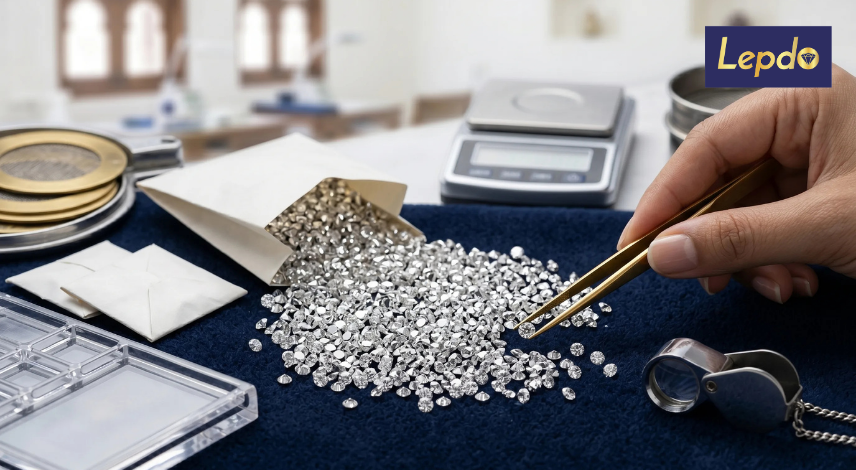
Melee diamonds are small diamonds, generally below 0.18 carats, used as accent stones in halos, pave settings, and eternity bands. The term comes from the French word for mixture, which fits since these stones are typically sold in large parcels rather than individually.
Unlike center stones, melee is rarely evaluated one diamond at a time. Buyers instead assess the overall character of a parcel: how consistent the cut quality is, how tightly the color range holds together, and whether the clarity grade across the lot meets the standard promised by the supplier.
Definition: Melee diamonds are small round or fancy-shaped diamonds under 0.18 carats sold in bulk parcels for accent and pave work.
Key Types or Varieties: Natural melee, lab-grown melee, single-cut melee, full-cut melee, fancy shape melee
Best For: Eternity bands, halo settings, pave jewelry, side stones, bridal accent work
Key Difference or Advantage: Sold by parcel weight rather than per stone, allowing high-volume sourcing at lower per-carat cost
For a deeper technical breakdown of grading and terminology, the melee diamonds glossary page at Lepdo Diamonds covers the standard definitions used across the industry.
Popular Types of Melee Diamonds from Indian Manufacturers: And Who They Are For
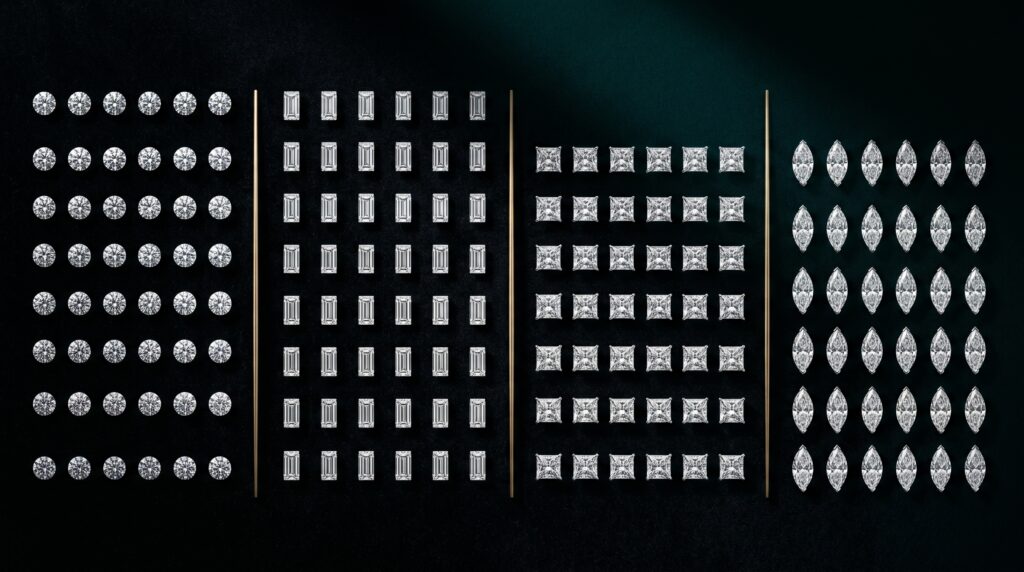
Not every melee parcel is built the same way, and the differences matter once you start filling production orders. Indian manufacturers have developed distinct product categories, each suited to a different stage of jewelry manufacturing.
1. Full-Cut Round Melee (D to J, VS to SI)
This is the workhorse of the industry. Full-cut rounds have 57 to 58 facets, just like larger brilliants, and deliver real sparkle in halos and pave bands. Retailers stocking bridal lines lean on this category heavily, and it remains the highest-volume product coming out of Surat by a wide margin.
2. Single-Cut Melee
Single-cut stones have around 17 to 18 facets and are used in the smallest sizes, often under 0.01 carats. Manufacturers working on antique-style or vintage-inspired pieces favor single-cuts because they mimic older cutting traditions, and the lower facet count keeps production costs down at sizes where extra facets barely register visually.
3. Lab-Grown Melee Diamonds
Lab-grown melee, produced through CVD methods, has rapidly replaced natural melee in many commercial lines. Melee lab grown diamonds India suppliers now offer parcels at significantly lower cost while matching the same clarity and color ranges as natural stones. For many manufacturers, lab-grown melee has become the default choice for new product lines, with natural melee reserved for higher-end or heritage pieces.
4. Fancy Shape Melee:
Princess, baguette, and marquise melee stones serve channel-set bands and Art Deco-style designs, where geometric lines matter more than brilliance. These shapes require tighter calibration than rounds since even small size variations create visible gaps in channel settings.
5. Calibrated Parcels:
Stones cut to exact millimeter sizes for specific setting types, critical for manufacturers using automated bezel-setting equipment. A calibrated parcel might specify sizes down to a tenth of a millimeter, which matters enormously when machines rather than hand-setters are placing the stones.
6. Color and Clarity Tiered Parcels:
Suppliers in Surat often sort melee into tiers, such as commercial grade, fine white, and top white, letting buyers match parcel quality to price point. Commercial grade works fine for fashion jewelry, while top white tiers serve bridal lines where every stone is visible up close.
7. Mixed Carat Run Parcels:
Parcels containing a range of sizes from 0.005 to 0.18 carats, useful for manufacturers building varied product lines without separate orders. These run parcels are often the most economical option for brands producing multiple styles from a single inventory pull.
Melee Diamonds vs Larger Center Stones: The Real Difference
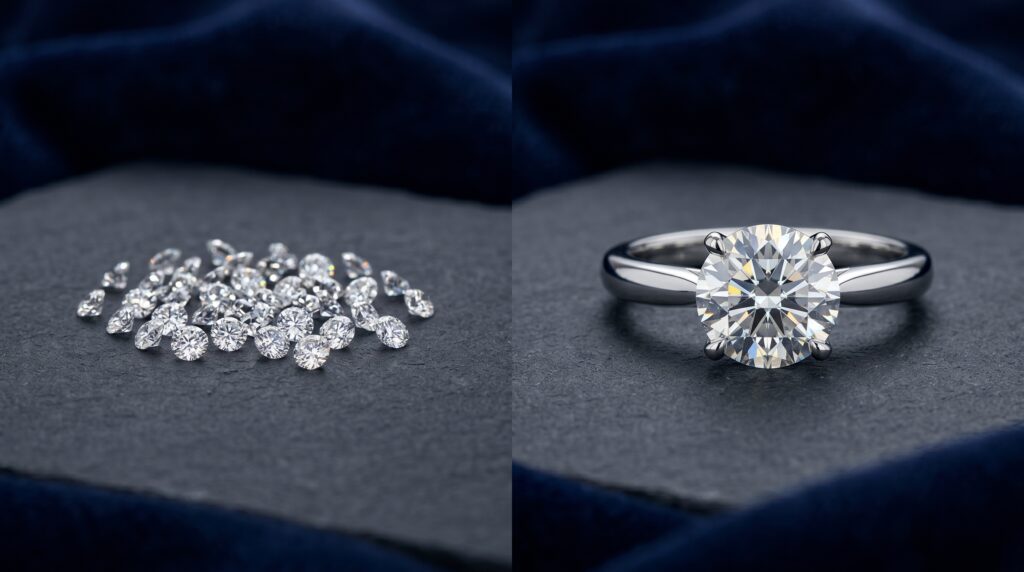
Most buyers comparing melee sourcing to center stone sourcing assume the rules are the same. They are not, and treating them identically is one of the most common mistakes new manufacturers make.
| Factor | Melee Diamonds | Center Stones |
|---|---|---|
| Selling Unit | Sold by parcel weight, often per carat across hundreds of stones | Sold individually, each with its own certificate |
| Certification | Often batch-certified, individual reports available at extra cost | Always individually certified by GIA or IGI |
| Grading Focus | Consistency across the parcel matters more than any single stone | Cut, clarity grade, and proportions of one stone are scrutinized closely |
| Price Per Carat | Lower per carat, but total parcel cost adds up quickly | Higher per carat, reflecting individual grading and rarity |
| Sourcing Volume | Bought in bulk for production runs | Bought stone by stone for specific pieces |
The practical takeaway is that melee sourcing is a consistency game, not a single-stone evaluation game. A manufacturer who treats a melee parcel like a single diamond purchase will miss the real risk, which is variation between stones in the same lot. Diamond melee Surat suppliers who sort tightly by size and color reduce that risk considerably, and that sorting discipline is often the real difference between a supplier worth keeping and one worth dropping.
To be fair, center stone sourcing still demands more individual scrutiny in absolute terms, since a single flawed center stone ruins a piece outright. But melee mistakes compound across dozens of stones, which makes parcel-level consistency just as important in its own way.
How to Choose the Right Melee Diamonds for Your Production Line
- Shape consistency: Decide whether your designs need round, princess, or baguette melee, and source parcels matched to that shape since mixing shapes mid-production creates setting headaches that slow down assembly lines.
- Setting compatibility: Pave and micro-pave work demands tightly calibrated sizes, while channel settings can tolerate slightly more variation in baguette and princess melee. Prong settings for melee accents sit somewhere in between, needing reasonable consistency but not machine-level precision.
- Color matching across the piece: A halo built with mismatched color grades looks patchy next to a center stone, so always request color-sorted parcels for visible settings. This matters even more in yellow gold mountings, where warmer tones can either complement or clash with off-color melee.
- Budget advantage: Small diamonds wholesale India pricing allows manufacturers to fill large production runs at a fraction of natural diamond costs in the US or Europe. That price gap is often what makes certain design concepts financially viable in the first place.
- Occasion and product line: Bridal lines need tighter grading tolerances than fashion jewelry, where commercial-grade melee is often perfectly acceptable. Investment pieces and signature collections may justify upgrading to fine white tiers even when budgets are tight elsewhere.
- Lab-grown vs natural melee: Buy melee diamonds India suppliers now offer extensive lab-grown options, and the Lab Grown Diamonds glossary explains the certification benchmarks worth checking before ordering either type. Many manufacturers now run parallel product lines, offering the same design in both natural and lab-grown melee at different price points.
Before you finalize your choice, request a sample parcel and inspect it under consistent lighting rather than relying on supplier photos alone. Photos can flatter even a mediocre parcel, while a sample in hand tells you immediately whether the grading claims hold up.
What B2B Buyers and Diamond Manufacturers Should Know
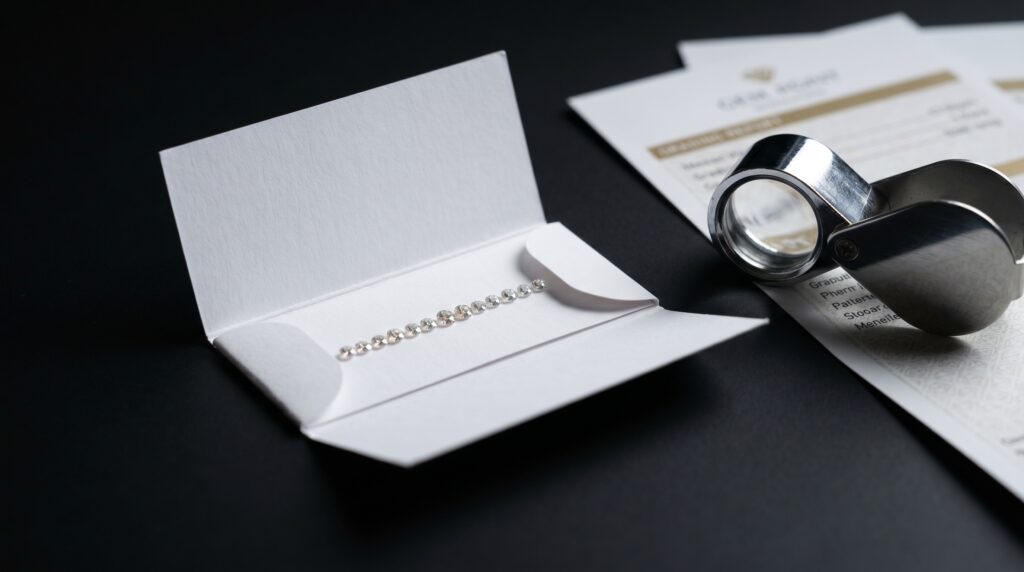
Bulk sourcing of melee diamonds wholesale India comes down to one thing above all else: parcel consistency. A 100-carat parcel that looks great in the top layer but degrades toward the bottom will cost you in returns and rework, and that kind of inconsistency is far more common than most first-time buyers expect.
Cut grading consistency matters more here than in almost any other diamond category, since a single off-grade stone in a visible setting stands out immediately. IGI and GIA both grade melee, though many Indian suppliers issue batch certificates for parcels rather than per-stone reports, with individual certification available on request for higher-value lots. A fancy cut diamond manufacturer working with baguette or princess melee should always ask whether calibration tolerances are documented in writing, not just verbally promised.
Rapaport pricing for melee tends to move differently than for larger stones, since labor and sorting costs make up a larger share of the per-carat price at small sizes. A diamond parcel India supplier who understands this will price more transparently than one quoting flat per-carat rates regardless of size, and that transparency is often the clearest signal of a supplier worth building a long-term relationship with.
For sourcing strategy and due diligence, the Diamond Wholesaler guide covers what questions experienced US manufacturers ask before committing to a new melee supplier relationship.
In my experience working with Surat-based melee suppliers, the biggest red flag is a supplier who cannot provide a consistent re-order. If a parcel they send today does not match the one from three months ago, that inconsistency will show up in your finished jewelry, often after it has already reached a retail customer.
Melee Diamond Jewelry Trends in the USA (2026 to 2027)
Eternity bands and stackable rings continue to dominate the fine jewelry case, and melee remains the backbone of both categories. Hidden halo settings, where a ring of melee surrounds the base of a center stone, have become a near-default request for new engagement ring designs, and that demand shows no signs of slowing.
Yellow gold settings paired with white melee have surged as part of a broader shift away from white metal dominance, a trend that mirrors what is happening with larger center stones as well. Two-tone designs, combining yellow gold bands with white gold or platinum melee settings, have also gained traction among buyers wanting a modern twist on a classic look.
Cultural moments and high-profile jewelry reveals continue to push demand for pave-heavy designs, particularly in tennis bracelets and huggie earrings. Industry estimates suggest lab-grown melee now accounts for a substantial and growing share of US melee purchases, driven largely by price advantages from Indian manufacturing. Fancy cut diamond jewellery incorporating baguette and trapezoid melee accents has also picked up momentum in modern minimalist designs, where clean geometric lines pair well with small stones cut to precise calibration.
How to Evaluate Quality in Melee Diamonds
When I assess a melee parcel, the first thing I check is not any single stone. It is whether the parcel holds together as a consistent group under a loupe.
- Cut quality and light return: Even small stones show brilliance, fire, and scintillation differences. Poorly cut melee with shallow pavilions or oversized table percentages looks dull even when set, and that dullness becomes obvious the moment the piece sits next to a well-cut center stone.
- Color consistency across the parcel: Pull stones from different areas of the parcel and compare them side by side, since color can drift within a single lot. A parcel graded as G to H on paper might still contain a handful of stones that read noticeably warmer.
- Clarity grade uniformity: A VS clarity grade on paper means little if some stones in the parcel show visible inclusions to the naked eye. Spot-checking a representative sample under magnification before committing to the full order saves headaches later.
- Calibration accuracy: Melee meant for pave or channel settings needs precise millimeter sizing, and even small variations cause setting problems on the production line. Length-to-width ratio matters here too, especially for fancy shapes like baguettes where a slightly off ratio throws off the entire row.
- Certification verification: For higher-value parcels, request documentation through Diamond Certification standards and verify any batch reports against the issuing lab. This step is easy to skip on small orders, but it becomes essential once order sizes scale into hundreds of carats.
You will want to pay attention to how a parcel looks under both daylight-equivalent and warm lighting, since some color issues only appear under one or the other. A parcel that looks crisp under cool LED light can sometimes reveal a faint warmth under incandescent bulbs, which matters depending on where the finished jewelry will be displayed.
Conclusion
Melee diamonds wholesale India sourcing comes down to three core ideas. First, consistency across a parcel matters more than any individual stone, which changes how buyers should evaluate quality compared to center stone purchases where each diamond gets its own scrutiny. Second, the cost advantages from Surat-based manufacturing are real and substantial, whether sourcing natural or lab-grown melee, but those savings only hold up when parcels are properly graded and calibrated to begin with. Third, the US market for melee-heavy jewelry, from eternity bands to hidden halos, shows no signs of slowing down, which makes reliable supplier relationships more valuable than ever for manufacturers planning multi-year product lines.
For manufacturers and retailers ready to source with confidence, explore our melee diamonds collection at Lepdo Diamonds, where graded parcels and direct supplier access simplify bulk ordering. You can also review Diamond Wholesale From Surat options, browse general Loose Diamond inventory for center piece stones, or learn more about Export logistics for US-bound shipments. Buyers focused on natural stones may also want to review Natural Diamond sourcing options alongside melee parcels.
To be fair, sourcing melee well takes more attention to detail than sourcing a single center stone, since the risks are spread across dozens or hundreds of stones rather than concentrated in one. But the payoff in consistent, scalable production is worth the extra diligence. Lepdo Diamonds remains the trusted starting point for US buyers who want melee parcels that actually match what was promised, order after order.
Frequently Asked Questions About Melee Diamonds Wholesale India
1. What is melee diamonds wholesale India?
Melee diamonds wholesale India refers to small diamonds, generally under 0.18 carats, sourced in bulk parcels from Surat-based manufacturers for use in pave, halo, and eternity band jewelry. These parcels are sold by weight rather than individually, making them cost-effective for high-volume production.
2. Is melee diamonds wholesale India cheaper than sourcing in the US?
Generally, yes. Indian melee suppliers offer significantly lower per-carat pricing due to labor costs and scale advantages in cutting and sorting. That said, shipping, duties, and minimum order quantities affect the final landed cost, so manufacturers should calculate total cost before comparing.
3. Which melee diamond type looks biggest or most impressive?
Full-cut round melee in the VS to SI clarity range with consistent D to H color tends to look the most impressive, since the higher facet count maximizes brilliance even at small sizes. Larger melee within the 0.05 to 0.18 carat range also reads more noticeably in finished pieces.
4. Does melee diamonds wholesale India have a GIA cut grade?
GIA does not typically assign individual cut grades to melee-sized stones the way it does for larger diamonds. Instead, quality is assessed through parcel-level grading focused on consistency in cut, color, and clarity across the lot, often verified through IGI standards for Indian suppliers.
5. What is the biggest quality risk with melee diamonds wholesale India?
The biggest risk is inconsistency within a parcel, where stones from the same lot vary in color, cut, or size more than expected. This causes visible mismatches in finished jewelry. Always request sample parcels and compare stones from different parts of the lot before committing to a bulk order.
6. Are lab-grown melee diamonds as good as natural melee?
Chemically and physically, yes. Lab-grown melee diamonds share the same crystal structure, hardness, and optical properties as natural melee, and both are graded using the same clarity and color standards. The main difference is origin and price, with lab-grown melee typically costing considerably less.
7. Which melee diamond type is best for an engagement ring?
Full-cut round melee remains the top choice for halo and pave engagement ring settings because of its high facet count and reliable brilliance. Baguette and trapezoid melee work well for side stones in vintage-inspired or Art Deco designs, depending on the overall ring style.
8. How do I choose a reliable melee diamonds wholesale India manufacturer or supplier?
Look for a supplier offering consistent re-orders, transparent parcel grading, and certification options through recognized labs like IGI or GIA. A documented track record with US-based manufacturers and willingness to provide sample parcels before bulk commitments are strong indicators of reliability.