Diamond Jewelry Manufacturers in Surat: From Raw Diamonds to Finished Jewelry
 by lepdogroup@gmail.com
1 comment
by lepdogroup@gmail.com
1 comment
Diamond jewelry manufacturers in Surat are vertically integrated production hubs that cut, polish, set, and export finished fine jewelry at wholesale prices. For USA buyers and retailers, sourcing directly from Surat-based manufacturers means lower costs without compromising GIA or IGI certified quality. Lepdo Diamonds connects American buyers to verified Surat manufacturers specializing in custom and ready-to-ship collections.
Nine out of ten diamonds on the planet touch Surat before they ever reach a jeweler’s case. Let that sink in for a second. If you’re sourcing finished diamond jewelry and you haven’t looked seriously at what diamond jewelry manufacturers in Surat are actually producing today, you’re working with an outdated map.
I’ve had this conversation with American retailers more times than I can count. They assume Surat means rough stones and basic cutting. What they find, once they actually look, is a city that has spent thirty years building something much bigger than a polishing hub. It’s a full manufacturing ecosystem: stones come in rough, and finished 14K gold ring settings, pendant necklaces, tennis bracelets, and bridal suites come out the other side, IGI and GIA certified and ready to ship to Houston or Chicago or wherever your store happens to be.
This post covers what that ecosystem looks like from the inside, which product categories Surat does best, how it stacks up against domestic sourcing, what buyers get wrong, and how to actually evaluate a piece once samples arrive on your desk.
What Diamond Jewelry Manufacturing in Surat Actually Means
People outside the trade picture Surat as a city of small cutting workshops, guys with loupes hunched over spinning wheels. That picture was never fully accurate, and it’s completely wrong today.
What Surat actually has is a dense, tightly organized cluster of manufacturing facilities where rough stone processing and finished jewelry production often happen inside the same building. The infrastructure that exists here, the polishing machinery, the CAD casting floors, the gold refining operations, took decades to build. It did not happen by accident.
Quick Info Box:
- Definition: Diamond jewelry manufacturers in Surat are companies that process rough or polished diamonds and produce finished, hallmarked jewelry pieces for wholesale, retail, or export.
- Key Types: Solitaire ring manufacturers, diamond pendant manufacturers, tennis bracelet specialists, custom bridal manufacturers, lab diamond jewelry producers, mixed gold-diamond jewelry factories.
- Best For: USA wholesale buyers, independent jewelry retailers, private label brands, and direct-to-consumer start-ups wanting certified quality at competitive prices.
- Key Advantage: Vertical integration and direct access to polished stone inventory cuts 30 to 50% off the finished jewelry price compared to buying through USA intermediaries.
Gold production here operates under BIS hallmarking standards, and the serious manufacturers all run IGI and GIA certification pipelines. Lepdo Diamonds works within this ecosystem directly, connecting verified production to the American market without the layers of markup that slow everyone else down.
Most Popular Types of Diamond Jewelry Produced in Surat, and Who They Are For
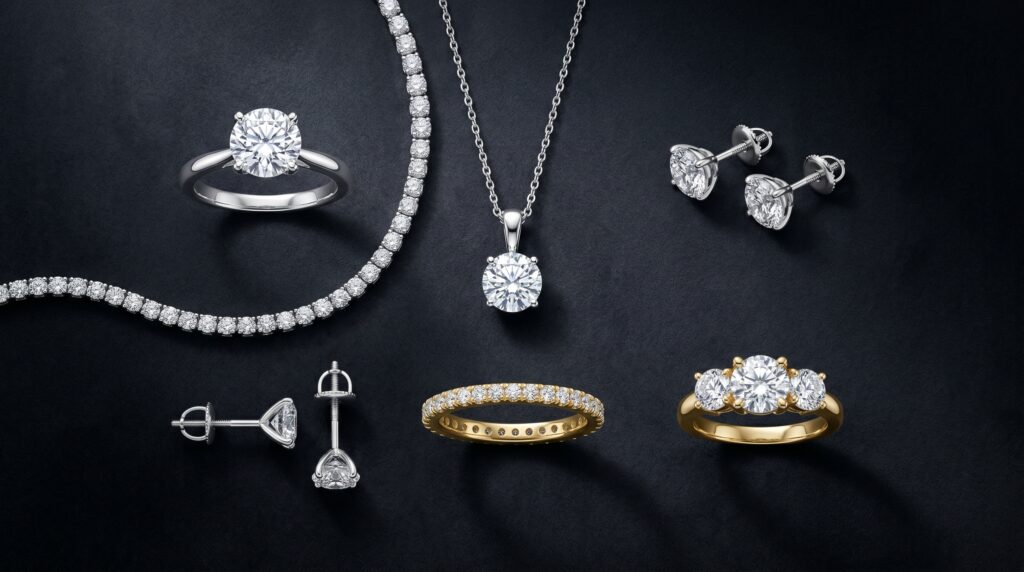
Diamond Solitaire and Bridal Rings
Engagement rings are where Surat’s USA export business is most concentrated. Think of it this way: every major American bridal retailer, from independent stores to regional chains, has at some point sourced solitaire settings from this city, whether they knew it or not.
Manufacturers here run the full range, from a classic four-prong round brilliant in a six-millimeter head to fancy shapes in princess, oval, pear, and cushion cuts. Most factories work with both natural and lab-grown diamonds without making you choose one or the other. A Diamond Ring from a Surat manufacturer typically comes with IGI documentation, 14K or 18K gold construction, and more flexibility on carat weight and color-clarity combinations than you’d get from a US-based competitor at the same price tier.
Diamond Pendant Necklaces
Pendants are growing faster than almost any other export category right now, and it’s not hard to see why. The price points work across a wide retail range, the styles travel well across customer demographics, and production lead times are short.
Surat’s pendant factories have gotten genuinely specialized. Some focus only on halo designs. Others do minimal bezel-set solitaires, or cluster styles, or geometric shapes for the fashion market. A Diamond Pendant Necklace built here can go from 0.10ct up to 2.00ct center stone without hitting the kind of pricing wall that kills the conversation at bigger American wholesale houses.
Tennis Bracelets and Eternity Bands
Here’s where vertical integration really pays off. Tennis bracelets and pave eternity bands live or die on stone matching. Every diamond needs to be the same diameter, the same color face-up, the same depth. Because Surat manufacturers pull directly from in-house polished stone inventory, they can assemble matched lots faster and tighter than anyone buying stones on the open market. The price difference on a matched 3-carat tennis bracelet versus sourcing that same piece through a US jobber is not small.
Diamond Earrings
Studs and diamond hoop variations make up a significant slice of wholesale diamond jewelry India export volume. This category tends to attract fashion retailers and department store buyers who want a steady supply of certifiable, consistently graded product they can price into their mid-range without friction.
Custom Bridal and High-Value Pieces
CAD design, wax casting, stone selection, setting, finishing, hallmarking, and export documentation, a growing number of Surat manufacturers now handle the entire chain in-house. For American brands building a private label bridal collection, that means 4 to 8 week turnaround on custom diamond jewelry India orders without needing to manage five different vendors.
Lab Diamond Jewelry
Lab diamond jewelry India production scaled up significantly after 2022 and has kept growing. Surat runs CVD and HPHT stone production alongside natural diamond manufacturing, and the finished jewelry quality is identical. For retailers targeting value-conscious or sustainability-minded shoppers, lab-grown from Surat can hit 40 to 70% lower price points versus natural-stone equivalents while still carrying IGI documentation.
Wholesale Gold Diamond Jewelry
Gold diamond jewelry manufacturers in India are heavily concentrated in Surat. The city produces in 10K, 14K, 18K, and 22K across yellow, white, and rose gold. Most wholesale programs offer mixed metal options within the same collection, which American retailers find useful for covering a broader customer base without managing separate supplier relationships.
Surat Manufacturers vs. USA-Based Manufacturers: Where the Difference Actually Shows Up
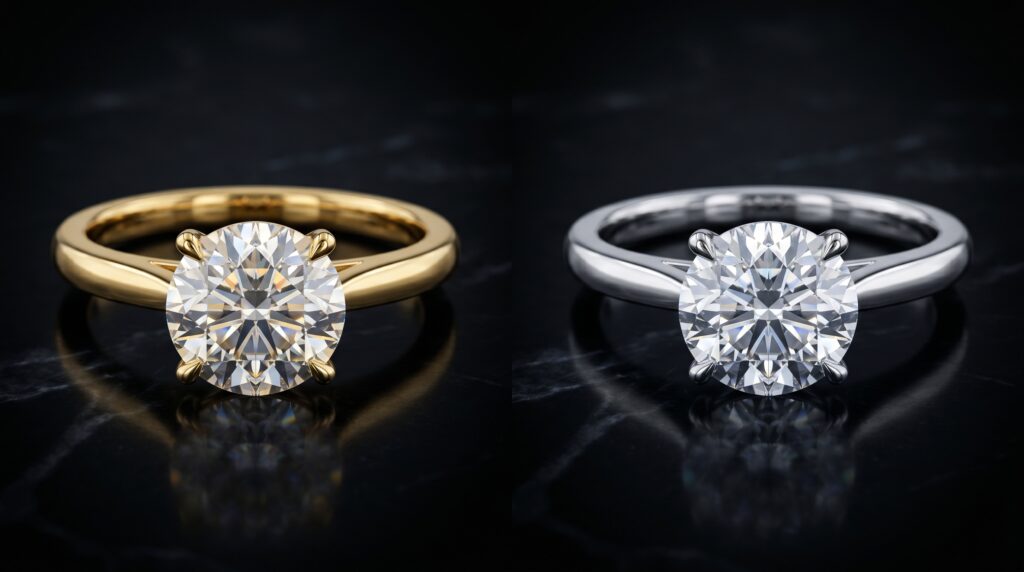
Most buyers who’ve sourced from both will tell you the comparison isn’t really about quality anymore. That debate was settled years ago. It’s about margin, flexibility, and what kind of supply chain headaches you’re prepared to manage.
Here is what the side-by-side looks like in practical terms:
| Factor | Surat Manufacturers | USA-Based Manufacturers |
|---|---|---|
| Per-Unit Cost | 30 to 50% lower at comparable quality | Higher due to labor and overhead |
| Customization | High, with in-house CAD and casting | Available, but at a meaningful premium |
| Certification | IGI and GIA, both widely accessible | GIA standard, IGI less consistent |
| Lead Time | 3 to 8 weeks custom, stock ships fast | 2 to 6 weeks custom |
| Minimum Order | Flexible, often 5 to 20 pieces | Higher MOQ for unit economics |
That said, domestic manufacturers do win on a few things. Communication is easier, time zones don’t work against you, and if something goes wrong legally, your recourse is cleaner. For retailers who need rapid replenishment, or who have country-of-origin labeling requirements, having a domestic backup matters.
The approach I see working best for mid-size American retailers is a hybrid: build core inventory with a verified Diamond Wholesaler partner in Surat, and keep a domestic relationship for speed-to-market situations. You get the margin advantages from India without giving up domestic responsiveness.
How to Choose the Right Diamond Jewelry Manufacturer in Surat for Your Business
- Know your product category before you start shopping. Diamond ring manufacturers India operations are not the same as pendant factories or bracelet houses. The skills, equipment, and stone inventories are genuinely different. Ask for a product portfolio, not a price sheet. Specialization in Surat runs deep, and a manufacturer that’s excellent at solitaires may produce mediocre pave work.
- Match scale to your actual volume. A 500-person factory is not going to care much about your 80-piece quarterly order. A 15-person workshop will care a lot, and you’ll get better attention, but they may not have capacity to grow with you. Be honest about where you are.
- Confirm what’s done in-house versus outsourced. Some Surat manufacturers outsource setting work to neigh boring workshops. That’s not automatically a problem, but you need to know about it. Ask specifically whether Prong Setting, Bezel Setting, and Pave Diamonds construction happen on their floor.
- Get specific about certification. Which lab do they use? Can they supply IGI or GIA paperwork for every stone above 0.18ct? Can they turn around GIA on larger stones when a customer requests it? Vague answers here are a red flag.
- Understand gold compliance for US import. BIS hallmarking covers India’s domestic standards, but USA karat stamping rules are separate. Make sure your manufacturer knows the difference and has actually exported to the American market before, not just in theory.
- Ask directly about lab-grown options. If your customer base skews younger, you are going to need a manufacturer with a real lab diamond jewelry India offering, not just a token line. Many Surat factories now run natural and lab-grown production in parallel.
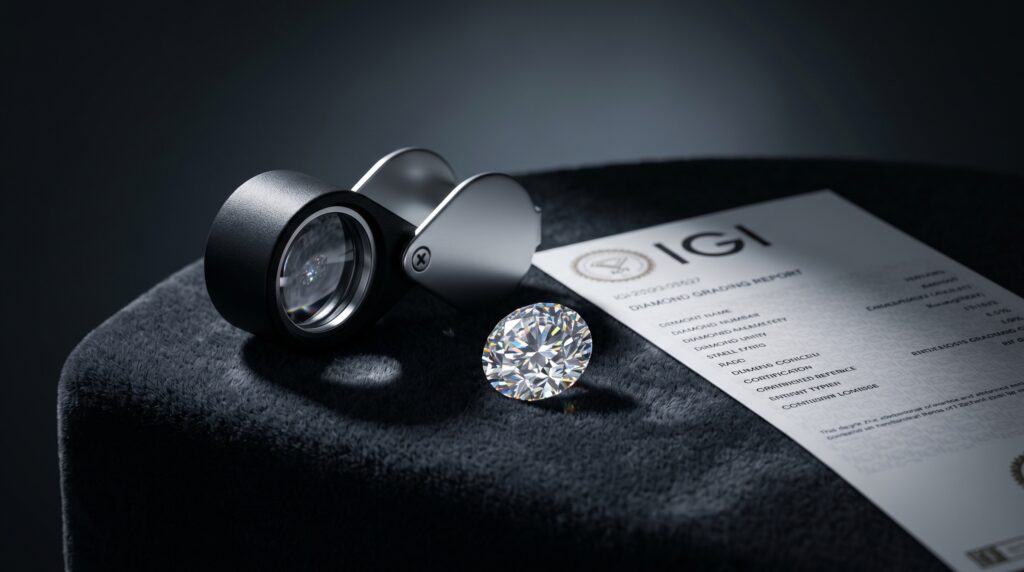
Before you finalize your choice, order samples. Three to five pieces minimum. Inspect them under a 10x loupe before making any volume commitment. No amount of portfolio photography or reference calls substitutes for having the actual product in your hands.
What B2B Buyers and Diamond Manufacturers Should Know Before Placing an Order
When sourcing from diamond jewellery manufacturers India at a business level, the things that kill deals, or blow up after delivery, are almost never visible in a catalog or a price list.
Cut grading consistency matters more in finished jewelry than most B2B buyers realize. A GIA cut grade on a round brilliant is standardized. But fancy shape diamonds used in pave work, channel settings, or matched bracelet lines are graded differently across labs and sometimes inconsistently within the same lot. IGI has tightened its standards over the past few years, but variation still happens. Ask for stone measurement spreadsheets alongside certificate numbers. Diameter spread and table percentage matter when you’re matching stones at scale.
Rapaport pricing is still the benchmark for natural polished diamonds at the manufacturer level. Most experienced diamond industry buyers know how discount-to-Rap negotiations work. If you don’t, learn before you sit down to negotiate. Lab-grown pricing is not Rapaport-based; it tracks indices like IDEX Lab, which moves differently and often faster.
For the Diamond Industry context that affects your actual cost: USA import duties on finished jewelry from India are currently structured under specific trade agreement terms. Always ask for a landed cost number, not just an FOB Surat figure. A piece that looks like a $90 landed cost at the factory can hit $130 by the time it clears customs and reaches your warehouse.
In my experience, the single biggest B2B mistake I’ve watched buyers make is obsessing over stone cost and barely glancing at metal quality. A 14K gold setting with visible porosity or prongs that weren’t properly finished will generate returns. It doesn’t matter how clean the diamond is.
Diamond Jewelry Trends Shaping the USA Market in 2026 and 2027
The American fine jewelry market right now is genuinely split, and both directions are creating real business for Surat manufacturers.
On one side, Diamond Jewelry Trends toward minimal everyday wear are accelerating. Thin stacking bands, small solitaire pendants under 0.25ct, understated studs that work from the office to a dinner out, these are selling well at the $500 to $2,000 retail price point. Diamond Minimal Jewelry is exactly where Surat’s production economics create the most competitive advantage for US retailers. You can price it attractively, maintain a reasonable margin, and still offer IGI-certified stones.
On the other side, social media visibility has pushed demand for statement pieces. Three-stone engagement rings, wide tennis necklaces, bold pave bangles. Pieces that read from across a room. Several of the larger Surat manufacturers have invested seriously in premium-tier production lines to capture this American buyer segment.
According to figures from the Jewelers of America, US diamond jewelry retail sales reached approximately $39 billion in 2023, with bridal driving the largest share. The manufacturers in Surat track that number closely. The production investments they’ve made over the past five years aren’t accidental.
How to Evaluate Quality in Diamond Jewelry from Surat
When I assess a finished diamond jewelry piece from any manufacturer, the first thing I check is not the certificate. Certificates don’t tell you whether the prongs are going to hold five years from now.
What I look at first is how the diamond is seated. Here are the five things I check before I get anywhere near paperwork:
- Prong geometry under magnification. Prongs should be evenly spaced around the stone, rounded at the tip, and not pressing into the girdle at an angle. A prong that’s biting the girdle is going to chip that stone. Sharp or uneven prongs are a quality control failure and a retail liability.
- Light performance in motion. Brilliance, fire, and scintillation in a mounted stone depend on both cut quality and setting depth. I’ve seen GIA Excellent cut diamonds look completely dead inside a bezel that was built too tall. You need to see the piece moving under a standard light source, not just sitting still under the supplier’s photography setup.
- Metal surface quality. Polish sections should be clean. No tool marks, no drag lines, no pitting. Porosity in the gold, those tiny surface pits that mean the casting wasn’t done properly, is one of the first things a retail customer will notice under any kind of light.
- Certificate-to-stone match. The laser inscription sits on the girdle and is visible under 10x. Confirm it matches the report number on the paperwork every time for pieces above 0.18ct. This matters more with certified diamonds sourced from a new supplier.
- Actual metal weight. Weigh the piece. It should come within 5% of the stated weight on the invoice. Cutting metal weight is one of the easiest shortcuts a manufacturer can take, and it’s one of the first places quality control slips.
You will want to pay particular attention to clarity grade consistency when evaluating a matched lot for pave or channel-set pieces. An SI1 and an I1 can look nearly identical in a finished mounting, especially under the fluorescent lights in a trade show booth.
Conclusion
The core case for working with diamond jewelry manufacturers in Surat comes down to three things, and none of them are complicated. First, the cost advantage is real and substantial. Buyers who haven’t tested it are genuinely leaving margin on the table, often 30 to 50 cents on every dollar. Second, the certification infrastructure has matured to the point where IGI and GIA documentation from Surat is as reliable as anything produced domestically.
The old concern about paperwork quality from Indian manufacturers has largely been resolved by manufacturers who export to demanding American clients regularly. Third, the customization depth available at Surat’s mid-tier factories, CAD, in-house casting, private label bridal, matched lot assembly, matches what American brands pay a serious premium for at home.
Finding the right manufacturer still takes work. Samples matter. References matter. A good pre-shipment inspection protocol matters. But the access is there for any buyer serious enough to use it.
Lepdo Diamonds was built to make that access straightforward, connecting American buyers to certified, accountable production from diamond jewelry manufacturers in Surat without the uncertainty that makes first-time sourcing feel like a gamble.
The world’s diamonds start in Surat. The question is just how close to the source your business is willing to go.
Frequently Asked Questions About Diamond Jewelry Manufacturers in Surat
1. What are diamond jewelry manufacturers in Surat?
Diamond jewelry manufacturers in Surat are production facilities that process rough or polished diamonds into finished pieces, rings, pendants, bracelets, earrings, and more, ready for retail or wholesale. Surat handles roughly 90% of global diamond cutting and polishing, giving its manufacturers direct access to stone inventory at every price tier. Most established manufacturers offer IGI and GIA certification and export regularly to the USA.
2. Is buying diamond jewelry from Surat cheaper than sourcing from USA manufacturers?
Yes, typically 30 to 50% cheaper per unit at comparable quality levels. Lower labor costs, direct access to polished inventory, and fewer intermediary markups all contribute. USA-based manufacturers offer faster logistics and easier communication, but on pure unit cost, Surat wins consistently. Even after accounting for import duties and shipping, landed cost from Surat is lower for most categories at meaningful order volumes.
3. Which type of diamond jewelry looks most impressive when sourced from Surat?
Halo engagement rings and multi-stone bridal sets tend to showcase what Surat does best. Tight stone matching, clean pave work, and well-finished prong setting are all areas where the city’s skill base runs deep. Tennis bracelets and pave eternity bands are another strong category because Surat manufacturers can pull matched stone lots directly from in-house polishing inventory, which is nearly impossible to replicate at the same price point.
4. Do Surat diamond jewelry manufacturers provide GIA certification?
Most reputable manufacturers work with both IGI and GIA. IGI is more commonly used for production-level finished jewelry because the turnaround is faster and the per-cert cost is lower. GIA is available and regularly requested by American buyers for higher-value pieces, typically above 0.50ct. The key is specifying which lab you want before production starts. Changing certification requirements after manufacturing adds time and cost.
5. What is the biggest quality risk when buying from diamond jewelry manufacturers in Surat?
The most common issue is a gap between sample quality and bulk production quality. Samples often get the best setter in the factory. Bulk orders don’t always get the same attention. Other common problems include metal weight shortfalls, mismatched stones in pave lots, and certification delays on larger stones. A third-party pre-shipment inspection is strongly worth the cost on any first order above $10,000.
6. Are lab-grown diamond jewelry pieces from Surat as good as natural diamond jewelry?
From a craftsmanship standpoint, yes. Lab-grown diamonds are chemically and physically identical to natural diamonds, and IGI grades them on the same 4Cs scale. Many Surat manufacturers run lab-grown and natural diamond production on the same lines with the same setters and the same quality controls. The difference is in rarity and market perception, not in how the finished piece looks or holds up.
7. Which Surat diamond jewelry style works best for the USA engagement ring market?
Round brilliant solitaires are still the most consistent seller and Surat is very strong in that category. To be fair, round diamonds still dominate engagement ring sales nationally, but oval and cushion shapes have taken real market share since 2020 and continue to grow. For a retailer new to bridal sourcing through a Surat partner, a mixed collection covering round, oval, and cushion in the 0.50ct to 1.50ct range gives the widest commercial appeal without overcommitting to a single shape.
8. How do I find a reliable diamond jewelry manufacturer in Surat?
Start with GJEPC membership verification, that’s the Gem and Jewellery Export Promotion Council, and confirms the manufacturer is a registered exporter. Ask for references from current USA buyers, not just a contact list. Request certified samples before any production commitment, and conduct a video factory tour or hire an independent sourcing agent in Surat to inspect the facility. Get the quality specs, stone grades, metal weights, and delivery terms in writing before production begins.