Diamond Wholesalers in Gujarat: Finding the Best Diamond Deals in India’s Diamond Hub
 by lepdogroup@gmail.com
0 comments
by lepdogroup@gmail.com
0 comments
Diamond wholesalers in Gujarat are companies and trading houses that supply certified polished diamonds at bulk pricing directly from India’s largest production and trading centers, Surat and Ahmedabad. Gujarat accounts for over 90 percent of the world’s diamond cutting and polishing output, making it the single most important sourcing destination for US retailers, manufacturers, and investors. Lepdo Diamonds connects verified US buyers directly with trusted Gujarat wholesale suppliers.
I still remember the first time I walked the trading floor of the Surat Diamond Bourse. It was a Thursday morning, around 9 a.m., and the place was already buzzing. Dealers moving between tables, stone parcels wrapped in kite paper, negotiations happening in Gujarati and English and sometimes both at once. What struck me most was not the volume, though the scale is genuinely staggering. It was how casual the whole thing felt. Billions of dollars in diamonds, changing hands in conversations that looked like neighbours catching up over tea.
That experience reshaped how I think about sourcing. If you’re a US buyer who has never seriously worked with diamond wholesalers in Gujarat, you’re operating at a real disadvantage, not just a pricing one. You’re missing access to the world’s most developed diamond cutting and trading ecosystem, and the relationships that make it work.
Gujarat, and Surat specifically, cuts and polishes somewhere north of 90 percent of the world’s diamonds by volume. That’s not a marketing claim from a trade association. It’s the operational reality that shapes pricing, availability, and quality standards for the entire global diamond industry. When you buy a certified stone from a US retailer, there’s a very good chance it passed through someone’s hands in Surat before it ever arrived in a display case in New York or Chicago.
This piece covers how that market actually works, who the players are, how to find good suppliers, and what US buyers, whether you’re a retailer, a manufacturer, or someone shopping for an engagement ring, need to know before engaging with the Gujarat diamond market for the first time.
What Is a Diamond Wholesaler in Gujarat?
Walk into any sizeable diamond market in Surat or Ahmedabad and you’ll encounter three different types of operations selling roughly similar-looking goods at sometimes very different prices. Understanding who you’re actually talking to is the first practical skill any US buyer needs.
A Diamond Wholesaler in Gujarat, at its most basic, is a trading business that buys polished stones in volume from manufacturers, often directly off the factory floor or through the trading floor of the Surat Diamond Bourse, and resells them to retailers, other dealers, or direct buyers. Their pricing advantage over US domestic wholesale is structural. They sit physically and operationally close to production, which cuts out at least two or three distribution layers that US supply chains typically include.
The range of what Gujarat wholesalers carry is wider than most first-time buyers expect. You’ll find dealers who specialize strictly in melee, stones under 0.18 carats used in pave and halo settings. You’ll find others who deal exclusively in large certified center stones, IGI and GIA graded, 1 carat and up. And you’ll find everything in between, including lab-grown specialists who source directly from the CVD reactor facilities that have made Surat the global capital of lab-grown diamond production.
Quick Info
Definition: A Gujarat diamond wholesaler sources polished stones from Surat’s cutting and polishing factories and sells certified parcels or individual stones to US retailers, manufacturers, and B2B buyers at pricing that reflects their proximity to production
Key Types: Parcel wholesalers, certified center stone dealers, lab-grown specialists, fancy shape traders, melee and calibrated stone suppliers
Best For: US jewelry retailers expanding inventory, manufacturers sourcing certified melee, direct buyers seeking engagement ring value without a domestic retail markup
Key Advantage: Eliminating two to three US distribution layers typically delivers 40 to 70 percent savings versus domestic wholesale pricing on equivalent certified goods
For a deeper look at how pricing tiers and trade terms work across the Gujarat supply chain, the Diamond Wholesale glossary at Lepdo Diamonds walks through each level in practical detail.
Most Popular Types of Gujarat Diamond Wholesalers and Who They Are For
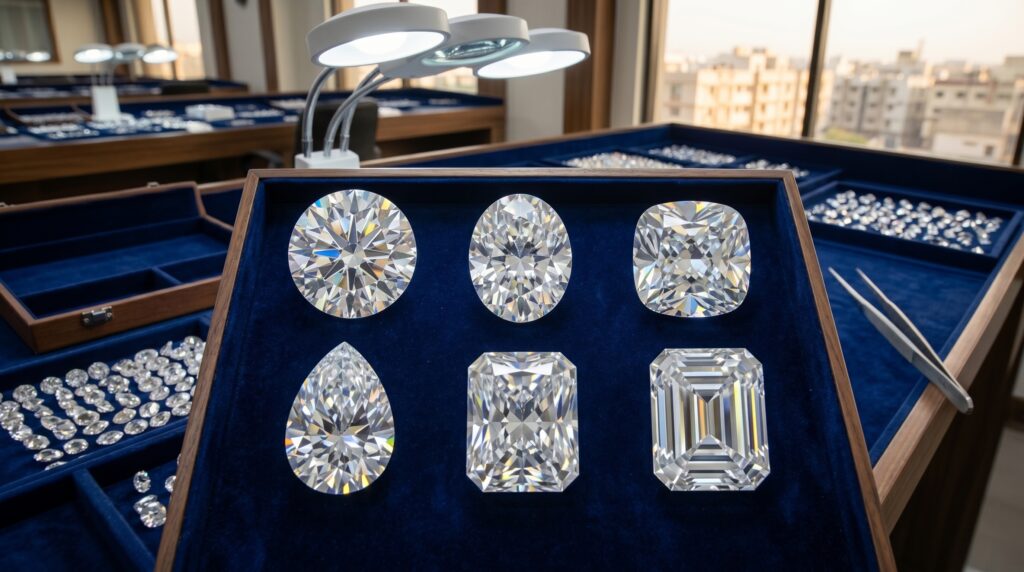
The Gujarat diamond trade is not one market. It’s a collection of specialized segments that have developed over decades around specific stone types, buyer profiles, and production methods. Buying from the wrong segment for your needs is one of the most common and costly mistakes first-time US buyers make.
1. Certified Round Brilliant Wholesalers
This is the backbone of Gujarat’s wholesale business, and it’s where most US retail buyers start. These operations carry IGI and GIA certified round brilliants across a wide size range, typically 0.30 carats up to 3 carats, with consistent inventory in the commercial grades that drive the most US retail volume: G to I color, VS2 to SI1 clarity. Pricing is negotiated against the Rapaport Natural or Rapaport Lab-Grown price sheet, and discounts deepen significantly with volume and established relationship history. Most major US jewelry retailers, the ones doing real volume, source at least part of their solitaire center stone inventory through Gujarat round brilliant dealers.
2. Melee and Parcel Suppliers
If you’re manufacturing jewelry in the US, this is where you can genuinely transform your cost structure. Melee suppliers in Gujarat sell calibrated matched lots, sorted by millimeter size, color range, and cut grade consistency, in quantities that let US manufacturers fill pave settings, eternity bands, and halo designs without the per-stone certification costs that make domestic melee sourcing expensive. The consistency these suppliers deliver has gotten good enough that US manufacturers who were skeptical five or six years ago have largely converted. I’ve seen manufacturers cut their melee costs by 50 percent or more by switching to Gujarat parcel sourcing with the right supplier relationships in place.
3. Fancy Shape Diamond Traders
This segment has changed more than any other in the Gujarat market over the past three years. Oval, cushion, elongated radiant, pear, and emerald cuts have gone from a secondary offering to a primary demand driver, and the better Gujarat fancy shape traders have invested heavily in the cutting talent and equipment to meet that demand. The best of them now carry curated IGI-graded inventories with documented length-to-width ratios, and they’ll send you video of individual stones before you commit to a purchase. That’s a significant shift from how this segment worked even two or three years ago.
4. Lab-Grown Diamond Wholesalers:
Surat is where the overwhelming majority of the world’s CVD lab-grown diamonds are made, and the wholesalers who source directly from those reactor facilities can offer US buyers prices that are 60 to 80 percent below equivalent natural diamonds. This is the fastest-growing segment in Gujarat by a wide margin, and the quality gap between lab-grown and natural, in terms of cut, certification, and optical performance, has essentially closed for commercial-grade goods.
5. Investment Grade Certified Stone Dealers:
A smaller and more selective category, these dealers focus on individually certified stones above 1.50 carats, often with GIA reports and the specific color and clarity combinations that US buyers treating diamonds as alternative assets want documented. Pricing is less negotiable here, but the access to stones you simply cannot find through US channels is the point.
6. Rough and Semi-Polished Suppliers:
A niche category, but genuinely useful for US manufacturers who want to control the final cut quality domestically. Semi-polished goods from Gujarat let you benefit from lower rough acquisition costs while finishing the stone yourself. It requires the right facilities and expertise, but the margin opportunity is real for the right buyer.
Gujarat Diamond Market vs Mumbai Diamond Market: The Real Difference
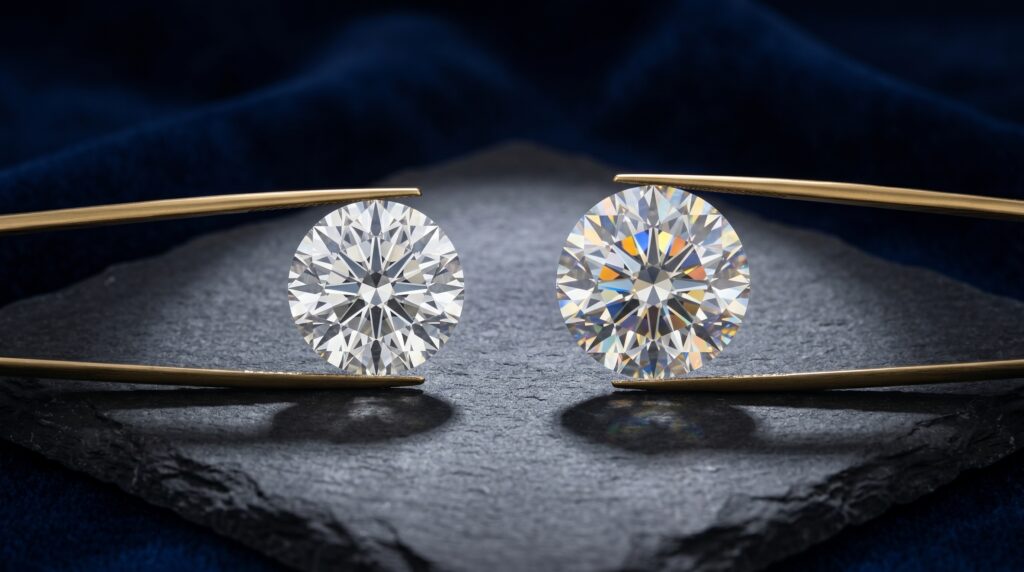
US buyers who do enough research usually end up asking the same question: should I source through Gujarat or through Mumbai? The honest answer is that it depends on exactly what you’re buying, and experienced B2B buyers typically maintain relationships in both places.
| Factor | Gujarat Diamond Market | Mumbai Diamond Market |
| Primary Strength | Manufacturing and polishing; physically closest to production | Trading and brokerage; broader access to specialty diamond categories |
| Pricing | Lower on polished goods due to direct manufacturer relationships | More competitive on rough and specialty items; typically higher on polished |
| Lab-Grown Access | World’s largest CVD and HPHT wholesale supply by a wide margin | Growing lab-grown segment, but clearly secondary to Surat |
| Certification Standards | IGI is dominant; GIA well-represented for larger sizes and investment goods | Both GIA and IGI widely available across all size categories |
| Best For | US retailers, manufacturers, melee and parcel buyers, lab-grown sourcing | Rough buyers, colored stone specialists, large investment grade certified stones |
In practice, most serious US B2B buyers end up with supplier relationships in both cities. Gujarat is simply unbeatable for polished rounds, melee, lab-grown goods, and fancy shapes in the 0.30 to 3.00 carat range. Mumbai adds value when you need rough, colored specialty goods, or very large certified stones where GIA grading and investment-grade documentation matter most. For most US retail and manufacturing sourcing needs, though, Gujarat is where you should start.
The Diamond Bourse glossary at Lepdo Diamonds explains how the trading floors in Surat and Mumbai actually operate, including membership requirements, how US buyers typically gain access, and what a typical trading day looks like.
How to Choose the Right Gujarat Diamond Wholesaler for Your Business
Here is what the sourcing decision actually comes down to for most US buyers working with Gujarat for the first time. There are six things that separate a productive supplier relationship from an expensive lesson.
- Certification requirements first, price second. The Gujarat diamond market carries both certified and uncertified supply, often from the same building, sometimes from the same dealer. Insist on individual IGI or GIA certification for anything above 0.30 carats. Mixing certified and uncertified goods in your inventory creates downstream disputes that cost far more than any upfront savings.
- Know whether you need parcels or individual stones. If you’re a manufacturer sourcing melee for production, parcel suppliers are your market. If you’re building a retail case with center stones, find a wholesaler who will supply per-stone IGI certificates and allow individual video review before payment. These are different operations with different pricing structures, and conflating them leads to bad expectations on both sides.
- Match the supplier to your quality tier. A Gujarat dealer who specializes in VS2 to SI1 commercial goods is the right partner for a mid-market US retailer. An investment buyer who needs D-F color with GIA triple excellent grades needs a different type of operation entirely. Being clear about your quality tier upfront saves everyone time.
- Benchmark against Rapaport before you negotiate. Most established Gujarat wholesalers price at a percentage discount to Rapaport Natural or Rapaport Lab-Grown. If you go into negotiations without knowing your reference point, you’ll have no real way to evaluate whether you’re getting a competitive deal. Pull the current Rapaport sheet before any serious conversation starts.
- Think about your lab-grown versus natural split. Gujarat now supplies both natural and lab-grown certified diamonds at scale. US retailers carrying both can often consolidate sourcing with a single Gujarat supplier, which simplifies logistics, builds relationship depth faster, and often improves payment terms. The Diamond Market Demand glossary at Lepdo Diamonds covers how US retail demand for each category is actually shifting in 2026.
- Understand payment terms before you commit. First-time buyers should expect to pay upfront. Established relationships with proven order history typically open up 30 to 60 day terms with approved buyers. The Diamond Trade Finance guide covers how to structure payment and financing for larger Gujarat diamond purchases in practical terms.
Before you finalize your supplier shortlist, ask for references from at least two US buyers who have placed orders with that Gujarat dealer in the past year. Reputation in this market is traceable and verifiable. Any legitimate supplier will provide references without making it a negotiation.
What B2B Buyers and Diamond Manufacturers Should Know About Gujarat Sourcing
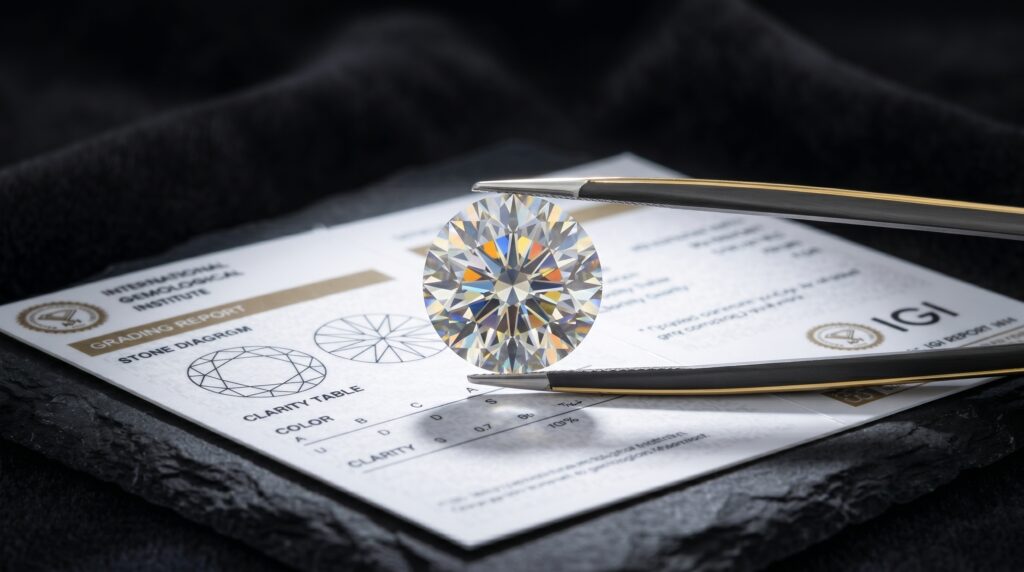
The truth is, working with Gujarat at a B2B level is genuinely different from placing a retail order with a US distributor. The savings are real, but so are the operational requirements.
The biggest consistent issue I see US buyers run into is parcel inconsistency. When you order a 200-piece lot of 0.50-carat rounds from a Gujarat supplier, you’re trusting that the IGI grading is uniform across the full lot. Some Gujarat wholesalers are completely reliable on this. Others selectively submit their best-performing stones for individual grading while selling the rest on batch reports or memo terms that don’t carry the same accountability. The fix is simple: insist on individual IGI certificates for every stone in any commercial-grade parcel above 0.20 carats. Don’t negotiate on this. It protects you, it protects your customers, and any supplier worth working with will accommodate it.
In my experience working directly with Gujarat Diamond Dealers over the past decade, the single most reliable signal of a trustworthy operation is whether they disclose post-growth treatment status on lab-grown goods before you ask. Not in response to a pointed question. Voluntarily, upfront, as part of how they describe the stone. That habit, or its absence, tells you more about a supplier than any number of references.
US Customs compliance is another area where B2B buyers consistently underestimate the complexity. Kimberley Process certification applies to natural rough, but US importers are responsible for accurate country of origin documentation on polished goods as well. Before you place your first significant import order from Gujarat, get a licensed US customs broker who knows diamond imports from India specifically. The compliance requirements are manageable, but they’re not something to figure out after the goods are already in transit.
The Diamond Wholesaler guide at Lepdo Diamonds walks through the full due-diligence checklist experienced US buyers use when qualifying new Gujarat suppliers, including what to ask about reactor type, certification lab affiliations, and return and dispute policies.
Diamond Jewelry Trends in the USA Driving Gujarat Wholesale Demand (2026 to 2027)
The US lab-grown diamond market crossed 12 percent of total diamond jewelry retail value in early 2026. That number was under 4 percent three years ago. The growth has been fast enough that it caught a lot of US retailers under inventoried on lab-grown goods, and the Gujarat wholesale market, which supplies the majority of that volume, has been working to meet demand that outpaced even optimistic projections.
The biggest commercial shift happening right now in Gujarat wholesale supply is the move toward fancy shapes in larger sizes. Oval, elongated cushion, and elongated radiant cuts in the 1.50 to 3.00 carat range are generating the strongest reorder velocity among US mid-market retailers. Round brilliants are not going away, and their light return advantage is still real, but the proportion of fancy shape orders from Gujarat has risen noticeably across multiple retail partners I follow closely.
Design-wise, 2027 is shaping up to be the year of the East-West setting, where oval and cushion diamonds are oriented horizontally in the mounting for a distinctly modern look. Yellow gold with colorless certified diamonds has also reversed a decade of white metal dominance in the US engagement ring market, and that combination has been particularly strong for Gujarat-sourced lab-grown stones. The diamond wholesale Gujarat market responds to these design shifts faster than any other sourcing region because the production pipeline is so direct.
How to Evaluate Quality When Buying from Gujarat Diamond Suppliers
When I assess a Gujarat diamond parcel for the first time, the first thing I check is not the price sheet. It is the proportions data across the lot. Table percentage and depth percentage tell me immediately whether the cutter was optimizing for light performance or for carat weight retention. Under margin pressure, Gujarat cutting facilities default to weight retention. That trade-off costs the buyer in brilliance and scintillation, and it shows up in how the stone actually performs in a setting, not just on paper.
You will want to pay attention to these five things before committing to any meaningful Gujarat wholesale purchase:
- Proportions over paper grades. For round brilliants, the sweet spot is table between 54 and 58 percent, total depth between 61 and 62.5 percent. Stones outside that range sacrifice fire and scintillation for carat weight. No color or clarity grade compensates for a stone that leaks light.
- Ask for light performance imaging on anything above 1 carat. ASET and ideal scope images show actual light return, contrast, and leakage in ways that a certificate grade simply cannot. Reputable Gujarat suppliers can provide these. If a dealer cannot produce them on request, that tells you something about how they evaluate their own inventory.
- Look at color in real light, not just on the certificate. Some Gujarat diamonds carry a faint brown or gray modifier that the IGI’s single letter color grade does not fully capture. View the stone face-up in neutral, daylight-equivalent light before you commit. What looks like an H on paper can look warmer or cooler than expected depending on that modifier.
- Verify every certificate number independently. Pull the certificate on the IGI or GIA portal directly before payment. Counterfeit lab reports exist in the Gujarat market, concentrated at the lower price tiers. The Diamond Price guide at Lepdo Diamonds benchmarks current certified versus uncertified pricing, which helps you spot offers that are priced suspiciously well for what they claim to be.
- Test the parcel before the full order. For melee and commercial parcel goods, request a sample lot before committing to the full quantity. Any Gujarat supplier worth working with will accommodate a sample request without applying restocking fees. Resistance to this request is a red flag that parcel consistency is not what they’re claiming.
Conclusion: Why Gujarat Diamond Wholesalers Deserve Your Serious Attention
Three things have become clear after years of working directly in the Gujarat diamond trade.
The pricing advantage is not a temporary arbitrage opportunity. It is built into the cost structure of how diamonds are made and traded in this part of the world, and it compounds significantly for buyers who invest in direct supplier relationships rather than sourcing through US intermediaries who have already taken their margin. The gap between Gujarat wholesale pricing and US domestic wholesale pricing has actually grown, not shrunk, over the last three years.
The quality infrastructure is genuinely mature now. IGI’s Surat operations, the consistency of cut grading across the better Gujarat wholesalers, and the availability of video inspection before purchase have all improved to a point where the operational experience of sourcing from Gujarat is not that different from sourcing domestically, once you have your first two or three supplier relationships working well.
And the demand tailwinds are real. US consumer appetite for lab-grown diamonds, fancy shape center stones, and larger certified goods is growing, and diamond wholesalers in Gujarat are positioned better than any other source in the world to meet that demand at scale. To explore certified natural and lab-grown diamonds sourced directly from Gujarat’s best manufacturers, the Diamond Marketplace at Lepdo Diamonds is the right starting point.
You can also browse verified top diamond manufacture in surat options and access loose diamond wholesale from surat inventory with current pricing. The Gujarat diamond trade has been quietly running the global diamond industry for decades. For US buyers who learn how to work with it directly, that relationship is one of the most commercially durable advantages in modern jewelry sourcing.
Frequently Asked Questions About Diamond Wholesalers in Gujarat
1. What are diamond wholesalers in Gujarat?
Diamond wholesalers in Gujarat are trading companies and individual dealers who source polished diamonds directly from Surat’s cutting and polishing factories and sell them at bulk pricing to US retailers, manufacturers, and direct buyers. Gujarat, specifically Surat and Ahmedabad, processes more than 90 percent of the world’s diamonds by polishing volume, making it the world’s primary wholesale supply point for both natural and lab-grown certified stones.
2. Are diamonds cheaper from Gujarat wholesalers than US suppliers?
Yes, often significantly. Direct Gujarat sourcing eliminates multiple US distribution layers, typically delivering 40 to 70 percent savings compared to domestic wholesale on equivalent certified goods, depending on stone category and order volume. Lab-grown diamonds sourced directly from Gujarat CVD manufacturers carry the most dramatic price advantage, frequently 60 to 80 percent below US retail pricing for equivalent certified stones.
3. Which diamond type from Gujarat looks the most impressive for an engagement ring?
A Gujarat-sourced oval CVD diamond in the 2.00 to 2.50 carat range, cut to a length-to-width ratio between 1.35 and 1.50, delivers exceptional face-up size and finger coverage at a price that would buy a 1.00 carat round brilliant domestically. That said, round brilliant diamonds still lead US engagement ring sales overall, and their light return is genuinely better for buyers who want maximum brilliance above everything else.
4. Does buying from a Gujarat diamond wholesaler mean the stone gets a GIA cut grade?
Not automatically. Most Gujarat suppliers certify through IGI. GIA issues cut grades for round brilliants only, not fancy shapes. IGI assigns cut grades to both rounds and popular fancy shapes, which makes it more practical for retail inventory. Always confirm which lab certified the stone and verify the report number on that lab’s portal directly before you transfer payment.
5. What is the biggest quality risk when buying from Gujarat diamond wholesalers?
Parcel inconsistency is the main one. Some Gujarat wholesalers certify their top-performing stones individually while selling lower-performing goods in batch lots or on memo terms without individual accountability. For lab-grown goods, undisclosed post-growth treatment is the second major concern. Insist on individual IGI or GIA certificates and verify treatment disclosure before any significant commitment. A supplier who pushes back on this should come off your approved list.
6. Are lab-grown diamonds from Gujarat wholesalers as good as natural diamonds?
Chemically and physically, yes. CVD and HPHT lab-grown diamonds from Gujarat share the same carbon crystal lattice, the same Mohs hardness of 10, and identical optical properties with mined diamonds when cut to equivalent proportions. IGI and GIA certify Gujarat lab-grown stones on the same 4Cs grading scales applied to natural goods. The only meaningful difference is origin, and that’s fully documented on the certificate.
7. Which Gujarat diamond wholesaler type is best for engagement ring sourcing?
In 2026, a certified fancy shape specialist in Gujarat is the strongest match for most US engagement ring buyers. Oval and cushion cuts in the 1.50 to 3.00 carat range offer the best face-up impact per dollar of wholesale cost. For buyers who want a traditional round brilliant, a parcel-focused round brilliant wholesaler with individual IGI certificates on every stone is the right starting point. Either way, cut quality and individual certification matter more than shaving a few percentage points off the price.
8. How do I find a reliable diamond wholesaler in Gujarat?
Look for dealers who provide individual IGI or GIA certificates on every stone above 0.30 carats, offer video of stones before shipment, can provide verifiable references from US buyers who have ordered recently, and proactively disclose treatment status on lab-grown goods without being asked. Lepdo Diamonds is a verified Gujarat diamond supplier with a documented track record supplying certified natural and lab-grown diamonds to US retailers and B2B buyers, with US-focused service standards and Surat manufacturing access.